How much it costs and what affects the price
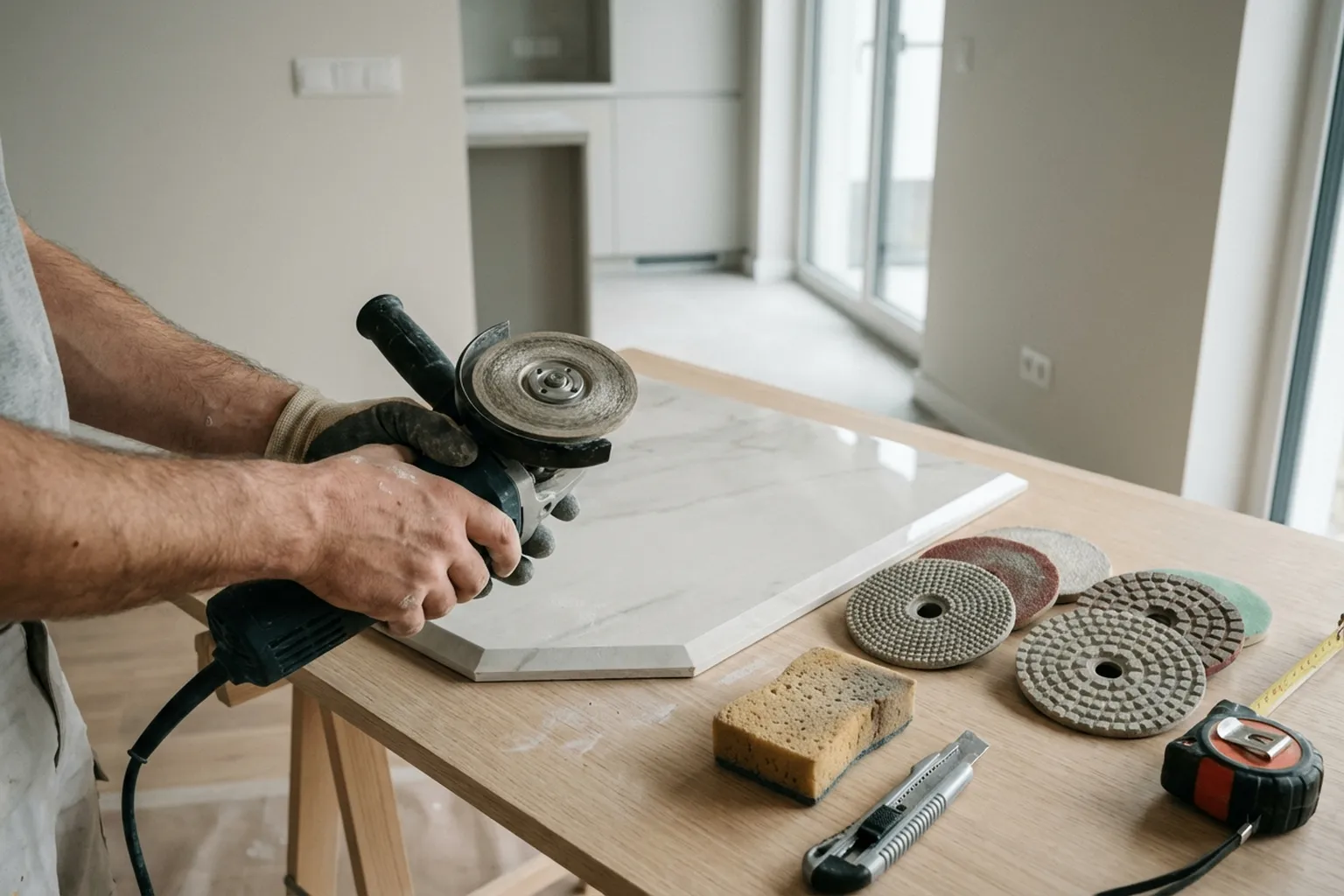
The price depends on the type of processing (45-degree mitre, straight polish, chamfer), the tile material (porcelain is faster; sintered stone and natural stone need more time), the total edge length and the number of corners. One external corner with both tiles mitred means two edges. A tile windowsill has four edges. Consumables (diamond discs, pads) are part of the price. You can see the current rates in the table below.
| Service | Price |
|---|---|
| Edge polishing (gloss) | 60–90 zł/mb |
| Polished visible edge | 40–70 zł/mb |
| Straight precision cut (factory edge) | 25–40 zł/mb |
| Large format precision cut | 60–100 zł/mb |
| Sintered stone precision cut | 80–140 zł/mb |
| Tile grinding at 45° | 60–90 zł/mb |
Indicative prices. Ranges for a typical scope. Fixings included, materials separate. Minimum order 300 zł.
Price ranges and offers from tradespeople: tiler in Warsaw.
How edge processing works
- Choose the processing type. A 45-degree mitre is used for outside corners where two tiles meet edge to edge. Straight polishing is for windowsills, visible edges and countertops. A chamfer slightly softens a sharp edge for safety.
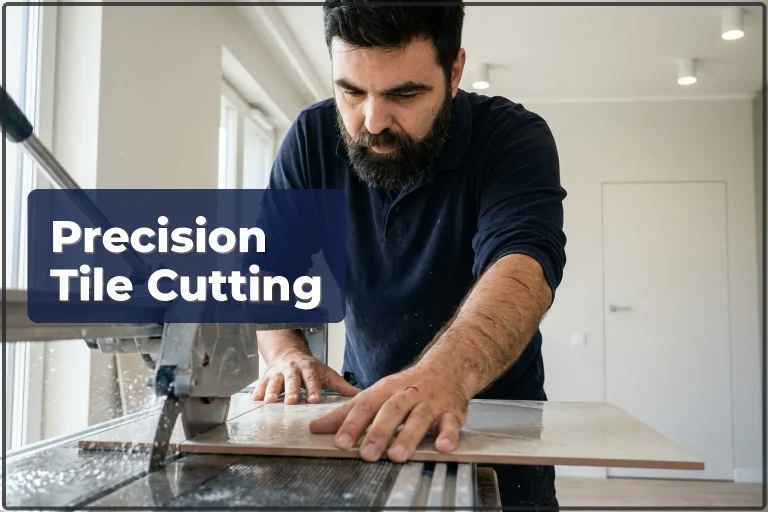
- Fix the tile in place. Tradespeople clamp it on a Sigma or Montolit professional cutter with a guide rail. For mitring, they set the machine to 45 degrees.
- Initial grinding. A diamond disc removes most of the material. On porcelain: dry, with dust extraction. On sintered stone — with water cooling.
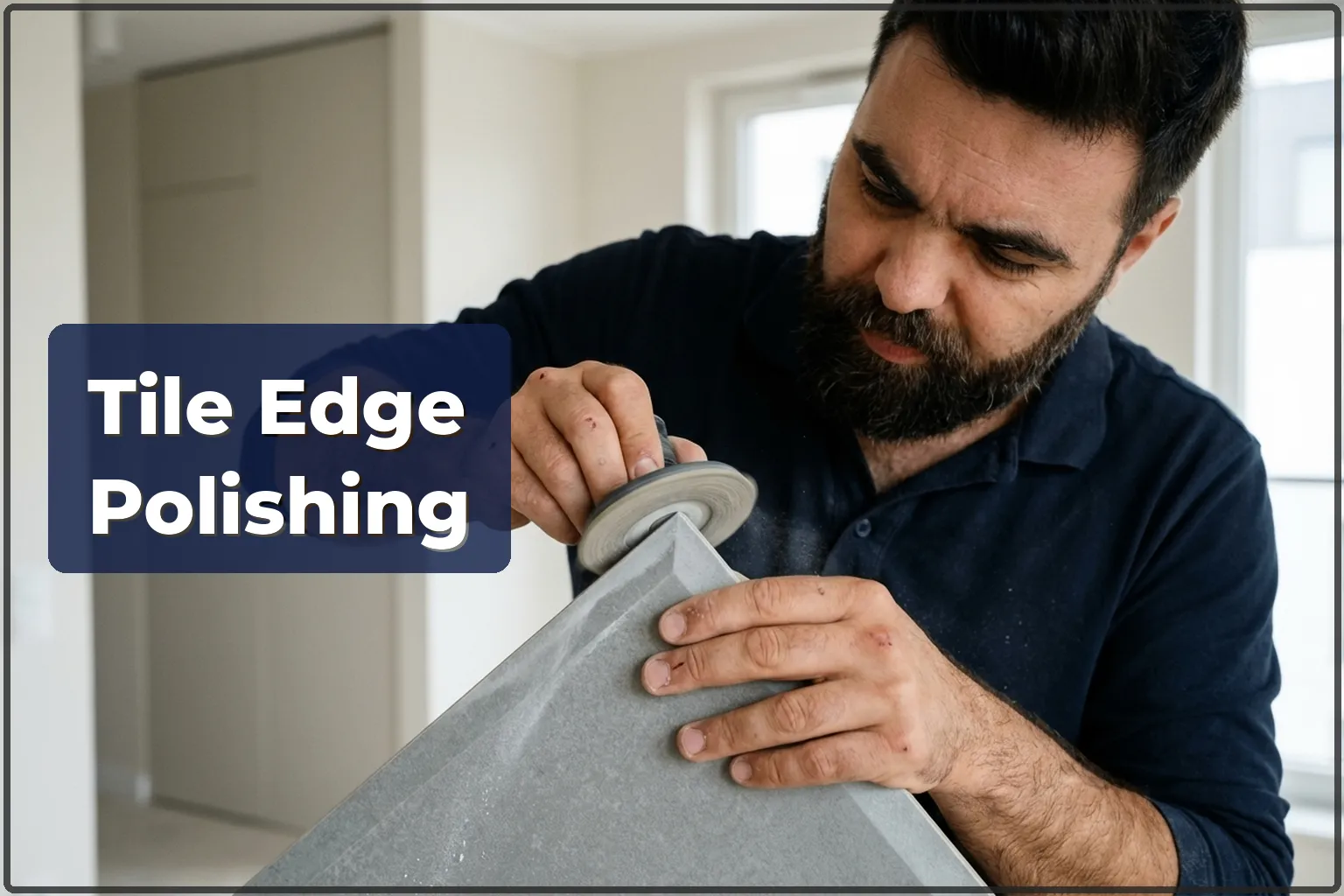
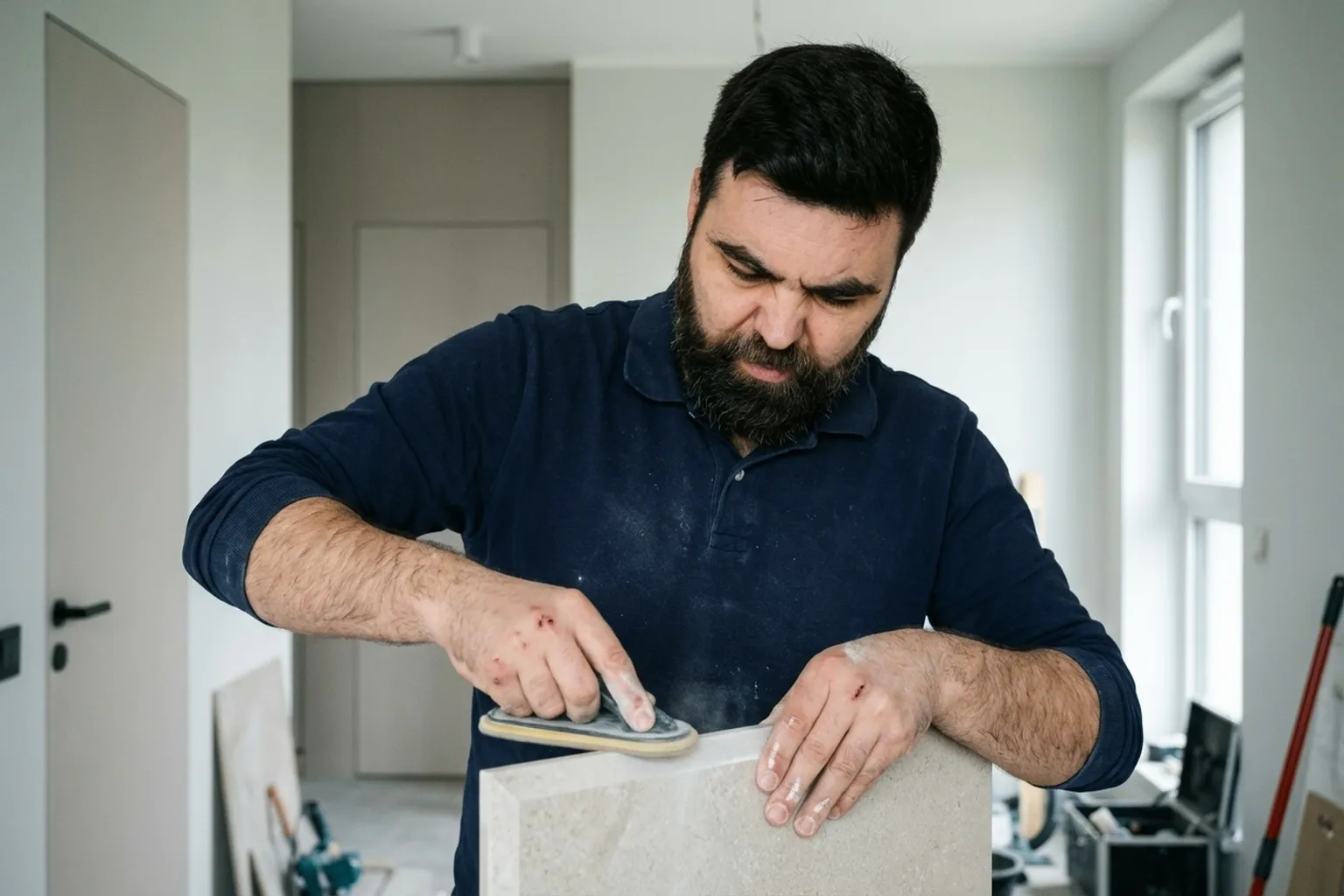
- Fine grinding. Tradespeople use diamond polishing pads at 50, 100, 200 and 400 grit. Each stage takes out the marks from the one before.
- Polishing. The final 800 or 1500 grit pad brings the edge close to the finish of the factory face. On polished porcelain, the result matches so well you can’t tell the difference.
- Final check. Tradespeople inspect the edge under light: no chips, scratches or uneven spots. If needed, any weak areas are polished again.
Common mistakes when processing tile edges
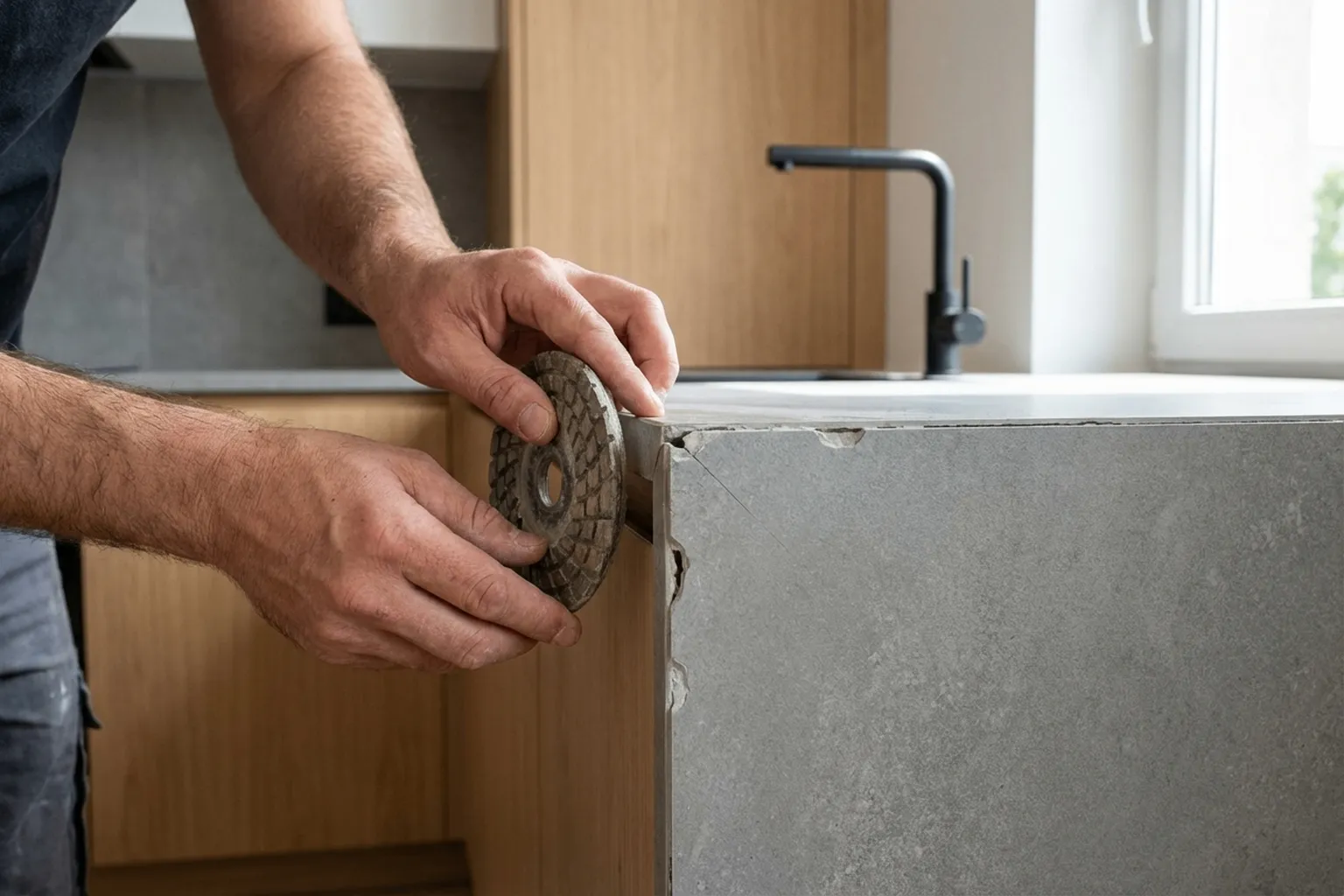
- Mitring with an angle grinder and no guide: the angle comes out uneven, the edge chips, and the line goes wavy. Use a cutter with a guide rail only.
- Making the edge tip too thin — the tile breaks right at the point. Leave at least 1 mm before the glaze.
- Skipping grit stages: if you jump from 50 straight to 400, scratches stay visible. Every step matters.
- Grinding sintered stone dry: without water it overheats and cracks. Wet processing only.
- Mitring cheap tiles — the thin glaze chips away and the body shows through. Not every tile should be mitred.
- No chamfer on internal corners: the sharp edge can cut your hands during cleaning. Even a small chamfer fixes that.
- Polishing without dry-fitting: edges finished first may not line up during installation. Always dry-fit before the final polish.
What to prepare before the technician arrives
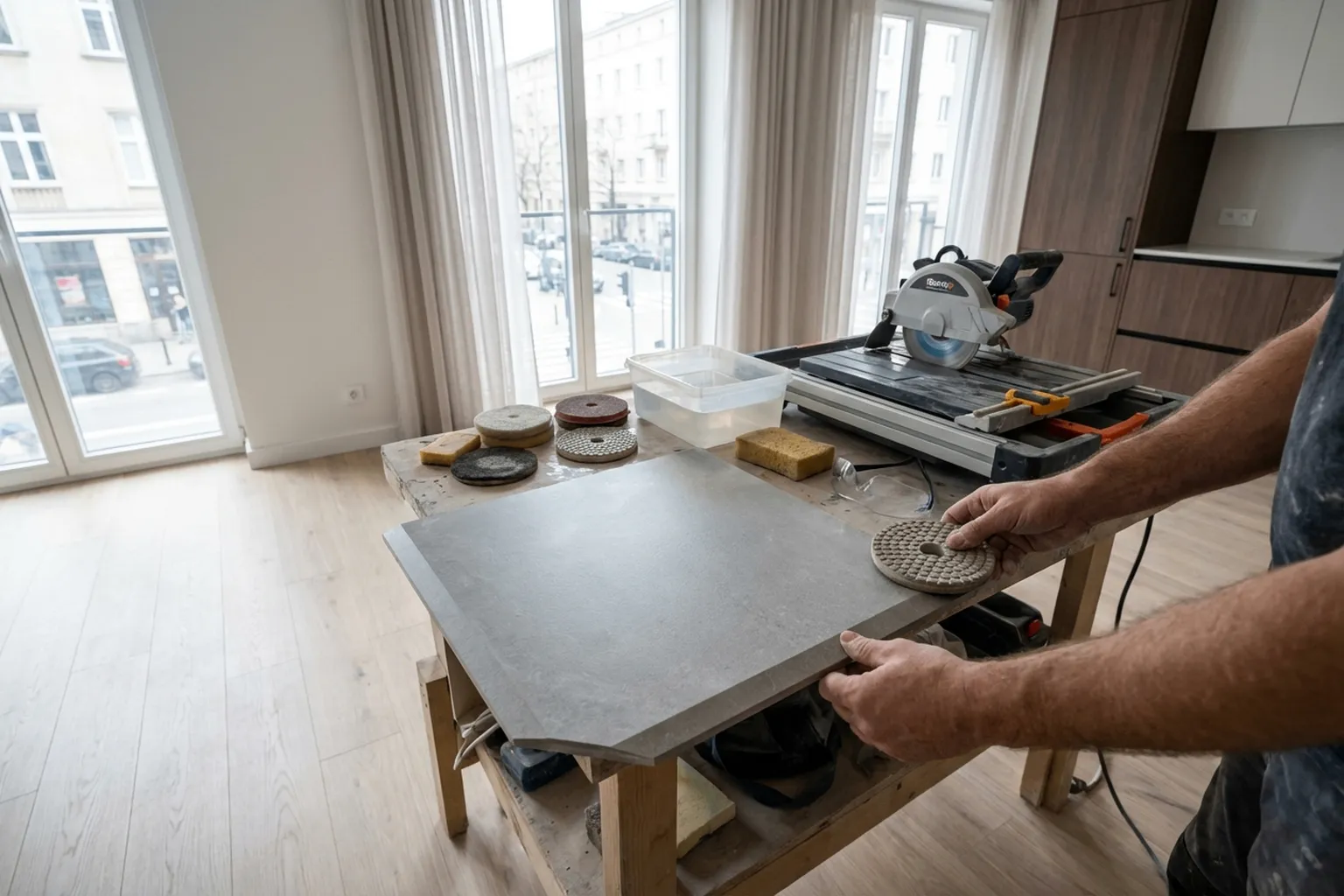
- Have the tiles cut to size (or they can cut them on site).
- Mark which edges will stay visible: those are the ones that need processing.
- State the required finish: 45-degree mitre or straight polish.
- If the tiles are already fixed to the wall, show which corners need attention.
- Make sure power is available — the grinder and cutter run from the mains.
- Provide water if they are working with sintered stone or natural stone.
- Clear the work zone: grinding still creates dust even with extraction.
- Cover furniture and appliances with sheeting.
- Keep spare tiles ready: there is always a small risk of chipping during mitring.
- Give access details: intercom, parking, floor number.
A real case from Warsaw
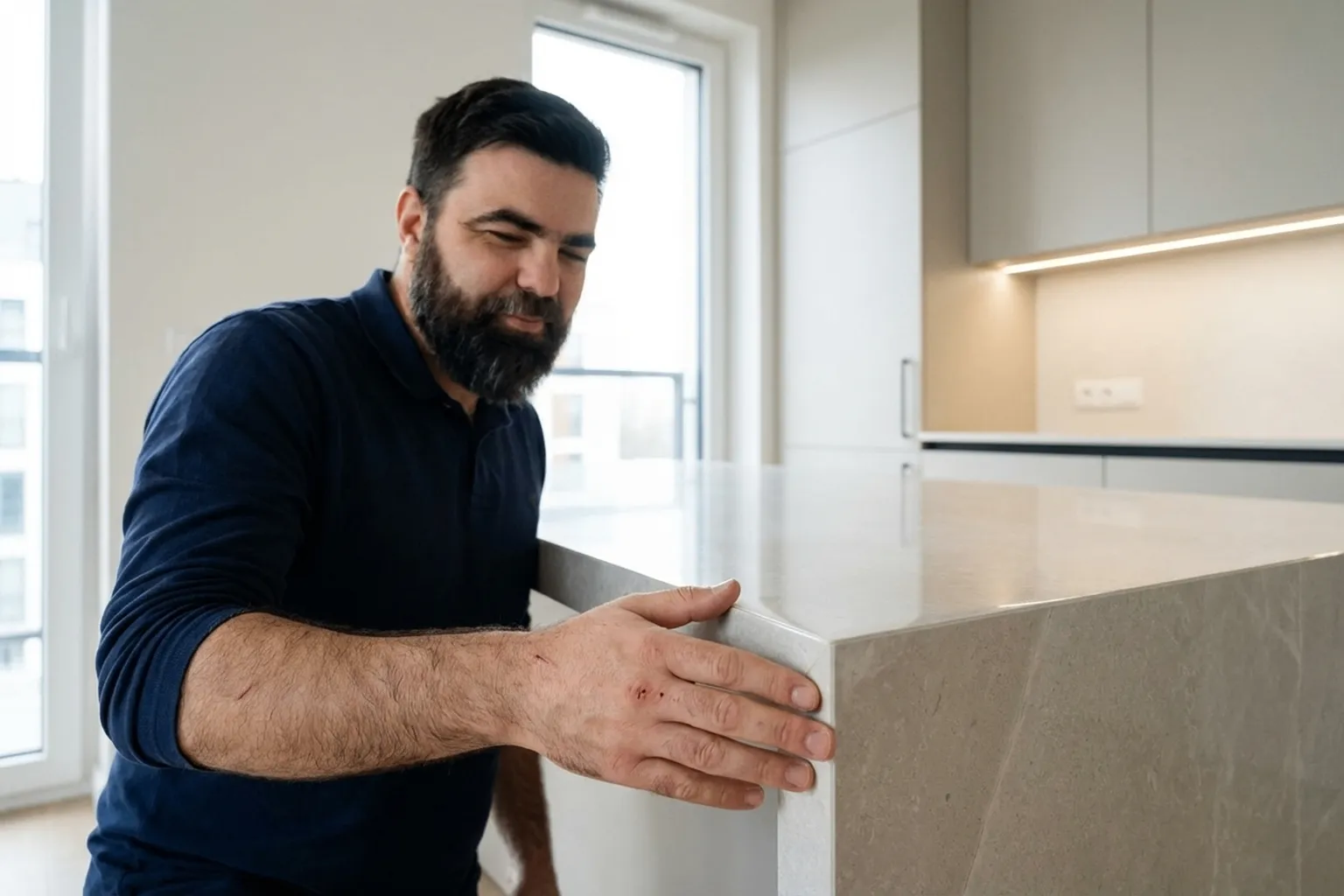
An apartment in Srodmiescie, with a bathroom finished in large-format 120×60 cm porcelain tiles. The designer asked for outside corners with no plastic profiles — just clean 45-degree joints. Tradespeople did the mitring on a Sigma cutter with a guide: first a diamond disc for the rough cut, then polishing pads at 50-100-200-400-800 grit. Tradespeople finished 12 linear metres of edge, six external corners and a shampoo niche. Every joint was dry-fitted before the final polish. The result: the corners read as one continuous surface, with no gaps and no plastic. The edge work took one day; tiling was done separately. The client said the lack of trims gave the bathroom a more expensive look. The conclusion: mitring makes sense on good porcelain with a thick glaze layer — for budget tiles, an aluminium Mapei profile is the smarter option.
Frequently asked questions
What is tile mitring?
It means cutting the tile edge at 45 degrees so two tiles meet on an external corner without a plastic trim. The finish looks like one continuous surface.
Can any tile be mitred?
No. Cheap tiles with a thin glaze chip easily. Mitring suits porcelain, sintered stone and dense natural stone.
Why is mitring better than a plastic trim?
Because the corner stays clean, with no added element. Plastic trims turn yellow, come loose and trap dirt. A mitred corner is a permanent finish.
How long does it take?
One external corner (two edges of 2.5 m): around an hour. A whole bathroom (10-15 m of edge): from half a day to one day.
Can tiles already on the wall be mitred?
Yes, but the job is more difficult and less accurate. It is better to process them before installation.
What is included in the price?
Labour, diamond discs, polishing pads and travel. The client buys the tiles separately.
Is there a risk of damaging tiles?
Very small with professional equipment. Budget tiles with a thin glaze have a higher risk of chipping — they mention that beforehand.
Can natural stone be polished?
Yes. Marble, granite and travertine can be polished with diamond pads to a mirror finish using a wet method.
What tools do tradespeople use?
Rubi, Montolit, Sigma: professional tile cutters and polishing systems.
Who does the work
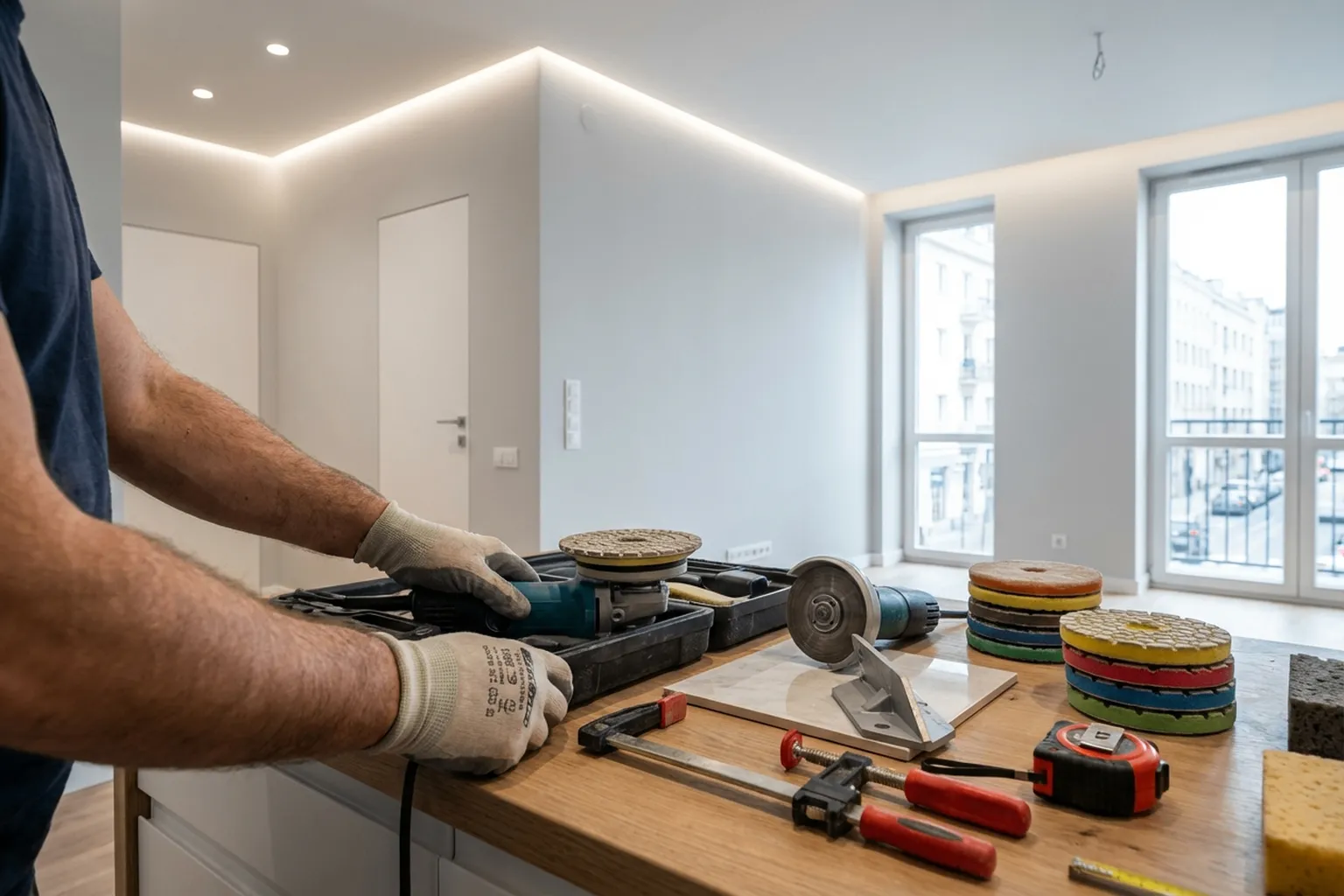
Edge finishing is done by tile specialists who know how to handle professional Rubi and Montolit machines, mitring and polishing need a steady hand and attention to detail. Tradespeople come with a tile cutter and a full set of diamond discs and pads. Tradespeople work across all of Warsaw.
Order in the app
Describe the job, add photos and the address. Tradespeople send their own prices and dates, and you pick one of the offers.
Open the app