
Blinds Installation in Warsaw — Venetian and Vertical Blinds
25.02.2026Blinds Installation in Warsaw — Venetian and Vertical Blinds
Blinds are not curtains and not roller shutters. They are slats — thin strips of aluminium, plastic or wood that rotate on their axis and give you precise control over light. Want dimness — tilt the slats down. Need light without direct sun — angle them just so. Open them fully and the view is as clear as an uncovered window. We install horizontal venetian blinds (25 mm aluminium, 50 mm wood) and vertical blinds (89 mm and 127 mm fabric slats). We cover all of Warsaw — measuring, fitting and testing in a single visit.
Blinds installation costs and what affects the price
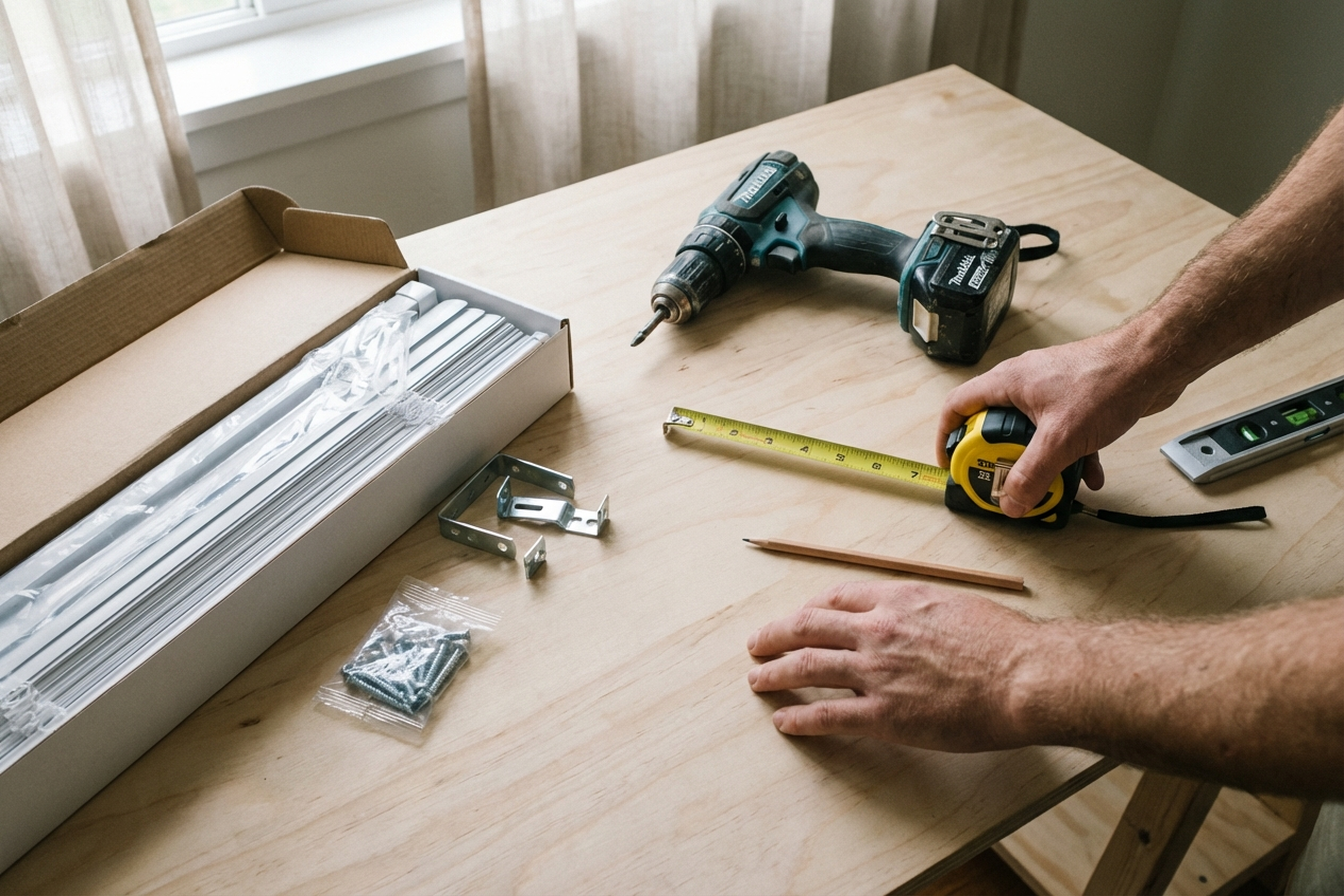
The price depends on the blind type and mounting method. Horizontal aluminium venetian blinds on brackets inside the window recess are the basic option. Wooden blinds are heavier, the brackets sturdier, the fixings more robust — and there is a bit more work involved. Vertical blinds require a headrail track mounted on the wall or ceiling. The price covers installation, fixings and adjustment of the tilt mechanism. The blinds themselves are charged separately. Current prices below.
| Service | min | max |
|---|---|---|
| Blinds installation | 200 zł | 350 zł |
| Roller shutter installation | 200 zł | 350 zł |
Send a photo of the window and the recess dimensions — we will quote the exact installation cost and advise on the best blind type.
How blinds installation works: step by step
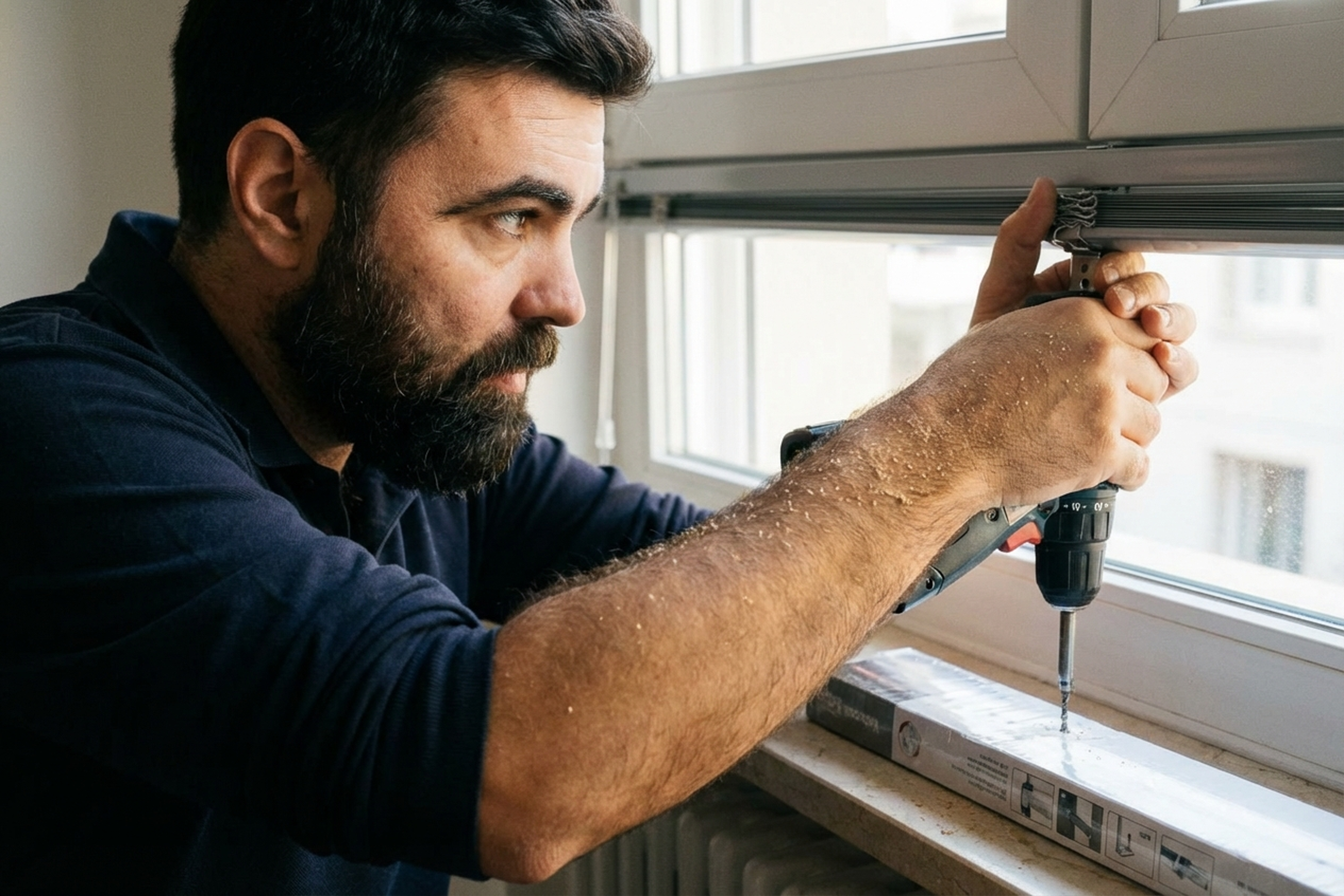
Fitting blinds is clean, precise work with no dust or mess:
- Measuring the window recess. The technician measures the width and depth of the recess (for an inside mount) or the area above the window (for a wall mount). He checks the blinds fit — side gaps no more than 2–3 mm.
- Marking the bracket positions. Brackets are marked strictly using a spirit level. For horizontal blinds — two brackets at the top of the recess. For vertical blinds — a headrail track on the wall or ceiling, with brackets every 40–60 cm.
- Drilling and fitting brackets. Holes are drilled in the uPVC frame, wall or ceiling, wall plugs inserted and brackets screwed in. For a recess mount without drilling the frame, clip-on brackets are used on the sash.
- Hanging the blinds. Horizontal: the headrail snaps into the brackets. Vertical: the headrail track slots into the brackets, then the slats are hung one by one on the carriers.
- Connecting the controls. For horizontal blinds a lift cord or chain and a twist wand for tilting the slats are fitted. For vertical blinds the traverse chain and tilt mechanism are checked.
- Adjustment and testing. All slats must rotate in sync without sticking. The blinds are raised and lowered several times. The bottom rail should be parallel to the sill. Vertical slats should stack evenly to one or both sides.
Common mistakes when installing blinds
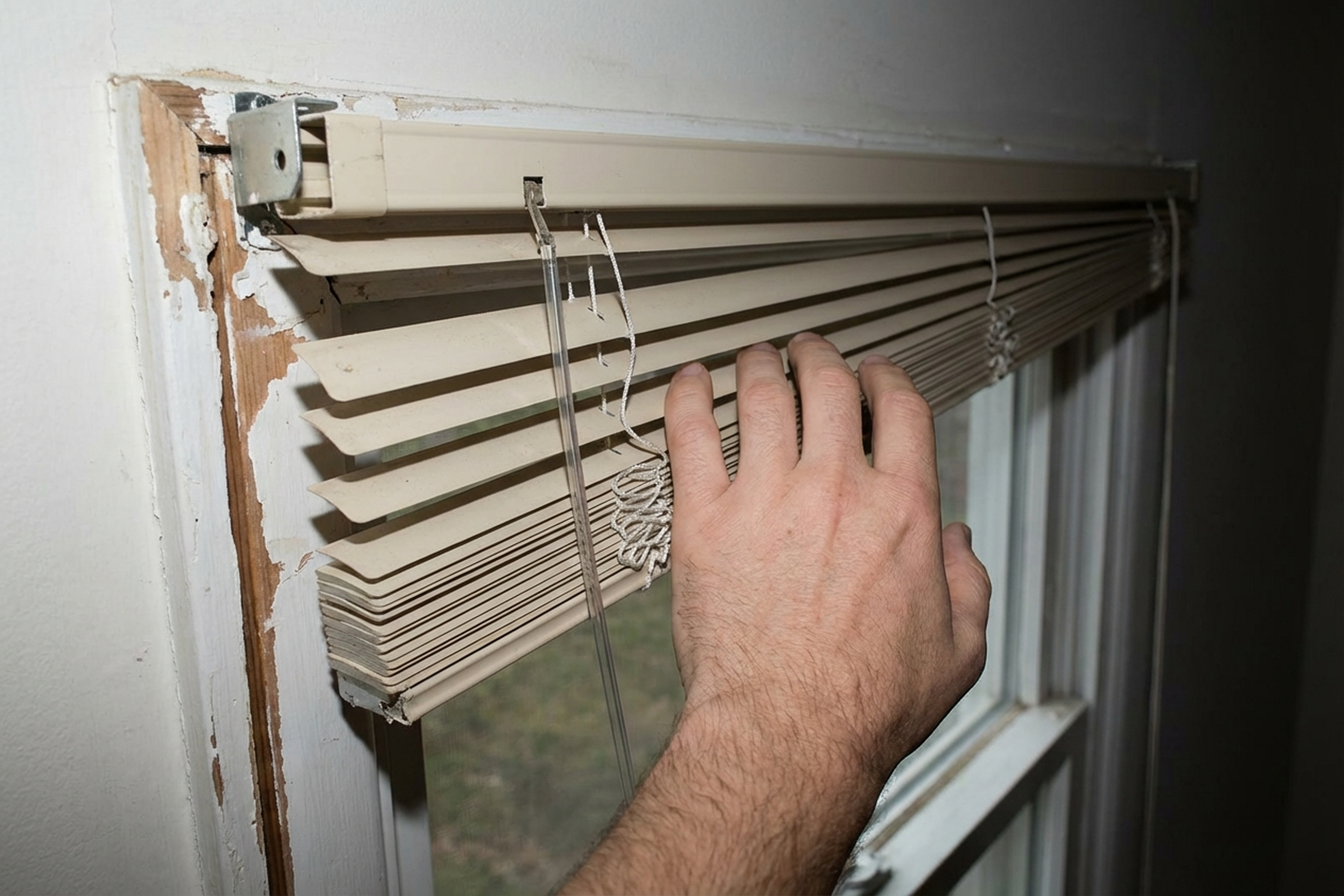
Blinds look like a simple mechanism, but it is easy to botch the installation:
- Measuring without checking the recess depth. Blinds ordered by width, but nobody measured the depth. The brackets do not fit, the slats hit the glass. The mounting method has to be changed.
- Brackets not level. Even a millimetre difference is visible — the slats hang crooked and the bottom rail tilts. With horizontal blinds this is obvious straight away.
- Wrong bracket choice. No-drill clips are designed for lightweight aluminium blinds. Wooden blinds with 50 mm slats weigh three to four times more — clips will not hold them.
- Over-tightened tilt mechanism. If the twist wand is secured too tightly the slats do not rotate smoothly — they either stick or snap from one position to another.
- Control cord too long. The lift cord or chain dangles to the sill or lower. It looks untidy and is a safety hazard for children. The length should be trimmed during installation.
- Slats bent during transport. Aluminium 25 mm slats bend from the slightest pressure. If you do not check before fitting, crooked slats cannot be straightened — only replaced.
- Vertical blinds on narrow windows. 127 mm slats on a 50 cm window look out of place. For narrow windows, horizontal blinds or vertical blinds with 89 mm slats work better.
What to prepare before the technician arrives
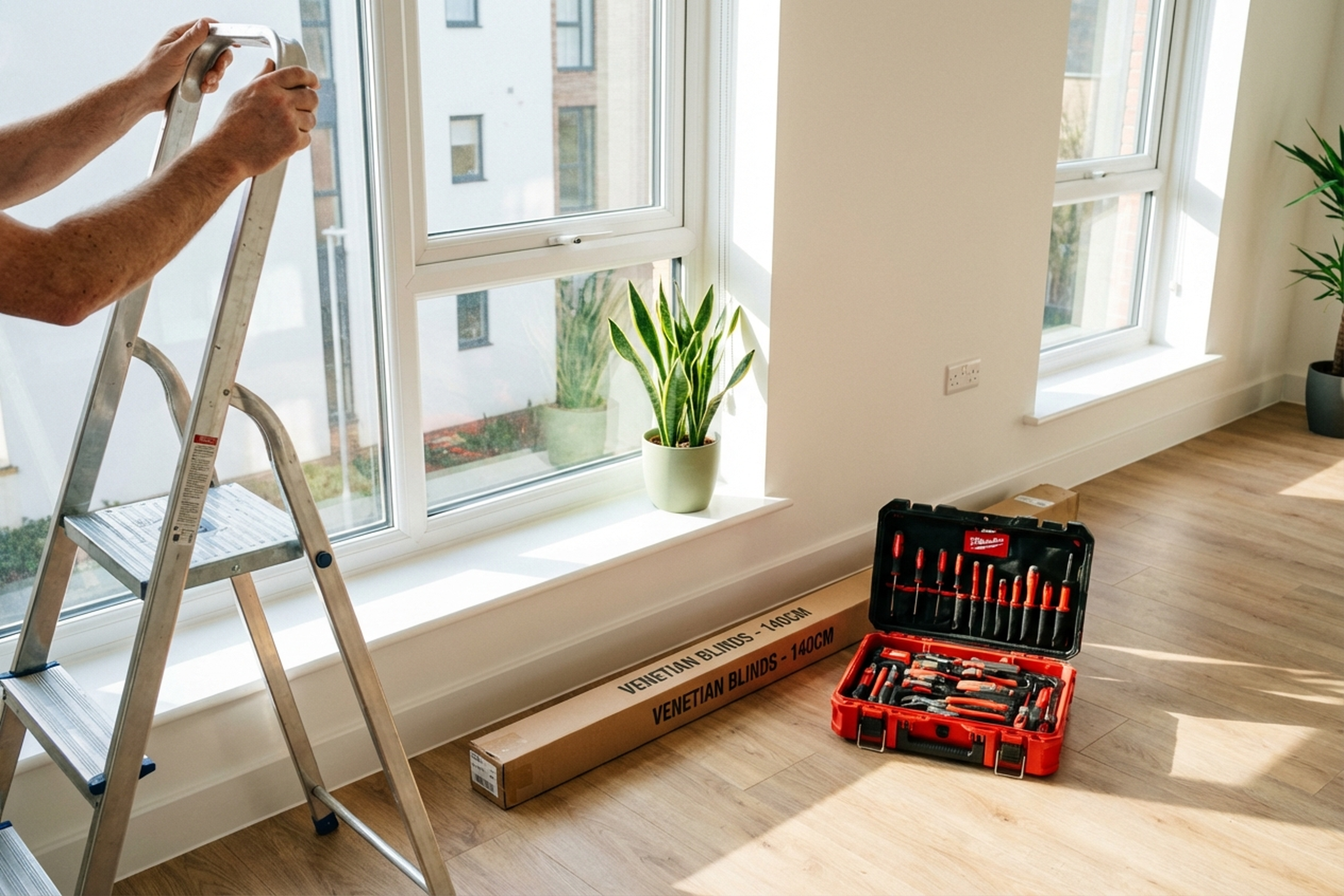
To keep the installation quick and hassle-free:
- Buy the blinds in advance, or give us the exact recess dimensions — we will help you choose a model.
- Clear the windowsill of plants, vases and ornaments.
- Remove old blinds or curtains if they are still hanging. If you cannot manage it yourself, we will do it on arrival.
- Decide where to mount: inside the recess, on the wall above or on the ceiling.
- If the windows have tilt-and-turn hardware, let the technician know — it affects the bracket choice.
- Count the number of windows — fitting several blinds in one visit is cheaper.
- Make sure power sockets are free — the drill needs to be plugged in.
- If the blinds are for a balcony door, check that the slats will not block the door from opening.
- Have the entry code and parking information ready.
A real case: replacing vertical blinds in a Wola flat
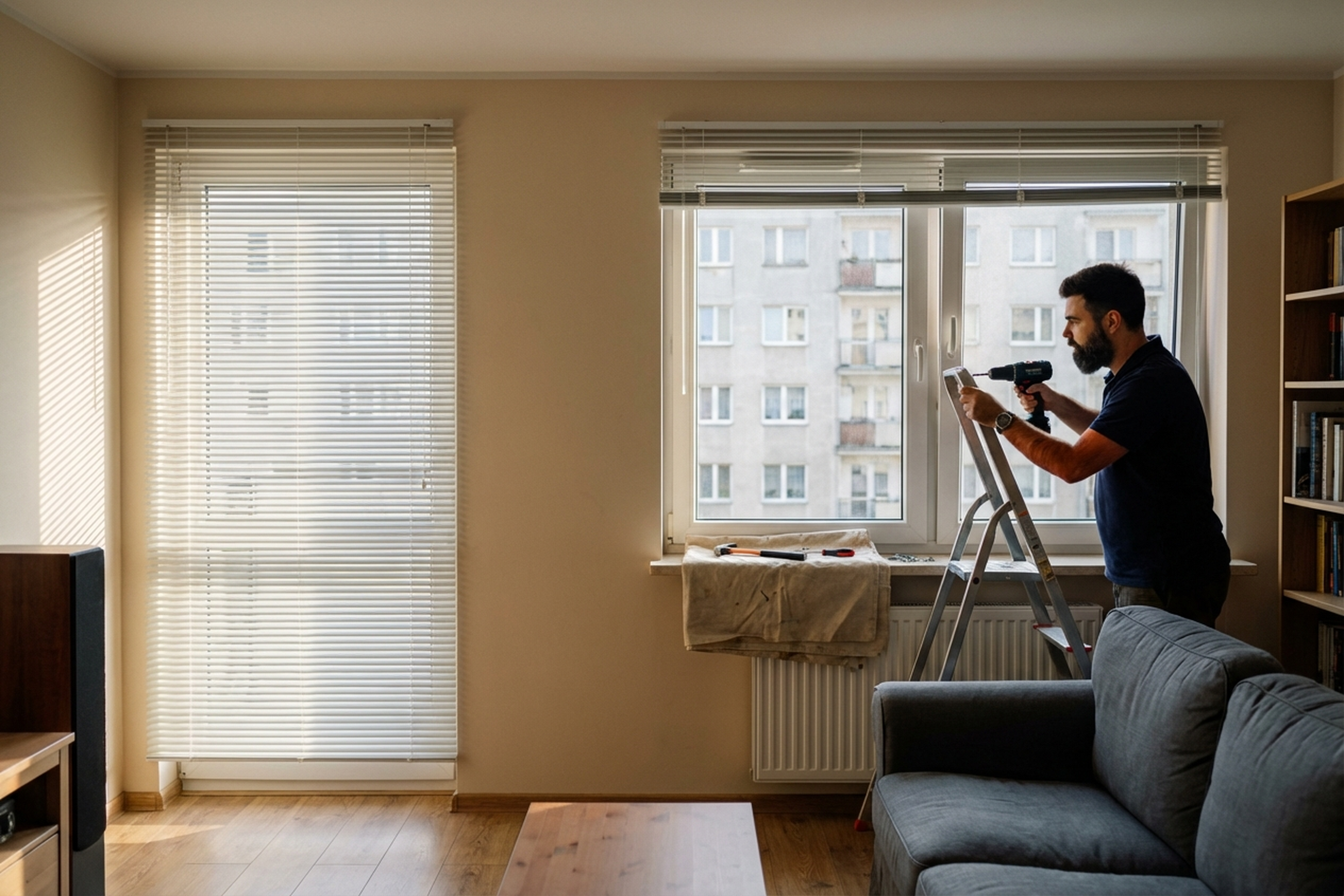
A client in Wola works from home — a home office with three windows. The windows had old vertical blinds from the 1990s: yellowed fabric slats, a jammed tilt mechanism, half the carriers broken. It was no longer possible to close the slats fully — the morning sun glared off the monitor.
We removed the old vertical blinds together with the headrail track. The wall was left with holes from the old brackets, which we filled with filler. We fitted new 25 mm horizontal aluminium blinds inside the window recess on each of the three windows. Brackets were screwed into the top of the recess and checked with a spirit level. The slats rotate with a twist wand — a light flick of the wrist and the angle of light changes. The entire installation took about two hours. The client immediately noticed the office was more comfortable — he could work without glare while still having daylight.
Frequently asked questions
How long does it take to install blinds on one window?
Horizontal blinds in a recess — 15–25 minutes. Vertical blinds with a headrail on the wall — 25–40 minutes. If old blinds need to be removed first, add another 10–15 minutes.
Can blinds be installed without drilling?
Yes, for lightweight horizontal blinds (25 mm aluminium) there are clip-on brackets that fit over the sash. For wooden and vertical blinds, drilling is required — they are too heavy for clips.
Horizontal or vertical — which is better?
Horizontal blinds suit standard windows — compact, space-saving and precise at controlling light. Vertical blinds are better for large windows and sliding doors — the slats slide to the side and do not block the way. For a home office, horizontal blinds are the more popular choice.
Will blinds damage the plastic frame?
When mounted in the recess (into the wall) the frame is not touched at all. Clip-on brackets do not damage the frame either. Screws into the frame leave small holes that are easy to plug when the blinds are removed.
Can blinds be fitted to a balcony door?
Yes. Vertical blinds are fitted to balcony doors — they slide to the side and do not obstruct the door. Horizontal blinds can also be used, but you will need to raise them each time you go out onto the balcony.
Who installs blinds and what guarantees we offer
Installation is carried out by technicians experienced with window systems. We fit blinds of all types: horizontal aluminium and wooden venetian blinds, vertical fabric blinds and pleated blinds. We know the specifics of mounting in recesses of different depths and on different window profiles. We cover all of Warsaw — from Praga-Polnoc to Wlochy. We guarantee a level installation, smooth tilt-mechanism operation and a neat finish. If anything sticks or sits crooked after fitting, we come back and fix it at no extra charge. Message or call us — we typically reply within an hour.