
Blinds installation costs and what affects the price
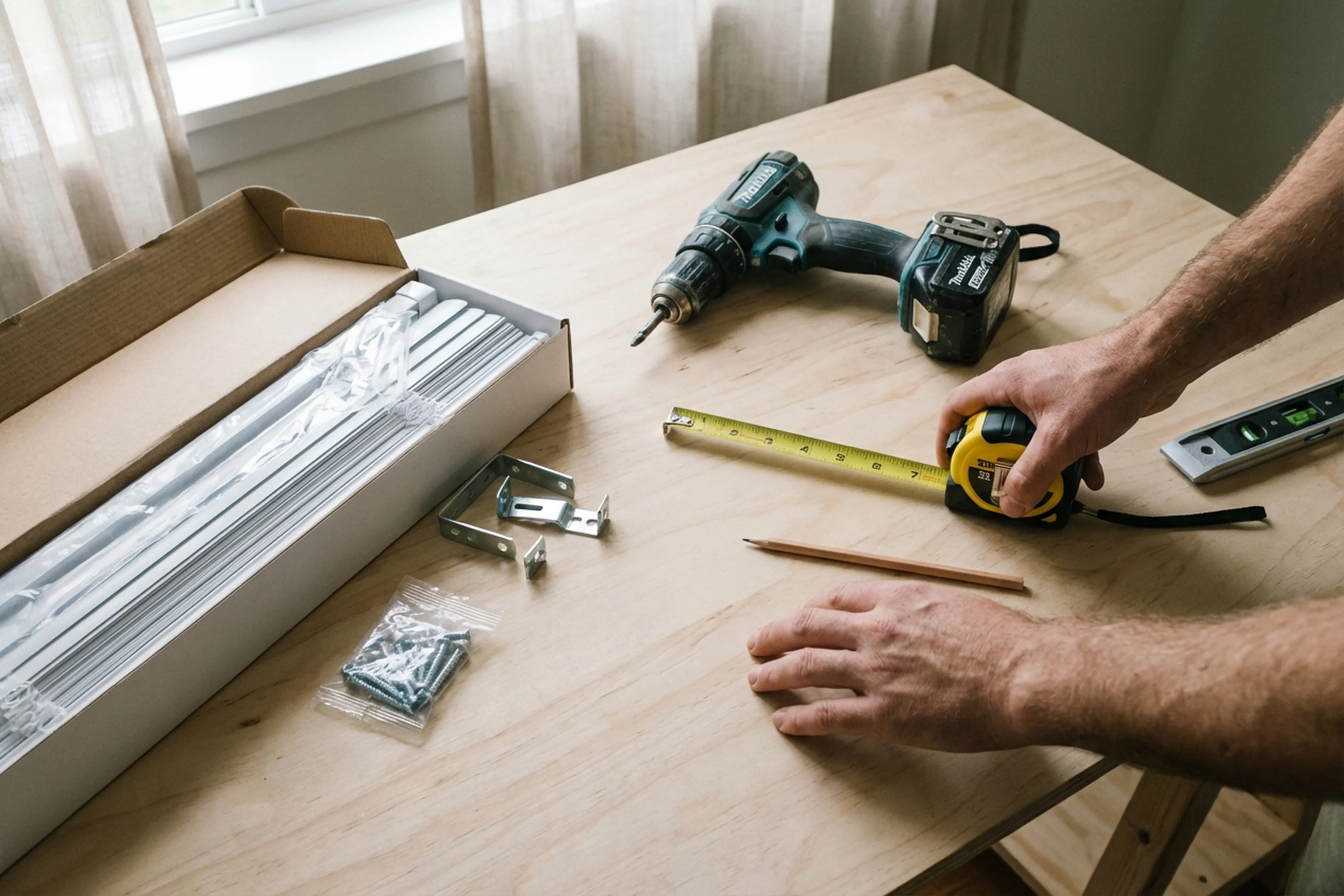
The cost comes down to the blind type and the way it is mounted. Horizontal aluminium venetian blinds on brackets inside the window recess are the basic version. Wooden blinds are heavier, the brackets need to be stronger, the fixings tougher, and the job takes a bit more effort. Vertical blinds need a headrail track fixed to the wall or ceiling. The price includes fitting, fixings and adjustment of the tilt mechanism. The blinds themselves are priced separately. Current rates are below.
| Service | Price |
|---|---|
| Venetian blind installation | 80–350 zł |
| Roller blind installation | 300–500 zł |
Indicative prices. Ranges for a typical scope. Fixings included, materials separate. Minimum order 300 zł.
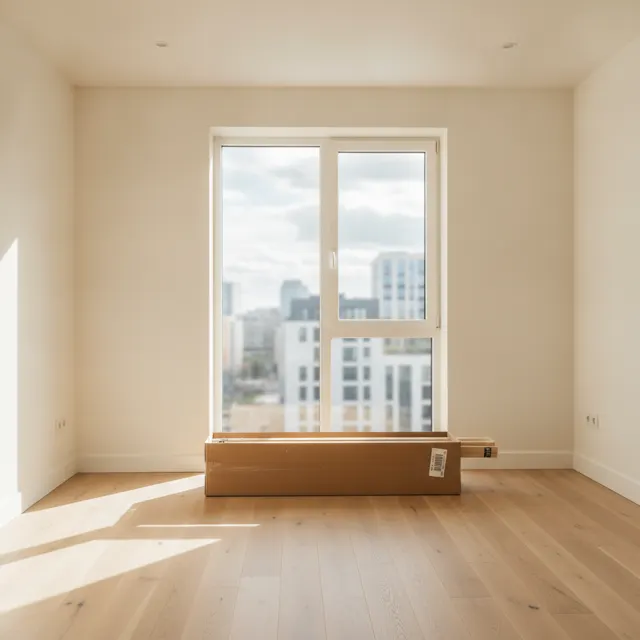
Add to the order a photo of the window and the recess dimensions: they will give you the exact installation price and suggest the most suitable blind type.
Price ranges and offers from tradespeople: handyman in Warsaw.
How blinds installation works: step by step
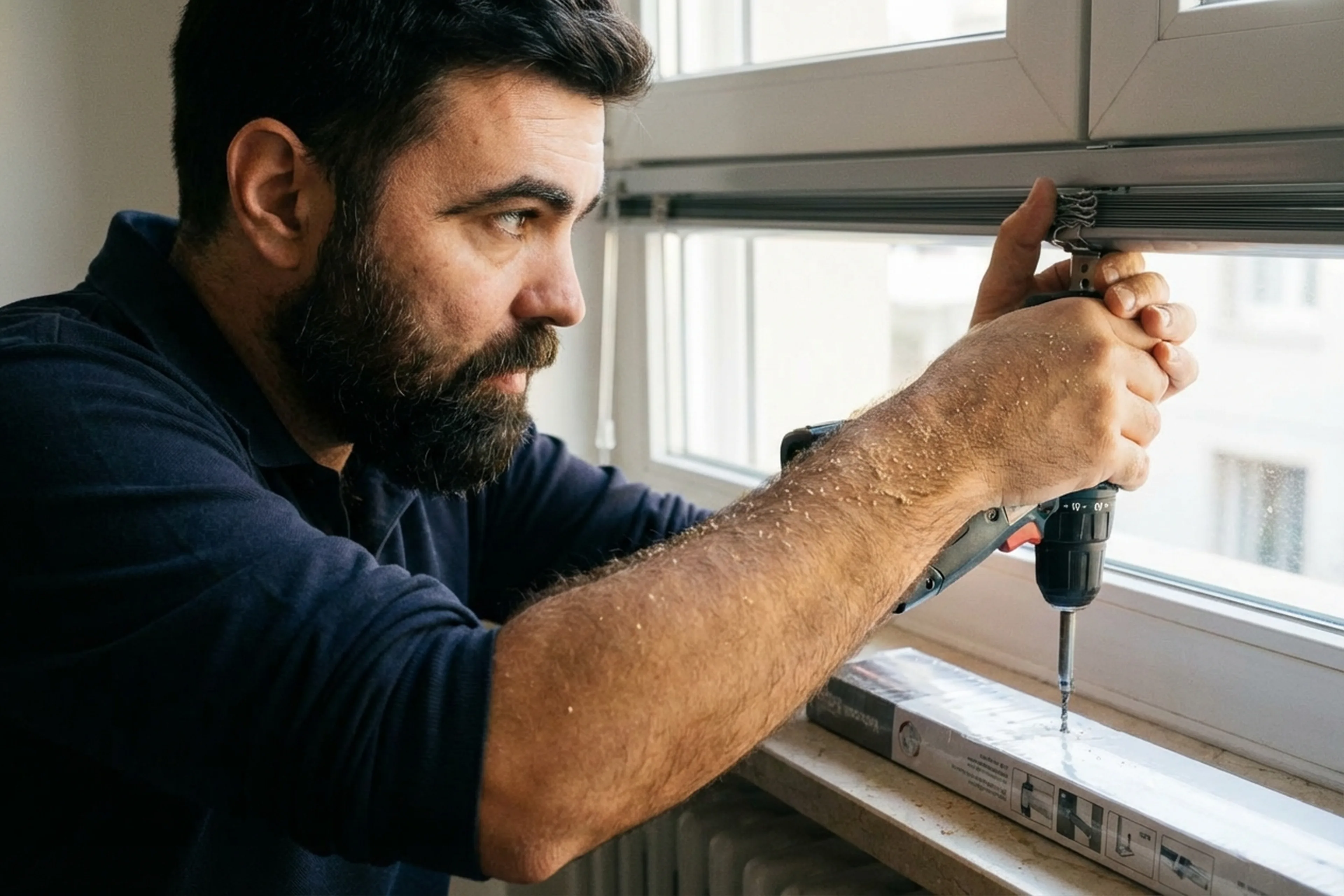
Installing blinds is a clean, accurate job with no dust or big mess:
- Measuring the window recess. The technician checks the width and depth of the recess (for an inside mount) or the space above the window (for a wall mount). He makes sure the blinds will fit: side gaps no more than 2–3 mm.
- Marking the bracket positions. Brackets are marked out carefully with a spirit level. For horizontal blinds — two brackets at the top of the recess. For vertical blinds, a headrail track on the wall or ceiling, with brackets every 40–60 cm.
- Drilling and fitting brackets. Holes are drilled in the uPVC frame, wall or ceiling, wall plugs are inserted and the brackets are screwed in place. For a recess mount without drilling into the frame, clip-on brackets go on the sash.
- Hanging the blinds. Horizontal: the headrail clicks into the brackets. Vertical: the headrail track locks into the brackets, then the slats are hung one by one onto the carriers.
- Connecting the controls. For horizontal blinds, a lift cord or chain and a twist wand for turning the slats are fitted. For vertical blinds, the traverse chain and tilt mechanism are checked.
- Adjustment and testing. All slats should turn together without catching. The blinds are raised and lowered several times. The bottom rail needs to sit parallel to the sill. Vertical slats should stack evenly to one side or both sides.
Common mistakes when installing blinds
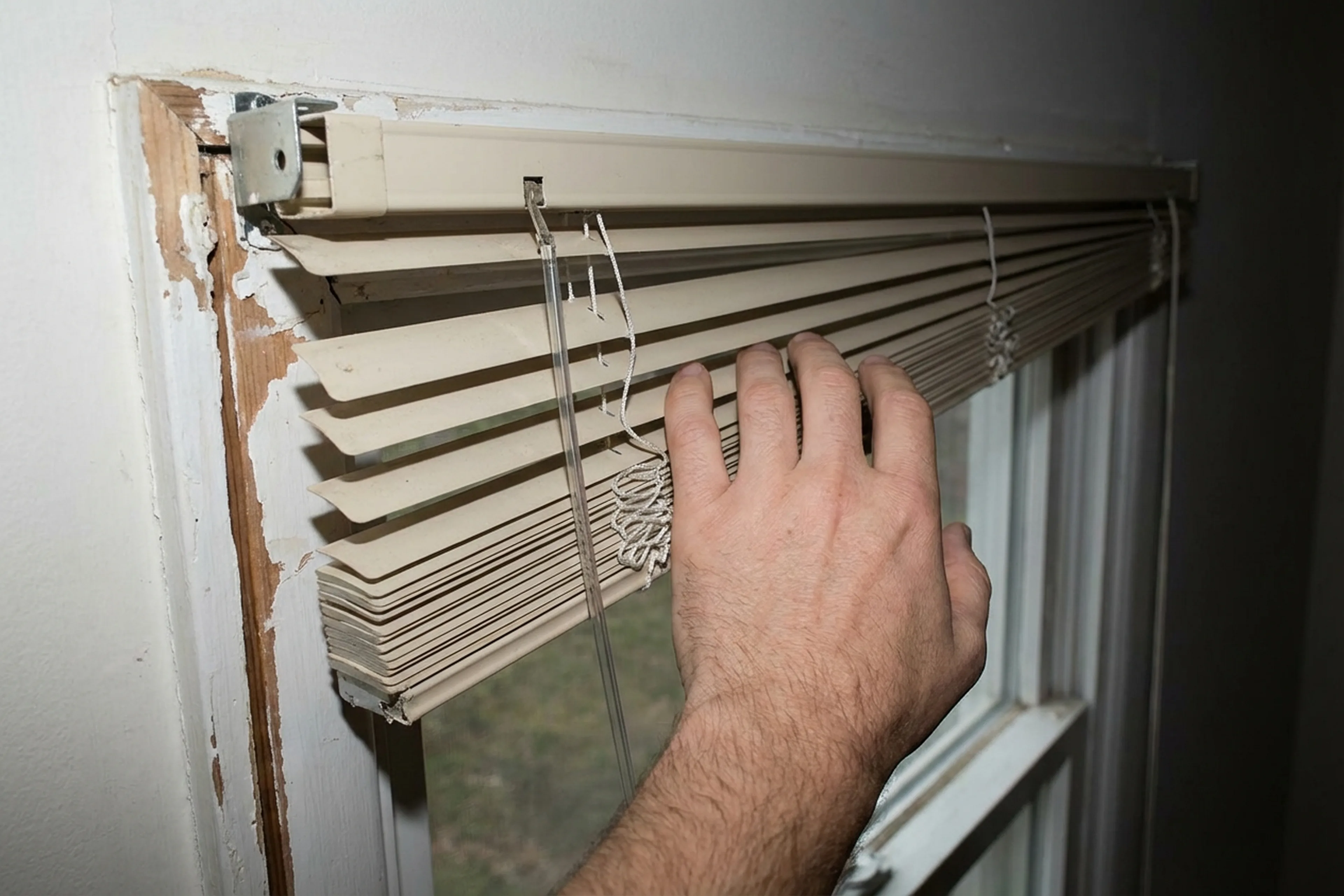
Blinds may look like a simple mechanism, but the installation is easy to mess up:
- Measuring without checking the recess depth. Blinds are ordered by width, but no one checked the depth. The brackets do not fit and the slats touch the glass. The mounting method then has to be changed.
- Brackets not level. Even a millimetre out shows up: the slats hang unevenly and the bottom rail slopes. With horizontal blinds you see it straight away.
- Wrong bracket choice. No-drill clips are made for lightweight aluminium blinds. Wooden blinds with 50 mm slats weigh three to four times more: the clips will not support them.
- Over-tightened tilt mechanism. If the twist wand is fixed too tightly, the slats do not turn smoothly — they either catch or jump from one position to another.
- Control cord too long. The lift cord or chain hangs down to the sill or below. It looks messy and creates a safety risk for children. The length should be shortened during fitting.
- Slats bent during transport. Aluminium 25 mm slats bend under the slightest pressure. If you do not inspect them before installation, bent slats cannot be straightened, only replaced.
- Vertical blinds on narrow windows. 127 mm slats on a 50 cm window look wrong. For narrow windows, horizontal blinds or vertical blinds with 89 mm slats are a better fit.
What to prepare before the technician arrives
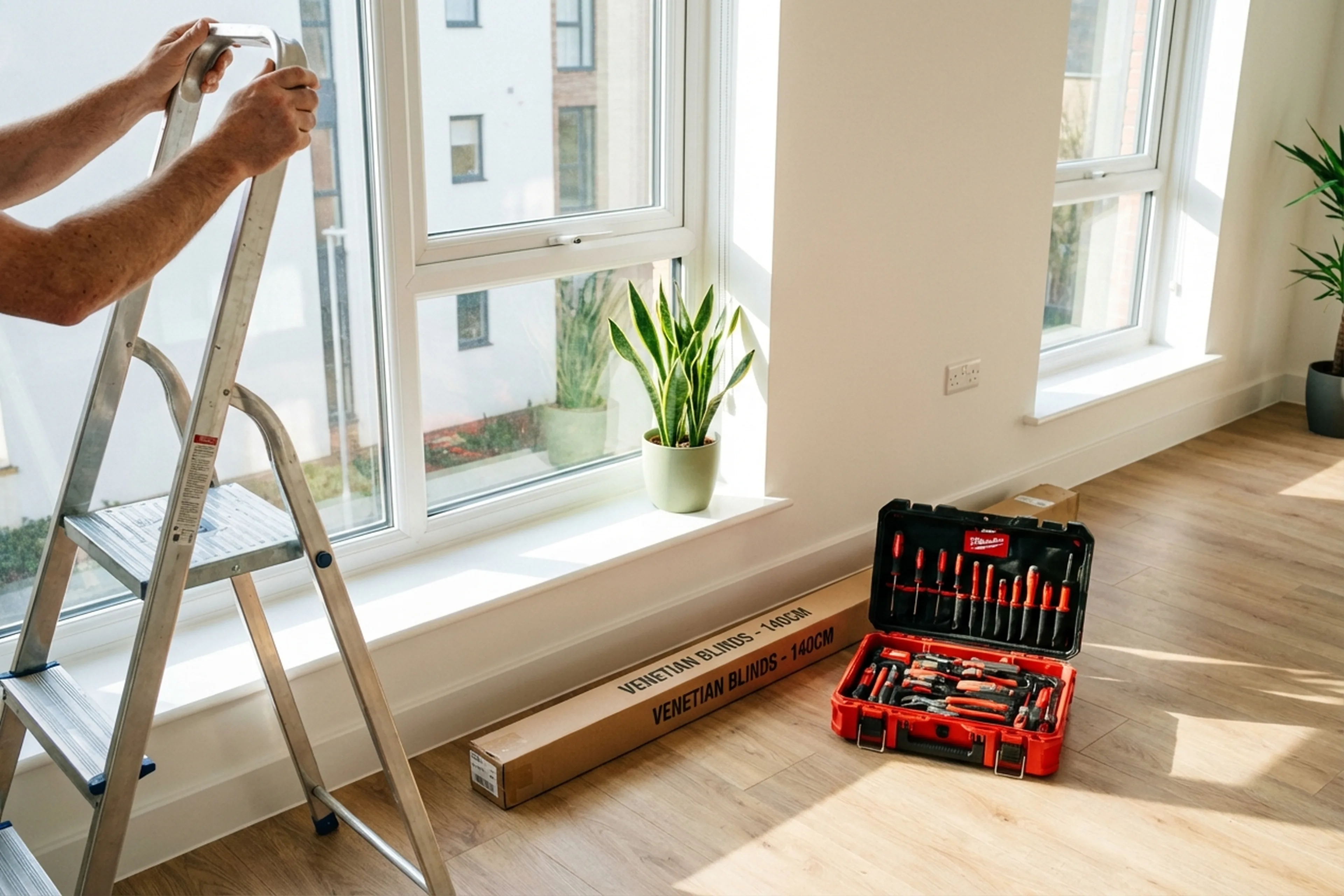
To make the installation fast and straightforward:
- Buy the blinds beforehand, or add to the order the exact recess dimensions, they will help you pick the right model.
- Clear the windowsill of plants, vases and decorations.
- Take down old blinds or curtains if they are still up. If you cannot do it yourself, they will handle it when they arrive.
- Decide on the mounting place: inside the recess, on the wall above or on the ceiling.
- If the windows have tilt-and-turn hardware, tell the technician — it affects which brackets can be used.
- Count how many windows there are: fitting several blinds in one visit costs less.
- Make sure power sockets are accessible: the drill needs plugging in.
- If the blinds are for a balcony door, check that the slats will not stop the door from opening.
- Keep the entry code and parking details ready.
A real case: replacing vertical blinds in a Wola flat
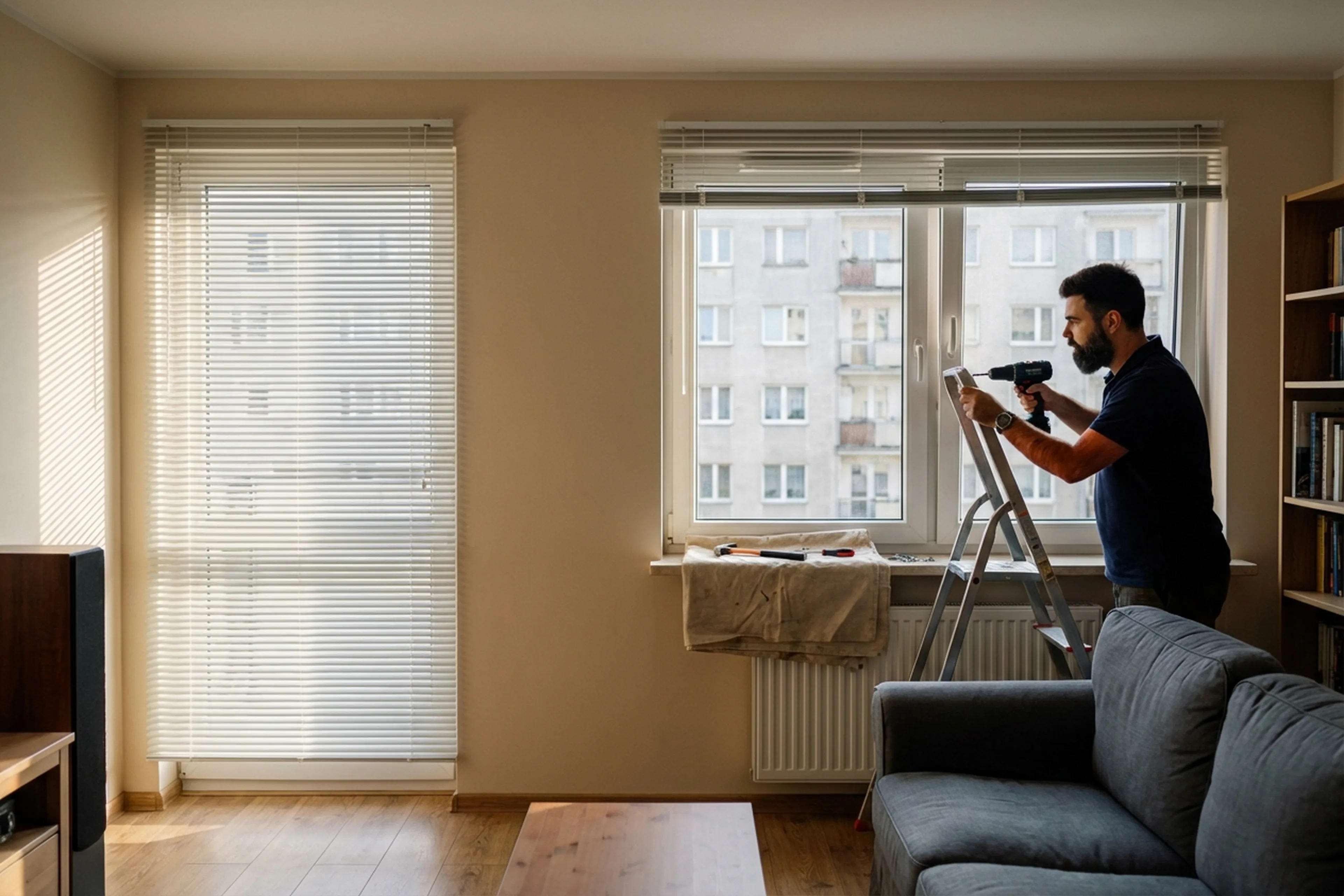
A client in Wola works from home — his home office has three windows. The windows still had old vertical blinds from the 1990s: yellowed fabric slats, a seized tilt mechanism, and half the carriers broken. It was no longer possible to shut the slats fully, the morning sun was glaring on the monitor.
Tradespeople took down the old vertical blinds together with the headrail track. The wall was left with holes from the old brackets, and they filled them with filler. Tradespeople installed new 25 mm horizontal aluminium blinds inside the window recess on all three windows. The brackets were screwed into the top of the recess and checked with a spirit level. The slats turn with a twist wand: one light movement of the hand and the light angle changes. The whole job took about two hours. The client noticed right away that the office felt more comfortable — he could work without glare and still keep natural daylight.
Frequently asked questions
How long does it take to install blinds on one window?
Horizontal blinds in a recess: 15–25 minutes. Vertical blinds with a headrail on the wall: 25–40 minutes. If old blinds need to be removed first, add another 10–15 minutes.
Can blinds be installed without drilling?
Yes, for lightweight horizontal blinds (25 mm aluminium) there are clip-on brackets that fit over the sash. For wooden and vertical blinds, drilling is required — they are too heavy for clips.
Horizontal or vertical: which is better?
Horizontal blinds are a good match for standard windows, compact, space-saving and accurate when it comes to light control. Vertical blinds work better for large windows and sliding doors — the slats move to the side and do not get in the way. For a home office, horizontal blinds are the more common choice.
Will blinds damage the plastic frame?
When mounted in the recess (into the wall), the frame is not touched at all. Clip-on brackets do not damage the frame either. Screws into the frame leave small holes that are easy to fill when the blinds are taken down.
Can blinds be fitted to a balcony door?
Yes. Vertical blinds can be fitted to balcony doors, they slide to the side and do not block the door. Horizontal blinds can also be used, but you will need to lift them each time you step out onto the balcony.
Who installs blinds and who answers for the work
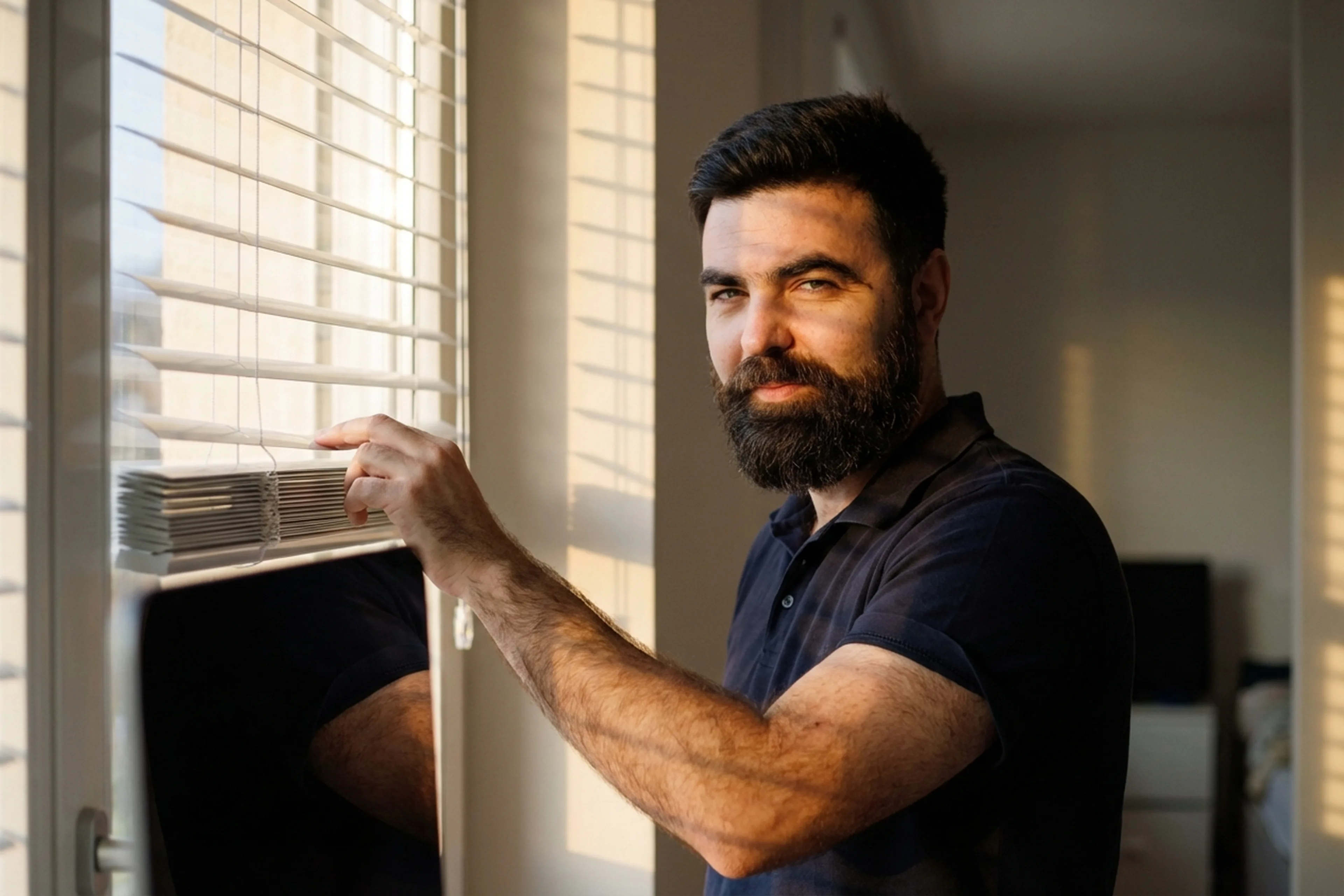
The installation is done by technicians who know window systems from practice. Tradespeople fit all kinds of blinds: horizontal aluminium and wooden venetian blinds, vertical fabric blinds and pleated blinds. Tradespeople understand the differences between mounting in shallow and deep recesses, and on different window profiles. Tradespeople work across all of Warsaw: from Praga-Polnoc to Wlochy. You can expect level fitting, smooth operation of the tilt mechanism and a tidy finish. If anything catches or sits unevenly because of the fitting, the tradesperson puts it right.
Order in the app
Describe the job, add photos and the address. Tradespeople send their own prices and dates, and you pick one of the offers.
Open the app