Electric Stove Connection in Warsaw
Your new electric stove is standing in the middle of the kitchen, and there’s a cable coming out of the wall that looks a bit suspicious? Hooking up an electric stove is more than just plugging in a cord. A dedicated 32A circuit, the correct cable cross-section, connection through a terminal block, proper earthing, and RCD testing — that’s what a proper setup includes. If you’re moving in, changing from gas to electric, or have just bought a new cooker — get a professional in so the job is done safely. We cover all of Warsaw, from Wola to Praga Poludnie.
Important: an electric stove pulls 7 to 11 kW. That puts a heavy load on the wiring. A bad connection can cause the cable to heat up, trip the breaker, or in the worst case — start a fire. Don’t gamble with it — if you’re unsure what condition your wiring is in, call a specialist.
How much does it cost and what affects the price
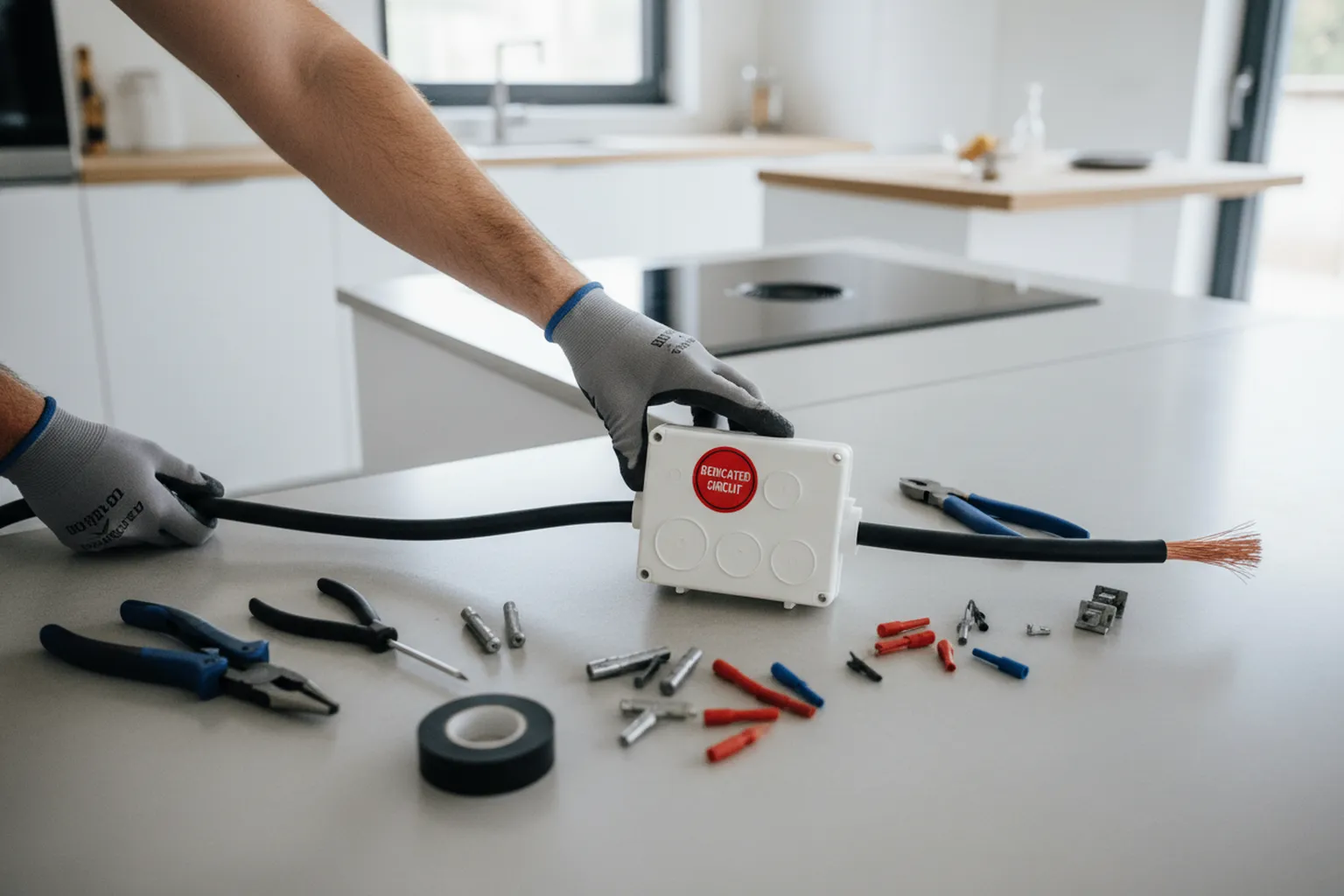
The price of connecting an electric stove depends on a few things. Is there already a dedicated line from the consumer unit with a 32A breaker? What cable cross-section is there — 4 mm² or 6 mm²? Is it a single-phase or three-phase connection? Does the socket need to be replaced, or will the stove be connected straight into a terminal block? If the line is already there and the breaker is installed, the work takes around an hour. If a new cable has to be run from the consumer unit, the job takes longer and the cost goes up. Basic fixings are included in the service price; materials (cable, breaker, RCD) are billed separately. You can find current prices in the table below.
| Service | min | max |
|---|---|---|
| Electric stove connection | 200 zł | 350 zł |
How the on-site work goes
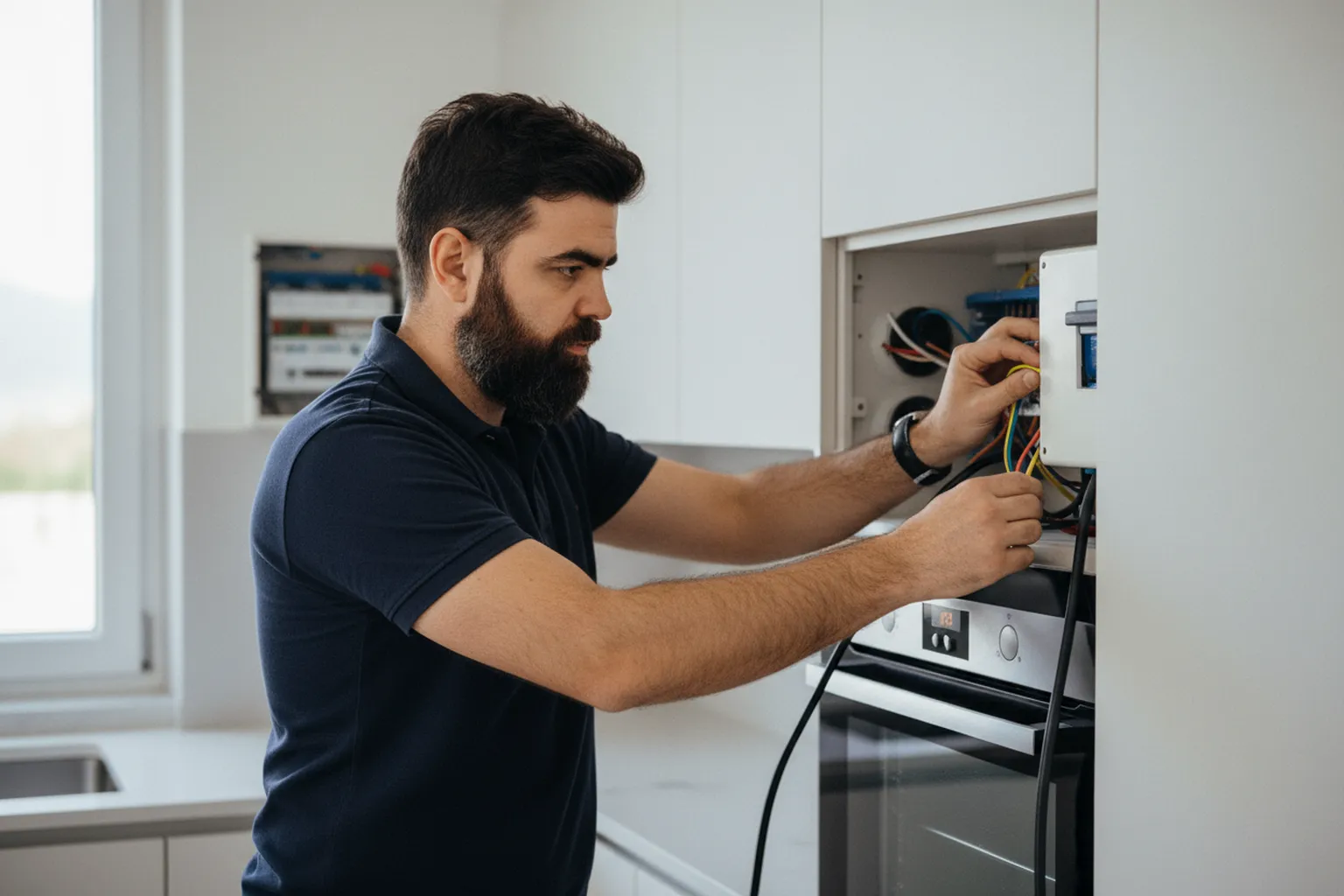
- You send a photo of the stove, the consumer unit, and the connection point — the technician checks the scope of work and gives you an estimated price.
- On site, the technician checks whether there is a dedicated circuit, the cable cross-section (minimum 4 mm² for single-phase, 2.5 mm² for three-phase), a 32A breaker, and a 30 mA RCD.
- If the line is ready, the technician removes the rear panel of the stove and connects the wires to the terminal block according to the manufacturer’s diagram (L, N, PE). The single-phase arrangement is different from the three-phase one — the jumpers are set differently.
- Checks the earthing — without it, the stove casing can become live. That is especially dangerous on a wet floor.
- Levels the stove with the adjustable feet — if it stands unevenly, the hobs heat unevenly and the oven can work badly.
- Turns on each hob and the oven, then checks heating, thermostat operation, and indicator lights.
- Makes sure the breaker does not trip under load, the cable does not get too hot, and the RCD trips correctly.
Common mistakes when connecting an electric stove (and how to avoid them)
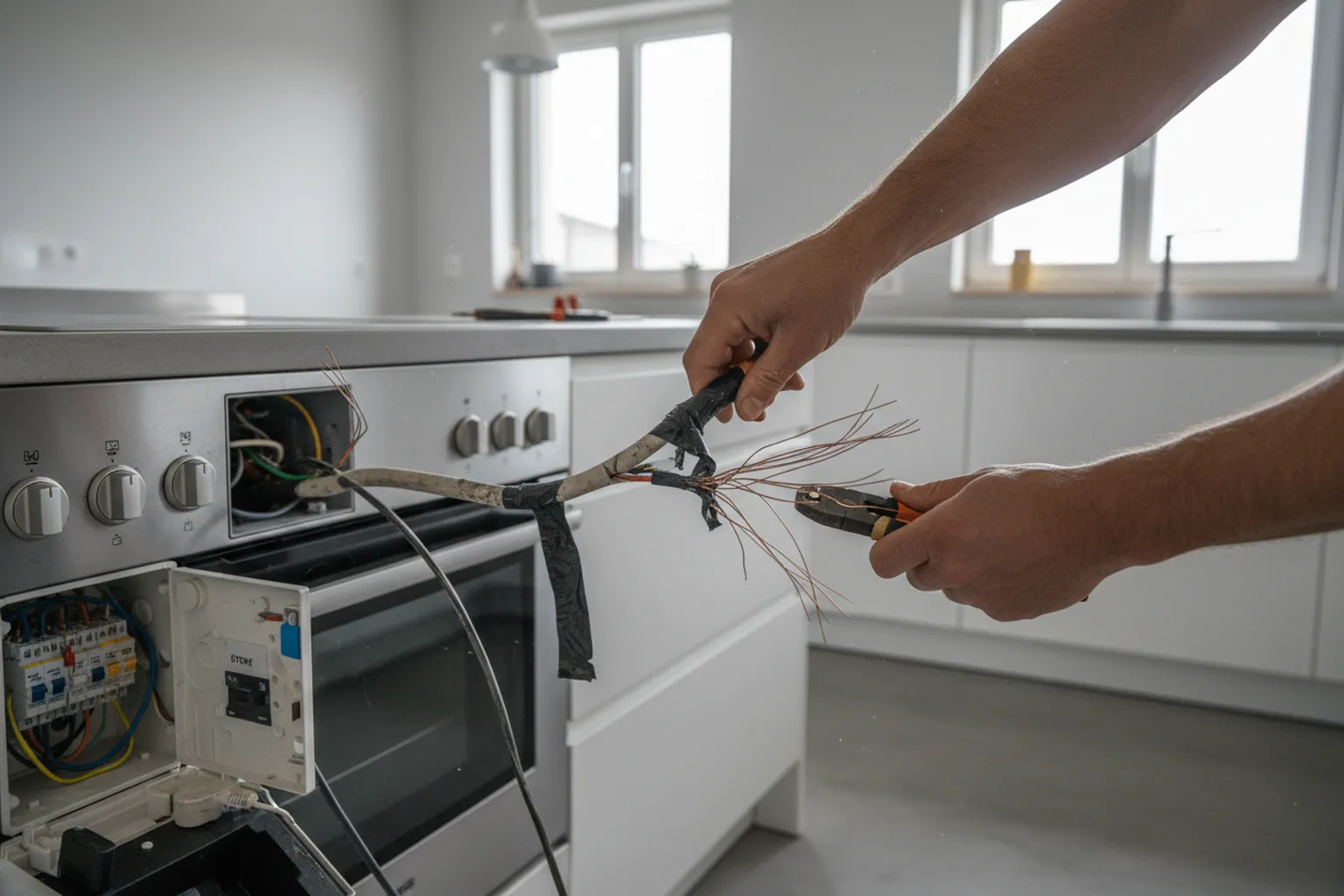
- Plugging the stove into a standard 16A socket — that socket can handle a maximum of 3.5 kW, while the stove pulls up to 11 kW. The cable overheats and the socket starts to melt.
- Using 1.5 mm² or 2.5 mm² cable instead of 4–6 mm² — the wire gets hot under load and the insulation breaks down over time.
- Skipping a dedicated breaker — the stove shares a circuit with the kitchen sockets, and once the oven is switched on, everything trips.
- Mixing up live, neutral, and earth on the terminal block — best case, the stove does not work; worst case, the casing gives you an electric shock.
- Leaving out an RCD — if the insulation fails, there is no protection against electrocution.
- Setting the terminal-block jumpers the wrong way — for example, wiring a three-phase layout on a single-phase supply or the other way around. The hobs do not reach full power or they overheat.
- Not checking the earthing in the consumer unit — the PE wire is present but not connected to anything. The safety system is useless.
- Not levelling the stove — pots slide on the hob and the oven door does not shut properly.
What to prepare before the technician arrives
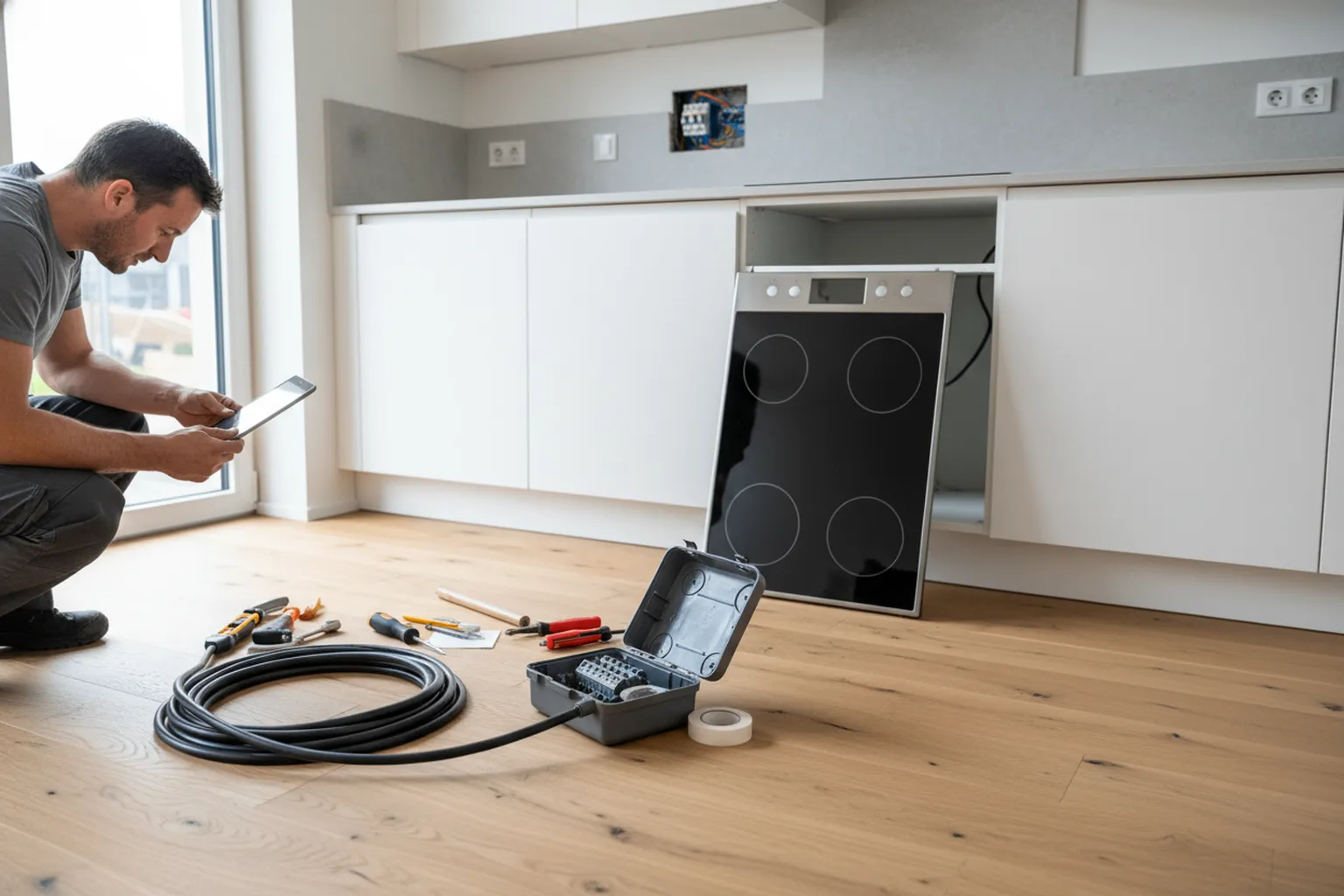
- Take a photo of the consumer unit — the technician can check in advance whether there is room for a breaker and what the wiring layout looks like.
- Check whether there is a dedicated cable for the stove (usually coming out of the wall behind the cooker) — and tell the technician.
- Find out whether your supply is single-phase or three-phase — this changes the wiring diagram. Most flats are single-phase (230 V); some new builds are three-phase (400 V).
- Clear the area for the stove and make sure there is access to the wall and the consumer unit.
- Unpack the stove and remove the transport fixings (listed in the manual).
- Keep the stove manual ready — it has the terminal-block wiring diagram and cable requirements.
- If you are replacing a gas stove with an electric one — make sure the gas is shut off and capped. Tell the technician beforehand.
- Provide the intercom code, floor number, and parking details.
- If the flat is under renovation — let the technician know so the surfaces can be protected.
A real case from Warsaw
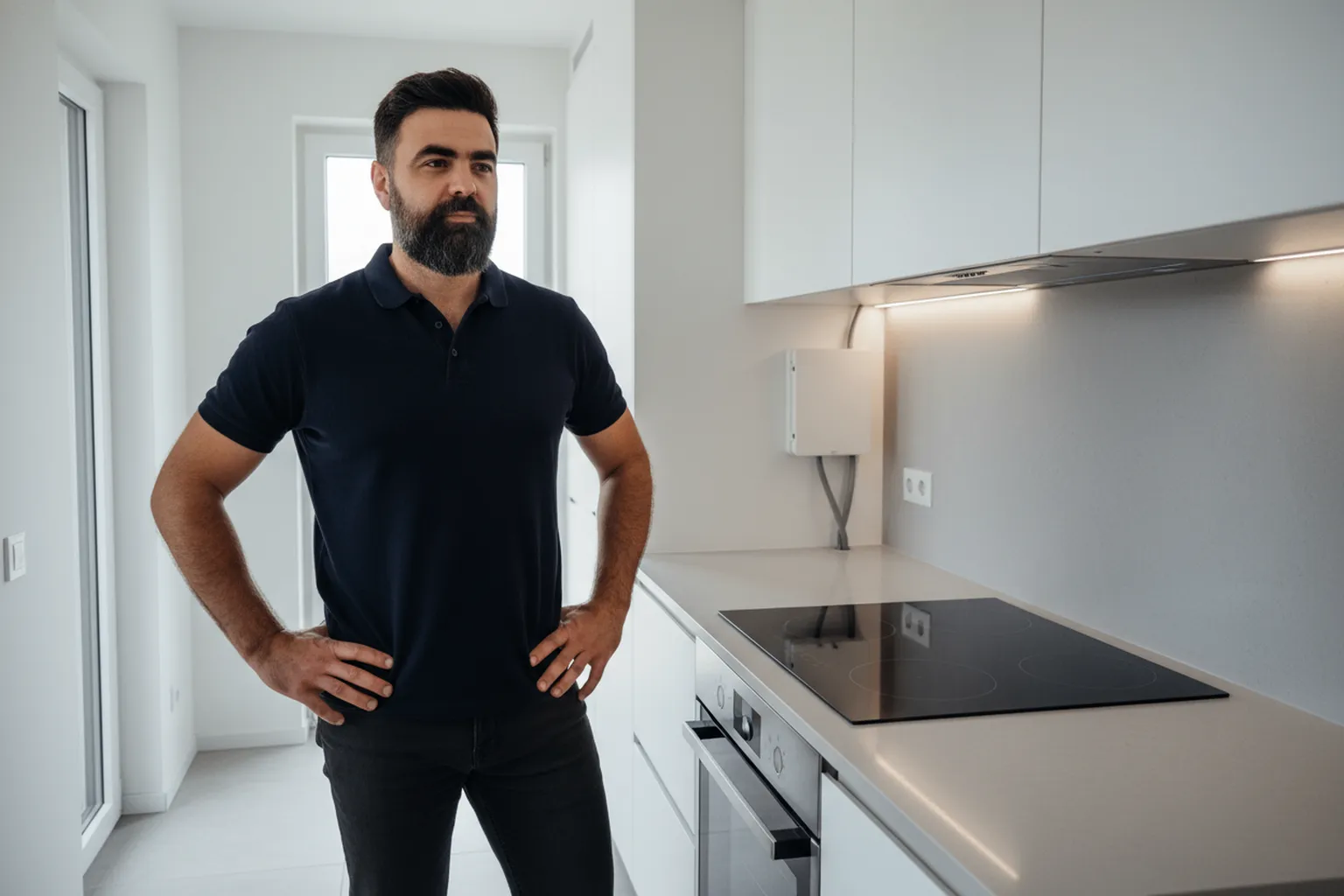
A client in the Bemowo district bought a freestanding Beko electric stove with four ceramic hobs and an oven. The flat was in a 1990s block and had previously used a gas cooker. An old three-core 2.5 mm² cable was coming out of the wall — not enough for a 9.5 kW electric stove. The breaker in the consumer unit was shared by the whole kitchen — 16A. The technician ran a new 3×6 mm² cable from the consumer unit to the installation point, installed a dedicated 32A breaker and a 30 mA RCD. The stove was connected through the terminal block in the single-phase layout — jumpers set according to the manufacturer’s diagram. He levelled the stove and tested every hob and the oven. Under load, the cable stayed cool and the breaker held. The whole job took about three hours — most of that time went into running the cable. Bottom line: if the flat previously had a gas cooker, a new dedicated line is almost always required — the old wiring is not designed for that load (compatible with Bosch, Vaillant, Junkers and similar).
Frequently asked questions
Can I connect an electric stove myself?
In theory yes, if there is already a dedicated line and you know your way around electrics. But one wiring mistake means a fire risk and a risk of electric shock. If you have no hands-on experience, it is better to call a professional.
Is a dedicated circuit mandatory?
Yes. An electric stove draws 7–11 kW. A standard 16A socket circuit will not carry that load. You need a separate cable from the consumer unit with a 32A breaker.
What cable is needed for an electric stove?
For a single-phase connection — 3×6 mm² (or at least 3×4 mm² if the run is under 10 m). For three-phase — 5×2.5 mm². The exact cross-section depends on the stove’s power rating and the cable length.
Can I use a standard socket?
No. A standard 16A socket is rated for a maximum of 3.5 kW. An electric stove is connected either through a 32A power socket or directly through a terminal block — the second option is more dependable.
What is the difference between single-phase and three-phase?
With a single-phase supply (230 V), there are three wires (live, neutral, earth) and the load goes through one conductor. With a three-phase supply (400 V), there are five wires and the load is spread evenly. Three-phase allows a thinner cable, but it needs a suitable consumer unit.
Is an RCD needed for an electric stove?
Yes. A 30 mA RCD protects against electrocution if the insulation fails. It is a safety requirement, not an extra.
How long does the connection take?
If the dedicated line is already in place — about an hour. If a cable has to be run from the consumer unit — two to four hours depending on the distance and the routing method.
Who does the work
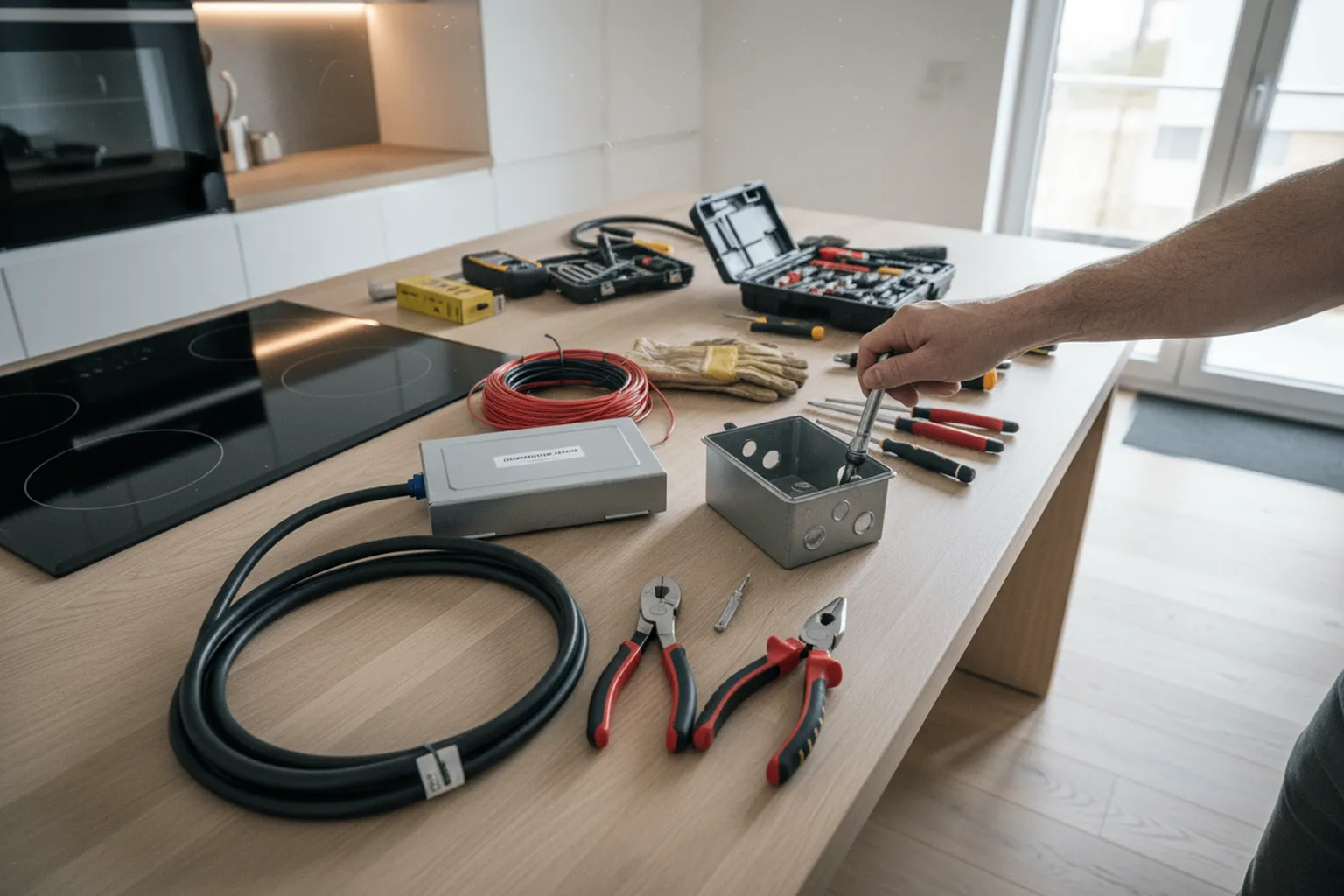
Electric stove connections are done by technicians with real experience in electrical installation — from flats in Zoliborz to new developments in Wilanow. We come with tools, a multimeter, and a basic set of consumables. If a cable, breaker, or RCD is needed, we talk it through first and bring it with us. To book, call or message us — we reply within an hour.