Electrical socket installation: cost and what affects it
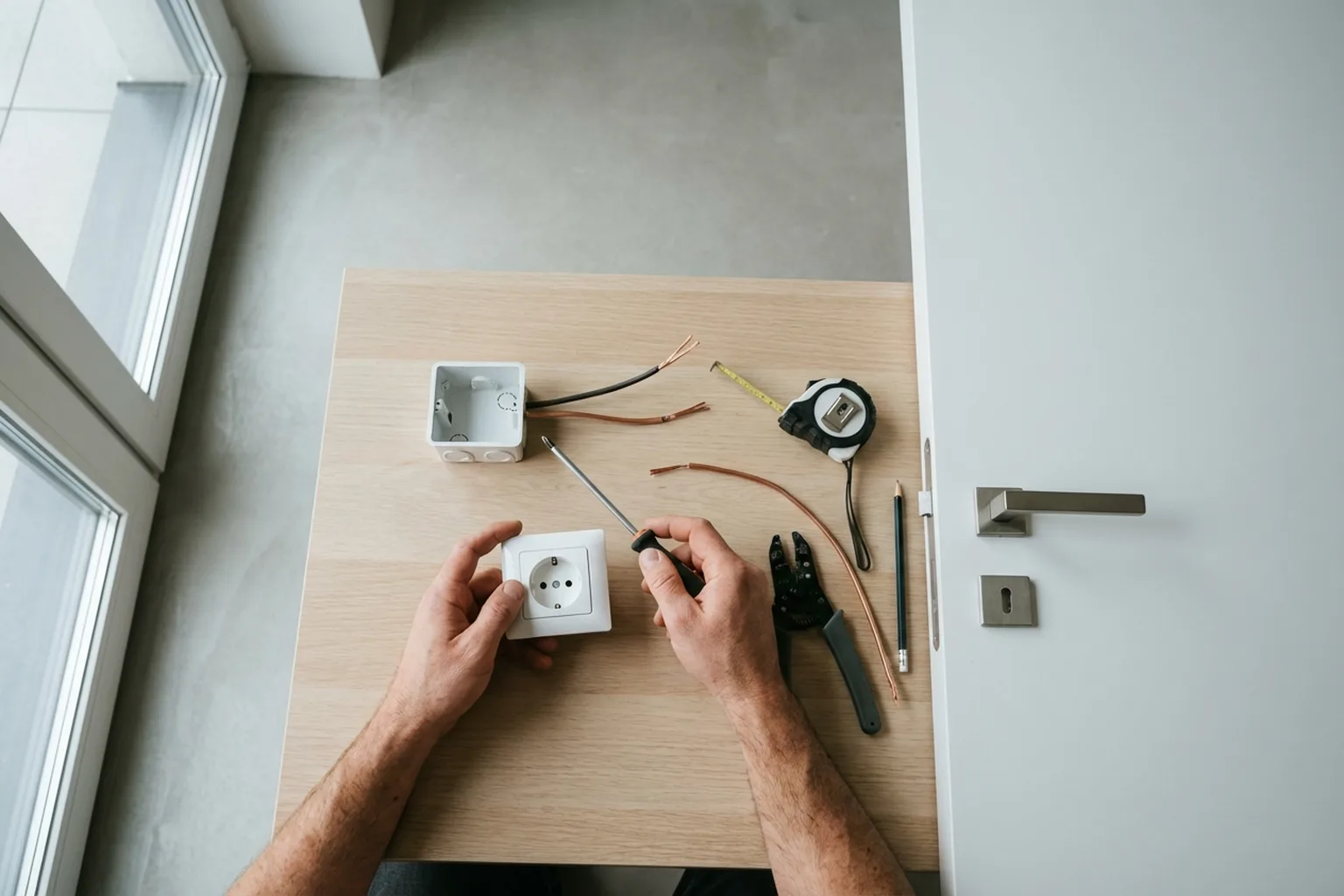
The price depends on the type of installation (surface or flush mount), whether the wall has to be chased, if new cable needs to be run, and how far the point is from the consumer unit. A straightforward back-box replacement and socket install is fast. A complete installation from the board, with cable routing, wall chasing and patching, takes more time. Up-to-date rates for all electrical work are shown in the table below. The socket and back box are provided by the client; fixings are included.
| Service | Price |
|---|---|
| Light switch installation | 50–90 zł/pkt |
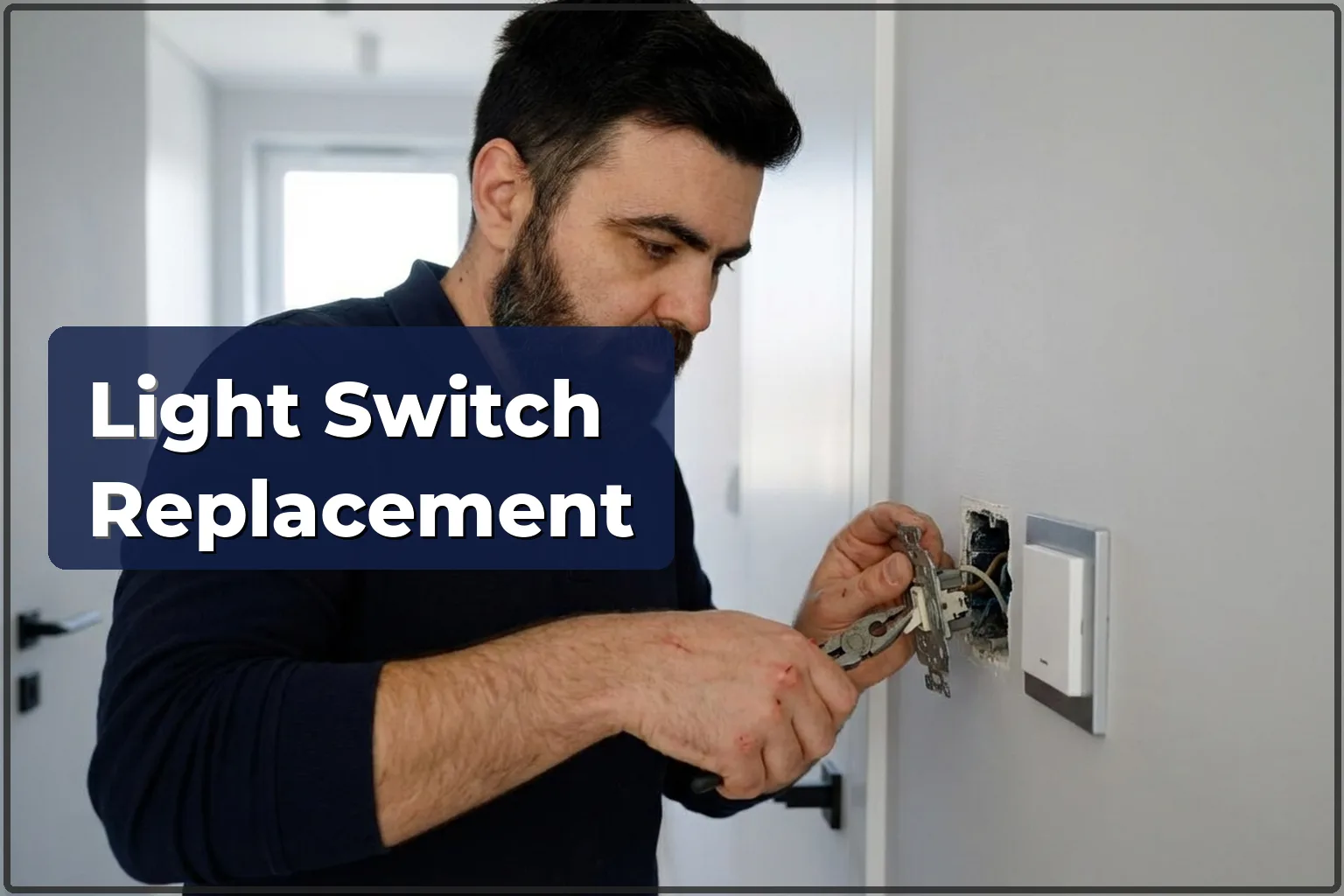
| Light switch replacement | 60–90 zł/pkt |
| Light switch repair | 150–350 zł/szt |
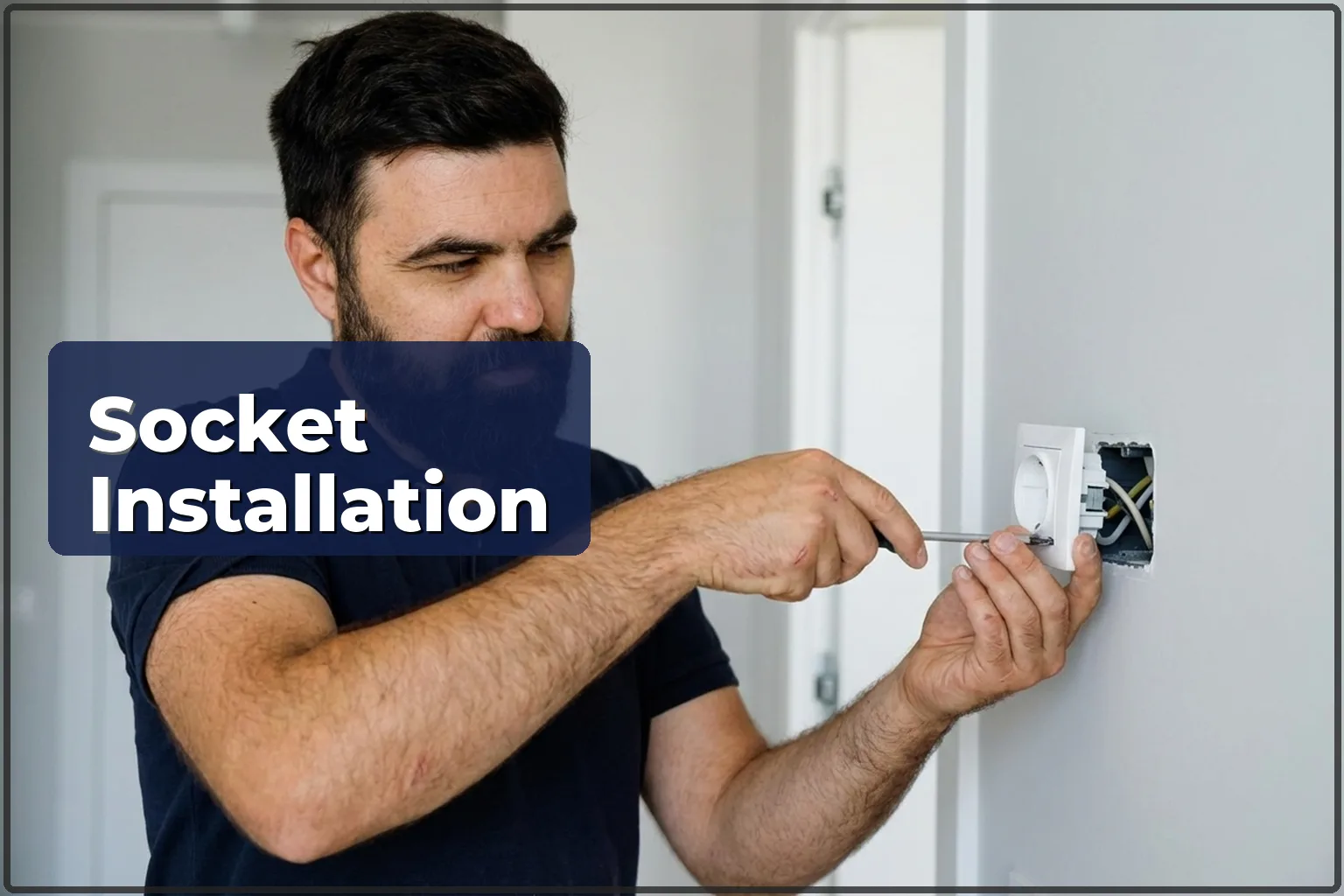
| Socket installation | 30–90 zł/pkt |
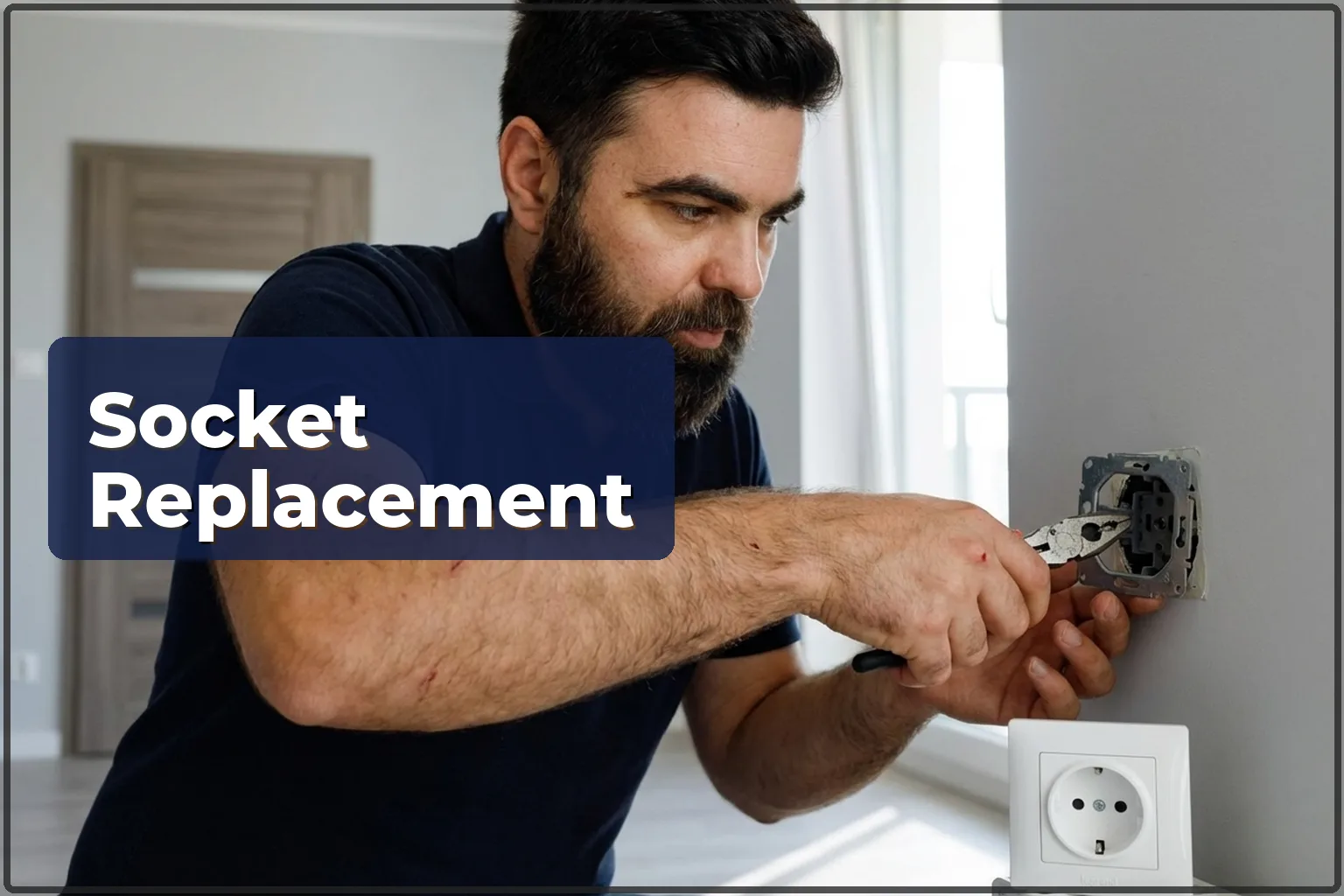
| Socket replacement | 50–90 zł/pkt |
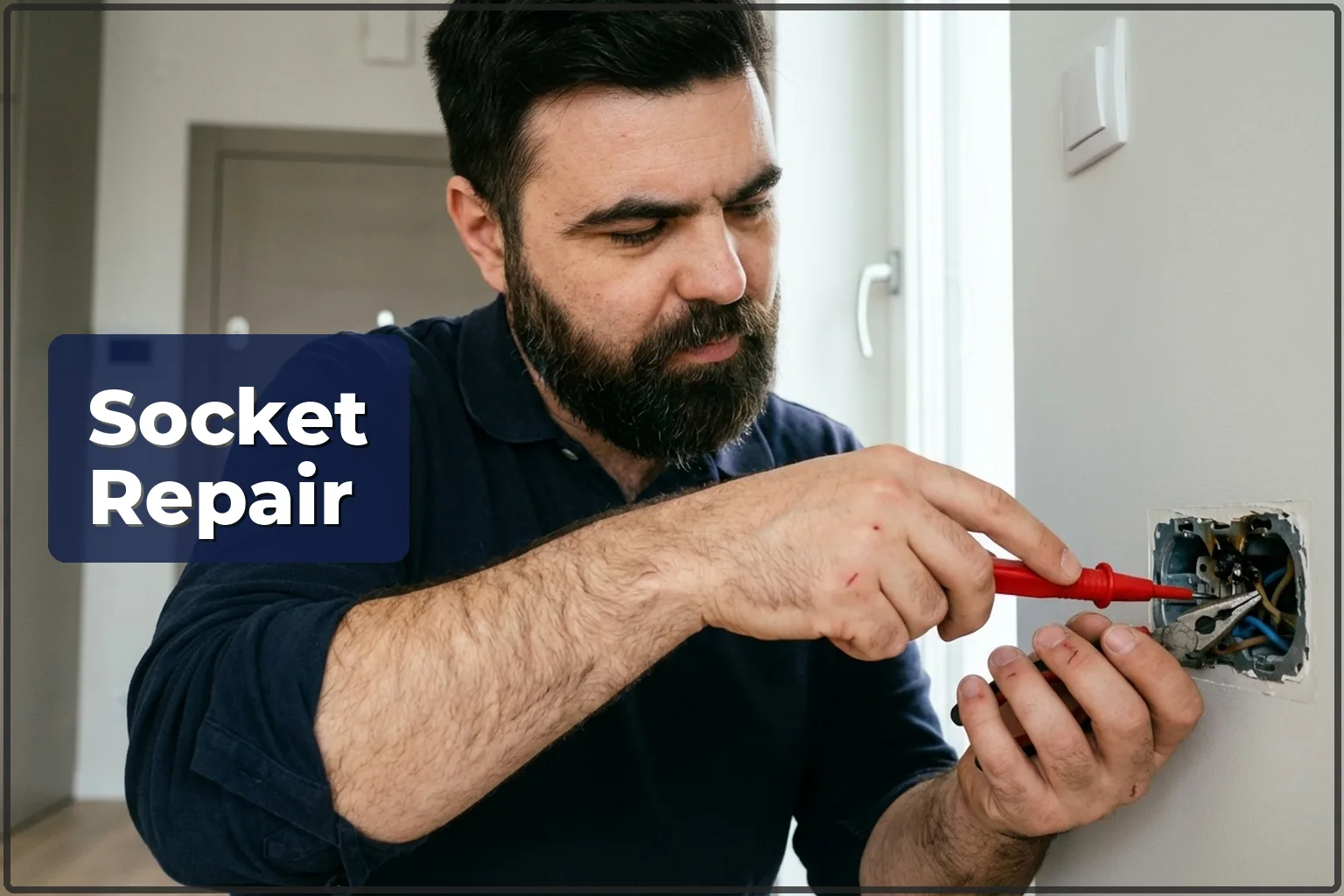
| Socket repair | 60–250 zł/szt |
| New electrical point | 150–250 zł/pkt |
| Wall chasing for cables | 40–80 zł/mb |
| Running electrical cables | 15–50 zł/mb |
| Junction box wiring | 80–400 zł/szt |
| Light installation (lamp, chandelier) | 80–550 zł/pkt |
| Light fixture replacement | 150–450 zł/szt |
| Lighting repair | 120–350 zł |
| LED strip installation | 60–90 zł/mb |
| LED transformer installation | 150–220 zł/szt |
| Bulb and halogen replacement | 30–50 zł/szt |
| Power socket installation 230/400 V | 150–350 zł/pkt |
Indicative prices. Ranges for a typical scope. Fixings included, materials separate. Minimum order 300 zł.
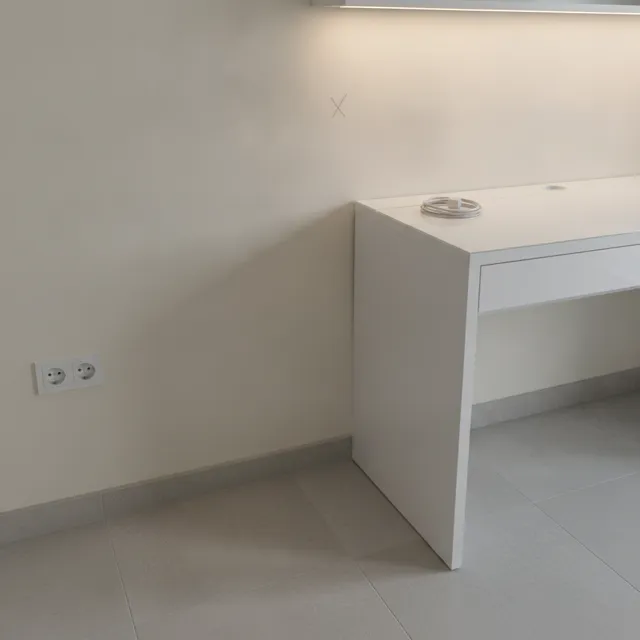
Rather hand the job over? More here: socket replacement in Warsaw.
Installation or replacement?
A new socket means a cable and a back box in a new place. If the socket is already there but gets hot, sparks or pulls out of the wall, book socket replacement.
Electrical socket installation: how the work goes
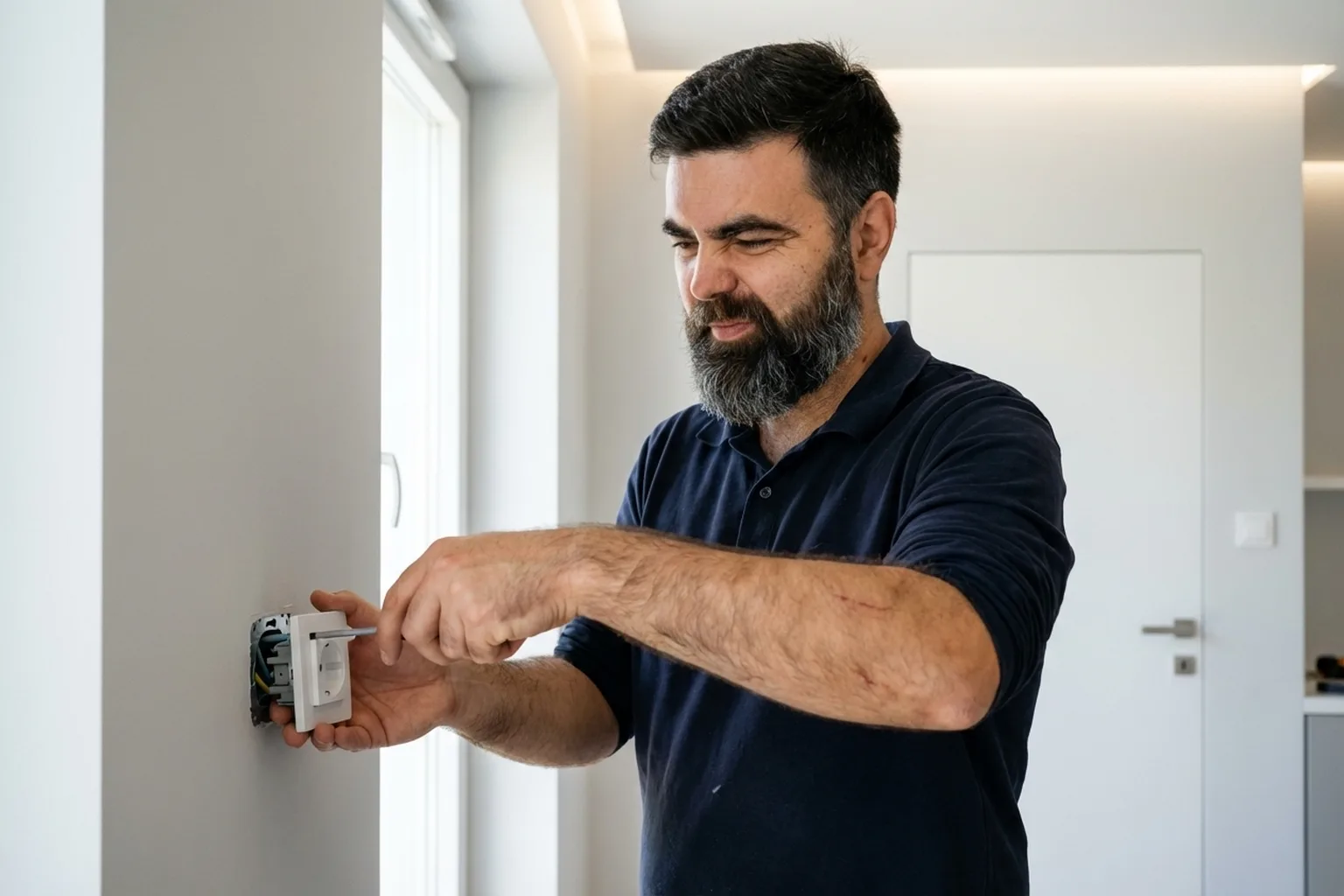
- Inspection: they choose the location, scan the wall for existing cables and check the load on the circuit.
- Isolating the supply: they turn off the relevant circuit at the board and confirm the line is dead with a voltage tester.
- Chasing (if needed): they cut a channel for the cable and a recess for the back box using a wall chaser or SDS drill with a core bit.
- Cable routing: they run a cable of the correct size (usually 2.5 mm² for domestic sockets) from the consumer unit or the nearest junction box.
- Fitting the back box: they bed it into the wall with plaster, making sure it sits level.
- Wiring: they strip the cables, connect live, neutral and earth to the socket mechanism, and make sure all terminals are secure.
- Testing: they power the circuit back on, check voltage with a multimeter and test the socket under load.
Common mistakes
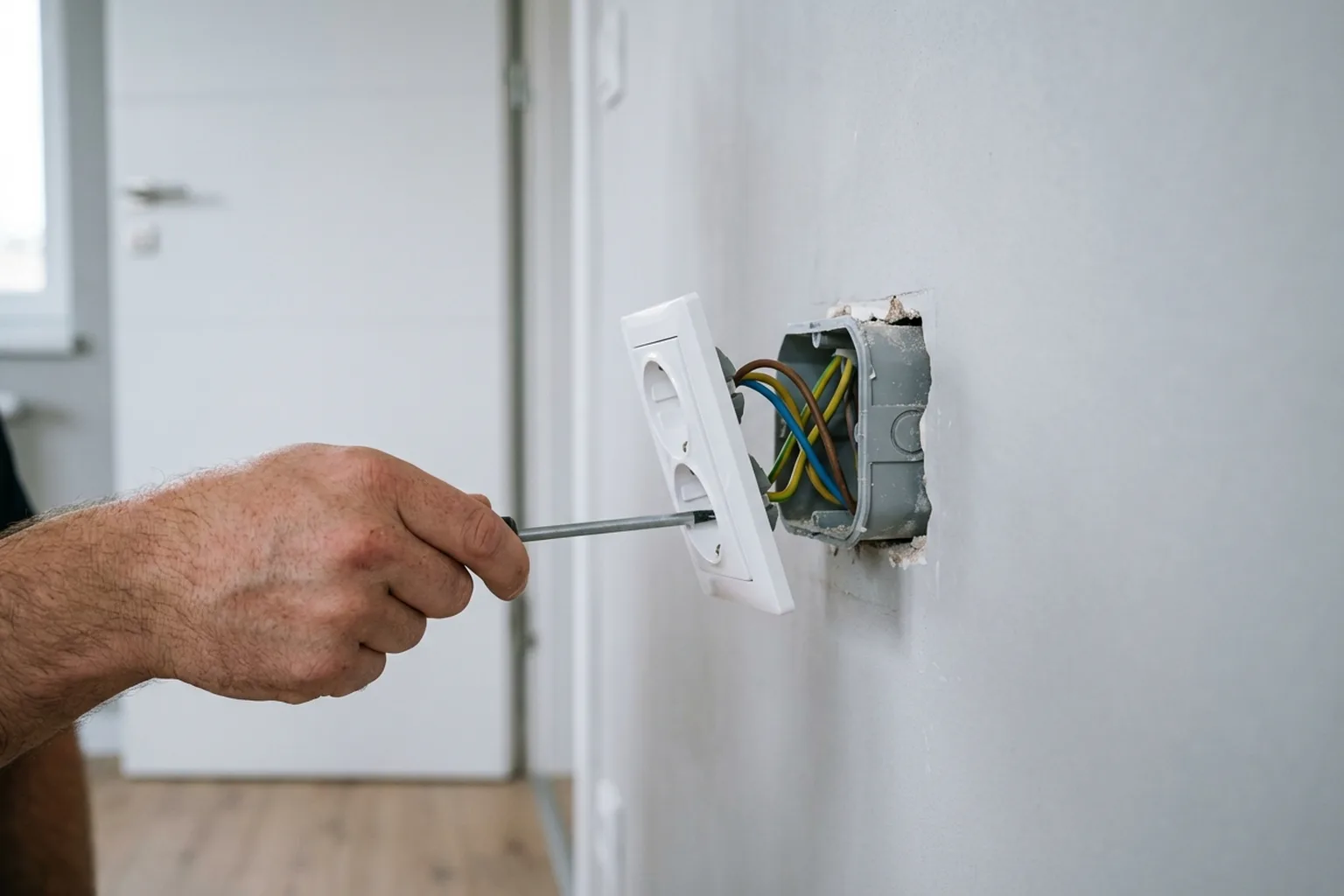
- Connecting to an undersized circuit: 1.5 mm² cable is not meant for high-draw appliances and may overheat.
- No earth connection — dangerous, especially in wet rooms.
- Chasing a load-bearing wall without permission, this can affect the structure and lead to problems with building management.
- Joining wires with twist connections instead of proper terminals, the connection works loose over time and heats up.
- Fitting a standard socket in a bathroom, a splash-proof unit with a cover (IP44 or above) is required.
- Not checking the circuit load — too many appliances on one circuit will trip the breaker.
- Plastering over the chase before testing: if the cable was damaged during chasing, the wall has to be opened up again.
Warning: electrical work can be life-threatening if done wrong. Bad connections may lead to short circuits, fires or electric shock. If you are not a qualified electrician, do not try to do it yourself.
What to prepare before the visit
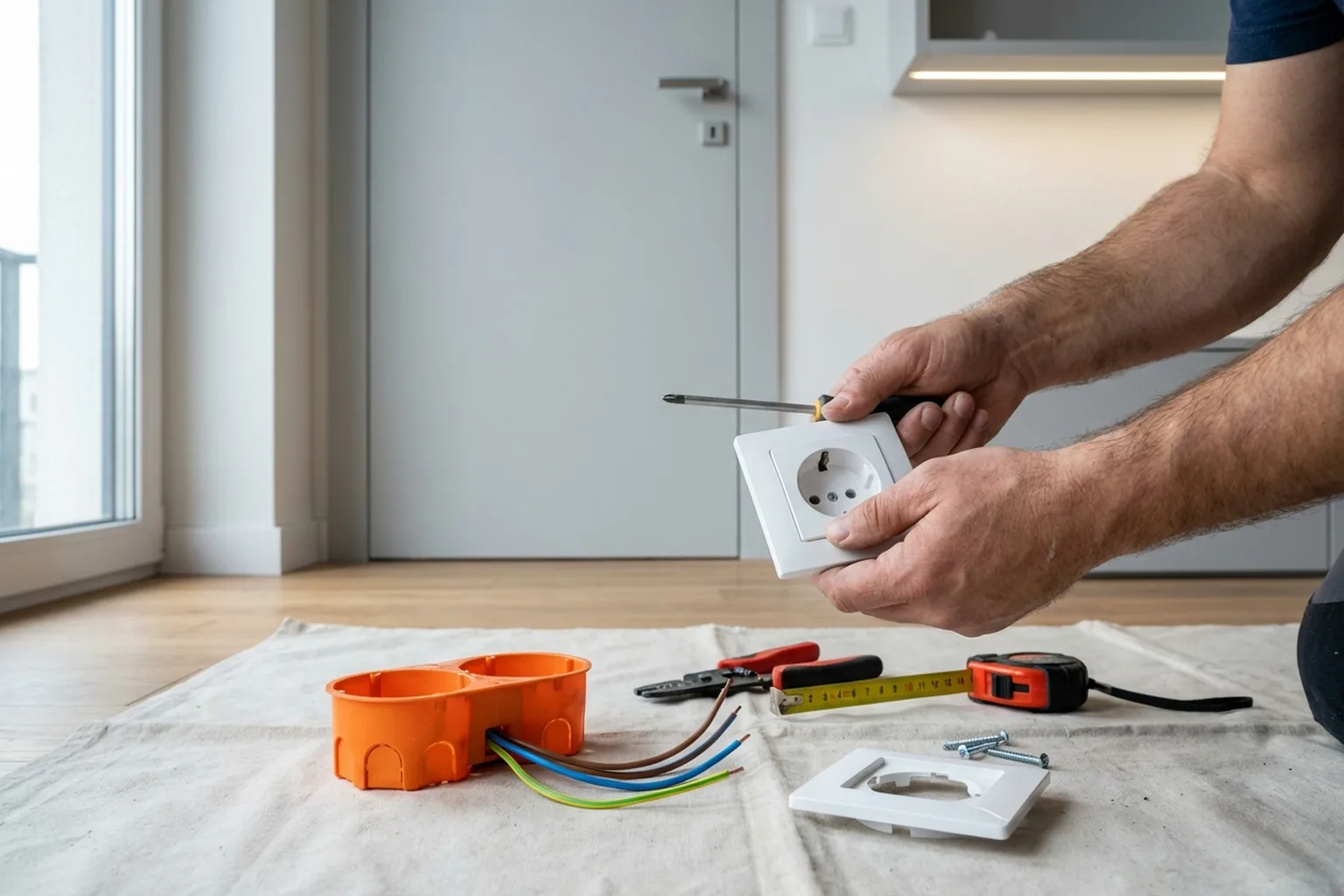
- Decide exactly where the socket is needed: at what height and on which wall.
- Buy the socket and back box (if you already know the range and colour) — or leave the choice to the technician.
- Check where the consumer unit is and whether there are spare breaker slots.
- If the socket is for a high-power appliance (air conditioner, boiler), mention it in advance, a dedicated circuit is required.
- Clear the wall area: move furniture, pictures and shelves at least a metre away.
- If the wall is tiled or has decorative plaster, say so in the order, chasing needs extra care.
- Make sure there is access to the consumer unit.
- Keep in mind: chasing makes dust — cover or move items within a 2–3 metre radius.
Electrical socket installation in practice: a Warsaw case
Tradespeople got a call to a flat on Mokotow. The owners had put an electric fireplace in the living room, but the nearest socket was 4 metres away, so they were powering it through an extension lead. The fireplace draws 2 kW and the extension was heating up. Tradespeople ran a dedicated 2.5 mm² cable from the consumer unit, chased the wall, installed a back box and fitted an earthed socket beside the fireplace. It was connected through a separate 16 A breaker. Tradespeople tested it under load: everything worked properly, the cable stayed cool and the breaker held. The chase was filled with plaster and the surface was made ready for painting. The whole job took about 3 hours.
Frequently asked questions
Can a socket be added without chasing?
Yes: surface-mounted in a cable trunking. It does not look as neat, but it is quicker and cheaper. Good for garages, utility rooms and temporary setups.
What cable size is needed?
For standard domestic sockets — 2.5 mm². For high-power appliances (cooker, boiler, air conditioner), 4 or 6 mm² on a dedicated circuit from the consumer unit.
Is permission needed to install a socket?
For a standard domestic socket: no. For major electrical modifications (new circuit, changes to the consumer unit) — it depends on the building rules.
How many sockets can go on one circuit?
That depends on cable size and the total load. A 2.5 mm² circuit with a 16 A breaker handles up to 3.5 kW combined. The technician will calculate it on site.
How long does installation take?
A simple installation into an existing back box: 30–40 minutes. With cable routing and chasing: 2–4 hours depending on distance.
Can a socket be installed in a bathroom?
Yes, but it must be splash-proof (IP44 or above), earthed, at least 60 cm from the bath or shower, and connected through an RCD (residual current device).
Book the installation
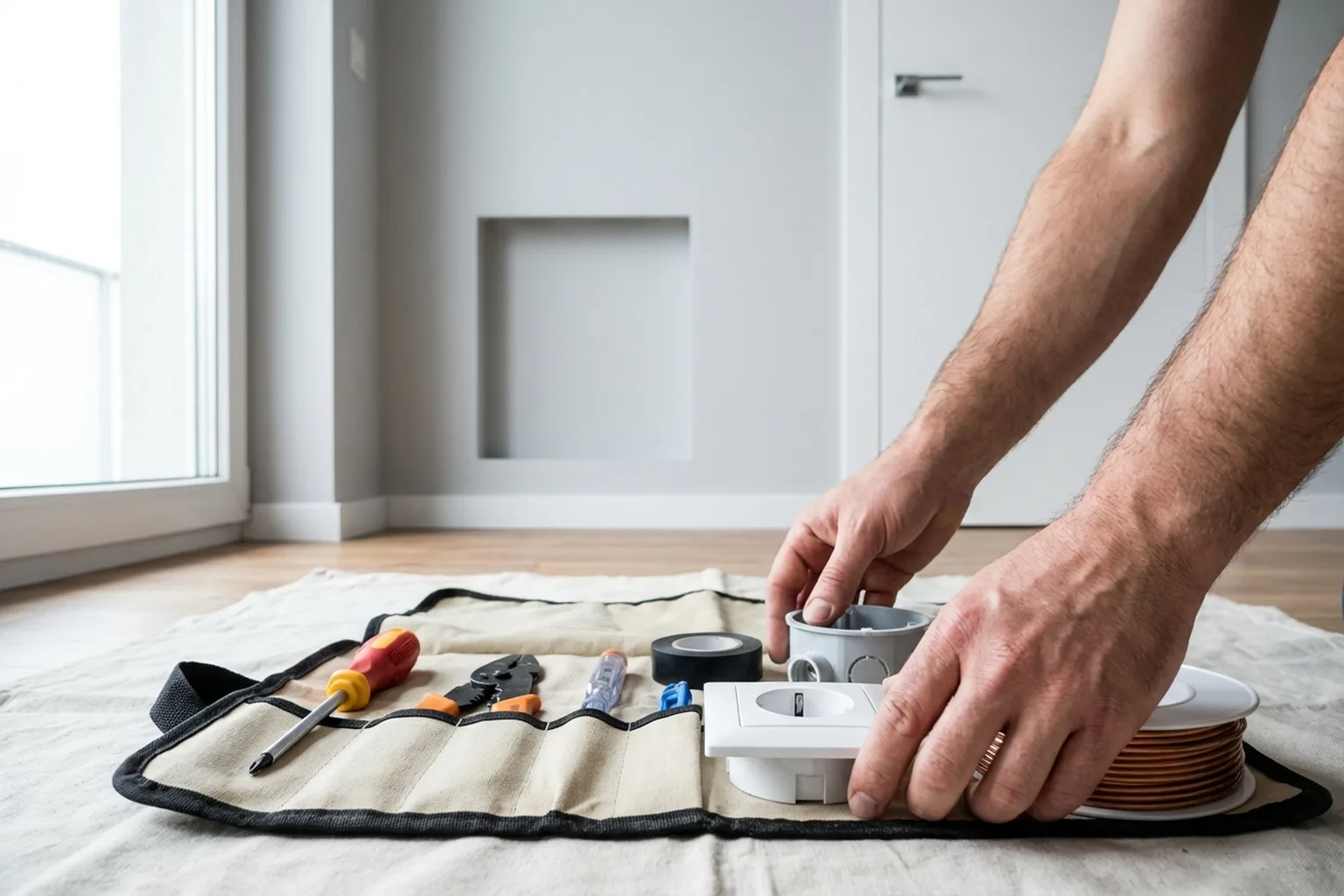
Tradespeople install sockets across Warsaw — flush and surface mount, domestic and heavy-duty, with earthing and protection. Tradespeople come with tools and supplies.
Order in the app
Describe the job, add photos and the address. Tradespeople send their own prices and dates, and you pick one of the offers.
Open the app