Leak and Motion Sensor Installation in Warsaw
You get back from holiday and find a small lake in your flat — the washing machine hose split during the night. Or you step into a dark stairwell, feeling around for the light switch. Both issues can be sorted in a couple of hours: a leak sensor under the sink and a motion sensor by the entrance. We fit both kinds all over Warsaw — from Wola to Ursynow. The job itself is simple, but the right placement and setup make all the difference, otherwise the sensor stays quiet when you need it most or keeps setting off false alarms all day.
How much does sensor installation cost
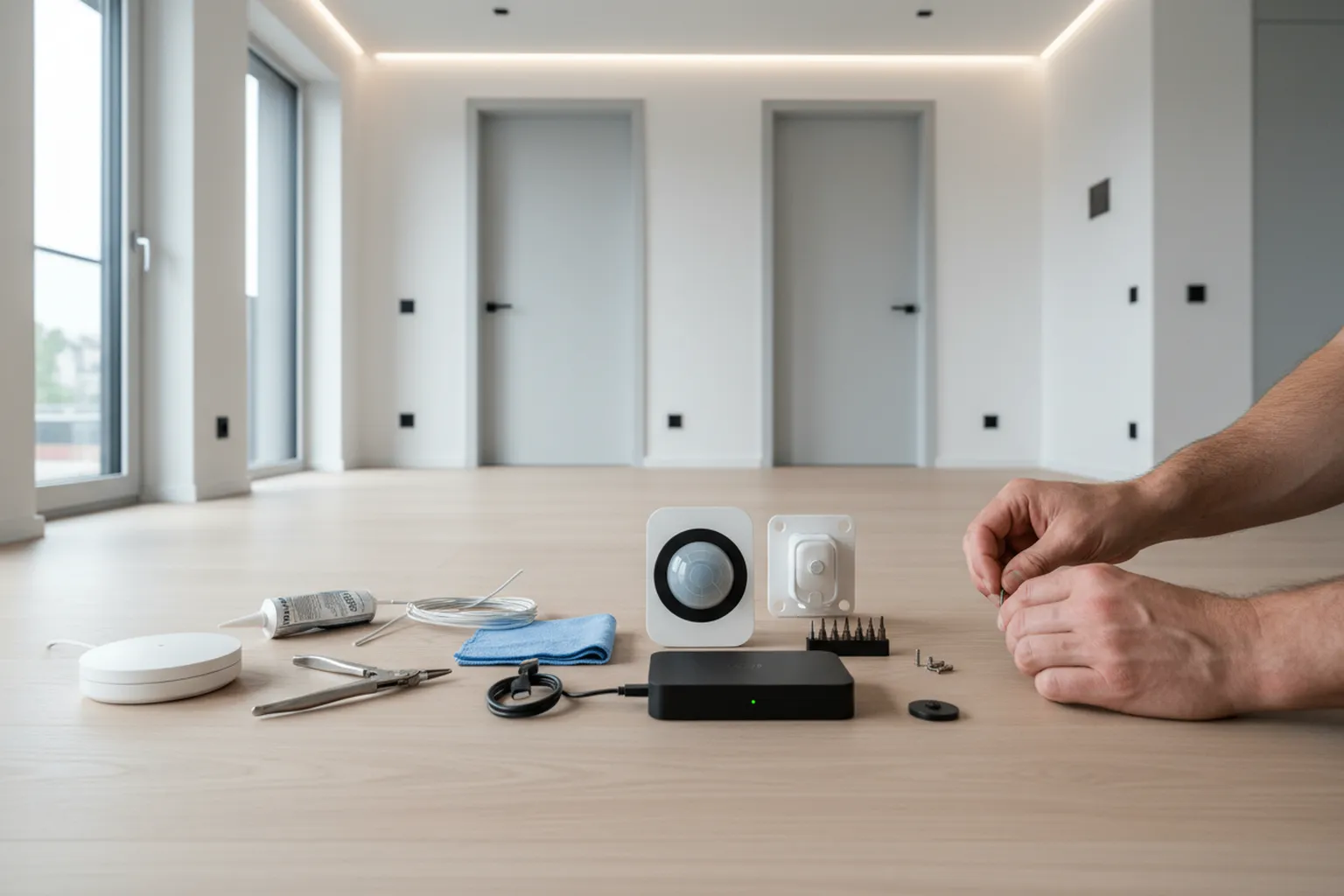
The price depends on the type of sensor (wired or wireless), how many installation points you need, and how tricky the cable routing is. Wireless WiFi sensors take 20-30 minutes each — they run on batteries and send alerts straight to your phone. Wired systems need to be connected to a controller and require cable runs — they take more time, but they are more dependable. Basic fixings are included in the service price; sensors and controllers are billed separately. You can see current prices in the table below.
| Service | min | max |
|---|---|---|
|
Leak sensor installation
Book this service → |
120 zł | 220 zł |
|
Motion sensor installation
Book this service → |
120 zł | 220 zł |
How the installation works
- You send photos of the areas where you want sensors — the technician works out the number of points and gives you a quote.
- We set a time — often for the same day or the next day.
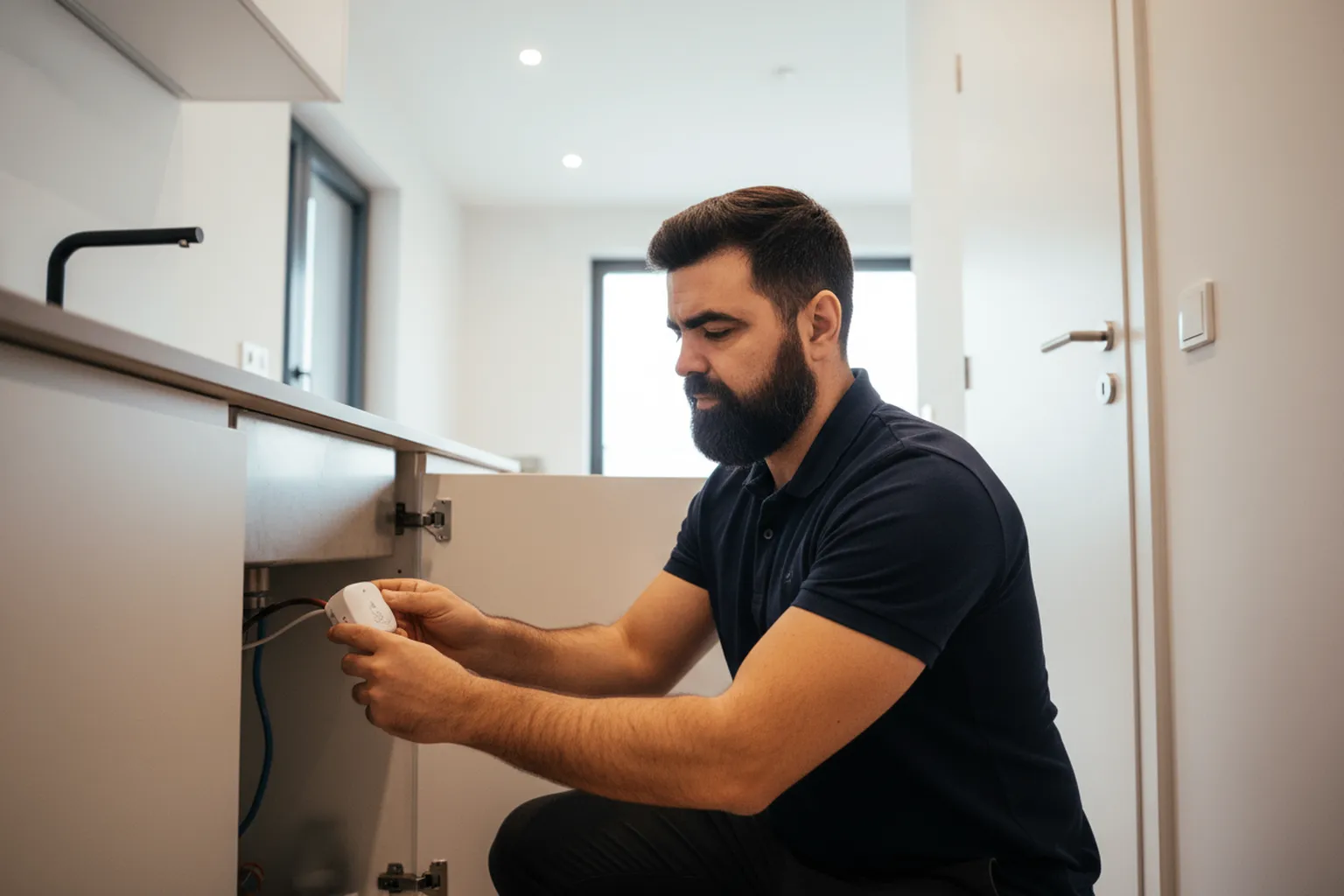
- On site, the technician checks the best locations: leak sensors go on the floor near the sink, washing machine, boiler, and radiator; motion sensors go by the entrance, in the stairwell, garage, or driveway.
- For wireless sensors: we fix them in place, connect them to WiFi, set phone notifications, and test the trigger.
- For wired sensors: we run cable from the sensor to the controller, connect everything according to the manufacturer’s diagram, and set the sensitivity.
- Motion sensors are adjusted for coverage area and viewing angle — so they respond to people, not your cat.
- We test each sensor: for leaks we drip water onto the probe; for motion we walk through the detection zone. We make sure the signal comes through.
Common mistakes when installing sensors
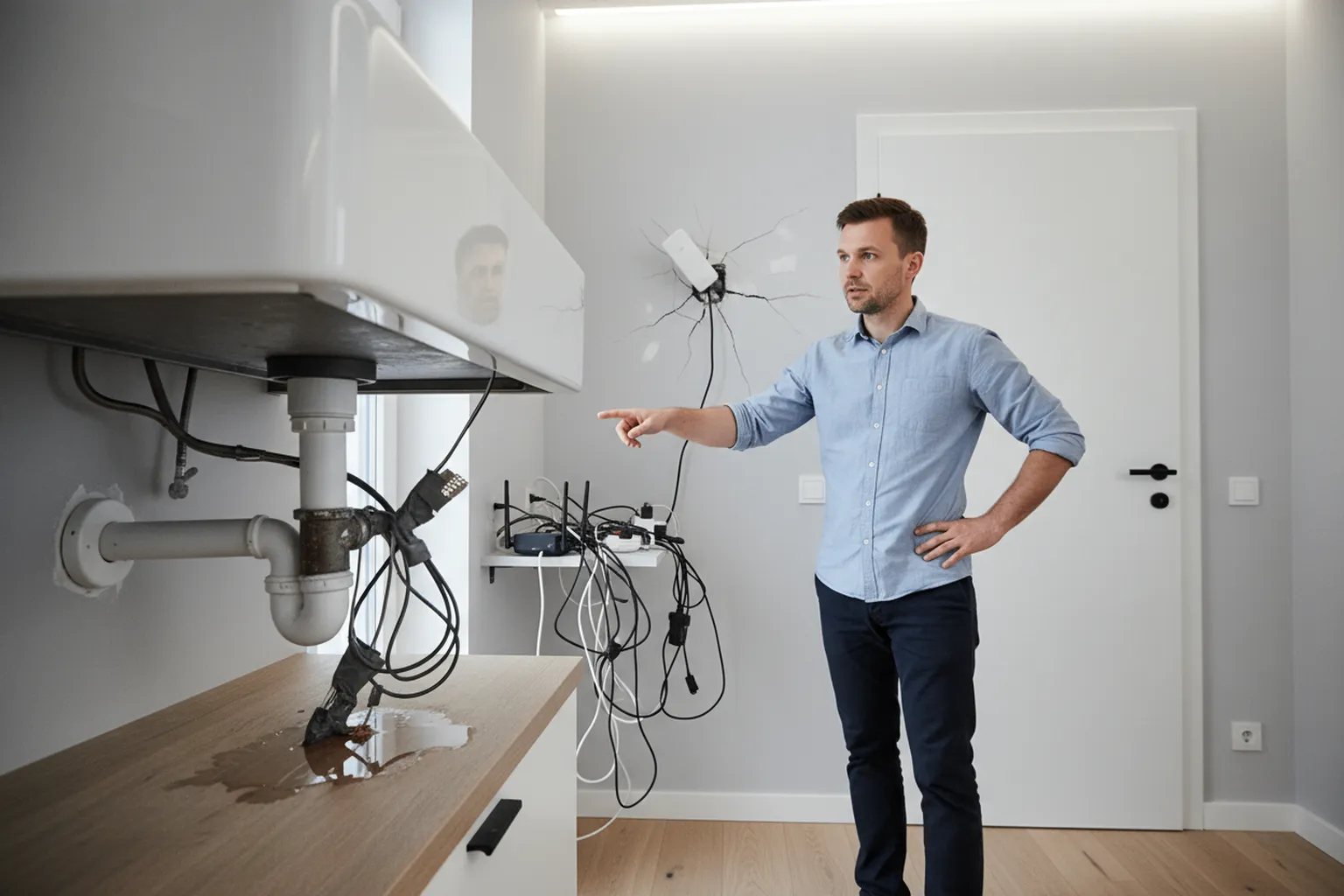
- Putting the leak sensor on a raised surface instead of the floor — by the time water reaches it, half the room may already be flooded.
- Installing the motion sensor opposite a window — it starts reacting to sunlight and moving branches.
- Skipping a WiFi signal check at the mounting spot — the sensor drops connection through the wall.
- Not changing the battery in time — the sensor dies quietly, and you find out only during a real leak.
- Mounting the motion sensor too high — the detection zone shifts upward and people pass underneath it.
- Ignoring pets — a motion sensor without pet immunity goes off every five minutes.
- Installing one leak sensor for the whole flat — you need at least one for each wet zone.
- Using cheap batteries — they run down three times faster and the sensor stops working in winter.
What to prepare before the technician arrives
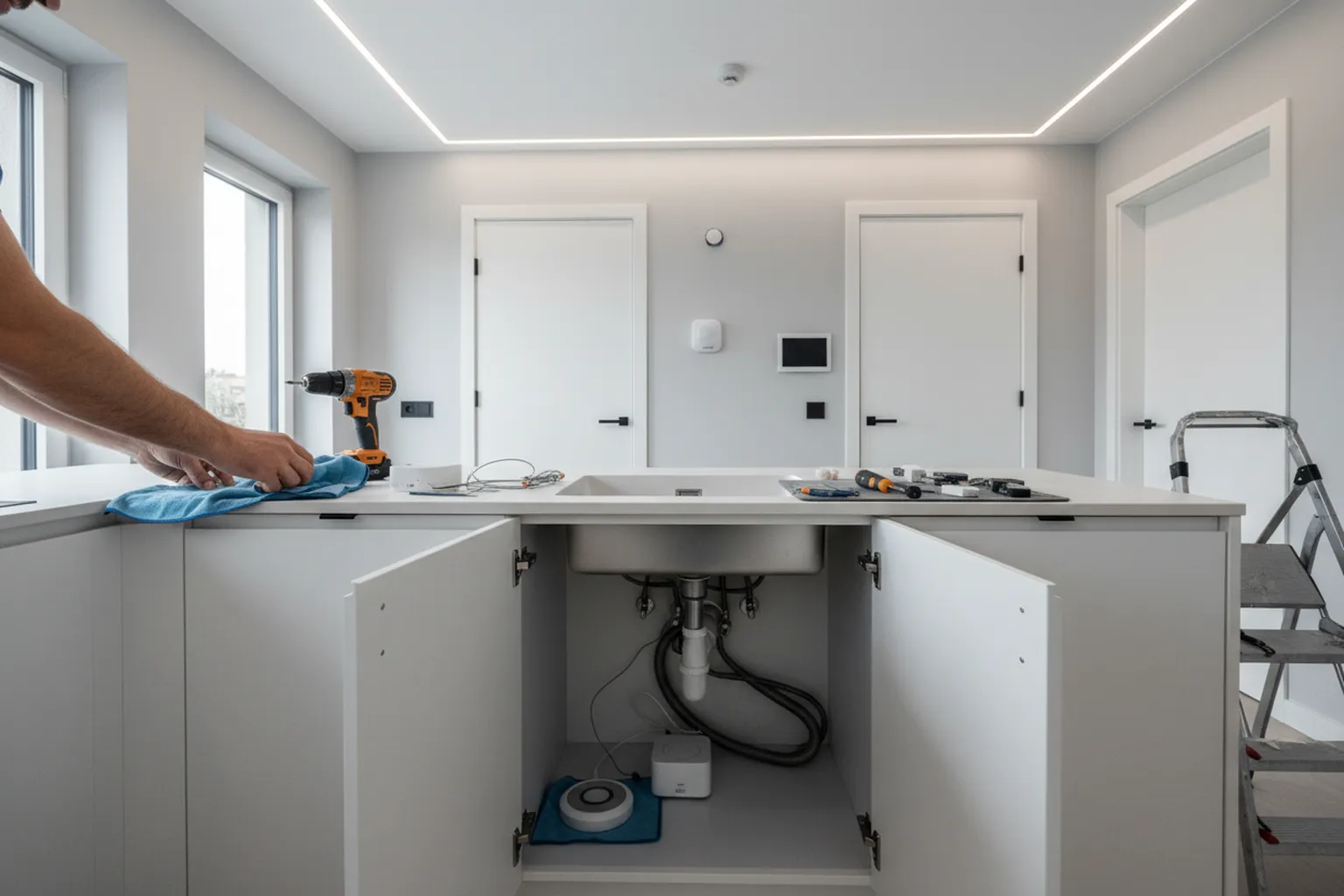
- Decide exactly where you want the leak sensors — under the sink, behind the washing machine, near the boiler, on the bathroom floor.
- Choose the motion sensor spots — entrance, stairwell landing, yard, garage.
- Buy the sensors in advance or ask the technician to suggest a model — discuss it over the phone.
- For WiFi sensors: check that your router signal reaches the installation point. If it does not, you will need a repeater.
- For wired systems: make sure there is access to the place where the controller will be installed (usually near the electrical panel).
- Clear the work areas — take things out from under the sink, pull the washing machine forward.
- Install the manufacturer’s app on your phone if you are using WiFi sensors — the technician will help you set it up.
- Check that there are power outlets near the controller location (for wired systems).
- If you want smart home integration (Tuya, Home Assistant) — tell the technician beforehand.
- Give building access details: intercom code, parking information.
A real case from Warsaw
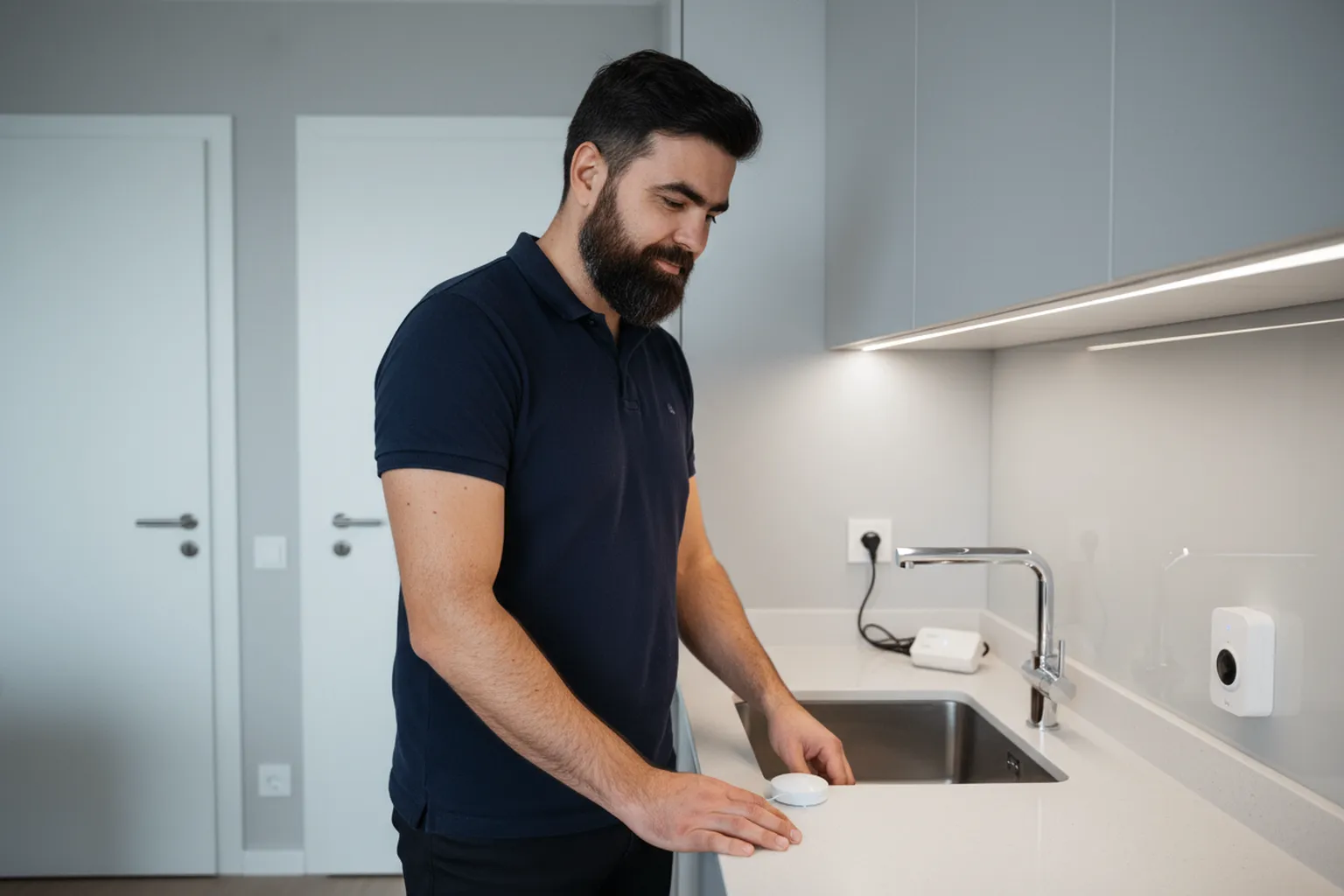
A flat owner in the Mokotow district asked us to install a leak protection system after the neighbour upstairs flooded his kitchen. We installed four wireless WiFi leak sensors: under the kitchen sink, behind the dishwasher, next to the washing machine in the bathroom, and beside the boiler. All sensors were connected to one app on his phone — when one is triggered, both a push notification and an audible alarm on the sensor itself go off. The client also ordered two motion sensors: one at the building entrance to switch on stairwell lighting, and one in the yard for parking area lighting. The motion sensors were adjusted so they would ignore the neighbourhood cats. The whole installation took about three hours. A month later the client sent us a message: the sensor under the sink had gone off — the siphon was leaking. It was caught early and there was no major damage. That is exactly the sort of case where a sensor pays for itself with one alert (compatible with Bosch, Vaillant, Junkers and similar).
Frequently asked questions
Which sensors are better — wired or wireless?
For a flat, wireless WiFi sensors are often enough. They are simpler to install and send notifications to your phone. Wired sensors are a better choice for large houses and commercial properties where WiFi may be unstable.
Do I need a solenoid valve on the pipe?
If you want full automation, yes. The sensor detects a leak and sends a command to the valve to shut off the water. But it adds to the cost and needs separate installation. A sensor with alerts is a solid start — you shut the water off by hand.
How often do sensor batteries need replacing?
On average every 1-2 years, depending on the manufacturer. Good sensors warn you about a low battery through the app. Use decent batteries — this is not where you want to save money.
Will the motion sensor trigger on pets?
If you pick a model with a Pet Immune function, no. These sensors ignore movement from objects weighing up to 20-25 kg. Ask about this option when choosing a model.
Can sensors be connected to a smart home system?
Yes. Most WiFi sensors work through Tuya, Zigbee, or Z-Wave and integrate with Home Assistant, Google Home, and Alexa. If you already have a system, tell the technician so matching sensors can be chosen.
What is included in the installation price?
Labour, fixings, configuration, testing, and travel within Warsaw. The sensors themselves, batteries, and controllers are charged separately. You can buy them on your own or ask the technician to supply them.
Does a leak sensor help with home insurance?
Yes, some insurance companies in Poland give a discount on the policy if a leak protection system is installed. Check with your insurer — we can issue an installation certificate.
How many sensors do I need for a flat?
At minimum: one under the kitchen sink, one in the bathroom, one near the washing machine. Best case, a separate sensor for every wet point. For motion: the entrance and one or two outdoor zones.
Who does the work
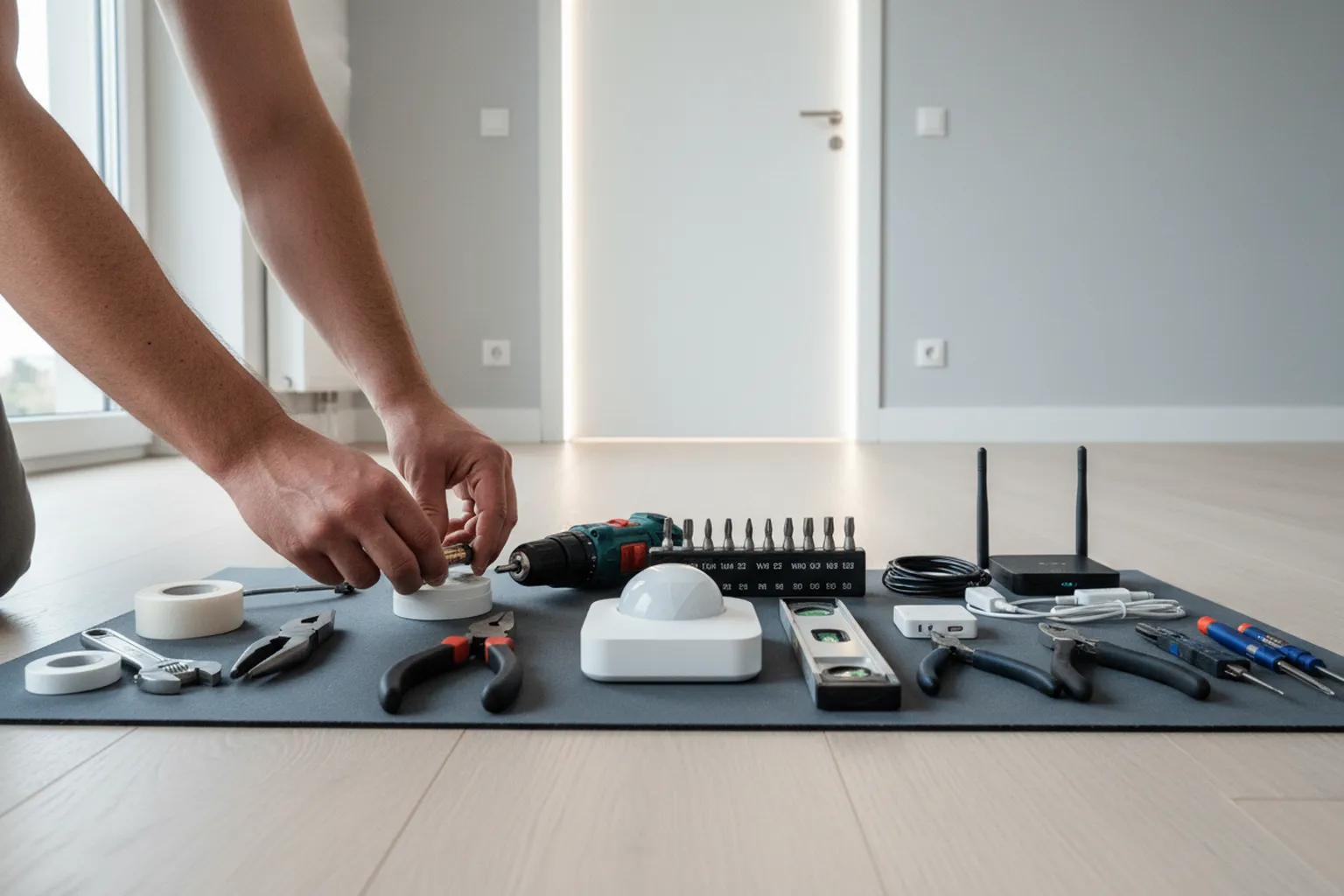
Sensor installation is done by technicians with hands-on experience in smart home and low-voltage systems. We work with WiFi, Zigbee, and wired sensors from all major manufacturers. We come with the tools, help you choose the right equipment, and configure the app. To book, call or message us — we answer within an hour.