Mosaic Tile Installation in the Bathroom in Warsaw
Mosaic is more than decoration — it is its own category of cladding, and it takes patience and accuracy. Small pieces of 2×2, 2.5×2.5 or 5×5 cm on mesh or paper are used for shower niches, bath panels, curved surfaces and countertops. Bisazza, Dunin, glass and stone mosaics — each one is fixed in its own way. We install mosaic all over Warsaw, from Ursynow to Targowek.
How much does it cost and what affects the price
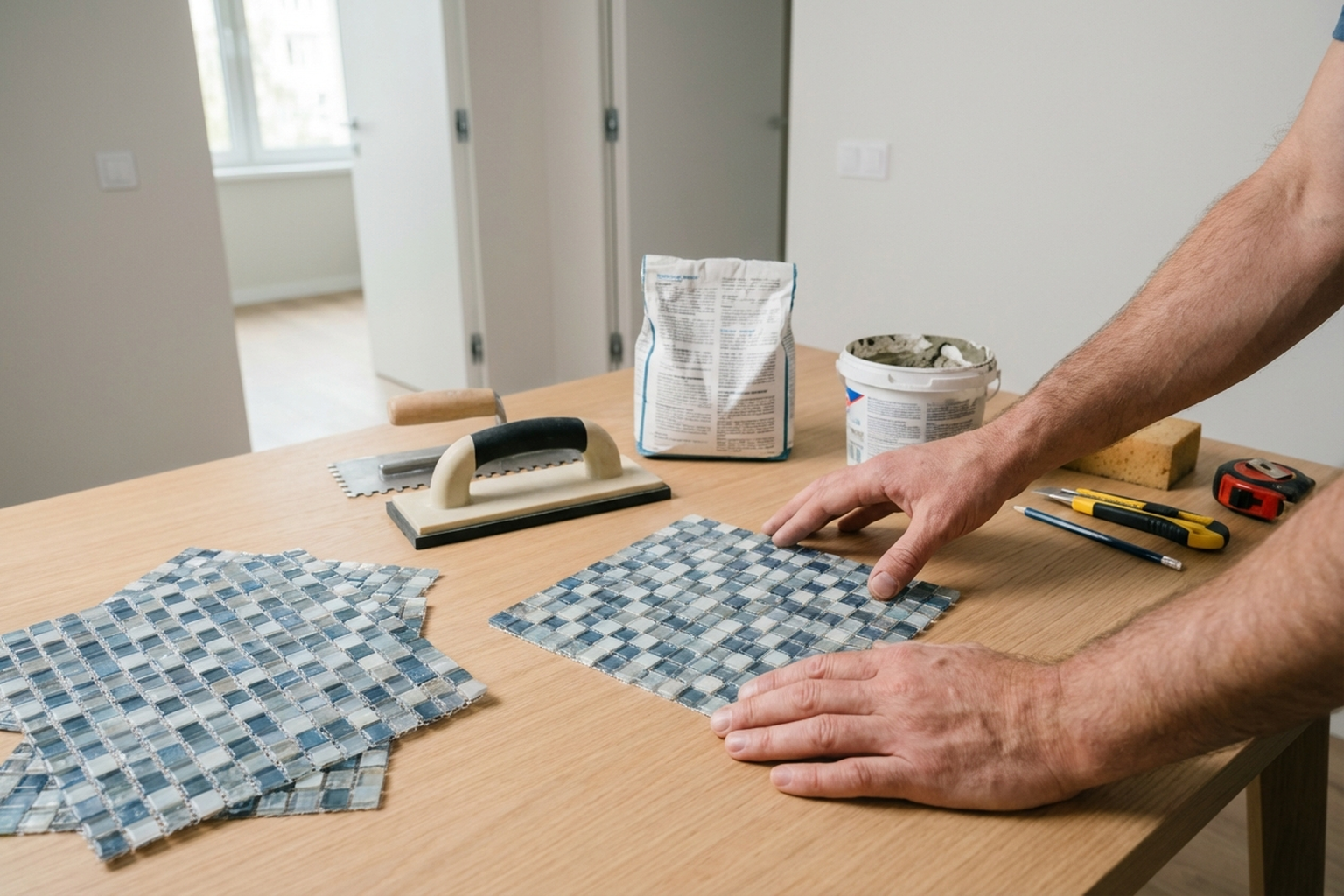
Mosaic fitting costs more than laying standard tiles — there are far more grout joints, more delicate cutting, and the base needs to be perfectly even. The final cost depends on the mosaic type (glass, ceramic, stone), the shape of the surface (flat wall, niche, curved section) and the grouting system (cementitious or epoxy). Materials are billed separately. You can see current prices in the table below.
| Service | min | max |
|---|---|---|
| Mosaic tile installation | 250 zł/m² | 450 zł/m² |
| Epoxy grouting | 40 zł/m² | 70 zł/m² |
| Epoxy grouting large format | 60 zł/m² | 90 zł/m² |
| Drain slope — mosaic | 300 zł/шт | 450 zł/шт |
| Shower base tiling — mosaic | 400 zł | 700 zł |
| Waterproofing under tiles | 30 zł/m² | 60 zł/m² |
How the work is done on site
- Inspection and measurement. Mosaic does not mask flaws — it brings out every wave and bump. We check the base with a straight edge: tolerance no more than 1 mm per metre.
- Surface preparation. Levelling with filler or plaster, then two coats of primer. In shower areas — waterproofing is required (Mapei Mapelastic, Ceresit CR 166).
- Dry layout and fitting. Mosaic sheets are set out dry to establish the pattern, direction and joint lines. Cutting is done with scissors on the mesh or a diamond disc for separate chips.
- Adhesive application. For glass mosaic — white adhesive (Mapei Kerabond T + Isolastic, Litokol K55). A 3-4 mm notched trowel — fine teeth so adhesive does not push into the joints. It is spread on the wall, not on the mosaic.
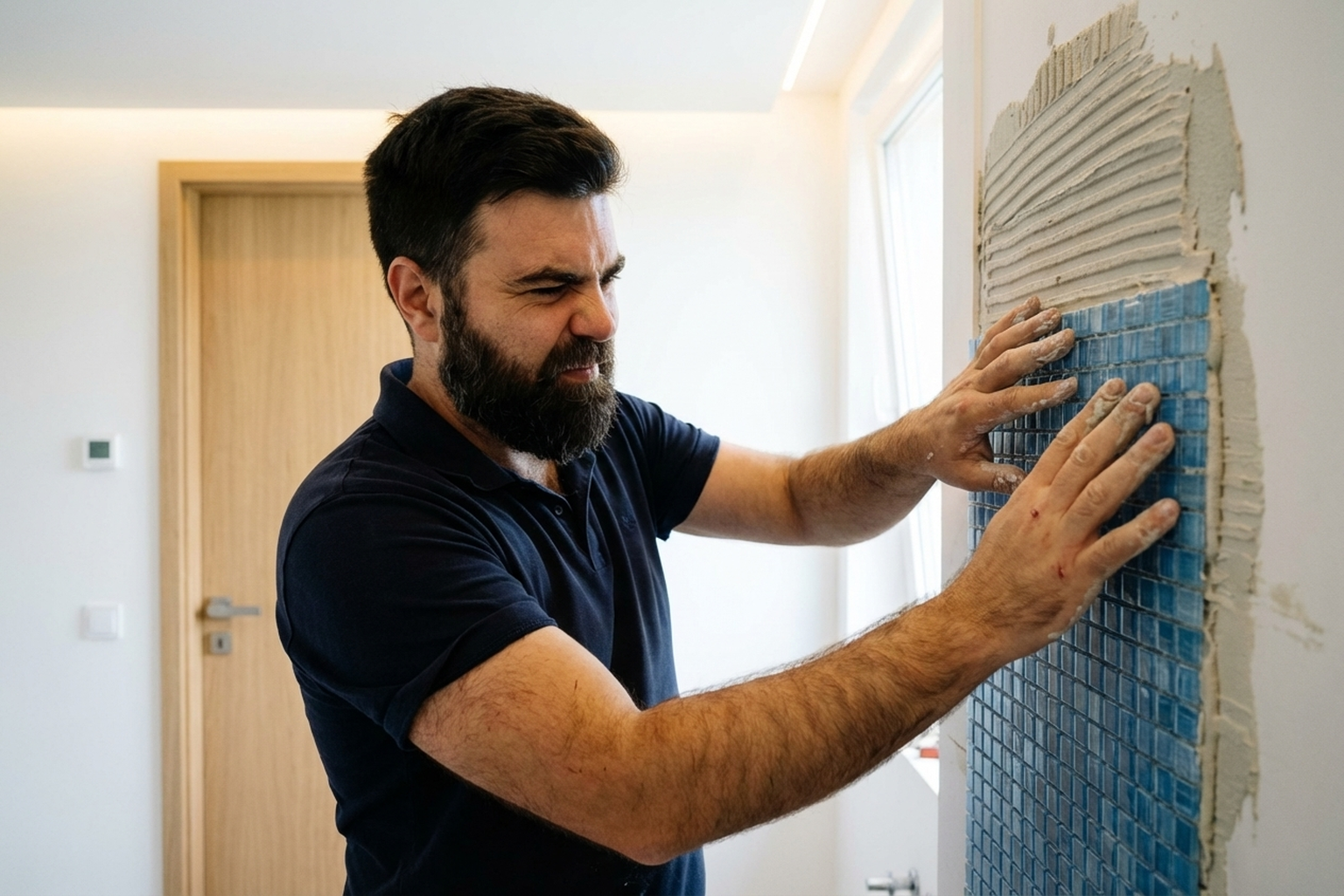
- Bonding. The mosaic sheet is pressed onto the wall and flattened with a rubber float or roller. The position can be corrected within the 10-15 minute open time.
- Grouting after 24 hours. For bathroom mosaic we advise epoxy grout — Litokol Starlike or Mapei Kerapoxy. It does not take in water, does not grow mould and does not change colour. This matters most with glass mosaic.
- Cleaning and final check. Epoxy residue is cleaned off with a dedicated product within the first 30 minutes. Each sheet is inspected for missing chips.
Common mistakes with mosaic installation
- Laying on an uneven base — every high spot and hollow shows through the small pieces.
- Using grey adhesive for glass mosaic — the grey is visible through the transparent glass and gives it a dull, dirty shade. Glass needs white adhesive only.
- Using a coarse trowel (8-10 mm) — adhesive comes through the joints and fills the space meant for grout. Maximum 3-4 mm for mosaic.
- Cementitious grout in the shower area — it darkens and starts growing mould within months. Wet zones need epoxy only.
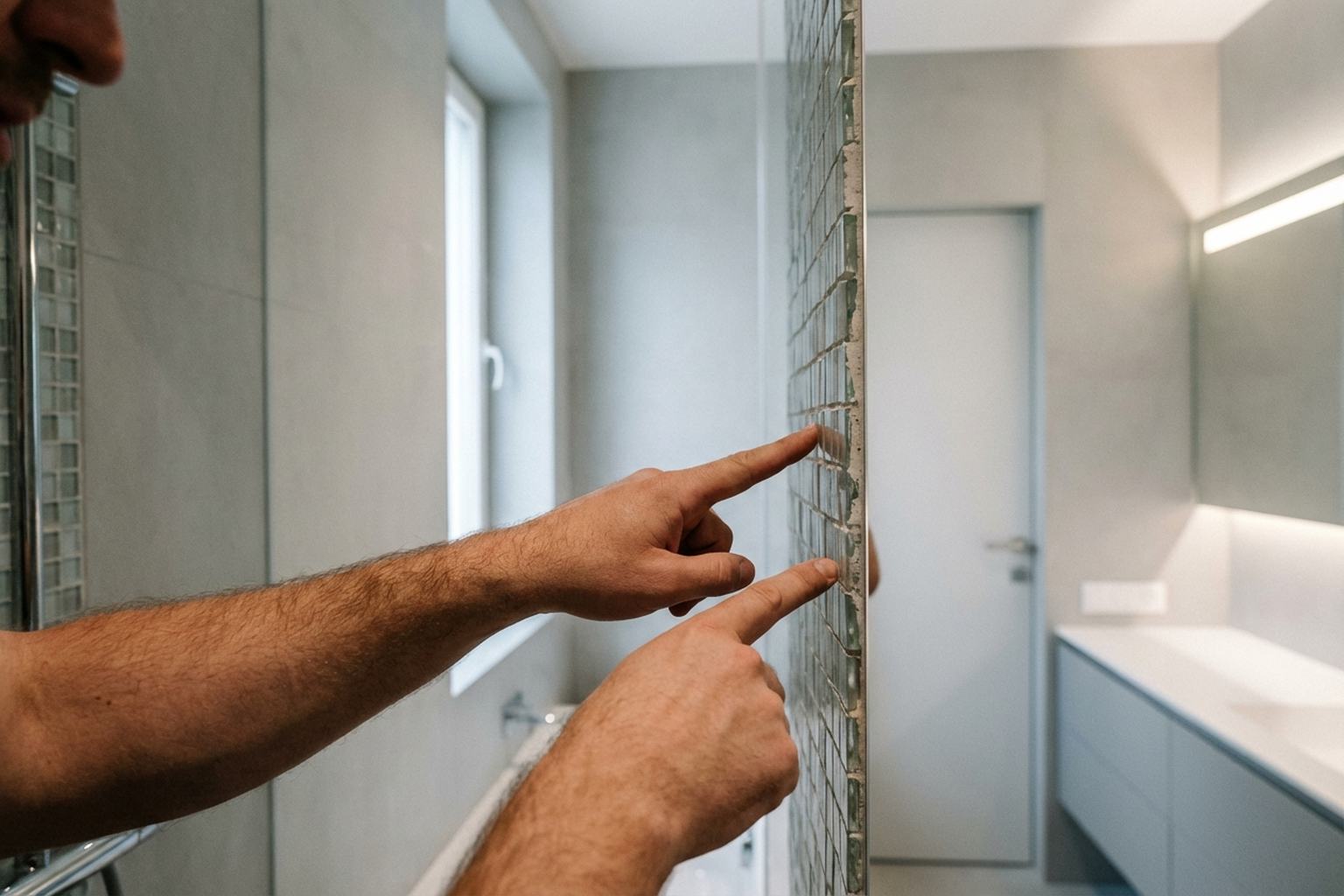
- Not lining sheets up with each other — joints between sheets become wider than joints between chips. You see it straight away.
- Grouting too early — the adhesive has not set, and the mosaic moves during grouting. Wait at least 24 hours.
- Not removing epoxy residue on time — after about an hour it sticks permanently to the surface.
What to prepare before the technician arrives
- The base must be levelled and primed. Tolerance — no more than 1 mm per metre.
- In shower areas — waterproofing already applied and dry (or the technician will do it as a separate item).
- Mosaic bought with a 10-15% surplus. Check the batch — the shade must be the same.
- Adhesive — white for glass mosaic (Mapei Kerabond T white + Isolastic, Litokol K55 white). Grey only for opaque ceramics.
- Grout — epoxy (Litokol Starlike, Mapei Kerapoxy). Agree the colour beforehand.
- Epoxy grout cleaner (Litokol Litonet, Mapei Kerapoxy Cleaner) — without it the residue cannot be cleaned off.
- Clear the work area: remove fittings, towels, toiletries.
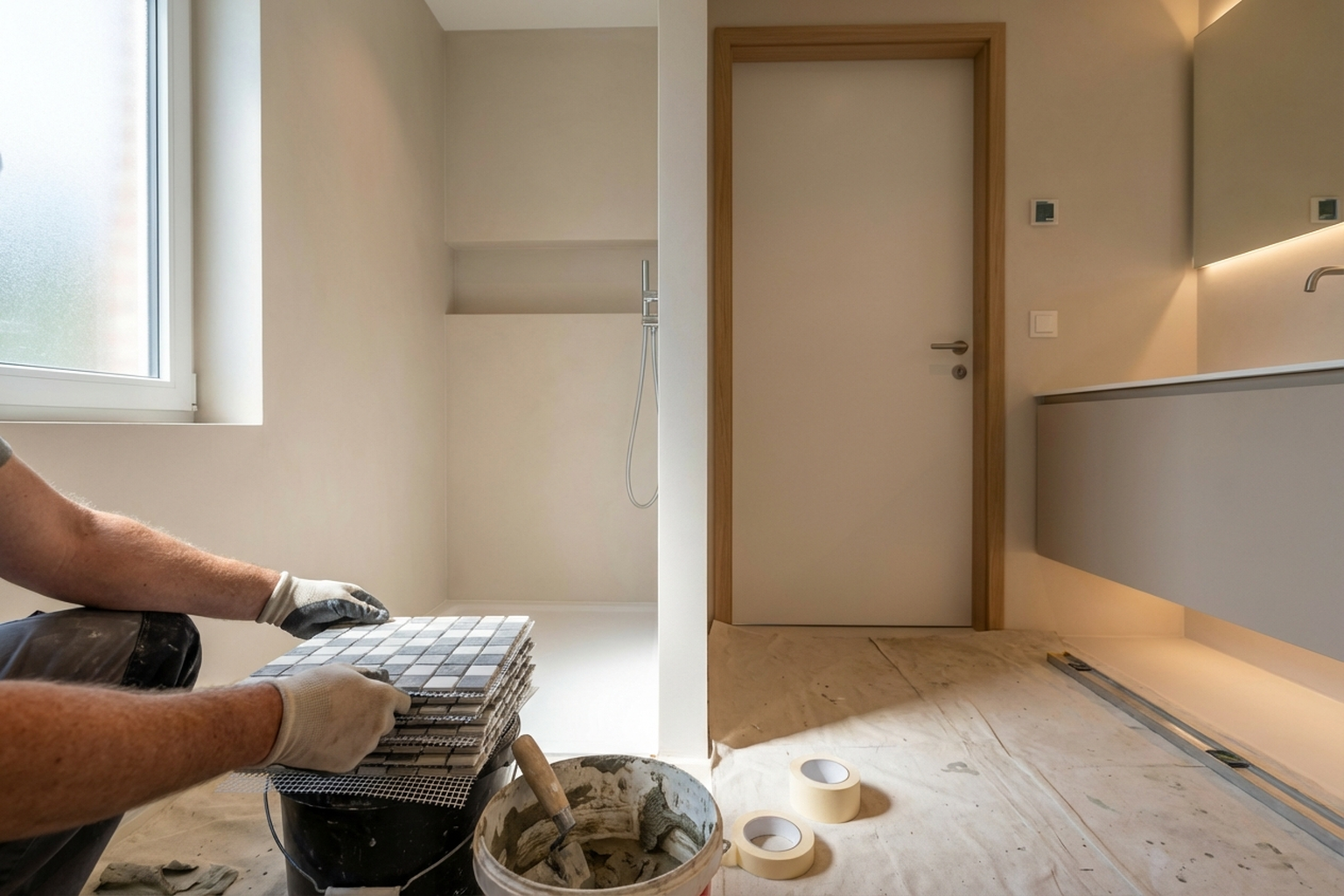
- Protect the floor and bathtub with sheeting.
- Make sure electricity and water are available.
- If mosaic is going into a niche — confirm the niche is ready (plasterboard, plaster, waterproofing).
A real case from Warsaw
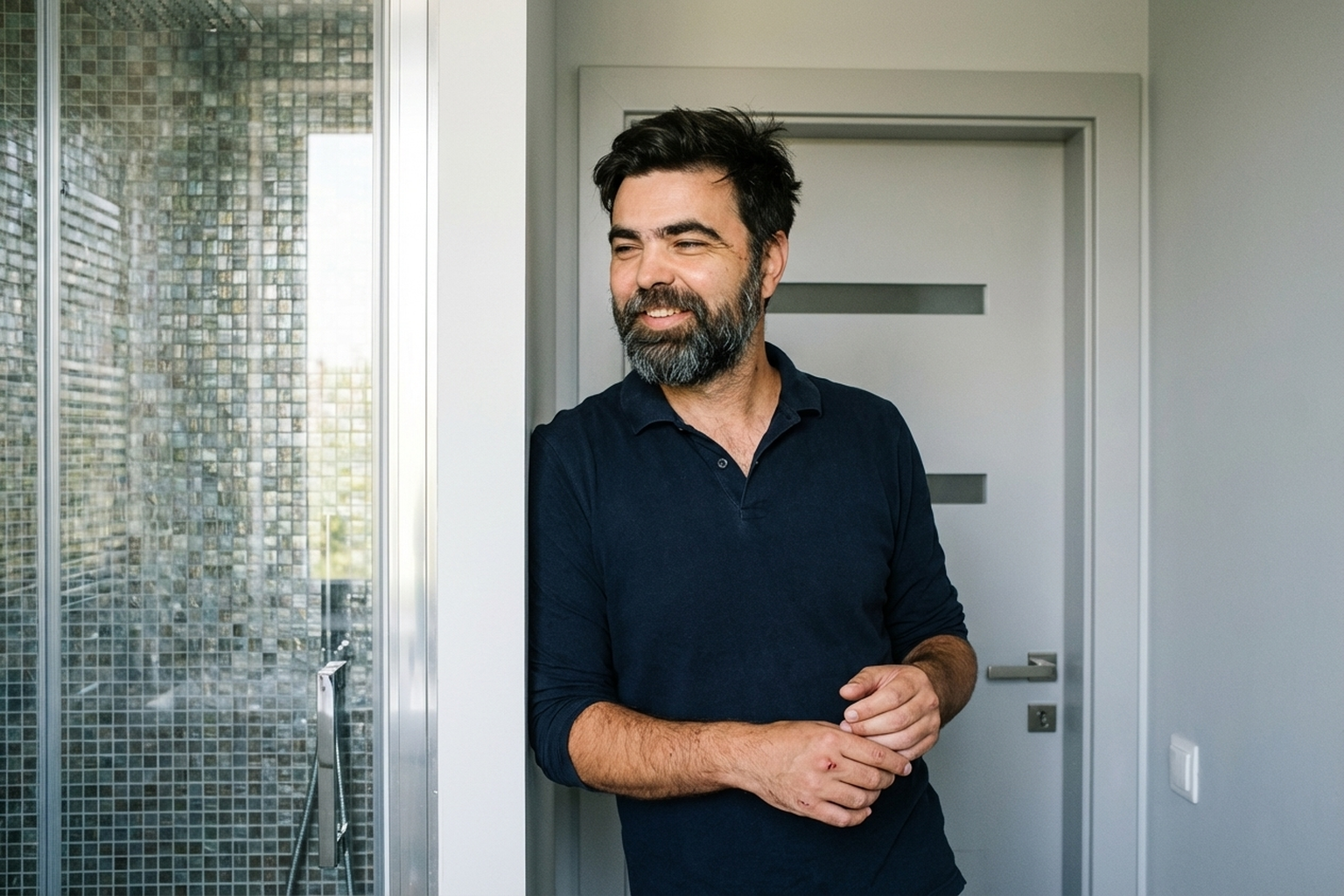
A bathroom in Zoliborz — the client wanted a glass mosaic feature wall by Dunin behind the bathtub, 4 m² from floor to ceiling. The wall was plasterboard — we checked it, dead flat. We primed it, then used white Mapei Kerabond T with a 3 mm trowel. Glass mosaic on mesh, 30×30 cm sheets. We fixed it from the bottom up, matching every sheet to the one below. At the ceiling line we cut with scissors on the mesh and a diamond disc on individual chips. Grout — Litokol Starlike, silver. We handled the epoxy as a two-man job: one spreads it, the other wipes straight away. The whole job took a day and a half. The wall catches the light nicely — the client said it was the best choice in the whole bathroom (compatible with Paradyż, Tubądzin, Cersanit and similar).
Frequently asked questions
What makes mosaic better than standard tiles in a bathroom?
Mosaic can cover curved surfaces (radiused niches, countertops, bath panels) and make accents and decorative inserts — standard tiles do not bend around curves.
Which mosaic is best for a shower?
Glass or low-absorption ceramic. Glass (Bisazza, Dunin) looks great and is waterproof. Natural stone — only with sealer, otherwise it takes in water.
Is epoxy grout mandatory for mosaic?
In wet zones (shower, wall behind the bath) — strongly advised. Cementitious grout darkens and starts growing mould within months. Epoxy stays the same for years.
Why does glass mosaic need white adhesive?
Glass is transparent or translucent — grey adhesive shows through and gives the mosaic a dirty shade. White adhesive keeps the real colour.
Can mosaic be applied to a bath panel?
Yes, and this is one of the most common options. A panel of moisture-resistant plasterboard, waterproofing, then mosaic. It looks good and is easy to clean.
How long does mosaic installation take?
A niche of 0.5 m² — 2-3 hours. A wall of 4-6 m² — one to two days. Plus a day for epoxy grouting.
Can mosaic be combined with large format tiles?
Yes, it is a classic pairing: main surfaces in large format, niches and accents in mosaic. Matching the thickness is important.
Is waterproofing needed under mosaic in a shower?
Absolutely. Mosaic is not waterproofing. Water gets through the grout joints. A waterproofing layer has to be applied underneath.
Are materials included in the price?
No. Mosaic, adhesive, grout and waterproofing are bought by the client. The labour price covers consumables.
Can I install mosaic myself?
A simple flat wall — carefully, yes. But epoxy grout, curved surfaces and glass mosaic need experience. Mistakes with epoxy are very hard to fix.
Who does the work
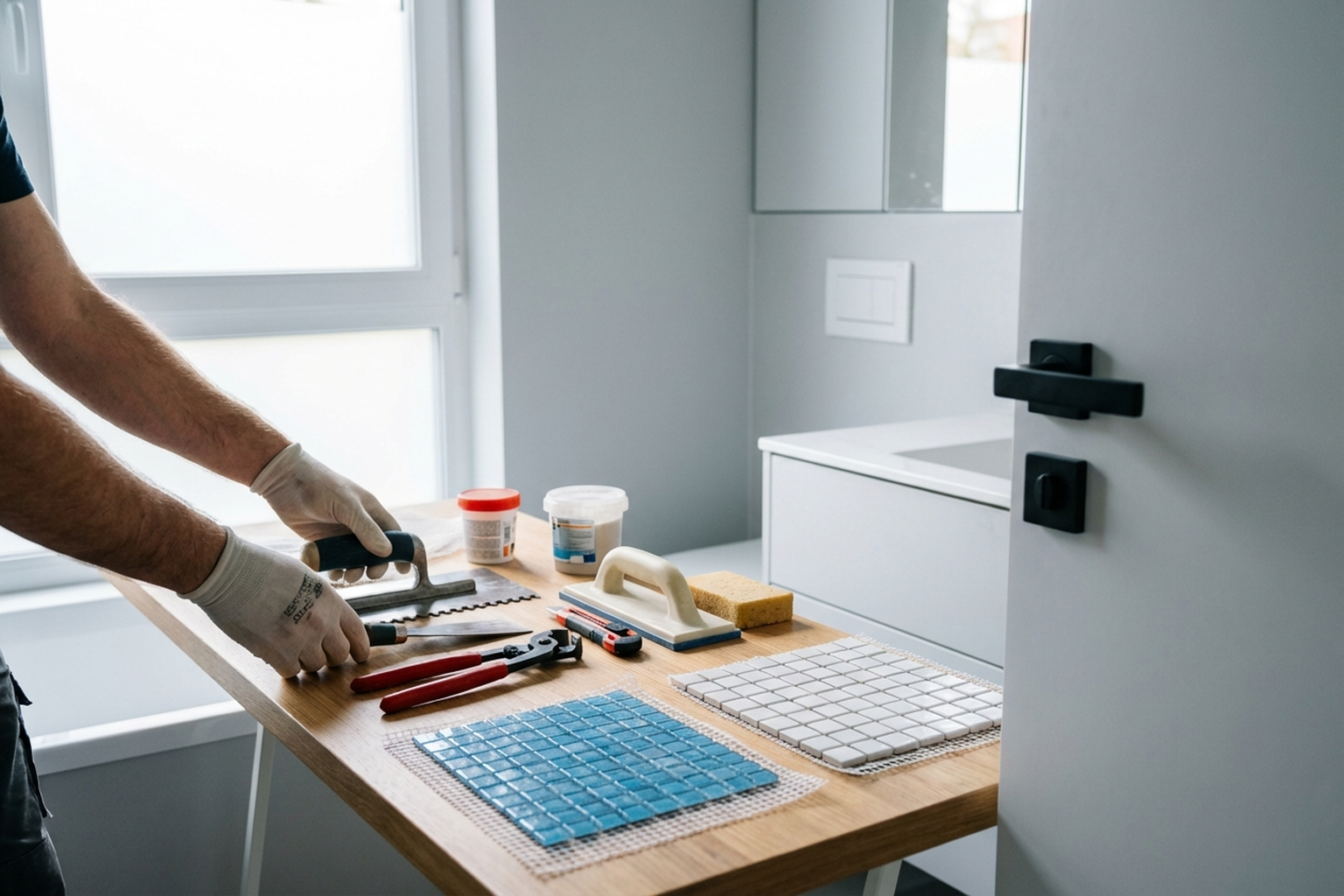
Bathroom mosaic is fitted by technicians who focus on small-format cladding — it is a different trade skill from laying standard tiles. We come with the full set of tools: 3-4 mm trowels, rubber floats, diamond discs for trimming chips, and products for working with epoxy grout. We cover all of Warsaw. Call or message — we’ll talk through your project and give you a price.