
How much does bathtub installation cost in Warsaw?
Labour for bathtub installation includes assembling the frame or legs, levelling the tub, connecting the trap to the waste pipe, and sealing all edges along the walls; current rates are in the table below. Materials are billed separately: the trap, waste-and-overflow kit, sealant, and panel fixings are bought by the client or by the tradesperson at retail price. Standard consumables are included in the charge.
The final price can go up if the waste outlet has to be moved, water pipes need to be replaced, or a bath panel with an inspection hatch has to be installed. Removal of packaging and construction waste is charged additionally. The technician will give you an exact quote after checking the site, for an initial estimate, add photos of your bathroom to the order.
What it costs and how to book: a good plumber in Warsaw.
Installation or replacement?
Installation assumes a clean recess: pipes ready, floor level, nothing to break out. If the old tub has to come out first, the tiled bath panel needs removing and the pipes need checking, book bathtub replacement. It is a separate item in the price list and usually takes longer.
How the work is carried out on site
1. Inspection and measurements. The technician comes out, measures the room, and checks where the waste outlet and water supply points are located. Then a fitting plan is prepared.
2. Frame assembly. Tradespeople put together the metal frame or install adjustable legs. The structure is levelled accurately with the proper fall toward the drain.
3. Positioning the bathtub. The tub is carefully moved into its final place and fixed to the walls if needed. Tradespeople check that it stands firmly and does not shift.
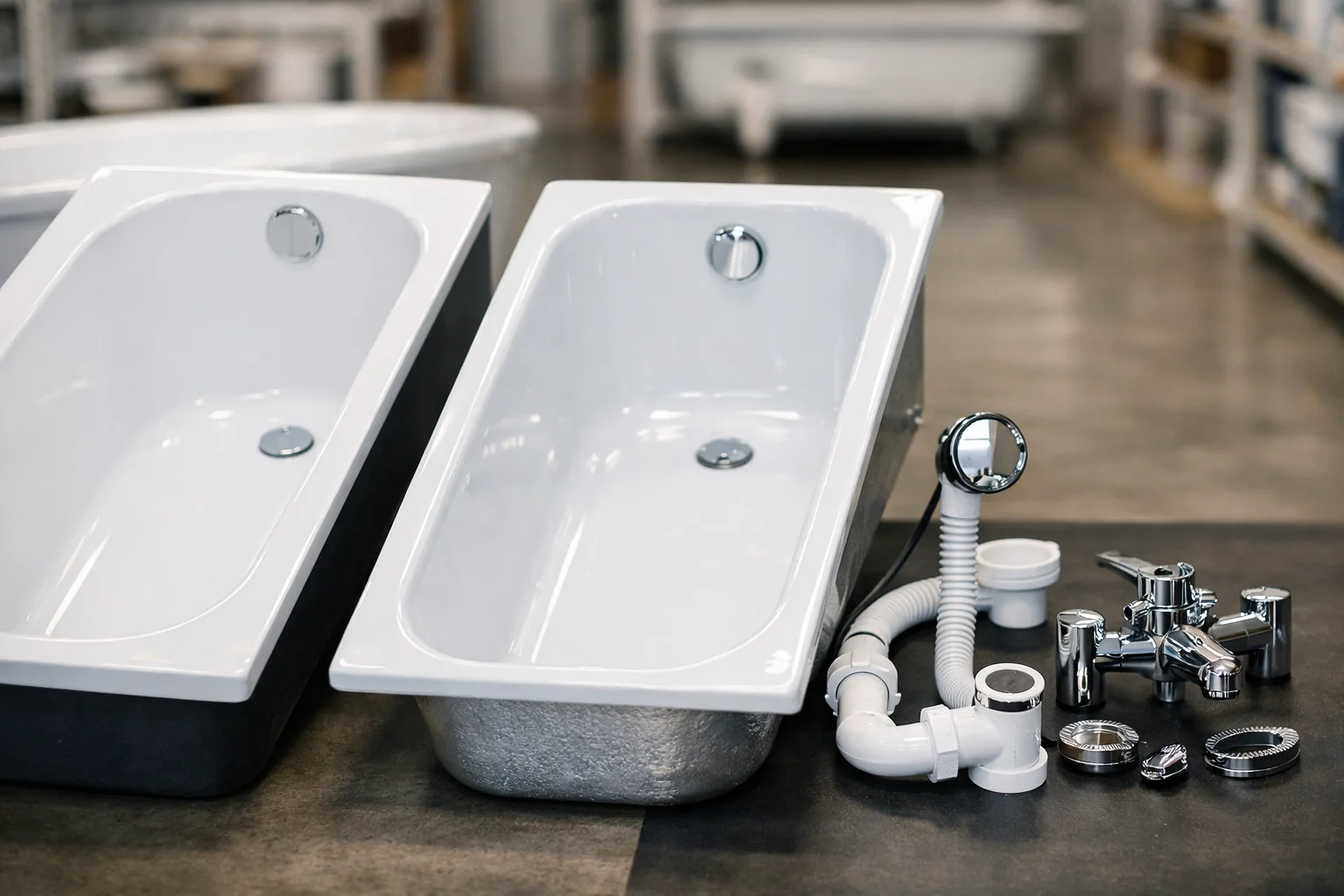
4. Connecting the trap. The waste-and-overflow kit is installed, and the drain and overflow are connected to the waste pipe. Every joint is checked for leaks.
5. Connecting the tap. If it is wall-mounted, they inspect the supply pipework. If it is deck-mounted, they drill the tub and install the mixer. Hot and cold water are then connected.
6. Sealing the joints. Sanitary silicone is applied around the entire perimeter where the tub meets the walls. A trim strip or plinth is installed where required.
7. Testing and clean-up. Tradespeople fill the tub fully, test the drain, overflow, and each joint for leaks. After that, the work area is cleaned and waste is taken away.
Common mistakes clients make (and how to avoid them)
1. Choosing a bathtub without measuring doorways. Large tubs often will not pass through standard doors. Before buying, measure every opening and corridor along the route to the bathroom.
2. Installing without a fall toward the drain. The tub needs a slight slope toward the waste hole, otherwise water will sit on the bottom. The technician sets this fall using adjustable legs.
3. Skimping on the trap. A low-cost plastic trap soon loses its seal and starts letting sewer smells through. It is better to choose semi-automatic models with a dependable mechanism.
4. Inadequate joint sealing. If silicone is applied unevenly or the seal is not continuous around the full perimeter, water gets behind the tub and mould starts to form. The seal must be neat and unbroken.
5. No access to the trap. When installing a bath panel, always leave an inspection hatch. Without it, clearing the trap or repairing a leak is impossible.
6. Improper wall fixation. Acrylic tubs are lighter than steel ones and may move when filled. Fixing the tub to the wall with proper hooks or adhesive stops this movement.
7. Using the bathtub before silicone has cured. Silicone reaches full strength after 24 hours. If the tub is filled earlier, the joints can deform and the seal may fail.
What to prepare before the technician arrives
1. Make sure the bathtub has already been delivered to the flat and unpacked.
2. Remove furniture, shelves, and other items from the bathroom.
3. Check that everything is there: legs or frame, trap, waste-and-overflow kit, fixings.
4. Buy sanitary silicone and a trim strip if the technician has advised this.
5. Know where the water shut-off valve is in your flat.
6. Make sure there is a clear route for the tub — take doors off hinges if needed.
7. Let the neighbours downstairs know about the installation work.
8. Prepare a free power socket for tools.
9. If you want a deck-mounted tap, confirm the model in advance.
10. Agree on the installation height and panel position by phone before the visit.
A real case from Warsaw: bathtub installation
Last month, a young couple from the Targówek district posted a request during their bathroom renovation. They wanted to swap an old cast-iron tub for a new acrylic one. The problem was that the waste outlet sat too far from the new drain position. The tradesperson extended the waste pipe, set the right gradient, and installed a reliable semi-automatic trap. The acrylic tub was mounted on its factory frame and levelled with care. All edges where it met the walls were sealed with sanitary silicone. Then came a full test: filled the tub right to the rim and checked the drain and overflow. No leaks at all. Three weeks later the clients confirmed that everything was still working perfectly. The installation took about five hours.
Cersanit acrylic baths: what matters during installation
Cersanit is a Polish bathroom manufacturer, and most of its baths are acrylic. Acrylic is light and warm to the touch, but it flexes on its own: only the frame or legs designed for that model hold its shape. Bricks or foam under the base instead of a frame are a false saving, because the base rests unevenly and the acrylic cracks where the load sits.
Ideally the bath goes in before the tiles: the handyman levels it, tapes a sealing strip along the rim, and the tiles are laid overlapping the rim. If the tiles are already up, the silicone goes on with the bath full of water. The bath panel needs an access hatch so the trap can be reached without breaking tiles. And unpack the bath and check it under strong light before fitting it, because scratches or chips on the rim are hard to claim back from the shop afterwards.
Frequently asked questions
How long does bathtub installation take?
In most cases, 3–5 hours. If pipework has to be moved or a panel is being installed, the job can take up to 7 hours.
Which bathtub material is best — acrylic, steel, or cast iron?
Acrylic tubs are warm and lightweight but scratch more easily. Steel tubs are tougher but noisier. Cast iron is the longest-lasting option but very heavy. The right choice comes down to your budget and what you prefer.
Is tap installation included in the price?
Tap installation is priced separately. The technician can do both jobs during one visit.
Should the trap be replaced when changing the bathtub?
Yes, they advise installing a new trap together with the new tub. The old one often does not match the size and is already worn out.
Do tradespeople fit bath panels?
Yes, fitting a panel with an inspection hatch is an extra service that can be ordered together with tub installation.
Do tradespeople work at weekends?
Yes, they work every day across Warsaw and nearby areas.
What should I do with the packaging?
The technician can remove the packaging. Disposal of bulky waste is charged separately.
Who does the work
Bathtub installations are done by tradespeople from the platform with hands-on experience in fitting sanitary equipment. Each profile shows what has been confirmed: identity and registry-checked trade permits. Whoever does the work answers for it: they come on their own account and issue the invoice themselves.
Often ordered together
| Service | Price |
|---|---|
| Trap (siphon) replacement | 120–400 zł |
| Drain cleaning | 200–800 zł |
| Towel radiator replacement | 350–700 zł |
| Towel radiator installation | 300–600 zł |
| Re-sealing shower and bathtub | 250–600 zł |
| Linear drain installation | 400–900 zł |
| Shower tray replacement | 600–1000 zł |
| WC frame replacement | 600–1500 zł |
| Bathtub installation | 400–900 zł |
| Washbasin installation | 200–500 zł |
| Wall-hung toilet installation (frame) | 450–700 zł |
| Floor toilet replacement | 350–600 zł |
| Floor toilet installation | 300–500 zł |
| Basin tap replacement | 250–400 zł |
| Basin tap installation | 150–250 zł |
| Vanity unit installation | 300–600 zł |
| Washbasin replacement | 250–600 zł |
Indicative prices. Ranges for a typical scope. Fixings included, materials separate. Minimum order 300 zł.
Order in the app
Describe the job, add photos and the address. Tradespeople send their own prices and dates, and you pick one of the offers.
Open the app