
Concealed toilet frame replacement: cost and what affects it
Labour for replacing a concealed toilet frame includes taking out the old frame, getting the wall recess ready, and fitting the new frame; current rates are in the table below. Materials are billed separately: the frame, cistern, fittings, and seals are bought by the client or by the tradesperson at retail price. Standard consumables and minor fixings are included in the service fee.
The cost can go up if the waste pipe layout has to be altered, the water supply pipes need replacement, or the wall covering has to be repaired after demolition. Removal of construction waste and the old frame is charged separately. The technician gives the exact price after seeing the site — for an initial estimate, add to the order a bathroom photo via messenger.
What it costs and how to book: toilet installation in Warsaw.
How the work is carried out on site
1. Inspection and diagnosis. The technician comes in, checks the wall recess, and looks over the condition of the pipework and old frame. A list of materials is prepared and the scope of work is confirmed.
2. Shutting off the water. Tradespeople turn off the water supply, empty the cistern, and drain the remaining water from the pipes.
3. Removing the old frame. The toilet bowl is removed, the wall finish around the recess is opened up, and the old frame is taken out. The waste and water connections are disconnected.
4. Preparing the recess. The walls are inspected for strength and reinforced if required. The water and waste connection points are adjusted for the new frame.
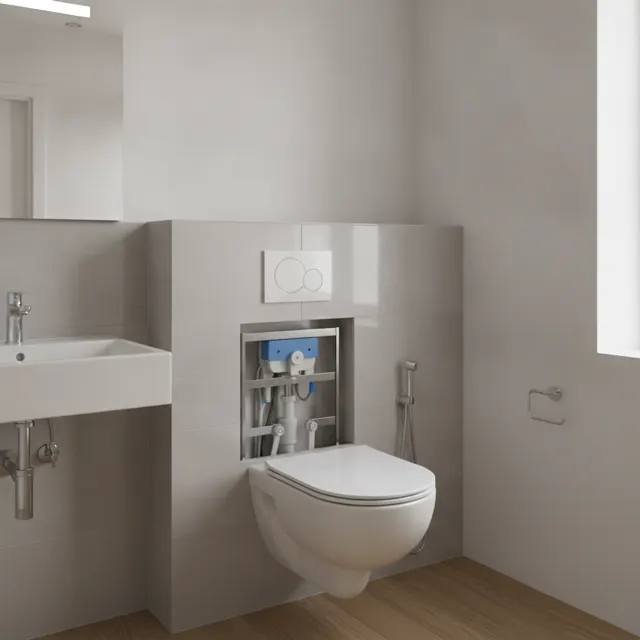
5. Installing the new frame. The frame is aligned fully plumb and level, then fixed to the wall and floor. The cistern is connected and the waste pipework is led into the drain.
6. Hanging the bowl and fitting the flush plate. The bowl is installed on the frame studs, connected to the flush outlet and waste pipe. The flush plate panel is fitted.
7. Testing and clean-up. The water is turned back on, several test flushes are done, and each joint is checked for leaks. The work area is cleaned and the waste is taken away.
Common mistakes clients make (and how to avoid them)
1. Buying a frame without measuring the recess. Frames are made in different widths and depths. If you skip measuring the recess before buying, the frame may not go in or the opening may need to be widened. Measure the height, width, and depth of the recess before picking a model.
2. Incompatible frame and bowl. Not every bowl matches every frame. The stud spacing, flush pipe diameter, and mounting height may differ. Buy the frame and bowl from the same manufacturer, or check compatibility beforehand.
3. Skimping on cistern internals. Cheap fill and flush valves inside the cistern often give up after a year or two. Replacing them means accessing the inspection panel. Pick trusted brands with spare parts that are easy to get.
4. No inspection access. Once the recess is closed up, there still needs to be access to the cistern and valve mechanism. Without an inspection hatch, any repair means breaking out the whole wall finish.
5. Ignoring level during installation. Even a few millimetres of tilt in the frame can cause poor flushing and leave the bowl visibly crooked. Setting the frame exactly level is essential.
6. Using poor-quality seals. Leaks between the bowl and frame are most often down to worn or low-quality sealing rings. Always fit original manufacturer seals.
7. Loading an unsupported wall. The frame passes the toilet load into the wall. If the wall is plasterboard with no proper structural backing, the whole setup can loosen over time. Check the wall’s load-bearing capacity before fitting.
What to prepare before the technician arrives
1. Clear the way to the frame recess: move the washing machine, shelves, and any clutter.
2. Make sure the new frame and toilet bowl have already been delivered to the flat.
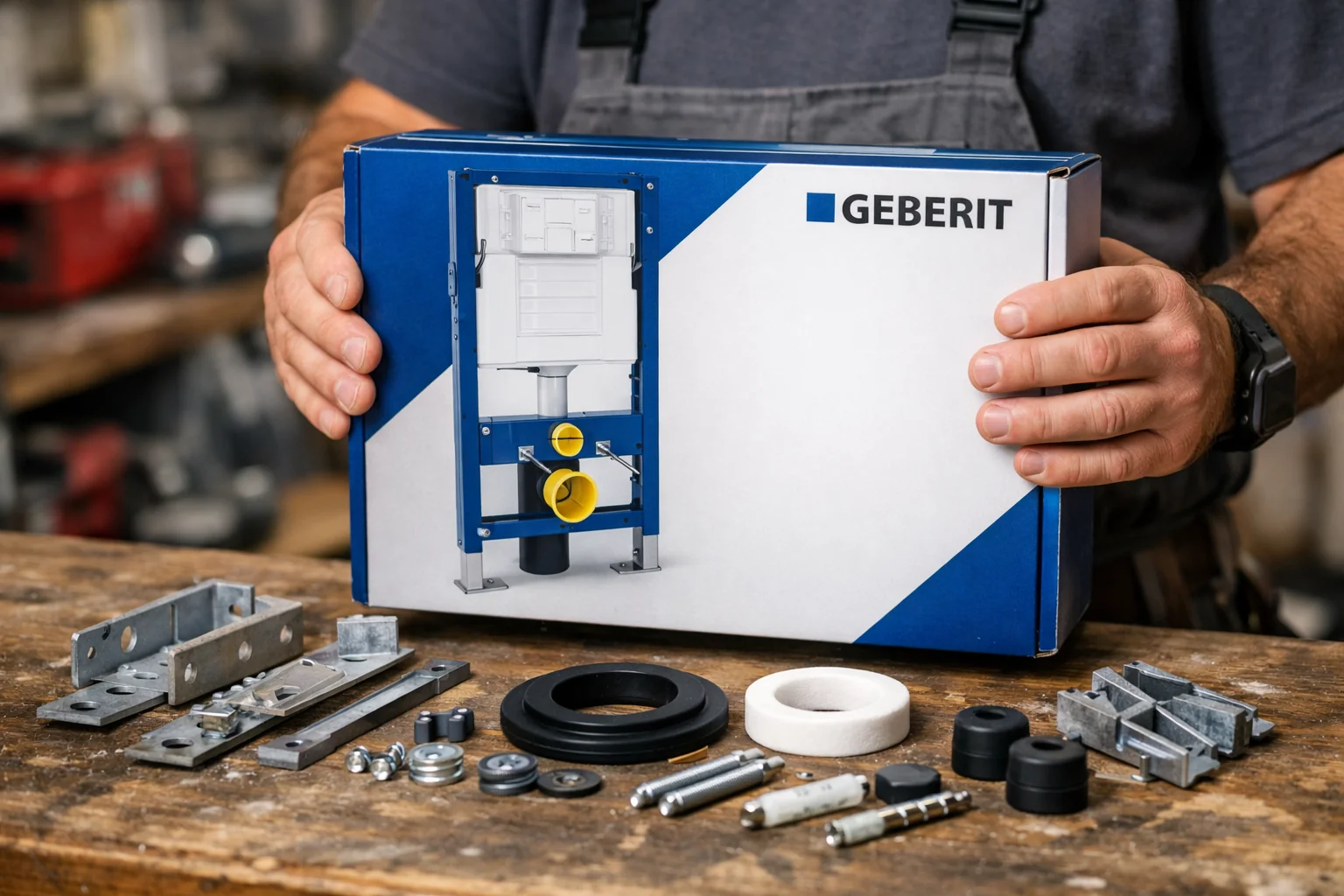
3. Check the kit contents: frame, cistern, fixings, connectors, flush plate.
4. Buy sealing rings and adaptors if the technician has included them on the list.
5. Know where the main water shut-off valve is.
6. Prepare room for construction waste — the old frame takes up space.
7. Let neighbours know about the temporary water shut-off and noisy work.
8. Have a free power socket available for the tools.
9. If you want to replace the wall finish, agree this with the technician beforehand.
10. Decide on the flush plate position and bowl height before the work starts.
Concealed toilet frame replacement in practice: a Warsaw case
A few weeks ago, a flat owner in the Mokotów district posted a request about a stubborn damp mark showing up on the bathroom wall. After opening the inspection panel, the tradesperson saw that the concealed frame had been installed for over thirteen years, the cistern fill valve had failed completely and the frame fixings had come loose. A fine crack in the cistern was letting water slowly run down the wall. He removed the old frame completely and found that the waste connector also had to be changed. A new Geberit frame with dual-flush cistern went in, connected to the existing pipework. The bowl was fitted on new studs and every connection was sealed. Three test flushes confirmed everything was watertight. The client retiled the wall himself. A month later the tradesperson followed up: no leaks at all, and the flush was working perfectly. The whole job took about six hours.
Frequently asked questions
How long does a frame replacement take?
The job usually takes 5–8 hours, including demolition, installation, and testing. If pipe replacement or rebuilding of the recess is needed, a second visit may be necessary.
Can the frame be replaced without changing the bowl?
Yes, as long as the bowl is compatible with the new frame. The technician will check this on site.
Which frame should I choose?
Tradespeople recommend proven brands — Geberit, Grohe Rapid SL, Viega. Spare parts are easy to find for them, and they last a long time.
Will the wall finish need replacing?
That depends on how the recess is built. If the frame can be reached through an inspection hatch, the wall finish may stay untouched. If not, part of it will need to be removed.
Do tradespeople fit the flush plate?
Yes, fitting the flush plate is included in the scope of work. Both mechanical and pneumatic panels are covered.
What if the wall cannot support the load?
The technician will check the wall on site. If needed, they can add structural backing or use a floor-standing frame that transfers the load to the floor.
Do tradespeople work at weekends?
Yes, they work every day across Warsaw. Orders go through the app.
Who does the work
Concealed toilet frame replacements are done by tradespeople from the platform with hands-on experience in sanitary system installation. Each profile shows what has been confirmed: identity and registry-checked trade permits. Whoever does the work answers for it: they come on their own account and issue the invoice themselves.
Often ordered together
| Service | Price |
|---|---|
| Trap (siphon) replacement | 120–400 zł |
| Drain cleaning | 200–800 zł |
| Towel radiator replacement | 350–700 zł |
| Towel radiator installation | 300–600 zł |
| Re-sealing shower and bathtub | 250–600 zł |
| Linear drain installation | 400–900 zł |
| Shower tray replacement | 600–1000 zł |
| WC frame replacement | 600–1500 zł |
| Bathtub installation | 400–900 zł |
| Washbasin installation | 200–500 zł |
| Wall-hung toilet installation (frame) | 450–700 zł |
| Floor toilet replacement | 350–600 zł |
| Floor toilet installation | 300–500 zł |
| Basin tap replacement | 250–400 zł |
| Basin tap installation | 150–250 zł |
| Vanity unit installation | 300–600 zł |
| Washbasin replacement | 250–600 zł |
Indicative prices. Ranges for a typical scope. Fixings included, materials separate. Minimum order 300 zł.
Order in the app
Describe the job, add photos and the address. Tradespeople send their own prices and dates, and you pick one of the offers.
Open the app