Relay and Sensor Replacement for Electric Cooktop in Warsaw
A burner doesn’t turn on, runs at full heat with no control, or switches off at random? In many cases, the problem is a faulty relay or temperature sensor. The relay manages power going to the burner, and the sensor checks the surface temperature. If one of them stops working, the burner starts acting erratically. We diagnose and replace these parts on site anywhere in Warsaw — from Bemowo to Praga-Północ.
How much does it cost and what affects the price
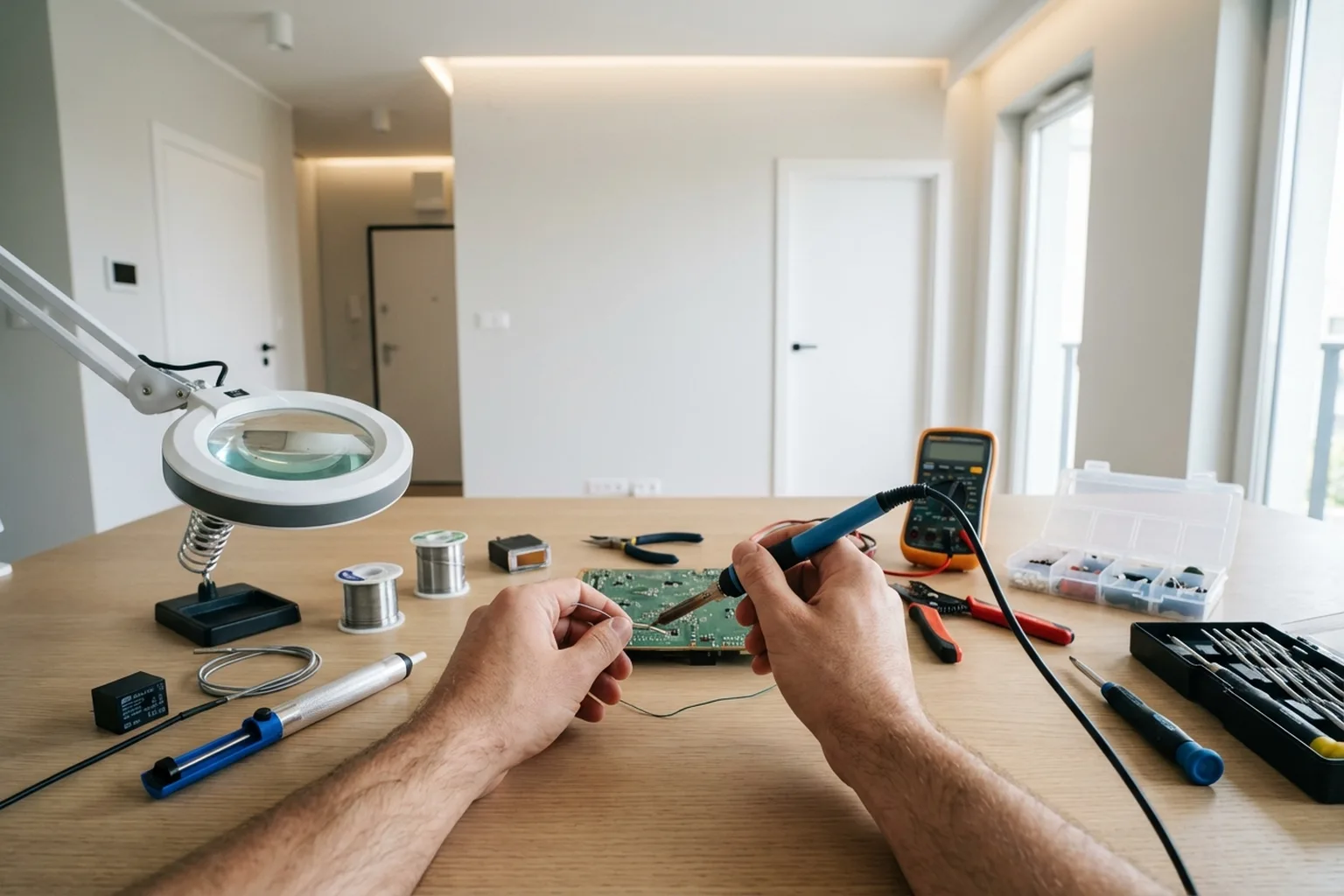
The price depends on the kind of cooktop (ceramic, induction, conventional), how many parts are faulty, and the exact model. You’ll find current prices in the table below. The service includes diagnostics with a multimeter; parts are billed separately. Warning: work on an electric cooktop involves high voltage — don’t try to repair it yourself.
| Service | min | max |
|---|---|---|
| Burner / heating zone replacement (electric cooktop) | 300 zł | 400 zł |
| Relay / sensor replacement (electric cooktop) | 300 zł | 400 zł |
| Glass-ceramic surface replacement (electric cooktop) | 300 zł | 450 zł |
| Power module replacement (electric cooktop) | 450 zł | 600 zł |
| Electronics repair (electric cooktop) | 450 zł | 550 zł |
How the relay / sensor replacement works
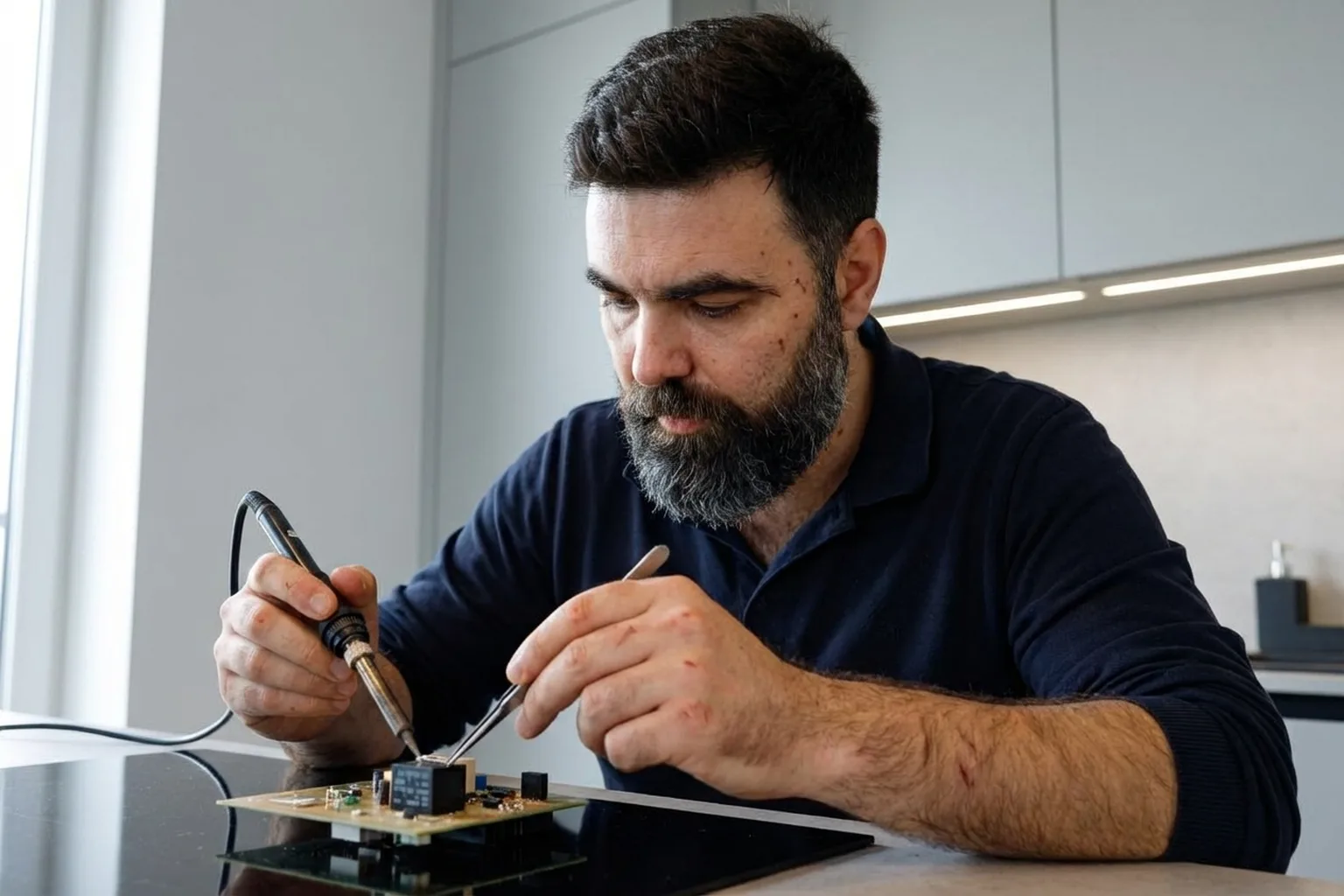
- You explain the problem — which burner is affected and what exactly happens.
- The technician checks the model and brings matching components.
- We disconnect the cooktop (switch off the breaker — cooktops have their own dedicated circuit).
- We lift the cooktop out of the worktop to reach the board and wiring below.
- The relays and sensors are checked with a multimeter to find the failed part.
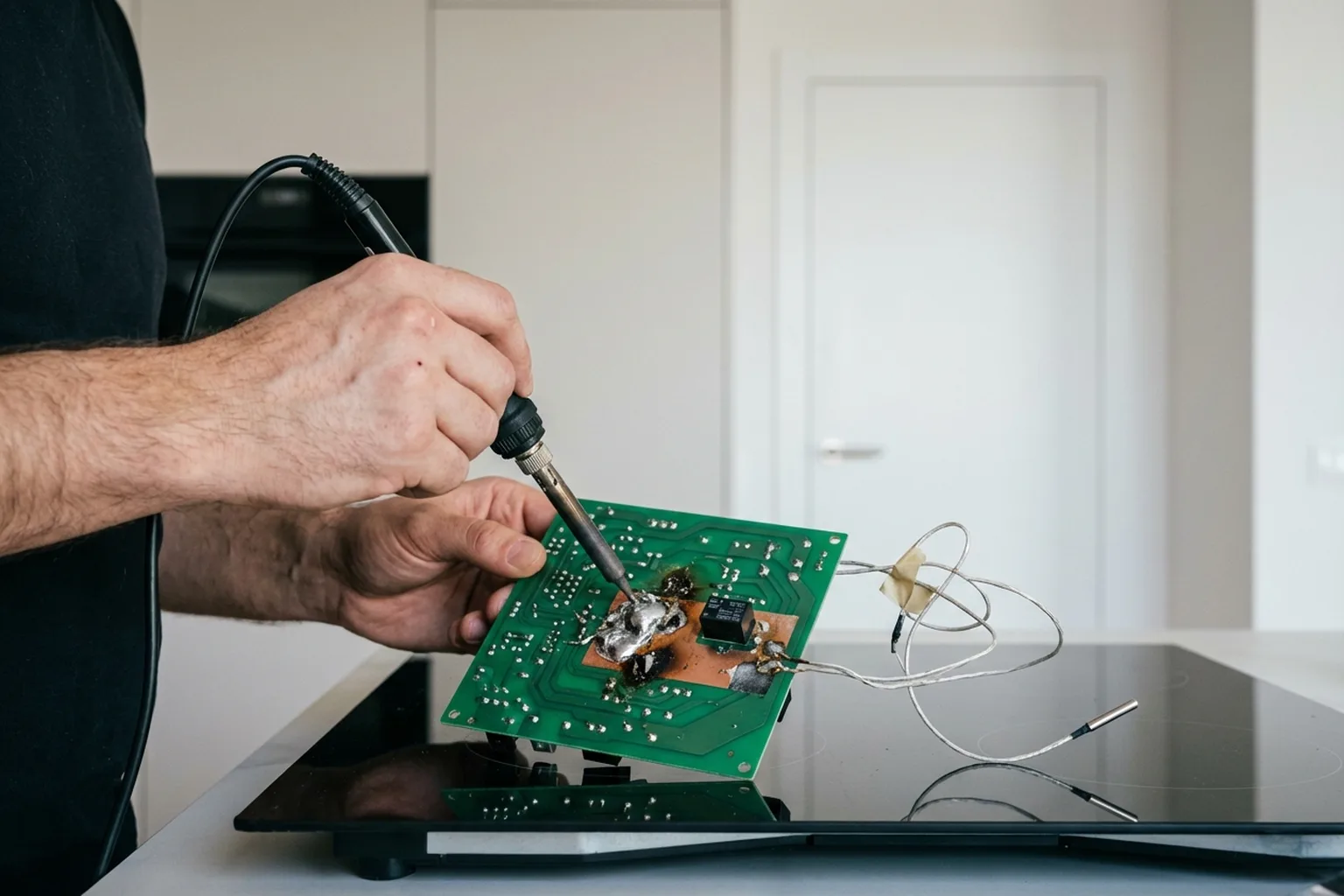
- The relay or sensor is swapped out; if necessary, we also re-solder board traces.
- The cooktop is put back in place, powered up, and all burners are tested at different power settings.
Common mistakes
- Mistaking a relay problem for a burner failure — and replacing an expensive element when the cheap relay is the real issue.
- Trying to fix it yourself — electric cooktops run on 220–380V, which can be fatal.
- Buying a relay without checking the ratings — wrong voltage or current.
- Brushing off occasional burner shutoffs — often the first sign that a relay is failing.
- Skipping a wiring check when changing a sensor — a melted wire can make the fault come back.
What to prepare
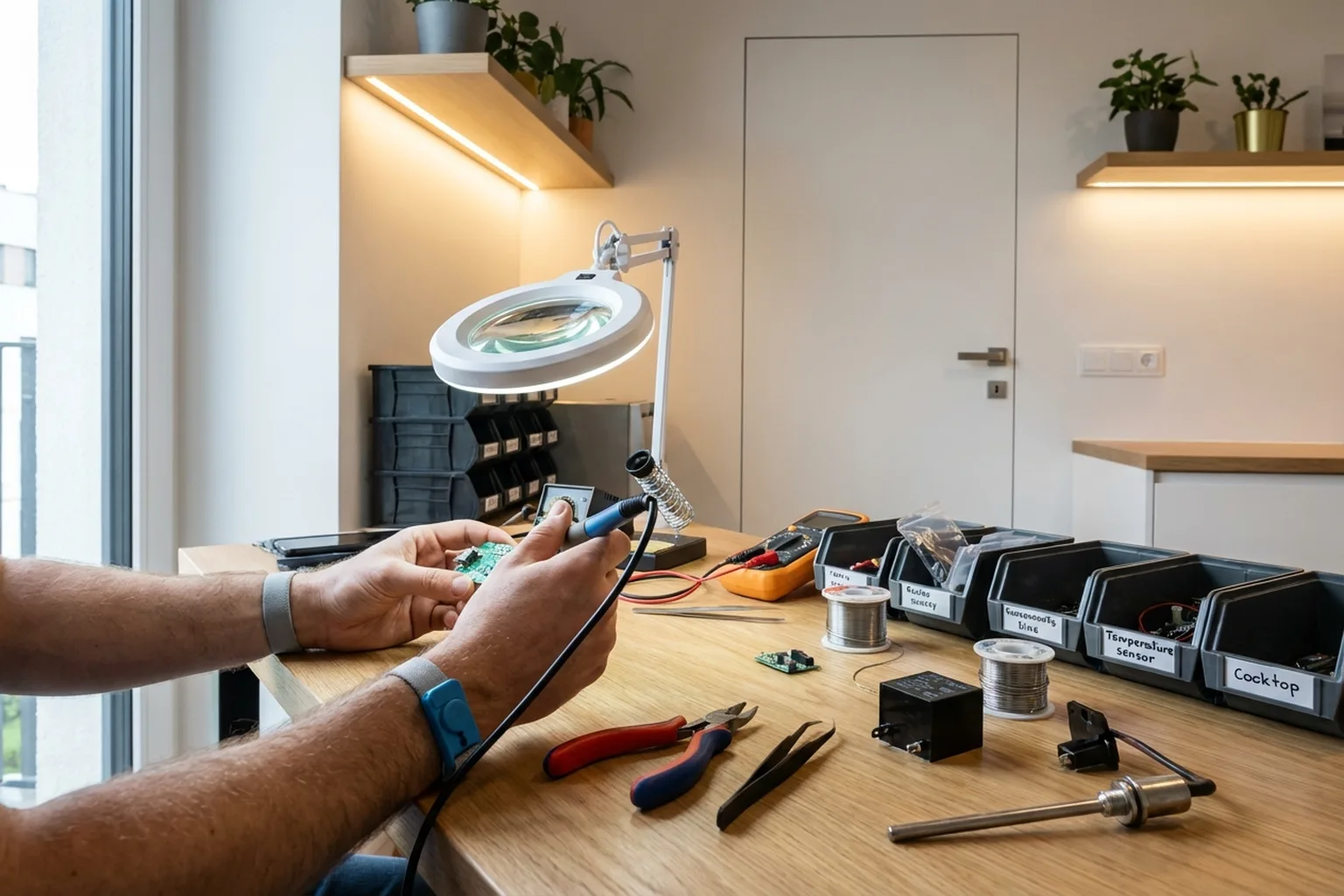
- Find the cooktop model — on the label underneath or in the documentation.
- Say which burner is causing trouble and what it’s doing.
- Switch off the dedicated breaker.
- Clear the worktop around the cooktop.
- Check that the cooktop can be lifted out (not permanently sealed with silicone).
- Take a photo of the model and send it to the technician.
- Provide access to the consumer unit.
- If there’s an oven under the cooktop, it may need to be pulled out.
A real case from Warsaw
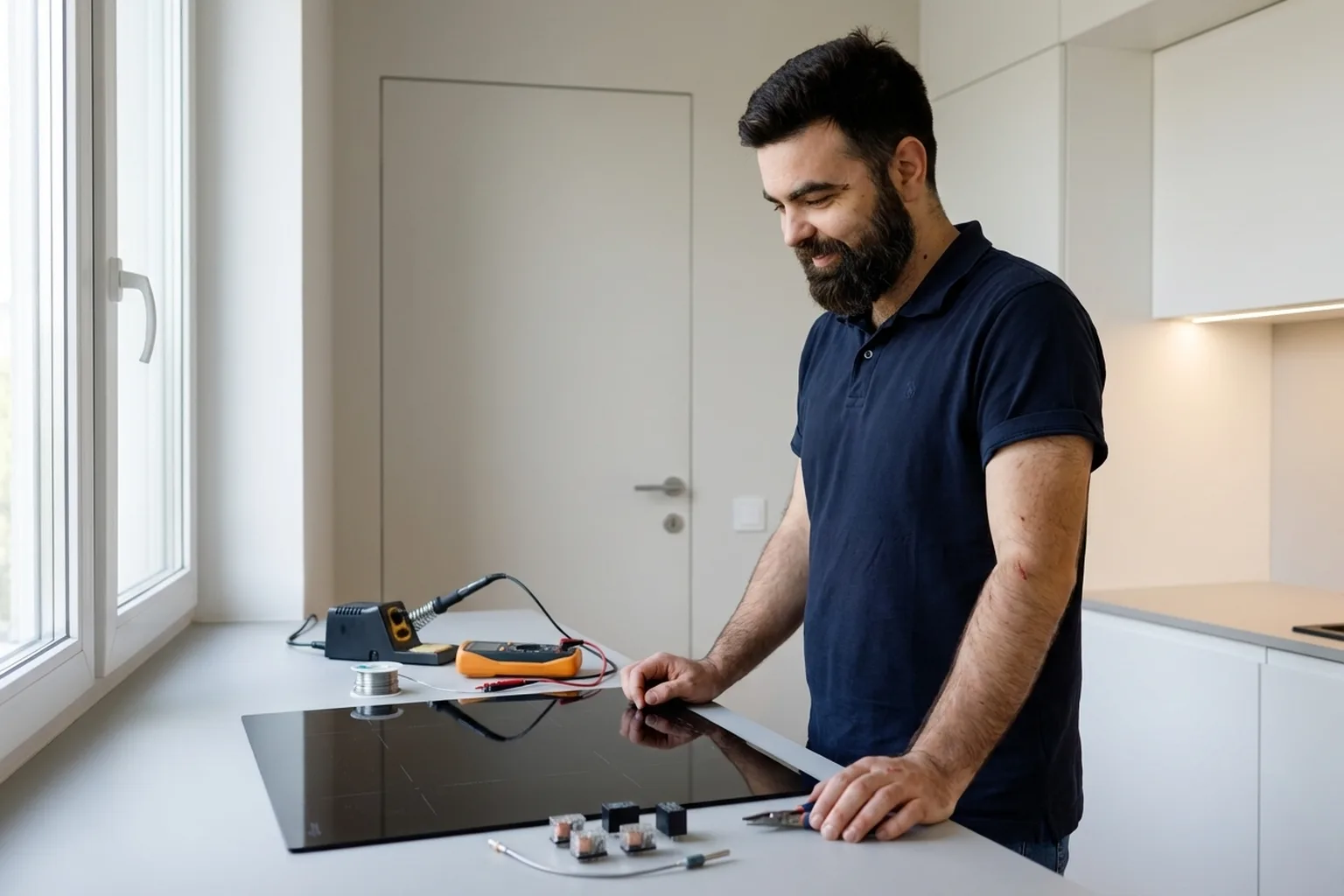
A client in Bemowo said the front-right burner on a Bosch ceramic cooktop was working on and off — sometimes it heated, sometimes nothing happened. The other three burners worked normally. On site, we removed the cooktop and inspected the board — the relay for that burner was sticking. The internal contacts were burnt and no longer closing properly. We replaced the relay and re-soldered fine cracks on nearby board traces caused by heat. All four burners then tested stable at different power levels. The whole repair took around an hour. The takeaway: when a burner works intermittently, the relay is very often the issue, not the burner itself.
Frequently asked questions
What is a relay in an electric cooktop?
It’s an electromechanical switch that, after a signal from the control board, connects or cuts power to a burner. When the internal contacts wear out, the burner stops reacting properly.
Relay vs sensor — what’s the difference?
The relay switches power on and off; the sensor reads the surface temperature and sends that information to the board for power control.
Can I still use the cooktop if one burner is down?
The other burners — yes, as long as there’s no burning smell. But don’t put off the repair.
Is DIY repair dangerous?
Yes. Cooktops are connected to 220–380V. Even when switched off, the terminals may still be live unless the breaker has been tripped.
Does the technician bring the relay?
Yes — common relay types are kept in stock. Less common models may take 1–3 days to order.
How long does the repair take?
45 minutes to 1.5 hours.
Does the cooktop need to come out?
Yes, so we can reach the board and wiring underneath.
Which brands?
Bosch, Siemens, Electrolux, Samsung, Beko, Amica, Whirlpool, Gorenje, Hansa and more.
Burner heats to max without regulation?
Most likely a stuck relay — the contact stays permanently closed. It needs urgent replacement to avoid overheating.
Who does the work
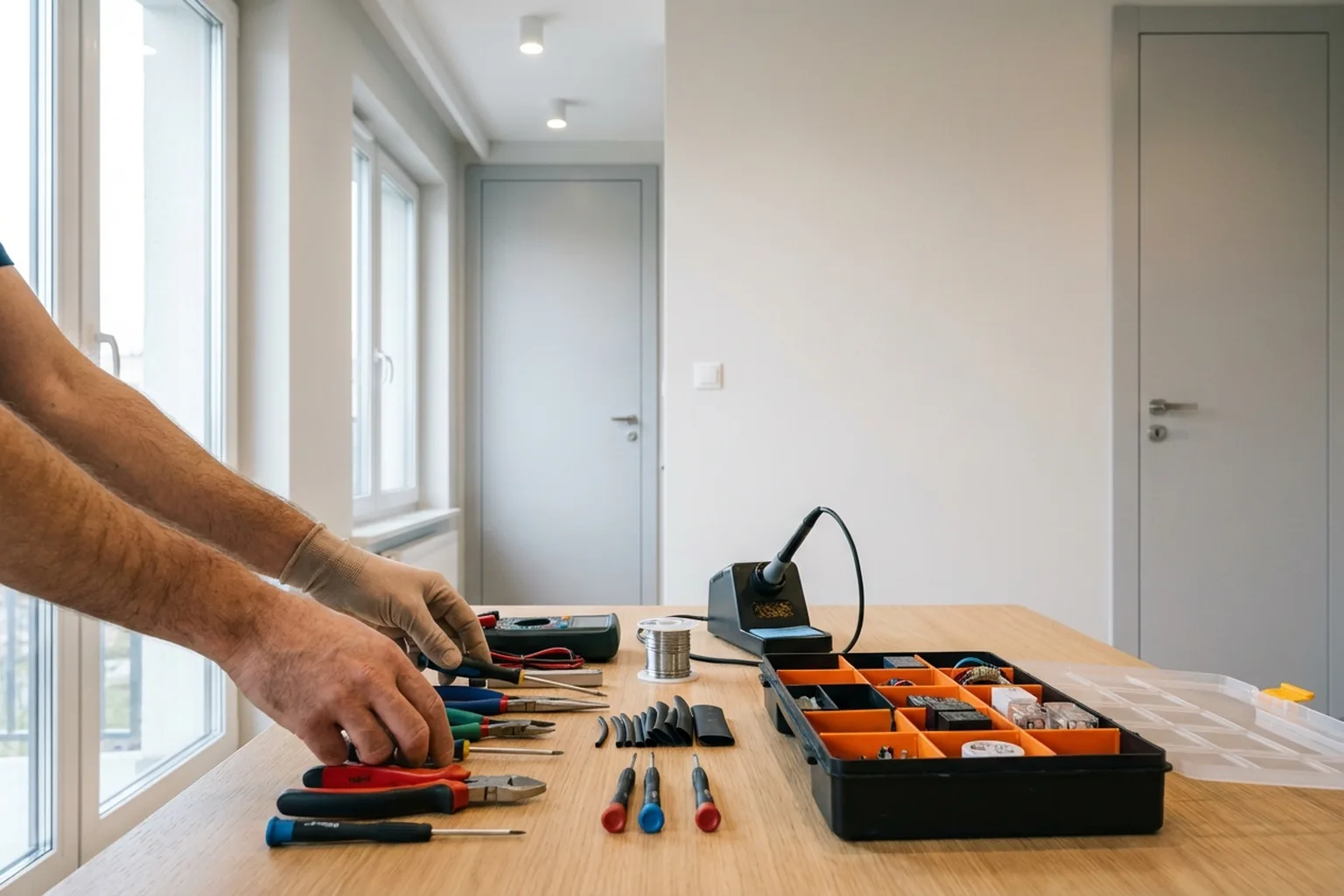
Relay and sensor replacement is done by technicians with hands-on experience in cooktop repair. We work across all of Warsaw with multimeters and soldering stations. Burner acting up? Message us — we’ll find the fault and sort it out.