Important: any electrical work comes with a risk of electric shock. If you’re not fully sure the circuit has been isolated properly, don’t touch the wires, call a professional. Tradespeople work only with the power off and check every wire with a voltage indicator before they begin.
Light switch fitting and replacement: cost and what affects it
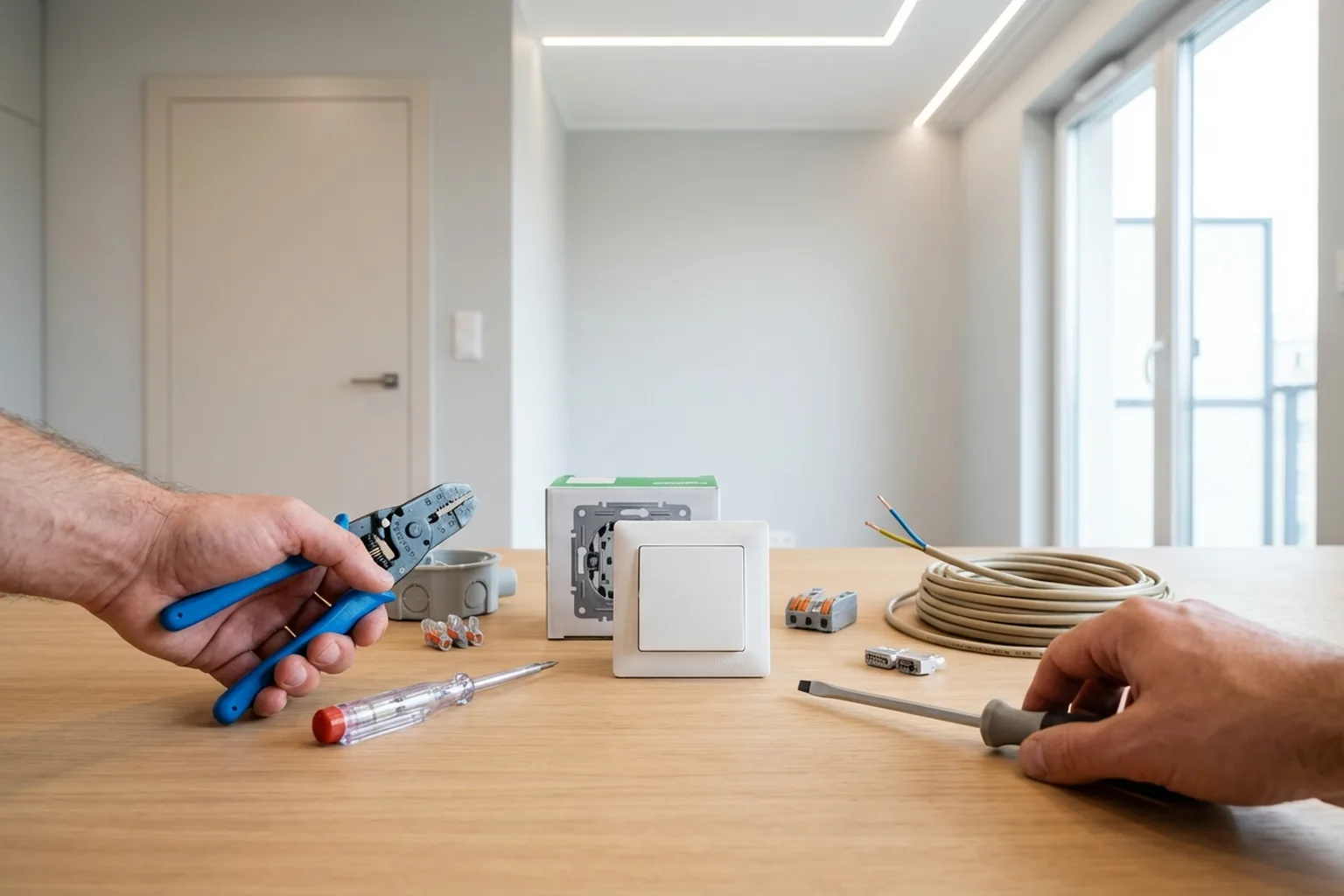
Current prices are listed in the table below. The final cost depends on the kind of switch (single-pole, double, two-way, dimmer, touch), the state of the wiring, and whether wall chasing is required. A completely new point installed from scratch includes electrical point installation, wall chasing, and cable routing. Fixings and terminal blocks are included. The switch itself and the back box are billed separately.
| Service | Price |
|---|---|
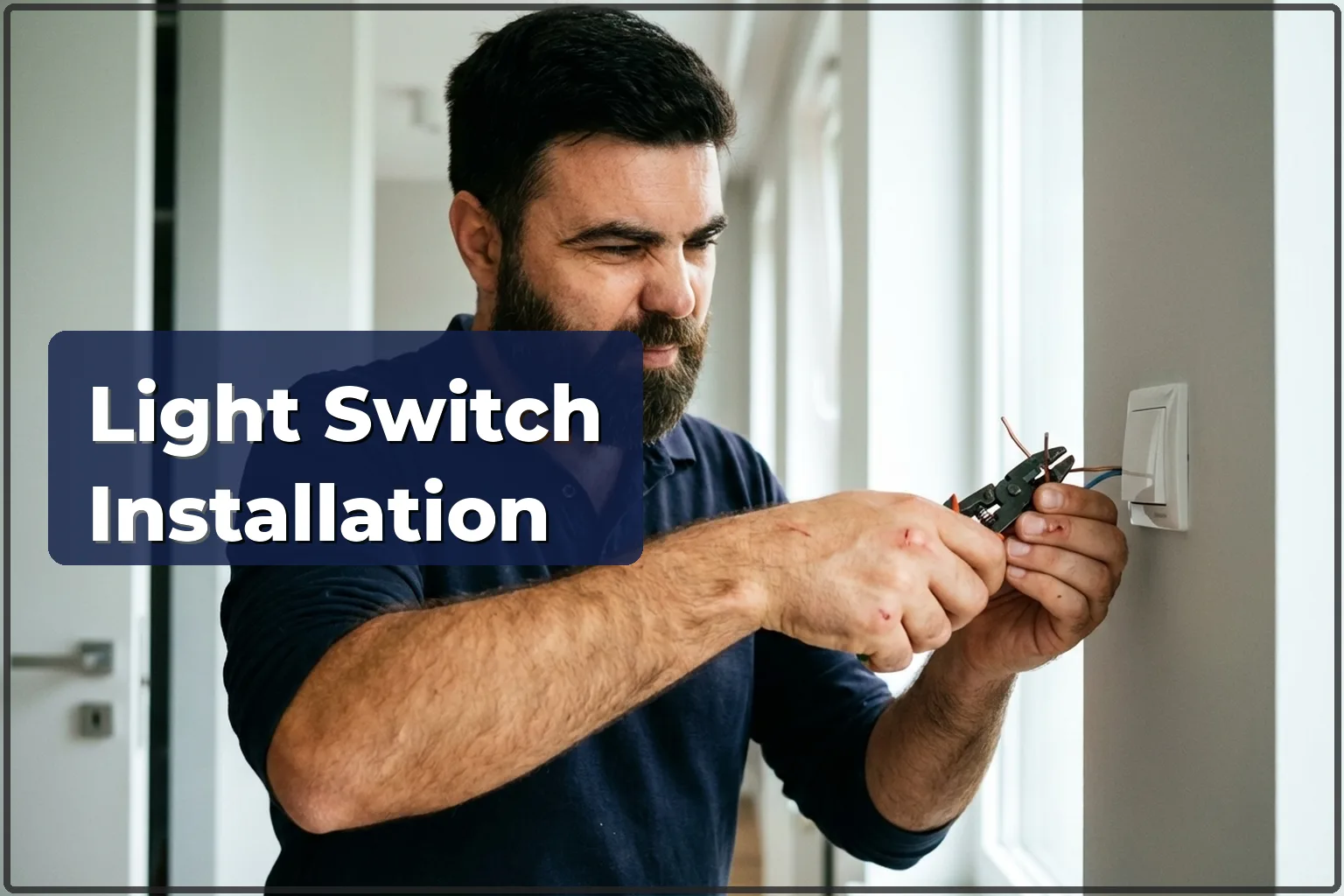
| Light switch installation | 50–90 zł/pkt |
| Light switch replacement | 60–90 zł/pkt |
| Light switch repair | 150–350 zł/szt |
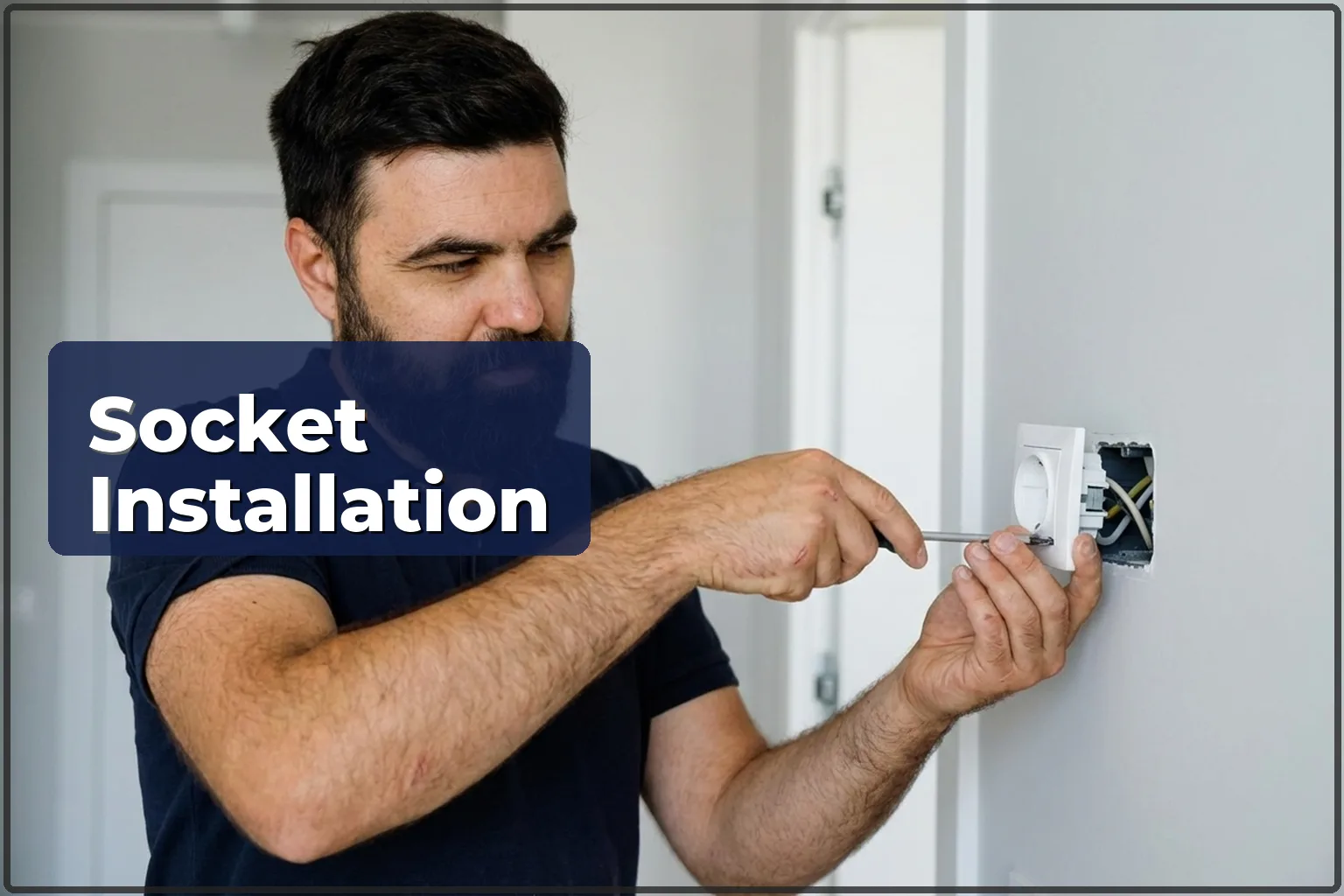
| Socket installation | 30–90 zł/pkt |
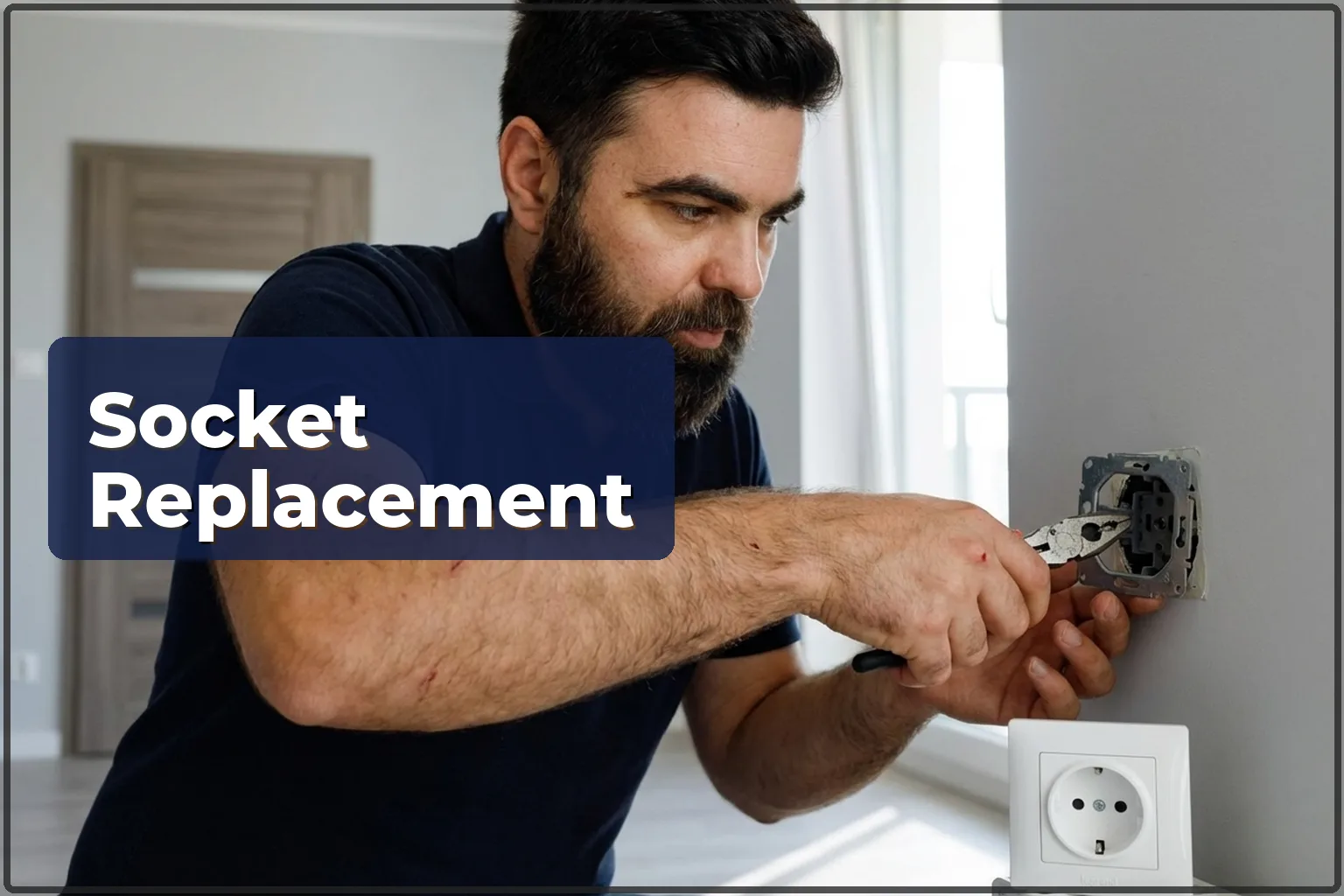
| Socket replacement | 50–90 zł/pkt |
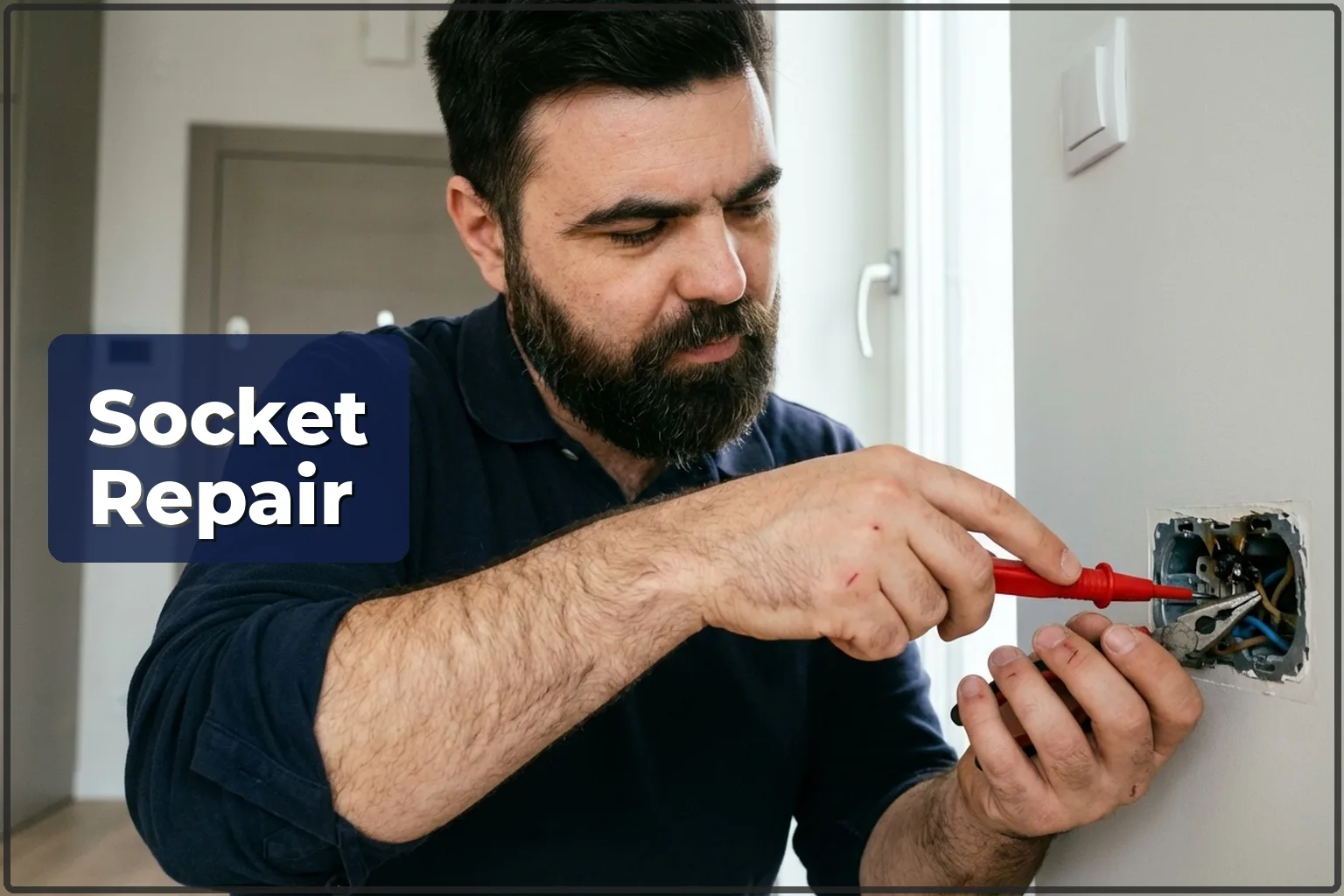
| Socket repair | 60–250 zł/szt |
| New electrical point | 150–250 zł/pkt |
| Wall chasing for cables | 40–80 zł/mb |
| Running electrical cables | 15–50 zł/mb |
| Junction box wiring | 80–400 zł/szt |
| Light installation (lamp, chandelier) | 80–550 zł/pkt |
| Light fixture replacement | 150–450 zł/szt |
| Lighting repair | 120–350 zł |
| LED strip installation | 60–90 zł/mb |
| LED transformer installation | 150–220 zł/szt |
| Bulb and halogen replacement | 30–50 zł/szt |
| Power socket installation 230/400 V | 150–350 zł/pkt |
Indicative prices. Ranges for a typical scope. Fixings included, materials separate. Minimum order 300 zł.
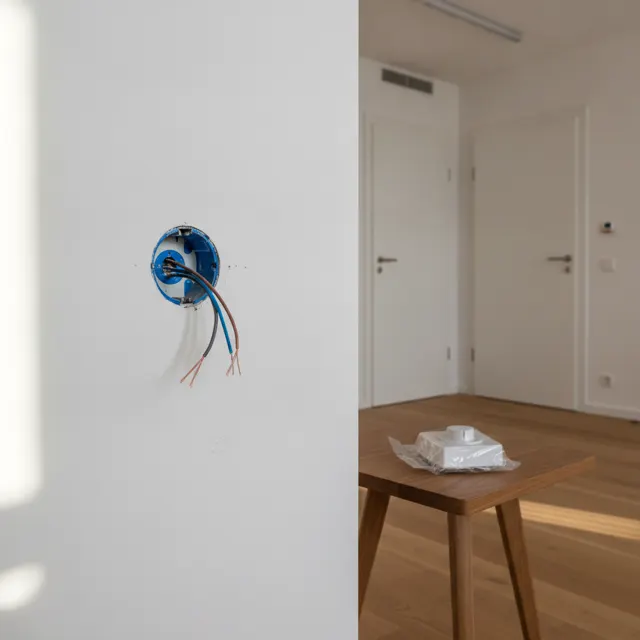
Price ranges and offers from tradespeople: light fitting in Warsaw.
Installation or replacement?
A new switch needs a cable and a back box. If the switch is there but clicks without effect or sparks, book switch replacement.
Light switch fitting and replacement: how the work goes
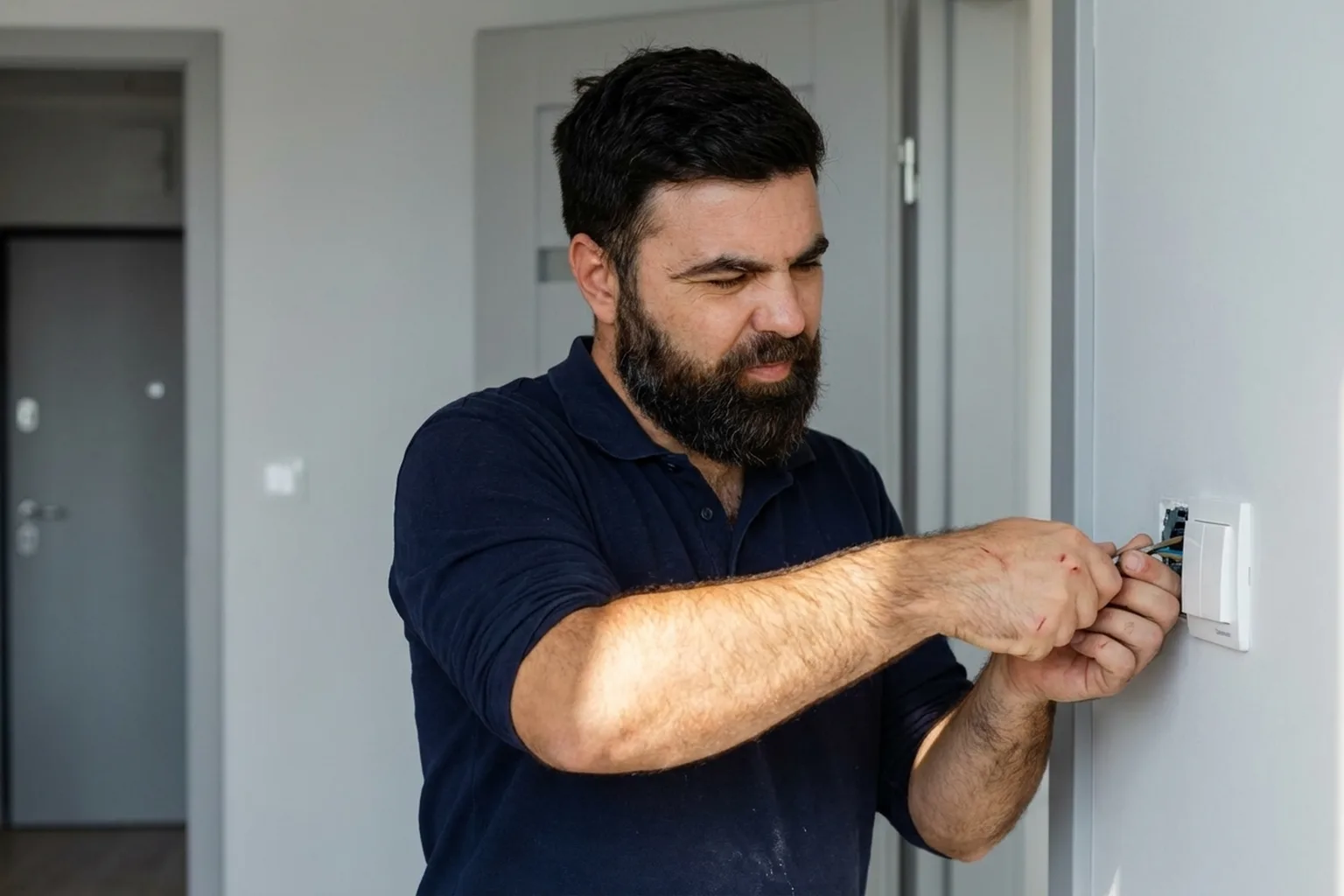
- You explain the job: exactly what needs doing: replacing an old switch, moving one, or fitting a new one.
- The technician checks the switch type and wiring setup (single phase, two-gang, two-way).
- On site, the technician isolates the circuit at the consumer unit and confirms zero voltage with an indicator.
- Removes the old switch, then inspects the condition of the wires and back box.
- Wires in the new switch, fixes it in the back box, and installs the face plate.
- Turns the breaker back on and tests it: the light should switch on and off cleanly, with no sparking or lag.
Common customer mistakes (and how to avoid them)
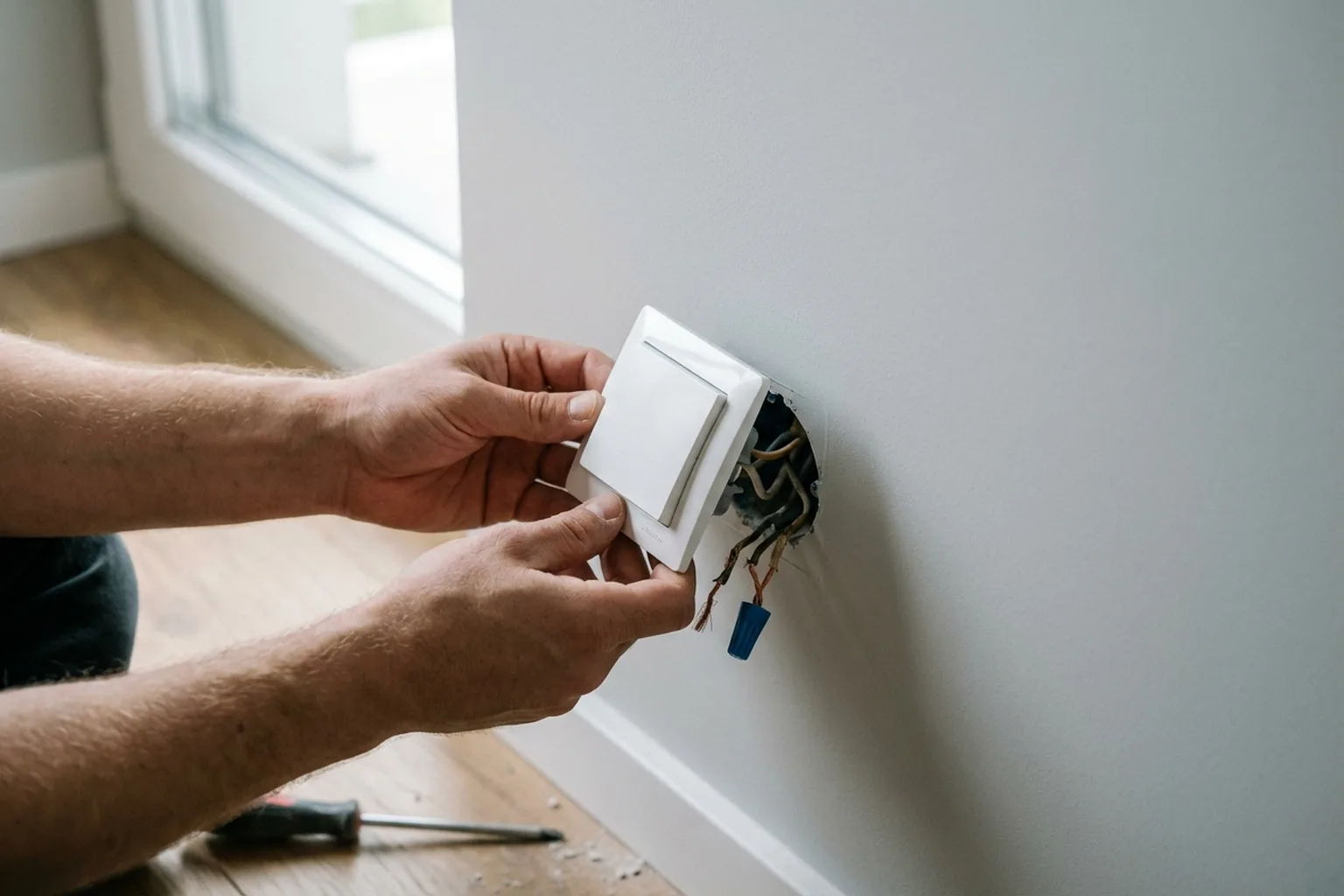
- Changing a switch while the power is still on: this can kill you. Always switch off the breaker at the consumer unit, not just the switch itself.
- Buying the wrong kind of switch: there are single-pole, double-pole, two-way, and intermediate switches. They may look alike, but the wiring diagrams are different.
- Mixing up live and neutral during connection — the switch must interrupt the live wire. If it interrupts neutral instead, the lamp holder remains energised even when the light is off.
- Pushing wires together without terminal blocks, bare twisted joints oxidise, the connection gives out, and sparking begins.
- Installing a switch in an old, cracked back box, the mechanism won’t stay secure and ends up pulling out of the wall.
- Ignoring the smell of burnt plastic — that means a contact is overheating, and it can lead to fire.
What to prepare before the technician arrives
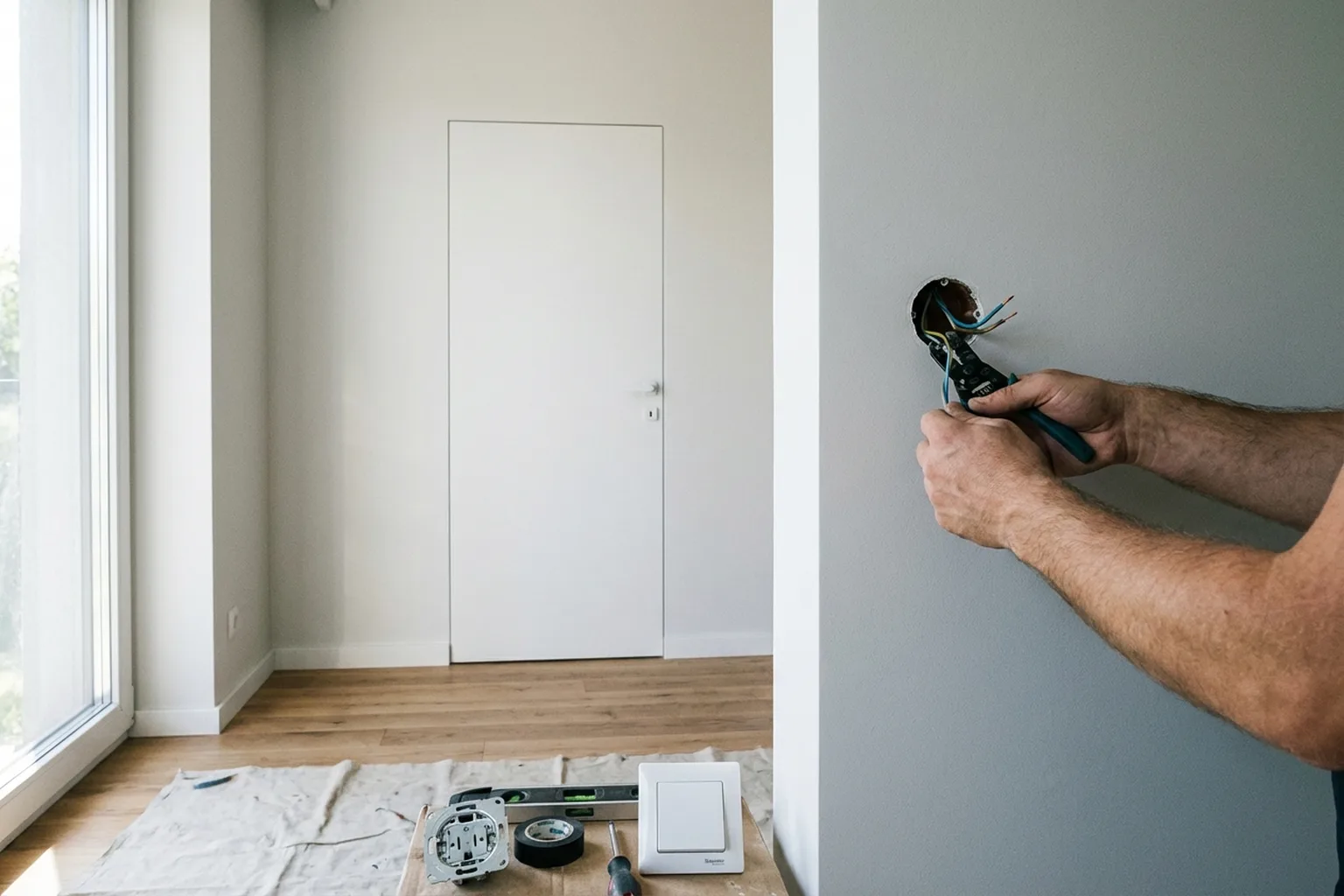
- Find your consumer unit and work out which breaker controls the relevant circuit.
- If you’re buying the switch yourself, ask the technician which type you need (flush/surface-mount, number of gangs, two-way required?).
- Take a photo of the existing switch and send it to the technician — this helps identify the back box type and fixing method.
- If the switch is being relocated, mark the wanted position on the wall.
- Make sure the wall is easy to reach: move furniture and pictures out of the way.
- Check that there’s a power socket available for tools (if chasing is required).
- Send access details: intercom code, parking info.
- Group all electrical jobs into one visit (sockets, lights, switches) — it works out cheaper.
Light switch fitting and replacement in practice: a Warsaw case
A client in Mokotów posted a request to replace three switches: two single-gang units and one double-gang in the hallway. Once the first one came off, the technician found the wires joined with bare twists, no terminal blocks, and the insulation had melted from overheating. In the second switch, live and neutral were reversed, so the chandelier stayed energised even when switched off. The technician replaced all three mechanisms with Legrand Valena units, installed Wago connectors on every joint, and corrected the polarity. The whole job took 1.5 hours. The client said the switches no longer clicked late or sparked. Lesson: if a switch is more than 10 years old, inspect all the connections — not only the mechanism.
Frequently asked questions
Can I replace a switch myself?
In principle, yes, if you’ve definitely isolated the circuit and know how to read the wiring diagram. But if the cables are aluminium, old, or unmarked: call a professional.
Which switches do tradespeople recommend?
Legrand, Schneider, Simon, Hager: dependable, easy to find, standard back-box size. Stay away from no-name products from market stalls.
Can I fit a dimmer instead of a standard switch?
Yes, if the bulbs are dimmable (LEDs marked “dimmable”). Standard LEDs used with a dimmer will flicker or won’t work at all.
How long does replacing one switch take?
15–25 minutes if the back box and wiring are in good shape. If repairs are needed — up to 40 minutes.
What should I do if a switch sparks?
Stop using it. Turn off the breaker at the consumer unit and call a professional. Sparking points to a bad connection or an overload.
Can other electrical jobs be done in the same visit?
Yes, and it works out cheaper. Gather all your tasks: the technician can sort everything in one trip.
Who does the work
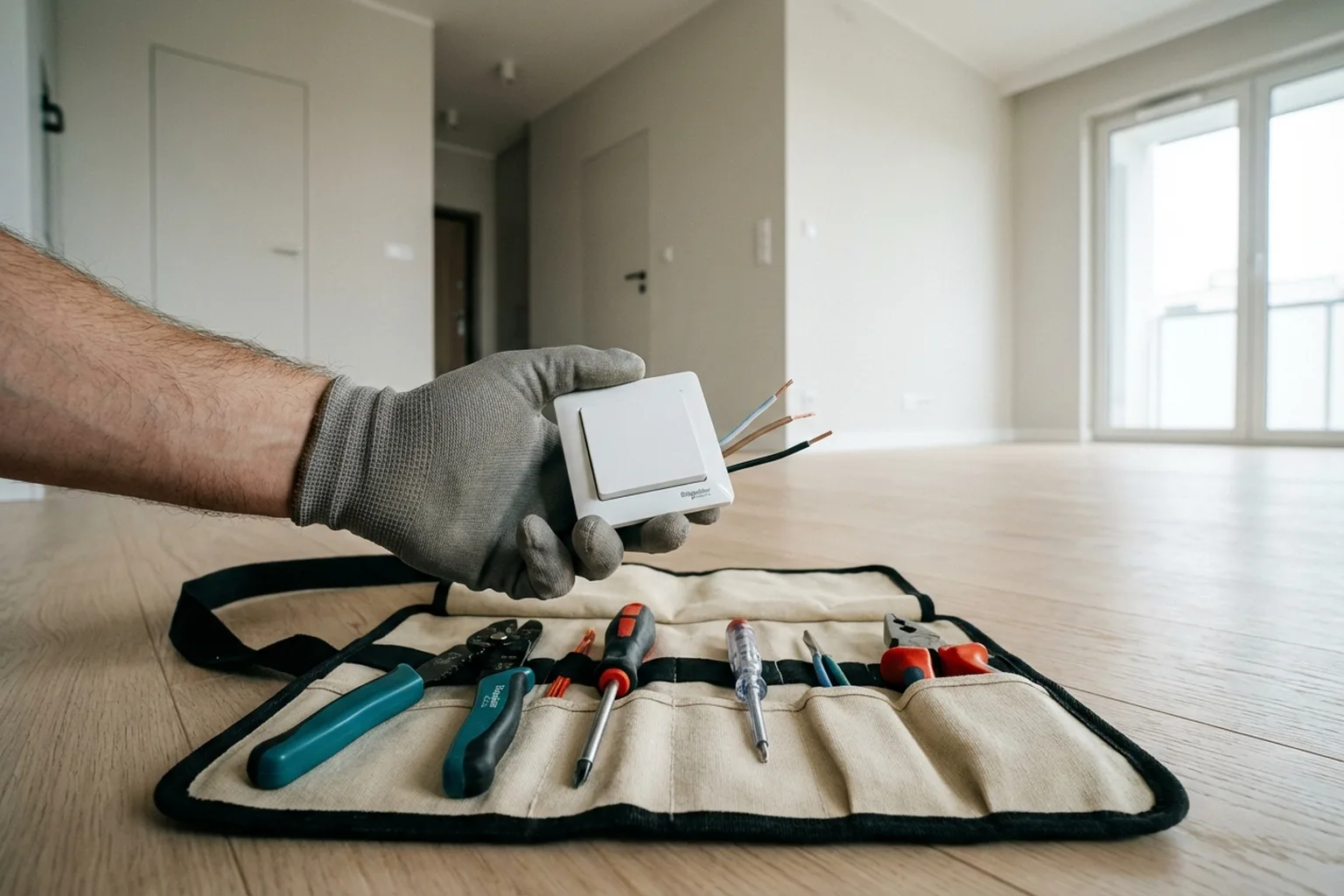
Switch installation and replacement is done by electricians with hands-on experience in domestic wiring. Tradespeople work across all of Warsaw.
Order in the app
Describe the job, add photos and the address. Tradespeople send their own prices and dates, and you pick one of the offers.
Open the app