
Important: any electrical job comes with a risk of electric shock. If you don’t know what’s behind the fault, don’t dismantle the fitting yourself, call a professional.
Light repair: cost and what affects it
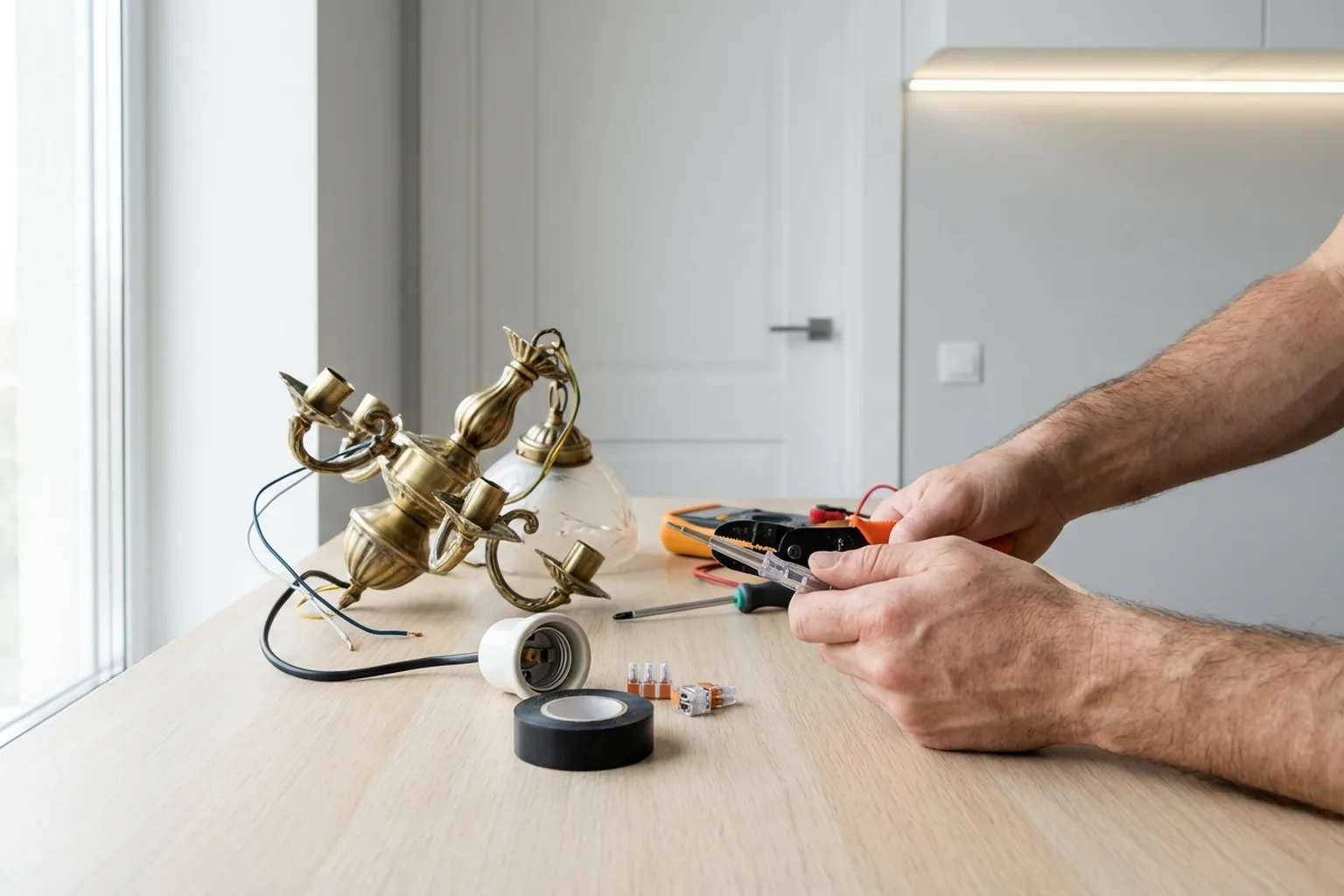
The price of lighting repair depends on the kind of fault. If the issue is with a lamp holder or terminal, the repair is fast. If the internal wiring has to be replaced or a break in the wall has to be located — the job takes more time and costs more. Fixings and terminals are included in the price. New lamp holders, drivers and cables are charged separately if parts have to be replaced. Current prices for all electrical work are listed in the table below.
| Service | Price |
|---|---|
| Light switch installation | 50–90 zł/pkt |
| Light switch replacement | 60–90 zł/pkt |
| Light switch repair | 150–350 zł/szt |
| Socket installation | 30–90 zł/pkt |
| Socket replacement | 50–90 zł/pkt |
| Socket repair | 60–250 zł/szt |
| New electrical point | 150–250 zł/pkt |
| Wall chasing for cables | 40–80 zł/mb |
| Running electrical cables | 15–50 zł/mb |
| Junction box wiring | 80–400 zł/szt |
| Light installation (lamp, chandelier) | 80–550 zł/pkt |
| Light fixture replacement | 150–450 zł/szt |
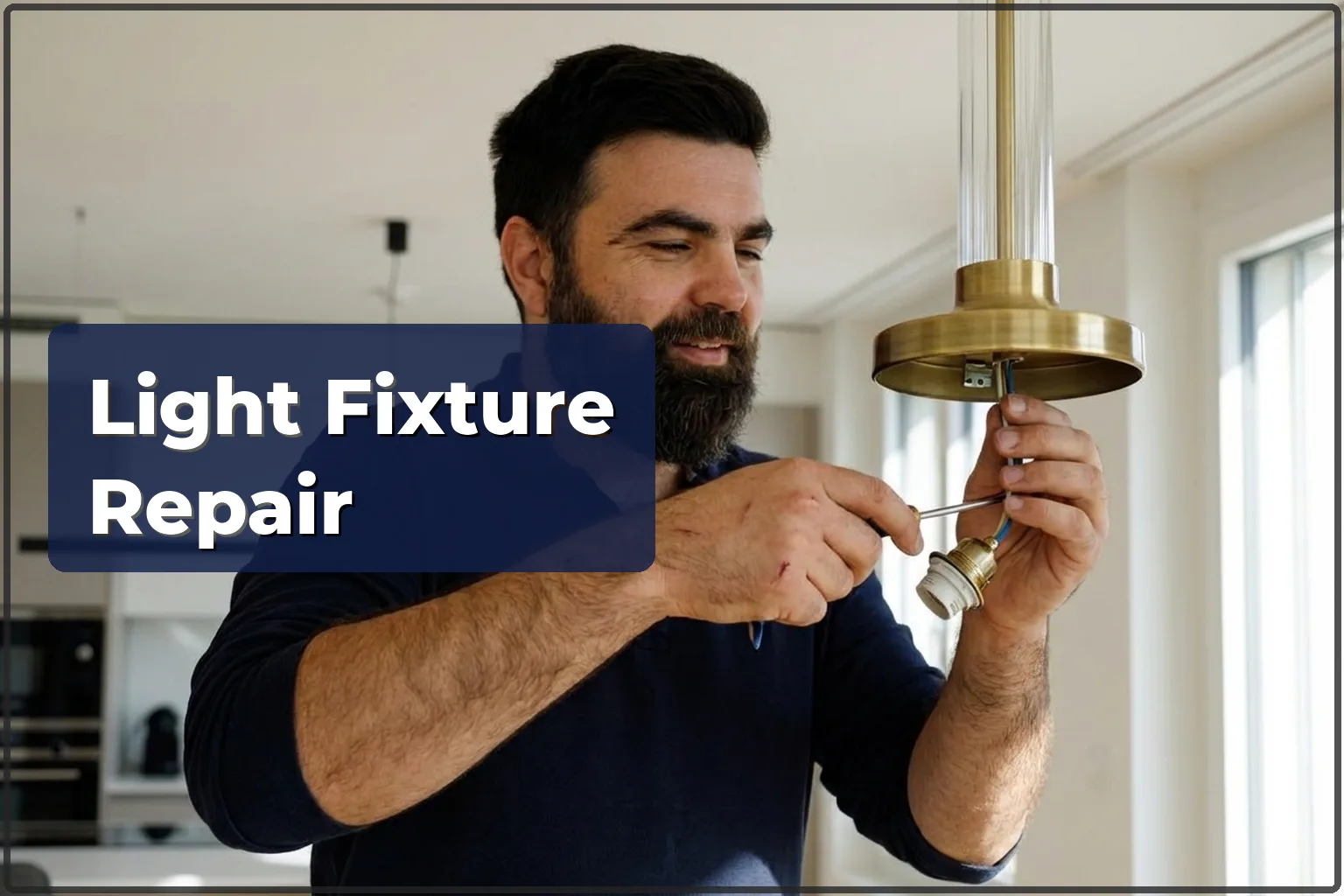
| Lighting repair | 120–350 zł |
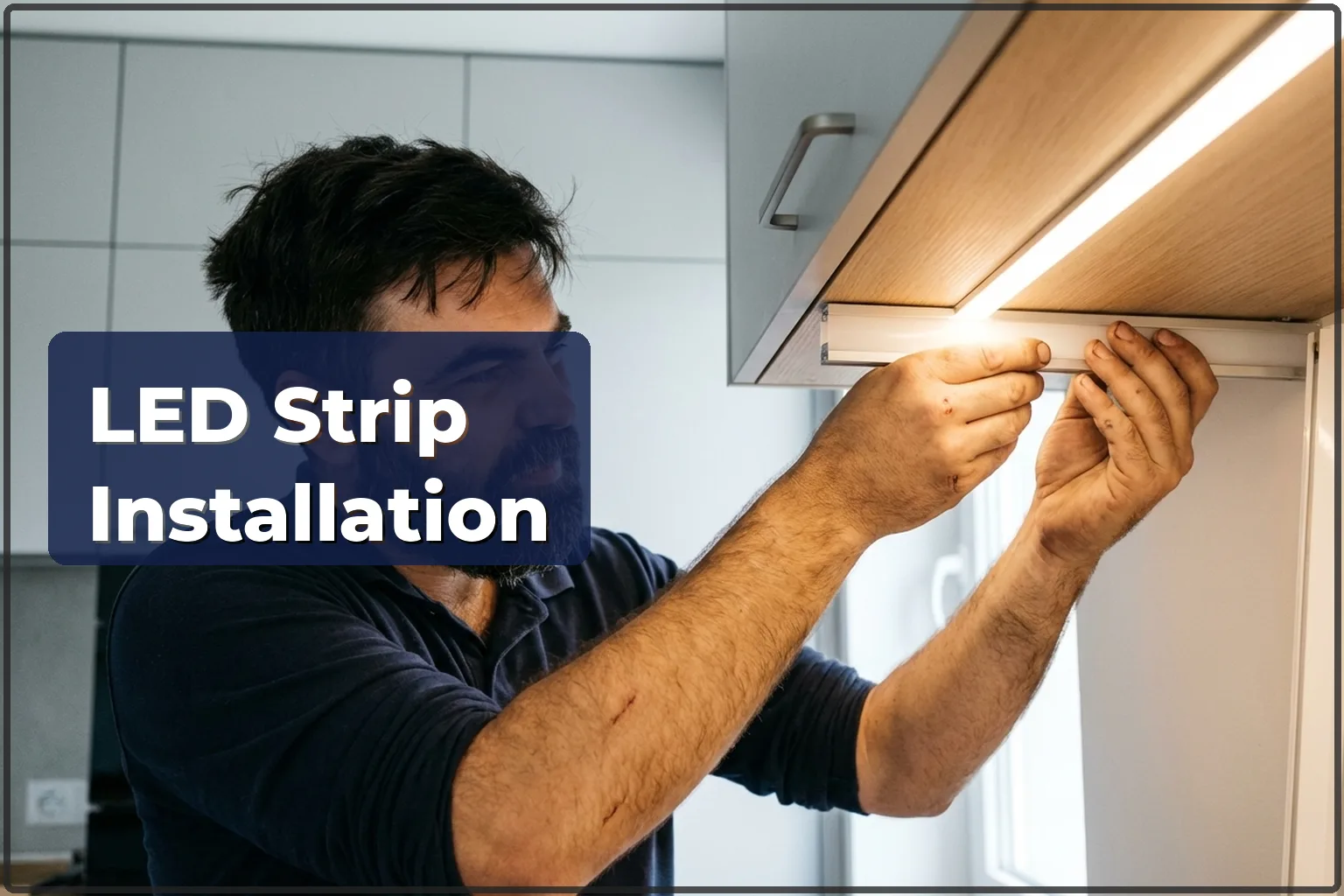
| LED strip installation | 60–90 zł/mb |
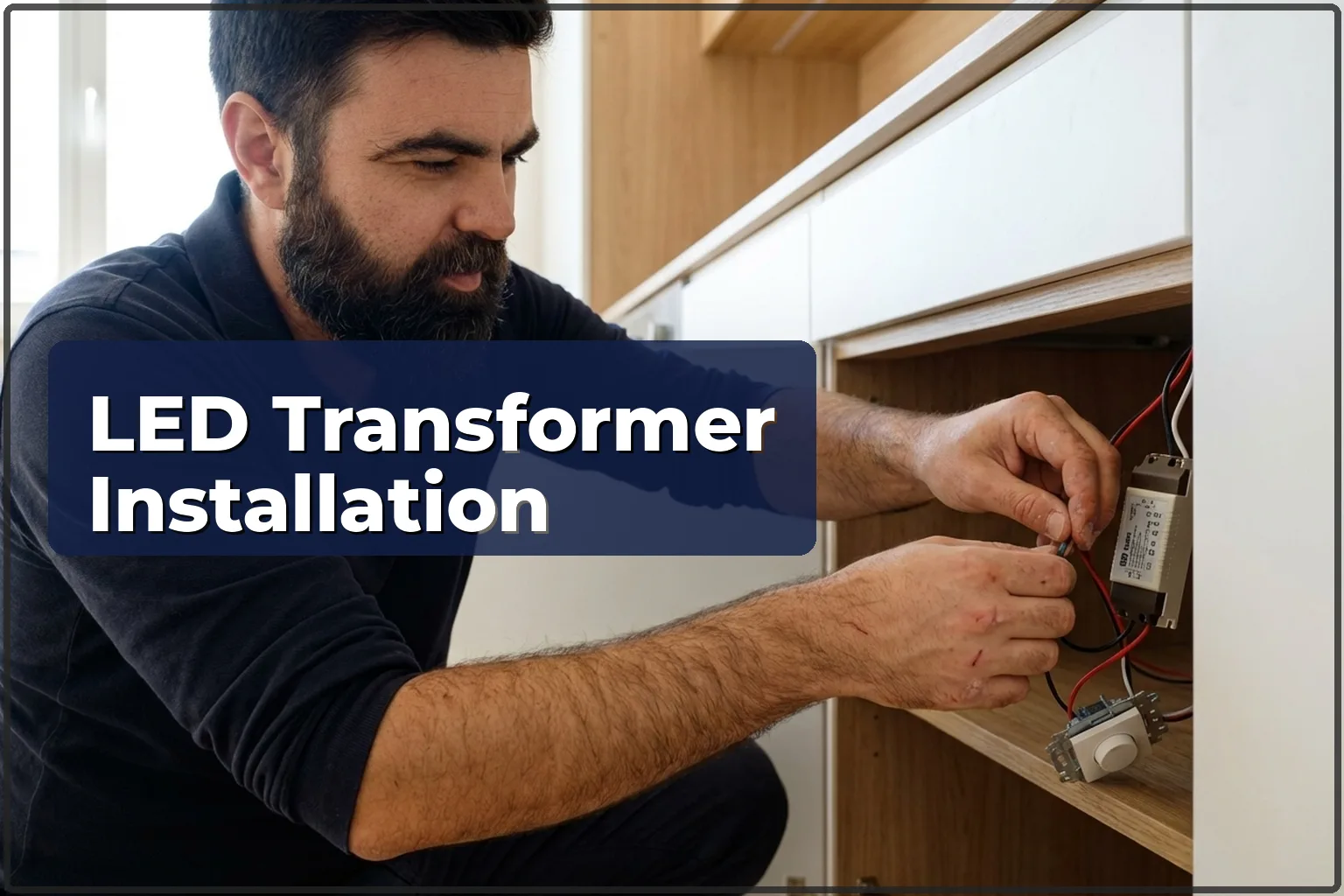
| LED transformer installation | 150–220 zł/szt |
| Bulb and halogen replacement | 30–50 zł/szt |
| Power socket installation 230/400 V | 150–350 zł/pkt |
Indicative prices. Ranges for a typical scope. Fixings included, materials separate. Minimum order 300 zł.
Rather hand the job over? More here: home repair service in Warsaw.
How the repair works on site
- You describe the problem in the order: what exactly isn’t working and when it began.
- The technician works out the fitting type (chandelier, wall light, spots, LED panel) and the likely causes.
- Timing depends on the tradesperson you choose: they give the arrival time in their offer.
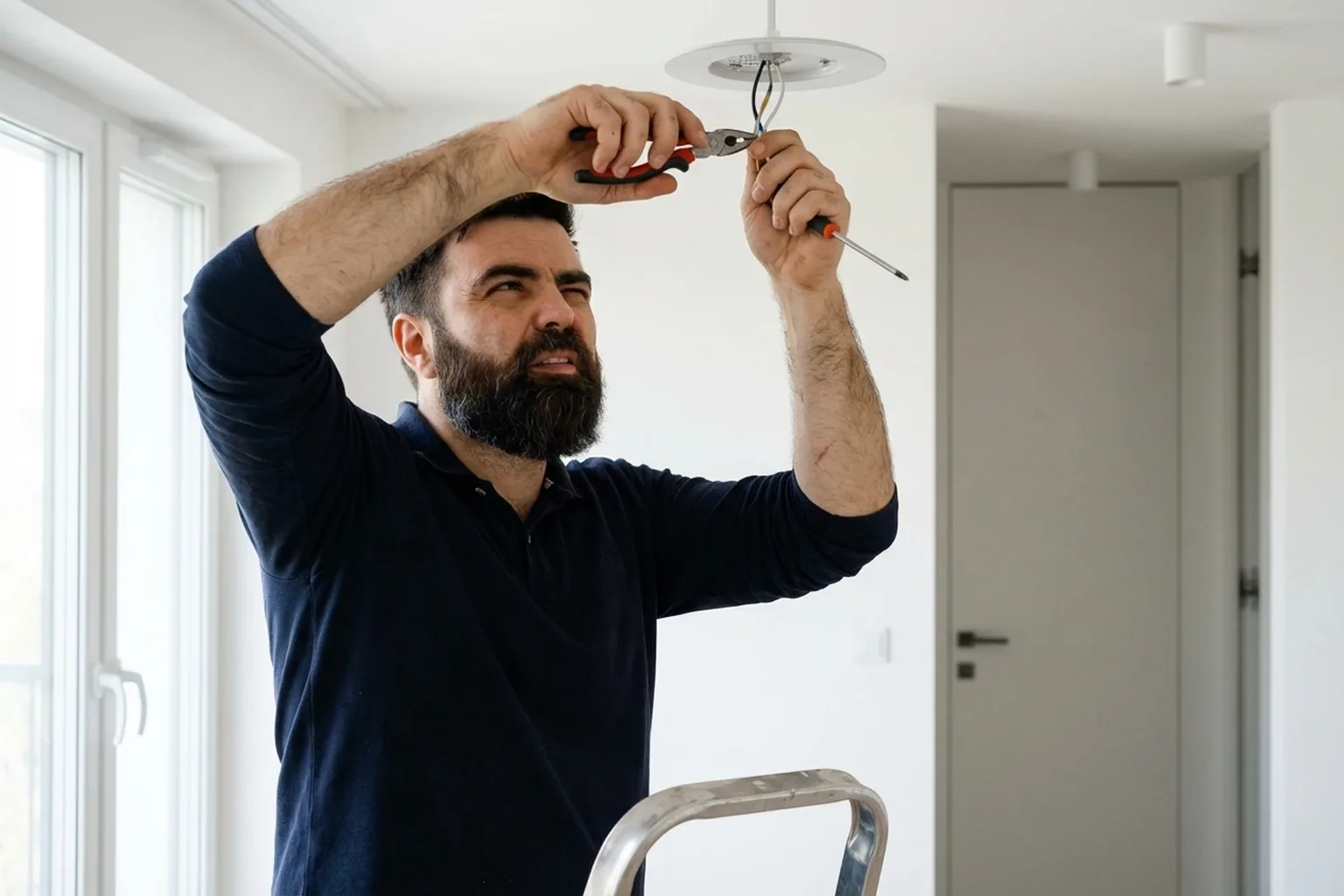
- On site the technician isolates the circuit and carries out diagnostics: checks output voltage, cable continuity, and the condition of the lamp holder and terminals.
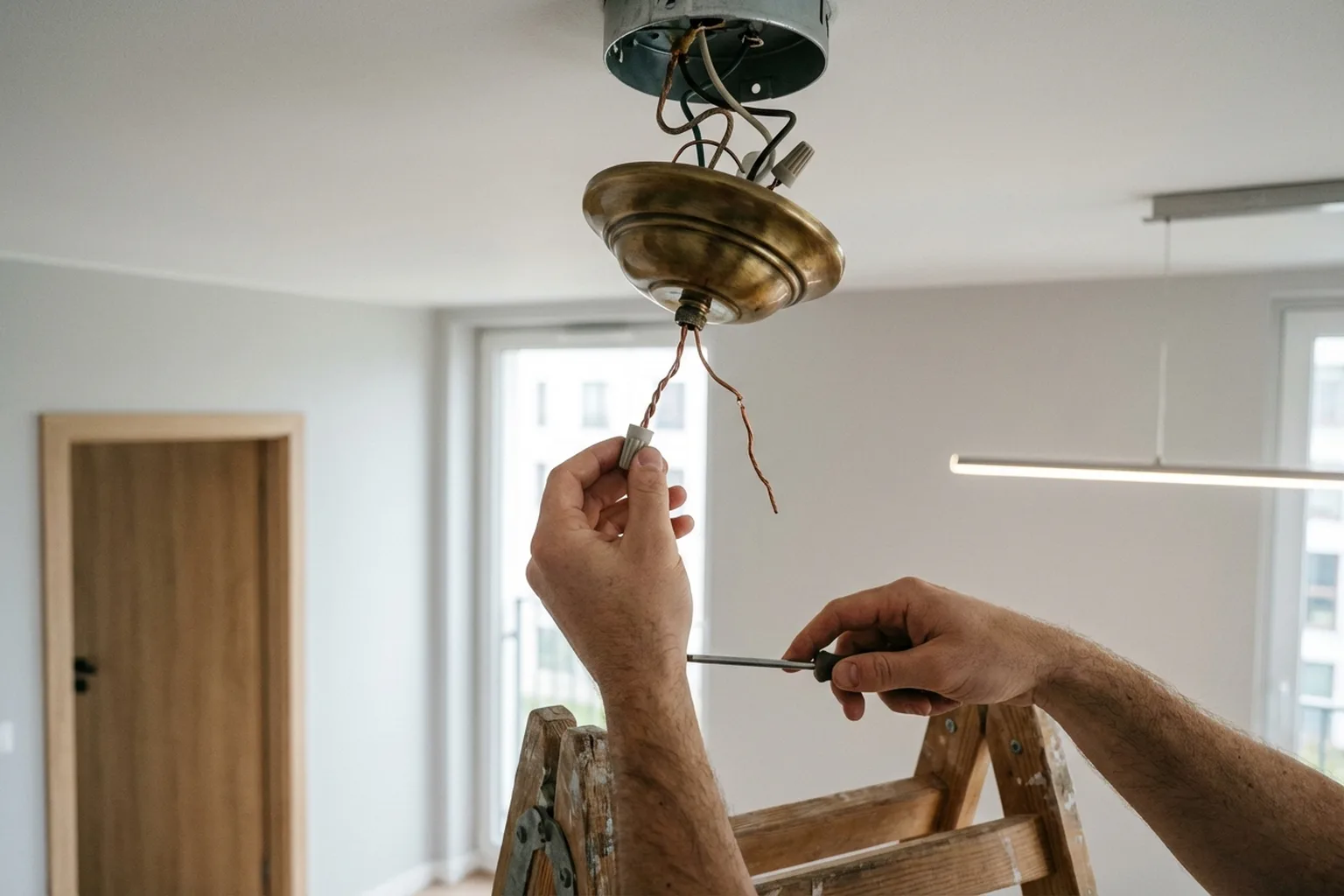
- Finds the cause and repairs it: replaces a contact, tightens a terminal, swaps a lamp holder, restores a connection.
- Tests the fitting in every mode — on, off, group switching.
- Gives advice: which bulbs to use and what signs to watch for.
Common faults and their causes
- Light flickers or goes dim: bad contact in the lamp holder, a loose ceiling terminal or a switch fault.
- One group of bulbs doesn’t work, a snapped wire inside the chandelier or a burnt terminal contact.
- Fitting won’t turn on at all — no voltage on the circuit (breaker tripped, break in the wall) or a defective switch.
- Fitting makes a buzzing sound: the dimmer doesn’t suit LED bulbs or the transformer is vibrating.
- Burning smell from the ceiling: overheated terminal, melted insulation. Call a professional right away.
- Not all spotlights switch on, a failed driver or a broken connection in the daisy chain.
What to prepare before the technician arrives
- Show in the order where the consumer unit is — the circuit will need to be isolated.
- Describe the problem clearly: when it started and under what conditions (after changing a bulb, after a power surge, it just stopped).
- If you know the fitting model or LED driver, say so in the order in advance.
- Make sure there’s clear access to the fitting: move any furniture from underneath.
- If the light flickers — leave it switched on so the technician can see the fault as it happens.
- Check whether other fittings on the same circuit are working: that helps narrow the issue down.
- Have a ladder ready if the ceiling is above 2.7 m (or mention it in the request so the tradesperson brings one).
- Send the intercom code and parking details.
Light repair in practice: a Warsaw case

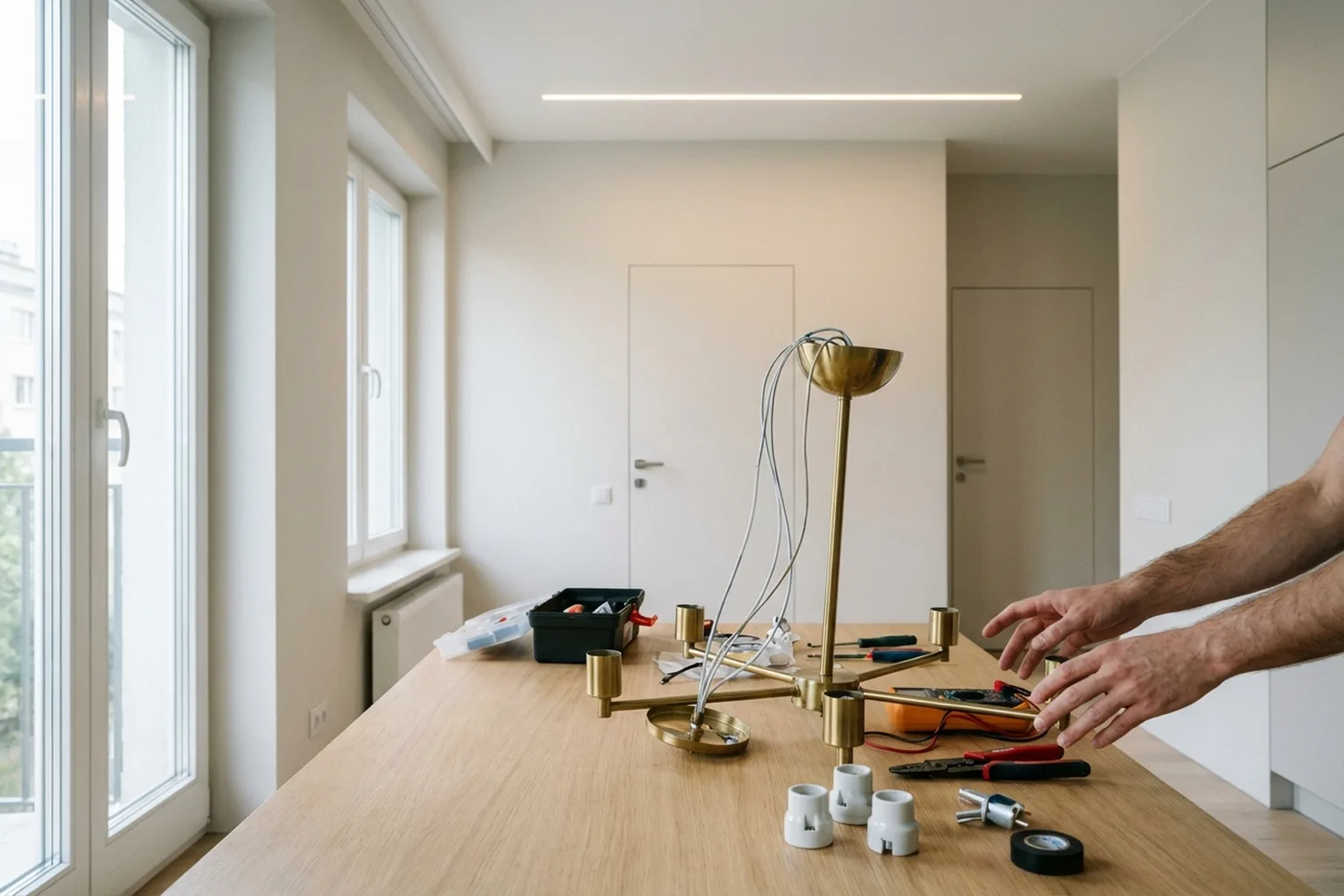
A client in the Zoliborz district got in touch because the second group on his five-arm chandelier in the living room had stopped working (3 out of 5 bulbs). The bulbs themselves were fine: they checked them in another holder. The technician took the chandelier down and found the cause: inside the body, one wire had burned off from the terminal. The wire was blackened and the terminal had melted — it looked like the connection had been loose since installation and had slowly overheated over time. Tradespeople stripped the wire, replaced the terminal block with a Wago 221, and checked every other connection inside the chandelier. Hung it back up, switched it on: both groups working. The whole job took 35 minutes. Conclusion: if some bulbs stop working but the bulbs themselves are fine, the fault is almost always inside the chandelier, in the wiring or terminals.
Some causes you can track down yourself before calling anyone: how to find the cause of a fault at home.
Frequently asked questions
The fitting stopped working — is it definitely a repair rather than a replacement?
In 80% of cases, yes. The fault is usually a contact, terminal or lamp holder. Full replacement is seldom needed.
Could the problem be in the wiring rather than the fitting itself?
Yes. If there’s no voltage at the ceiling outlet, the fault is further upstream: in the switch, junction box or the cable in the wall.
Does the technician bring spare parts?
Standard terminals, E27/E14 lamp holders and cables: yes. Specific LED drivers or transformers often have to be ordered.
Can an LED panel be repaired?
That depends on the fault. If the driver has failed, it can be replaced. If the LEDs have burned out, replacing the whole panel is often the simpler option.
How long does a repair take?
Diagnosis and fixing a simple fault: 20–40 minutes. If the chandelier has to be dismantled or a break in the wall has to be traced — up to 1.5 hours.
What’s included in the price?
Labour, diagnostics, small consumables (terminals, insulating tape). Replacement lamp holders, drivers and cables are charged separately if parts need replacing.
Book a lighting repair
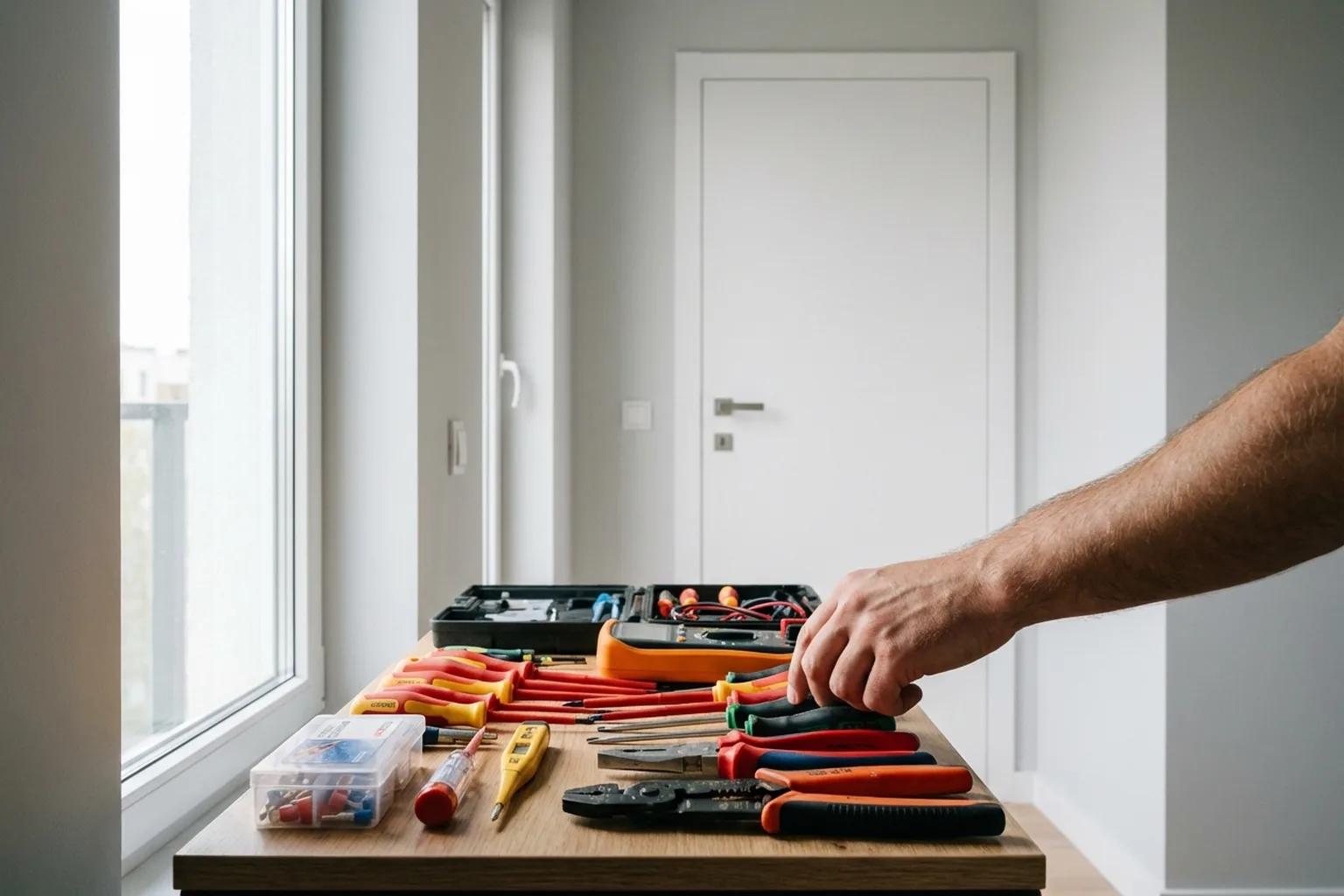
Tradespeople repair chandeliers, wall lights, spots and panels across Warsaw. Tradespeople trace the fault, fix it and test everything.
Order in the app
Describe the job, add photos and the address. Tradespeople send their own prices and dates, and you pick one of the offers.
Open the app