
Window Adjustment in Warsaw — Hardware Tuning and Draught Elimination
24.02.2026The sash has dropped and scrapes the frame, the handle spins loosely, cold air seeps from under the seal — sound familiar? In most cases the problem is fixed in 20–40 minutes with an adjustment, no window replacement needed. uPVC windows are designed for thousands of opening cycles, but over time the hardware loosens: hinges weaken, clamping pressure drops, the sash shifts by fractions of a millimetre — and suddenly there is a draught. We adjust windows across Warsaw: switch to winter and summer mode, eliminate draughts, tune hinges and strike plates. If the seal is worn — we replace it. Often a single visit is enough to make the window work like new again.
How much does window adjustment cost and what affects the price
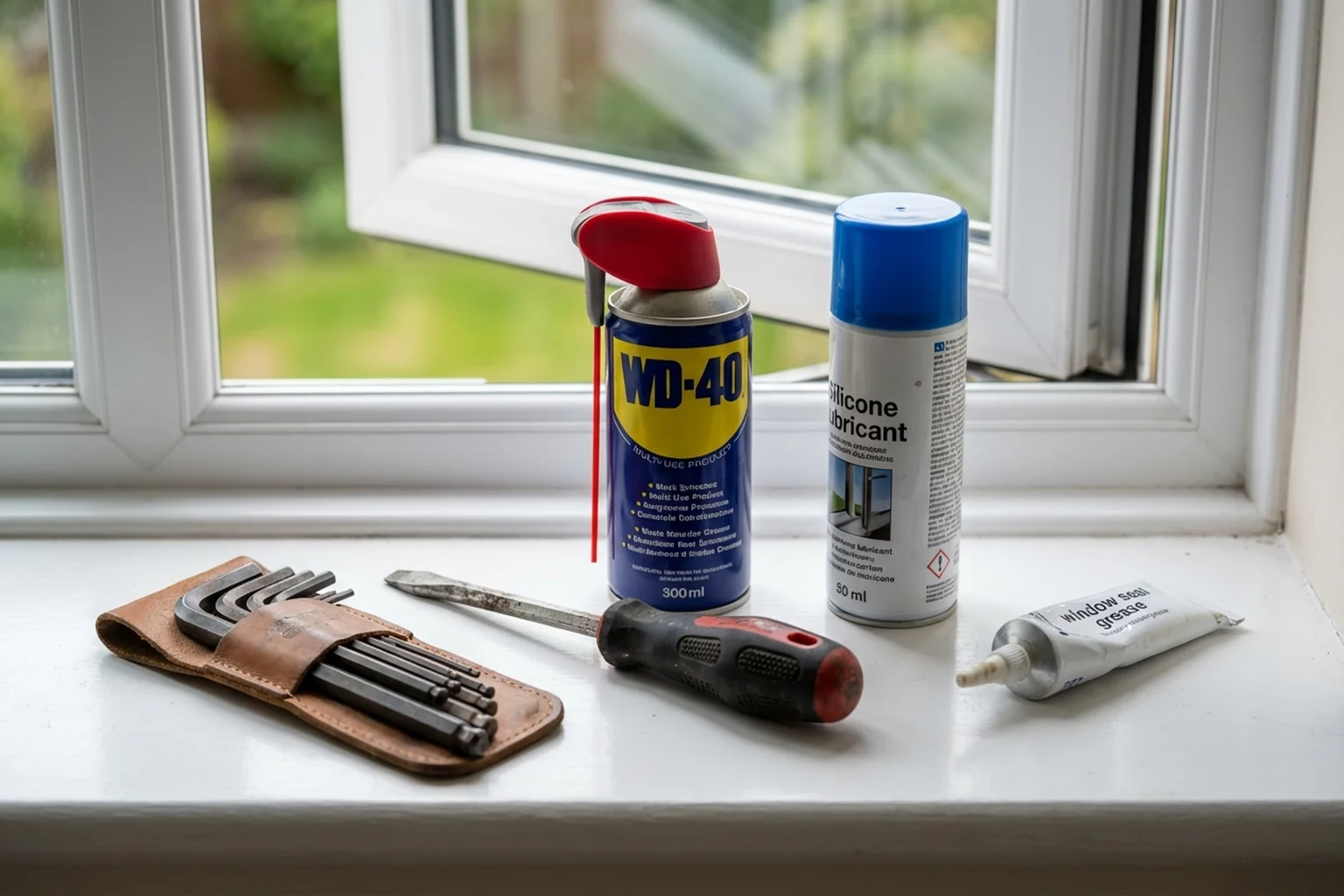
Adjustment is one of the most affordable services. The price depends on the number of sashes, the condition of the hardware and the scope of work. A simple switch to winter mode is the minimum. If the hinges need tightening, the strike plates need replacing or the seal needs changing — a little more. But even in difficult cases it costs a fraction of a window replacement.
The price includes diagnostics, pressure adjustment, hinge tuning and a check of sash operation. Seal replacement, strike plates or a new handle are extra, but the consumables are inexpensive. Current prices below.
| Service | min | max |
|---|---|---|
| Window adjustment | 30 zł | 60 zł |
| Window sealing | 25 zł/mb | 40 zł/mb |
| Window repair | 150 zł | 400 zł |
Describe the problem and send a photo of the window — the technician will quote an approximate cost before arriving.
How window adjustment works: step by step
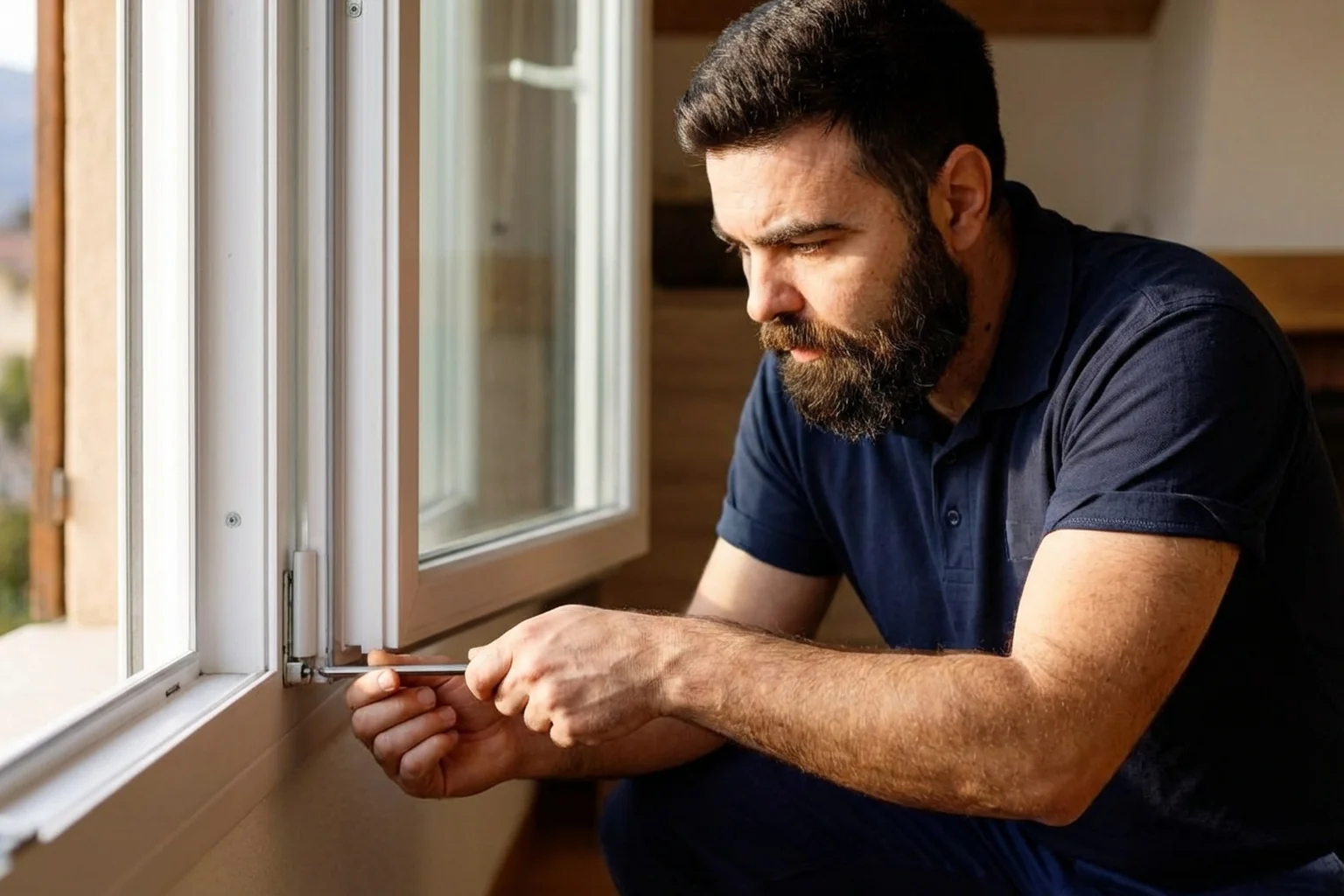
Adjustment is not just a quick turn of a hex key. The technician checks the entire system so the window works properly rather than simply stopping the draught for a week:
- Inspection and diagnostics. The technician opens and closes every sash, tests clamping pressure with a sheet of paper — if the paper slides out without resistance the pressure is too low. He inspects the seal, hinges and strike plates.
- Checking sash geometry. Using a level and visual inspection we determine whether the sash has dropped or skewed. If it scrapes the frame at the bottom — the lower hinge has sagged. If at the side — the upper corner has shifted.
- Hinge adjustment. With a 4 mm hex key we tighten or loosen the upper and lower hinges. The lower hinge controls vertical position and left-right shift. The upper hinge controls the clamping of the top corner and tilt.
- Setting the pressure (winter/summer). On the edge of the sash there are eccentric cams (mushroom pins). We rotate them: mark facing the street — winter mode (maximum pressure), mark facing the room — summer (relaxed). Between seasons — the middle position.
- Strike plate adjustment. If the cams are set correctly but there is still a draught, the problem lies in the strike plates on the frame. We tighten or shift them so the cam engages the slot precisely.
- Checking and lubricating the hardware. We apply silicone lubricant to every moving part: hinges, cams, scissors, handle gearbox. This reduces wear and makes opening easier.
- Final check. The sash should open smoothly, close without force and the handle should lock in every position. We test the pressure with paper around the full perimeter. If the seal is heavily worn we recommend replacement.
Common mistakes when adjusting windows
Many people try to adjust their windows themselves following online videos. Sometimes it works, but more often things get worse:
- All cams cranked to maximum. Permanent winter mode flattens the seal within a year or two and it stops sealing. Switch modes with the seasons.
- Turning the wrong screw. Each hinge has several adjustment screws — one for vertical, one for horizontal, one for pressure. Random turning makes the sash even more skewed.
- Not lubricating the hardware. Adjusted but not lubricated. A few months later the mechanism jams again, hinges squeak and the handle is stiff.
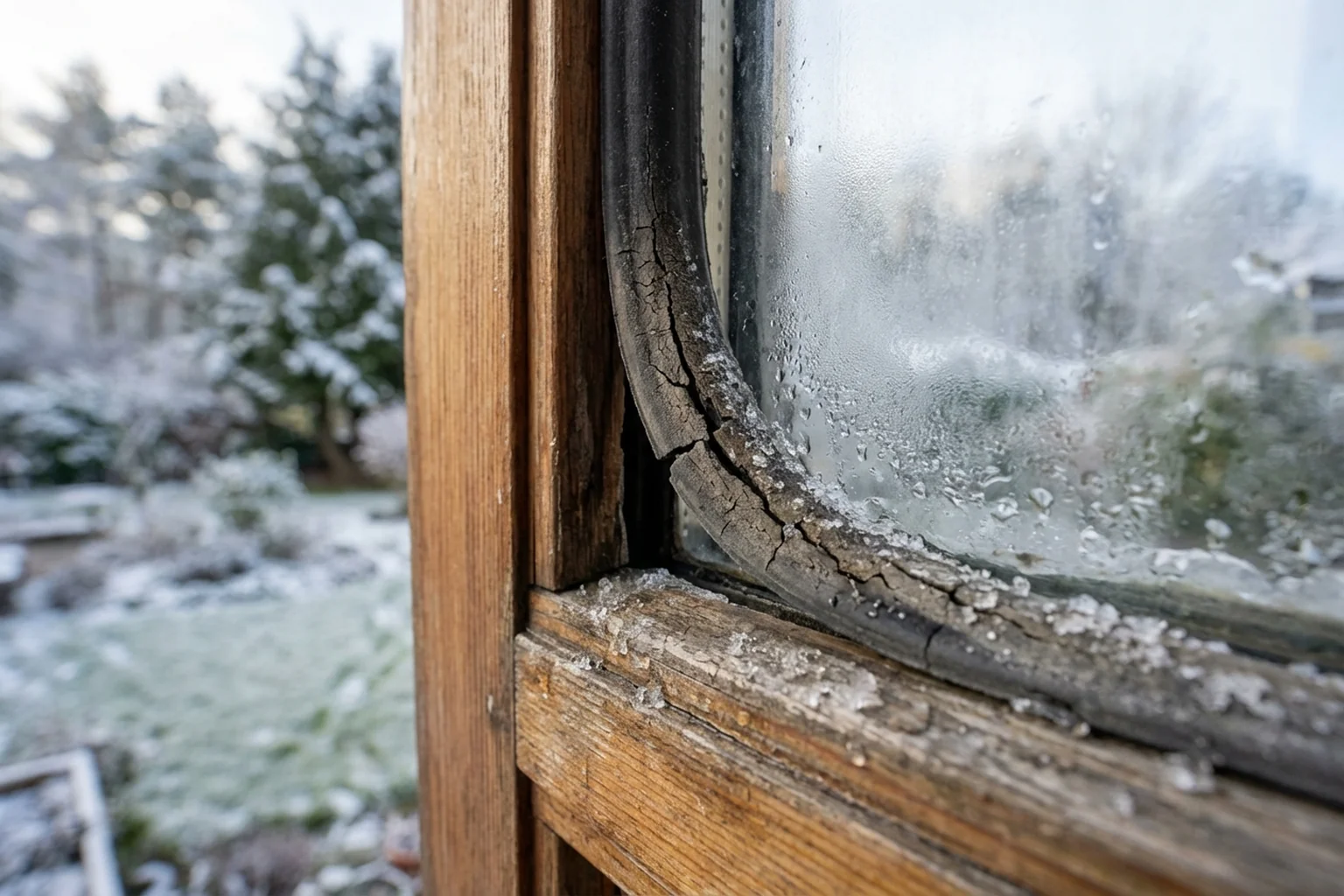
- Ignoring a worn seal. Adjustment will not help if the rubber has cracked and lost its elasticity. Replace the seal first, then set the pressure.
- Wedging cardboard under hinges. A folk remedy for sagging. It helps temporarily but disrupts the geometry and accelerates hardware wear.
- Forgetting the strike plates. Cams are set — but the sash still does not press tight. Because the strike plate has shifted or come loose.
What to prepare before the technician arrives
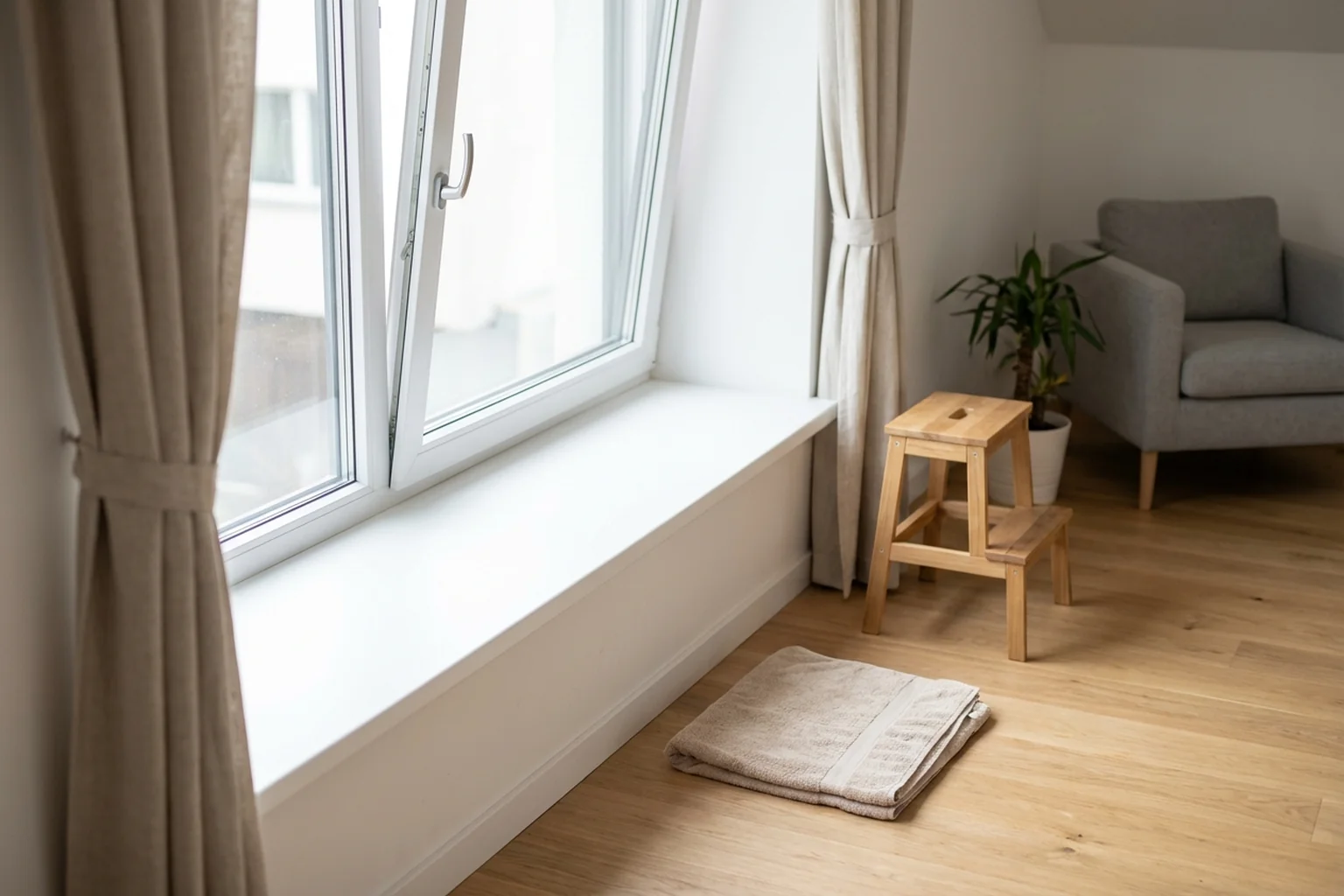
Adjustment is clean and quick work, but a few things will speed up the process:
- Clear the windowsill of plants, vases and anything that prevents the sash from opening fully.
- Pull back curtains and blinds — the technician needs unobstructed access to the window.
- If the window is on a balcony, make sure the route to it is clear.
- Note down exactly what the issue is: draught from above, from below, sash scraping, handle not turning fully.
- Check whether all windows in the flat need adjustment — it is cheaper to do everything in one visit.
- If the windows are still under the manufacturer’s warranty, check that DIY interference will not void it.
- Have access details ready: entry code and parking information — the technician arrives with tools.
- If there is a fly screen, remove it beforehand — it can get in the way during diagnostics.
- Pets are best kept in another room — an open window and a curious cat are a bad combination.
- Decide whether the balcony door also needs adjustment — the principle is the same.
A real case: window adjustment in a Wola flat
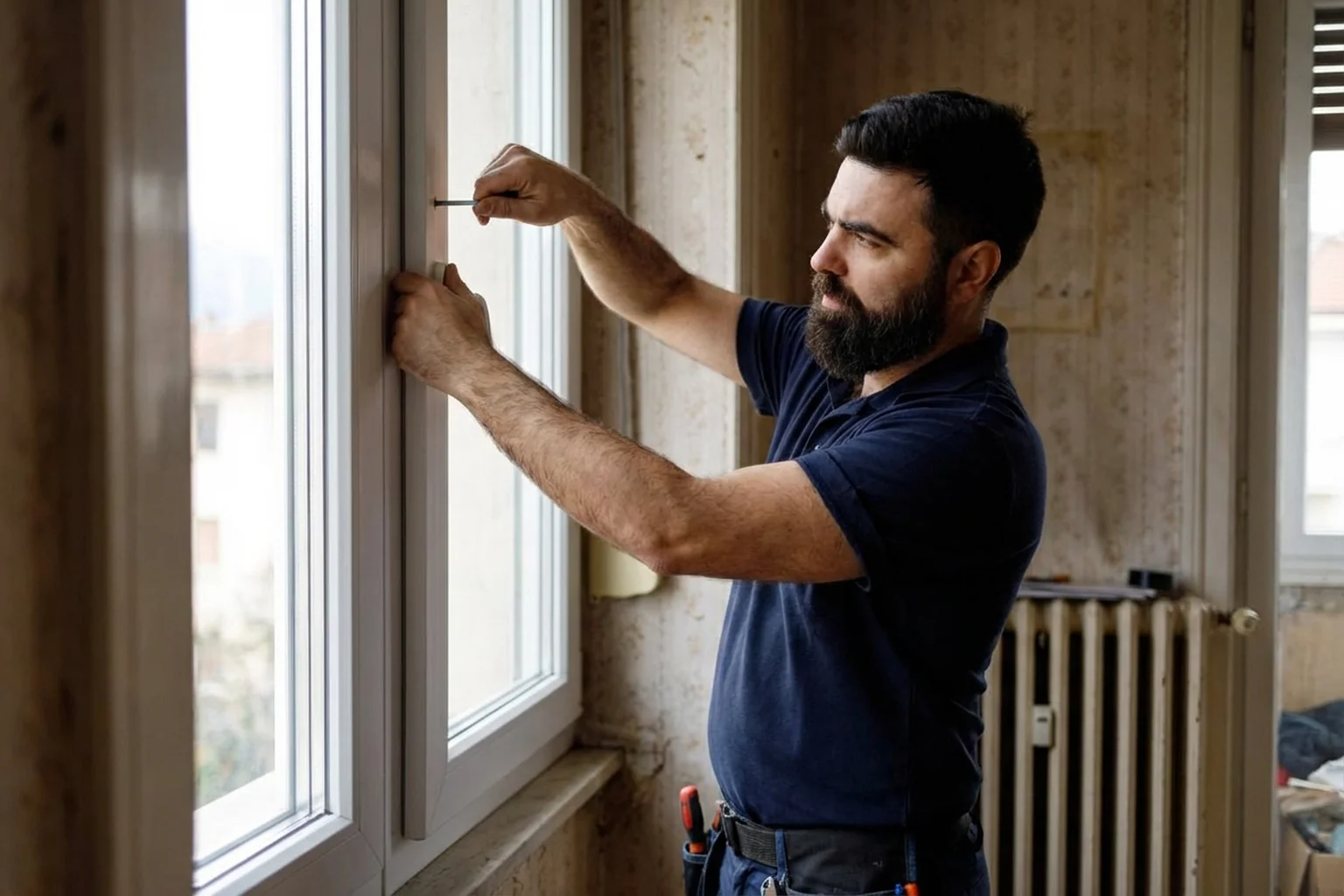
A client in Wola reported that in winter three living-room windows were noticeably draughty, even though they had been installed only four years earlier. Heating bills had risen and it had become cold to sit near the radiator. On inspection we found that every cam was still in summer mode — the windows had never been switched to winter. The seals were in good condition but the clamping pressure was minimal.
We switched the cams to winter mode and tightened the lower hinges on two sashes — they had sagged slightly and were scraping the frame. We lubricated all mechanisms with silicone spray. On one window a strike plate had shifted — we tightened and secured it. After adjustment we tested the pressure with paper — the sheet held firmly around the entire perimeter. The job took about an hour for three windows. The client called back a week later and said the draughts had disappeared completely and the room was noticeably warmer. The takeaway: sometimes you do not need to replace windows to solve a cold-air problem — a proper adjustment is enough.
Frequently asked questions
How often should windows be adjusted?
We recommend switching winter/summer mode twice a year. A full hinge and hardware adjustment — once every 2–3 years or when problems appear: draughts, a stiff handle, sash scraping.
Can a timber window be adjusted?
If the timber window has tilt-and-turn hardware — yes, adjustment is the same as for uPVC. Old timber windows without modern hardware cannot be adjusted — they need resealing or replacement.
What if the handle spins loosely?
Most often the fixing screws have come loose. Lift the decorative cover and tighten the two screws with a Phillips screwdriver. If that does not help, the handle mechanism is worn and needs replacing.
Will adjustment help if the sash will not close?
In 90 % of cases — yes. The sash fails to close because of sagging, skewing or shifted strike plates. All of these are fixed by adjustment. If the hardware mechanism itself is broken, the component will need replacing.
How long does adjustment take?
One sash — 15–20 minutes. A typical flat with 4–5 windows — about an hour. If seals need replacing, add 10–15 minutes per sash.
Is winter mode mandatory?
Not mandatory, but recommended. Winter mode increases clamping pressure and eliminates draughts. In summer it is better to ease off — the seal lasts longer. Leaving winter mode on all year round flattens the rubber in 2–3 years.
Why does the window start draughting again after adjustment?
Most likely the seal is worn and no longer springs back after compression. Adjustment increases pressure, but if the rubber is dead the effect is temporary. The solution is seal replacement.
Who does the work and what guarantees we offer
Window adjustment is carried out by technicians who work with window hardware every day — Roto, Maco, Siegenia, Winkhaus. We know the specifics of each system and which keys it requires. We arrive with a full set of hex keys, screwdrivers, silicone lubricant and spare consumables (cams, strike plates, seals). We cover all of Warsaw — from Bielany to Mokotow. We guarantee that after adjustment the sash will close smoothly, pressure will be even and the draught will be gone. If the problem returns within a month we come back and fix it free of charge. Call or message us — we typically reply within an hour.