
How much does window adjustment cost and what affects the price
Adjustment is among the lowest-cost services. The final amount depends on how many sashes there are, the state of the hardware and how much needs doing. A basic switch to winter mode is the starting point. If hinges need tightening, strike plates need replacement or the seal needs changing, the cost goes up a bit. Still, even in harder cases it is only a small part of the price of replacing a window.
The price covers diagnostics, pressure setting, hinge tuning and a check of how the sash works. Seal replacement, strike plates or a new handle are charged separately, but these parts are cheap. Current prices below.
| Service | Price |
|---|---|
| Window hardware adjustment | 80–190 zł/szt |
| Window sealing | 30–45 zł/mb |
| Window repair | 150–400 zł |
Indicative prices. Ranges for a typical scope. Fixings included, materials separate. Minimum order 300 zł.
Describe the issue and send a photo of the window — the technician will give you an approximate price before arrival.
What it costs and how to book: window adjustment in Warsaw.
How window adjustment works: step by step
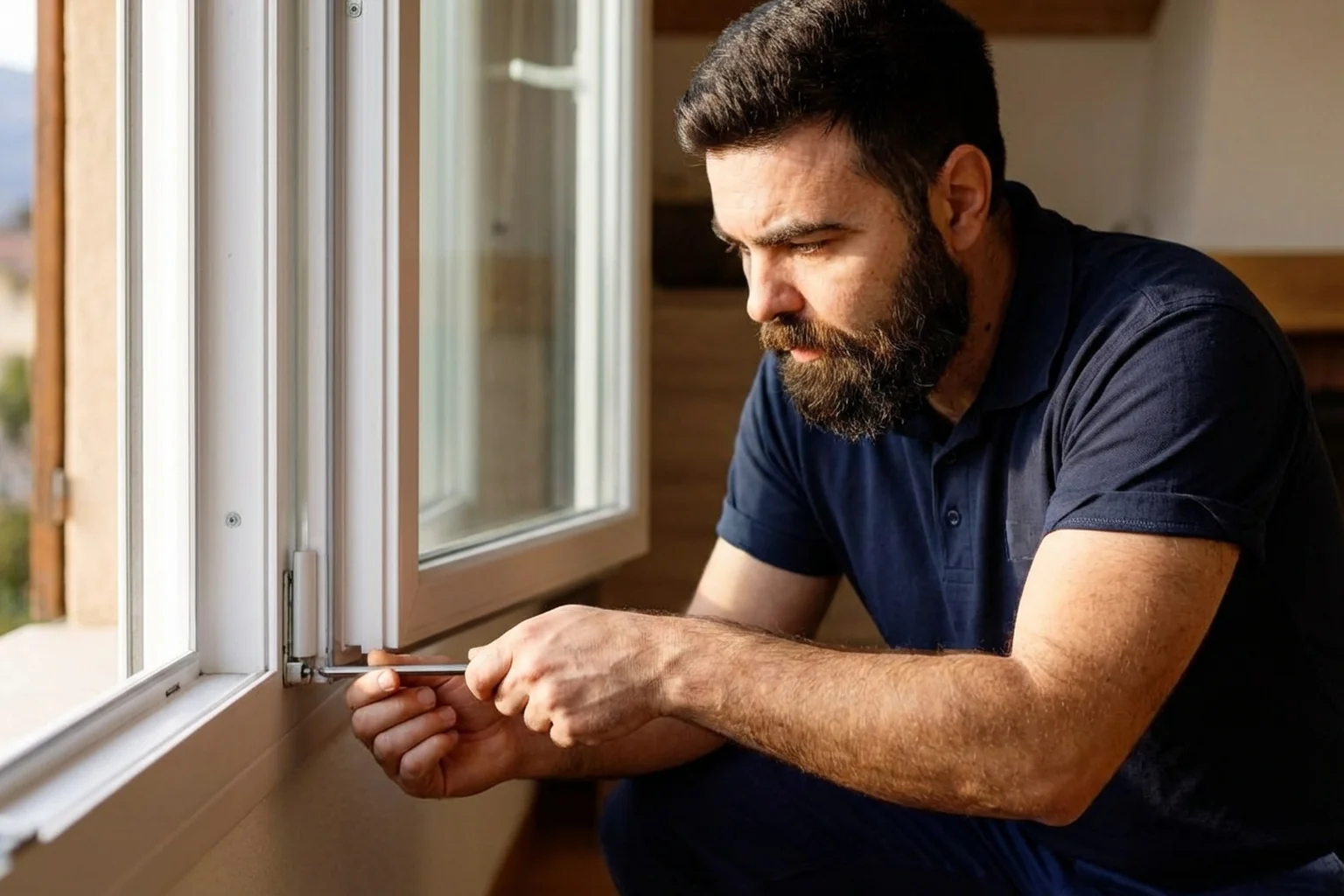
Adjustment is more than a quick twist with a hex key. The technician checks the whole system so the window works properly, not just stops the draught for a few days:
- Inspection and diagnostics. The technician opens and closes each sash, checks clamping pressure with a sheet of paper, if the paper pulls out with no resistance the pressure is too low. He looks over the seal, hinges and strike plates.
- Checking sash geometry. Using a level and visual check they see whether the sash has dropped or gone out of square. If it rubs the frame at the bottom, the lower hinge has sagged. If at the side — the top corner has moved.
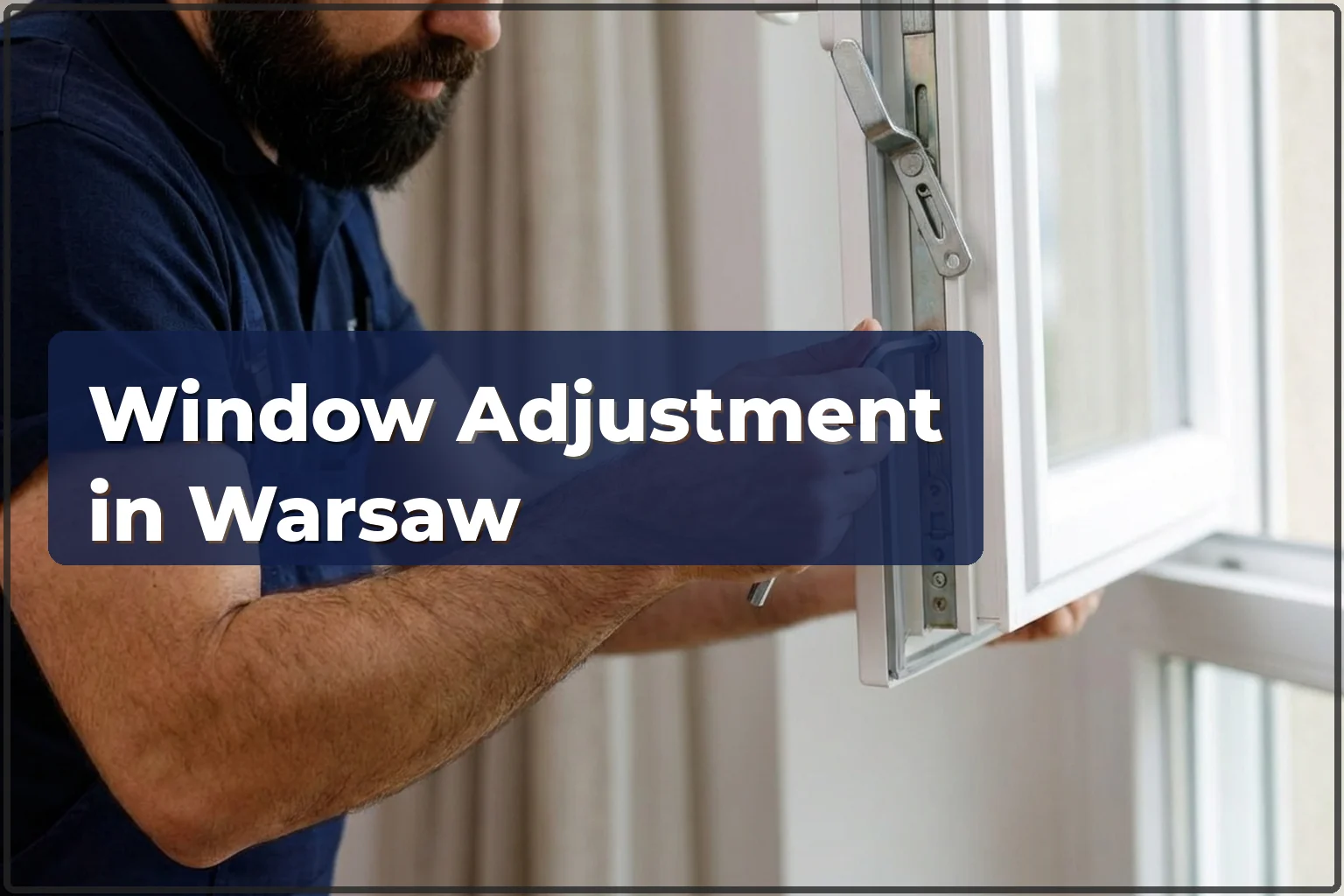
- Hinge adjustment. With a 4 mm hex key they tighten or loosen the upper and lower hinges. The lower hinge sets the vertical position and left-right movement. The upper hinge sets the pressure on the top corner and the tilt.
- Setting the pressure (winter/summer). On the edge of the sash there are eccentric cams (mushroom pins). Tradespeople turn them: mark facing the street, winter mode (maximum pressure), mark facing the room: summer (lighter pressure). Between seasons — the middle position.
- Strike plate adjustment. If the cams are set right but a draught is still there, the issue is in the strike plates on the frame. Tradespeople tighten or move them so the cam catches the slot exactly.
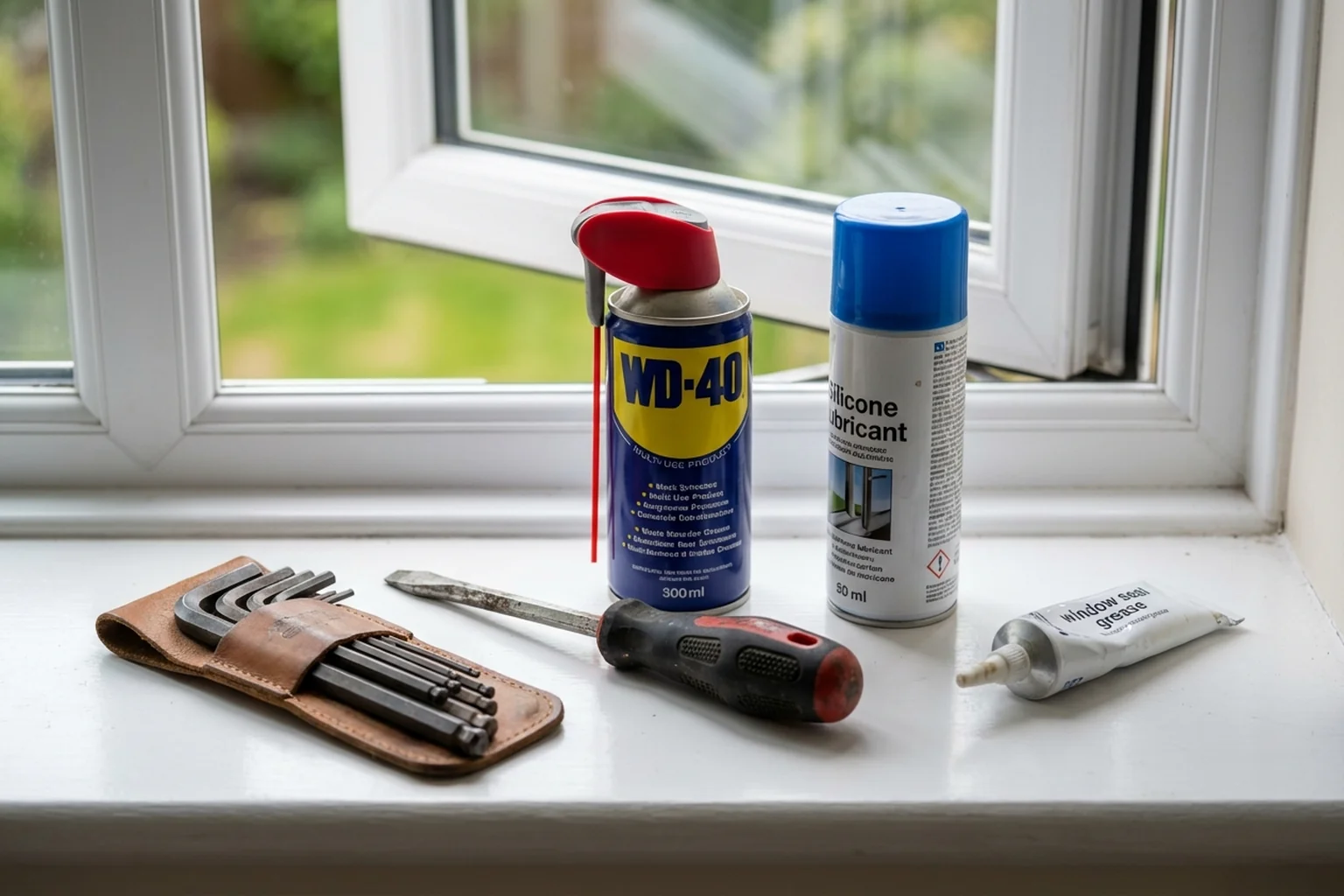
- Checking and lubricating the hardware. Tradespeople apply silicone lubricant to all moving parts: hinges, cams, scissors, handle gearbox. This cuts down wear and makes the window easier to open.
- Final check. The sash should open easily, close without force and the handle should lock in every position. Tradespeople test the pressure with paper around the full perimeter. If the seal is badly worn they advise replacement.
Common mistakes when adjusting windows
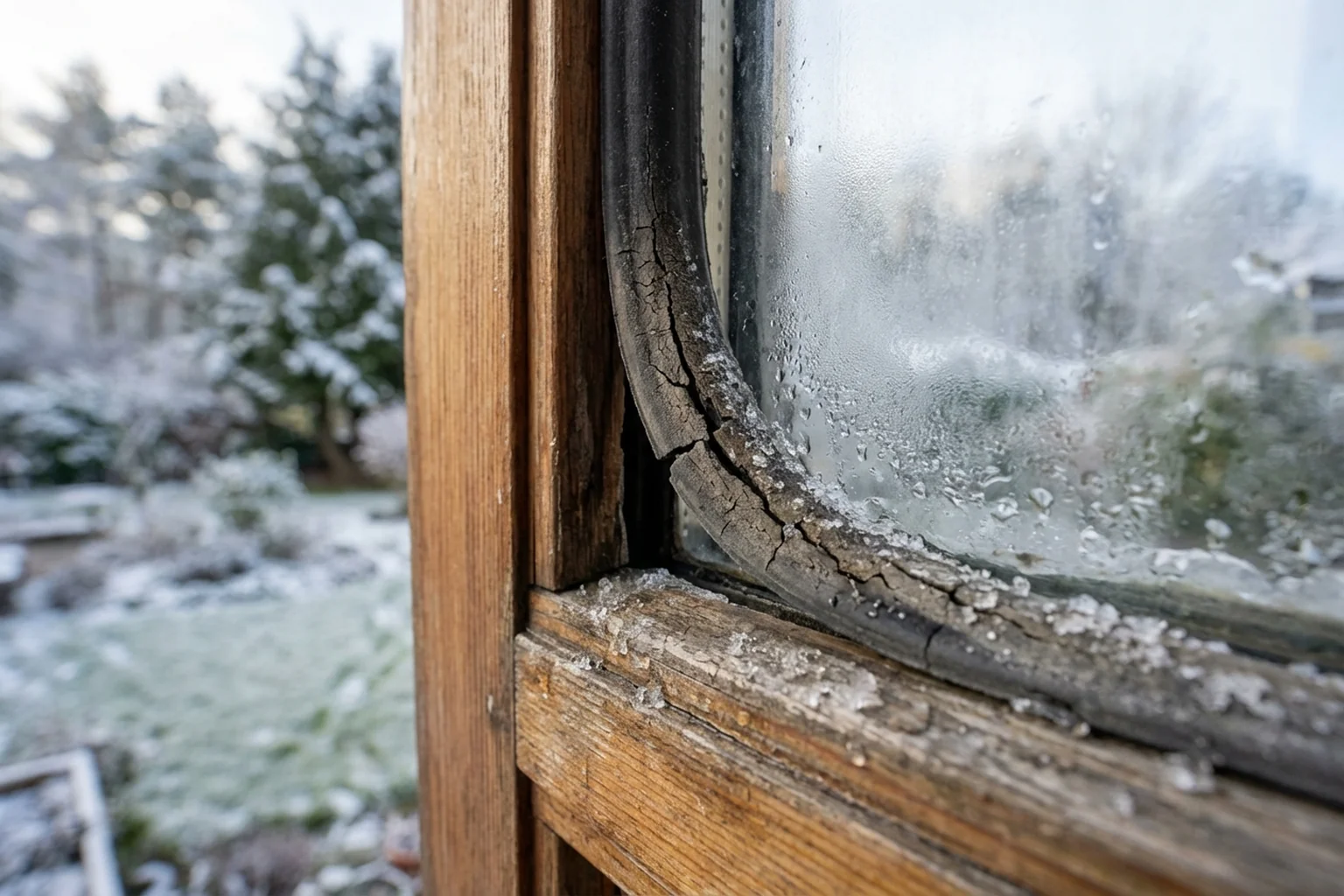
Plenty of people try to adjust windows themselves after watching online videos. Sometimes they manage it, but more often they make the problem worse:
- All cams cranked to maximum. Leaving the window in permanent winter mode squashes the seal flat within a year or two and then it stops sealing properly. Change modes with the seasons.
- Turning the wrong screw. Each hinge has several adjustment screws: one for vertical, one for horizontal, one for pressure. Twisting them at random makes the sash go even more out of line.
- Not lubricating the hardware. Adjusted, but left dry. A few months later the mechanism sticks again, the hinges squeak and the handle turns hard.
- Ignoring a worn seal. Adjustment will not solve anything if the rubber is cracked and has lost elasticity. First replace the seal, then set the pressure.
- Wedging cardboard under hinges. A home-made fix for sagging. It may help for a short while, but it throws off the geometry and speeds up hardware wear.
- Forgetting the strike plates. The cams are set, but the sash still does not clamp tight. The reason is that the strike plate has moved or loosened.
Switching windows to winter mode is often something you can do yourself: how to adjust PVC windows for winter and summer.
What to prepare before the technician arrives
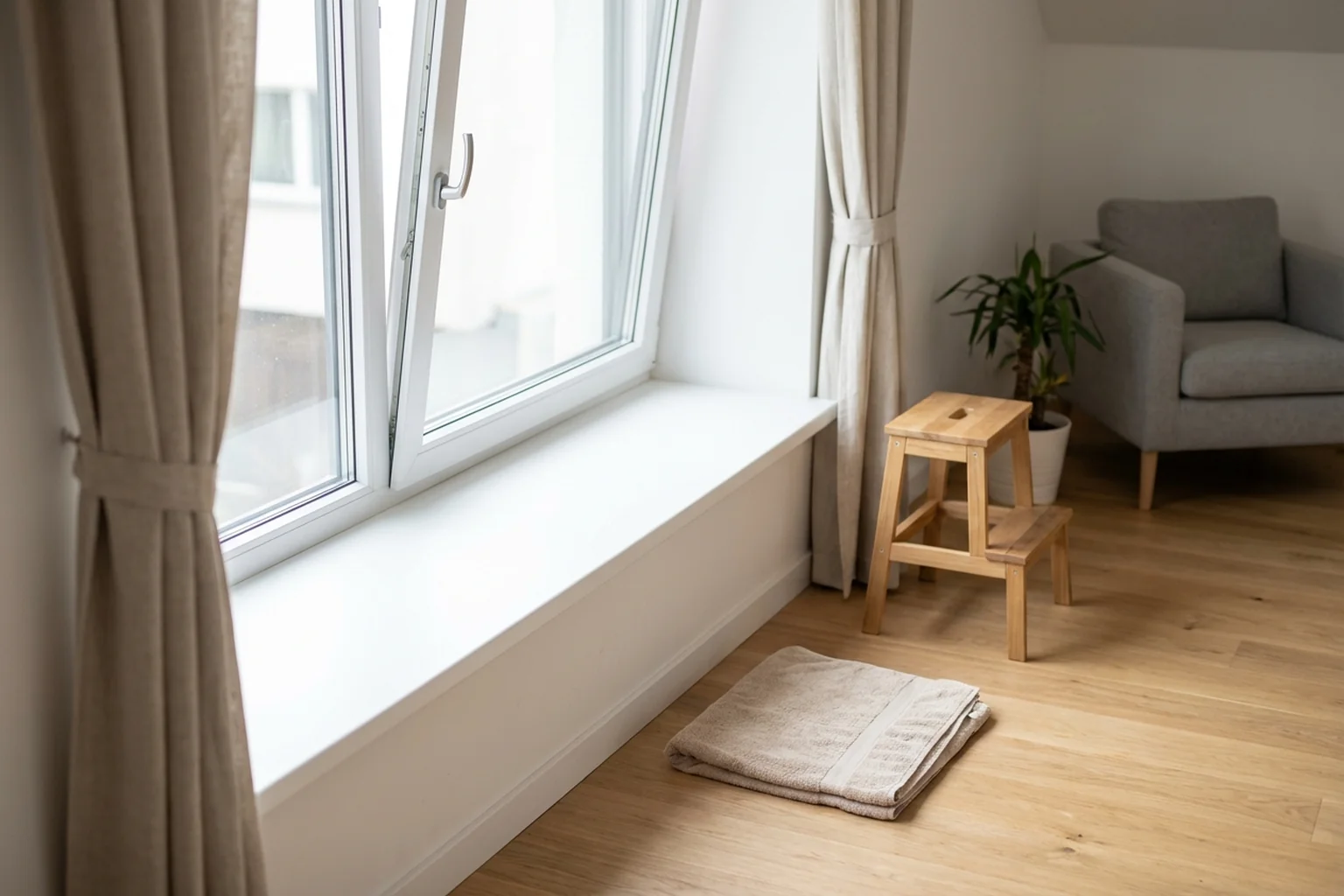
Adjustment is clean and fast work, but a few simple things will make it go quicker:
- Remove plants, vases and anything else from the windowsill that stops the sash opening fully.
- Move curtains and blinds aside: the technician needs clear access to the window.
- If the window is on a balcony, make sure the way to it is not blocked.
- Write down what exactly is wrong: draught from above, from below, sash scraping, handle not turning all the way.
- Check whether all windows in the flat need adjustment — it is cheaper to do everything during one visit.
- If the windows are still under the manufacturer’s own terms, make sure DIY interference will not cancel it.
- Prepare access details: entry code and parking information: the technician comes with tools.
- If there is a fly screen, take it off in advance, it can interfere during diagnostics.
- It is best to keep pets in another room — an open window and a curious cat are not a good mix.
- Decide whether the balcony door needs adjustment as well: the principle is the same.
A real case: window adjustment in a Wola flat
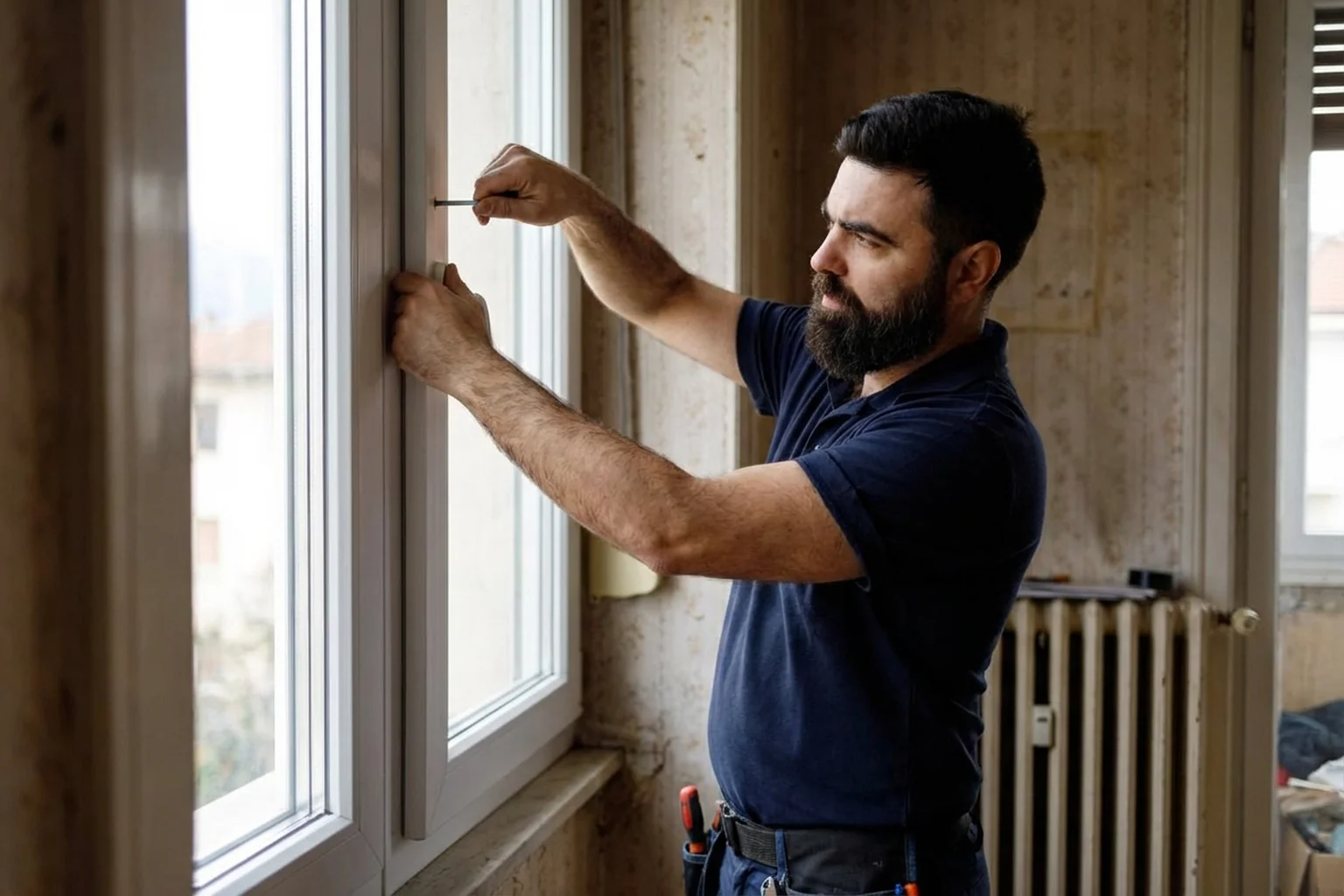
A client in Wola said that in winter three living-room windows were letting in a clear draught, even though they had been fitted only four years earlier. Heating bills had gone up and it had become unpleasantly cold to sit near the radiator. During inspection they found that every cam was still set to summer mode — nobody had ever switched the windows to winter. The seals were in good shape, but the clamping pressure was very low.
Tradespeople turned the cams to winter mode and tightened the lower hinges on two sashes, they had dropped slightly and were rubbing the frame. Tradespeople lubricated all mechanisms with silicone spray. On one window a strike plate had shifted: they tightened it and fixed it in place. After the adjustment they checked the pressure with paper — the sheet held tight all around the perimeter. The whole job took about an hour for three windows. A week later the client called back and said the draughts were completely gone and the room felt much warmer. The lesson is simple: sometimes you do not need new windows to stop cold air: proper adjustment does the job.
Maco and Siegenia hardware: what to check
Maco
The frame can come from any profile maker. Maco sits inside it: the hinges, the stay arms, the locking bars with their cams, and the handle. It’s an Austrian company, and you’ll usually find the logo on a hinge or on the locking bar once the sash is open. Check before you book, because one photo tells the tradesperson which keys and parts to bring.
Adjustment fixes three things. A sagging sash that rubs the frame gets lifted with the screw in the bottom hinge. Seal pressure is set on the cams around the sash, tighter for winter and looser for summer, so the gasket isn’t crushed all year. And a stiff handle often just needs the mechanism cleaned and greased, with nothing turned at all.
Siegenia
Siegenia is a German hardware maker, and like most tilt-and-turn hardware theirs has a mis-operation lock. While the sash is open the handle is locked, and a small button on the edge of the sash releases it when it presses against the frame. If the sash has dropped and the button misses its catch, the handle won’t turn even though the window looks shut.
Try the simple test first: press the sash firmly against the frame next to the handle, then turn it. If that works, the window needs adjusting, not new hardware. A tradesperson lifts the sash at the bottom hinge and sets it so the lock meets its catch again.
Frequently asked questions
How often should windows be adjusted?
Tradespeople advise switching winter/summer mode twice a year. Full hinge and hardware adjustment: once every 2–3 years or whenever problems show up: draughts, a stiff handle, sash scraping.
Can a timber window be adjusted?
If the timber window has tilt-and-turn hardware — yes, the adjustment is the same as for uPVC. Old timber windows without modern hardware cannot be adjusted: they need resealing or replacement.
What if the handle spins loosely?
Most often the fixing screws have loosened. Lift the decorative cover and tighten the two screws with a Phillips screwdriver. If that does not help, the handle mechanism is worn out and needs replacement.
Will adjustment help if the sash will not close?
In 90 % of cases: yes. The sash does not close because it has sagged, gone out of square or the strike plates have shifted. All of this is corrected by adjustment. If the hardware mechanism itself is damaged, the part will need replacing.
How long does adjustment take?
One sash — 15–20 minutes. A standard flat with 4–5 windows: about an hour. If seals need replacement, add 10–15 minutes per sash.
Is winter mode mandatory?
Not mandatory, but they recommend it. Winter mode increases clamping pressure and stops draughts. In summer it is better to reduce it: the seal lasts longer. Leaving winter mode on throughout the year flattens the rubber in 2–3 years.
Why does the window start draughting again after adjustment?
Most likely the seal is worn out and no longer springs back after being compressed. Adjustment increases pressure, but if the rubber is finished the effect will only be temporary. The fix is seal replacement.
Can windows be adjusted in winter?
Yes, and winter is a good time for it: draughts are easiest to spot when it is cold outside.
What if the window won’t lock?
Usually it is an adjustment issue rather than broken hardware: the strike plate position or the handle timing needs correcting.
What if the frame is warped?
Slight warping can often be compensated by adjustment. If the frame is badly damaged, the handyman will tell you on site whether repair or replacement makes sense.
Who does the work
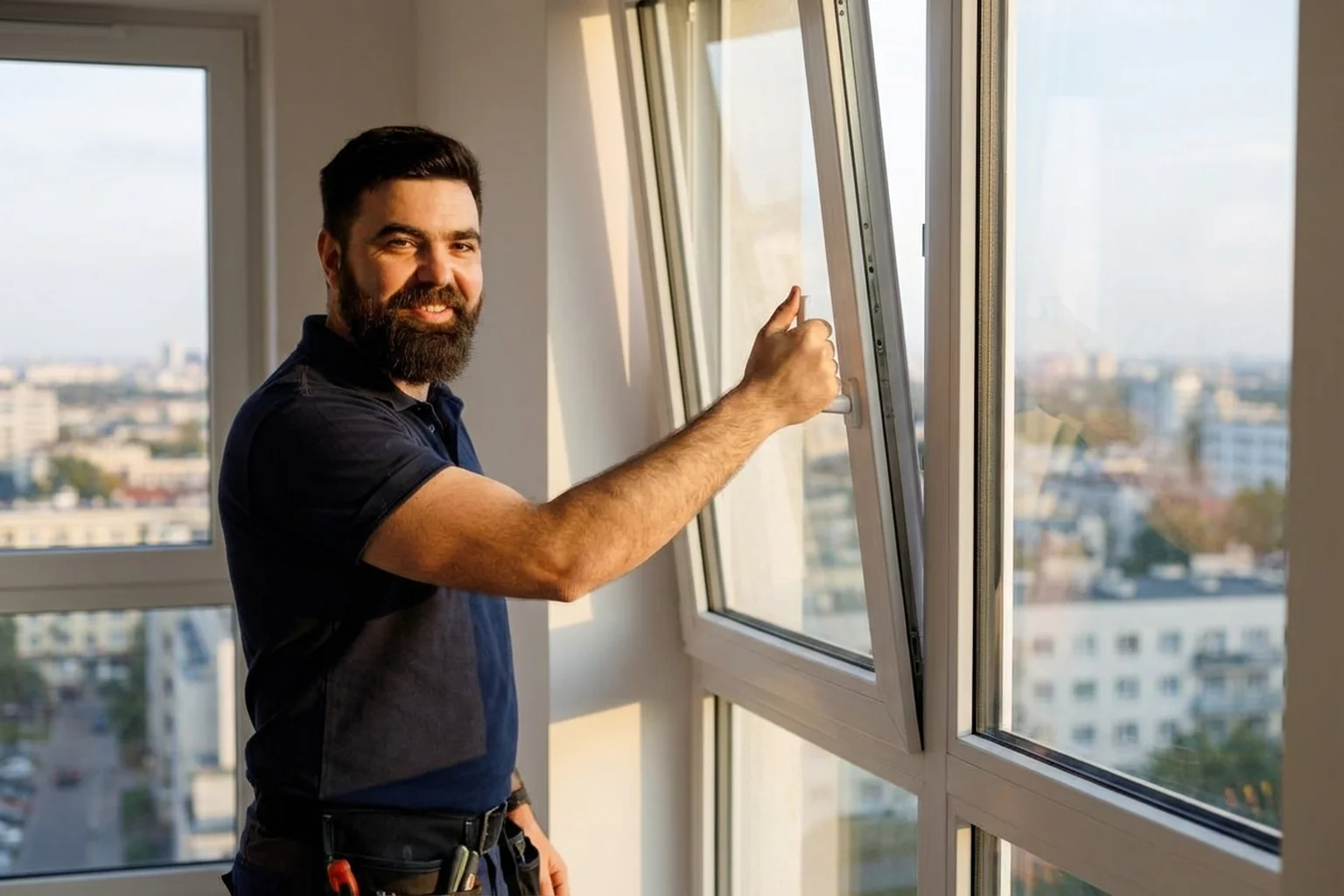
Window adjustment is done by technicians who handle window hardware every day — Roto, Maco, Siegenia, Winkhaus. Tradespeople know how each system works and which keys are needed for it. Tradespeople come with a full set of hex keys, screwdrivers, silicone lubricant and spare consumables (cams, strike plates, seals). Tradespeople cover all of Warsaw: from Bielany to Mokotow. After adjustment the sash will close smoothly, the pressure will be even and the draught will disappear. The tradesperson answers for their own work: if the fault is theirs, they put it right.
Order in the app
Describe the job, add photos and the address. Tradespeople send their own prices and dates, and you pick one of the offers.
Open the app