
Bought a new gas hob and need it fitted into the countertop and connected to the gas supply? This is not a DIY job. In Poland, connecting gas appliances must be done by a certified gas fitter (uprawnienia gazowe). We cover all of Warsaw — from Ursynow to Bielany — and carry out connections to full code: with a flexible gas hose, a leak test using soapy water, and a signed certificate.
Safety warning: gas is not electricity. Even a small leak can lead to poisoning or an explosion. Do not attempt to connect a gas hob yourself unless you have the proper qualifications and tools. Call a certified gas fitter — this is about your safety and the safety of your neighbours.
Current kitchen service prices
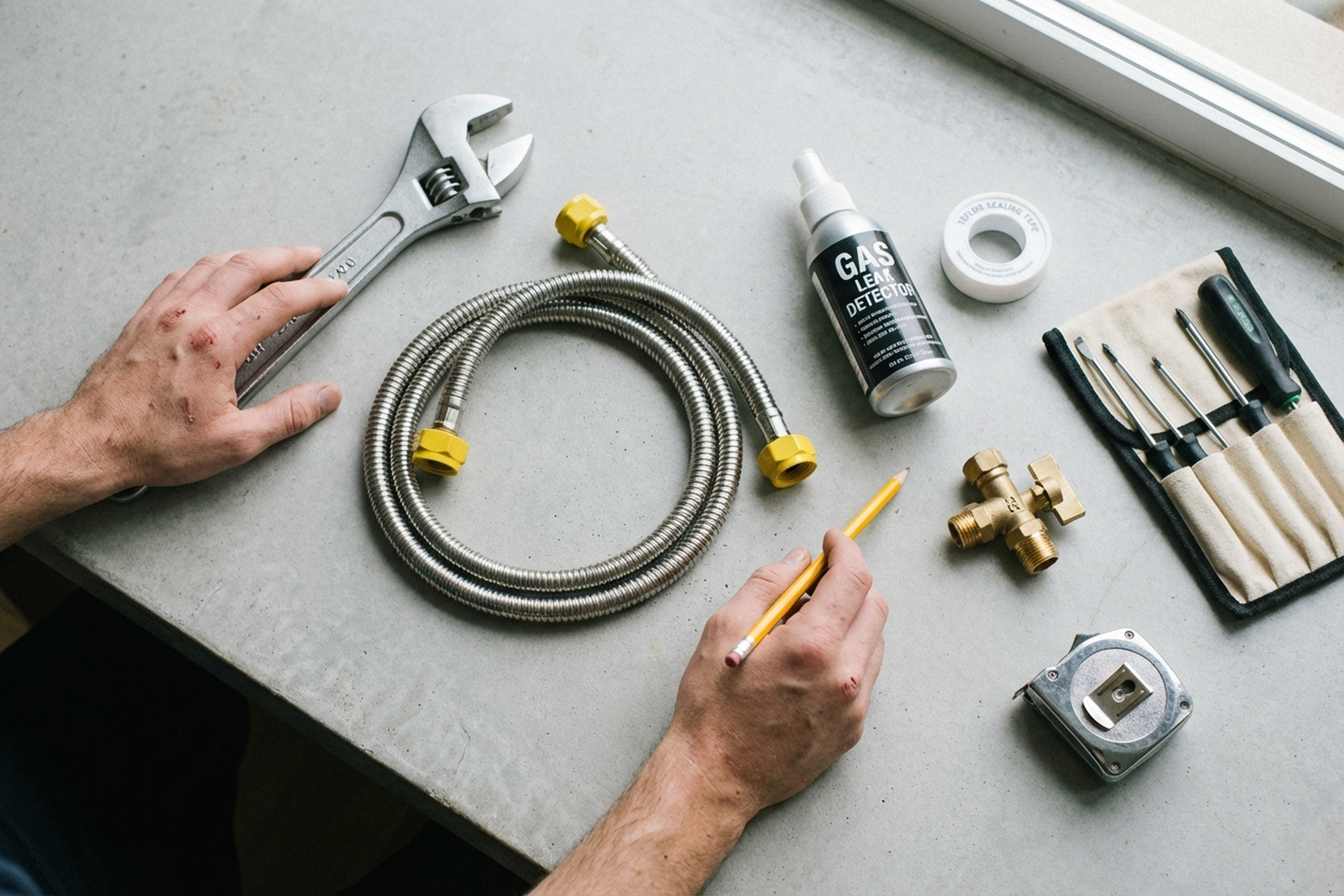
The cost of connecting a gas hob depends on several factors: whether a countertop cutout is needed, what type of connector is used, and whether the gas valve is in a convenient position. Current rates for kitchen work are in the table below. Fixings are included in the price; materials (flexible hose, sealant) are charged separately.
| Service | min | max |
|---|---|---|
| Kitchen furniture installation (complete set) | 20% od ceny | 25% od ceny |
| Kitchen base cabinet installation | 250 zł | 400 zł |
| Wall cabinet installation | 250 zł | 400 zł |
| Kitchen cabinet door adjustment | 80 zł | 150 zł |
| Hinge replacement | 60 zł/szt | 120 zł/szt |
| Kitchen countertop installation | 200 zł/mb | 350 zł/mb |
| Laminate countertop installation | 150 zł/mb | 250 zł/mb |
| Composite countertop installation | 250 zł/mb | 400 zł/mb |
| Countertop joining | 190 zł/szt | 300 zł/szt |
| Countertop cutout (sink / hob) | 120 zł/szt | 200 zł/szt |
How the gas hob connection works
- You send photos of the kitchen, countertop, and gas outlet — the technician assesses the scope of work.
- We agree on a visit time — usually the same day or the next.
- On site, the technician checks the gas valve and pipe condition, measures the countertop cutout.
- If the cutout has not been made yet — it is cut according to the manufacturer’s template.
- The hob is set into the countertop and secured with brackets from below.
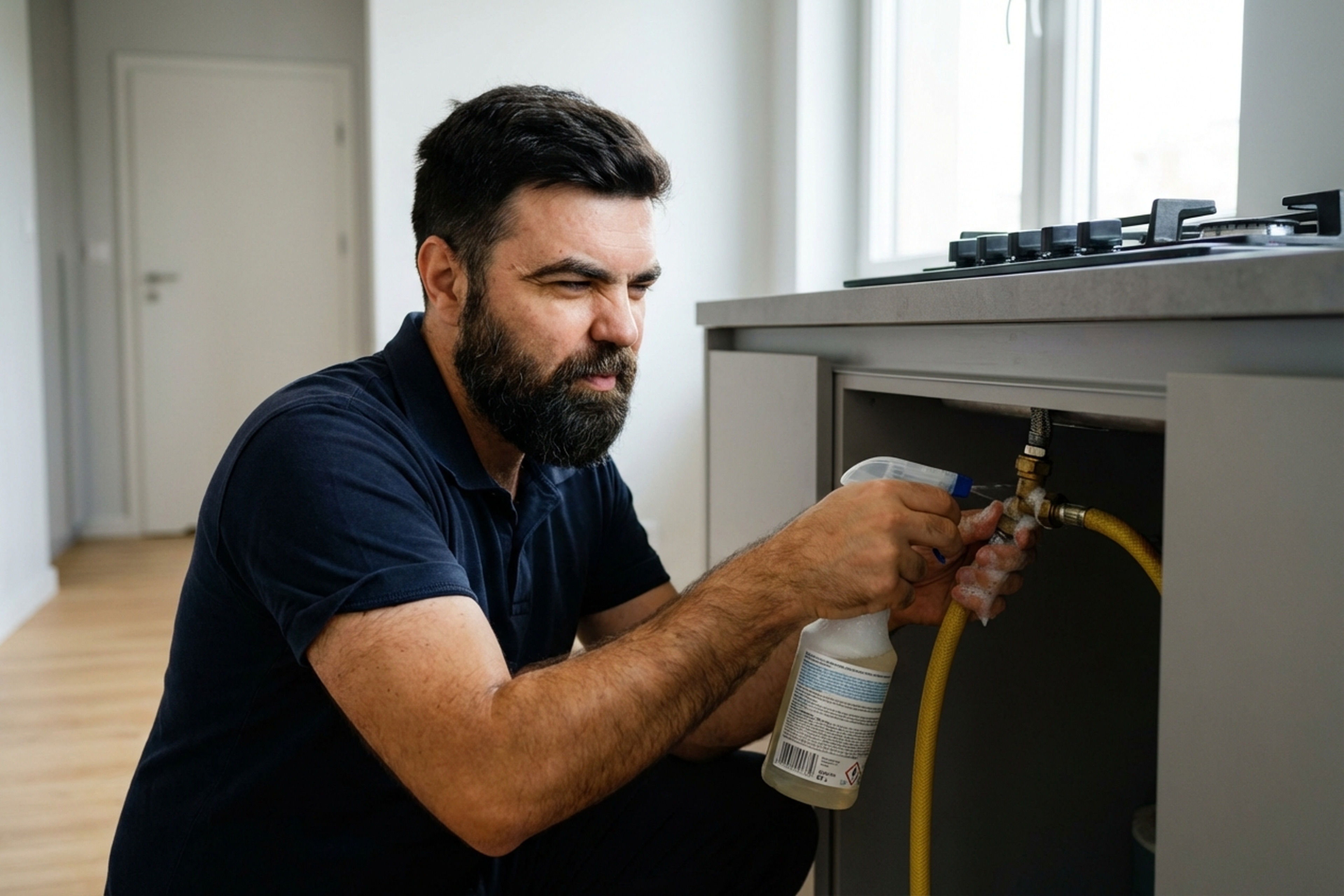
- The flexible gas hose is connected, joints are tightened, and soapy water is applied to check for leaks.
- All burners are tested, the technician confirms there are no leaks, and cleans up.
Common mistakes when connecting a gas hob
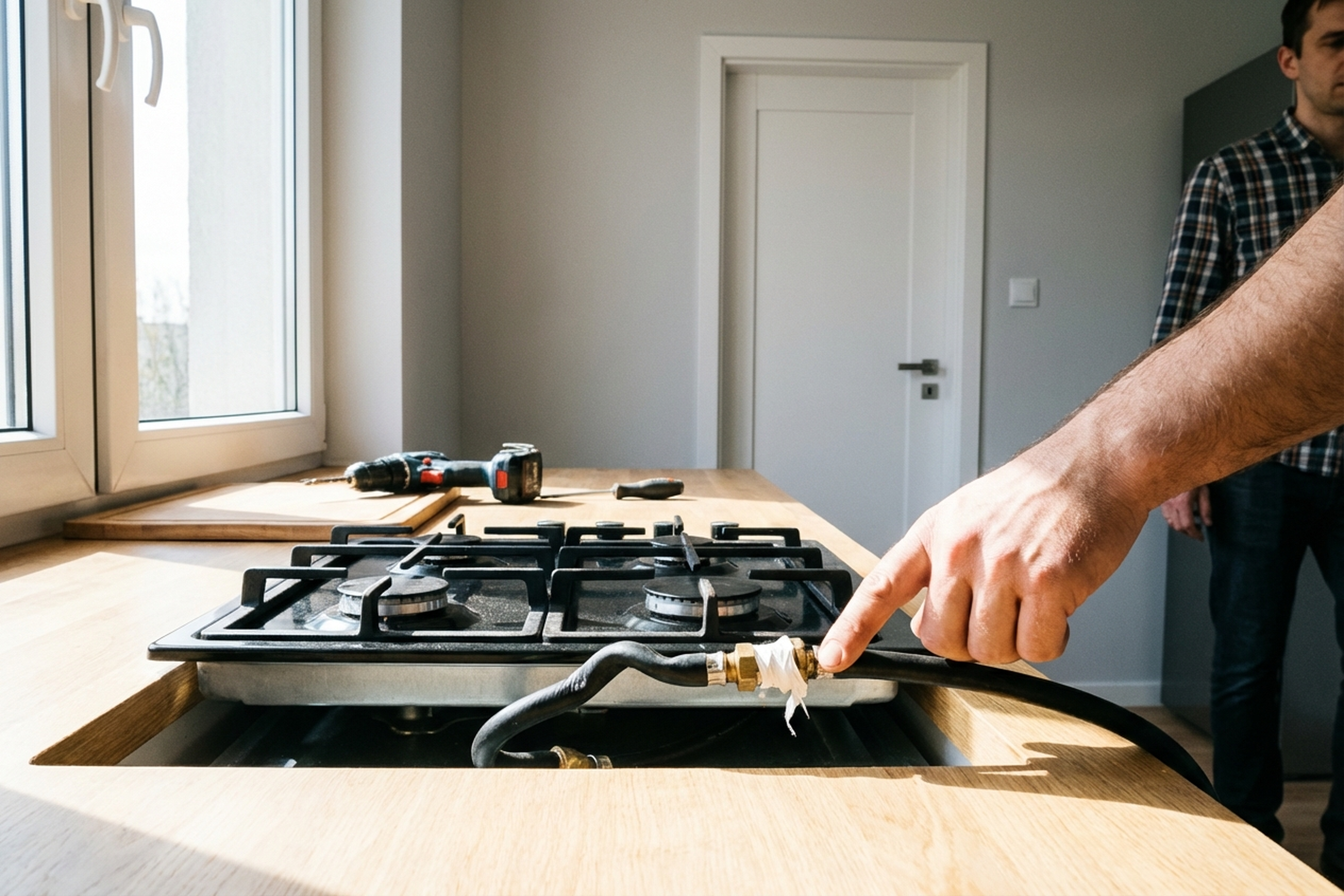
- Using a regular rubber hose instead of a certified flexible gas connector — the rubber dries out and starts leaking.
- Not testing for leaks after connection — a gas leak may not be immediately noticeable.
- Cutting the countertop opening without a template — the hob falls through or doesn’t sit flush.
- No shut-off valve before the hob — in case of a leak, there is no way to quickly cut the gas.
- Connecting to an old pipe without inspection — there may be rust or scale inside.
- Sealing threaded gas joints with regular PTFE tape instead of the yellow gas-rated tape — it does not provide a proper seal.
- Attempting a DIY connection without certification — in case of an accident, insurance will not cover the damage.
What to prepare before the technician arrives
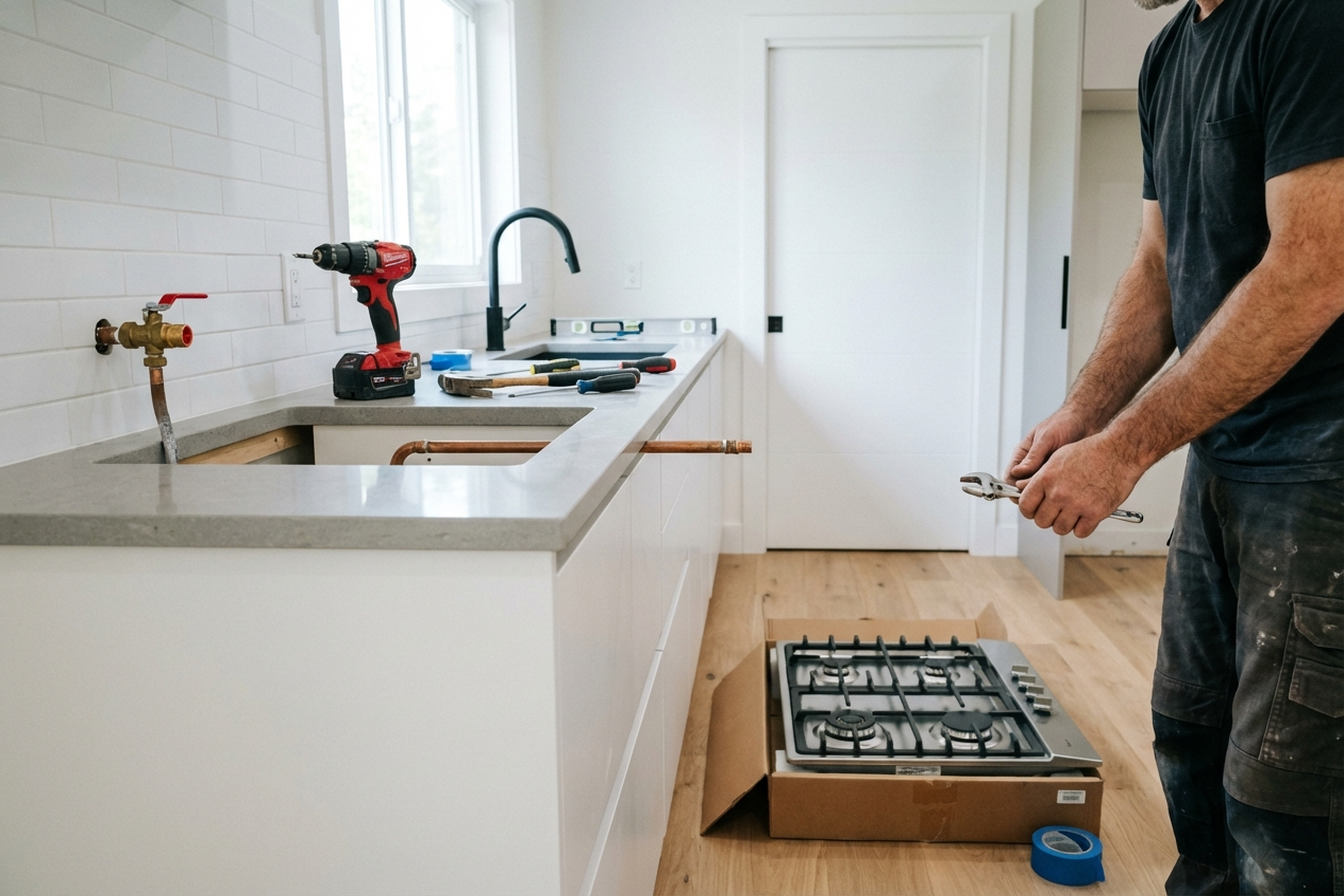
- Make sure the kitchen gas valve works and shuts off completely.
- Clear access to the countertop and gas pipe — remove dishes, appliances, and drawers.
- Check if the hob kit includes mounting brackets and a countertop seal.
- Find the hob manual — it specifies cutout dimensions and connection type.
- If the countertop already has a cutout — measure it and compare with the hob dimensions.
- Confirm what type of gas your building uses (natural gas is standard in Warsaw).
- Ensure kitchen ventilation — open a window during gas work.
- Prepare a power socket nearby — electric ignition requires a power supply.
- Photograph the gas outlet and send it to the technician in advance.
- Provide access details: intercom code, floor, parking.
A real case from Warsaw
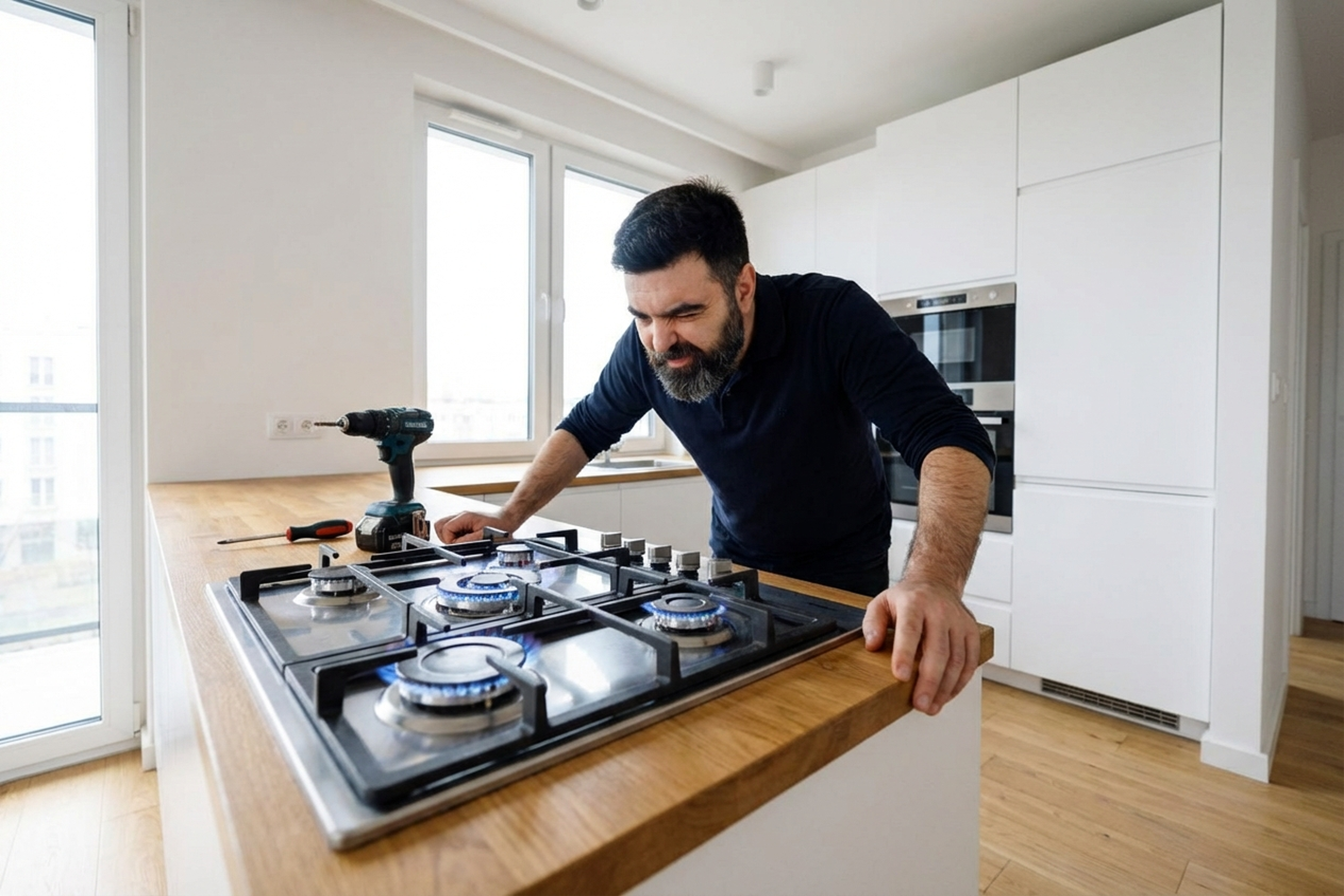
A client in the Zoliborz district ordered a new Bosch gas hob connection during a kitchen refit. The countertop was laminated chipboard with no cutout yet. The technician marked the opening using the manufacturer’s template, cut it with a jigsaw, and sealed the edges with silicone to prevent moisture damage. The old connector was a rigid copper pipe — we replaced it with a certified flexible hose with yellow marking. The gas valve was behind a cabinet — no need to relocate it, the hose length was sufficient. After connection, we tested all four burners and applied soapy water to every joint — no bubbles, no leaks. The whole job took about an hour and a half. Takeaway: even if the old connector looks fine, it is better to fit a new one when changing the hob — saving on a hose is not worth the risk.
Frequently asked questions
Is it mandatory to call a gas fitter for hob connection?
Yes, in Poland gas appliance connections must be carried out by a specialist with uprawnienia gazowe. DIY connection is a regulation breach and a safety risk.
Should the gas hose be replaced when changing the hob?
Recommended. The old hose may be damaged or incompatible with the new connection type.
Do you cut the countertop opening?
Yes, if the cutout has not been made — the technician will cut it to the manufacturer’s template.
What is included in the connection price?
Labour, fixings, leak testing. Flexible hose and sealant are separate if not included in the hob kit.
How is the leak test done?
Soapy water is applied to all joints and checked for bubbles. This is the standard method.
Does a gas hob need a power socket?
If the hob has electric ignition — yes, a standard 230V socket near the countertop is required.
How quickly can you come?
Usually the same day or the next. Call or message us — we will arrange a time.
Who does the work
All work is carried out by experienced professionals in kitchen appliance installation and gas fitting. We cover all of Warsaw and nearby suburbs. To book, call or message us — we reply within an hour.