

How much does kitchen base cabinet installation cost in Warsaw?
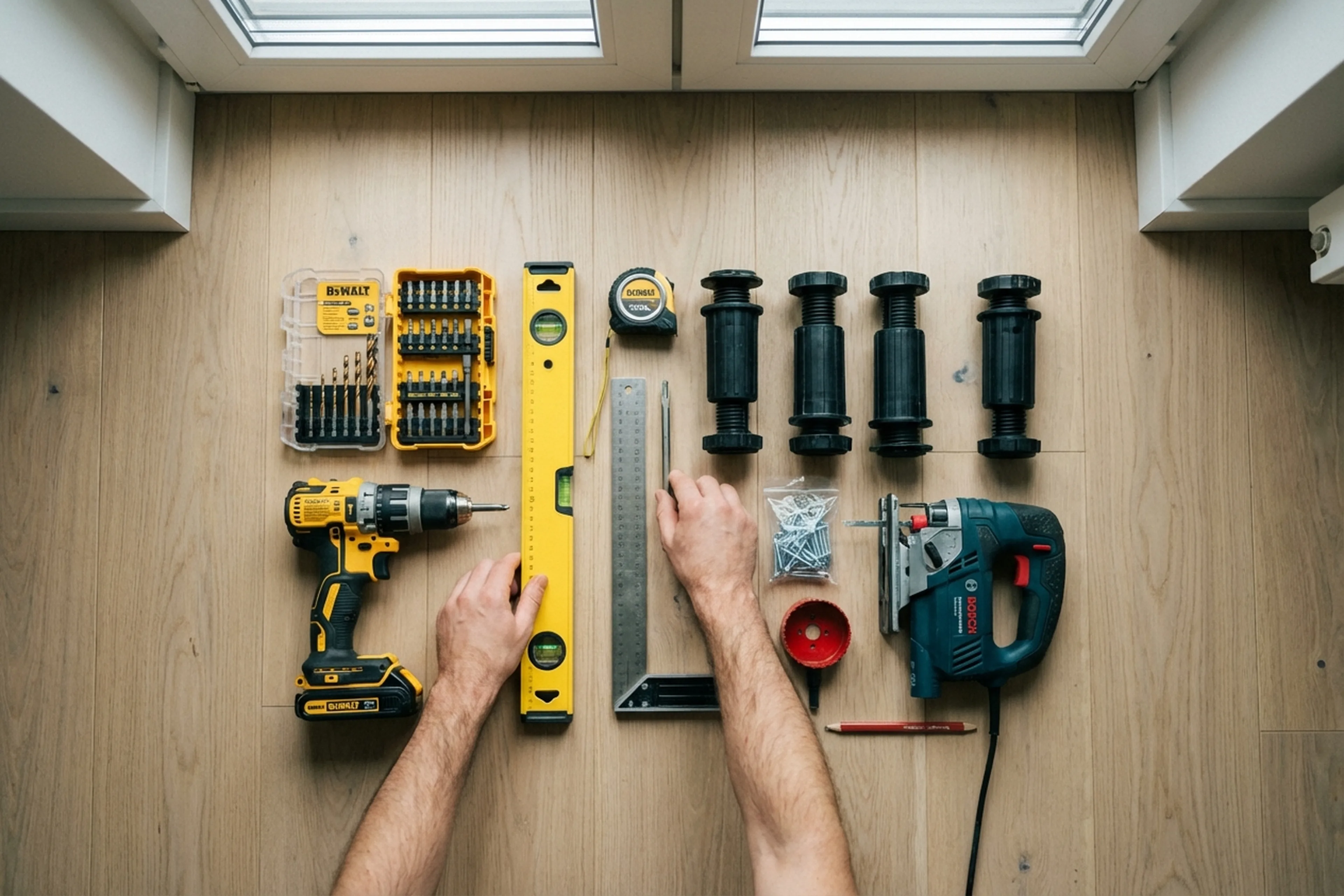
Up-to-date prices for all kitchen services are listed in the table below. The price for fitting a single base cabinet depends on the build (units with pull-out drawers are priced higher than a basic shelf cabinet), whether a worktop is part of the job, if any cutting is needed, and what condition the wall is in for fixing. Fixings are included in the price. The cabinet itself, worktop and any extra materials are charged separately. Removing packaging is a separate paid service.
| Service | Price |
|---|---|
| Assemble kitchen units (base and wall cabinets) | 400–1000 zł/mb |
| Base kitchen cabinet installation | 120–270 zł |
| Wall kitchen cabinet installation | 120–270 zł |
| Kitchen front adjustment | 80–250 zł |
| Kitchen worktop installation | 70–200 zł/mb |
| Laminate worktop installation | 70–135 zł/mb |
| Composite worktop installation | 250–400 zł/mb |
| Worktop joining | 190–300 zł/szt |
| Worktop cut-out (sink, hob) | 150–300 zł/szt |
Indicative prices. Ranges for a typical scope. Fixings included, materials separate. Minimum order 300 zł.
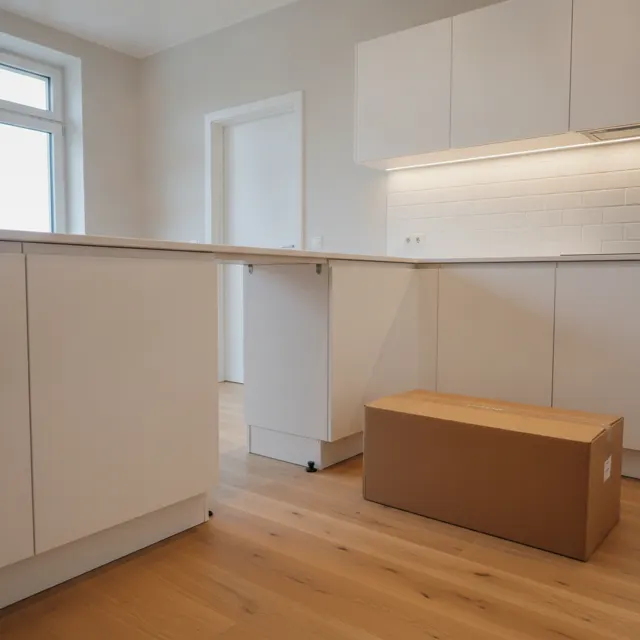
What it costs and how to book: handyman in Warsaw.
How kitchen base cabinet installation is done
- You send a photo of the installation spot and the cabinet model: the technician reviews the job.
- You agree the visit time with the tradesperson you choose; it depends on their schedule.
- At the flat, the technician checks the floor level, wall condition and utilities (pipes, sockets).
- Assembles the cabinet if it arrives flat-packed (or checks the factory assembly).
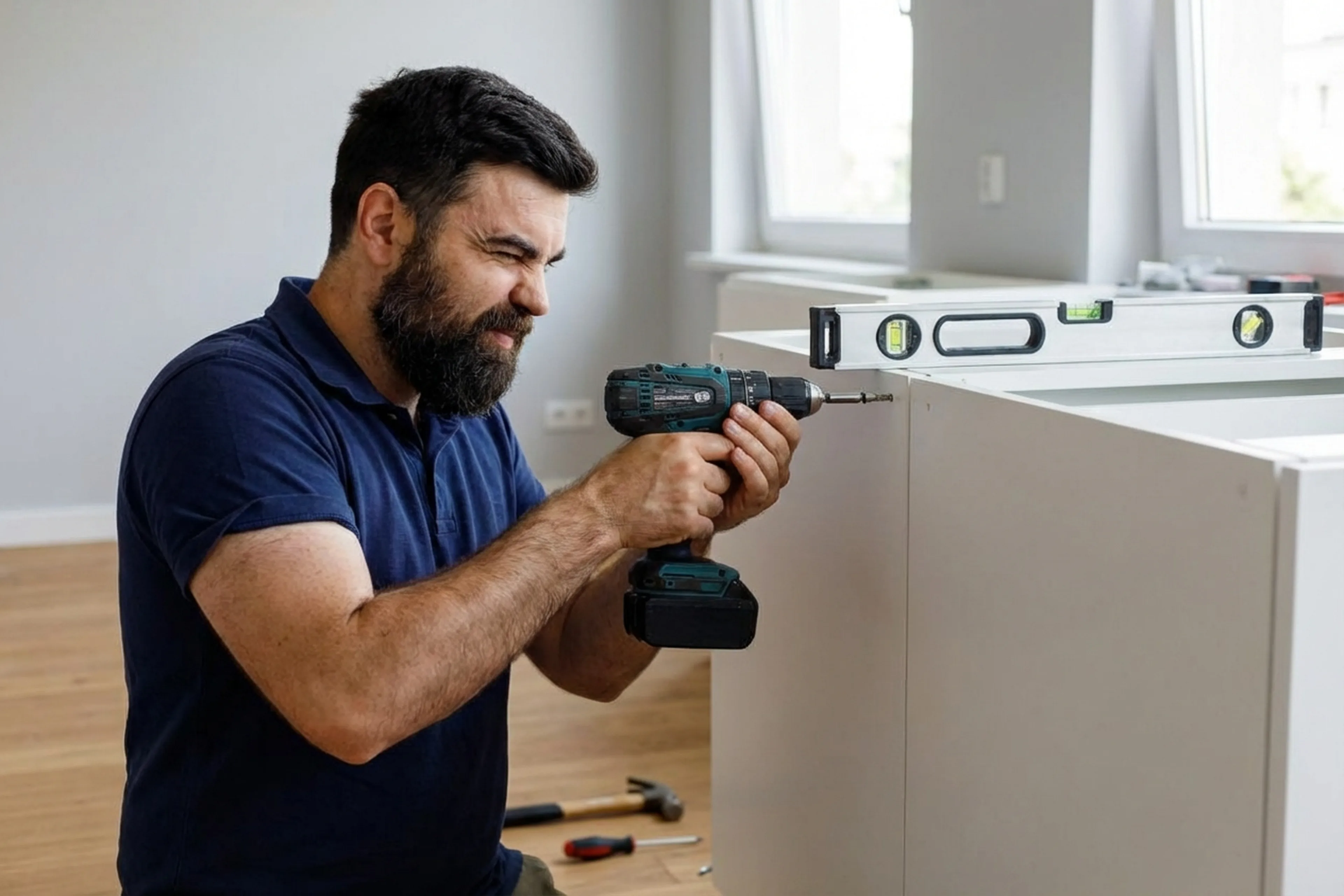
- Levels the cabinet: adjusts the legs to make up for an uneven floor.
- Fixes the carcass to the wall with anchors or wall plugs, so the cabinet doesn’t pull forward when the doors are opened.
- Connects it to the neighbouring units with connectors, adjusts doors and hinges, and checks the drawer runners.
Common customer mistakes (and how to avoid them)
- Setting the cabinet in place without wall fixings — it can tip forward once loaded with dishes.
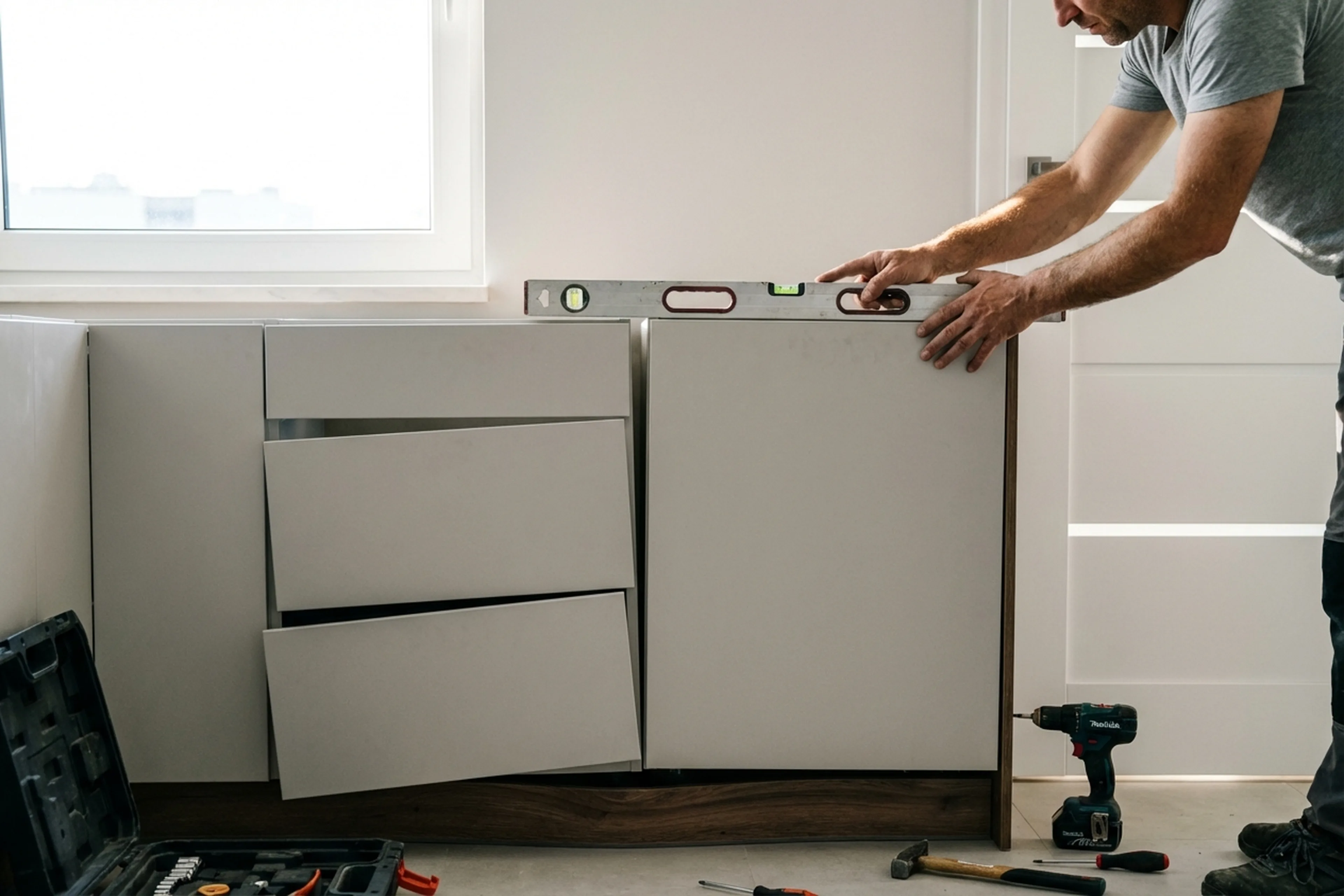
- Skipping the floor level check: the cabinet ends up crooked, doors go out of line, gaps appear between units.
- Not allowing space for pipes or sockets: the back panel then needs cutting afterwards.
- Ordering the worktop before the cabinets are installed — measurements end up off by 5–10 mm.
- Pushing the cabinet tight to the wall without leaving room for the skirting: the door won’t open all the way.
- Leaving out hinge adjustment after fitting: doors drop and close unevenly.
- Trying to fit the cabinet on an uneven floor without adjustable legs — the whole unit rocks.
What to prepare before the technician arrives
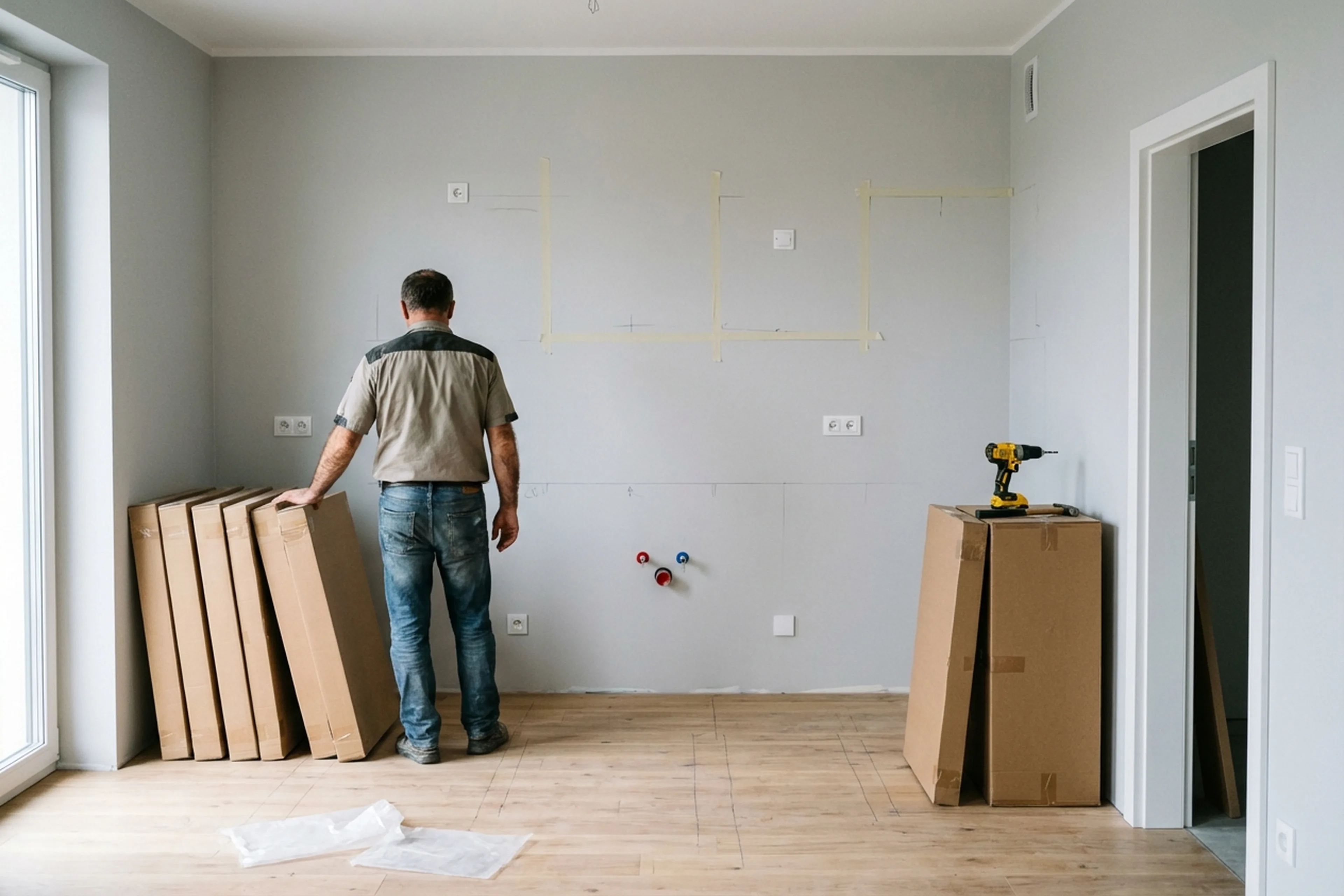
- Clear the installation spot: move out old furniture, boxes and appliances.
- Check that the cabinet is complete: all parts, fittings, legs and hardware.
- If the cabinet is still in the box — leave it sealed, the technician will go through it with you.
- Make sure the cabinet will fit through the doorways (especially if it is pre-assembled).
- Take photos of the wall and floor where the cabinet will go and send them to the technician.
- Confirm where the water and waste pipes run: to avoid drilling into them.
- Have a power socket free for the tools.
- Send access details: intercom code, parking info.
- If a worktop is planned, wait until all base cabinets are installed before taking measurements.
A real case from Warsaw: kitchen base cabinet installation
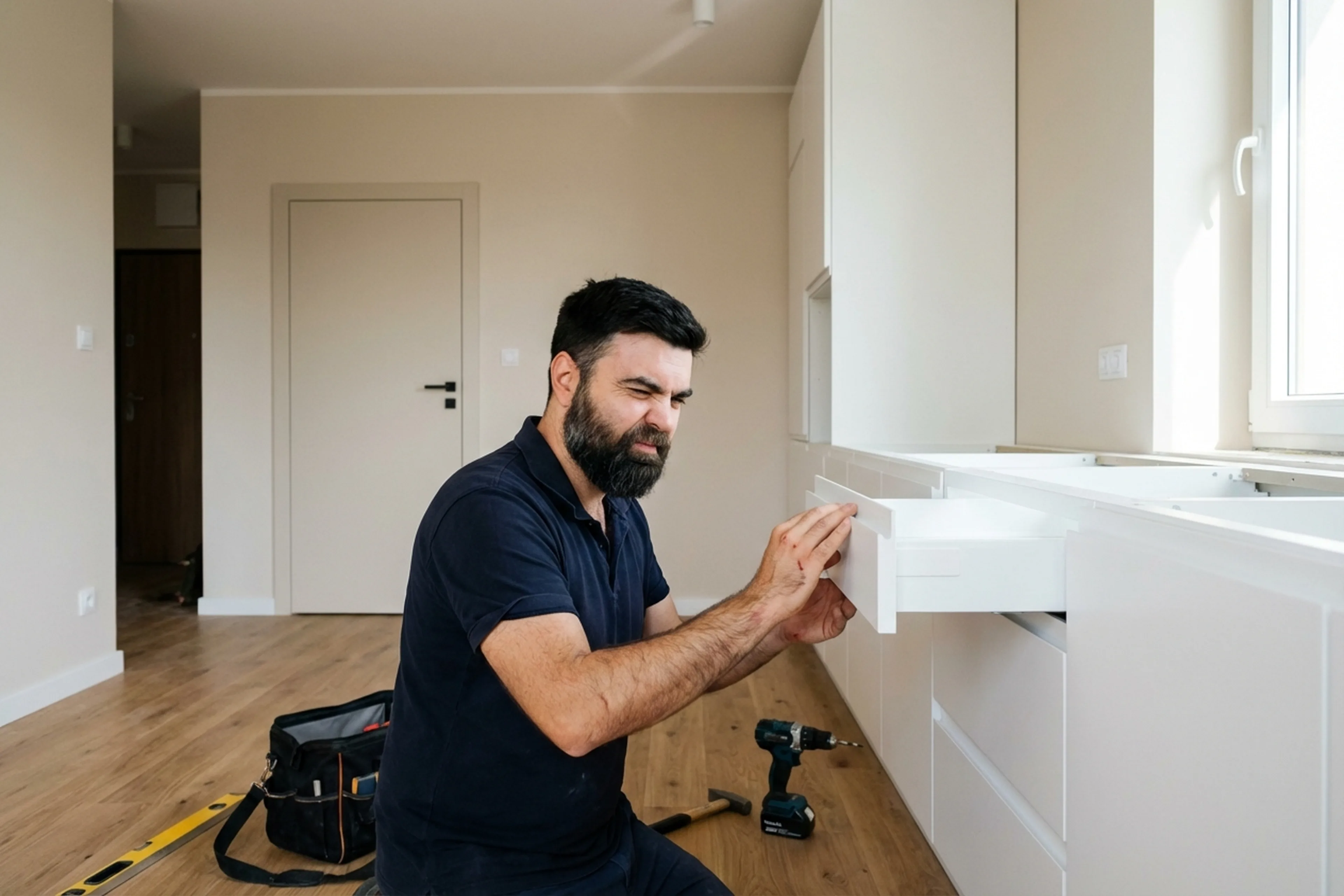
A client in Ursynow bought a single IKEA METOD 80 cm base unit with two MAXIMERA pull-out drawers. The old cabinet had already been taken out, but the wall still showed marks from previous fixings, and the floor dropped by 8 mm across the width of the unit. The technician adjusted the legs until the cabinet was level, fixed the carcass to the wall with two plugs, installed the door fronts and fine-adjusted the hinges and drawer runners. Gaps to the neighbouring units were closed using cabinet connectors. The whole job took an hour and a half. The client said the drawers now ran smoothly and the fronts lined up perfectly: no steps between them. The point is simple: even one cabinet needs accurate adjustment, otherwise it stands out from the rest of the kitchen run.
Frequently asked questions
How is installing one cabinet different from fitting a whole kitchen?
A full kitchen fit is a complete package: levelling, lining up every module, worktop, appliance connections. One cabinet is a narrower job: place it, level it, fix it to the wall, connect it to the neighbouring units.
Does a base cabinet need to be fixed to the wall?
Yes, every time. Without fixings the cabinet can tip under load — especially with pull-out drawers.
Will the technician assemble the cabinet from the box, or should I do it beforehand?
The technician can put it together on site. If it is already assembled, he will inspect the build quality before fitting it.
What is included in the price?
Labour, fixings (plugs, anchors, connectors), travel within Warsaw. The furniture, worktop and materials are billed separately.
Can a cabinet be installed on an uneven floor?
Yes, that is exactly why adjustable legs are used. The technician will level the cabinet even if the floor is uneven.
How long does it take to install one cabinet?
Usually 1–2 hours, depending on the cabinet design and the condition of the wall and floor.
Do tradespeople connect appliances if the cabinet is for a sink or dishwasher?
Yes, sink and dishwasher connections are separate services and can be done together with the cabinet installation.
Who does the work

Kitchen cabinet installation is done by technicians with hands-on experience in assembling IKEA, Castorama, Leroy Merlin kitchens and bespoke furniture. Tradespeople cover all of Warsaw and nearby areas.
Order in the app
Describe the job, add photos and the address. Tradespeople send their own prices and dates, and you pick one of the offers.
Open the app