
Countertop joining: cost and what affects it
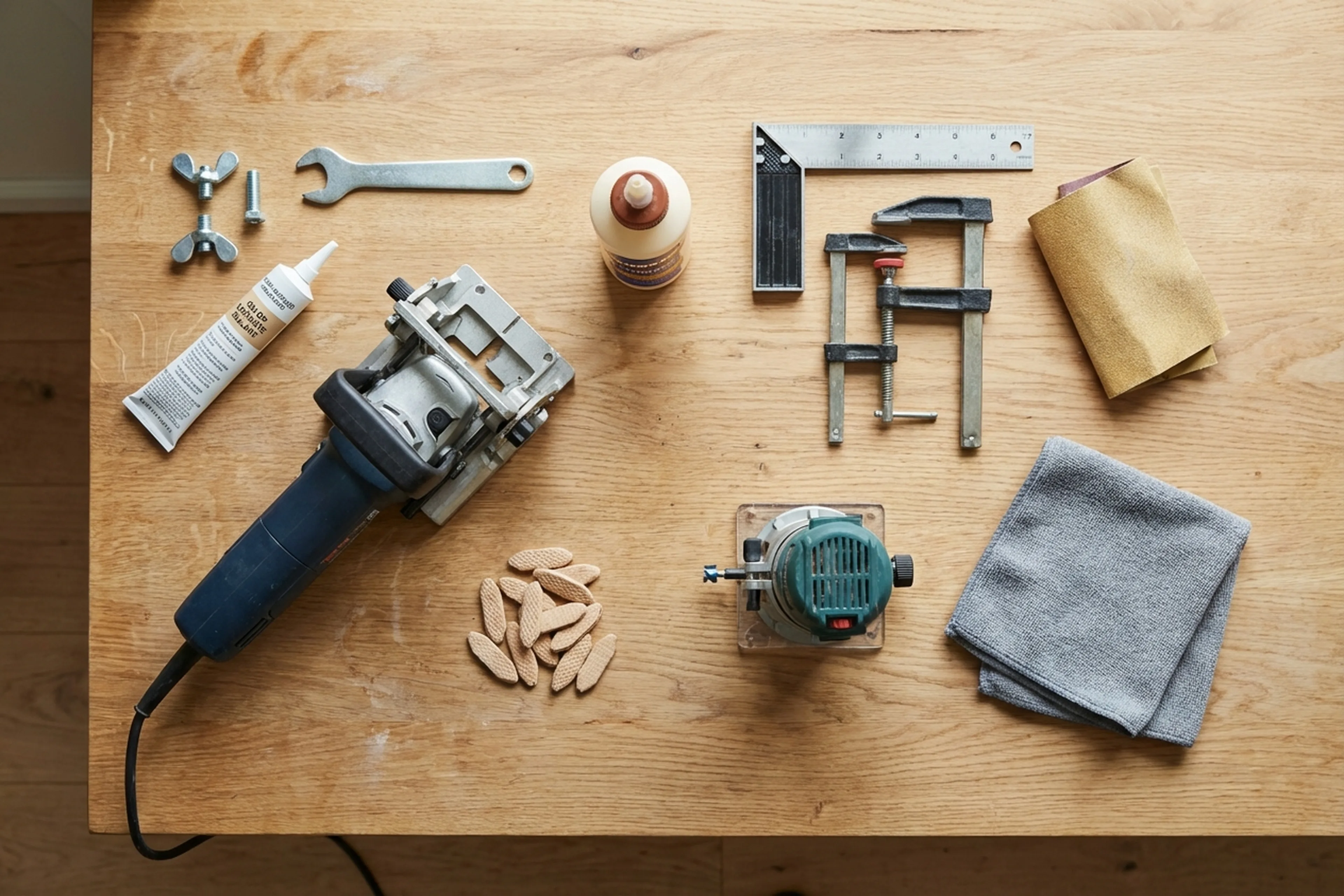
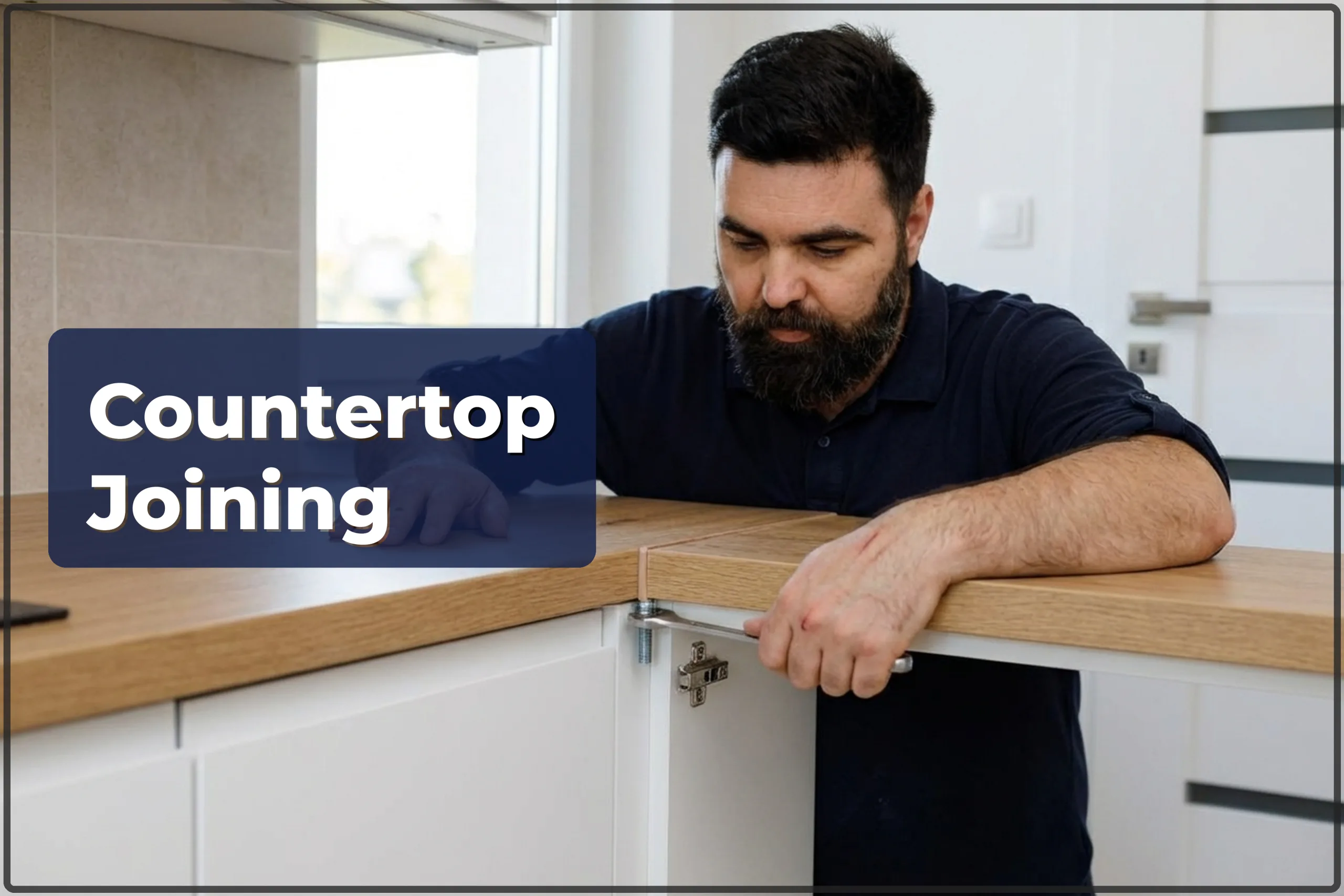
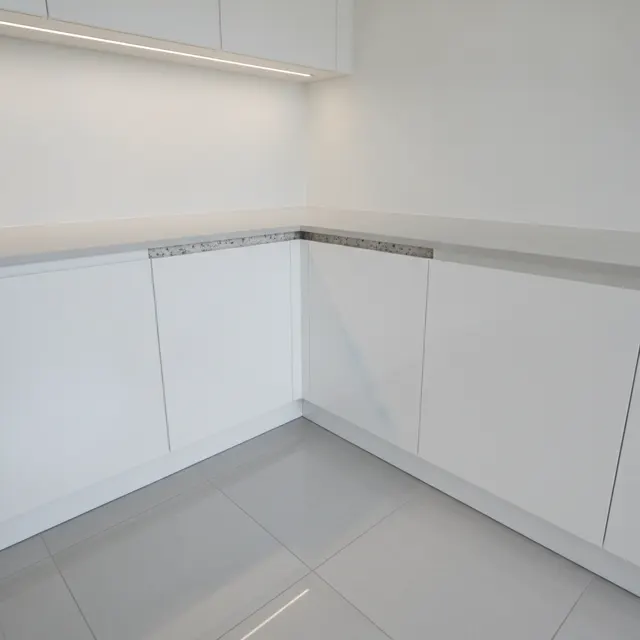
Up-to-date prices for kitchen services are listed in the table below. The price for joining depends on the worktop material (laminate, solid wood, composite), how many joints need doing, whether trimming on site is required, and the condition of the corner walls. Laminate worktops are tightened with eurobolts: quicker and less expensive. Wood or composite needs specialist adhesive and more accurate fitting. Fixings are part of the labour price. Sealant and adhesive are billed separately if a particular colour or brand is needed. Waste disposal and delivery of materials are extra as well.
| Service | Price |
|---|---|
| Assemble kitchen units (base and wall cabinets) | 400–1000 zł/mb |
| Base kitchen cabinet installation | 120–270 zł |
| Wall kitchen cabinet installation | 120–270 zł |
| Kitchen front adjustment | 80–250 zł |
| Kitchen worktop installation | 70–200 zł/mb |
| Laminate worktop installation | 70–135 zł/mb |
| Composite worktop installation | 250–400 zł/mb |
| Worktop joining | 190–300 zł/szt |
| Worktop cut-out (sink, hob) | 150–300 zł/szt |
Indicative prices. Ranges for a typical scope. Fixings included, materials separate. Minimum order 300 zł.
What it costs and how to book: a good plumber in Warsaw.
Countertop joining: how the job goes
- You send a photo of the kitchen and explain the job — how many joints there are, what material the worktop is, and whether there is a corner joint.
- The technician looks over the scope and gives an estimated price.
- On site they check the wall angle in the corner, walls are often not exactly 90 degrees, so adjustment is needed.
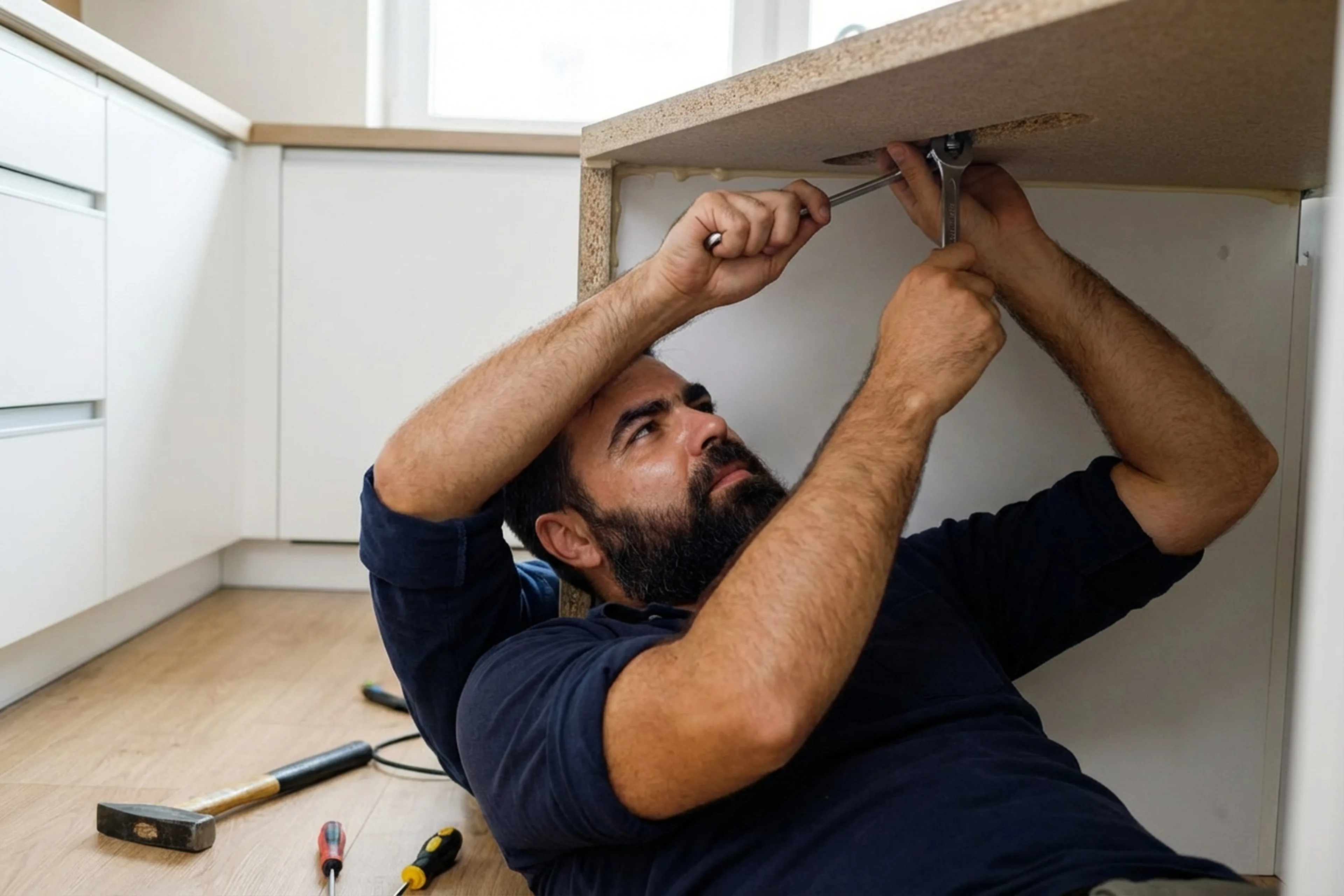
- Tradespeople mark and rout slots for eurobolts (for laminate) or get the surfaces ready for adhesive (for wood/composite).
- Tradespeople apply sealant to the cut edges: this keeps moisture out; without it the chipboard will swell within months.
- Tradespeople tighten the sections together and line them up flush — even a half-millimetre lip is visible and gets annoying during cooking.
- Tradespeople clean off excess sealant and inspect the joint for level and a tight fit.
Common customer mistakes (and how to avoid them)
- Joining the worktop without eurobolts: movement and load make the seam open up within a couple of months.
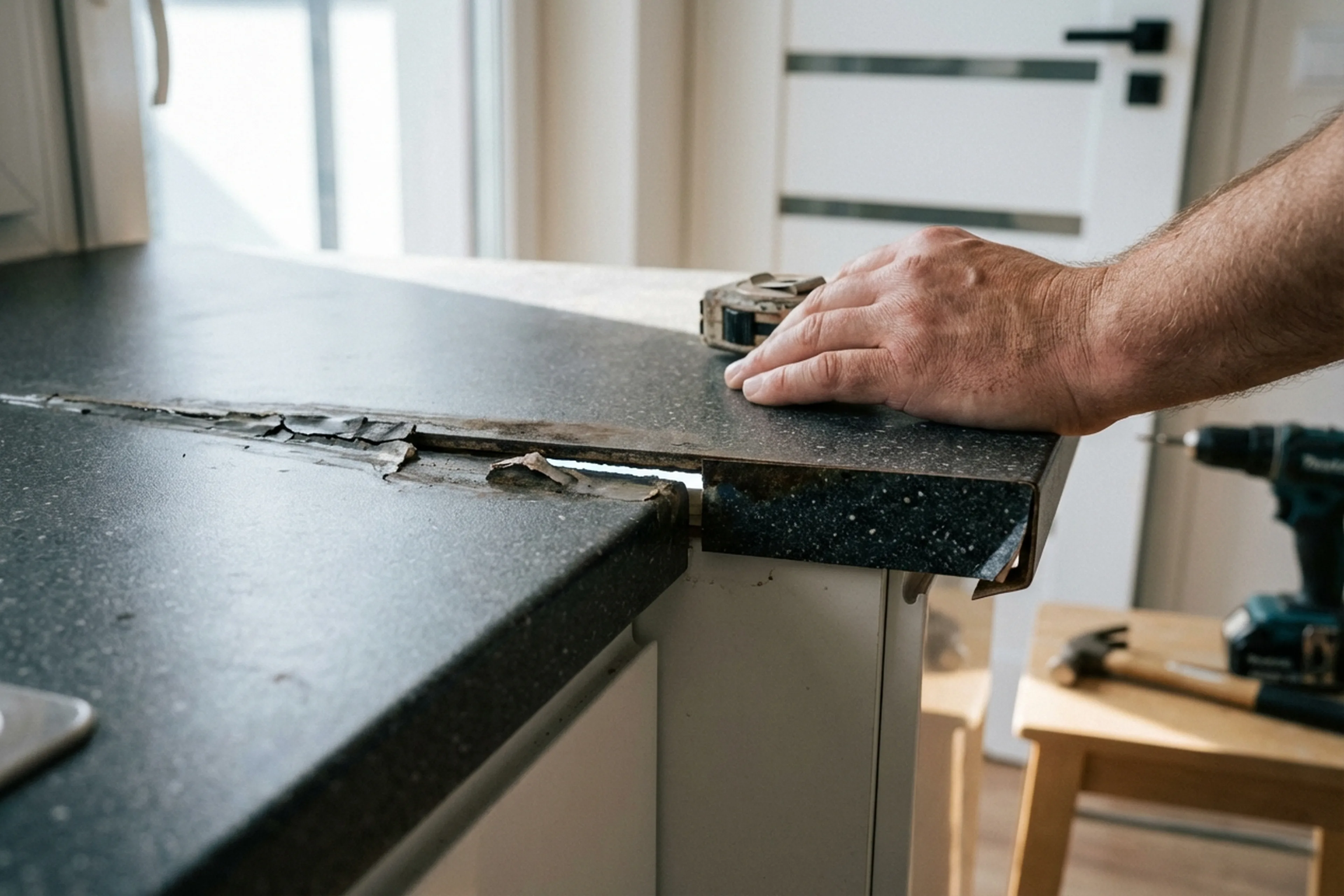
- Leaving the cut edges unsealed: water gets into the chipboard, and the worktop swells and warps.
- Using ordinary silicone instead of kitchen-grade sealant — it turns yellow and does not stick properly to laminate.
- Tightening the sections together before applying sealant, the inside of the joint can no longer be protected.
- Not checking the wall angle before fitting: the worktop does not sit to the wall, so a gap is left.
- Skipping the joining strip for laminate — the exposed edge stays visible and takes on water.
- Over-tightening eurobolts: the chipboard splits and one section has to be replaced.
- Cutting the worktop with a jigsaw and no guide rail, a rough cut means the joint will not line up.
What to prepare before the technician arrives
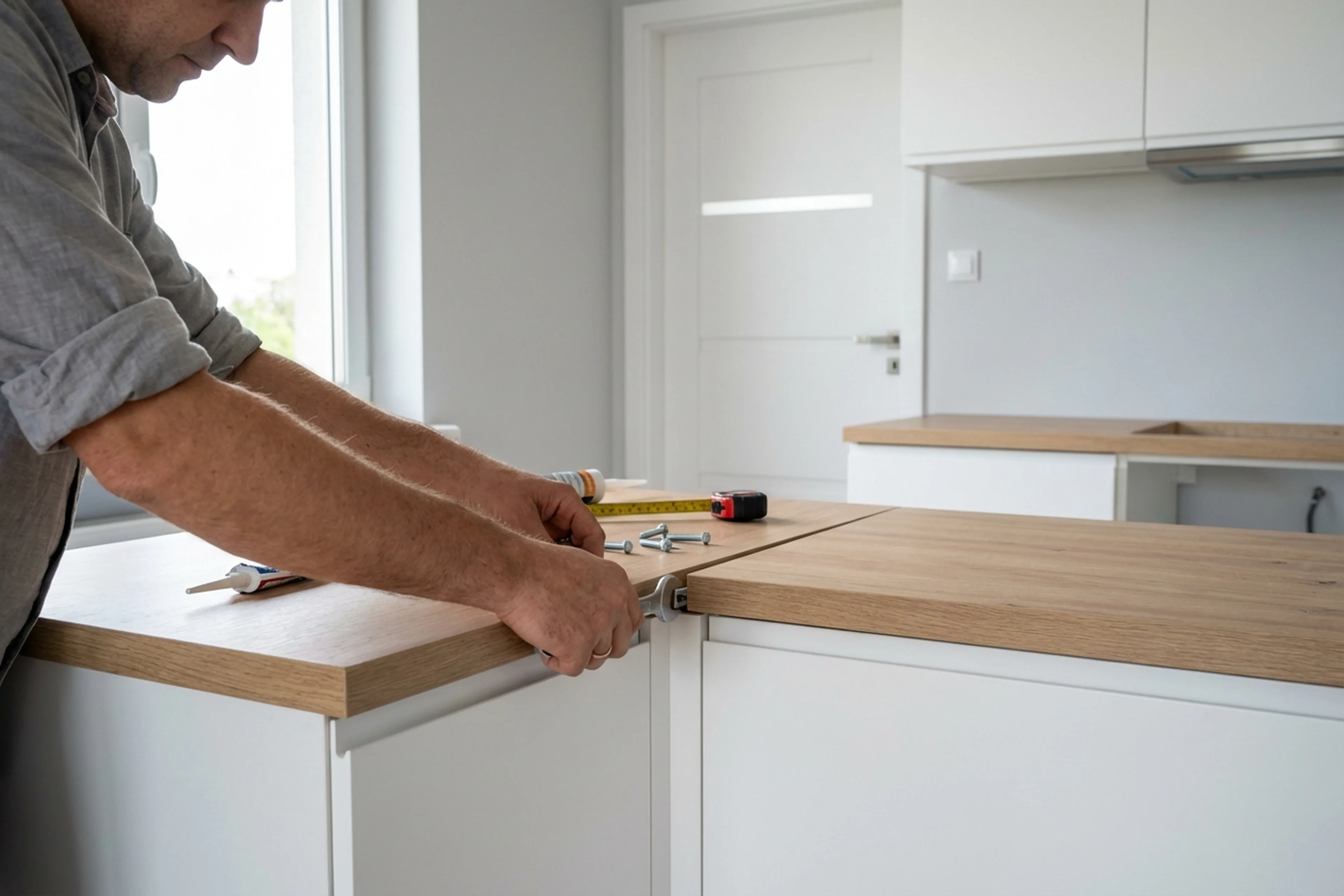
- Confirm the worktop material: laminate (chipboard), solid wood (beech, oak), or composite (quartz, acrylic).
- Take photos of the joint area and the full kitchen layout, send them to the technician beforehand.
- Remove dishes, appliances, and food from the worktop — the joint area needs full access.
- If the worktop is not installed yet, put the sections next to each other so the technician can begin straight away.
- Check if you have a joining strip and eurobolts (if the kitchen was bought as a set, they are often included).
- Prepare a power socket for the tools, a router or drill will be needed.
- Confirm the worktop colour: sealant is matched to the shade; if you need a specific tone, buy it in advance.
- Arrange access to the flat: intercom code, parking, floor number.
- If the corner walls are uneven, say so in the order in advance, it changes the scope of work.
- Remove base units from under the joint area if they block access from below.
A real case from Warsaw
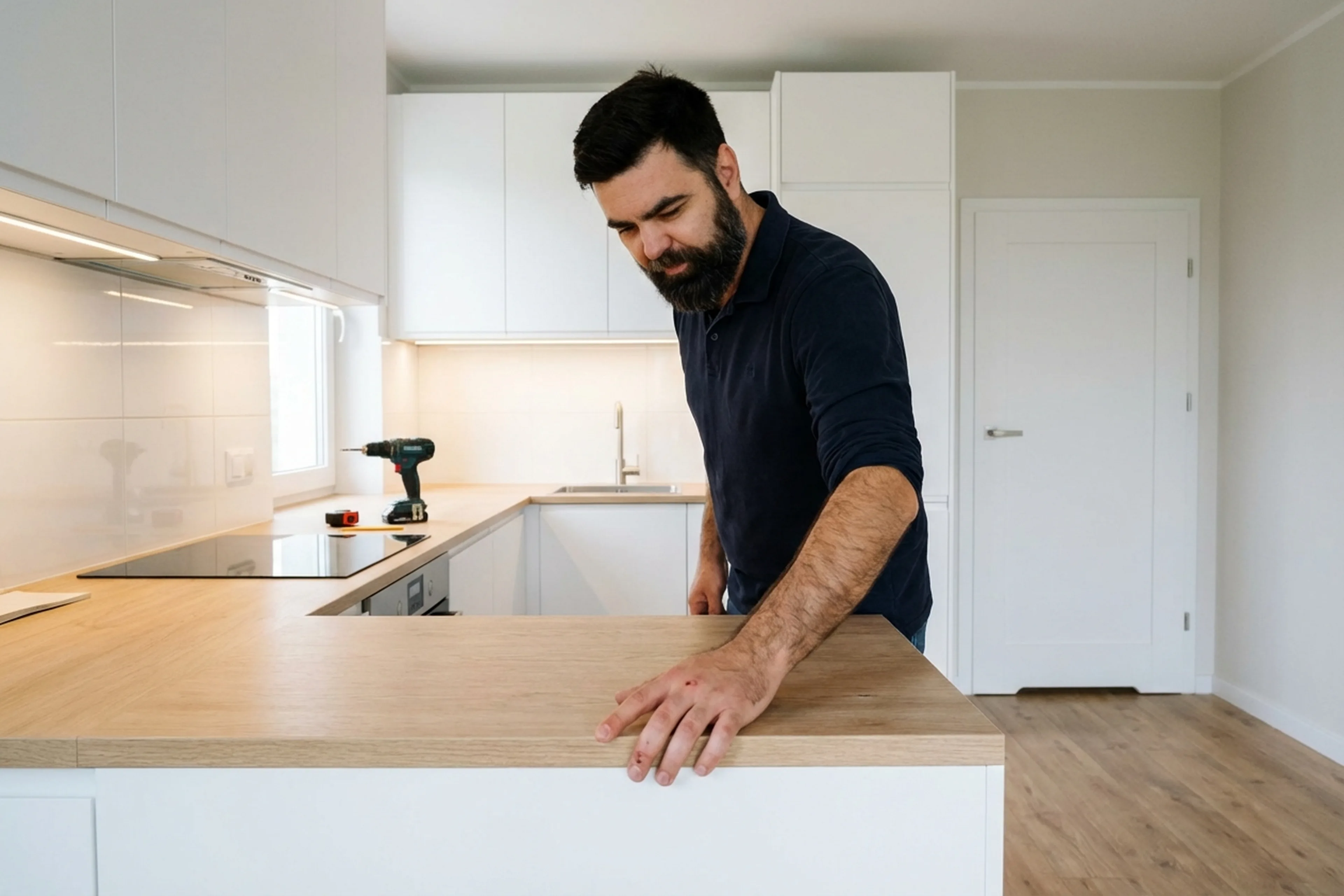
A client in the Bemowo district ordered an L-shaped IKEA kitchen. The worktop was laminate, two sections: 186 cm and 62 cm. During measuring, they found the wall angle was 88 degrees instead of 90. Just pushing the sections together would not have worked: there would be a gap along the wall, and the front of the joint would open out. Tradespeople had to trim the end at an angle to make up for the wall deviation. After that, the rest was standard: routing slots for eurobolts, sealing the cut edges, tightening the sections, levelling them. The joint came out tight with no difference in height, and the sealant matched the worktop colour. The whole job took about an hour and a half. The point is simple: even in new-build flats the walls are not perfect — always check the angle before joining.
Frequently asked questions
What is a eurobolt and why is it needed?
It is a special connector bolt that pulls two worktop sections together from underneath. Without it the joint depends only on adhesive and sealant: not enough for a laminate worktop.
Can the worktop be joined without a visible seam?
On laminate the seam will always be visible, but if the job is done properly it stays minimal. On composite (quartz, acrylic) an almost invisible bond can be made with specialist adhesive.
Is sealant really necessary?
Yes. Without sealant, water gets to the chipboard edges and the worktop swells. This is not just about appearance: it is about service life.
How long does the joining take?
One joint takes 1 to 2 hours, depending on the material and whether trimming is required. If the walls are uneven, it takes more time.
What’s included in the price?
Labour, fixings (eurobolts), travel within Warsaw. Sealant, adhesive, and joining strips are separate if they are not supplied by the client.
Can worktops made of different materials be joined?
Technically yes, but the joint will stand out more. It is better to use the same material so the pattern and thickness are the same.
Do tradespeople bring eurobolts with them?
Yes, they always bring standard fixings.
What if an old joint has started to swell?
That depends on how bad the damage is. If the chipboard has only swollen a little, it can be cleaned out, dried, and sealed again. If the damage is serious, replacing the affected section is easier. Add a photo to your request in the HandyMan24 app, and tradespeople will assess it.
Who does the work

Worktop joining is done by technicians with hands-on kitchen fitting experience. Tradespeople handle laminate, solid wood, and composite. Tradespeople cover all of Warsaw and the nearby suburbs.
| Service | Price |
|---|---|
| Assemble kitchen units (base and wall cabinets) | 400–1000 zł/mb |
| Base kitchen cabinet installation | 120–270 zł |
| Wall kitchen cabinet installation | 120–270 zł |
| Kitchen front adjustment | 80–250 zł |
| Kitchen worktop installation | 70–200 zł/mb |
| Laminate worktop installation | 70–135 zł/mb |
| Composite worktop installation | 250–400 zł/mb |
| Worktop joining | 190–300 zł/szt |
| Worktop cut-out (sink, hob) | 150–300 zł/szt |
Indicative prices. Ranges for a typical scope. Fixings included, materials separate. Minimum order 300 zł.
Order in the app
Describe the job, add photos and the address. Tradespeople send their own prices and dates, and you pick one of the offers.
Open the app