
579 328 023

Built-in Dishwasher Connection in Warsaw

Built-in Dishwasher Connection in Warsaw

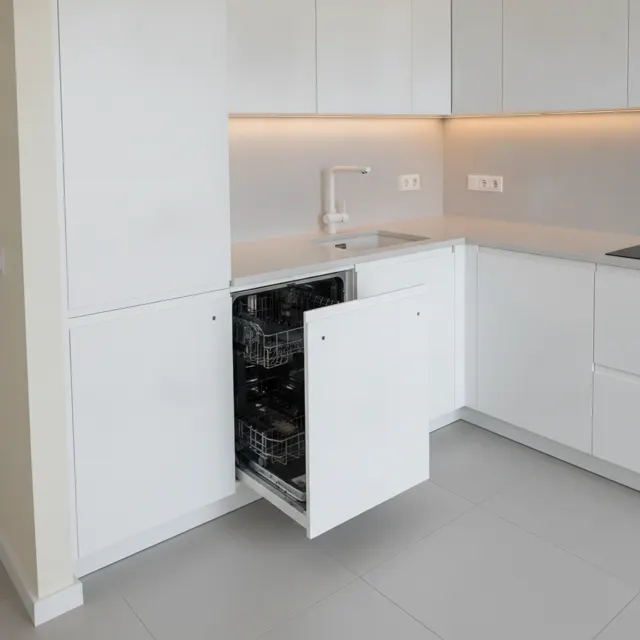
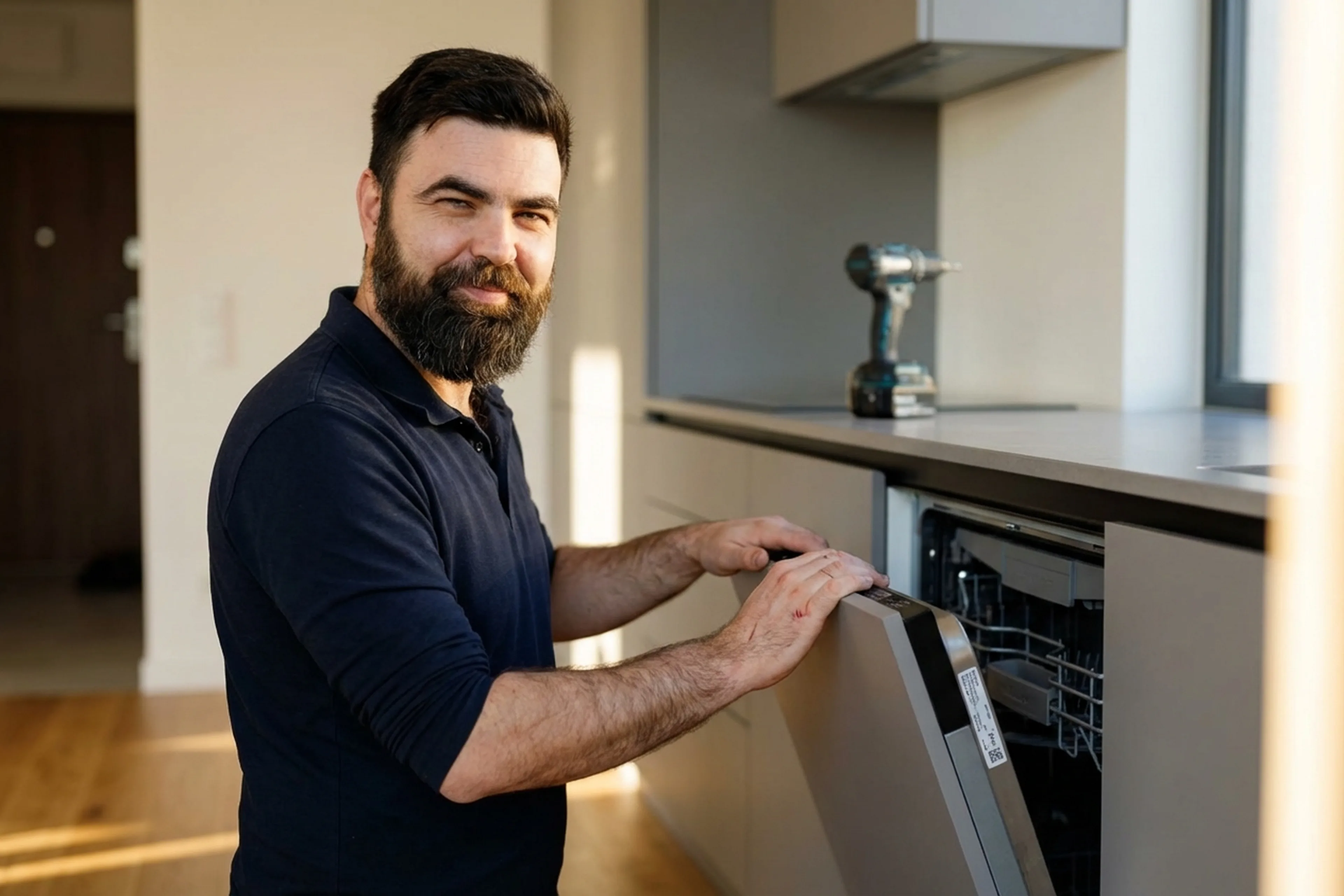
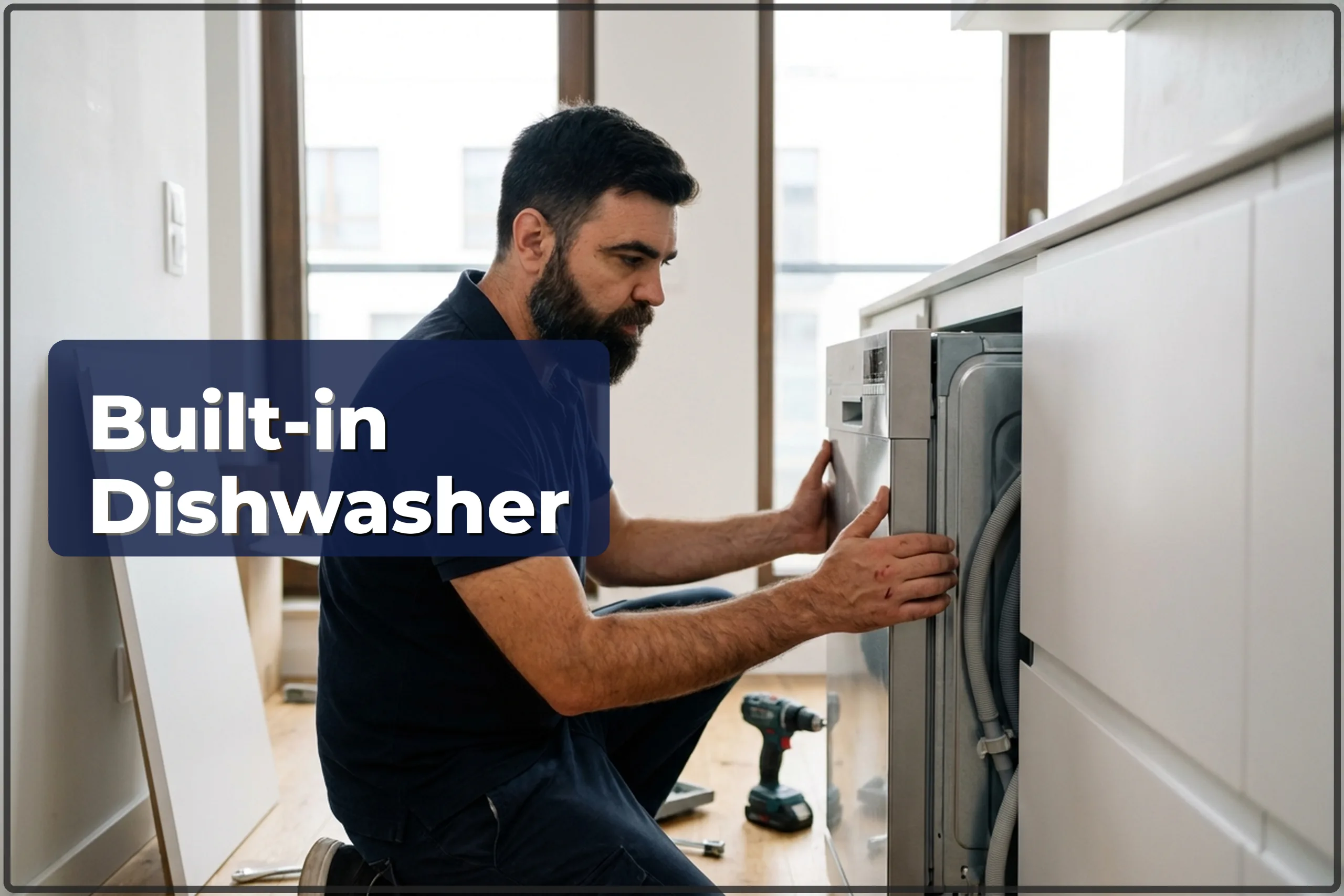
A built-in dishwasher is not the same as a freestanding one. It needs to fit inside a 60 cm cabinet niche, be secured with mounting brackets to the countertop and side panels, and have a decorative door panel attached to match your kitchen fronts. On top of that, you need water supply, drainage, and power connections. If the kitchen is new and everything was planned in the design, the job takes a couple of hours. If not, the cabinets and plumbing may need adapting. Either way, it is better to have a professional handle the connection — to avoid flooding your neighbours and voiding the appliance warranty.

How much does it cost and what affects the price

The cost of connecting a built-in dishwasher depends on several factors: whether the cabinet needs modification (cutout in the back panel, niche adjustment), whether water and drain outlets are already in place, and how far the power socket is. If the kitchen was designed with a dishwasher in mind, the connection is straightforward. If outlets need extending or relocating, that is extra work. See the table below for current kitchen service prices. Mounting hardware and consumables are included; materials for extending plumbing are charged separately.

Serviceminmax
Kitchen furniture installation (complete set) 20% od ceny25% od ceny
Kitchen base cabinet installation 250 zł400 zł
Wall cabinet installation 250 zł400 zł
Kitchen cabinet door adjustment 80 zł150 zł
Hinge replacement 60 zł/szt120 zł/szt
Kitchen countertop installation 200 zł/mb350 zł/mb
Laminate countertop installation 150 zł/mb250 zł/mb
Composite countertop installation 250 zł/mb400 zł/mb
Countertop joining 190 zł/szt300 zł/szt
Countertop cutout (sink / hob) 120 zł/szt200 zł/szt

How the on-site work goes

  1. You send a photo of the niche and the cabinet back panel — the technician assesses readiness.
  2. We agree on a time — usually same-day or next-day across Warsaw.
  3. On site, the technician checks the niche: width, depth, and whether there is a cutout in the back panel for hoses.
  4. If there is no cutout, one is made with a jigsaw or router on the spot.
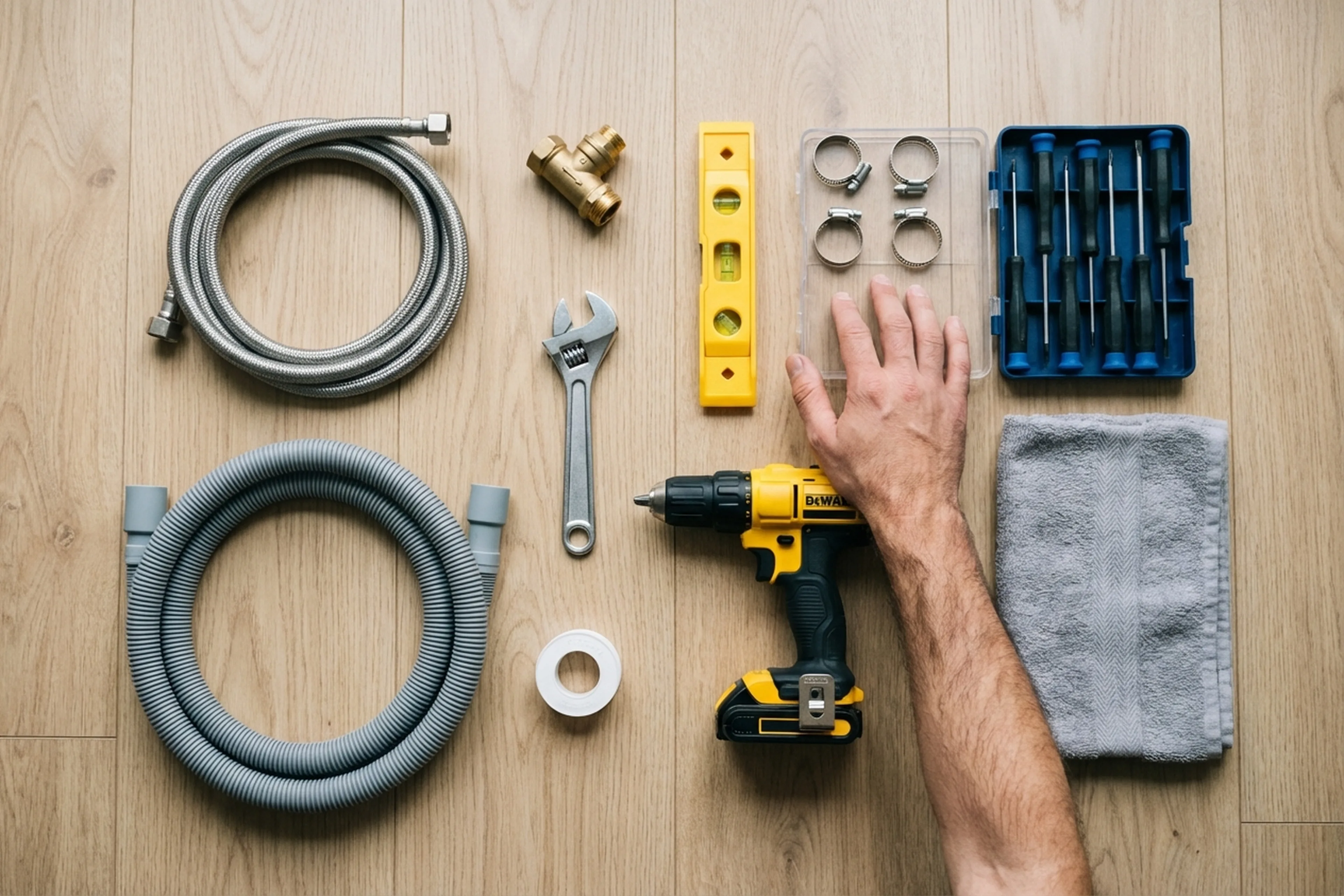
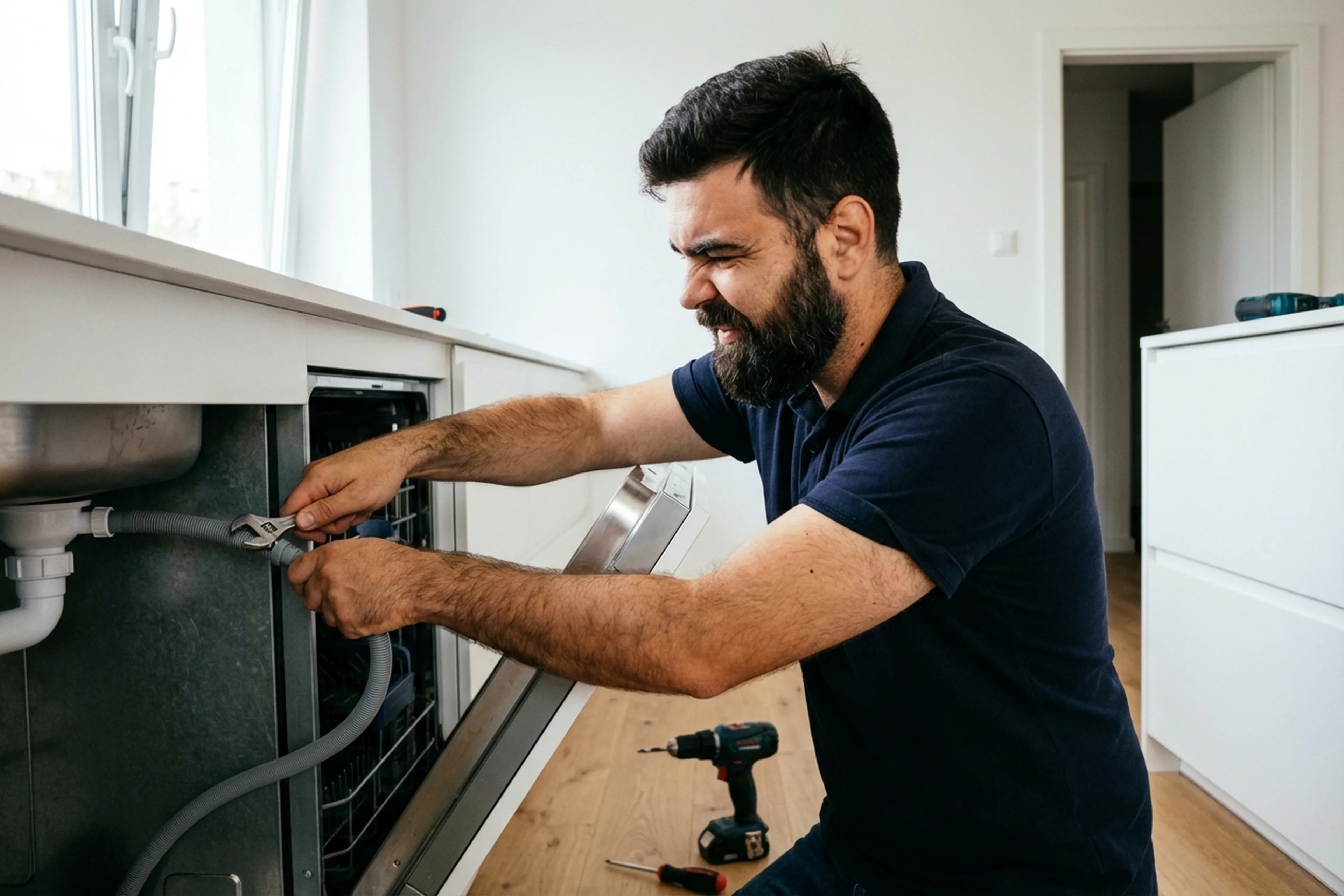
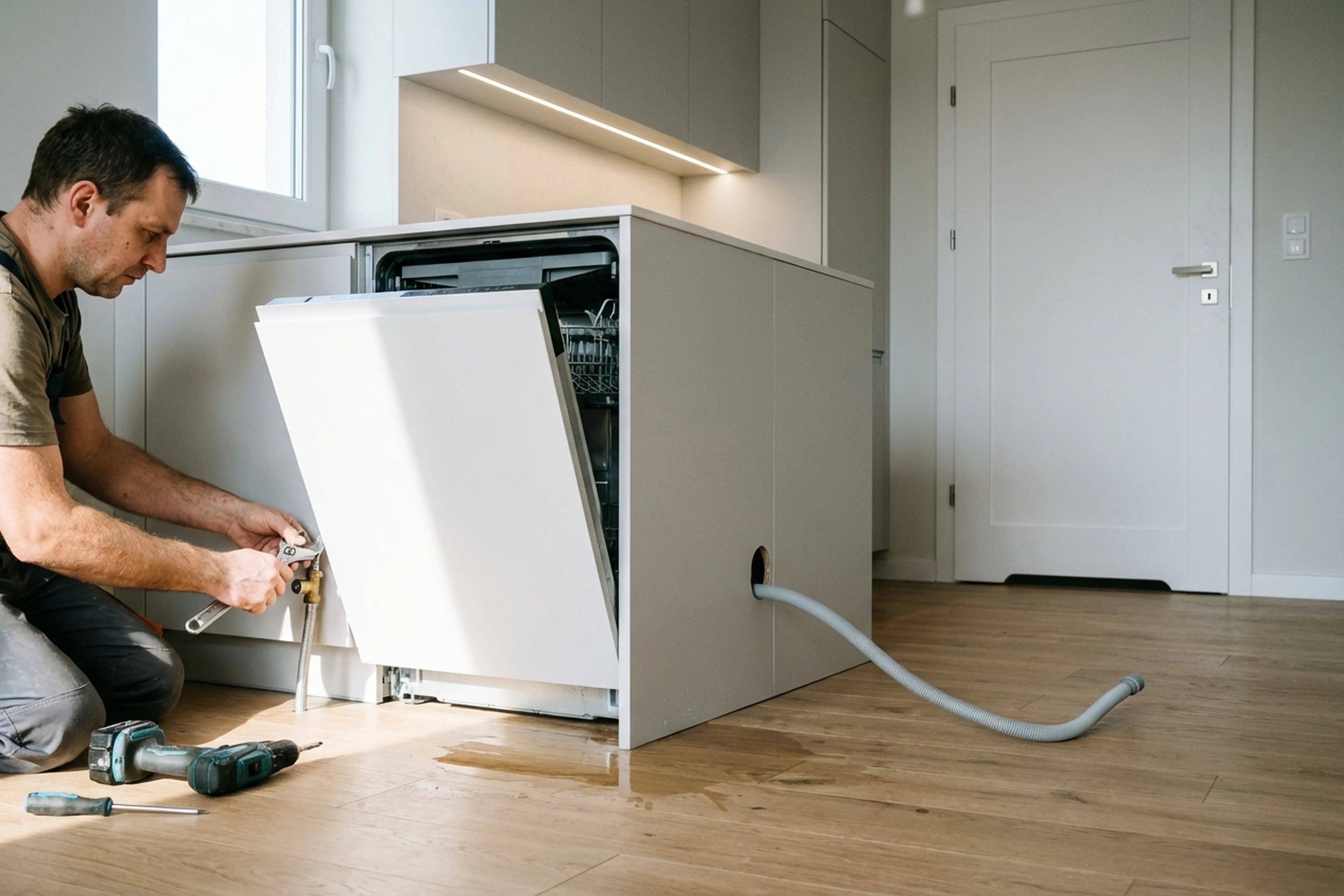
  5. The dishwasher is slid into the niche, connected to cold water via a tee valve, and the drain is routed to the sink siphon or directly to the waste pipe.
  6. Electrics are checked: the socket must be earthed and not located behind the appliance (so the plug does not press against the wall).
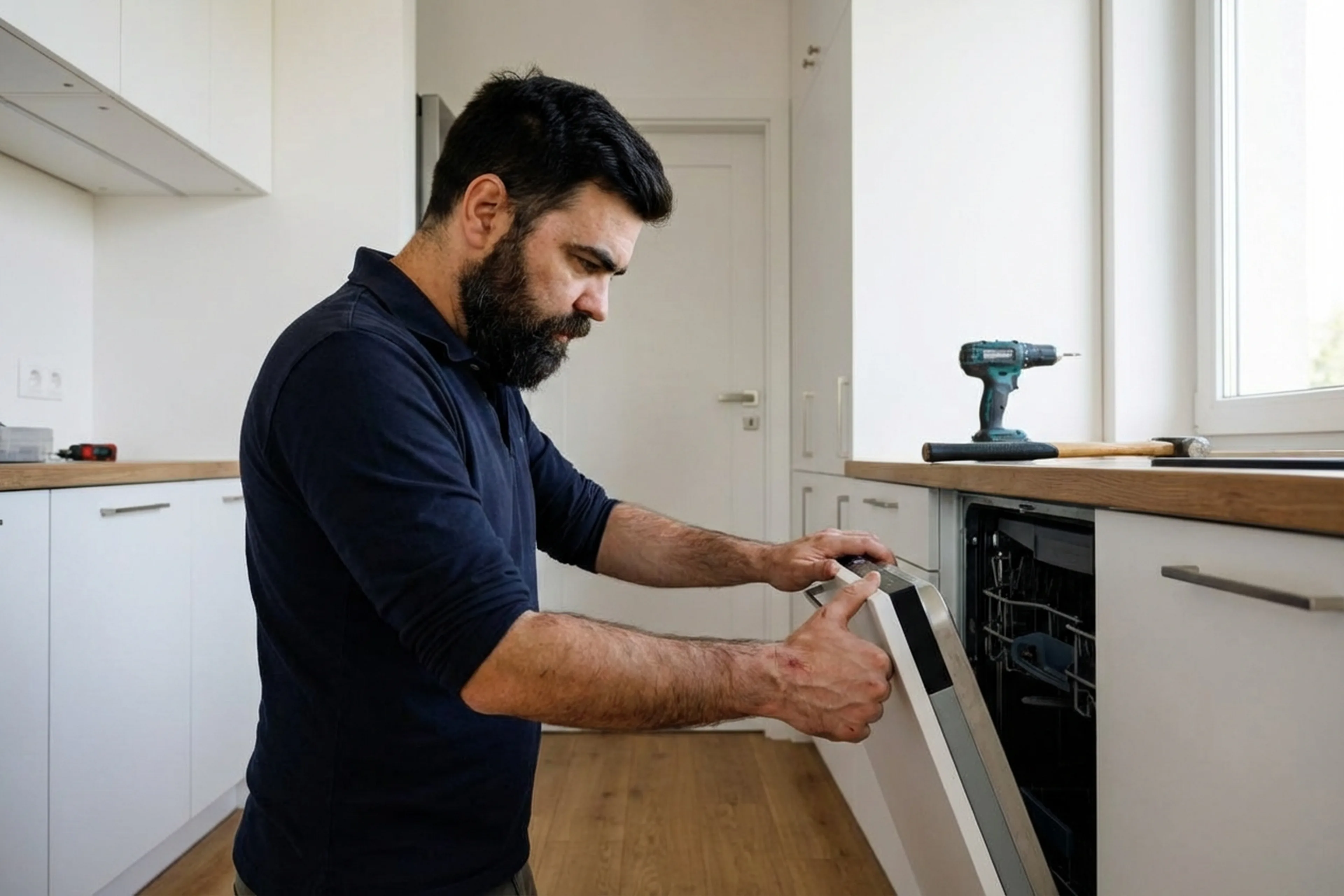
  7. The decorative panel is mounted and attached to the dishwasher door.
  8. Test run — checking for leaks, drain function, and door alignment.

Common customer mistakes (and how to avoid them)
  • Buying a 45 cm dishwasher for a 60 cm niche (or vice versa) without measuring first.
  • Forgetting the cutout in the cabinet back panel — hoses have nowhere to go, and the machine won’t slide in fully.
  • Connecting the drain without a siphon with a non-return valve — sewer odours get into the dishwasher.
  • Placing the socket right behind the dishwasher — the plug prevents the unit from fitting, and in case of a leak it is dangerous.
  • Not securing the dishwasher with mounting brackets — it vibrates during cycles and damages the countertop.
  • Reusing the old drain hose from a previous machine — the diameter or length does not match.
  • Attaching the decorative panel before connecting — then everything has to come off again.

What to prepare before the technician arrives
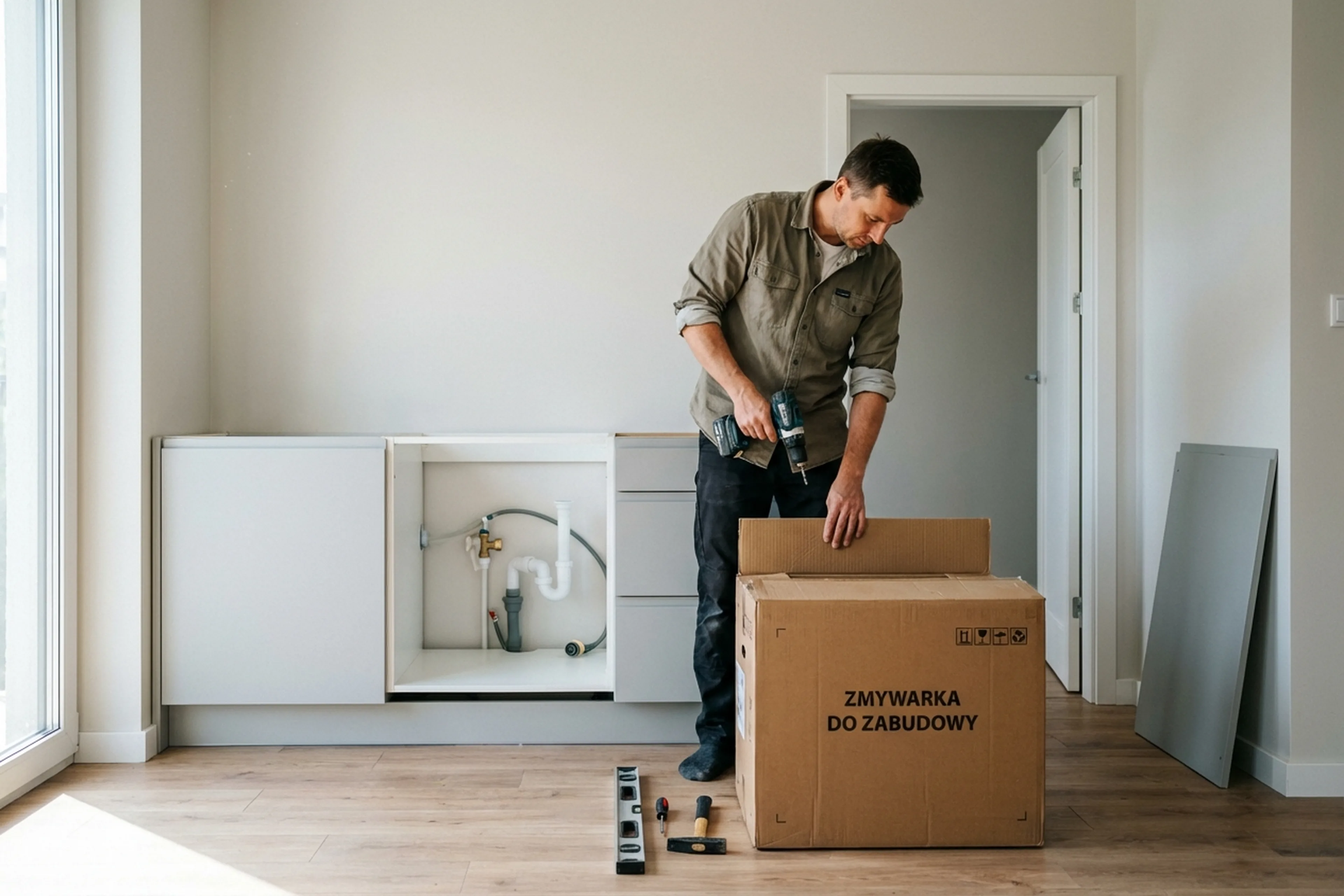
  • Make sure the dishwasher has been delivered and is next to the installation spot (not in the hallway on another floor).
  • Check the contents: supply and drain hoses, mounting kit, manual.
  • Measure the niche: width, depth, height — compare with the dishwasher dimensions.
  • Check whether there is a cutout or hole in the cabinet back panel for hoses.
  • Make sure there is room under the sink for a tee on the water supply.
  • Confirm there is an earthed socket within reach (not behind the machine).
  • Clear the space in front of the niche — remove chairs, boxes, rubbish.
  • If the kitchen is still being assembled, coordinate with the fitters to make utility cutouts.
  • Have the decorative panel (front) ready if it comes separately from the furniture.
  • Provide the intercom code and parking information for the technician.

A real case from Warsaw

Clients in the Ursynow district ordered an IKEA kitchen and bought a Bosch built-in dishwasher. They assembled the cabinets themselves but did not cut the opening in the back panel for hoses. The dishwasher hit the wall and would not slide in by 8 centimetres. The technician marked and cut an opening with a jigsaw on the spot for the hoses and power cable. Then it turned out the drain hose was too short to reach the siphon, so an extension with clamps was fitted. Water was connected via a tee with a shut-off valve, and all joints were checked for leaks. The decorative front panel was mounted on the factory guide rails. The test run went without issues. The entire installation took about two hours. Takeaway: when ordering a kitchen, plan space for built-in appliances from the start and ask the fitters to make all utility cutouts in advance.

Frequently asked questions

How is connecting a built-in dishwasher different from a freestanding one?
A built-in unit must be secured in the niche with brackets, fitted with a decorative front panel, and the cabinet back panel needs a cutout for hoses. The actual connections (water, drain, power) are the same.

Can I connect a dishwasher if there is no drain nearby?
Yes, the drain can be extended to the sink siphon. However, the hose length should not exceed the manufacturer’s recommendation (usually 2-3 metres).

Does the dishwasher need a dedicated socket?
Yes, a dedicated earthed socket on a circuit rated at least 16A is recommended. Do not use an extension lead or adapter.

What if the niche is slightly wider than the dishwasher?
That is normal — gaps are taken up by mounting brackets and the decorative panel. The key thing is that the machine is firmly secured.

Does the technician bring materials?
Mounting hardware and standard consumables — yes. Tee valves, hose extensions, siphons — it depends on the situation. Best to check when booking.

How long does the connection take?
If everything is ready (niche, cutouts, outlets) — about 1 to 1.5 hours. If cabinet or plumbing modifications are needed — up to 3 hours.

Can the dishwasher be moved to a different spot in the kitchen?
It can, but it will require extending the plumbing. The technician will assess feasibility on site.

Who does the work

Kitchen appliance connections are handled by technicians experienced in built-in equipment installation. We cover all of Warsaw — from Wilanow to Bielany. We arrive with tools, assess the situation on site, and give you an exact price before starting. To book, call or message us — we reply within an hour.

Reviews from our clients

Built-in Dishwasher Connection in Warsaw

Built-in Dishwasher Connection in Warsaw

A built-in dishwasher is not the same as a freestanding one. It needs to fit inside a 60 cm cabinet niche, be secured with mounting brackets to the countertop and side panels, and have a decorative door panel attached to match your kitchen fronts. On top of that, you need water supply, drainage, and power connections. If the kitchen is new and everything was planned in the design, the job takes a couple of hours. If not, the cabinets and plumbing may need adapting. Either way, it is better to have a professional handle the connection — to avoid flooding your neighbours and voiding the appliance warranty.

How much does it cost and what affects the price

The cost of connecting a built-in dishwasher depends on several factors: whether the cabinet needs modification (cutout in the back panel, niche adjustment), whether water and drain outlets are already in place, and how far the power socket is. If the kitchen was designed with a dishwasher in mind, the connection is straightforward. If outlets need extending or relocating, that is extra work. See the table below for current kitchen service prices. Mounting hardware and consumables are included; materials for extending plumbing are charged separately.

Serviceminmax
Kitchen furniture installation (complete set) 20% od ceny25% od ceny
Kitchen base cabinet installation 250 zł400 zł
Wall cabinet installation 250 zł400 zł
Kitchen cabinet door adjustment 80 zł150 zł
Hinge replacement 60 zł/szt120 zł/szt
Kitchen countertop installation 200 zł/mb350 zł/mb
Laminate countertop installation 150 zł/mb250 zł/mb
Composite countertop installation 250 zł/mb400 zł/mb
Countertop joining 190 zł/szt300 zł/szt
Countertop cutout (sink / hob) 120 zł/szt200 zł/szt

How the on-site work goes

  1. You send a photo of the niche and the cabinet back panel — the technician assesses readiness.
  2. We agree on a time — usually same-day or next-day across Warsaw.
  3. On site, the technician checks the niche: width, depth, and whether there is a cutout in the back panel for hoses.
  4. If there is no cutout, one is made with a jigsaw or router on the spot.
  5. The dishwasher is slid into the niche, connected to cold water via a tee valve, and the drain is routed to the sink siphon or directly to the waste pipe.
  6. Electrics are checked: the socket must be earthed and not located behind the appliance (so the plug does not press against the wall).
  7. The decorative panel is mounted and attached to the dishwasher door.
  8. Test run — checking for leaks, drain function, and door alignment.

Common customer mistakes (and how to avoid them)

  • Buying a 45 cm dishwasher for a 60 cm niche (or vice versa) without measuring first.
  • Forgetting the cutout in the cabinet back panel — hoses have nowhere to go, and the machine won’t slide in fully.
  • Connecting the drain without a siphon with a non-return valve — sewer odours get into the dishwasher.
  • Placing the socket right behind the dishwasher — the plug prevents the unit from fitting, and in case of a leak it is dangerous.
  • Not securing the dishwasher with mounting brackets — it vibrates during cycles and damages the countertop.
  • Reusing the old drain hose from a previous machine — the diameter or length does not match.
  • Attaching the decorative panel before connecting — then everything has to come off again.

What to prepare before the technician arrives

  • Make sure the dishwasher has been delivered and is next to the installation spot (not in the hallway on another floor).
  • Check the contents: supply and drain hoses, mounting kit, manual.
  • Measure the niche: width, depth, height — compare with the dishwasher dimensions.
  • Check whether there is a cutout or hole in the cabinet back panel for hoses.
  • Make sure there is room under the sink for a tee on the water supply.
  • Confirm there is an earthed socket within reach (not behind the machine).
  • Clear the space in front of the niche — remove chairs, boxes, rubbish.
  • If the kitchen is still being assembled, coordinate with the fitters to make utility cutouts.
  • Have the decorative panel (front) ready if it comes separately from the furniture.
  • Provide the intercom code and parking information for the technician.

A real case from Warsaw

Clients in the Ursynow district ordered an IKEA kitchen and bought a Bosch built-in dishwasher. They assembled the cabinets themselves but did not cut the opening in the back panel for hoses. The dishwasher hit the wall and would not slide in by 8 centimetres. The technician marked and cut an opening with a jigsaw on the spot for the hoses and power cable. Then it turned out the drain hose was too short to reach the siphon, so an extension with clamps was fitted. Water was connected via a tee with a shut-off valve, and all joints were checked for leaks. The decorative front panel was mounted on the factory guide rails. The test run went without issues. The entire installation took about two hours. Takeaway: when ordering a kitchen, plan space for built-in appliances from the start and ask the fitters to make all utility cutouts in advance.

Frequently asked questions

How is connecting a built-in dishwasher different from a freestanding one?
A built-in unit must be secured in the niche with brackets, fitted with a decorative front panel, and the cabinet back panel needs a cutout for hoses. The actual connections (water, drain, power) are the same.

Can I connect a dishwasher if there is no drain nearby?
Yes, the drain can be extended to the sink siphon. However, the hose length should not exceed the manufacturer’s recommendation (usually 2-3 metres).

Does the dishwasher need a dedicated socket?
Yes, a dedicated earthed socket on a circuit rated at least 16A is recommended. Do not use an extension lead or adapter.

What if the niche is slightly wider than the dishwasher?
That is normal — gaps are taken up by mounting brackets and the decorative panel. The key thing is that the machine is firmly secured.

Does the technician bring materials?
Mounting hardware and standard consumables — yes. Tee valves, hose extensions, siphons — it depends on the situation. Best to check when booking.

How long does the connection take?
If everything is ready (niche, cutouts, outlets) — about 1 to 1.5 hours. If cabinet or plumbing modifications are needed — up to 3 hours.

Can the dishwasher be moved to a different spot in the kitchen?
It can, but it will require extending the plumbing. The technician will assess feasibility on site.

Who does the work

Kitchen appliance connections are handled by technicians experienced in built-in equipment installation. We cover all of Warsaw — from Wilanow to Bielany. We arrive with tools, assess the situation on site, and give you an exact price before starting. To book, call or message us — we reply within an hour.

Reviews from our clients