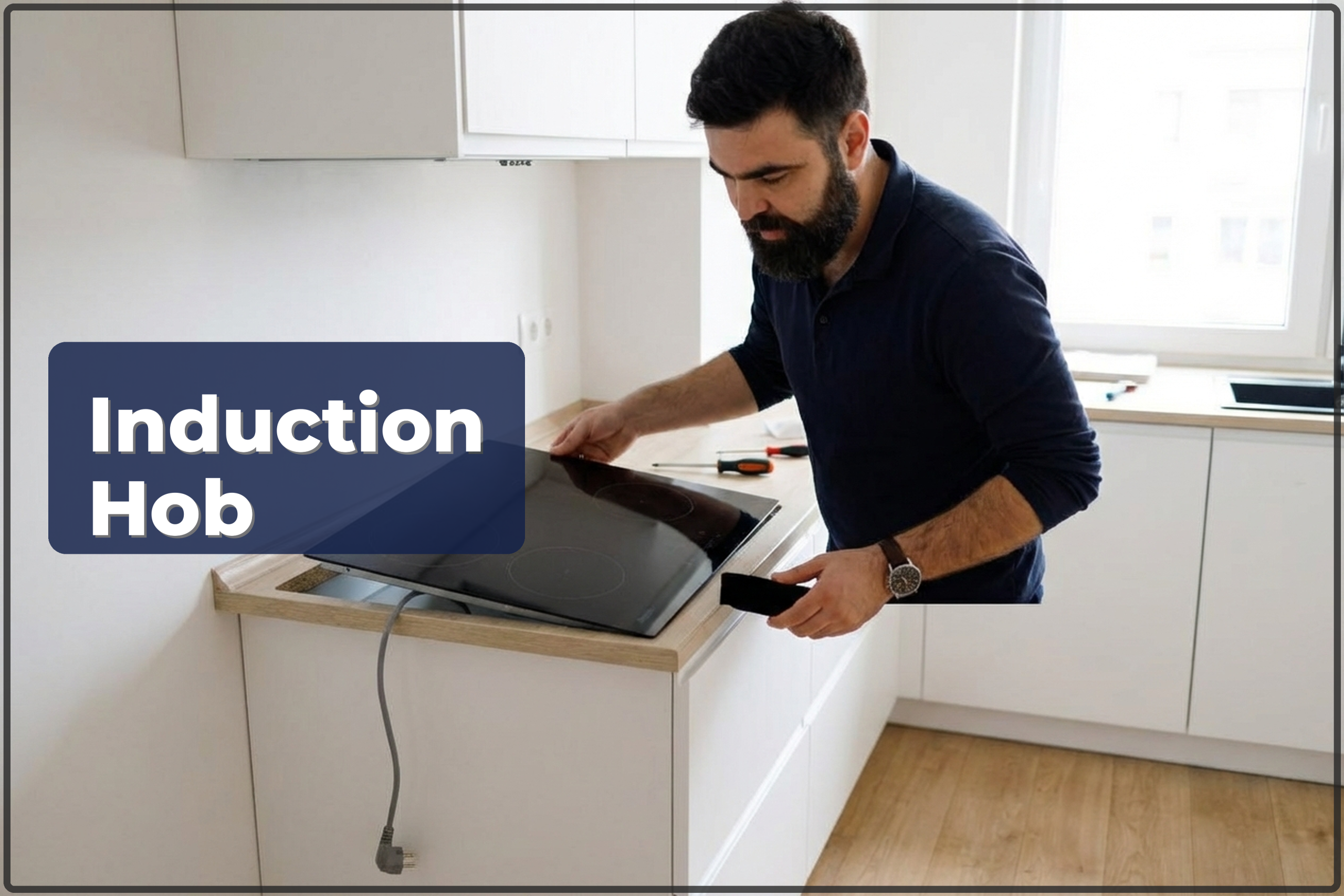
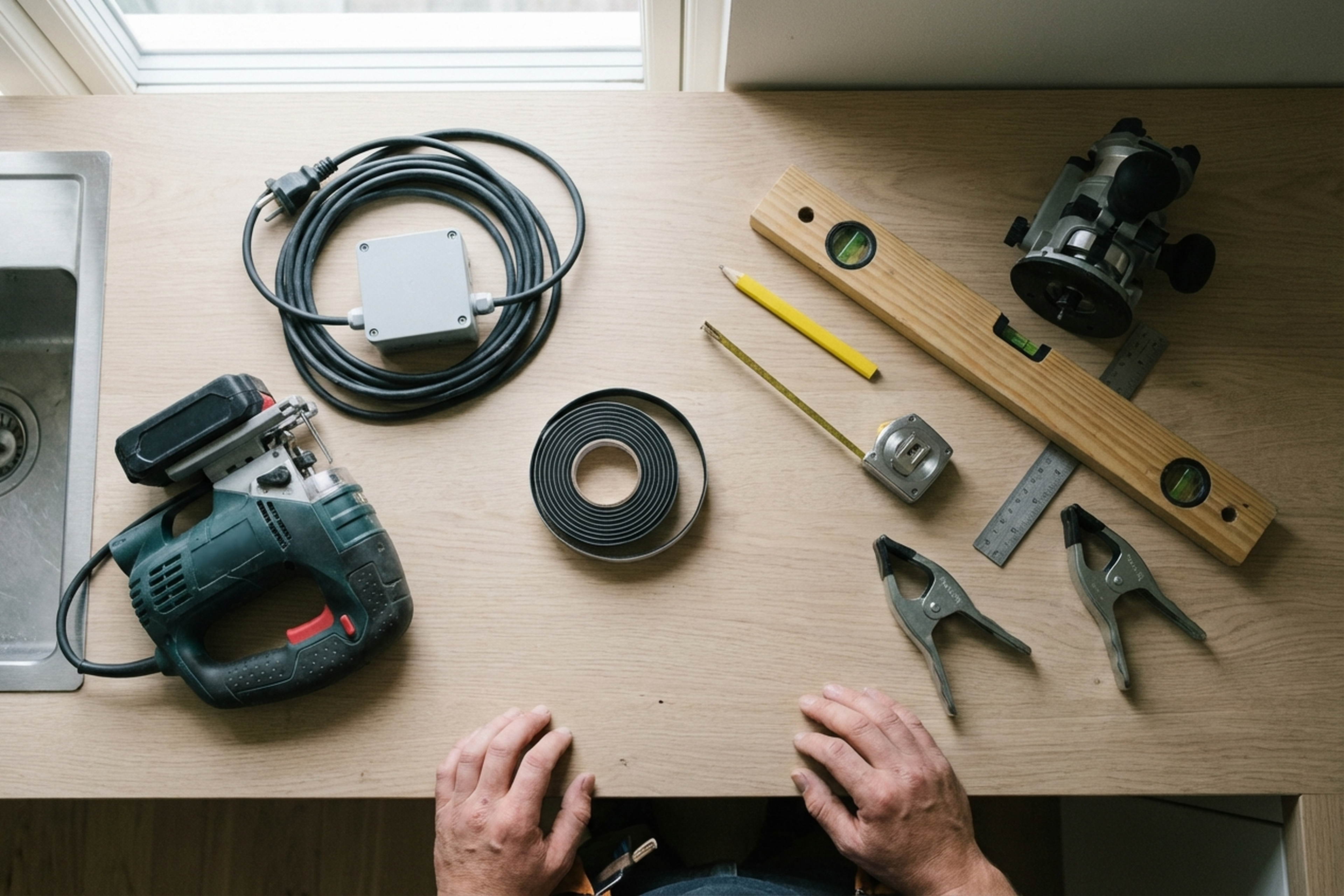
The induction hob is already bought, the kitchen is almost finished — the last step is cutting it into the countertop and hooking it up. On paper it looks easy: cut the hole, set it in place, connect the wires. In practice, a lot of small things have to be done properly. The cutout size comes from the manufacturer’s template, not from estimating by eye. Sealing tape around the edge keeps moisture out of the worktop. Mounting clips underneath keep the panel from moving. And if there’s an oven under the hob — a ventilation gap is required. We do kitchen installations all over Warsaw — from Mokotow to Ursynow, coming with a router, jigsaw, and all the tools needed for the job.
Important: an induction hob needs its own dedicated electrical circuit from the consumer unit. Connecting it to the mains means dealing with high current loads. If you don’t already have a prepared line or you’re not sure about the wiring — call an electrician. We can do both the electrical hookup and the countertop fitting in one visit.
How much does it cost and what affects the price
The price of installing an induction hob depends on the worktop material, how tricky the cutout is, and whether the electrical connection also needs to be done. Cutting a laminate worktop is faster and simpler. Stone or composite needs diamond tools and takes longer. If a dedicated electrical line is already there, the technician only connects the terminals. If there isn’t one, a cable has to be run from the consumer unit — that’s a separate job. Mounting clips and sealing tape usually come in the box with the hob. If something is missing, it has to be bought separately. Current prices for all kitchen services are listed in the table below.
| Service | min | max |
|---|---|---|
| Kitchen furniture installation (complete set) | 20% od ceny | 25% od ceny |
| Kitchen base cabinet installation | 250 zł | 400 zł |
| Wall cabinet installation | 250 zł | 400 zł |
| Kitchen cabinet door adjustment | 80 zł | 150 zł |
| Hinge replacement | 60 zł/szt | 120 zł/szt |
| Kitchen countertop installation | 200 zł/mb | 350 zł/mb |
| Laminate countertop installation | 150 zł/mb | 250 zł/mb |
| Composite countertop installation | 250 zł/mb | 400 zł/mb |
| Countertop joining | 190 zł/szt | 300 zł/szt |
| Countertop cutout (sink / hob) | 120 zł/szt | 200 zł/szt |
How the on-site installation goes
- You send a photo of the kitchen, the hob model, and the worktop dimensions — the technician checks the scope of the job.
- We set a time — often the same day or the next day.
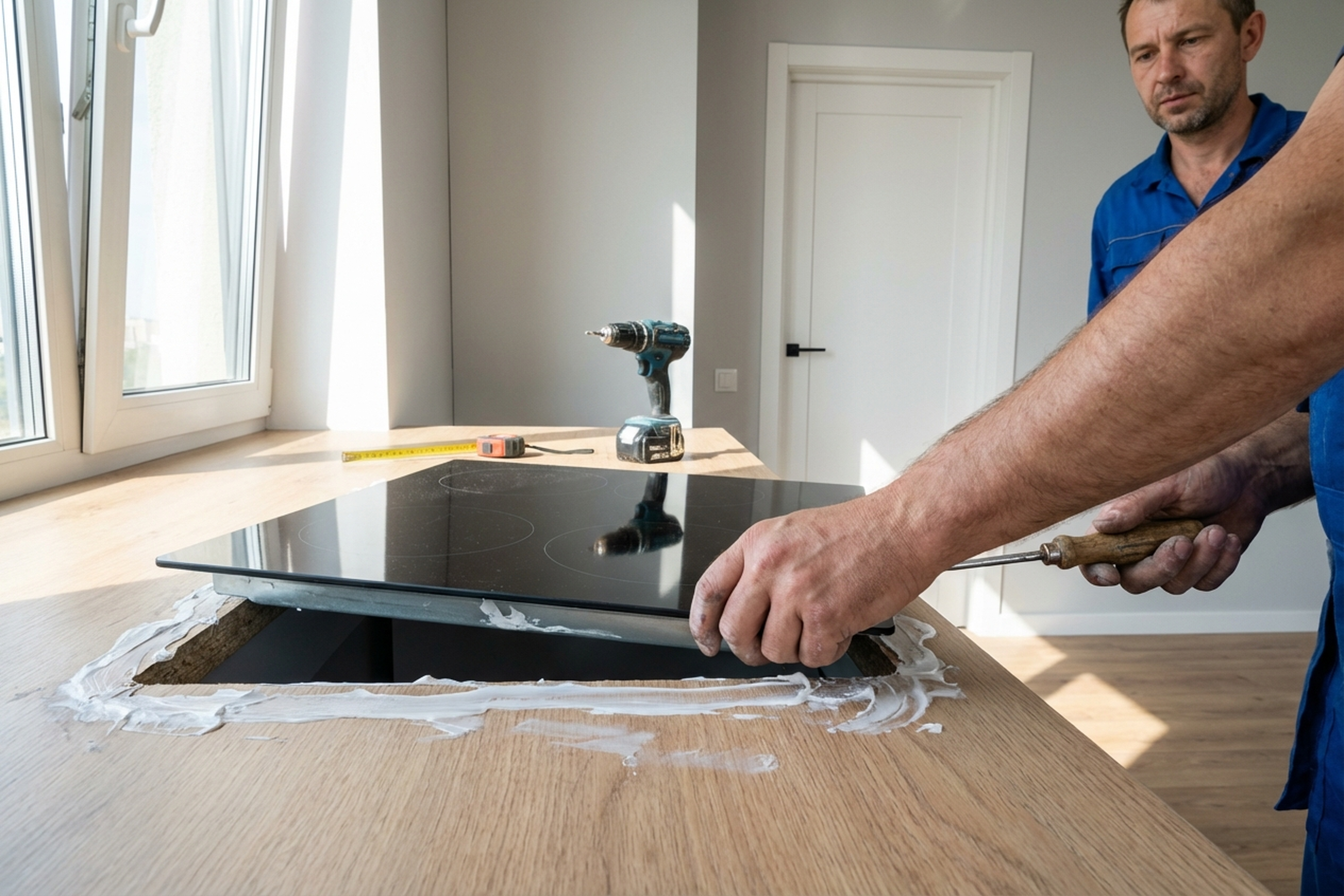
- On site, the technician marks the cutout using the template from the hob manual — accurate to the millimetre.
- Then cuts the opening with a jigsaw (laminate, wood) or router. The edges are cleaned up and sealed with silicone if needed.
- Applies sealing tape around the perimeter of the cutout — this protects the worktop edges from water and grease.
- Places the hob into the opening and fastens it from below with mounting clips.
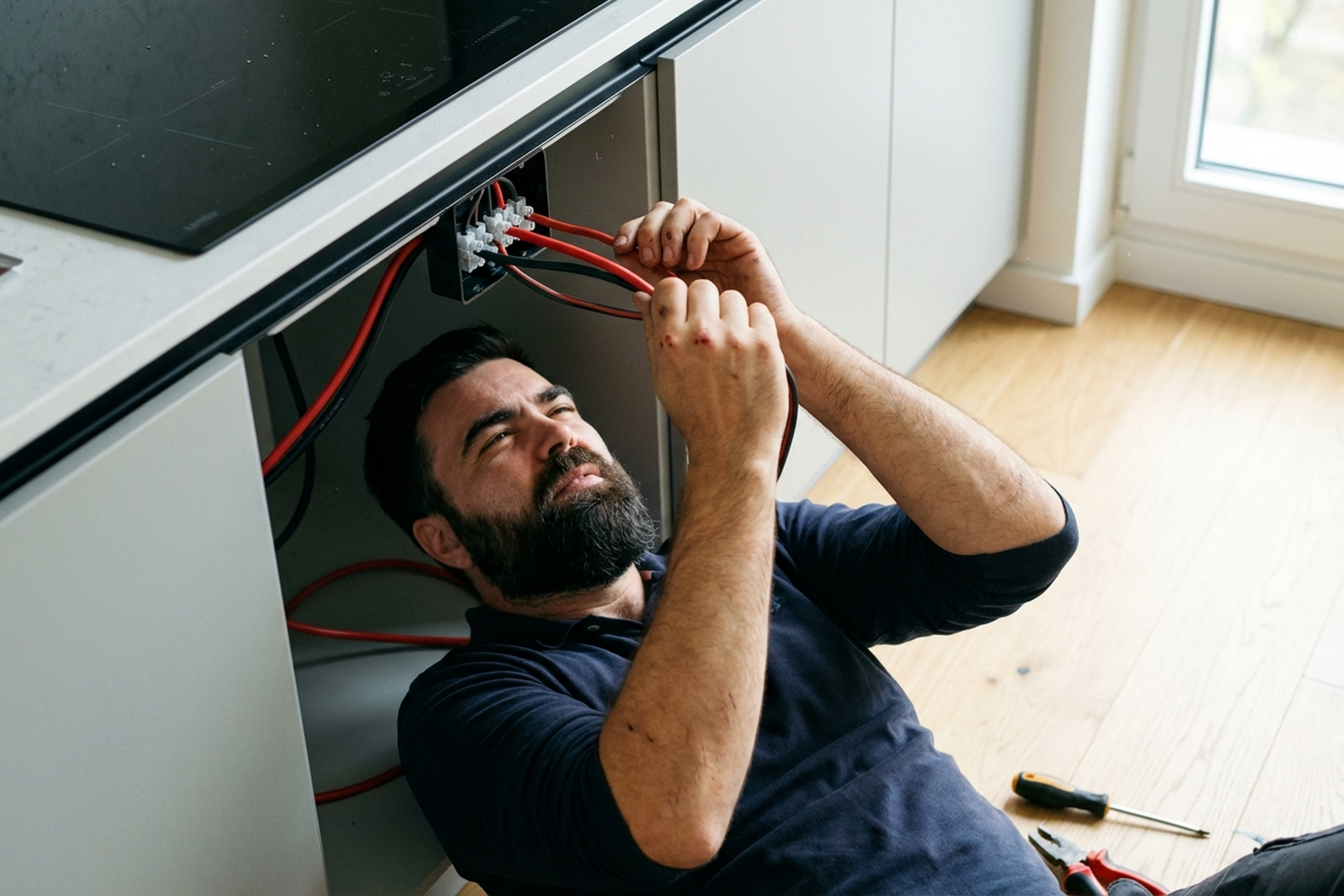
- Connects the electrics: cable to the terminal block according to the diagram in the manual (single-phase or three-phase). Tests all cooking zones.
Common mistakes when fitting an induction hob
- Cutting by the hob’s outside dimensions instead of using the template — the panel drops through or doesn’t go in.
- Leaving out the sealing tape — water from wiping the worktop gets into the cutout, and the laminate swells and deforms.
- Not fitting the mounting clips underneath — the hob rests only on its own weight and can move while cleaning.
- Installing the oven directly under the hob with no gap — the electronics overheat and sensor problems start.
- Connecting the hob to a standard socket through an extension lead — overload, the breaker trips, wires get hot.
- Cutting the worktop with an angle grinder instead of a jigsaw — chipped laminate, rough edges that sealant won’t hide.
- Not checking whether the cable from the consumer unit is long enough — joining power cables is not acceptable.
What to prepare before the technician arrives
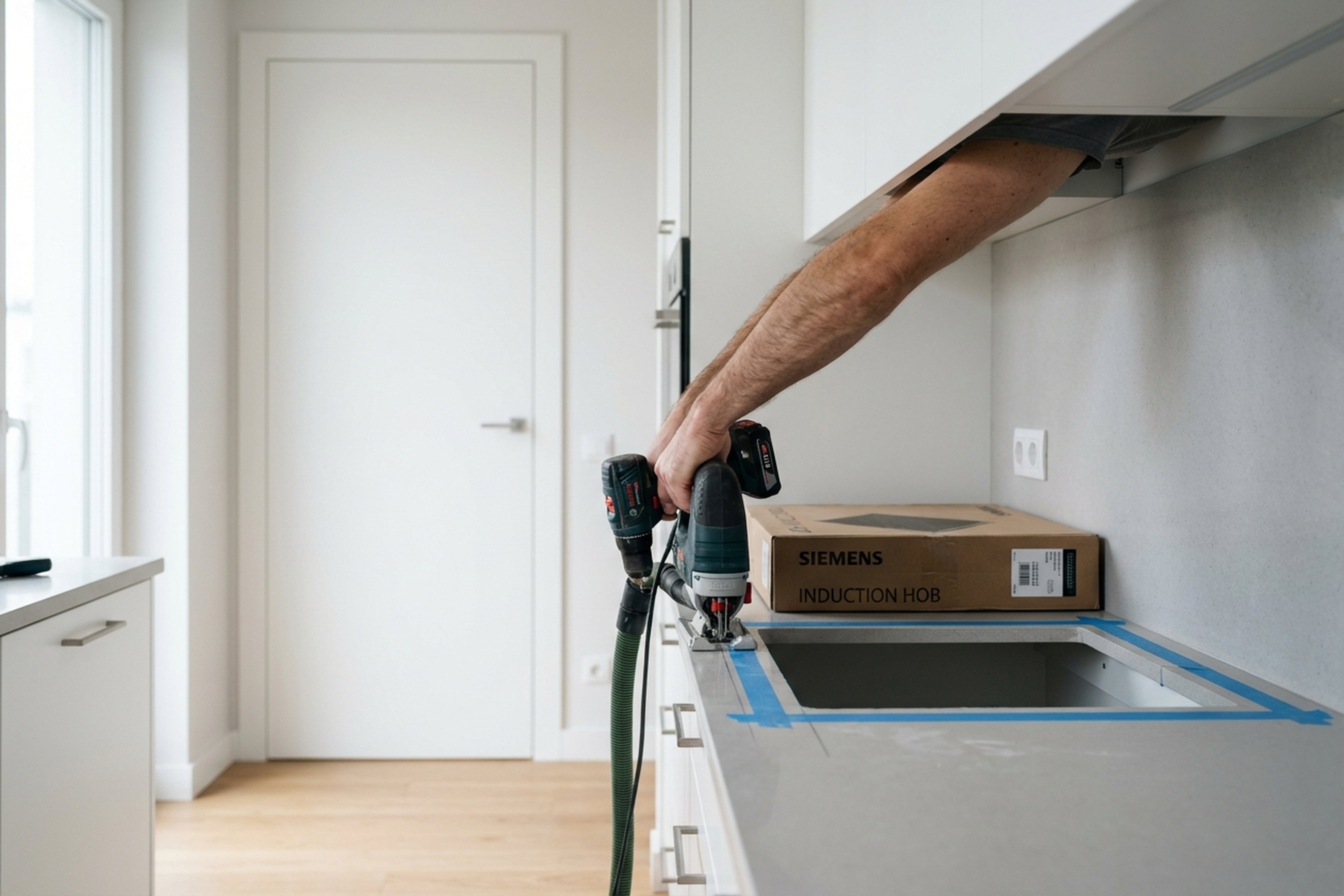
- Unpack the hob and check what’s inside: panel, sealing tape, clips, cutout template.
- Find the manual — it has the exact cutout dimensions and wiring diagram.
- Make sure the worktop is already fitted and fixed in place.
- Clear the workspace — remove dishes and appliances from the countertop.
- Check whether there’s a dedicated socket or cable for the hob behind the cabinet. If not, tell the technician beforehand.
- Check whether your flat has a single-phase (230 V) or three-phase (400 V) supply — this changes the wiring diagram.
- If there’ll be an oven below the hob — share the model so the technician can confirm the minimum required gap.
- Make sure there’s access to the consumer unit — the breaker will have to be turned off before connection.
- Provide access details: intercom code, parking information.
A real case from Warsaw
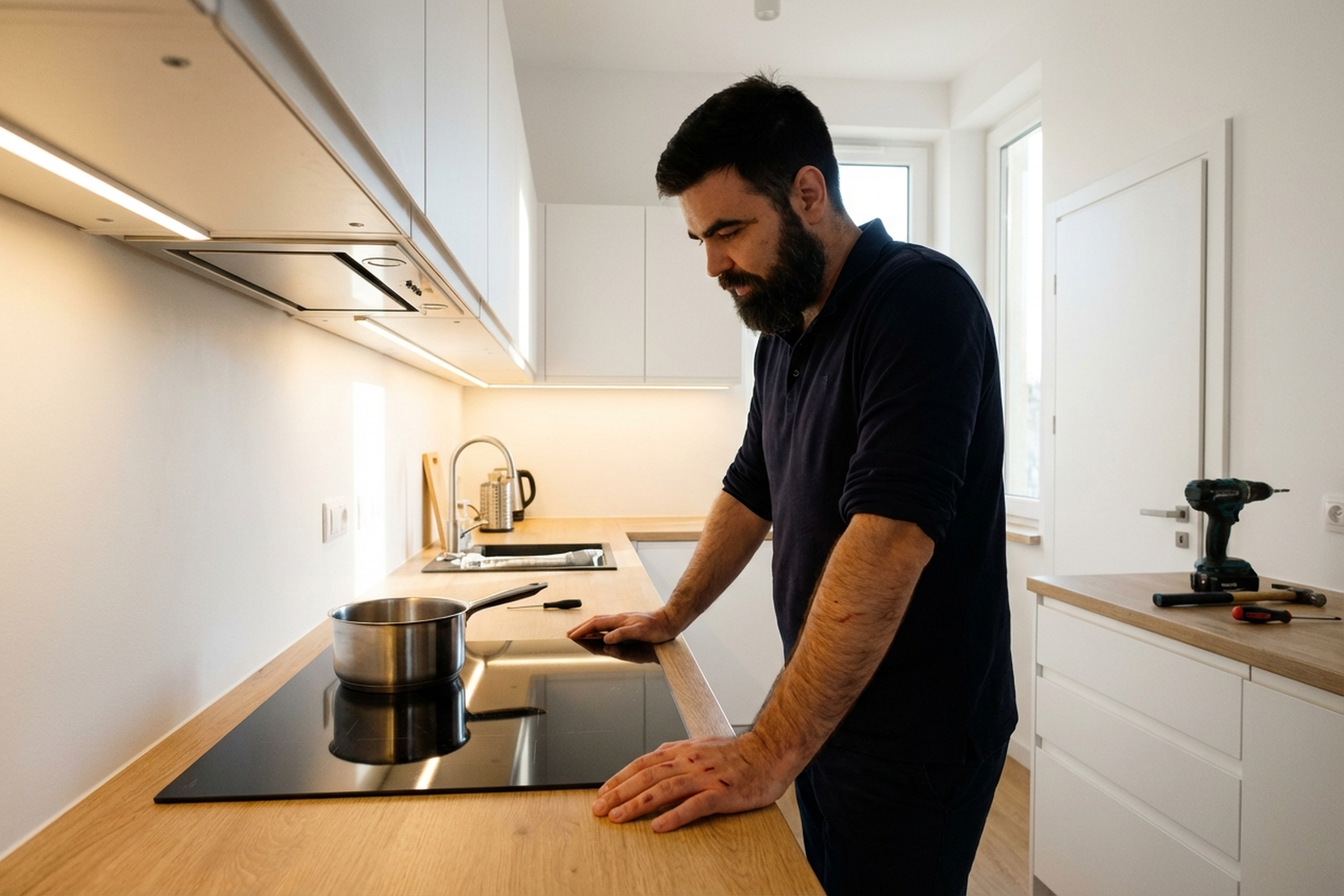
A client in the Wola district booked fitting of a Bosch induction hob into a new laminate worktop. Another crew had assembled the kitchen but left the hob “for later.” When we checked it, we saw the worktop had been mounted tight to the wall without leaving room for the cutout — there was only 4 cm from the edge to the wall, while the manual calls for at least 5 cm. We chose to move the cutout 2 cm towards the sink, which kept the minimum clearance. We cut the opening with a fine-tooth jigsaw blade, sealed the edges with silicone, and applied the factory sealing tape. The hob was fixed from below with four clips. A dedicated 3×4 mm² line from the consumer unit was already there — we connected straight to the terminals using the single-phase diagram. We tested all four zones, the boost function, and the timer. The whole job took around an hour and a half. The lesson: when planning a kitchen, always leave enough room for the cutout and the minimum clearances given in the appliance manual (compatible with IKEA, Nobilia, BRW and similar).
Frequently asked questions
Can an induction hob be fitted into a stone worktop?
Yes, but cutting stone needs specialist tools. It’s a harder job and costs more than laminate. Tell us the material in advance so the technician comes with the proper equipment.
Is sealing tape really necessary?
Yes. It comes with the hob and protects the cutout edges from water and grease. Without it, the worktop can start swelling within a few months.
What gap is needed between the hob and the oven below?
That depends on the manufacturer. Usually at least 20–30 mm. You’ll find this in both appliance manuals. Without that gap, the hob’s electronics can overheat.
The hob came without a plug — is that normal?
Yes. Most induction hobs are connected directly to a terminal block with a dedicated cable. No plug or socket is used.
Can I install the hob myself?
Cutting the worktop and setting the panel in place is possible with a jigsaw and some hands-on experience. But connecting the power cable should be done by a professional — mistakes here can be expensive.
How long does the whole job take?
If the line is already in place — around 1–1.5 hours. If a cable has to be run from the consumer unit — from 2 hours, depending on distance and whether wall chasing is needed.
What’s included in the price and what isn’t?
Labour, fixings, and travel within Warsaw are included. Cable, breakers, and RCD — if they have to be purchased, they are charged separately. Sealing tape and clips usually come with the hob.
Who does the work
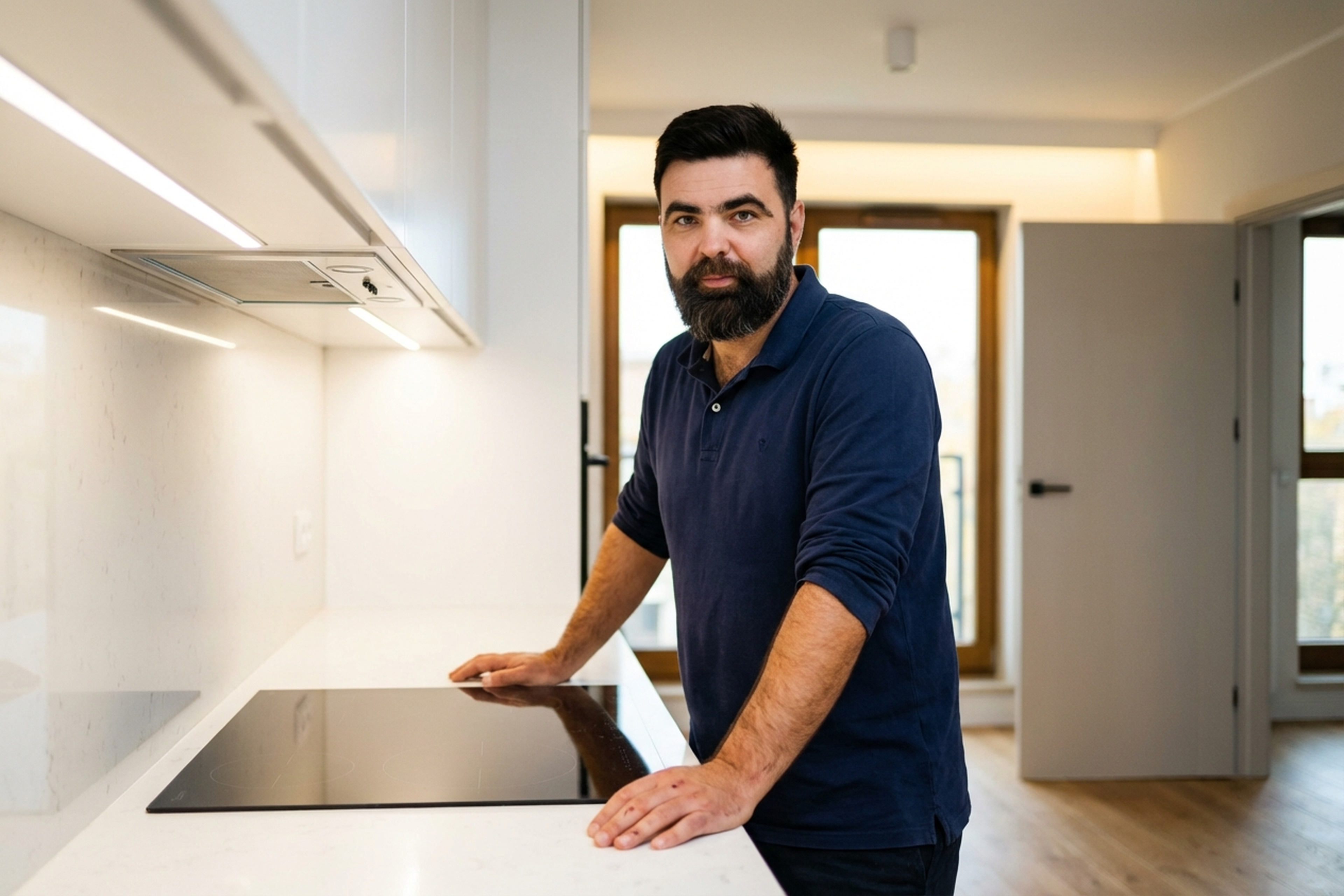
Induction hob fitting and connection is done by technicians with experience in kitchen installation and electrical work. We cover all of Warsaw and the nearby suburbs. Minimum order from 200 zl. To book, call or message us — we get back to you within an hour.