
Door Lock Replacement in Warsaw — Fast and Damage-Free
25.02.2026The lock stopped latching, the key spins without engaging or the only set of keys went missing — and now you need a replacement. It looks like a quick DIY job: unscrew the old one, pop in the new one. But buy a mechanism with the wrong backset or misjudge the pocket size and the door will not close at all. We replace locks across Warsaw: cylinder, mortise, multipoint, on interior and entrance doors alike. If you want to upgrade to a higher security grade rather than just swap like for like, we advise on site.
How much does lock replacement cost and what affects the price
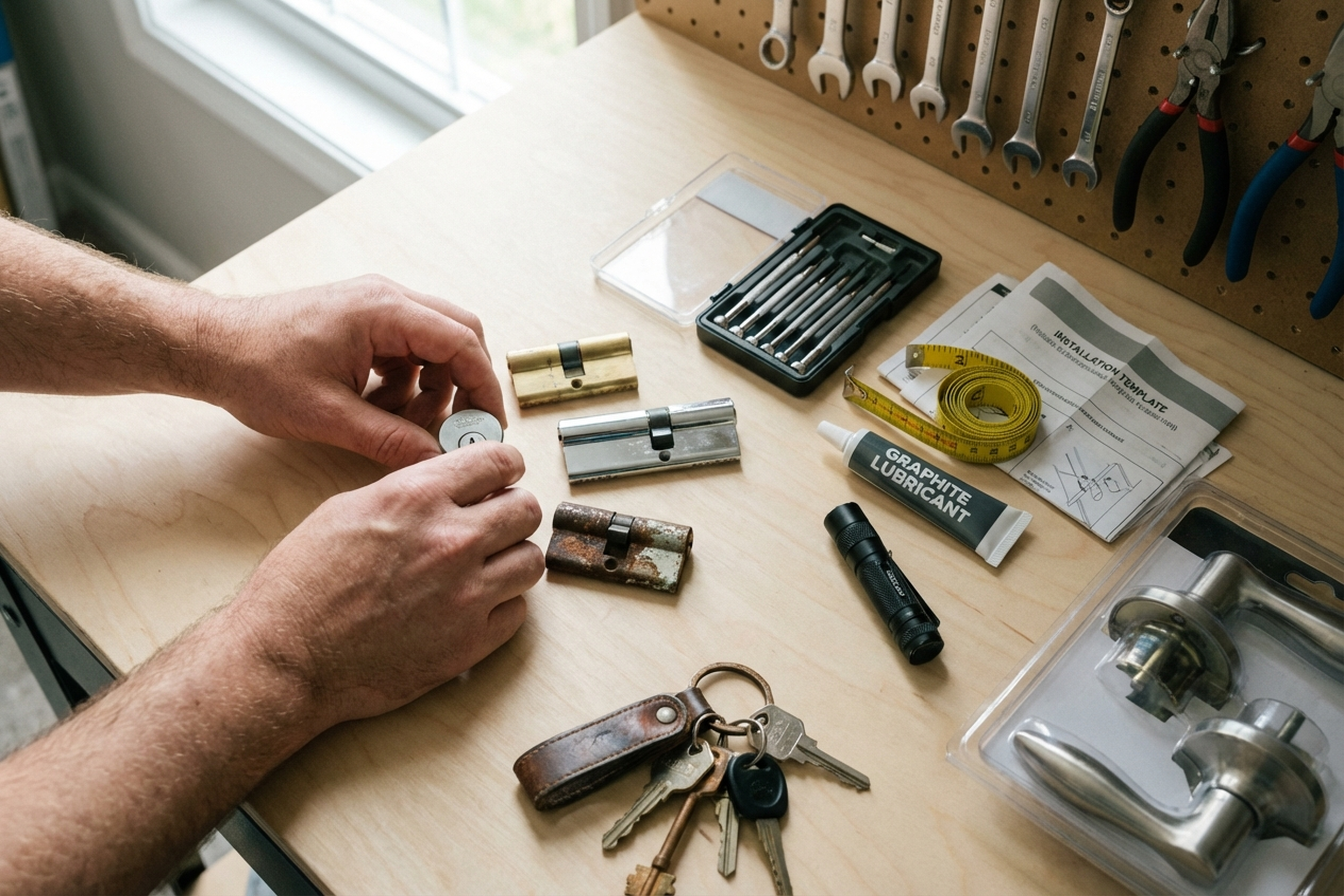
The cost depends on the lock type and the complexity of the fitting. A simple case is a euro-cylinder in a standard interior door: pull the old barrel out, slide the new one in — fifteen minutes. A difficult one is a multipoint lock on a front door with three or five locking points, where every bolt must line up precisely with its keep. A category of its own is the mortise deadlock in an older door, where the case is locked solid inside the leaf and removing it risks damaging the timber.
The labour charge covers removing the old lock, adjusting the pocket for the new one (if the dimensions differ) and installation. The lock itself is supplied by the client — buy it in advance or the technician can recommend one on site. Waste removal and simultaneous handle replacement are separate services. Current prices for locks and related work are in the table below.
| Service | min | max |
|---|---|---|
| Door adjustment | 30 zł | 60 zł |
| Squeaky door lubrication | 40 zł | 80 zł |
| Lock replacement | 180 zł | 350 zł |
| Door handle replacement | 80 zł | 150 zł |
Send a photo of the lock and the door — the technician will identify the mechanism type and quote an exact price with no surprises.
How lock replacement works: step by step
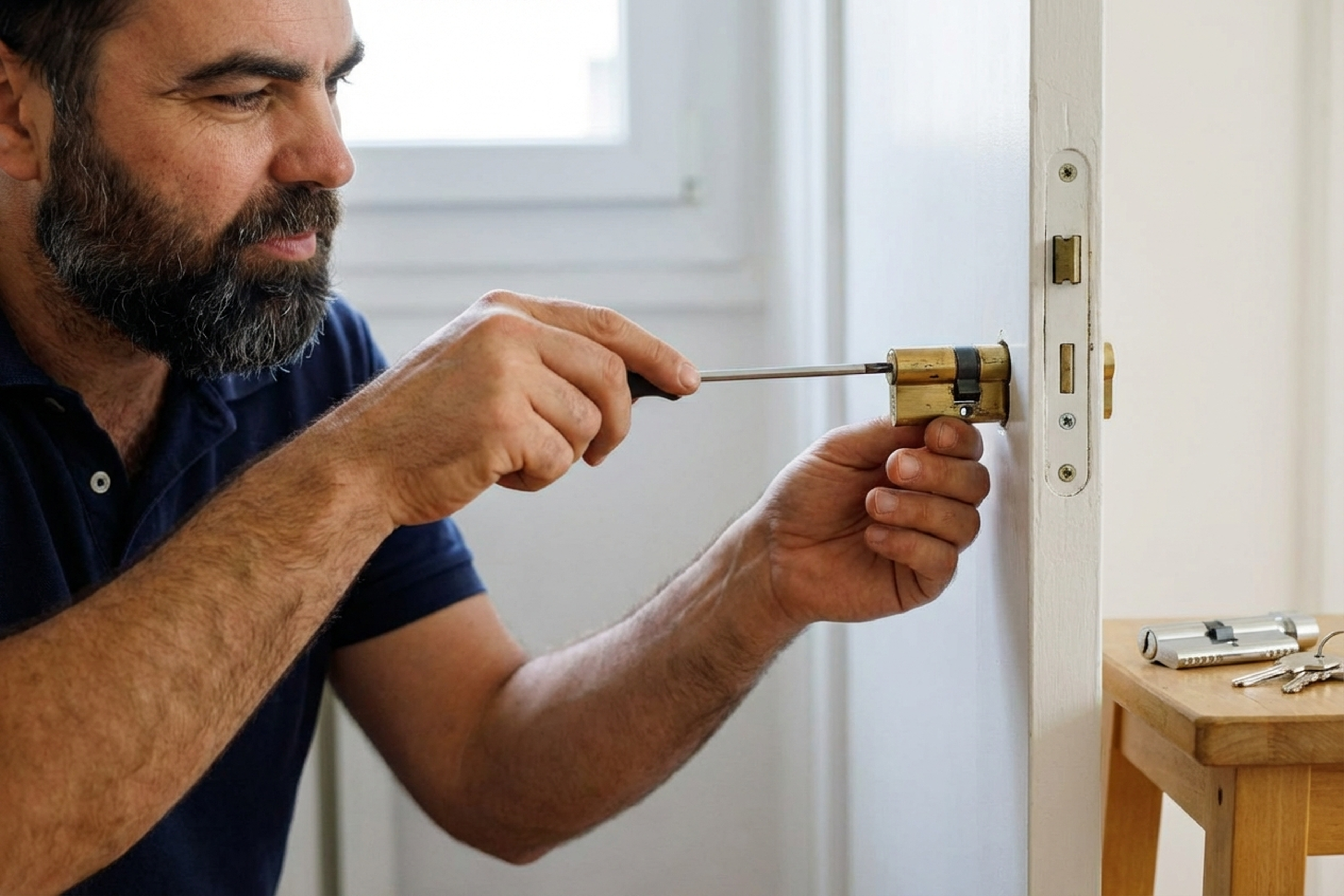
Replacing a lock is not just a matter of undoing four screws. Every mechanism type calls for a different approach, and a mistake at any stage leaves you with a door that will not close. Here is how the technician works:
- Inspection and diagnosis. The technician identifies the lock type (cylinder, mortise, multipoint), measures the backset, the door thickness and the pocket size. This is the key step — the new lock must drop straight into the existing cutout.
- Selecting the replacement. If the client has not bought a lock in advance, the technician recommends a suitable model based on dimensions and security class. For entrance doors — at least Class C under the European standard.
- Removing the old lock. We take off the handle and escutcheon plates, undo the fixing screws and extract the mechanism. If the lock is jammed, we tap it out carefully without damaging the leaf.
- Preparing the pocket. If the new lock differs slightly in size, we adjust the pocket with a chisel or router. We enlarge it carefully so as not to weaken the door leaf.
- Fitting the new lock. We insert the case, secure it with screws, install the cylinder, and check the bolt throw. The handle and plates go back on.
- Adjustment and testing. We verify that the lock opens and closes smoothly, the bolts align with the keep plate, and the key turns without sticking. If needed, the keep on the frame is repositioned.
The whole process takes from 20 minutes for a straightforward cylinder swap to around ninety minutes for a multipoint lock that needs pocket adjustment.
Common mistakes when replacing a lock yourself
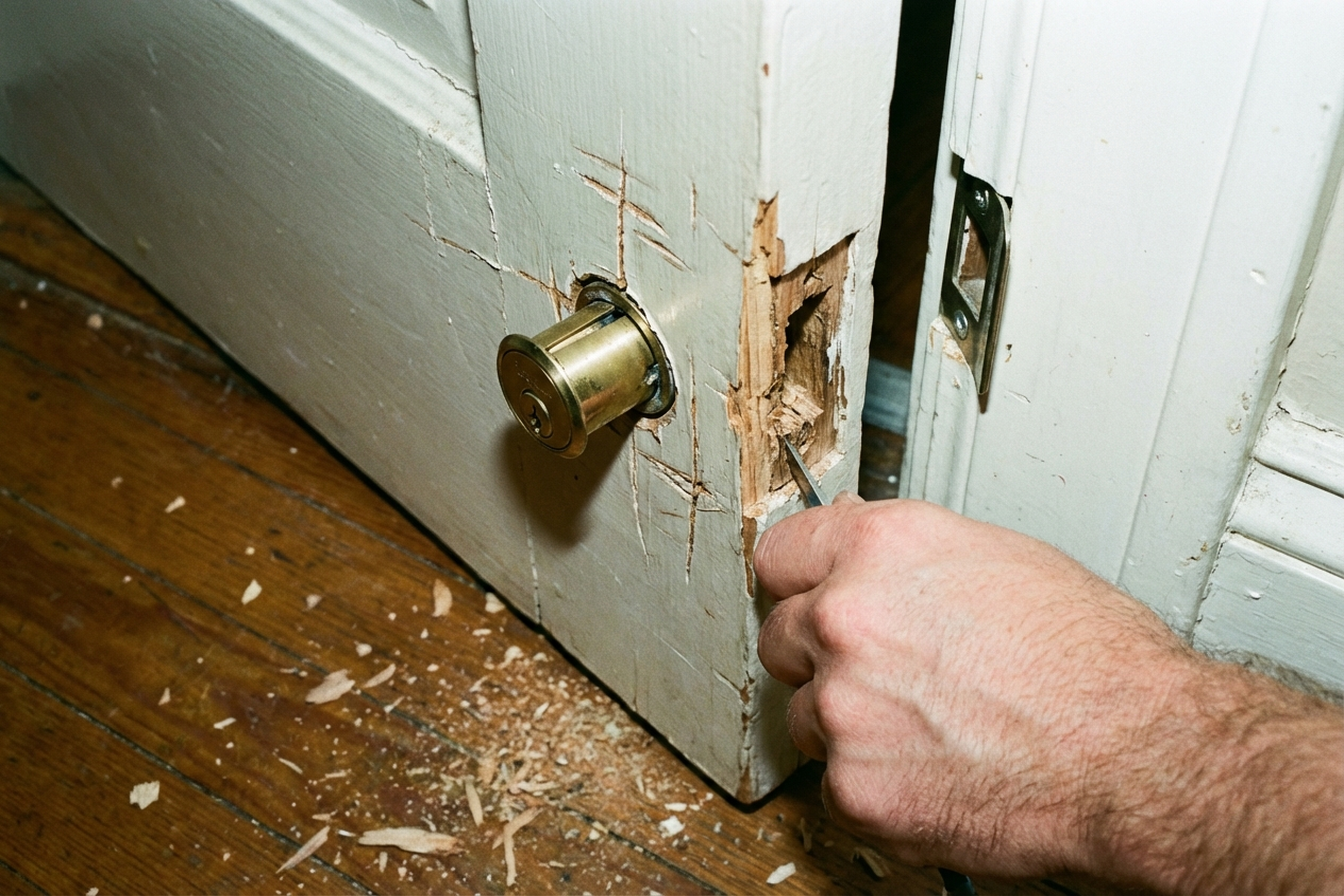
Lock replacement looks like a simple task, yet this is exactly where people trip up most often. Here is what goes wrong:
- Buying the wrong size. The backset is off by 5 mm and the mechanism will not fit the pocket — or it rattles loosely. Measure the old lock precisely before you buy.
- Confusing a cylinder lock with a mortise lock. These are two different mechanism types with different pockets. One will not fit into the other without major rework of the door.
- Getting the cylinder length wrong. The barrel should sit flush with the escutcheon. Too long and it protrudes — easy to snap off with pliers. Too short and the key cannot reach the cam.
- Hammering the lock in. If the mechanism does not slide in, the pocket needs adjusting. Hammering deforms the case and breaks internal springs.
- Ignoring the keep plate. The lock is fitted, the key turns, but the bolts miss the keep on the frame. The door appears to close but does not actually lock.
- Reusing old screws. The threads are stripped and hold weakly. The lock wobbles and eventually wallows out the pocket.
- Skipping lubrication. A brand-new lock moves stiffly out of the box. Graphite powder or silicone spray is essential at installation.
What to prepare before the technician arrives
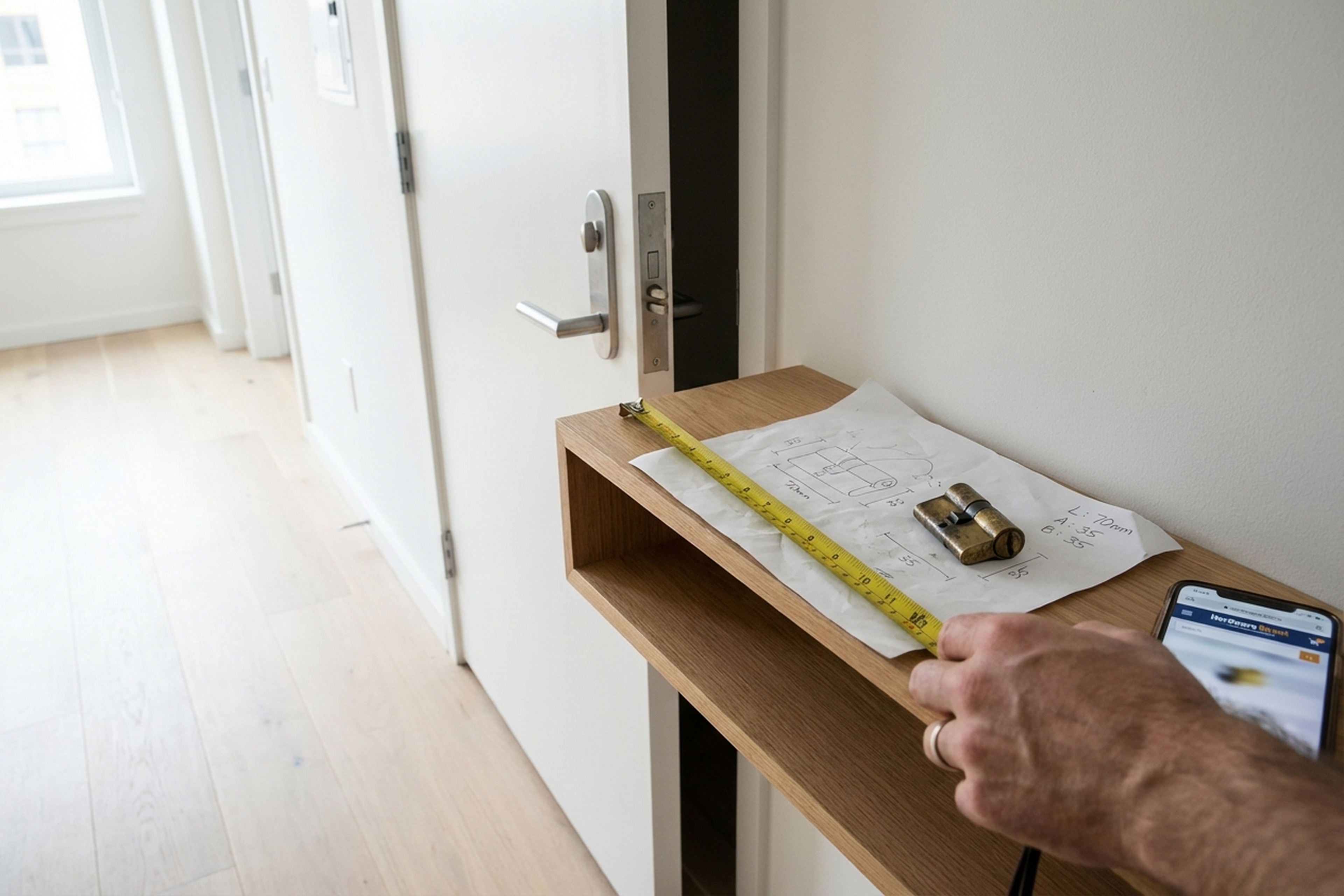
Lock replacement is quick and clean work, but a few things are worth doing in advance:
- Photograph the lock from both sides of the door and send the images to the technician — this speeds up selecting the replacement.
- If you still have the old key, keep it. The key profile identifies the mechanism type.
- Measure the door thickness and the distance from the edge of the leaf to the centre of the keyhole (backset). Common values are 45, 50 or 55 mm.
- Decide whether you want to buy the lock yourself or leave the choice to the technician. If you buy it yourself, take the old lock to the shop for comparison.
- Make sure the door opens and closes freely. If the leaf has dropped, that needs fixing before the lock is replaced.
- Have access details ready: entry code, floor, lift availability.
- Clear mats and objects away from the door — the technician needs free access on both sides.
- If the lock is on the front door and you cannot get in from outside, let the technician know in advance.
- Consider whether you also want the handle or cylinder replaced at the same time — it is cheaper in a single visit.
- If the door has a second lock, decide whether to replace both. It often makes sense to renew all locking mechanisms at once.
A real case: multipoint lock replacement in Ursynow
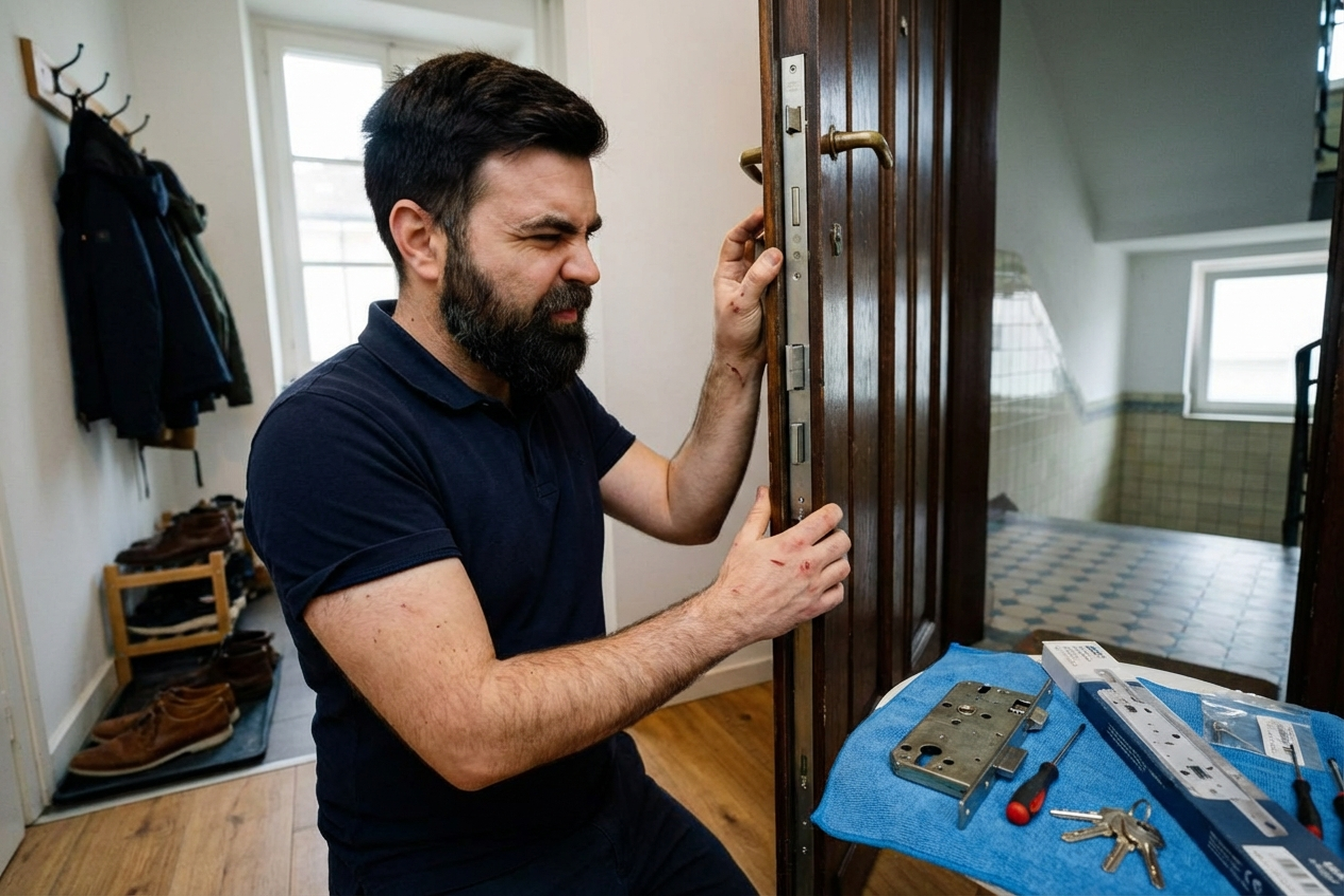
A client in Ursynow called after their front door stopped locking with the key. Cylinder lock, steel door, multipoint locking — three bolts: top, bottom and side. It turned out the cylinder itself was fine; the problem was the gearbox — a plastic cog inside the lock case that transfers the key’s rotation to the bolts. You cannot buy the cog separately — the entire lock has to go.
The complication was that the door was non-standard: a Chinese manufacturer with a 47.5 mm backset instead of the usual 45 or 50. We had to adapt the pocket for a European lock with a 45 mm backset — carefully widening it by a millimetre and a half on one side. After fitting, all three bolts engaged their keeps first time. The client ended up with a higher security class than the original. The takeaway: non-standard doors take longer, but the result is more reliable than the factory lock if you choose the replacement carefully.
Who does the work and what guarantees we offer

Locks and door hardware are handled by tradespeople who work with locking mechanisms of every type daily — from simple latches to multipoint systems on security doors. We arrive with a full tool kit: chisels, router, screwdrivers, drill bits, lubricants. We cover all of Warsaw and the nearby suburbs. We guarantee that after replacement the lock will operate smoothly, the bolts will hit the keep plate, and the door will lock securely. If anything goes wrong through our fault, we fix it free of charge. To book, call or message us — we typically reply within an hour.