
How much does lock replacement cost and what affects the price
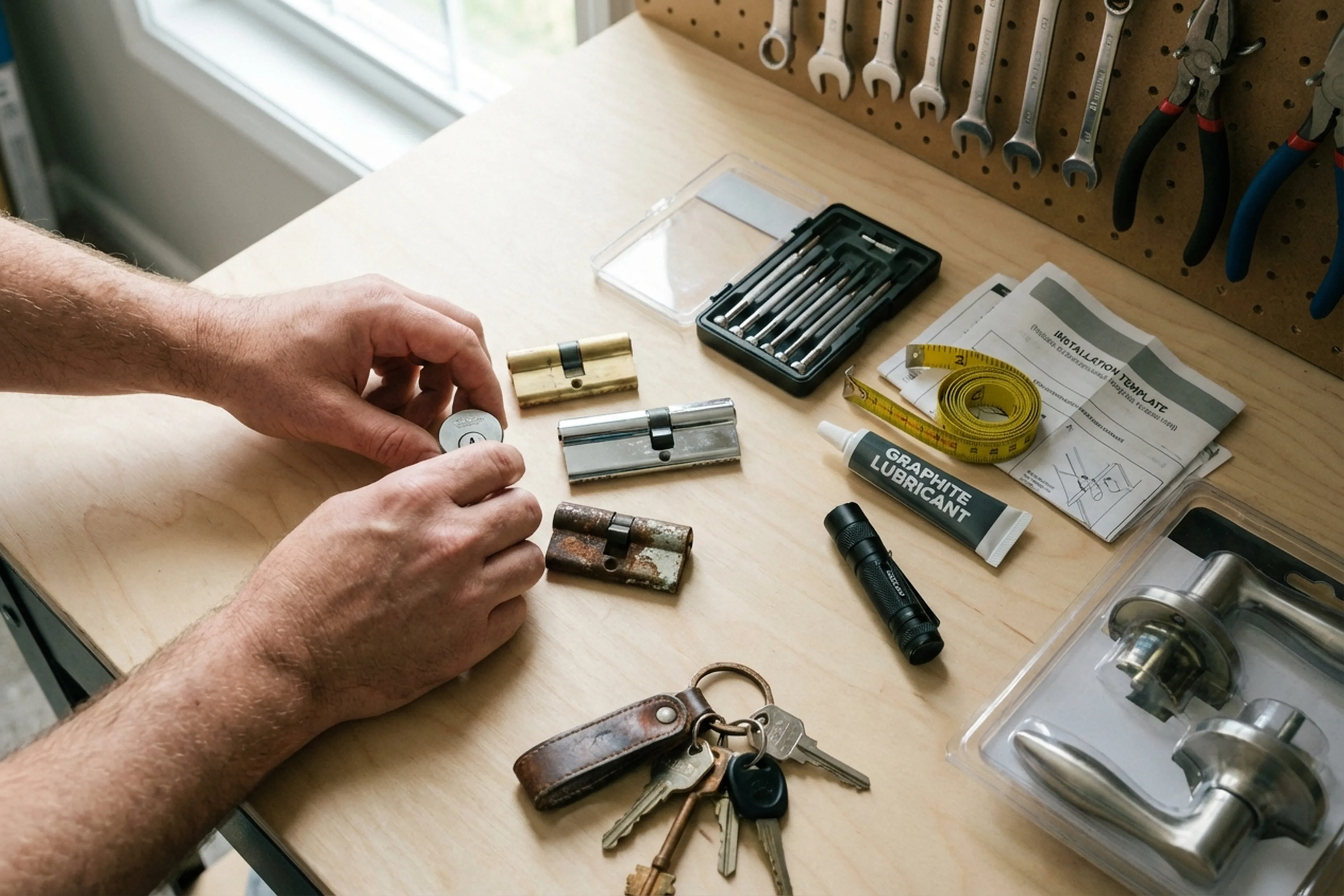
The price comes down to the lock type and how awkward the fitting is. The easiest job is a euro-cylinder in a standard interior door: remove the old barrel, slide in the new one: fifteen minutes. The harder option is a multipoint lock in a front door with three or five locking points, where each bolt has to match its keep exactly. Then there is the mortise deadlock in an older door, where the case is stuck tight inside the leaf and taking it out can damage the timber.
The labour fee includes removing the old lock, modifying the pocket for the new one if the dimensions are different, and fitting it. The lock itself is provided by the client: either buy it beforehand or ask the technician to suggest one on site. Disposal of old parts and replacing handles at the same visit are charged separately. You can find current prices for locks and related work in the table below.
| Service | Price |
|---|---|
| Door adjustment | 80–150 zł |
| Fixing squeaky doors | 40–80 zł |
| Lock replacement | 180–350 zł |
| Door handle replacement | 180–280 zł |
Indicative prices. Ranges for a typical scope. Fixings included, materials separate. Minimum order 300 zł.
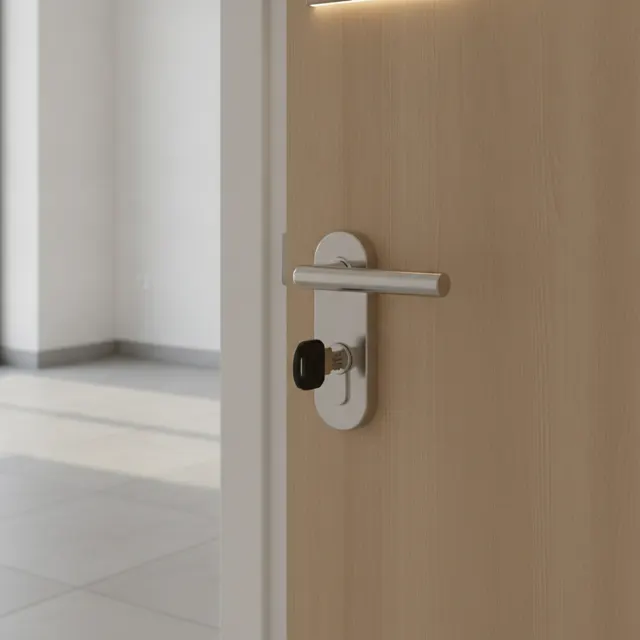
Send over a photo of the lock and the door — the technician will work out the mechanism type and give you a clear exact price in advance.
Price ranges and offers from tradespeople: lock replacement in Warsaw.
How lock replacement works: step by step
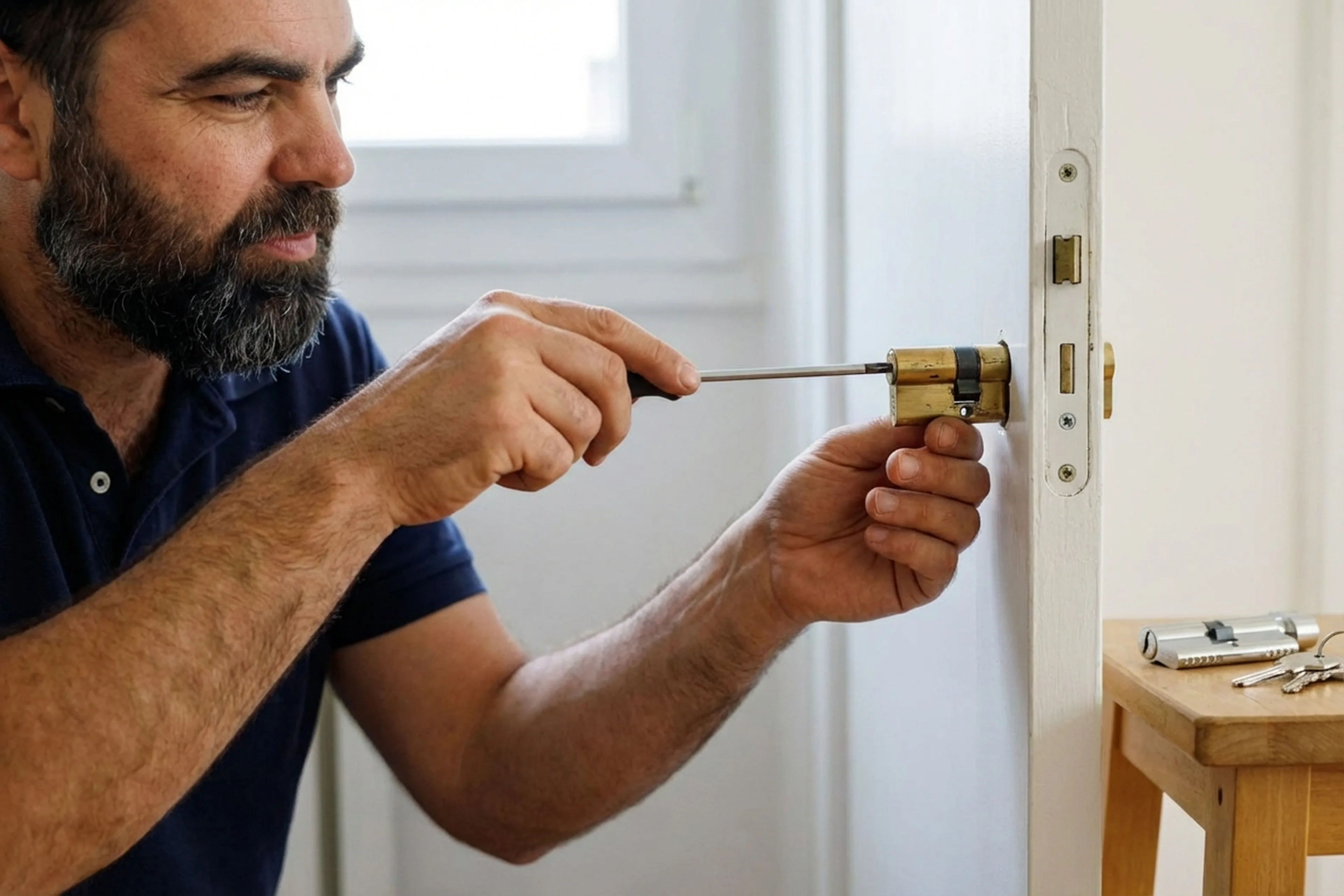
Changing a lock is more than removing four screws. Each mechanism needs its own method, and one mistake is enough to leave you with a door that will not shut. This is how the technician handles the job:
- Inspection and diagnosis. The technician checks what kind of lock is installed (cylinder, mortise, multipoint), then measures the backset, door thickness and pocket size. This is the important stage: the replacement has to fit the existing cutout exactly.
- Selecting the replacement. If the client has not purchased a lock beforehand, the technician suggests a suitable model based on the dimensions and security rating. For entrance doors — at least Class C under the European standard.
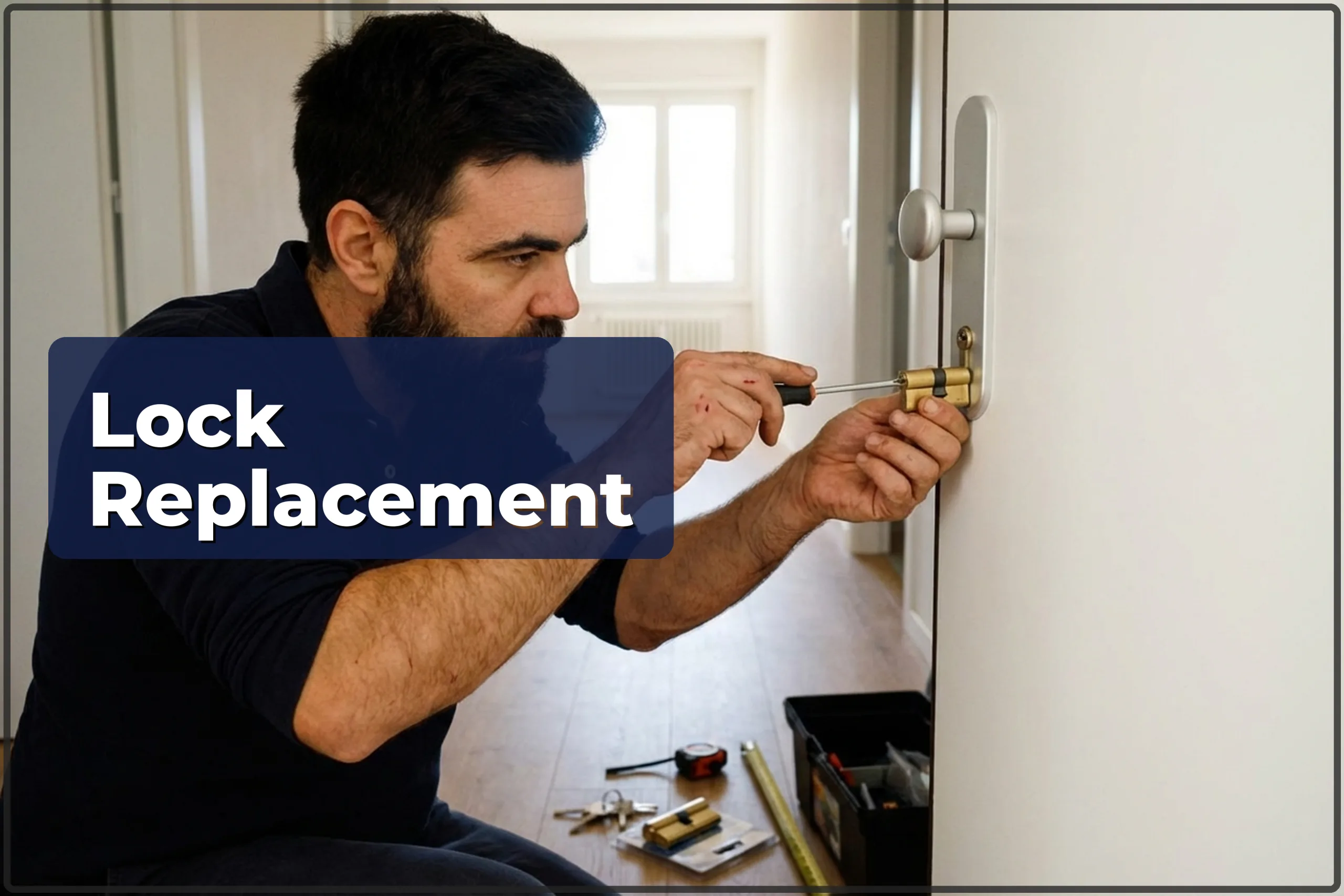
- Removing the old lock. Tradespeople remove the handle and escutcheon plates, undo the fixing screws and pull the mechanism out. If the lock has seized, they ease it out carefully without damaging the leaf.
- Preparing the pocket. If the replacement lock is slightly different in size, they adjust the pocket with a chisel or router. Tradespeople open it up carefully so the door leaf does not lose strength.
- Fitting the new lock. Tradespeople place the case in position, fix it with screws, install the cylinder, and check the bolt travel. Then the handle and plates are refitted.
- Adjustment and testing. Tradespeople make sure the lock opens and closes properly, the bolts meet the keep plate correctly, and the key turns freely. If necessary, the keep on the frame is moved.
The full job can take as little as 20 minutes for a simple cylinder change, or up to about ninety minutes for a multipoint lock that also needs the pocket adjusted.
Common mistakes when replacing a lock yourself
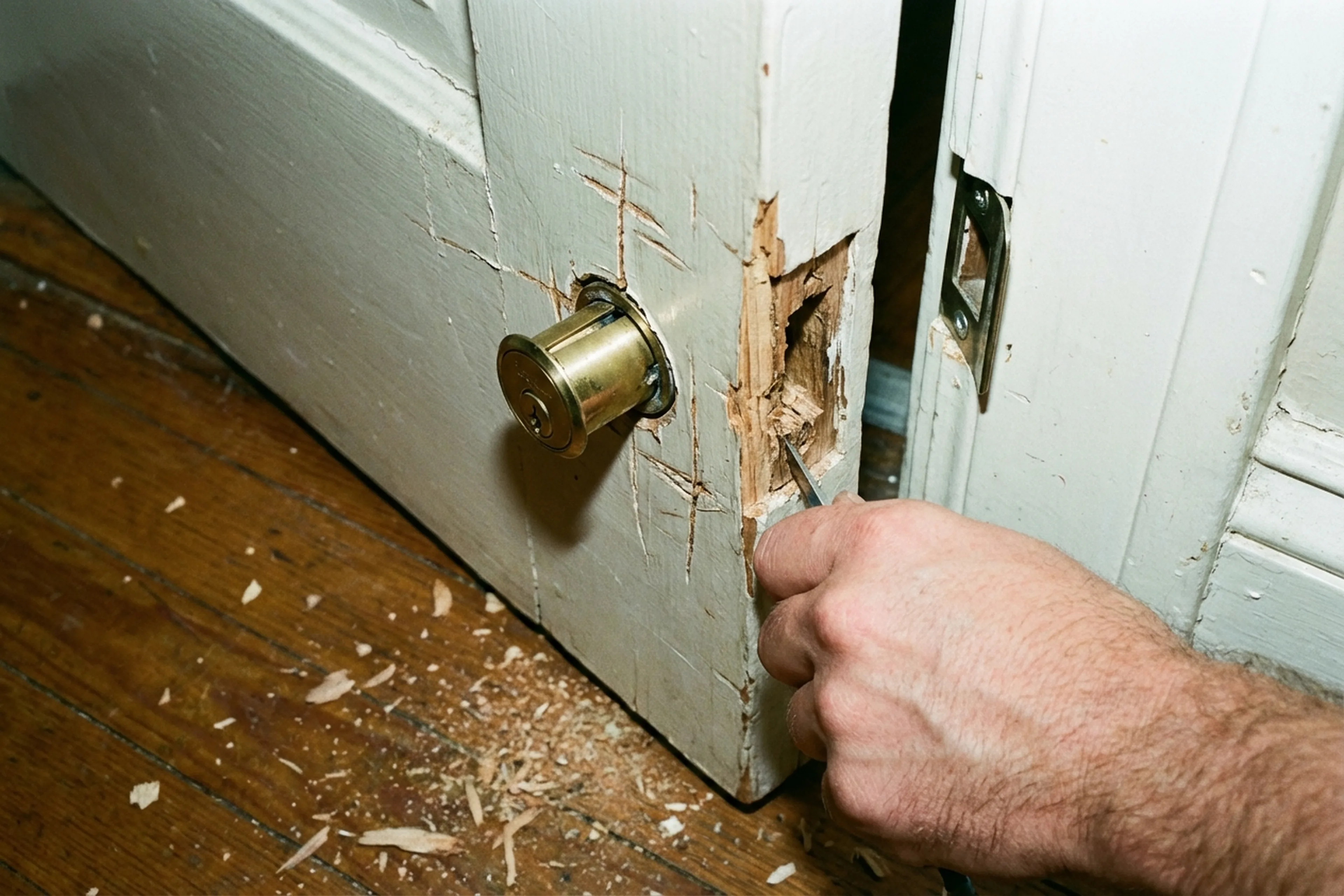
Replacing a lock seems straightforward, but this is exactly where people make the most mistakes. Here is what usually goes wrong:
- Buying the wrong size. The backset is wrong by 5 mm and the mechanism either will not go into the pocket or sits there loose and rattling. Measure the old lock carefully before buying a new one.
- Confusing a cylinder lock with a mortise lock. These are different types of mechanisms and they use different pockets. One will not go into the other without serious work on the door.
- Getting the cylinder length wrong. The barrel should finish level with the escutcheon. If it is too long, it sticks out, easy to break off with pliers. Too short, and the key will not reach the cam.
- Hammering the lock in. If the mechanism will not slide into place, the pocket needs to be adjusted. Hitting it with a hammer bends the case and damages the internal springs.
- Ignoring the keep plate. The lock is installed, the key turns, but the bolts do not line up with the keep on the frame. The door looks shut, yet it is not really locked.
- Reusing old screws. The threads are worn out and no longer hold properly. The lock starts to move and in time enlarges the pocket.
- Skipping lubrication. Even a brand-new lock can feel stiff straight from the box. Graphite powder or silicone spray should be used during installation.
If the door has slammed shut or the lock has jammed, see locked out or door won’t open: how to get back in.
What to prepare before the technician arrives
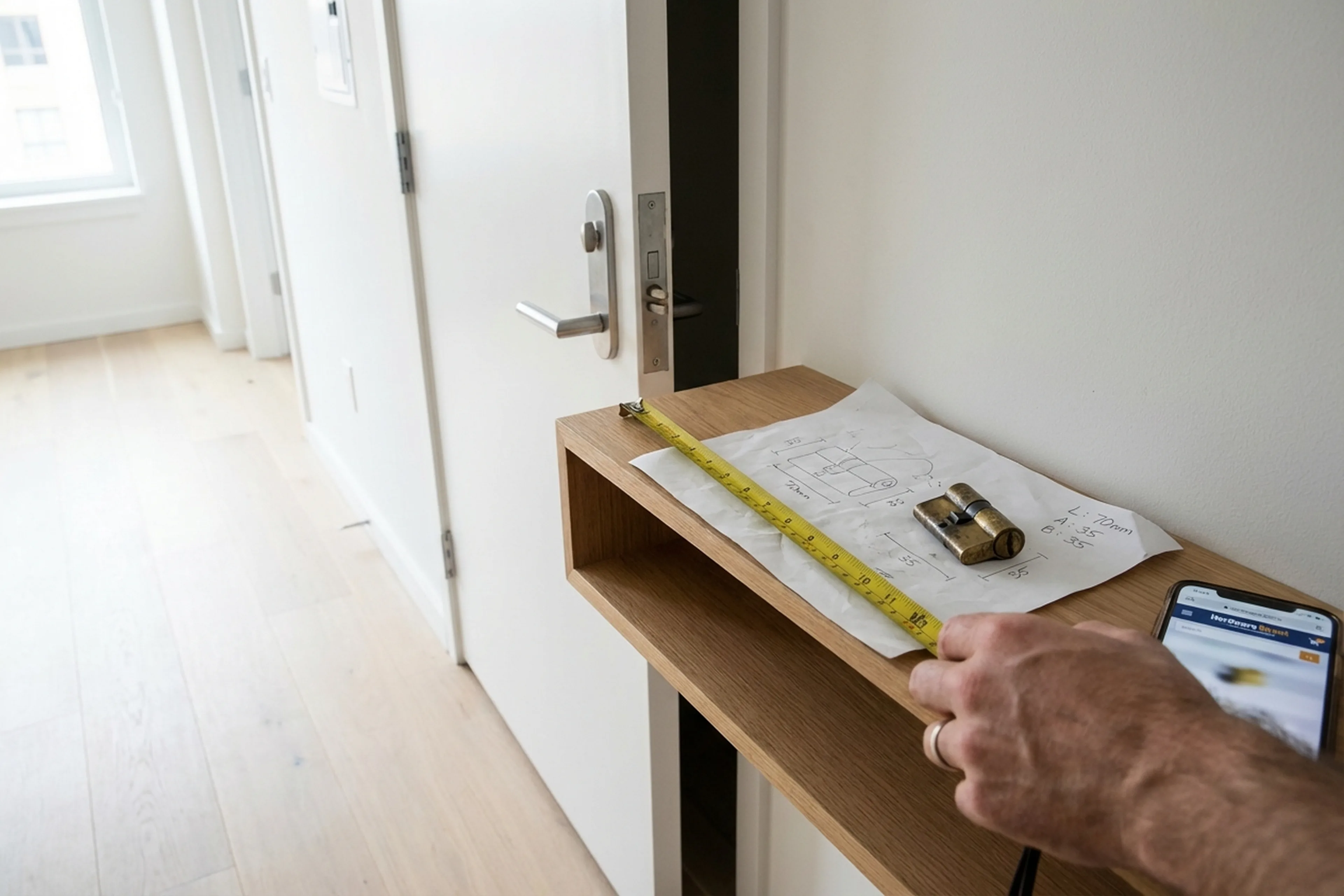
Lock replacement is fast and tidy, but there are a few things you should sort out beforehand:
- Take photos of the lock from both sides of the door and send them to the technician, this makes choosing the replacement faster.
- If you still have the old key, keep it handy. The key profile helps identify the mechanism type.
- Measure the door thickness and the distance from the edge of the leaf to the centre of the keyhole (backset). Common values are 45, 50 or 55 mm.
- Decide whether you want to buy the lock yourself or leave that decision to the technician. If you buy it yourself, bring the old lock to the shop to compare it.
- Check that the door opens and shuts freely. If the leaf has dropped, that should be fixed before replacing the lock.
- Prepare access details: entry code, floor, lift availability.
- Move mats and any objects away from the door — the technician needs clear access from both sides.
- If the lock is on the front door and you cannot enter from outside, tell the technician beforehand.
- Think about whether you also want the handle or cylinder changed during the same visit: it is cheaper as one job.
- If the door has a second lock, decide if you want both replaced. In many cases it makes sense to renew all locking mechanisms at once.
A real case: multipoint lock replacement in Ursynow
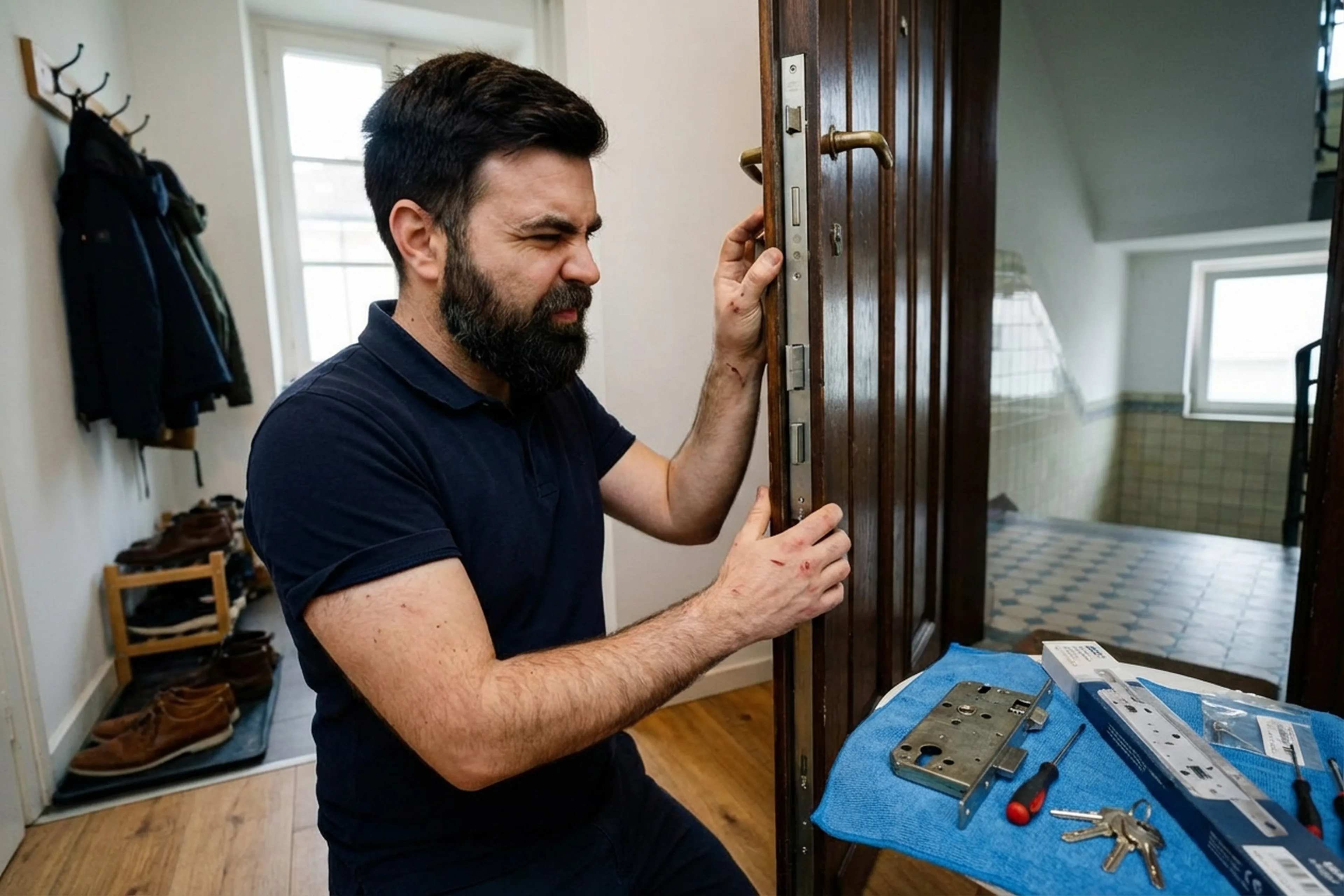
A client in Ursynow got in touch after the front door stopped locking with the key. It was a cylinder lock in a steel door with multipoint locking: three bolts: top, bottom and side. The cylinder turned out to be fine; the actual fault was in the gearbox, a plastic gear inside the lock case that transfers the key’s movement to the bolts. That gear is not sold separately — the whole lock must be replaced.
The tricky part was that the door was non-standard: a Chinese manufacturer with a 47.5 mm backset instead of the usual 45 or 50. Tradespeople had to adapt the pocket for a European lock with a 45 mm backset, carefully widening it by a millimetre and a half on one side. Once fitted, all three bolts met their keeps on the first try. The client finished with a better security class than the original lock. The point is simple: non-standard doors take more time, but if the replacement is chosen properly, the end result is more dependable than the factory lock.
Who does the work

Locks and door hardware are handled by tradespeople who deal with locking mechanisms every day, from basic latches to multipoint systems in security doors. Tradespeople come with a full set of tools: chisels, router, screwdrivers, drill bits, lubricants. Tradespeople work across all of Warsaw and nearby suburbs. Once the replacement is done, the lock will run smoothly, the bolts will meet the keep plate properly, and the door will lock securely. The tradesperson answers for their own work: if the fault is theirs, they put it right.
Order in the app
Describe the job, add photos and the address. Tradespeople send their own prices and dates, and you pick one of the offers.
Open the app