Floor Damage Repair in Warsaw — Chips in Laminate, Parquet and Single Board Replacement
A chipped plank edge, a dent from a dragged wardrobe, one board swollen after a spill — these are spot repairs, and replacing the whole floor makes no sense for any of them. In most cases it is enough to fill the chip with hard wax or to lift out and swap a single board, leaving the rest of the floor untouched. We do it in one visit, without stripping the room. Book a handyman while the damage is fresh — swollen laminate pushes harder against its neighbours every day.
What floor repair costs and what the price depends on
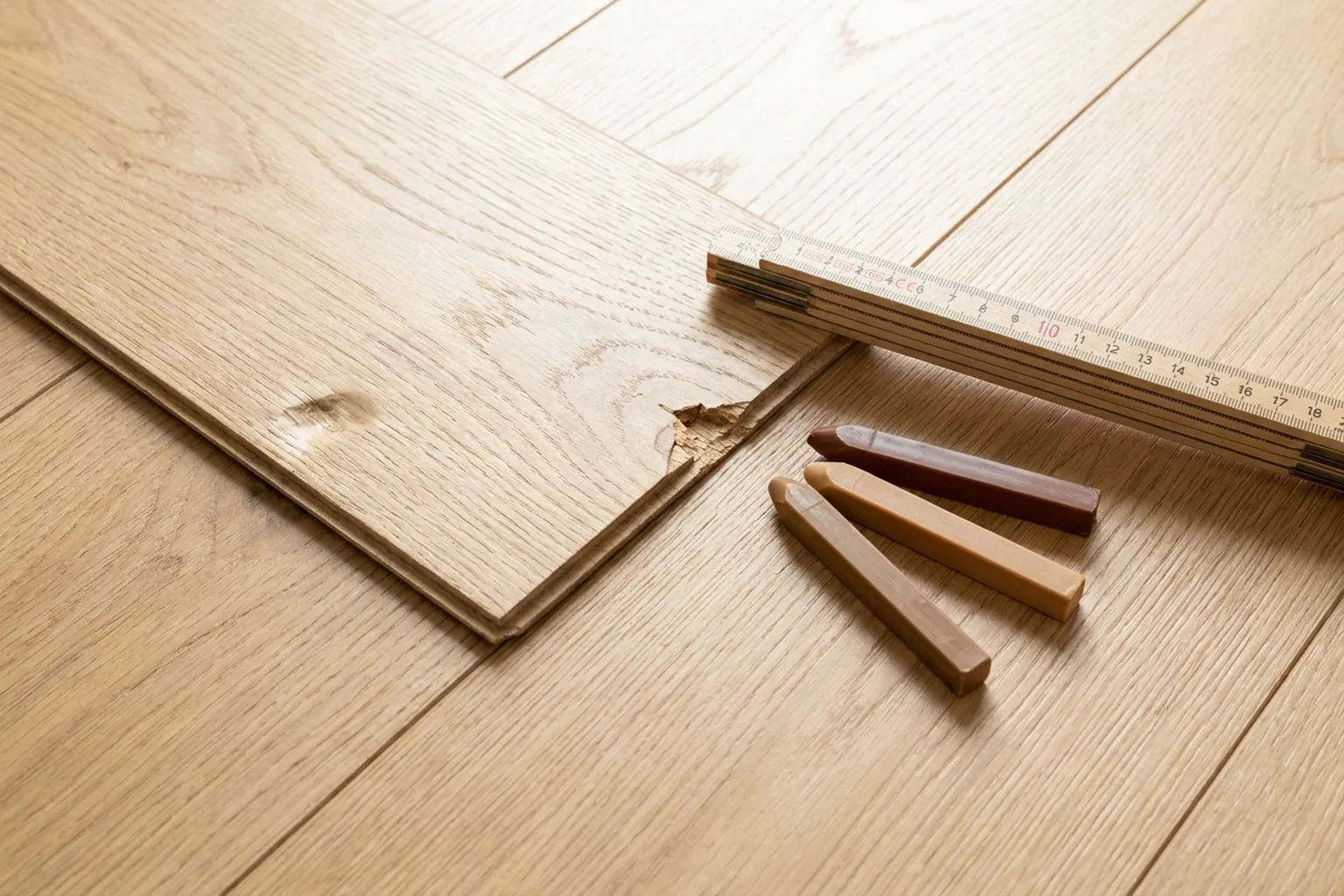
The price comes down to three things: the type of floor (laminate, vinyl, parquet or engineered board), how deep the damage goes, and whether a board has to be replaced or a fill will do. Retouching and wax filling is the cheapest option — it happens on the spot, with no dismantling. Replacing one board in the middle of a room costs more than near a wall, because it has to be cut out and a replacement glued in rather than unclicking the floor from the edge. Current rates are in the table below.
Related work is quoted separately, and it often surfaces once the skirting comes off: fixing skirting boards, a threshold in a doorway, or trimming a door leaf if the new board raised the level.
| Service | min | max |
|---|---|---|
| Floor panel replacement | 70 zł/m² | 100 zł/m² |
| Floor panel removal | 15 zł/m² | 25 zł/m² |
| Parquet gap filling | 25 zł/m² | 45 zł/m² |
| Parquet sanding | 70 zł/m² | 110 zł/m² |
| Parquet varnishing | 45 zł/m² | 75 zł/m² |
| Parquet oiling | 55 zł/m² | 90 zł/m² |
| Baseboard installation | 30 zł/mb | 45 zł/mb |
| Baseboard removal | 15 zł/mb | 25 zł/mb |
| Floor threshold installation | 180 zł | 300 zł |
| Door trimming after floor installation | 120 zł | 250 zł |
Fixings and small hardware come with us. Replacement material — boards, colour-matched wax, adhesive — is charged separately, as is waste removal and carrying material upstairs. We say so before starting, so there are no surprises at the end.
How the repair goes on site — step by step
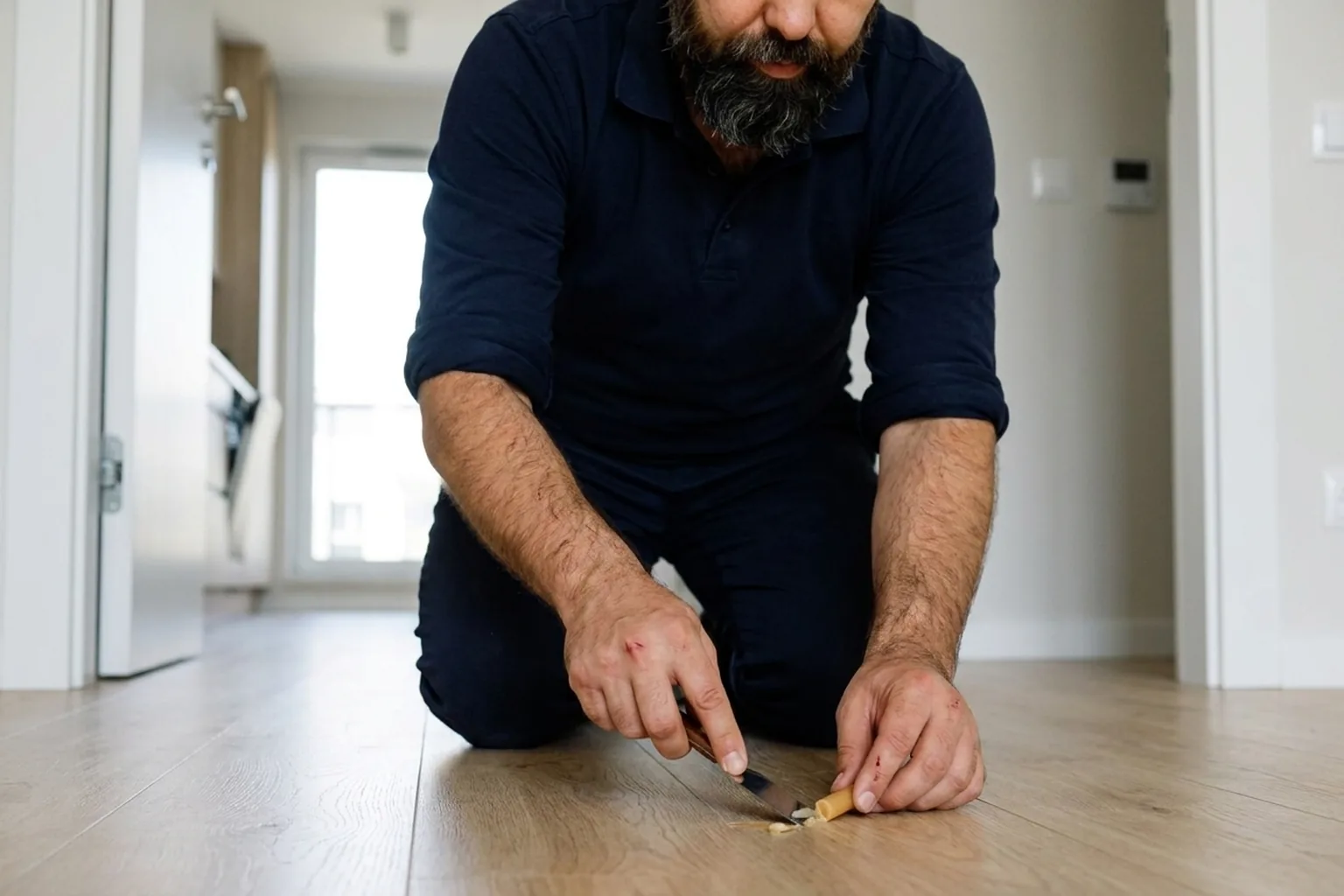
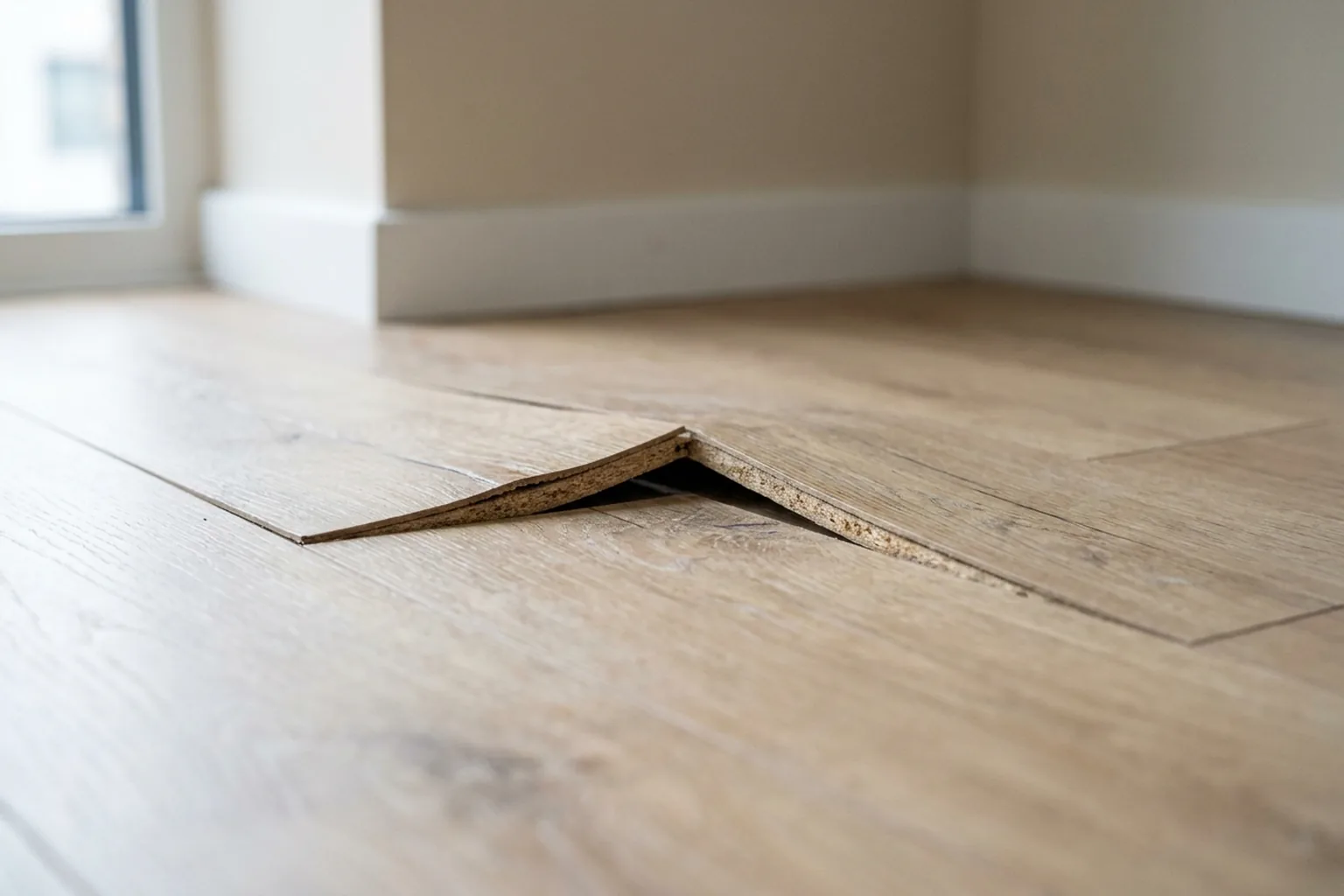
- We look at the damage and check whether the board is merely scuffed or swelling from underneath. A swollen core means water below, and then filling the chip alone achieves nothing.
- We work out whether a replacement exists. We ask about offcuts from the original installation — if there are none, the best source is a board from under a wardrobe or from the corner behind a door, where the swap will never be seen.
- For surface chips we clean the edge, match hard wax to the shade and melt it in hot, then level off the excess flush with the laminate.
- When replacing a board we take the skirting off and, if the damage sits near a wall, unclick the floor up to that point and reassemble it — the cleanest method, and it leaves no adhesive behind.
- If the board is in the middle of the room, we cut it out with a mitred kerf, clear the remains of the locking profile and glue in a trimmed replacement, weighting it for a few hours.
- On parquet and engineered board we fill the chip with wood dust and adhesive, sand the spot and close the surface with lacquer or oil — so the repaired area does not stand out in sheen.
- Finally the skirting and thresholds go back, we clean up after ourselves and check the floor for squeaks and any step underfoot.
One caveat: in flats with underfloor heating we do not cut anything by feel. Pipes run below the surface, and sometimes cables too. With no layout drawing available we either pick a method that does not cut into the substrate, or establish the routing first. If a leak under the floor is suspected, call a specialist rather than opening the covering yourself.
Common client mistakes (and how to avoid them)
- Throwing away the offcuts. Two boards kept in the basement are the difference between an invisible repair and a patch in a roughly similar colour. Laminate ranges are discontinued within two or three years.
- Filling a chip with silicone. Silicone does not bond to laminate, it collects dirt, and at the next repair it has to be dug out along with the decor layer.
- Wax in a random shade. Colour is matched in daylight on a cleaned edge, not by eye in the hallway.
- Waiting with a swollen board. The core keeps working and pushes its neighbours. One board turns into three.
- Sanding lacquer without knowing the thickness. On engineered board the wear layer can be thin, and after two sandings there is nothing left to sand.
- Putting furniture on fresh adhesive. A glued board needs weight and time; loading it early lifts the edge.
- Rearranging furniture without pads. The same leg in the same spot will make the same dent.
What to prepare before the visit
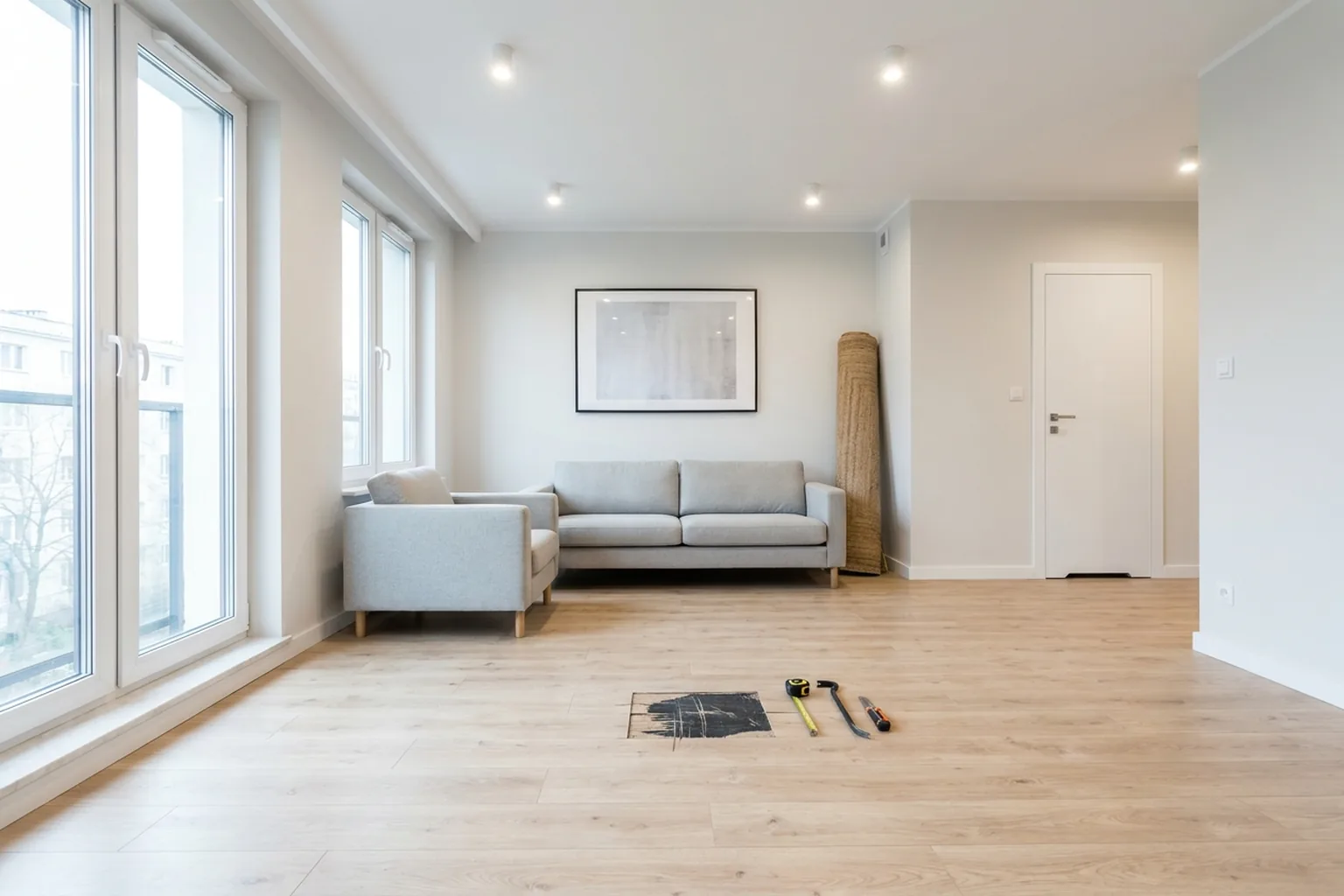
- A close-up photo of the damage and a second one from a metre away — together they show whether retouching will do.
- Whether any boards were left over from the installation, and how many.
- The range and manufacturer if you know them — often printed on the back of a board.
- The floor type: laminate, glue-down vinyl, click vinyl, parquet or engineered board.
- Access to the repair area — furniture moved far enough to take the skirting off.
- Whether the room has underfloor heating.
- Whether there was a flood here, and when.
- A free socket nearby — we work with power tools.
- Agreement on brief noise while a board is cut out, if the flat is in a block.
- Who removes the waste — on our side that is a separate charge.
A case from practice in Warsaw
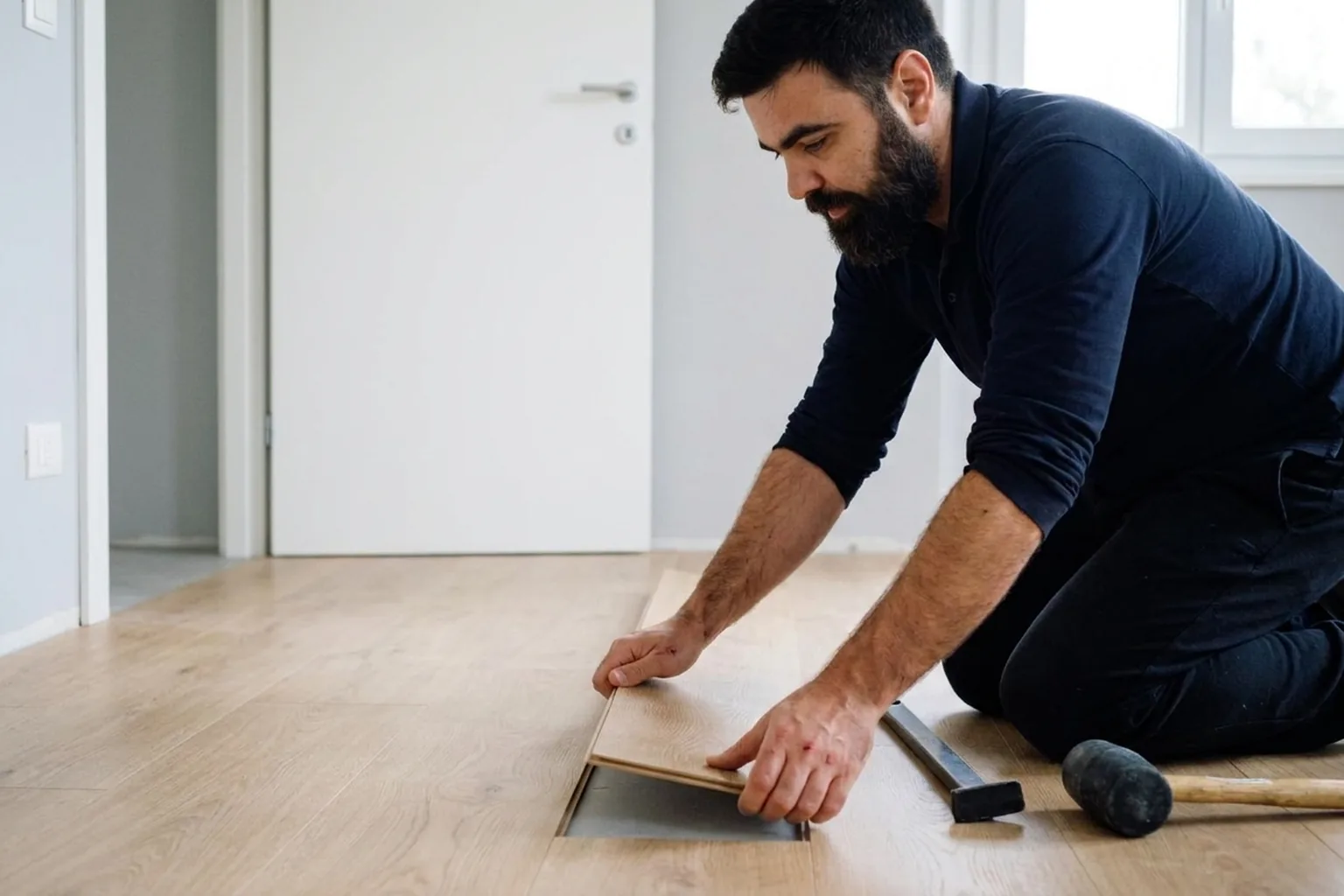
A flat in Bemowo, laminate in the living room, laid four years earlier. The owner had dragged a chest of drawers without pads and torn out a piece of the decor layer on two boards in the middle of the room, a metre from the window. No offcuts had been kept, and the range was no longer on sale. Instead of hunting for a near-enough shade, we lifted two boards from under the wardrobe in the bedroom — that floor is covered and will never be seen. The damaged boards were cut out with a mitred kerf, the remains of the locking profile cleared, and trimmed replacements glued in with construction adhesive, weighted with sandbags overnight. In the bedroom, two boards from a different leftover range went in where the originals came from; under a wardrobe the difference is irrelevant. The next day the owner got four felt pads for the chest and a note to lift rather than drag it next time. The repair took one visit plus a short return to remove the weights. The conclusion is simple: a matching board is almost always somewhere in the flat — you just have to look where the floor is not visible.
Frequently asked questions
Can one board be repaired without lifting the whole floor?
Yes. If the damage is near a wall we unclick the floor from the edge and reassemble it. In the middle of a room the board is cut out and a replacement glued in — the rest of the floor stays untouched.
Where do you find a replacement board if no offcuts were kept?
The best source is a board from under a wardrobe, from the corner behind a door or from a storage recess — somewhere out of sight. A swap there is invisible, and the colour and texture match perfectly, which no shop substitute will do.
Can a chipped edge be filled so that it does not show?
For surface damage, yes. Hard wax matched to the shade and melted in hot is practically invisible from standing height once set. A deep tear in the decor layer is better solved by replacing the board.
A board swelled after a flood — can it be saved?
The chip itself cannot: the core swells and the board keeps moving. We replace that board and check for remaining moisture underneath while we are there. The sooner it is done, the fewer neighbouring boards need disturbing.
How does laminate repair differ from parquet?
Laminate carries its decor on the surface, so damage is not sanded — it is either filled or the board is replaced. Parquet and engineered board are timber through the whole wear layer, so a chip can be filled, sanded and closed with lacquer or oil.
How long does the repair take?
Retouching and filling chips is usually one short visit. A glued-in board needs weighting for several hours, so we sometimes return the next day to take the weights off.
Will the joint be visible afterwards?
With an identical replacement board, no. With wax filling you can find the boundary up close, but usually not from standing height. We say honestly beforehand what result to expect for the specific damage.
I have underfloor heating — is the repair safe?
It is, but the method changes: no cutting into the substrate, and only after establishing where the pipes run. If no layout drawing exists we say so plainly and choose an approach that does not require opening the wear layer.
Do you fix a squeaking floor?
Yes, though it is different work from a chip. Squeaking usually comes from play at the wall or an uneven substrate, and it is resolved locally once the skirting is off.
What if the board sits slightly higher after the repair?
With a properly matched replacement there is no step. If the board comes from another batch and stands proud, we adjust the seating; in a doorway a threshold or trimming the door leaf is often the answer.
Who does the work and where we stand

Floor repairs are done by a handyman with finishing experience, not a renovation crew — this is spot work where the hand matters, not the headcount. We work in Warsaw and the immediate surroundings, and we arrive with our own tools and small hardware. Replacement material, waste removal and carrying material upstairs are charged separately, and we say so before starting.
We set out the limits of responsibility plainly before the work. We answer for the quality of the execution itself — how the board seats, the shade match, the cleanliness of the edge. We do not take on the consequences of someone else’s installation errors or the behaviour of a substrate we have not seen: if the floor was laid without expansion gaps or there is moisture underneath, we say so on site and propose a scope that makes sense. If the inspection shows that a spot repair will not be enough, we say it straight away rather than doing the work on spec. Send us a photo of the damage — it is usually enough to tell whether retouching will do or a board needs replacing.