
How much does door trimming cost
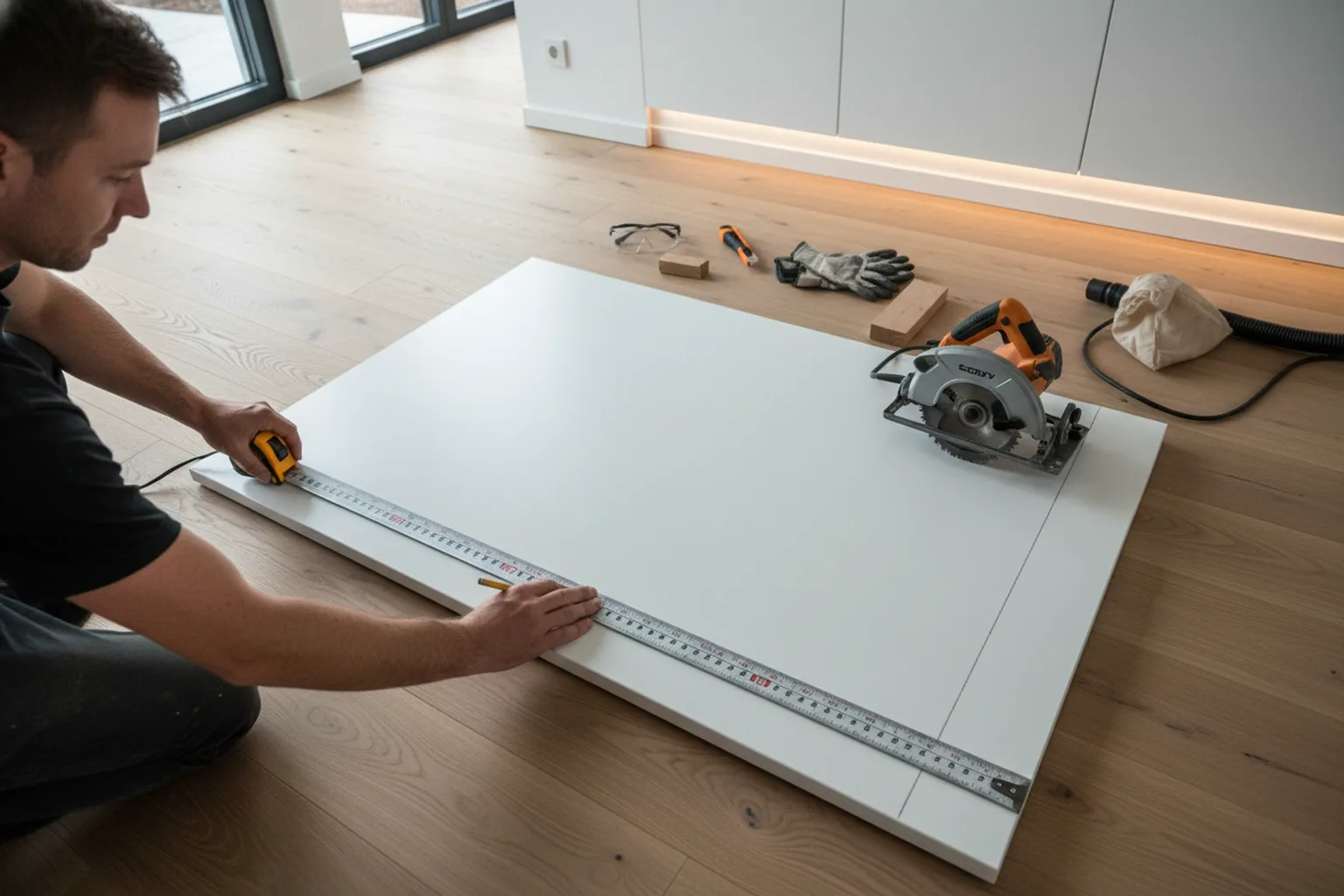
The cost depends on how many doors need cutting, what the doors are made of (solid wood, MDF, hollow-core), and whether the frame needs trimming as well. Current rates for all flooring services are listed in the table below.
| Service | Price |
|---|---|
| Floor panel removal | 20–30 zł/m² |
| Floor panel installation | 50–90 zł/m² |
| Floor panel replacement | 70–100 zł/m² |
| Vinyl plank installation | 45–80 zł/m² |
| Skirting board installation | 25–45 zł/mb |
| Skirting board removal | 8–12 zł/mb |
| Old flooring removal | 20–30 zł/m² |
| Carpet laying | 55–70 zł/m² |
| PVC flooring laying | 45–75 zł/m² |
| Glued flooring laying | 45–75 zł/m² |
| Parquet sanding | 45–55 zł/m² |
| Parquet varnishing | 40–60 zł/m² |
| Parquet oiling | 25–45 zł/m² |
| Parquet filling | 25–45 zł/m² |
| Floor threshold installation | 180–300 zł |
| Door trimming | 200–400 zł |
Indicative prices. Ranges for a typical scope. Fixings included, materials separate. Minimum order 300 zł.
Rather hand the job over? More here: interior finishing in Warsaw.
How the process works
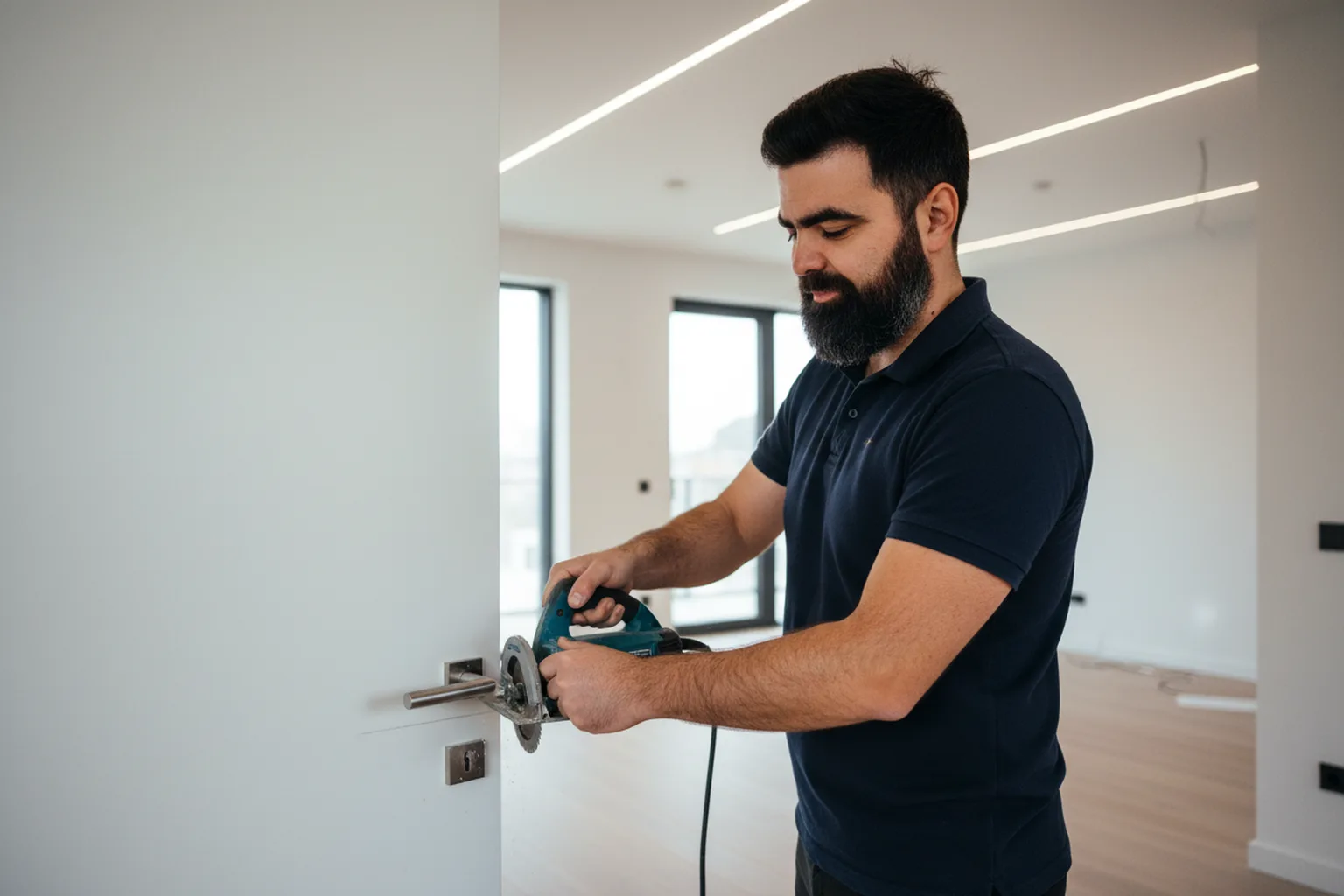
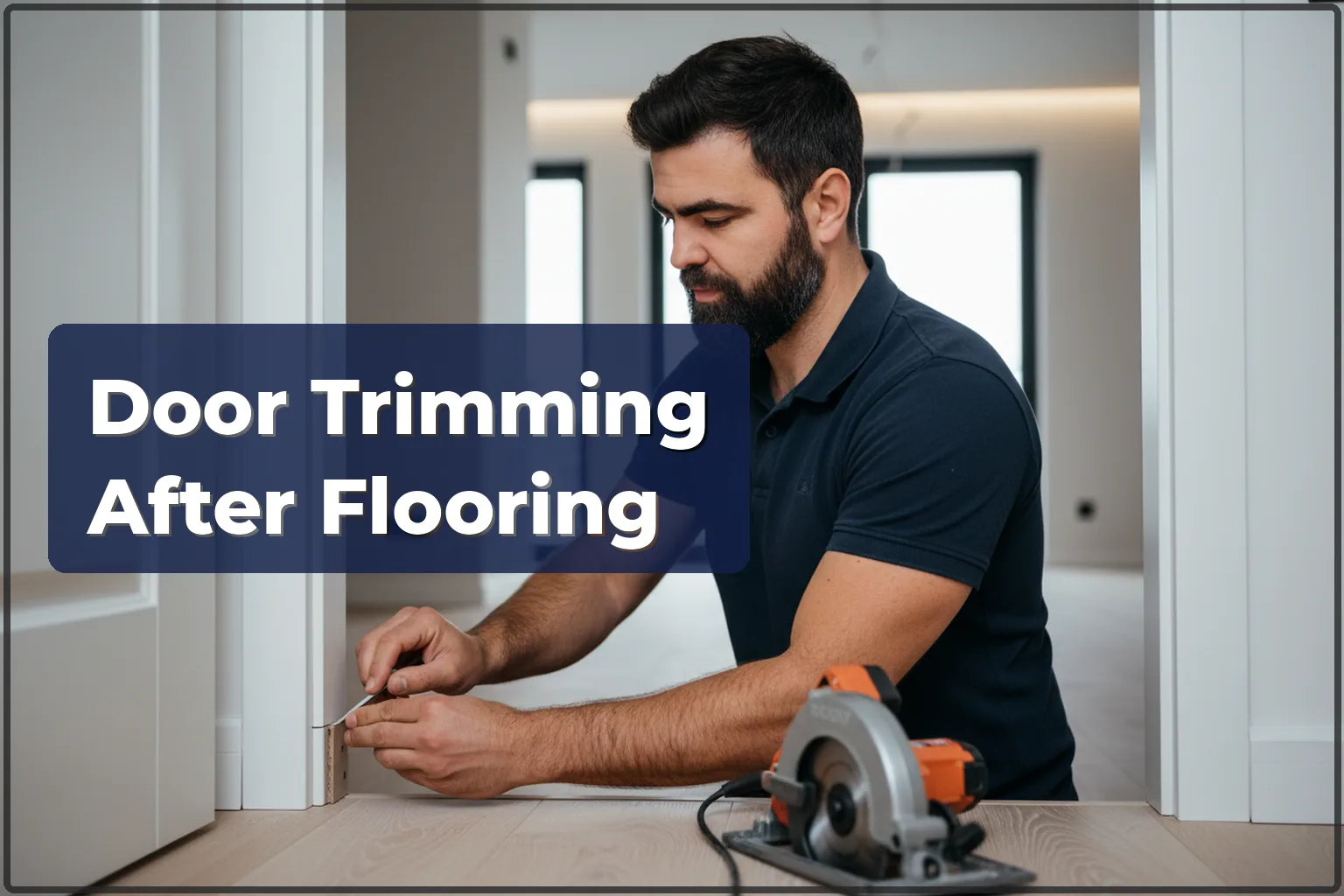
- Measure the gap: they place a piece of the new flooring against the door and mark the cut line. Tradespeople leave 5–8 mm for a ventilation gap above the finished floor.
- Take the door off its hinges and put it on a stable surface, sawhorses or cardboard laid on the floor.
- Stick masking tape along the cut line: this helps stop the decorative finish from chipping.
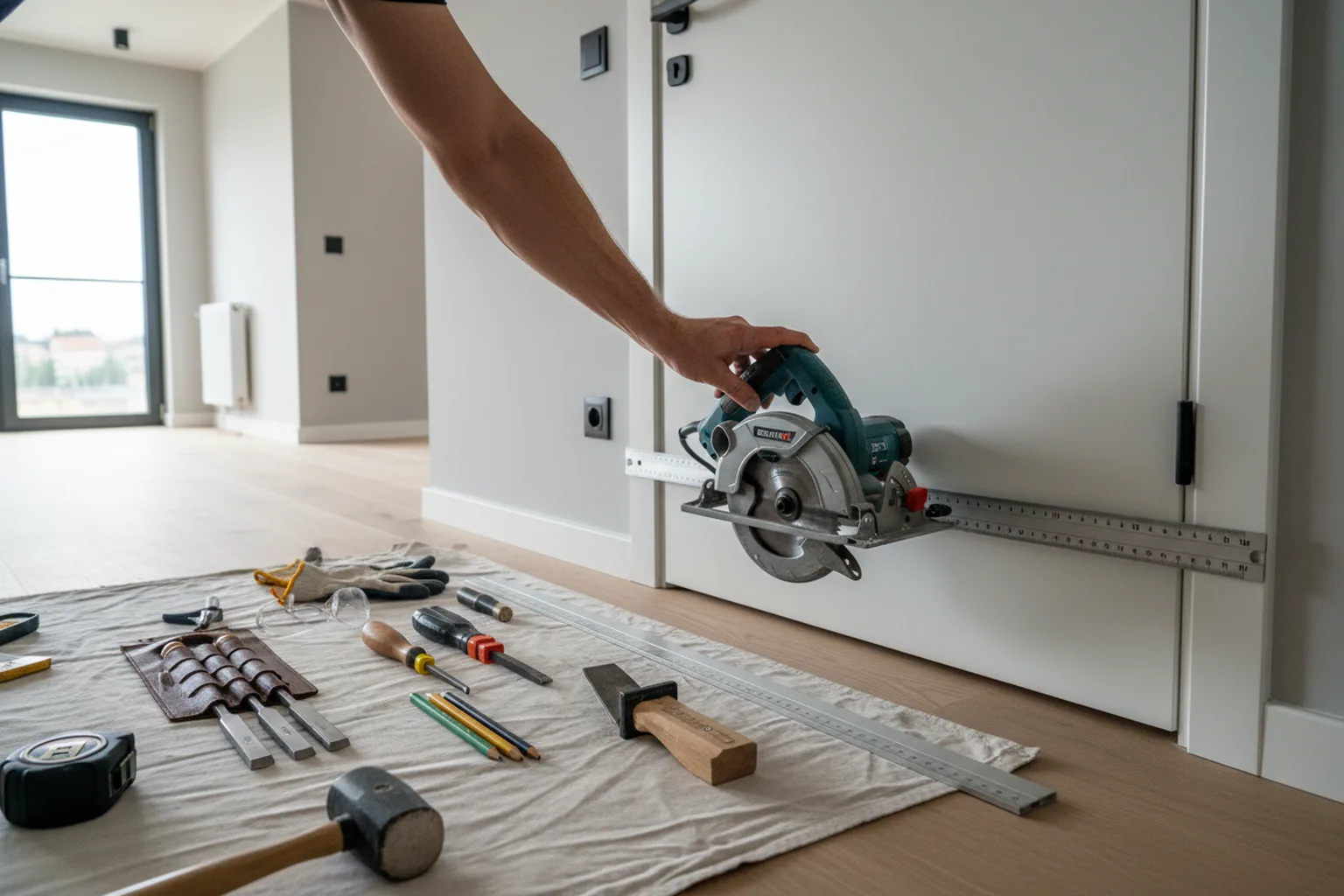
- Cut with a circular saw and guide rail. Fine-tooth blade for solid wood, standard blade for MDF.
- Sand the cut edge with 120-grit paper and clear away any splinters. For laminated doors, finish with finer paper.
- Seal the exposed edge with acrylic sealant or primer — especially important for MDF and hollow-core doors to stop moisture damage.
- Hang the door back, make sure it opens freely, and adjust the hinges if needed.
Common mistakes
- Cutting by eye without marking: the door comes out uneven and the gap is different from one side to the other.
- Sawing without masking tape: the laminate or veneer chips along the cut line and leaves a rough edge.
- No ventilation gap — the door sits tight to the floor, airflow in the room is poor, and in summer the wood swells and starts jamming again.
- Skipping edge sealing: bare MDF soaks up moisture every time the floor is mopped, and after a few months it swells and starts to delaminate.
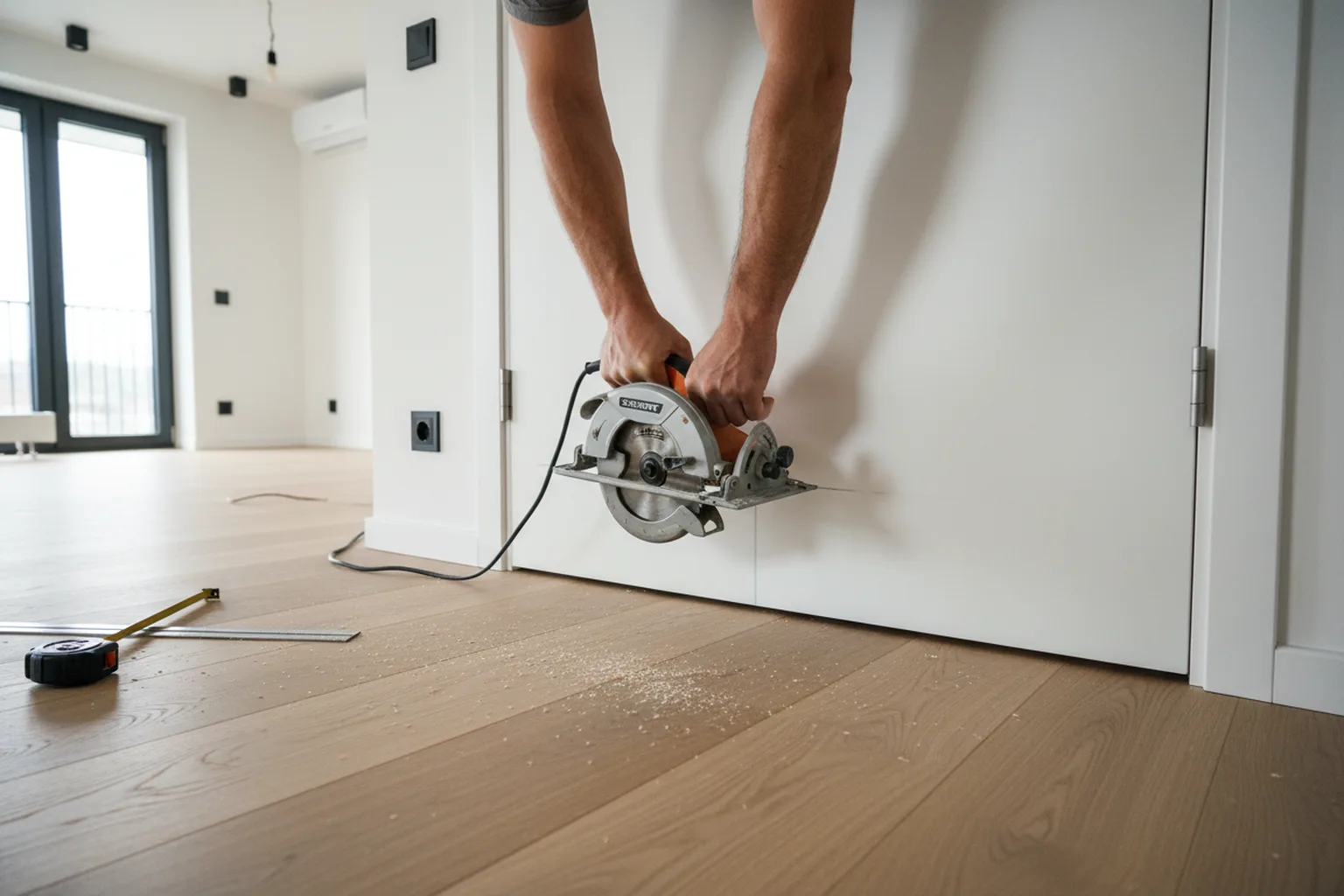
- Trimming the door while it is still on the hinges, the saw can slip, the cut comes out uneven, and the frame gets scratched.
What to prepare before the handyman arrives
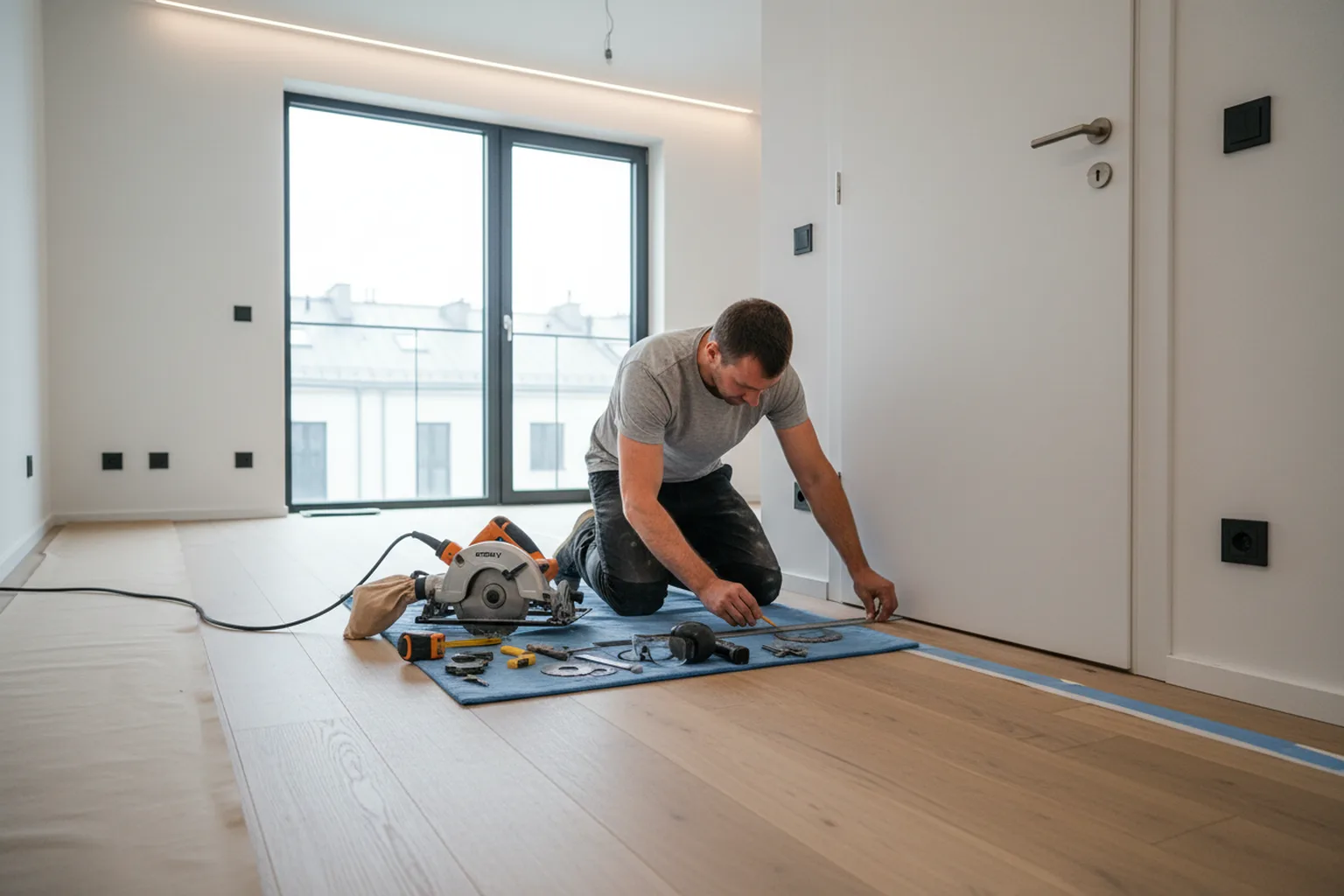
- Remove doormats and threshold strips near the doors that need trimming.
- Check that there is a power outlet nearby (the circular saw runs on mains power).
- Decide which doors need trimming — sometimes it is only the bedroom doors, not the bathroom.
- For expensive or custom doors, check with the manufacturer how much can be taken off the bottom (hollow-core doors may have only a 30 mm rail).
- Clear about 2 metres of space in front of each door so there is enough room to work comfortably.
A real case from Warsaw: door trimming after floor installation

A 60 m² flat in Ursynow had vinyl click flooring (5.5 mm) laid over the old screed with a 2 mm underlay: 7.5 mm higher overall. Four bedroom doors and one bathroom door no longer closed. The handyman came with a track saw and guide rail. Each door was removed from its hinges, marked using a sample of the vinyl plus 7 mm clearance, cut, sanded, sealed along the bottom edge, and hung back. All five doors were done in a little over two hours. The bathroom door was left with a wider 12 mm gap for better ventilation because there was no mechanical extract fan. Now every door opens and closes smoothly without scraping, and the bottom edges are protected against moisture.
Classen doors after a new floor: each leaf on its own
Classen doors are a good example of why door trimming is not done in bulk: after new laminate goes down across a flat, three doors may start to rub, each in a different spot. The screed can differ by a few millimetres between rooms, and there may be a hump under the arc of the swing. So the clearance is checked for each door along the full path of the leaf, and sometimes adjusting the hinges is enough instead of cutting.
If a cut is needed, the leaf comes off and is shortened from the bottom with a track saw, the cut line is taped so the veneer does not chip, and the fresh edge is sealed against moisture. In a bathroom the gap under the door often serves as the air inlet for ventilation, so its height is decided before cutting.
Frequently asked questions
Can a tradesperson trim a hollow-core door?
Yes, but carefully. Hollow-core doors have a solid bottom rail of about 30–50 mm. If more needs to come off, they glue in a new timber insert and reseal the edge. The handyman will check on site how much material is there.
Does the door frame need trimming too?
If the new flooring runs into the frame, yes. Tradespeople undercut the frame with a multi-tool so the floor and skirting board can slide neatly underneath.
What is the correct gap size?
The standard gap is 5–8 mm above the finished floor. In bathrooms it can be 10–12 mm for better air circulation. Anything below 5 mm risks the door catching when the flooring expands in warmer months.
How long does it take?
One door: 20–40 minutes. A flat with four to six doors usually takes two to three hours including measuring, cutting, and sealing.
Book a door trimming service
New flooring should not turn into a daily battle with your doors. Add to the order a message: they will measure, trim, and seal every door properly. Tradespeople bring their own tools and work across all of Warsaw.
Order in the app
Describe the job, add photos and the address. Tradespeople send their own prices and dates, and you pick one of the offers.
Open the app