Floor-Standing Toilet Replacement in Warsaw — Old Removal and New Installation
The bowl has a crack, the cistern won’t stop leaking, or the whole toilet just looks like it came from another era — at that point, replacement makes sense. Floor-standing toilets are still installed in plenty of Warsaw flats: panel buildings in Ursynow, older tenements in Wola, and all sorts of places in between. The work itself takes a few hours, but it needs to be done right — a bad drain or water connection can end with a leak, flooding, and expensive repairs. Below is how we do the job and what is good to check before replacing the unit.
How much does toilet replacement cost
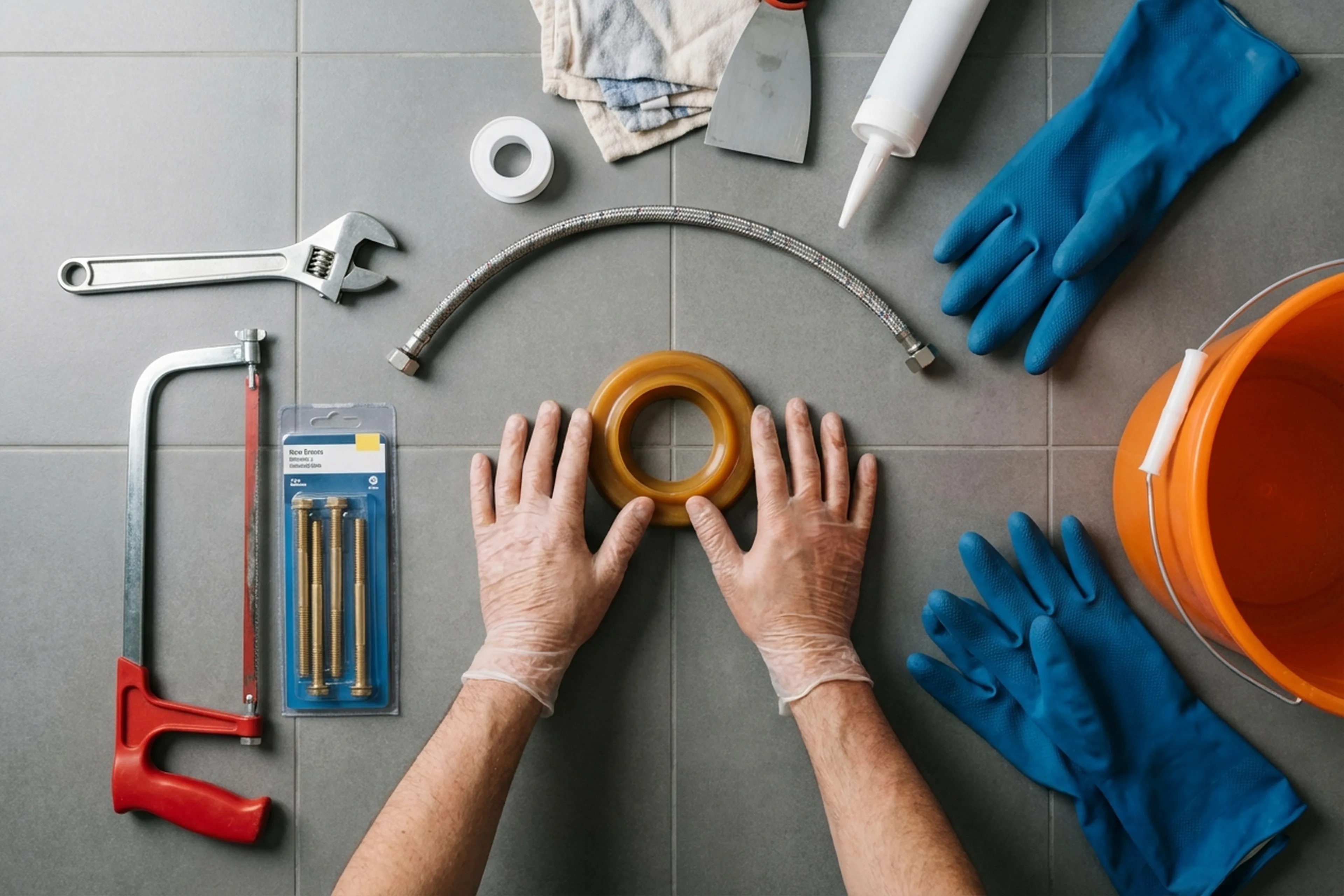
The cost comes down to how hard it is to remove the old toilet, what shape the sewer outlet is in, and what kind of new unit is going in. If the old cast-iron pipe is rusted and needs an adapter — that adds extra work. Current rates for all plumbing and bathroom services are listed in the table below. Fixings and sealant are included in the service price; the toilet itself and the flexible supply hose are bought by the client.
How the replacement works
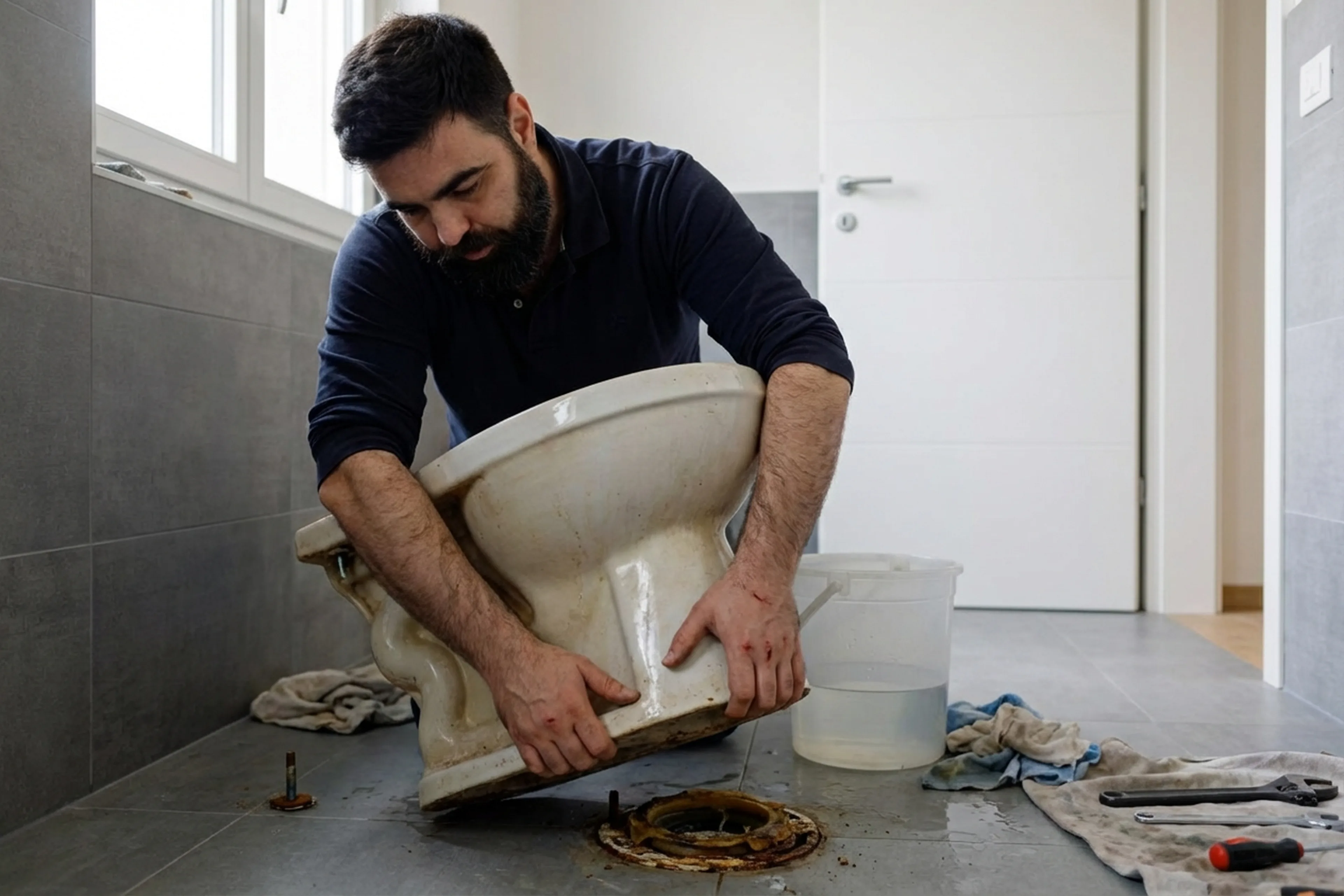
- We turn off the water feeding the cistern and flush out what is left inside. Then we disconnect the flexible supply hose.
- We remove the old toilet: undo the floor fixings and carefully separate it from the sewer outlet. If the base has been set in cement, we chip it out carefully so the nearby tiles are not damaged.
- We inspect the sewer pipe: check the socket, clean it when needed, or install a rubber transition sleeve.
- We test-fit the new toilet: place it in position, make sure the outlet lines up with the sewer pipe, and mark the fixing points.
- We drill the floor, insert wall plugs, place the toilet onto a bead of silicone sealant, and tighten the mounting bolts.
- We connect the cistern (if it is a separate unit), fit the flush mechanism, and attach the flexible supply hose to the water valve.
- We test everything: flush several times and check each connection for leaks. We also check that the toilet is stable — it must not wobble.
Important: any work on the water supply and drain needs care. A bad connection can lead to leaks and water damage in the flat below. If you are not sure what condition your pipes are in, it is better to have a specialist look at them before you buy a new toilet.
Common mistakes
- Buying a toilet without measuring the distance from the wall to the centre of the sewer outlet — the new unit does not match the existing pipe.
- Not shutting the water off fully — once the supply hose is unscrewed, the floor gets flooded.
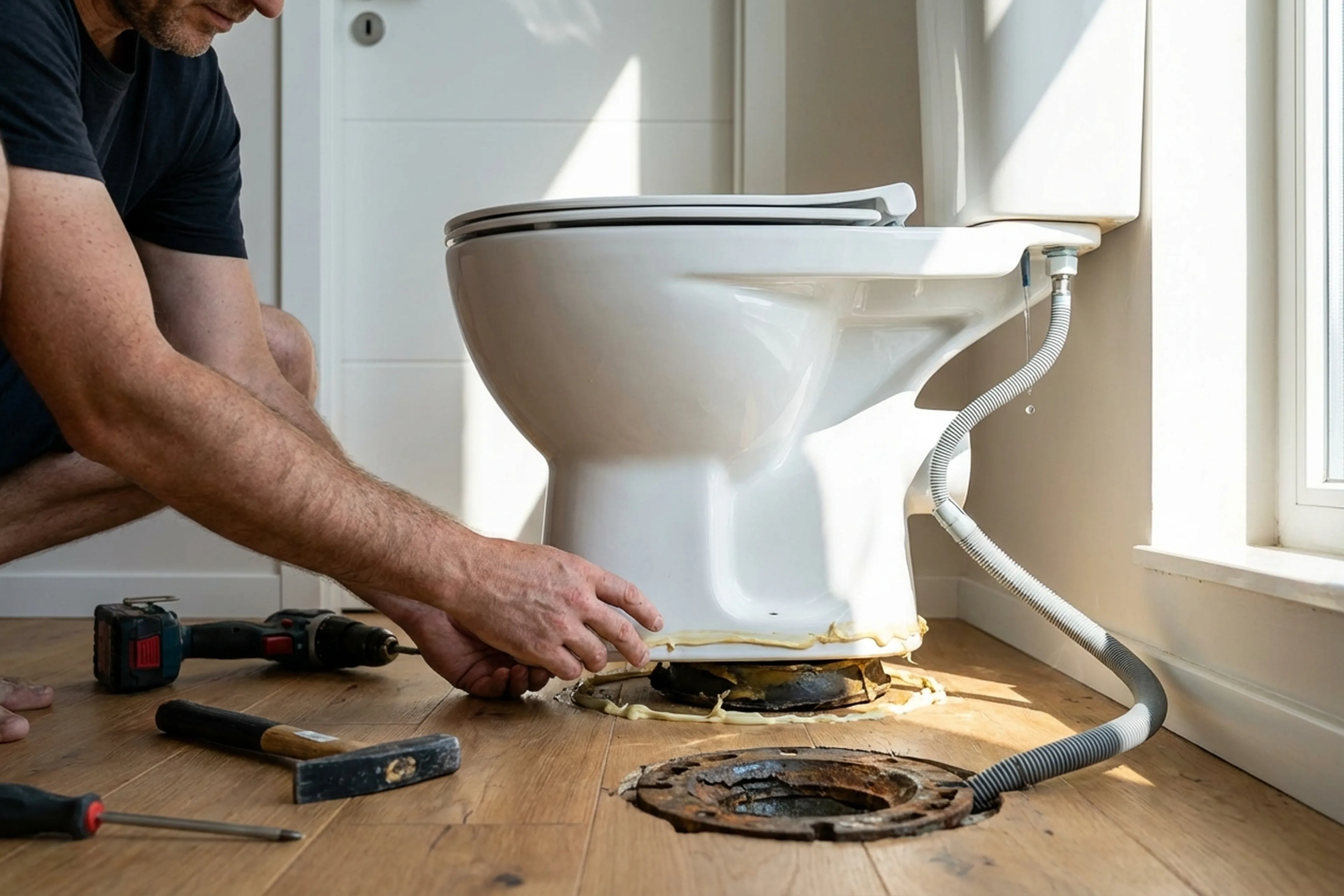
- Fitting the toilet without sealant between the base and the tile — water gets underneath during cleaning and starts causing smells.
- Tightening the mounting bolts too much — the ceramic cracks and the toilet is finished.
- Using the old flexible connector or rubber sleeve again — within six months it starts leaking on the sewer side.
- Leaving out PTFE tape on threaded joints — drips show up under the cistern.
- Not checking whether the floor is level — the toilet sits unevenly and the cistern fills badly.
What to prepare before the visit
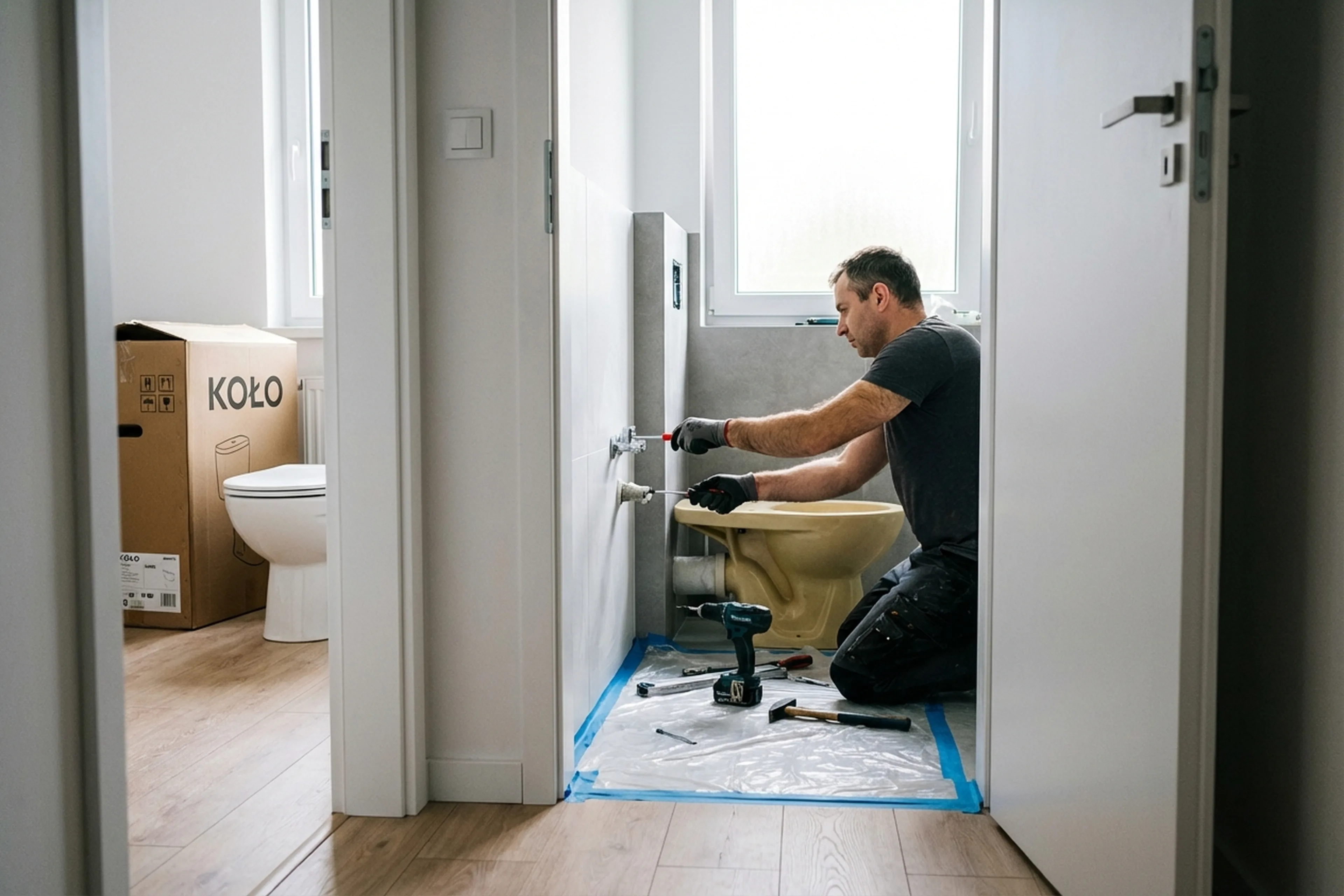
- Buy the new toilet — check the outlet type (horizontal, vertical or angled) and the wall distance.
- Buy a flexible supply hose in the correct length and a flexible connector or rigid adapter for the sewer pipe.
- Make sure the isolation valve for the cistern actually works — if it is stuck, tell us beforehand.
- Clear the area around the toilet: remove mats, shelves, and cleaning supplies.
- Keep some old towels or rags ready — a bit of water will end up on the floor during removal.
- If the flat has old cast-iron pipes, keep in mind that part of the drain may need to be replaced.
- Check that the bathroom door opens wide enough to get the old toilet out.
- If the building is old, give the neighbours below a quick warning — just to be safe.
A real case from Warsaw
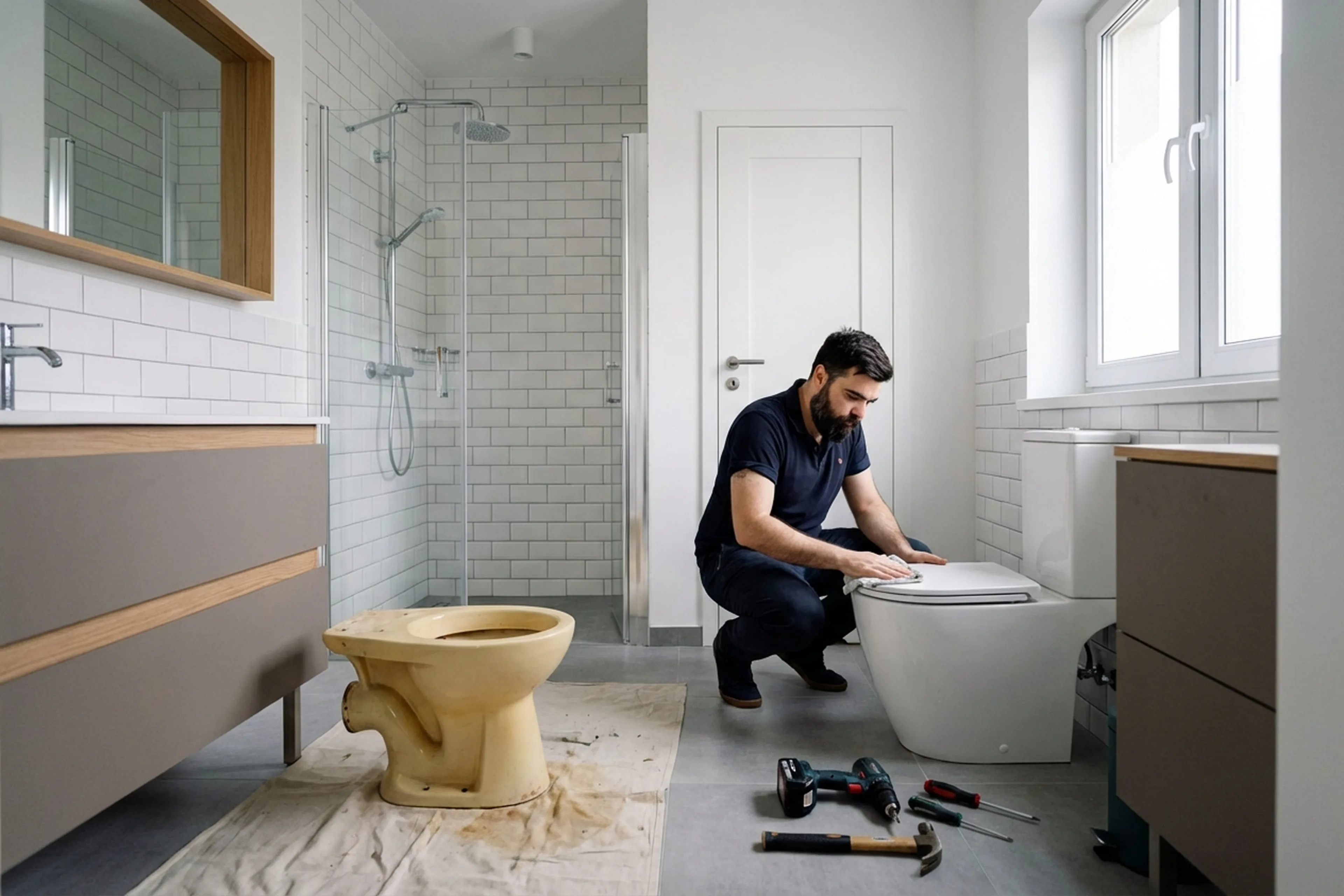
We got a call to a studio flat in Ursynow. The toilet was from the 1990s — the cistern leaked all the time and the base had a crack. The owner had already bought a new close-coupled unit with a horizontal outlet. I came in, shut off the water and removed the old toilet, and then found it had been bedded in cement mortar. I had to chip it out carefully so the surrounding tiles stayed intact. The cast-iron sewer socket was in fairly good condition, so I installed a rubber transition sleeve. The new toilet sat straight, I fixed it down and sealed the base with silicone. Then I connected the cistern and ran the tests — not one drop leaked. The whole job, cleanup included, took about two and a half hours (compatible with Grohe, Hansgrohe, Geberit and similar).
Frequently asked questions
Which outlet type do I need?
Check how your existing toilet connects to the sewer. If the pipe goes into the wall — horizontal outlet. Into the floor — vertical. At an angle — angled. Most Warsaw flats have horizontal outlets.
Can I install a new toilet on old tiles?
Yes, if the tiles are firmly fixed and level. We drill, insert plugs and bolt the unit down. If a tile is chipped where the fixing goes, it is better to repair it first.
Do I have to replace the flexible connector?
If the old one is in good shape and fits the new toilet — you can keep it. But we often advise replacing it: a new one costs very little and then gives you years of trouble-free use.
What if the old toilet is cemented in?
We chip it out carefully. It takes more time, but in most cases the tiles can be kept. If there are no tiles under the old base, a ring mark will be visible after the new toilet is fitted. That can be covered with sealant or a matching tile patch.
Will you take the old toilet away?
Removal and disposal of old sanitary ware is a separate service. We can carry it to the stairwell or the waste container for an extra fee.
Do I need to call a plumber separately?
No — our technician handles the whole job: removal, sewer and water connections, and testing. If we find a serious issue with the pipes, we will tell you straight away.
Book the replacement
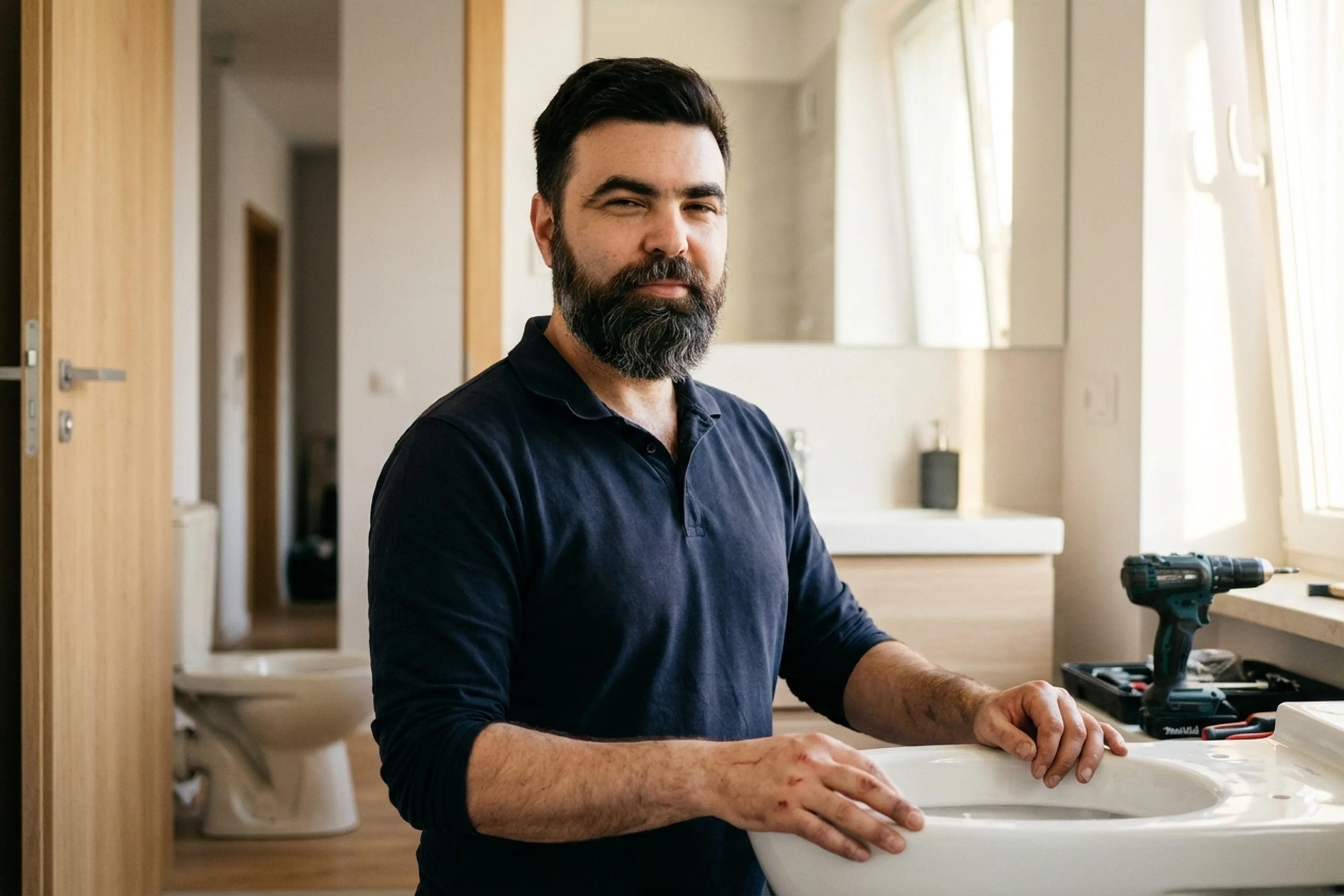
We work all over Warsaw. We come with a full set of tools, fixings and consumables. Removal of the old unit, fitting the new one, all connections, and testing — all done in one visit. Contact us and we will set up a time that works for you.