
Why Grohe: what sets this brand apart
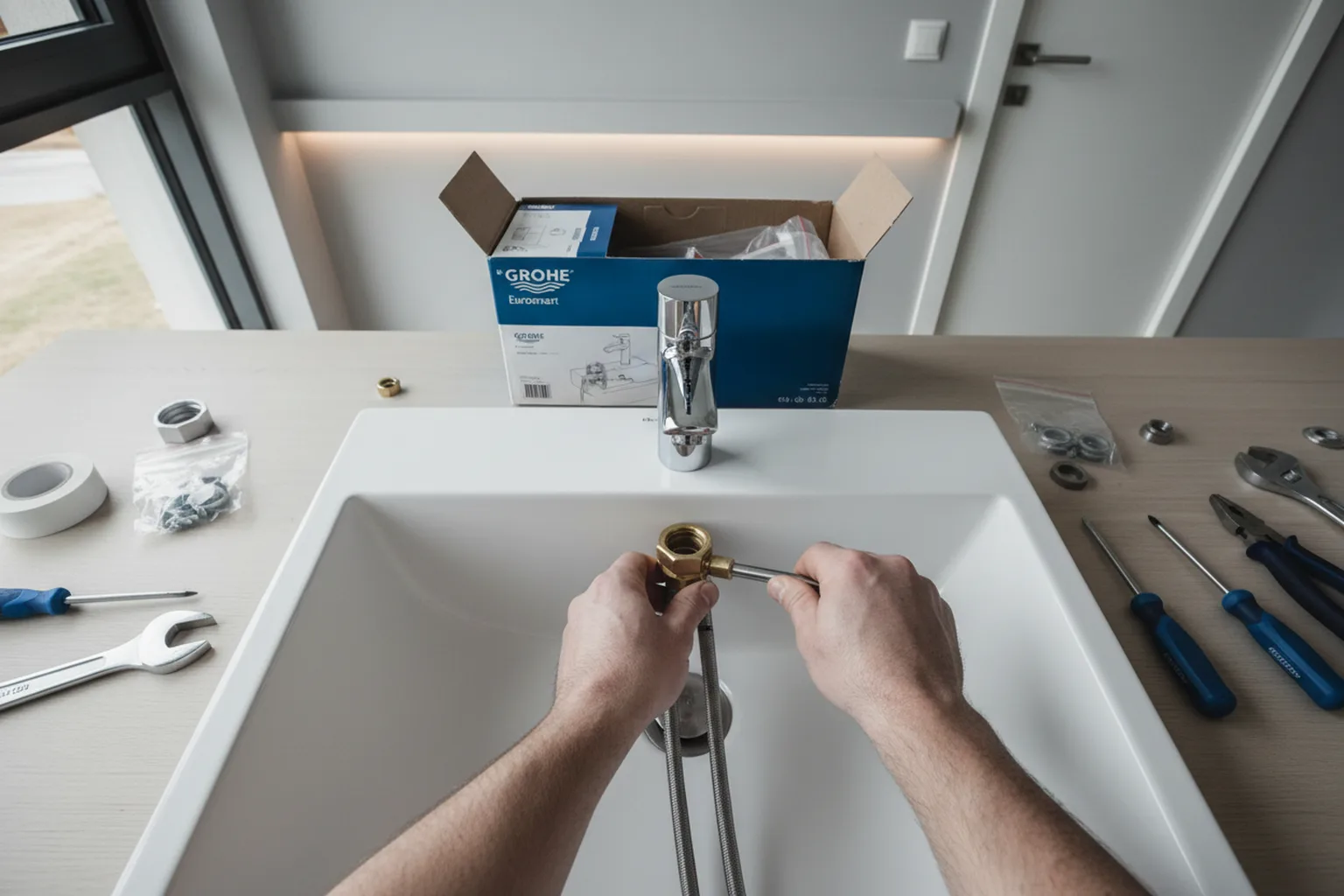
Grohe is in the premium part of the market, and you notice it in everyday use. It’s a German brand, and in real life that usually gives the client two things: smoother handle action when the faucet is new, and better general build quality than a lot of budget mixers. If someone had a cheap no-name tap before and then changed to a Grohe model like Eurosmart, Concetto or Essence, they normally feel the difference right away.
The brand is especially known for its SilkMove ceramic cartridge. That is the component responsible for smooth lever action and accurate water mixing. Another thing Grohe is known for is water-saving technology, often promoted in models that cut flow without making the stream feel too weak. In real flats, this means the faucet often lasts a long time, but when it finally starts giving trouble, the repair or replacement should be done with the proper parts, not “something close enough” from the bottom shelf.
In Warsaw, Grohe is common in both renovated older apartments and newer developer flats. BauEdge and Eurosmart turn up often in practical bathrooms, while Eurostyle Cosmopolitan and Essence are more frequent where the owner wanted the tap to match a more polished interior.
The request, step by stepBasin tap replacement: from a photo to offersFirst the service and a photo: just show the broken sink tap. A price range appears right away. All that’s left is the address and the day. Handymen see the job and each decides whether to take it. Offers with prices land in the app. You pick the one that suits you.Service and a photoAddress and a day that suits youOffers from handymen, you chooseDescribe the job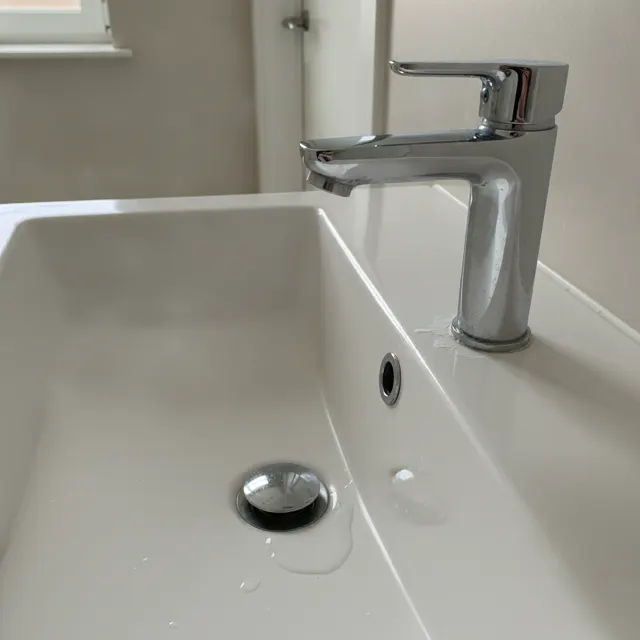
Price ranges and offers from tradespeople: plumber prices in Warsaw.
Typical failures of Grohe faucets
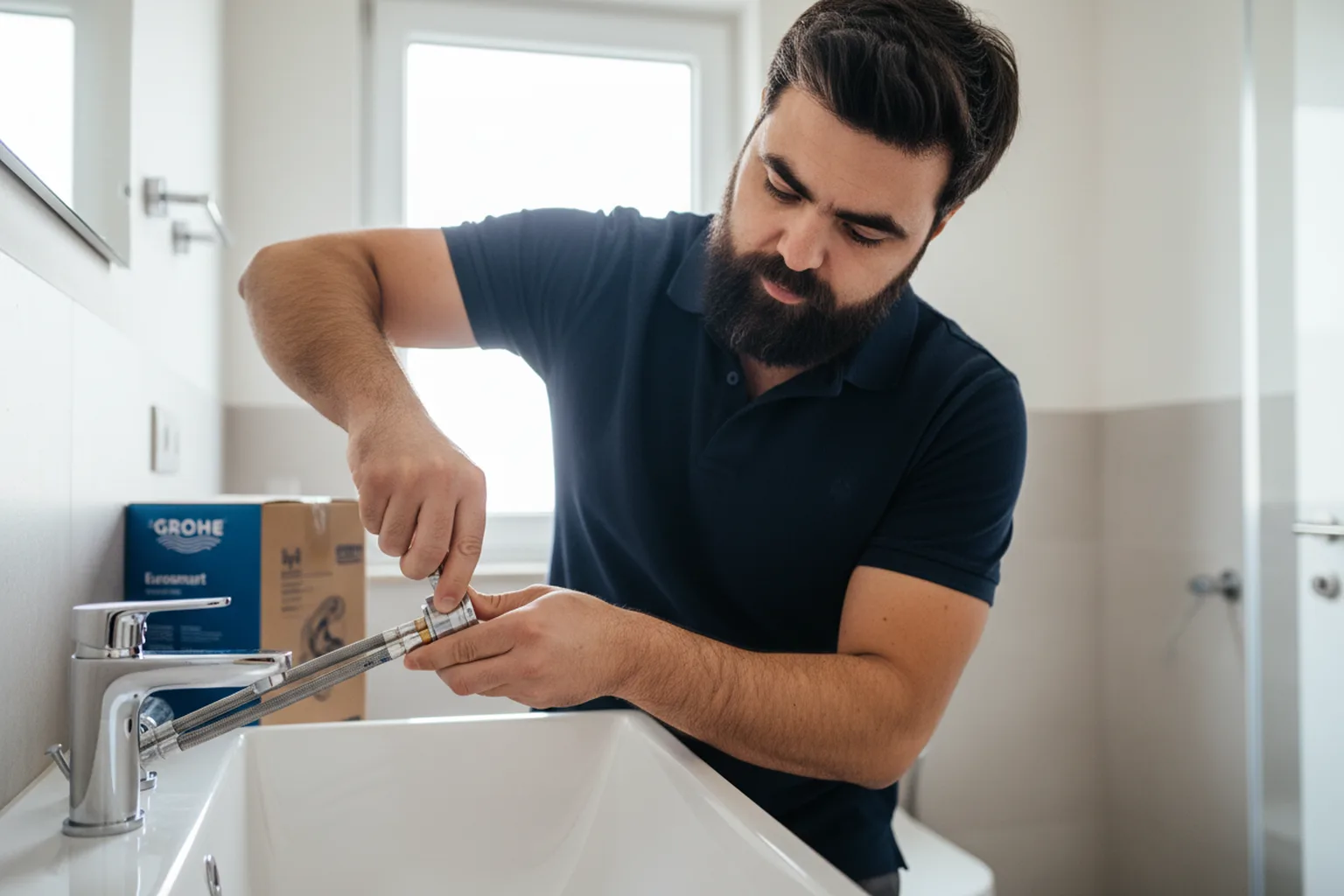
Grohe taps usually do not break down after one or two years unless the water quality is poor or the installation was done badly. More often, the familiar pattern begins after around 7 to 10 years. The lever gets stiff, doesn’t return smoothly, or starts to feel “gritty.” In most cases, that points to wear inside the SilkMove ceramic cartridge.
Another frequent issue is limescale in the aerator. This one is simple but irritating: the flow becomes uneven, water starts spraying to the side, and users think the whole faucet is on its way out when in fact the aerator just needs cleaning or replacement. In districts with harder water, like some parts of Ursynów or Ochota, this comes up very often.
There is also a cosmetic issue that matters if you care about how the bathroom looks. Grohe’s chrome finish is hard-wearing, but if someone cleaned it for years with abrasive paste, rough scouring pads or aggressive chemicals, the surface can get damaged and begin peeling. Once that happens, repair no longer makes much sense, because even if the faucet still works mechanically, it will go on looking worse.
Less often, the leak is under the handle, around the base, or from the flexible connection hoses. On older mixers, the body may still be sound, but seals, hoses and cartridge wear out together. At that point, replacing one part solves only half of the problem.
Replacement process
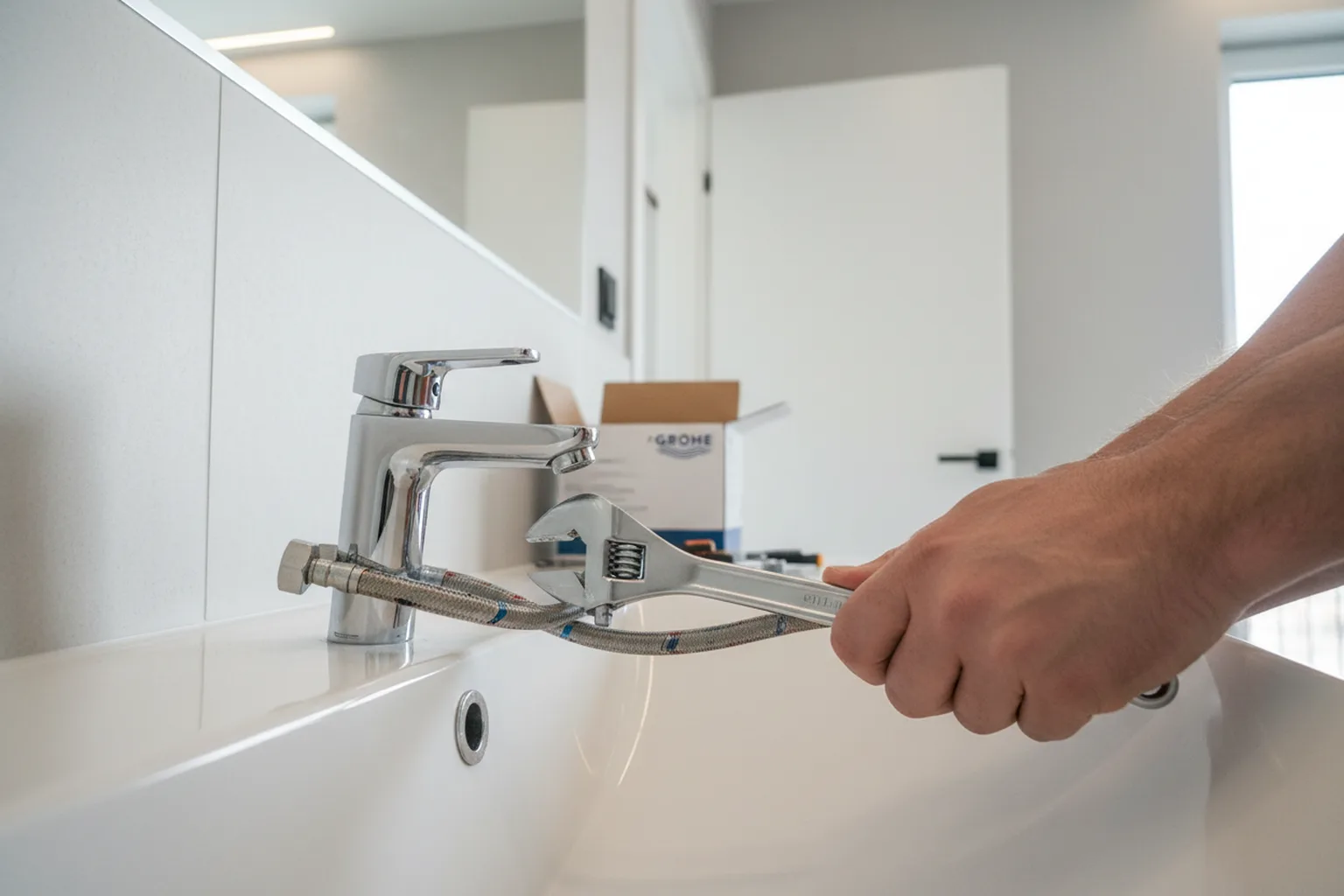
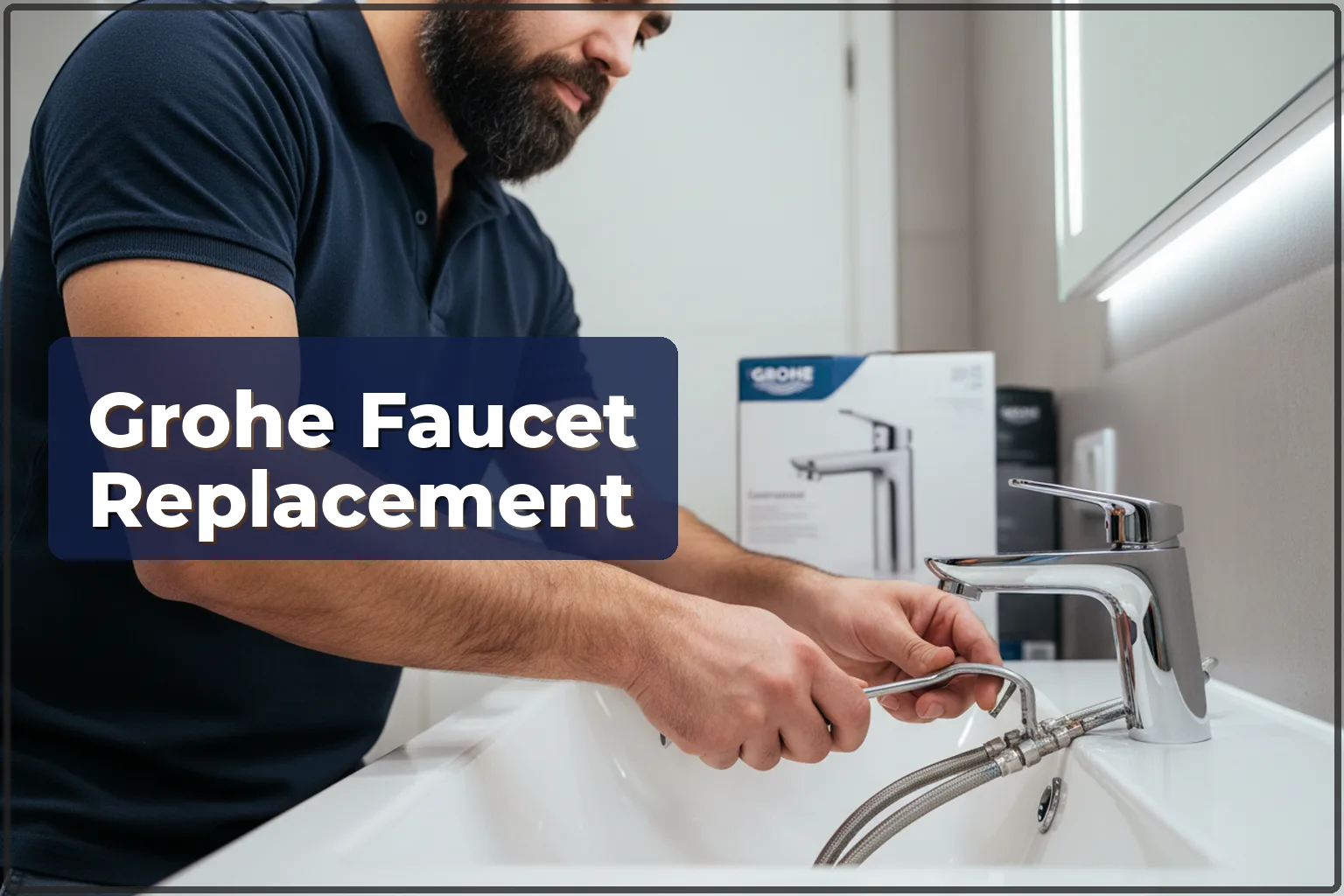
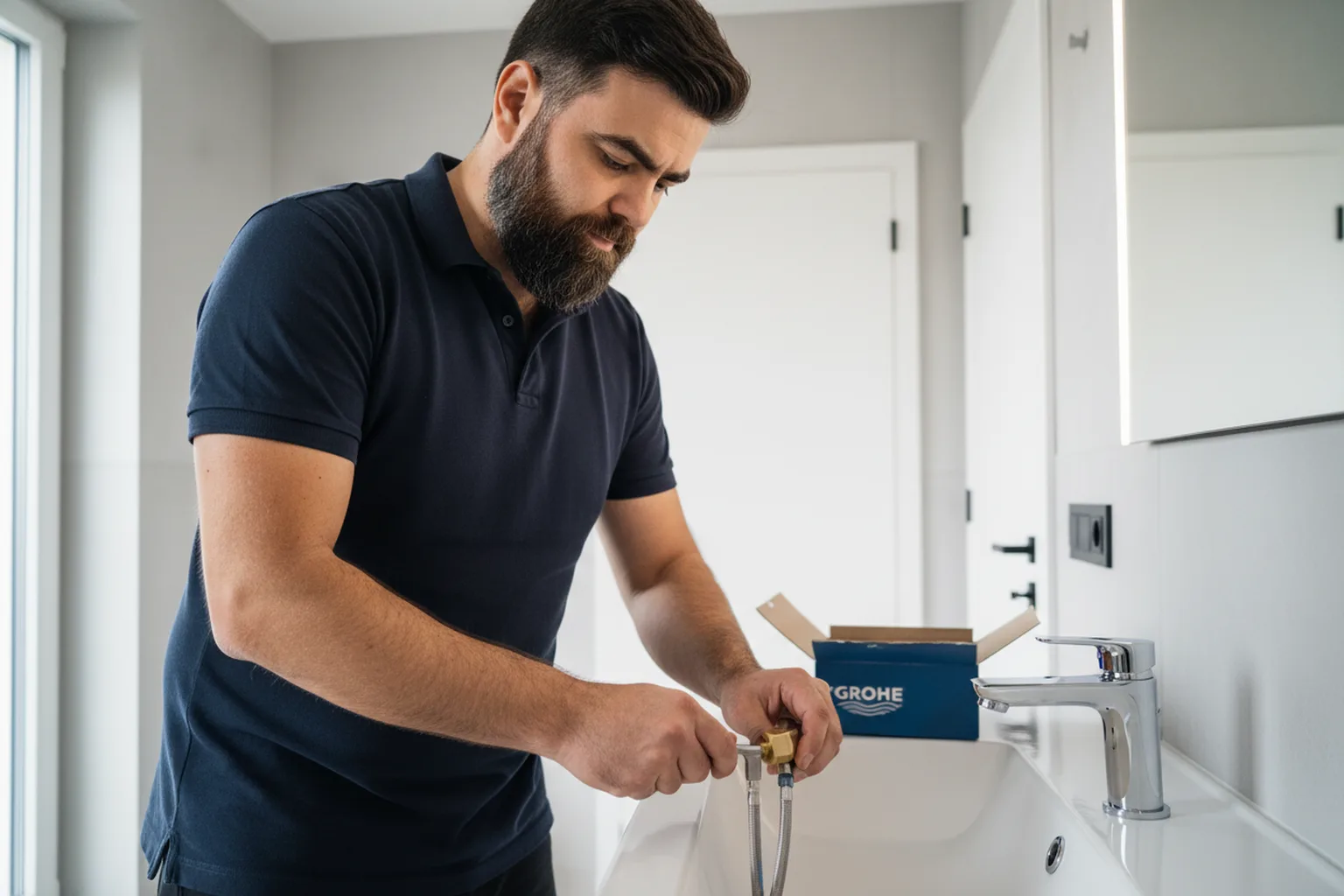
Replacing a Grohe basin mixer is straightforward for someone who does it often, but the brand has a few details that need checking before ordering parts or a new tap. First the water is shut off, the flexible hoses disconnected, the fixing set under the sink loosened and the old body removed. That sounds simple on paper, but under a small washbasin in a Warsaw apartment block, access is often the real problem.
With Grohe, cartridge size and body proportions need close attention. Most standard models use a 46 mm ceramic SilkMove cartridge, while compact models often use a 35 mm version. That matters if the client first wants a repair but then decides during the visit that replacement is the better choice. It also matters when comparing old and new fittings, because not every compact single-lever tap has the same internal arrangement.
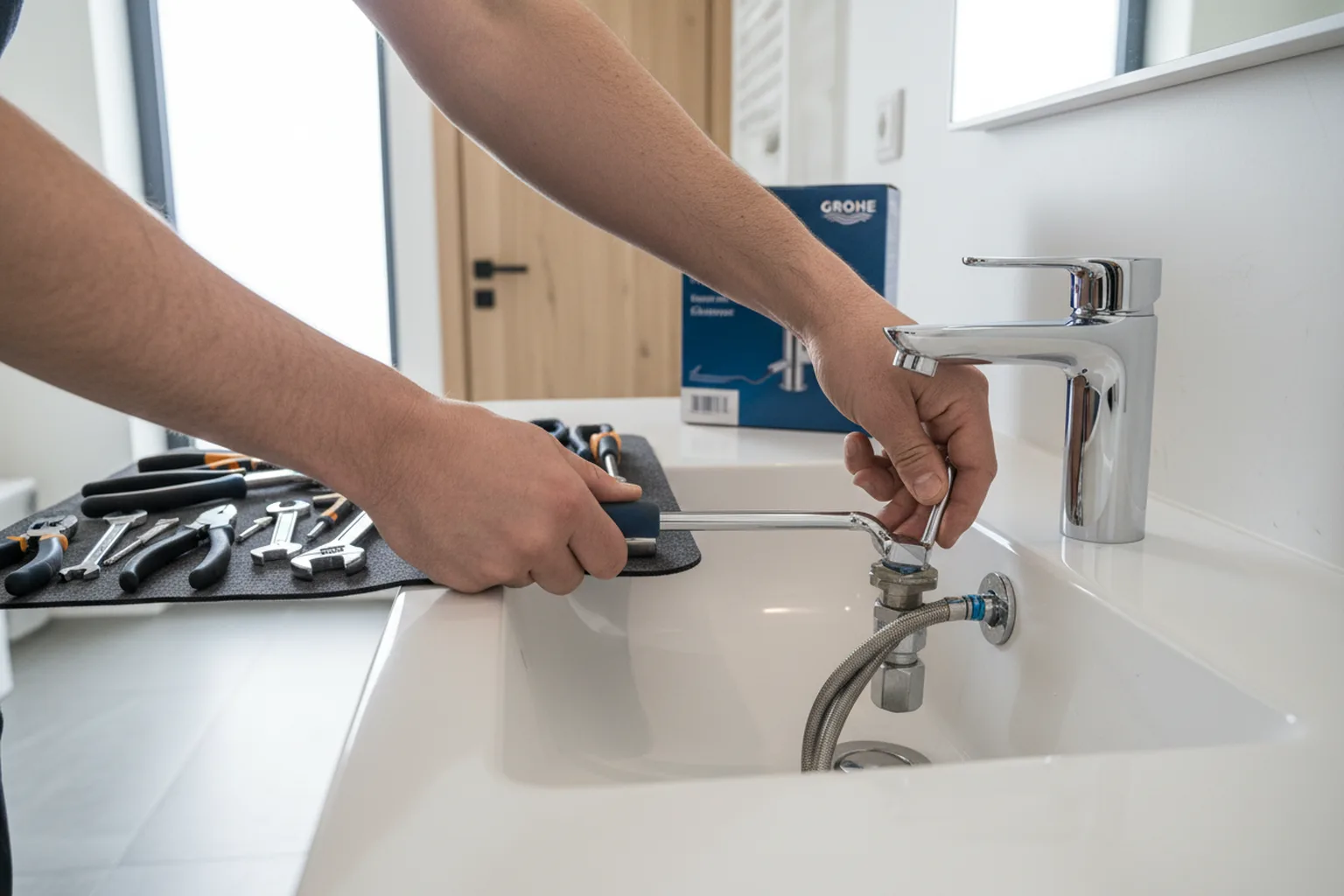
Mounting hardware on Grohe faucets is usually well made, but older installations can have corroded nuts, twisted hoses or very little room to work. The usual tools are a basin wrench, deep socket, adjustable spanner, silicone grease for seals, and sometimes a cartridge puller if the old mechanism is stuck. If limescale has built up around the fixing point, removal can take longer than fitting the new tap.
When fitting the new faucet, the tradesperson checks three things: whether the sink hole is clean and flat, whether the rubber base gasket sits correctly, and whether the hoses are routed without sharp bends. A premium faucet can still leak if someone overtightens the mounting or twists the connections carelessly.
Parts and compatibility
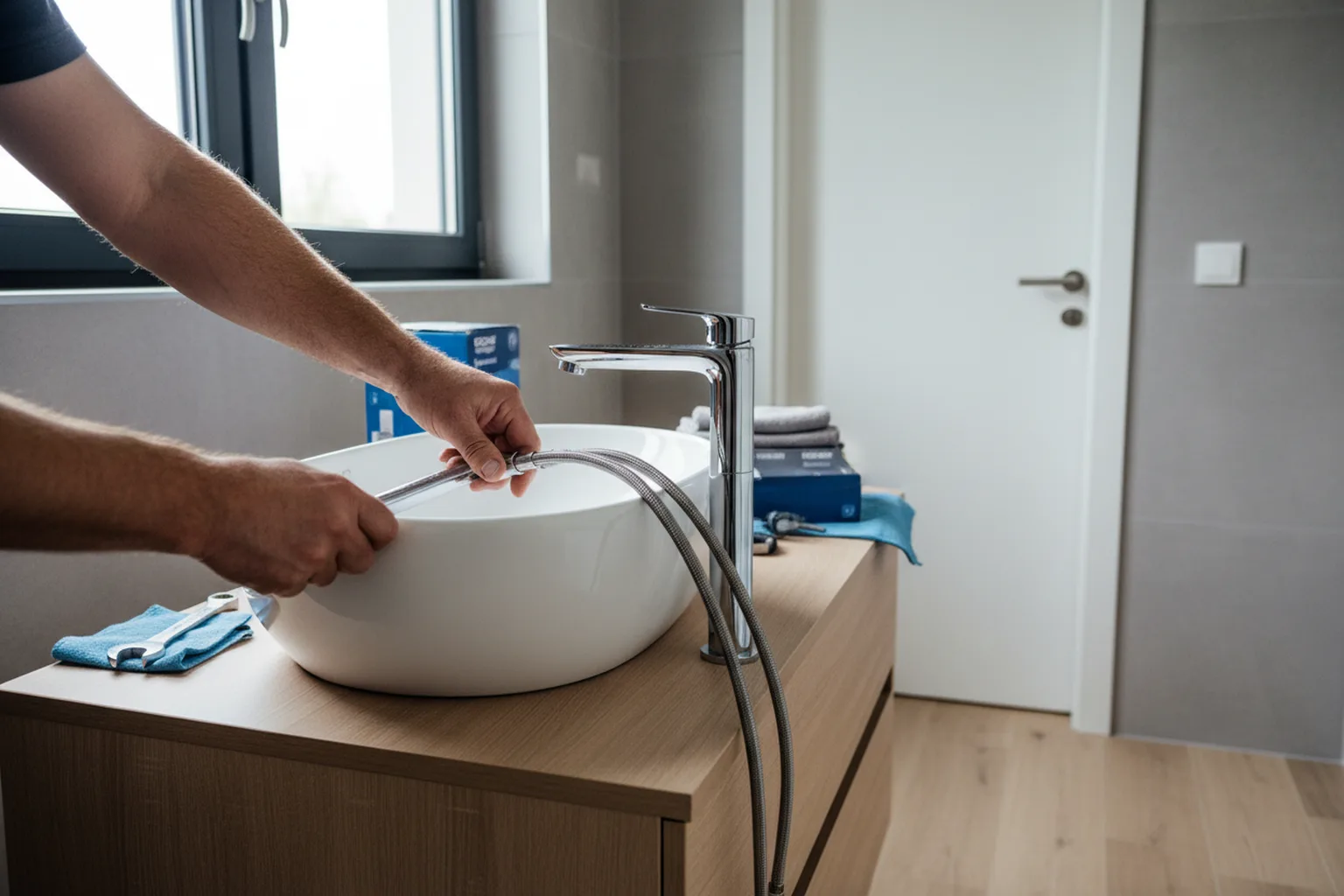
This is where Grohe is convenient in Warsaw: parts availability is very good. Basic consumables and many replacement elements can be found in large stores like Leroy Merlin, Castorama and BricoMarche. For something more specific, official support and service availability in the city makes things easier than with obscure imported brands.
For cartridges, the key technical point is simple:
- most Grohe single-lever basin mixers use a 46 mm ceramic SilkMove cartridge,
- compact models often use a 35 mm cartridge.
Can generic parts fit? Sometimes yes, but it is a mistake to assume that all “46 mm cartridges” are interchangeable. The diameter may match while the locating pins, stem shape, height or sealing surfaces differ. On paper it looks close enough; in practice the handle may not sit properly, the water mix may act strangely, or the faucet may still leak. With Grohe, using the correct part is usually the safer option.
For aerators, hoses and some seals, compatible alternatives are often fine if they are matched properly. But for the cartridge and visible finish parts, original or proven replacement components are the better option, especially in models like Concetto, Eurostyle Cosmopolitan or Essence where people care about both function and appearance.
How much does Grohe faucet replacement cost in Warsaw?
Grohe is not the cheapest option, but it is also not priced like a designer-only boutique brand. In Warsaw shops, Grohe basin mixers usually start from the mid-range level and go up depending on the series, finish and features. Practical models such as BauEdge or Eurosmart are easier on the budget, while Essence and some premium versions can cost noticeably more.
The final replacement cost depends on more than the faucet itself. It can vary with access under the basin, the condition of shut-off valves, whether hoses also need changing, and whether you choose a direct replacement or a higher series than the old one. So a realistic range comes after seeing the installation, not a number thrown out that only fits ideal conditions.
When replacement beats repair for Grohe
If the faucet is fairly young and the problem is limited to the aerator or a cartridge starting to stick, repair can make sense. Grohe is one of the few brands where servicing older mixers is often worth considering because parts are available and the body quality is usually decent.
But replacement is often the better call when the faucet is already around a decade old and shows several symptoms at once: stiff handle, tired chrome, minor leaks, limescale buildup and worn hoses. In that case, spending money on one internal part often only postpones the next issue.
Replacement also makes sense when the finish is damaged or peeling. A mechanical repair will not bring the surface back. And if the client wants a visual upgrade anyway, moving from an old basic mixer to a newer Grohe model in the same family is often the cleanest answer. For example, replacing an older practical unit with a new Eurosmart or stepping up to Concetto or Essence can improve both usability and appearance without redoing the whole bathroom.
FAQ
- Can I fit a different brand cartridge into a Grohe faucet?
Sometimes a substitute can be made to fit, but it is generally not a good idea. Even if the nominal size matches, the internal geometry may be different. With Grohe cartridges, proper fit matters for smooth handle movement and sealing. - Which Grohe cartridge size do I need?
Most standard single-lever Grohe basin mixers use a 46 mm ceramic SilkMove cartridge. Compact models often use 35 mm. The safest way is to check the exact model or remove the old cartridge and verify it before ordering. - Are Grohe faucets easy to repair?
Compared with many brands, yes. Access to parts in Warsaw is good, and common faults like aerator blockage or cartridge wear are familiar. The difficulty depends more on access under the sink and the condition of the old mounting than on the brand itself. - Why is my Grohe handle suddenly hard to move?
Most often because the SilkMove cartridge is wearing out or limescale has affected the mechanism. If the faucet is several years old, this is a very common sign that servicing or replacement is due. - Is it worth replacing an old Grohe with another Grohe?
Usually yes, if you were happy with the brand. The quality level is consistent, parts are widely available in Warsaw, and matching hole size and installation style is often simpler when staying within the same brand family.
If your Grohe faucet is dripping, getting stiff, or simply looks past its best, post a request in the HandyMan24 app: tradespeople will help you decide whether to repair it or replace it. And if you haven’t chosen your new faucet yet, read the general guide on faucet replacement.
Order in the app
Describe the job, add photos and the address. Tradespeople send their own prices and dates, and you pick one of the offers.
Open the app