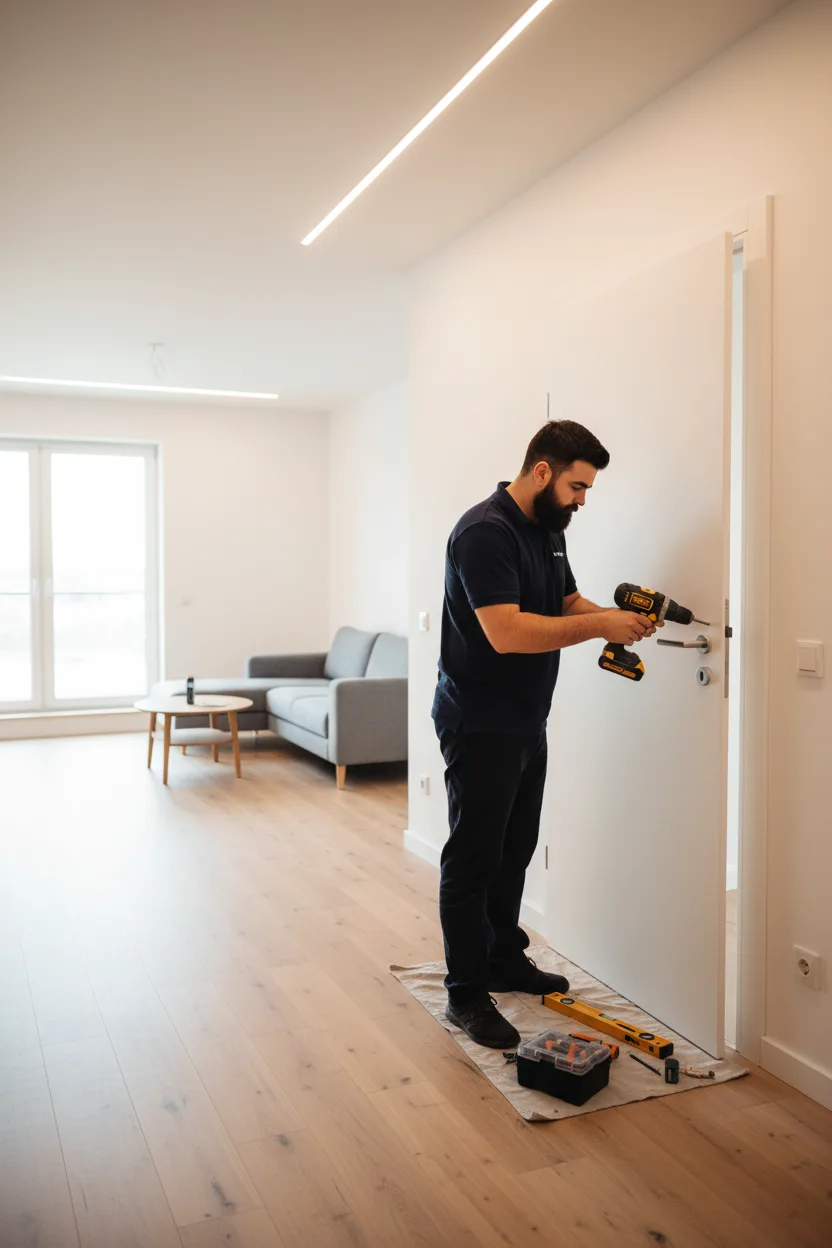
The handle has gone loose, the return spring has broken, or the mechanism has just seized up — and now the door does not open as it should. On paper it looks like a small issue, but in real life it gets on your nerves every day. Buying a new handle is simple; installing it so the spindle stays firm, the rose does not mark the door, and the latch tongue lines up with the strike plate — that needs a careful hand. We replace handles on interior and entrance doors all over Warsaw: lever handles, knob handles, on roses and on backplates. If the old hardware is still usable but shaky, we can tighten and set it right without doing a full replacement.
How much does handle replacement cost and what affects the price
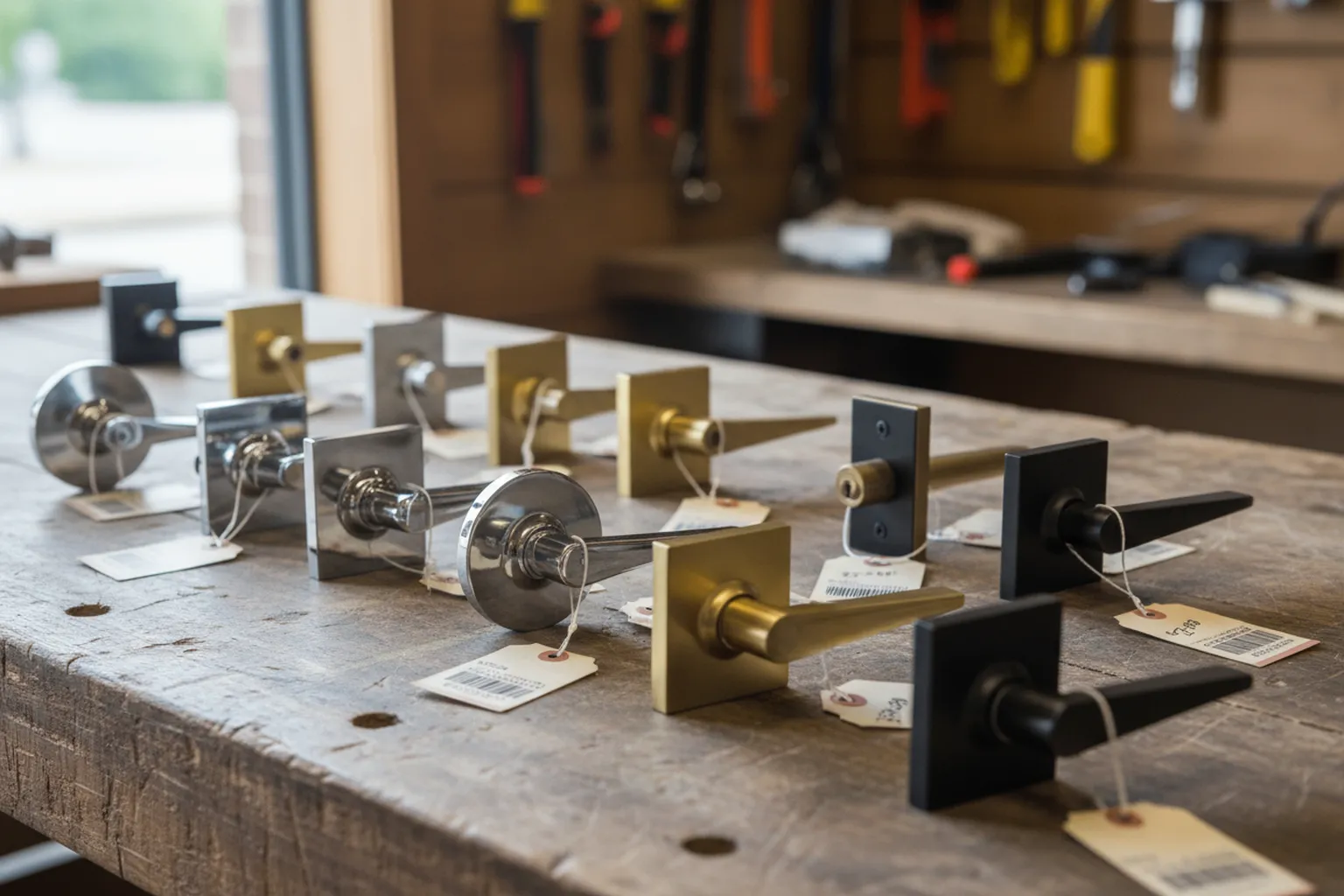
The cost depends on the kind of handle and the state of the door. The easiest job is changing a lever handle on a rose: undo two screws, take off the old set, install the new one, tighten everything. A more complicated job is a handle on a long backplate with a lock, where the spindle has to sit correctly with the latch and the keyhole has to line up with the cylinder. There is also the case where the old handle has chewed up the fixing hole and it has to be repaired before the new hardware can be fitted.
The labour price includes taking off the old handle, installing the new one, and checking the latch operation. The handle itself is provided by the client. Fixings are usually included with the hardware. If you also need the lock changed or the door adjusted, those are separate jobs. Current prices below (compatible with Porta, VOX, Erkado and similar).
| Service | min | max |
|---|---|---|
|
Door handle replacement
Book this service → | 80 zł | 150 zł |
|
Lock replacement
Book this service → | 180 zł | 350 zł |
|
Door adjustment
Book this service → | 30 zł | 60 zł |
Send a photo of the handle and the door — we will identify a suitable replacement and give you an exact quote.
How handle replacement works: step by step
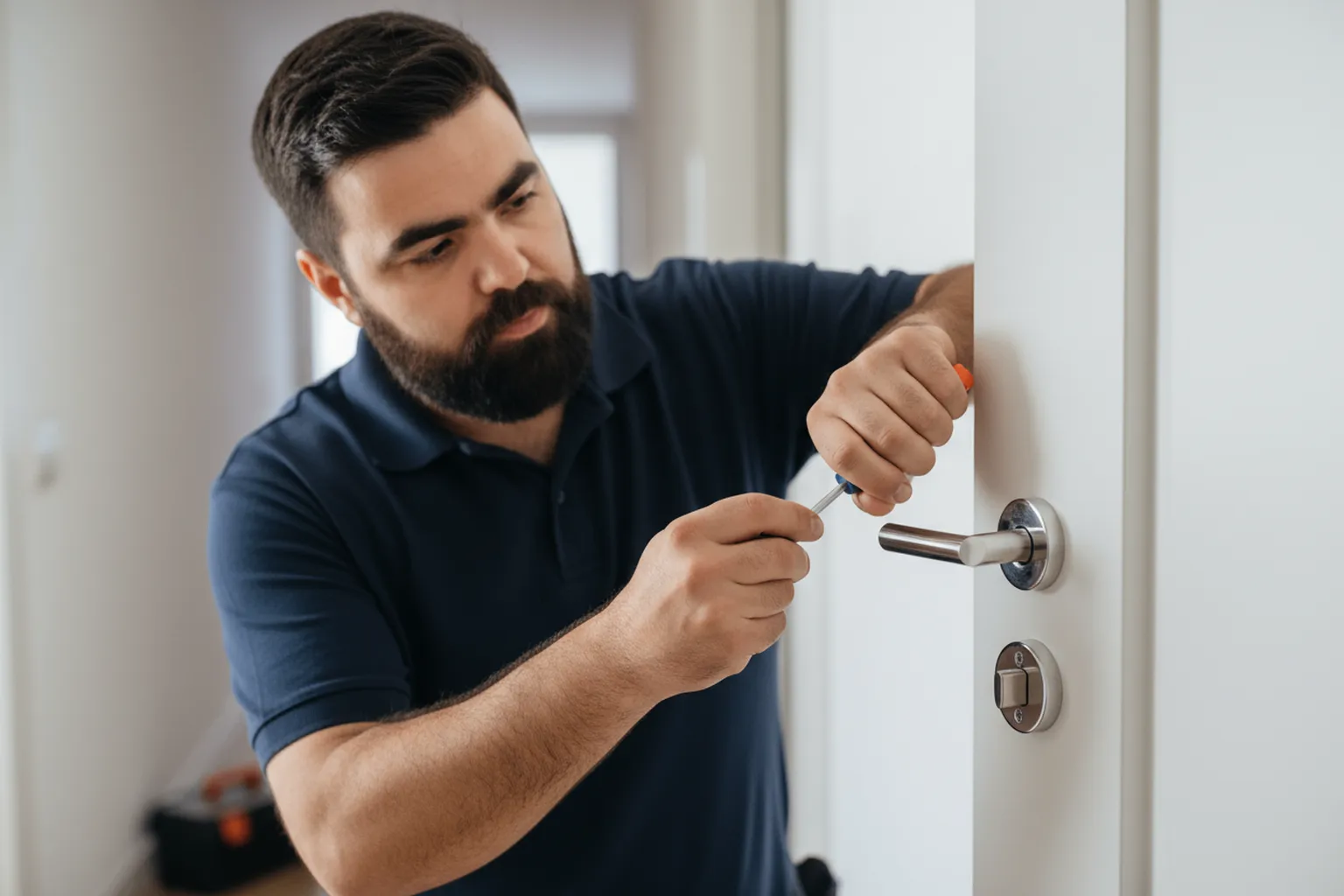
Replacing a handle takes 15–30 minutes, but each stage matters. Tighten a screw too much or set the spindle off-centre, and the handle may fail again after a few weeks. This is how the technician does it:
- Inspection. The technician checks what kind of handle is fitted (rose or backplate), what latch is inside (roller or tubular), and looks at the condition of the spindle and the fixing holes in the door.
- Removing the old handle. We loosen the grub screw on the rose or cover plate, take off the handles from both sides, and pull the spindle out of the latch.
- Checking the latch. If the latch is working properly, we leave it in place. If it is sticking or the spring has failed, we replace it. Handles often fail for one simple reason: a worn latch creates too much resistance.
- Preparing the mounting hole. If the hole is worn out, we fit a bushing sleeve or fill it with epoxy filler and drill it again. For backplate handles we make sure all holes line up properly.
- Fitting the new handle. We put in the spindle, position the handles on both sides, and tighten the through-bolts. With rose handles, we align the roses neatly and tighten the hidden screws.
- Testing and adjustment. We press the handle 10–15 times, check that it returns to horizontal, that the latch tongue catches the strike plate, and that the door shuts without force. If needed, we move the strike plate.
Common mistakes when replacing a handle yourself
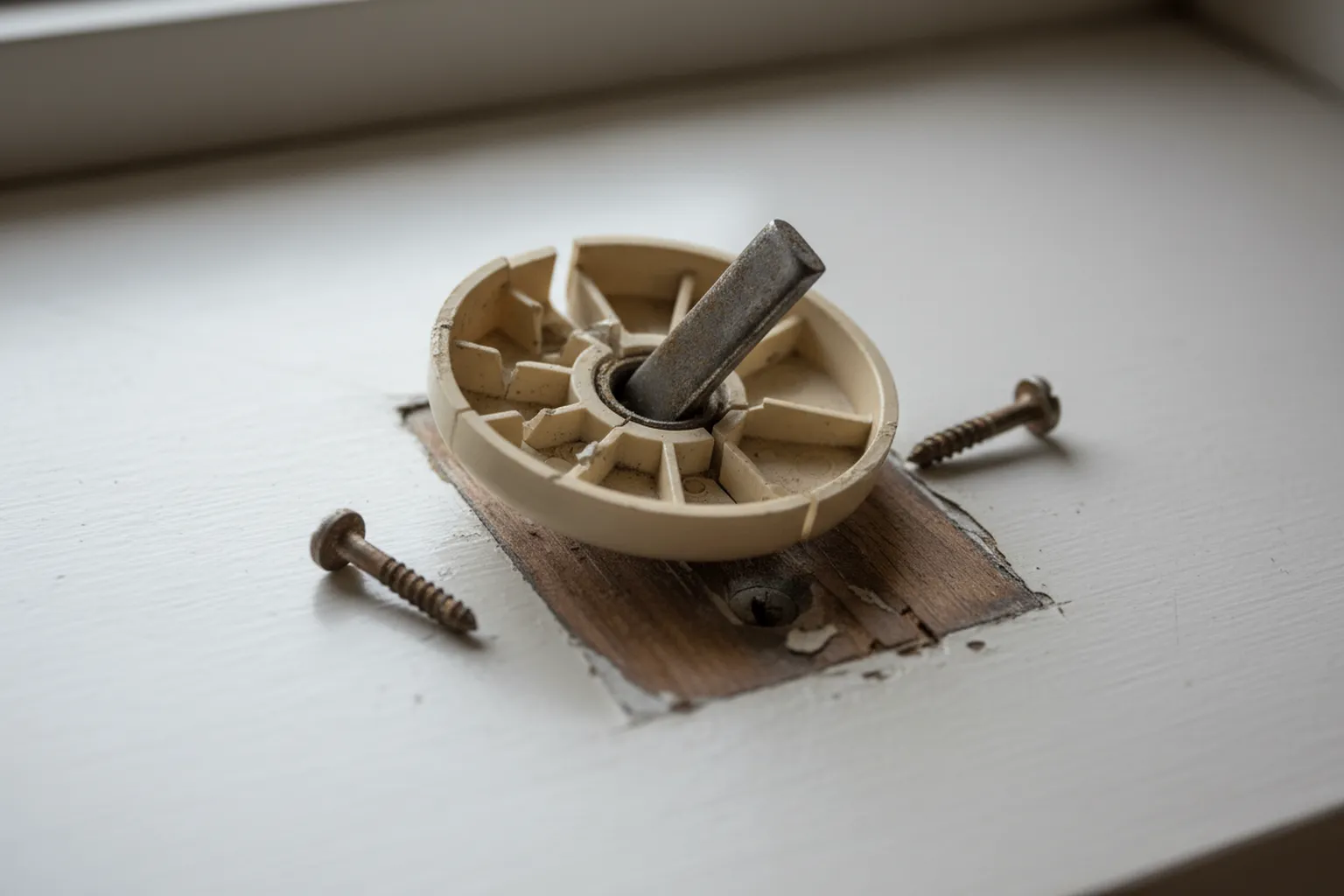
A handle looks straightforward, but DIY replacement mistakes happen a lot more often than people expect:
- Buying a handle with the wrong spindle. The standard spindle is 8 mm, but 7 mm and 9 mm also exist. If the spindle is smaller than the latch hole, the handle will wobble and fail fast.
- Ignoring the centre distance. The distance between the spindle centre and the keyhole centre (on backplate handles) has to match. If not, you will end up drilling fresh holes in the door.
- Over-tightening the through-bolts. The result — the rose bites into the timber, the handle starts binding, and within a week the bolt either snaps or strips the thread.
- Not replacing a worn latch. A new handle gets fitted onto an old latch with a dead spring. After a month the handle sags and stops returning.
- Reusing the old spindle. The old spindle has worn, rounded edges. The new handle fits loosely and turns on it.
- Fitting an interior handle on a front door. Interior hardware is not made for a heavy leaf and constant use — the spring gives out after a couple of months.
- Skipping strike-plate adjustment. The handle works, but the door does not stay shut — the latch tongue does not meet the plate on the frame.
What to prepare before the technician arrives
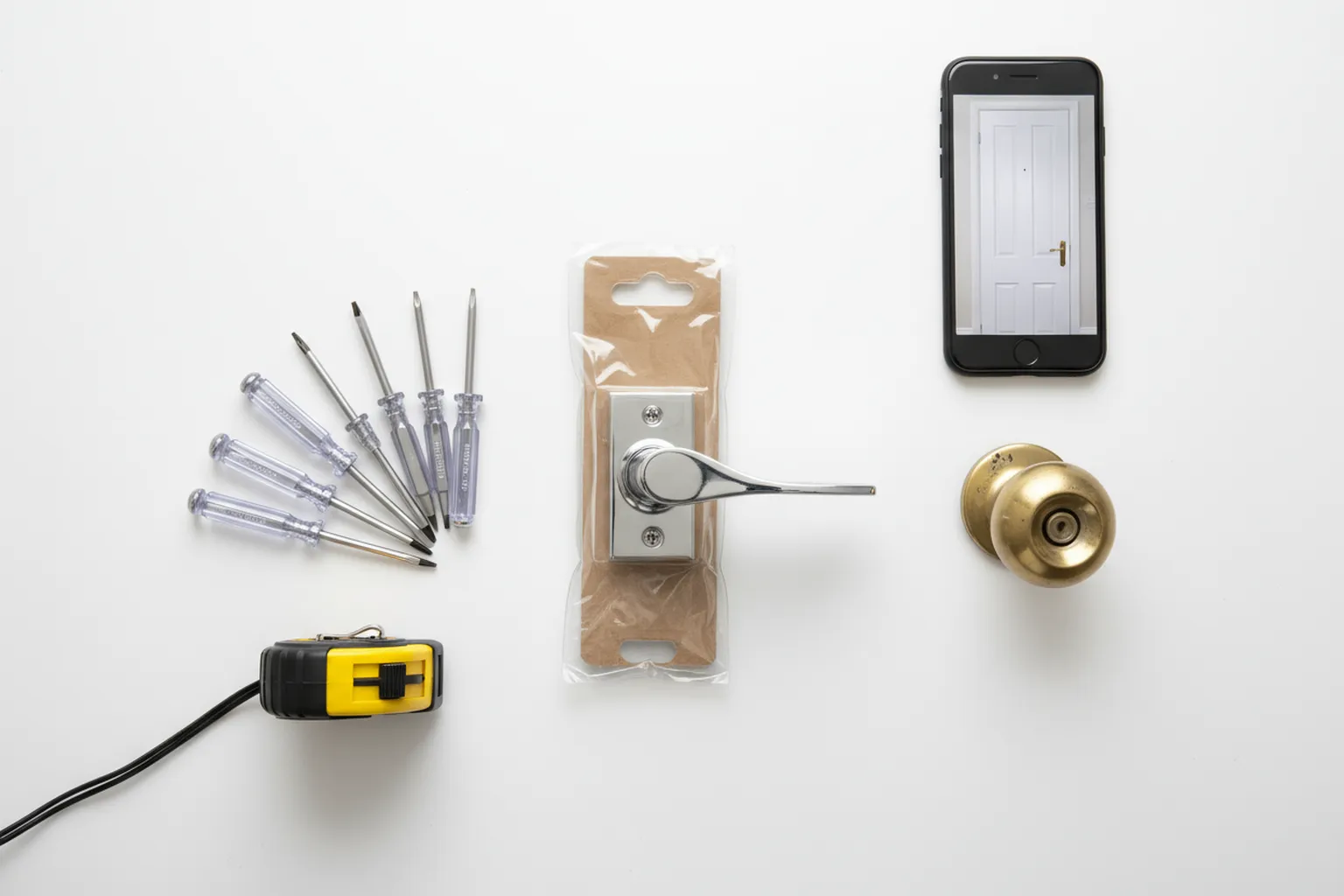
Replacing a handle is a quick job, but a bit of prep makes the visit faster:
- Take photos of the handle from both sides of the door — this helps the technician work out the fixing type beforehand.
- If you are buying the handle yourself, measure the door thickness (standard 35–45 mm) and the spindle cross-section (usually 8 × 8 mm).
- For backplate handles, measure the centre distance (from spindle centre to keyhole centre): 72 or 90 mm.
- Check whether the latch works without the handle — press the tongue with your finger. If it does not spring back, the latch also needs replacing.
- Decide whether you want the lock replaced as well or the door adjusted — it is cheaper in one visit.
- If the handle is on the front door, make sure you have the key and access from both sides.
- Keep the access details ready: entry code, floor, lift availability.
- Move objects away from the door — the technician needs clear access to the leaf.
- If several doors in the flat have loose handles, show them all so the technician can review the full job in one visit.
- Pick a finish: matt chrome, polished brass, black — the handle should suit the rest of the hardware.
A real case: handle replacement in a Mokotow flat
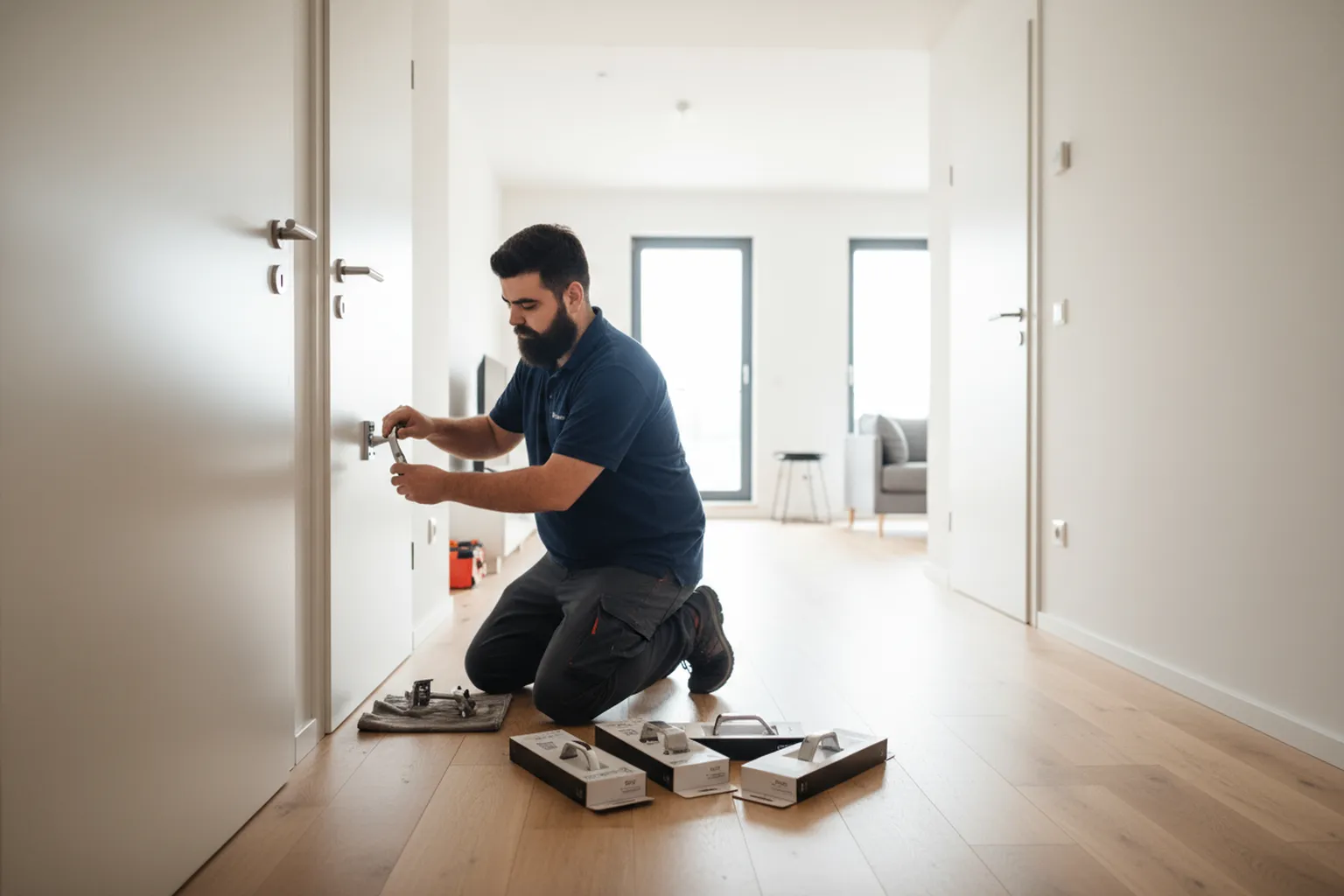
A client in Mokotow asked us to change handles on five interior doors. The flat had recently been renovated and fitted with new doors, but the developer had installed cheap hardware — plastic roses and thin 7 mm spindles. After six months, handles on two doors had broken and the others were already wobbling.
The issue turned out to have two parts: apart from the weak handles, the latches on three doors had dead springs and would not pull back the tongue. We replaced all five sets with metal handles on 8 mm spindles and installed three new latches. On one door we had to widen the rose hole — the old plastic rose had a smaller diameter. The whole job on all five doors took a little over an hour. The lesson is simple: saving on hardware during a renovation is false economy — replacing it later costs more than putting in decent handles from the start.
Frequently asked questions
Can I fit a handle from a different manufacturer?
Yes, as long as the dimensions match: spindle cross-section, centre distance (for backplate handles), and rose diameter. Most European manufacturers use standard sizes.
Do I have to replace the latch at the same time?
Only if the spring in the latch has weakened or the mechanism is sticking. The technician will inspect it and advise on site.
Does one handle fit every door?
No. Entrance doors need heavy-duty hardware with a stronger return spring. An interior handle on a front door will not last long.
How long does replacement take?
One handle — 15–30 minutes. If the latch also needs changing or the hole needs repairing, allow up to 45 minutes.
Do I need to buy the handle in advance?
Not always. Send a photo of the old handle and the measurements — the technician will choose a suitable match. Or buy it yourself once you have checked the dimensions.
What if the hole in the door is damaged?
The technician will repair the hole and refit the handle. This is a normal situation and adds 10–15 minutes to the job.
Who does the work and what guarantees we offer
Door hardware is handled by tradespeople who deal every day with handles, locks, and hinges of all kinds — from budget to premium. We come with a full set of tools: screwdrivers, drill bits, chisels, epoxy filler for repairing holes. We cover all of Warsaw and the nearby suburbs. After the replacement, the handle will operate smoothly without play, and the latch will keep the door shut properly. If anything goes wrong because of our work, we put it right free of charge. Call or message us — we usually reply within an hour.