
How much does seal replacement cost and what affects the price
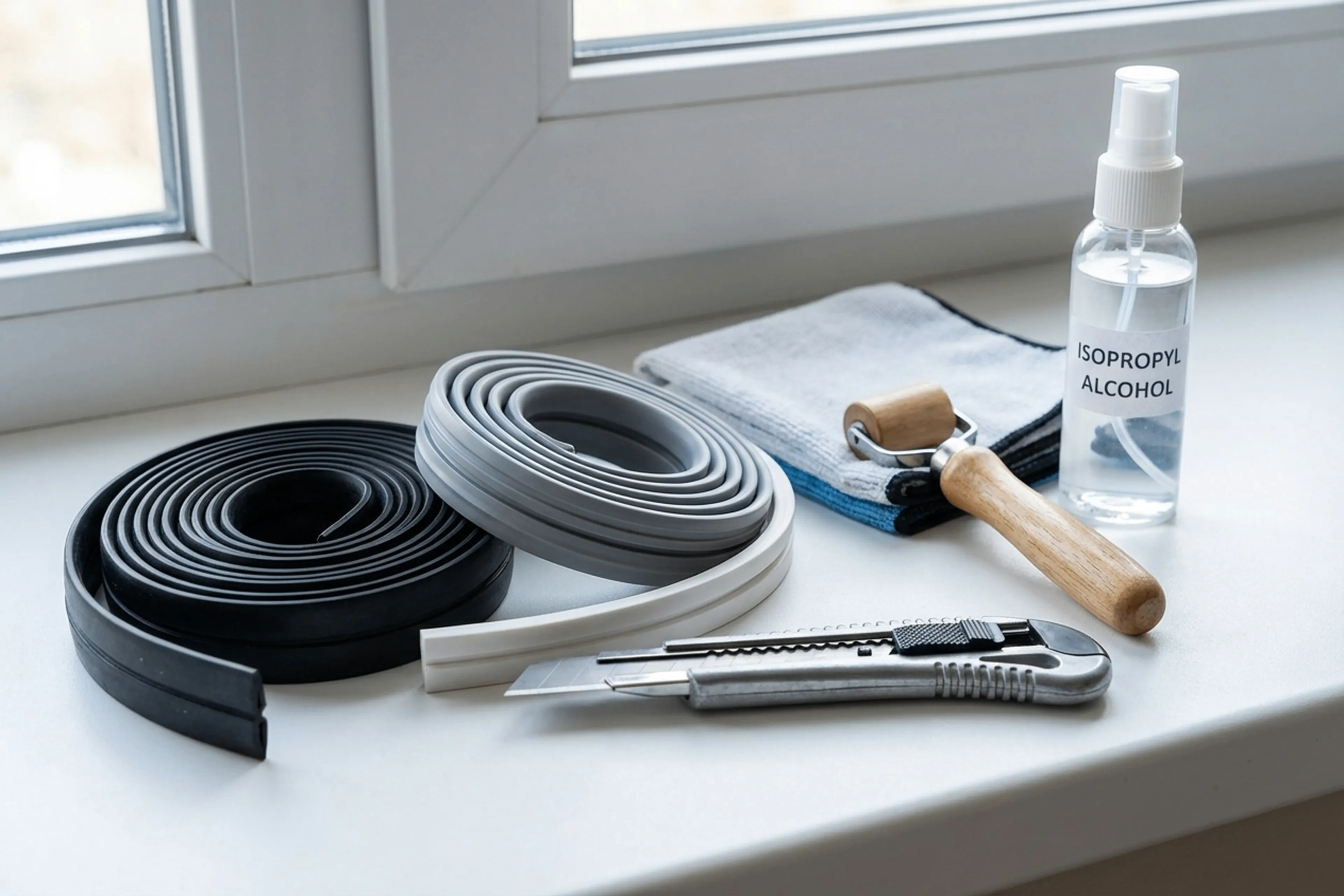
The cost depends on how much seal is needed (measured in linear metres), the profile type and the number of sashes. A standard window needs around 3–4 linear metres. A balcony door needs more. If the seal is non-standard, for example for older German or timber windows, the price is a bit higher because the material costs more.
The labour price covers: taking out the old seal, cleaning the groove and installing the new one. The seal itself is billed separately, but it is a low-cost consumable. Fasteners are included. Waste removal and material delivery are charged extra. Current prices below.
| Service | Price |
|---|---|
| Window sealing | 30–45 zł/mb |
| Window hardware adjustment | 80–190 zł/szt |
| Window repair | 150–400 zł |
Indicative prices. Ranges for a typical scope. Fixings included, materials separate. Minimum order 300 zł.
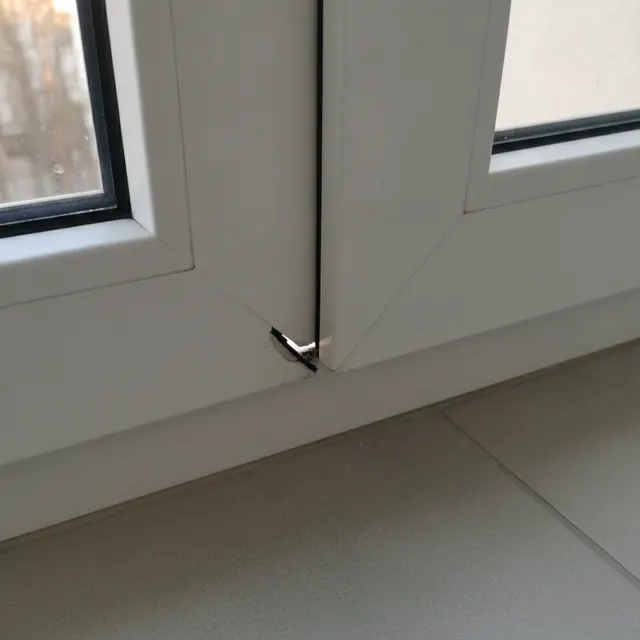
Take a close-up photo of the window and the seal — the technician will identify the profile and give you a price before coming out.
Price ranges and offers from tradespeople: window seal replacement in Warsaw.
How seal replacement works: step by step
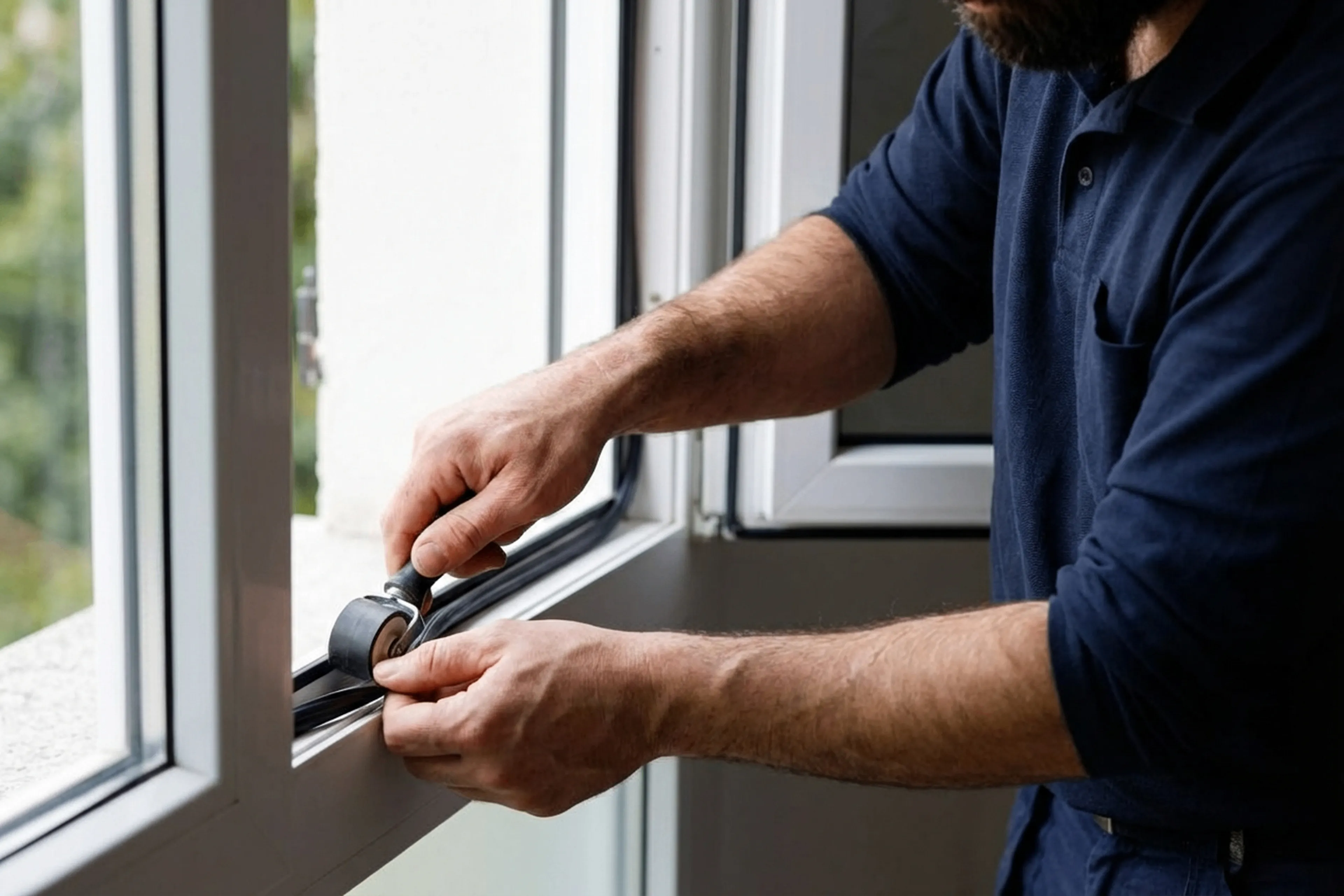
Sealing is more than just pressing rubber into a groove. The correct profile, a clean channel and careful fitting without stretching or joins are what really matter:
- Inspection and diagnostics. The technician checks the condition of the seal around the entire sash and frame. He identifies the profile type: each manufacturer (Rehau, KBE, Veka, Salamander) has its own groove shape and seal cross-section.
- Removing the old seal. The worn rubber is gently pulled out of the groove. If it has been glued in, they use a scraper without harming the plastic.
- Cleaning the groove. The channel is cleaned of dirt, dust and adhesive remains. This part matters: if the groove is dirty, the new seal will not sit properly and will start coming out.
- Measuring and selecting the profile. Tradespeople measure the exact perimeter length. Tradespeople choose the seal by profile: EPDM (synthetic rubber — the longest-lasting, 10–15 years), silicone (best for timber windows), TPE (thermoplastic — budget option, 5–8 years).
- Cutting and fitting. The seal is fitted in one continuous piece with no joins — that is the key detail. The only joint is at the top corner of the sash. The rubber must not be stretched or left sagging.
- Checking the pressure. Tradespeople close the sash and test the fit with a sheet of paper around the full perimeter. The paper should take noticeable force to pull out. If it slips anywhere, they make an adjustment.
- Lubrication and advice. Tradespeople apply silicone lubricant to the new seal to help it last longer. Tradespeople explain how to look after it: wipe and lubricate it every six months.
Common mistakes when sealing windows
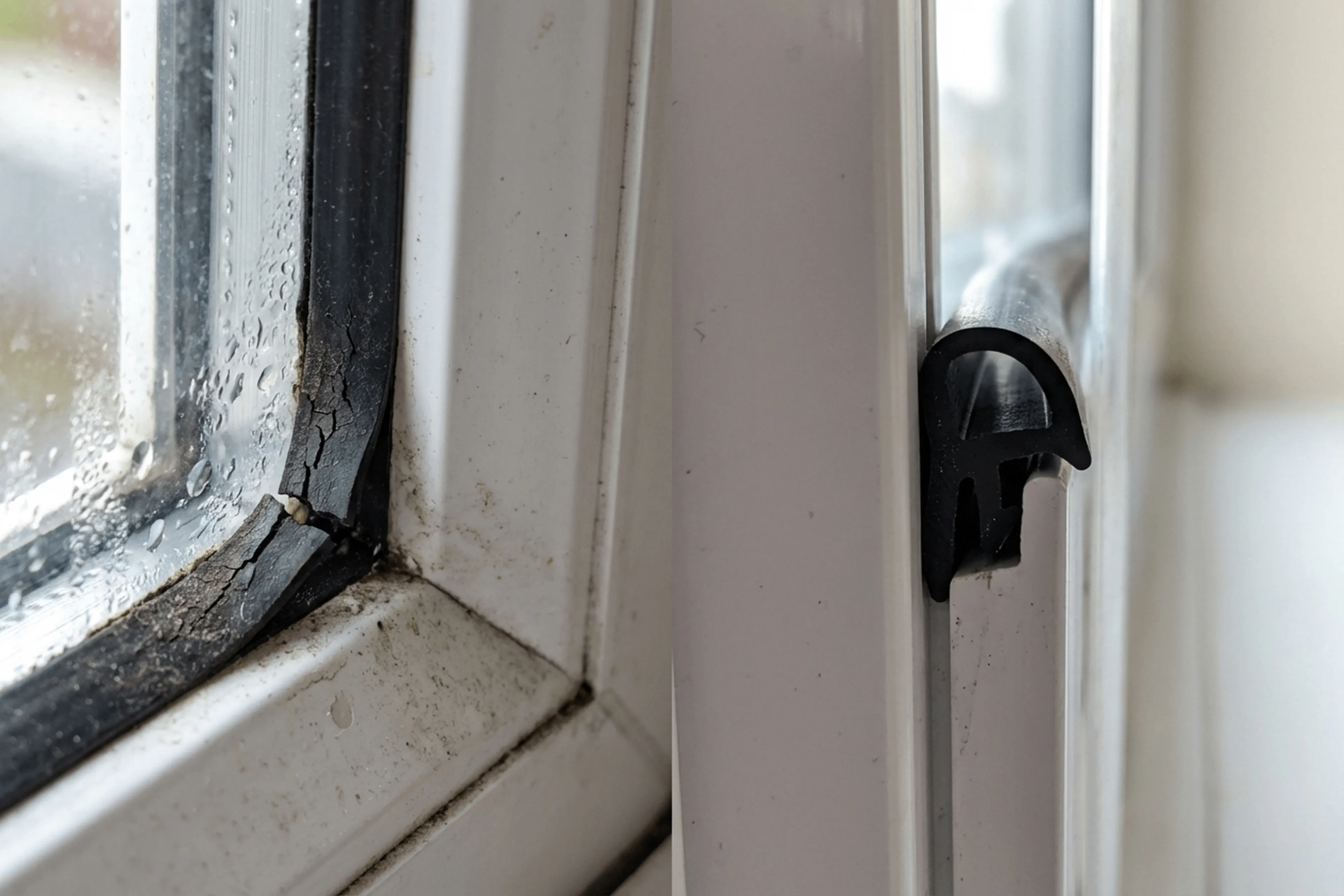
Replacing a seal looks simple, but people get it wrong all the time, and then everything has to be done again:
- Wrong seal profile. A “universal” seal from the market that does not fit the groove. It barely stays in place and falls out within a month. Every system (Rehau, Veka, KBE) needs its own profile.
- Cheap foam seal tape. Self-adhesive foam from a DIY store is a short-term patch for a couple of months. It compresses, peels away and does not give proper clamping pressure.
- Silicone sealant instead of a proper seal. Pumping silicone into the groove or along the sash-to-frame joint does not solve the problem: the sash stops opening properly and the silicone starts peeling off in strips.
- Dirty groove. The new seal is installed over dust and old residue. After a few weeks it begins to pop out and does not sit flat.
- Multiple joins around the perimeter. Seal installed in sections with several joints. Every joint is a possible draught point. The right way is one continuous piece for the whole perimeter.
- Stretching during fitting. The seal is pulled to make it reach. A week later it shrinks back and gaps show up in the corners.
Things like this are easiest to catch during a routine check. The spring and autumn list is in our seasonal apartment inspection checklist.
What to prepare before the technician arrives
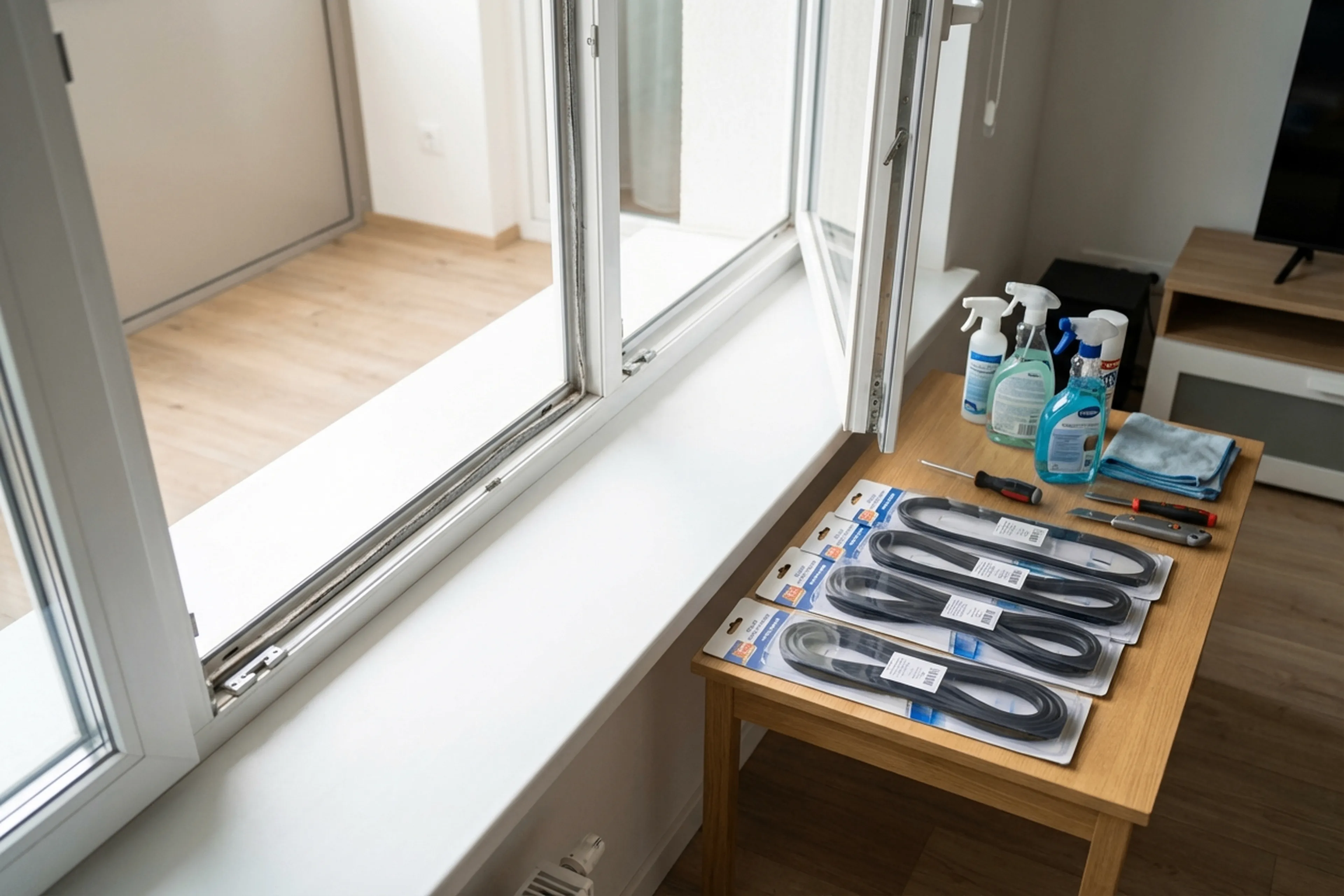
The job is clean and fast, but a few simple things will make it go quicker:
- Clear the windowsill of anything that stops the sash from opening fully: plants, lamps, decorations.
- Pull back curtains and blinds so the technician has free access.
- If there is a fly screen on the window, take it off beforehand.
- Figure out which windows are draughty. A simple test: close the window, move your palm along the sash perimeter, where you feel air movement, the seal has failed.
- Check every window in the flat — seals often wear out on all of them around the same time. Replacing them in one visit is cheaper.
- If you know the window brand (Rehau, Veka, KBE, Salamander) tell the technician in advance so he brings the correct profile.
- Have access details ready: entry code and parking information.
- Pets are better kept in another room: the technician will be opening windows.
- If the balcony door seal also needs replacing, say so in advance, the process is the same.
- Think about whether the hardware should be adjusted at the same time — after fitting a new seal, it often makes sense to fine-tune the clamping pressure.
A real case: window sealing in a Mokotow flat
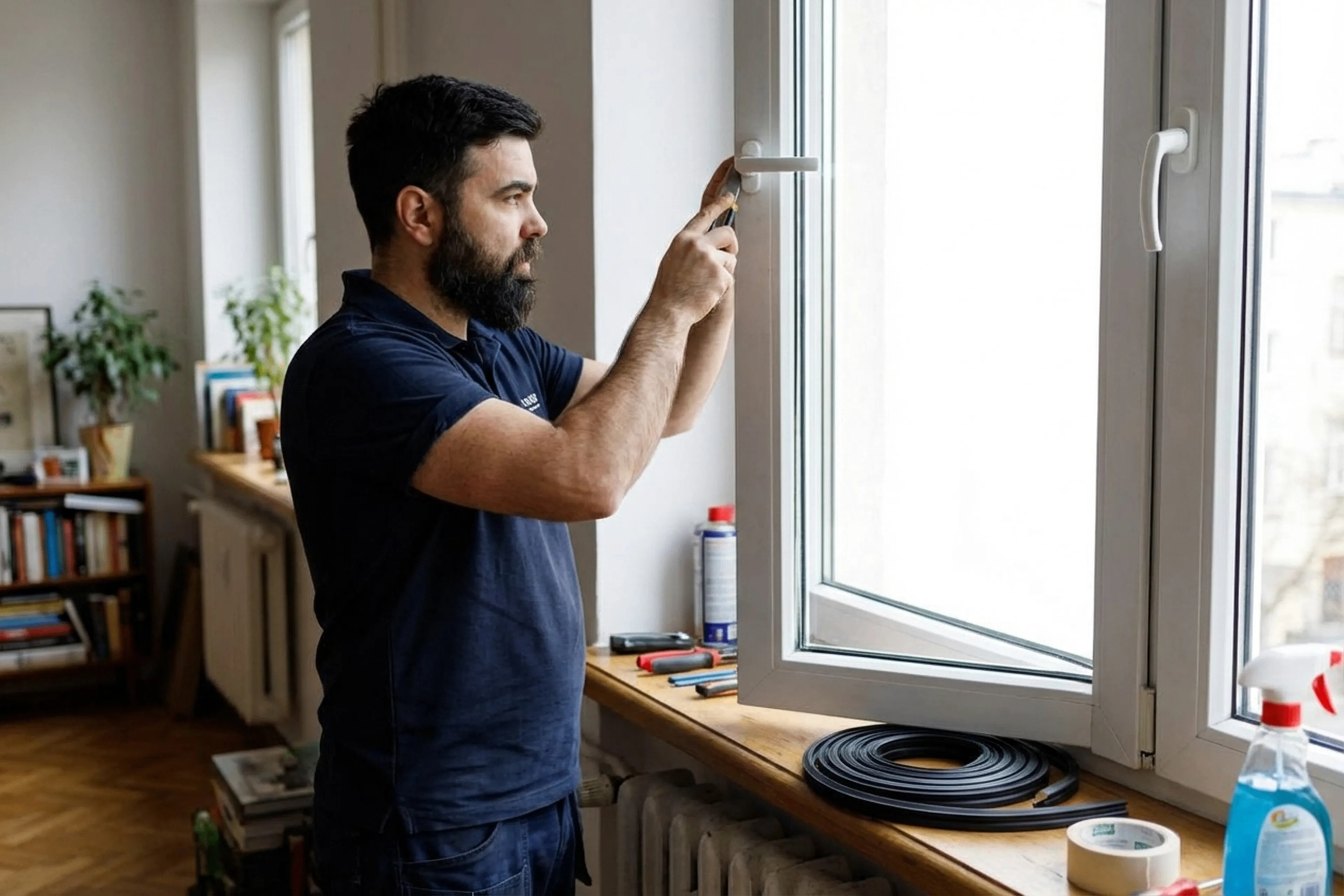
The owner of a flat in Mokotow posted a request with one complaint: the bedroom was cold in winter even though the heating was working properly. Every morning there was condensation on the glass and the windowsill was wet. The windows had been installed seven years earlier and had never had any servicing.
During inspection they found that the seals on three sashes had flattened and lost their spring, you could push a finger into the gap between the sash and the frame. On one window the seal had come completely out of the groove and was hanging in a loop. The profile was Rehau Blitz, which needs a seal with a specific cross-section. Tradespeople replaced the seals on all three windows: removed the old ones, cleaned the grooves thoroughly and fitted new EPDM seals in one continuous piece per sash. While they were there, they also tightened the hinges, two sashes had dropped slightly. After replacement they checked the pressure with paper — the sheet held firmly around the whole perimeter. The work took about 40 minutes. The client sent a message three days later: the condensation was gone, the bedroom felt clearly warmer and the street noise had dropped a lot.
Knauf reveals and Siegenia hardware pressure
Knauf is associated with plasterboard, plasters and fillers. They won’t seal a window: their place is in the reveal, which is finished only after the gap between the frame and the wall has been sealed. A crack in the reveal along the frame usually means the foam underneath has crumbled or was never covered, so simply filling it will come back after the first heating season. A flexible joint is needed between the reveal and the frame, or rigid plaster cracks exactly there.
Some draughts come from under the sash, though. Siegenia hardware has cams for adjusting the pressure, tighter for winter and looser for summer, and a dropped sash is lifted at the bottom hinge. A damp hand moved along the frame quickly shows where the air is coming in.
Frequently asked questions
How do I know the seal needs replacing?
Main signs: draughts when the window is closed, condensation on the glass, street noise louder than before. Visually: the rubber is cracked, flattened, deformed or has come out of the groove.
Which seal is best: EPDM, silicone or TPE?
EPDM (synthetic rubber) is the best option for uPVC windows: it lasts 10–15 years and copes well with temperature changes. Silicone works well for timber frames. TPE is the budget option but does not last as long (5–8 years).
How long does the replacement take?
One sash — 15–20 minutes. A standard flat with 4–5 windows: an hour and a half to two hours, including groove cleaning and testing.
Can I replace the seal myself?
Technically yes, if you choose the right profile and buy a good-quality seal. In real life the main problem is identifying the correct cross-section. There is no universal seal, and the wrong profile simply will not stay in place.
How often should seals be replaced?
EPDM: every 10–15 years. TPE — every 5–8 years. Wiping and lubricating with silicone every six months helps them last longer. Keeping windows permanently in winter mode wears the seal out faster.
Will a new seal reduce noise?
Yes, quite noticeably. A worn seal lets through not only air but sound as well. After replacement, street noise drops: especially in flats on busy roads.
Does the window need adjusting after a new seal?
Yes, recommended. A new seal is thicker than the old flattened one, so the clamping pressure may become too high. The technician will adjust the eccentric cams so the sash closes smoothly and the pressure is even.
Is it worth sealing old wooden windows?
If the frames are still in decent condition, yes: sealing cuts draughts and heating bills noticeably. If the wood is rotting, replacing the window makes more sense.
Can the balcony door be adjusted at the same time?
Yes. Balcony doors use the same tilt-and-turn hardware as windows, so they are usually set up together with them.
When is the best time to seal windows?
Before winter, ideally between September and November. Spring works too, and it is a good moment to check how airtight the windows really are.
Who does the work
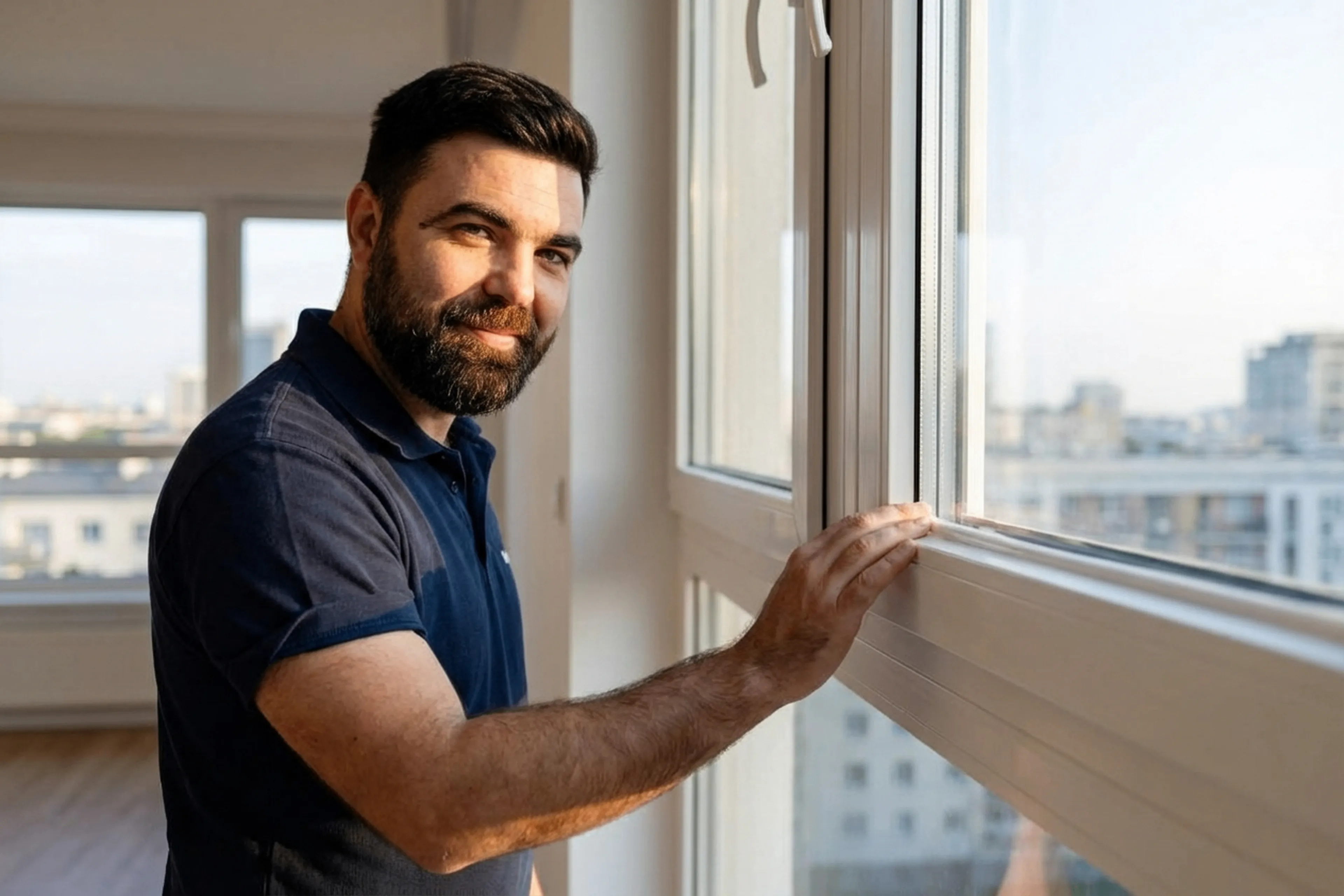
Window sealing is done by technicians who work with window systems every day, Rehau, Veka, KBE, Salamander, Schuco. Tradespeople know which seal profile fits each system and always carry several sizes. Tradespeople arrive with spare material, groove-cleaning tools and silicone lubricant. Tradespeople cover all of Warsaw — from Praga Poludnie to Wlochy. You can expect a tight seal and no draughts. The tradesperson answers for their own work: if the fault is theirs, they put it right.
Order in the app
Describe the job, add photos and the address. Tradespeople send their own prices and dates, and you pick one of the offers.
Open the app