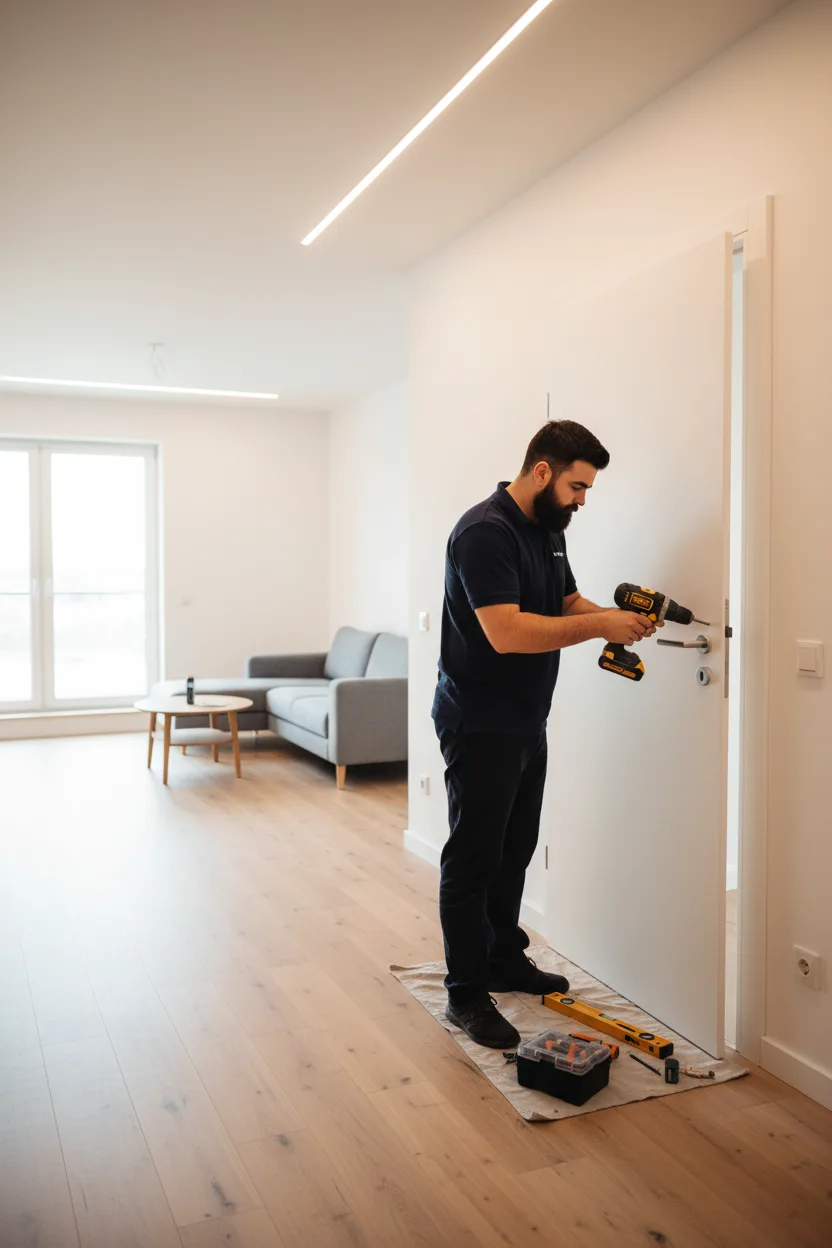
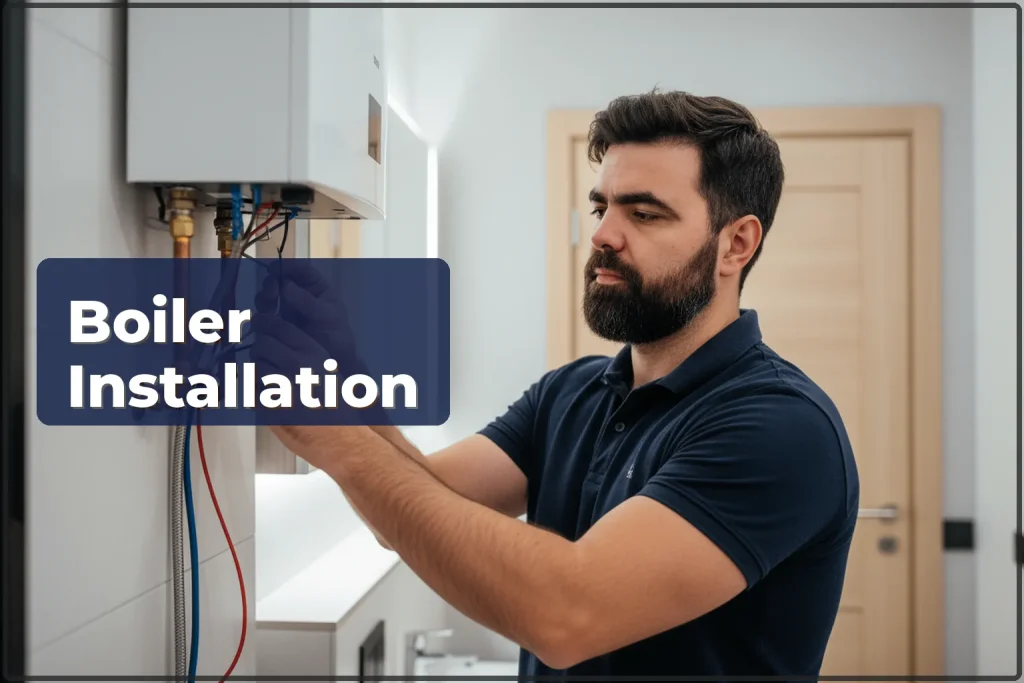
Has your water heater packed in, or did you move into a flat where there’s no hot water at all? Hooking up an electric boiler is not just a matter of hanging a tank on the wall. It needs solid fixing (an 80-litre boiler filled with water weighs more than 90 kg), a cold-water feed, a hot-water outlet, a pressure relief valve, and a separate electrical circuit with an RCD. We cover the whole of Warsaw — from Mokotow to Bielany — and come with tools and a basic selection of fittings.
How much does it cost and what affects the price
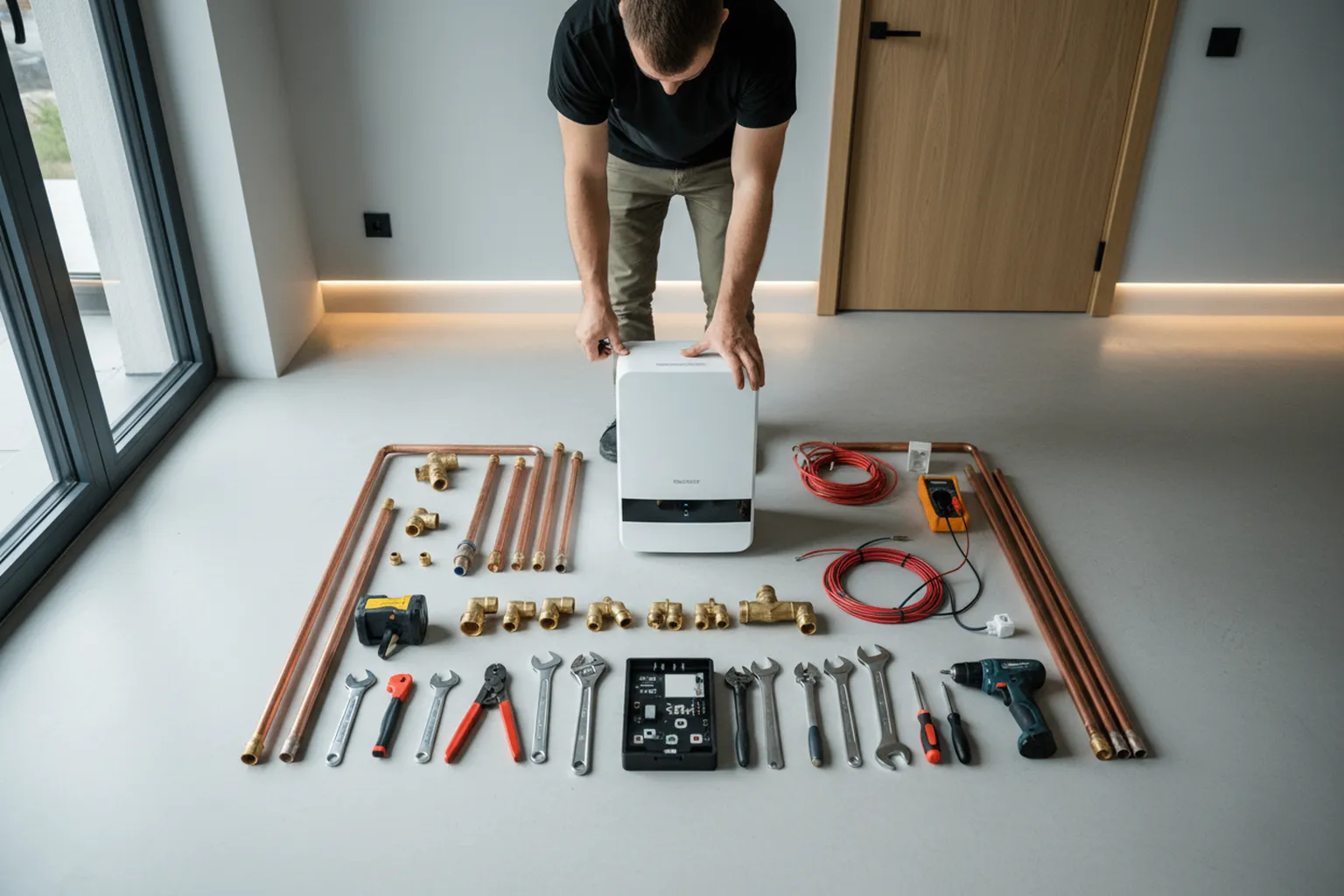
The price of boiler work depends on the kind of job: connecting a tank that is already on the wall, a complete installation from zero, or swapping an old water heater for a new one. The final cost is affected by tank size (30, 50, 80, or 100 litres — the heavier the unit, the more demanding the mounting), the wall type (concrete, brick, or plasterboard on a frame), the condition of the existing pipework, and whether a separate electrical line has to be installed. Basic fixings are included in the service price, while consumables (fittings, flexible connectors, cable) are billed separately if required. Current prices are in the table below.
| Service | min | max |
|---|---|---|
|
Boiler connection
Book this service → | 300 zł | 600 zł |
|
Boiler installation
Book this service → | 400 zł | 800 zł |
|
Boiler replacement
Book this service → | 500 zł | 1000 zł |
How the installation goes
- You send a photo of the installation area and the boiler model — the technician checks the scope of work and gives you an estimated price.
- We set a time — often a same-day or next-day visit.
- At the flat, the technician inspects the wall: concrete or brick means expansion anchors; plasterboard means special load-distributing fixings or mounting through the stud into the structural wall.
- We mark the fixing points to match the boiler bracket. Then we drill, install the anchors, and hang the tank.
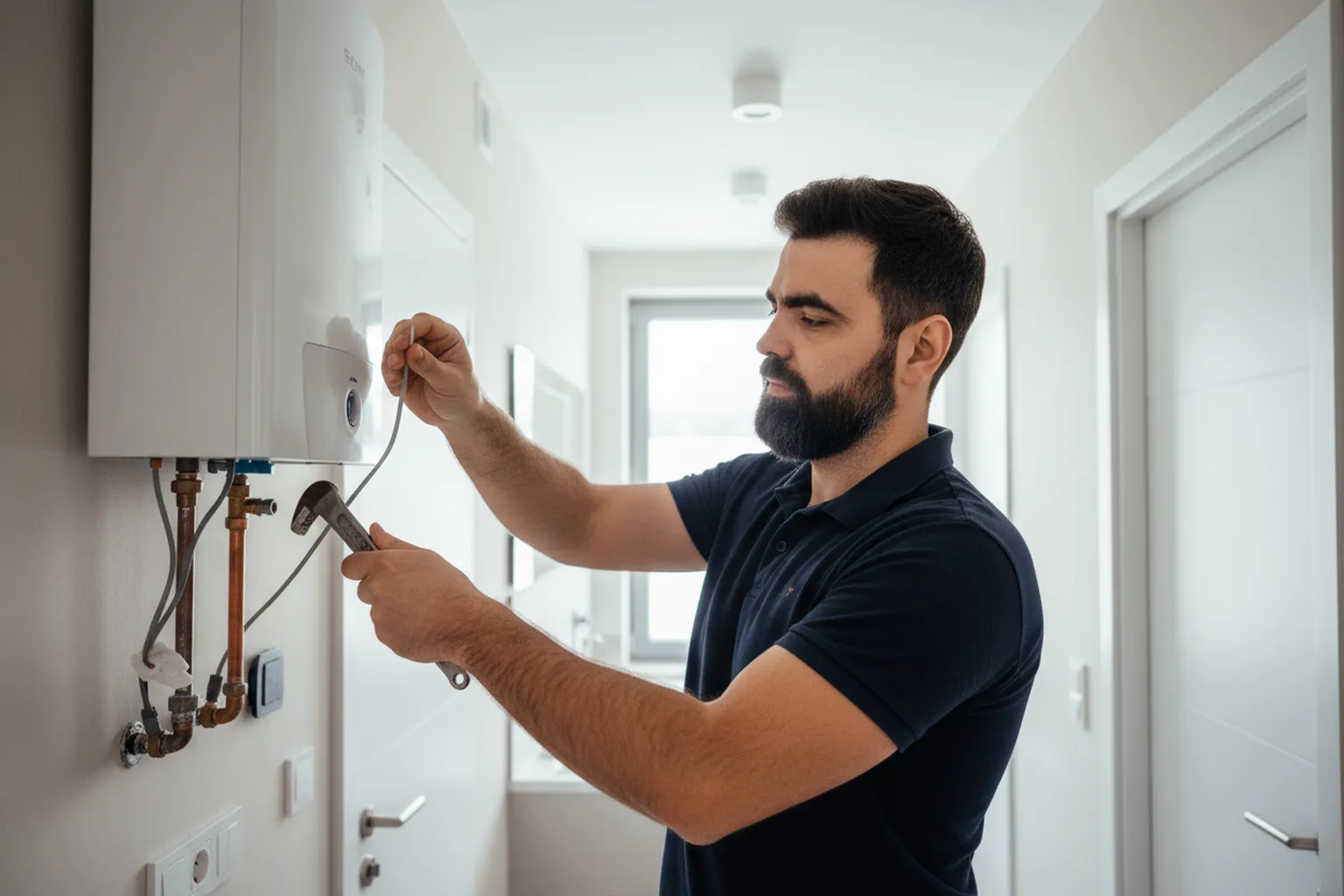
- We connect the cold-water inlet (blue marking). We install a pressure relief valve (mandatory — without it, the tank can split from pressure). Then we connect the hot-water outlet.
- We wire the electrics. The boiler needs its own circuit breaker and an RCD rated at 30 mA. We also check the earthing — without that, the tank casing can give electric shocks.
- We fill the tank and inspect every connection for leaks. We open the hot tap and wait until the flow is steady and free of air. Then we switch the heating on and check that the thermostat works properly.
Common mistakes when installing a boiler
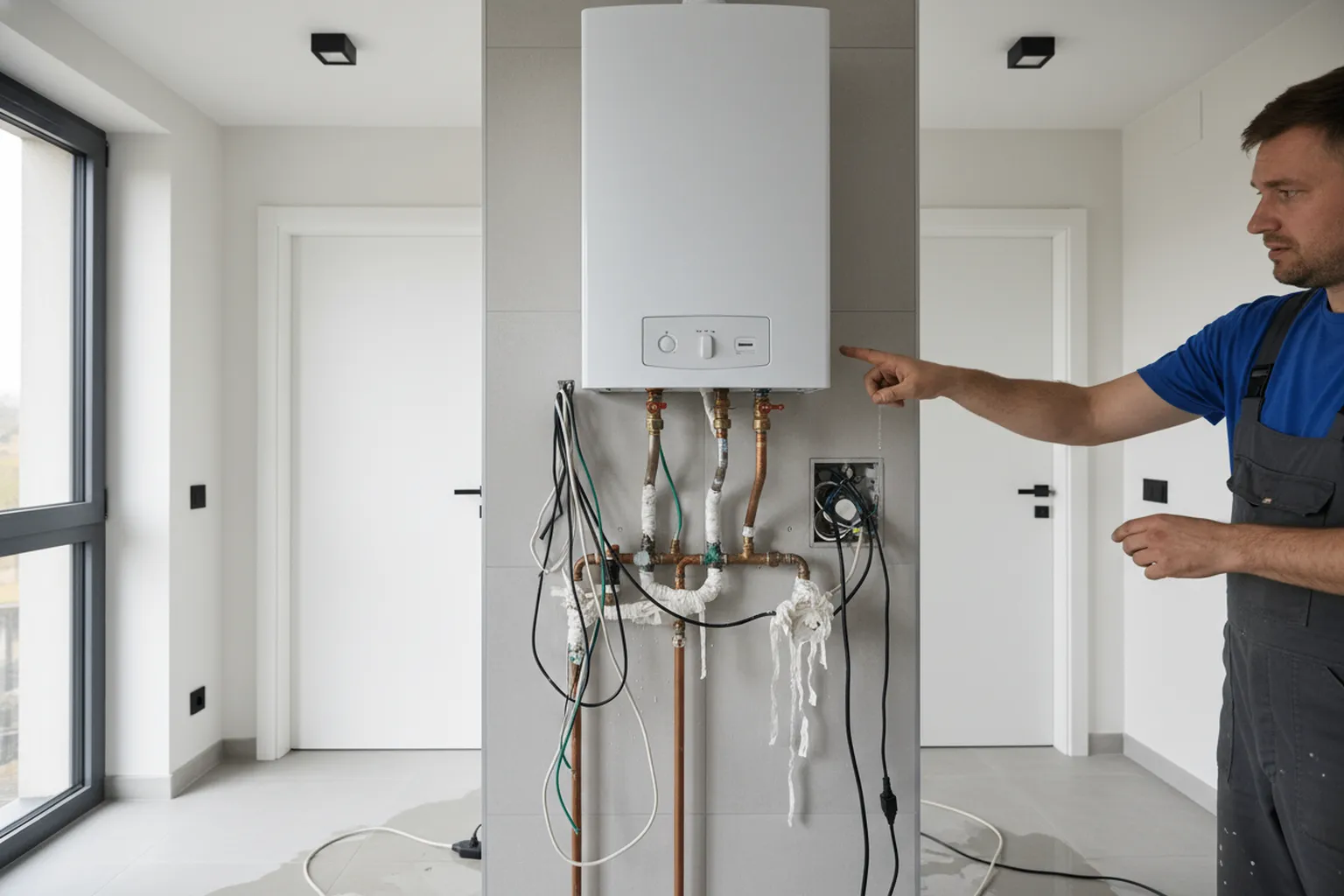
- Mounting a heavy boiler on plasterboard without reinforcement — with time the tank starts pulling away from the wall and takes the cladding with it.
- Skipping the pressure relief valve — during overheating the pressure inside the tank rises and it may deform or burst.
- Connecting the boiler to a shared socket through an extension lead — the wiring overheats and the fire risk goes up.
- Leaving out the RCD — if there is a fault to the casing, water from the tap can cause an electric shock.
- No drain from the relief valve — water drips onto the floor instead of going into a drain or container.
- Reversing the inlet and outlet — the boiler runs incorrectly and hot water does not get to the taps.
- Not checking system pressure — if it is above 6 bar, a reducer is required, otherwise the valve will drip all the time.
- Installing the boiler inside a closed niche with no ventilation — the casing overheats and the unit wears out faster.
What to prepare before the technician arrives
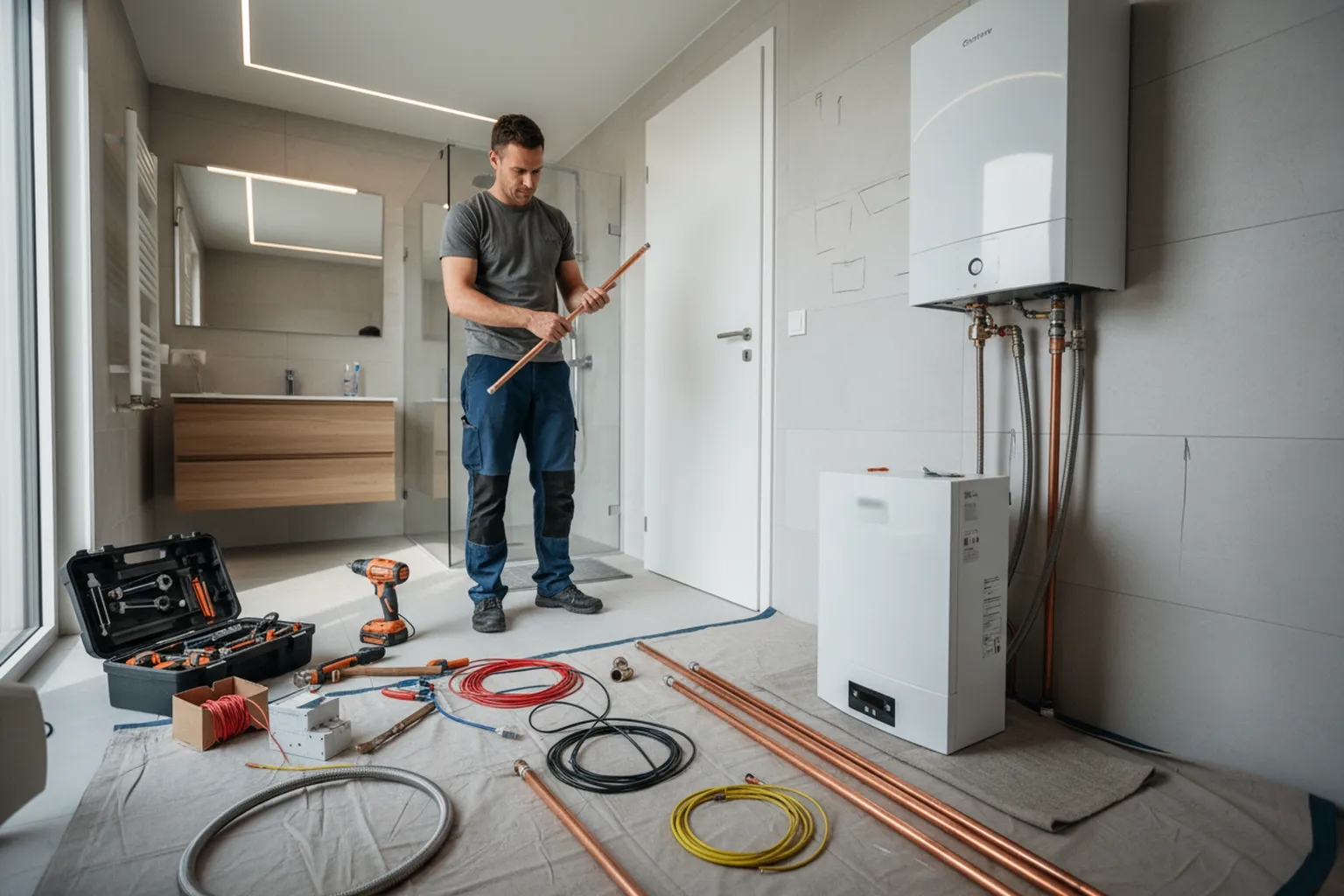
- Choose the location: bathroom, kitchen, utility closet, niche — the technician needs this information in advance.
- Check what the wall is made of at the mounting point: concrete, solid brick, hollow brick, or plasterboard.
- If the wall is plasterboard — tell the technician so he brings reinforced fixings or finds a load-bearing stud.
- See whether there is a cold-water supply near the installation point.
- Make sure there is a hot-water outlet point (or pipework leading to the taps).
- Check the consumer unit: is there a spare 16A breaker and room for an RCD?
- If the boiler is new — do not unpack it completely, but check what is inside (mounting bracket, pressure relief valve).
- If it is a replacement — turn off the water and disconnect the old boiler from the mains before the technician arrives.
- Keep a basin and cloths ready — there is always some water left in the old tank during removal.
- Provide access details: intercom code, parking information.
A real case from Warsaw
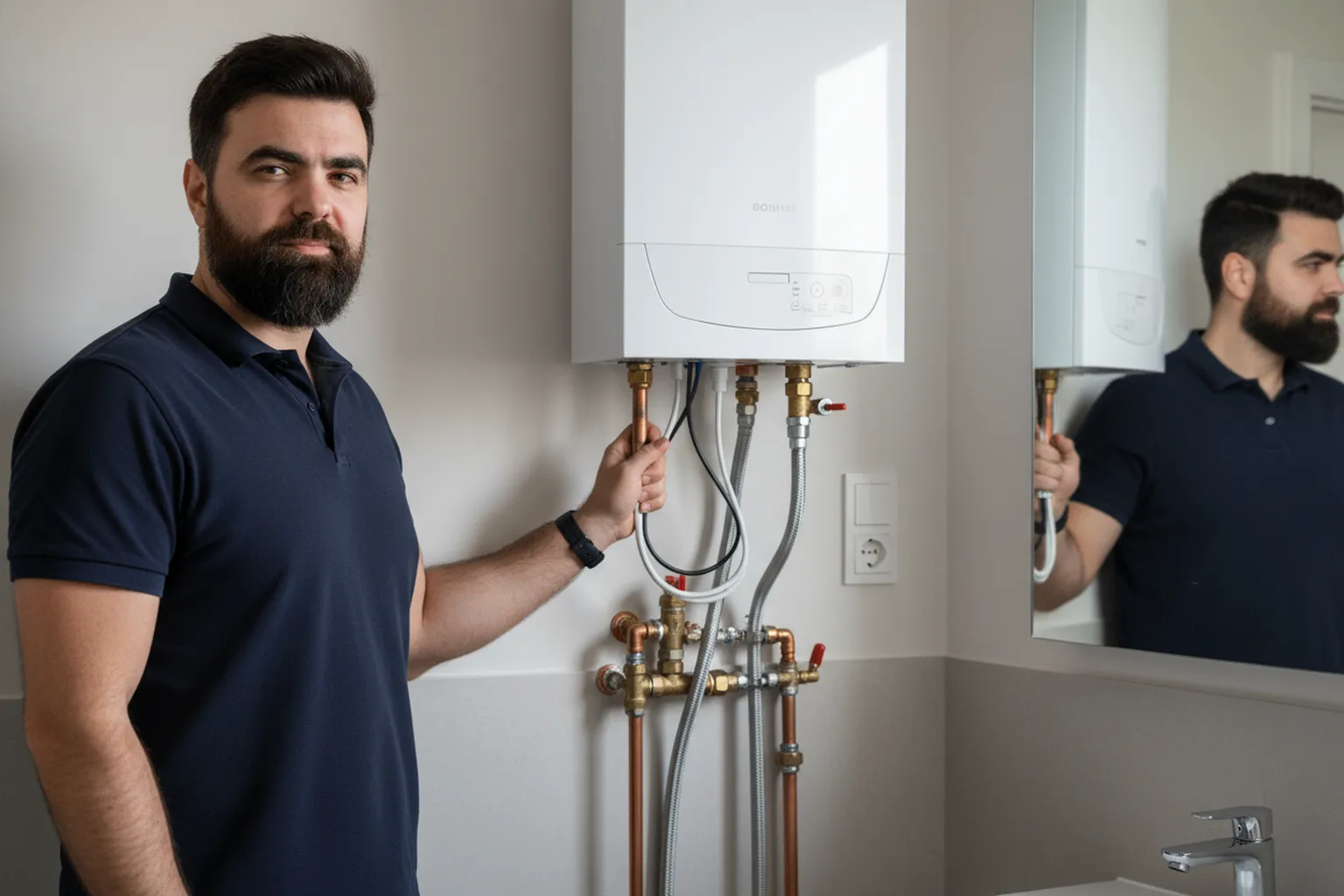
A client in the Wola district bought an Atlantic Steatite 80-litre boiler for the bathroom. The old 50-litre unit was no longer enough — there simply wasn’t enough hot water for two people. The bathroom wall was hollow brick, so standard expansion anchors would not be reliable — the technician used chemical anchors for a firm fixing. We drained and took down the old boiler. The new tank was mounted and connected to the existing water points with flexible connectors. The pressure relief valve was fitted with a transparent drain tube running into the waste pipe, so any dripping can be seen right away. The electrics also needed updating: the old boiler had been plugged into a normal socket with no RCD. The technician ran a dedicated line from the consumer unit with a 16A/30mA RCBO. After filling the tank, we checked every joint — all dry. Within 40 minutes the water reached 60 degrees. The whole job took about three hours (compatible with Bosch, Vaillant, Junkers and similar).
Frequently asked questions
Can I install a boiler myself?
You can physically hang it and connect the water if you know what you are doing. But the electrical side (dedicated line, RCD, earthing) should be handled by a professional. A boiler is a device that works with water and electricity at the same time — mistakes here can be life-threatening.
What size boiler should I choose?
30 litres — for a kitchen or one person. 50 litres — for one or two people (shower). 80 litres — for a family of two or three. 100 litres — if you use a bathtub or the family is larger. The technician can help you choose during the site visit.
Is an RCD mandatory for a boiler?
Yes. This is not just advice but a safety requirement. An RCD (or RCBO) cuts the power if current leaks to the casing. Without it, there is a real danger of electric shock through the water.
What is a pressure relief valve and why is it needed?
It is a valve on the cold-water inlet that releases extra pressure during heating. Without it, the tank can deform or split. The valve usually comes with the boiler — don’t throw it out.
Can a boiler be mounted on plasterboard?
Yes, but there are conditions. It has to be fixed through the plasterboard into the structural wall, or mounted on a dedicated frame. An 80-litre boiler full of water weighs close to 100 kg — ordinary toggle bolts will not hold it.
How long does a boiler replacement take?
If the plumbing and electrics are ready and it is a direct replacement — around two hours. If extra electrical or plumbing work is needed — up to four hours.
What is included in the price?
Labour, fixings (anchors, plugs), and travel within Warsaw. Consumables (flexible connectors, fittings, cable, RCD) are charged separately if needed.
Do you take the old boiler away?
Removing it is included in the replacement service. Carrying the old boiler out of the flat is charged extra. Disposal must be arranged separately or agreed in advance.
Who does the work
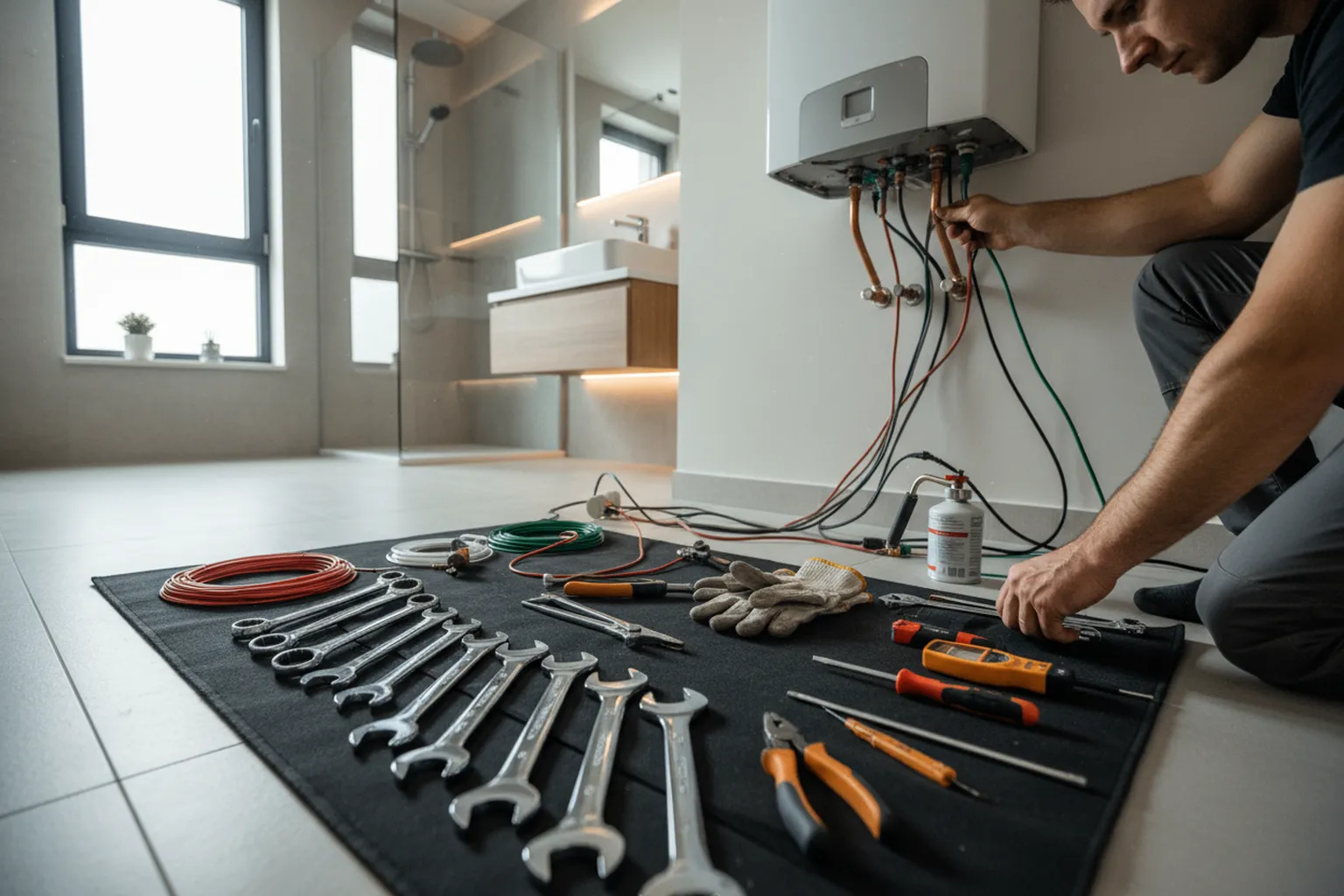
Boiler installation and replacement is done by technicians who know flats of all kinds — from older buildings in Praga to new developments in Wilanow. We come with tools, a hammer drill, and a basic set of fittings. If extra materials are needed, we talk it through beforehand. To book, call or message us — we get back to you within an hour.