How much does it cost and what affects the price
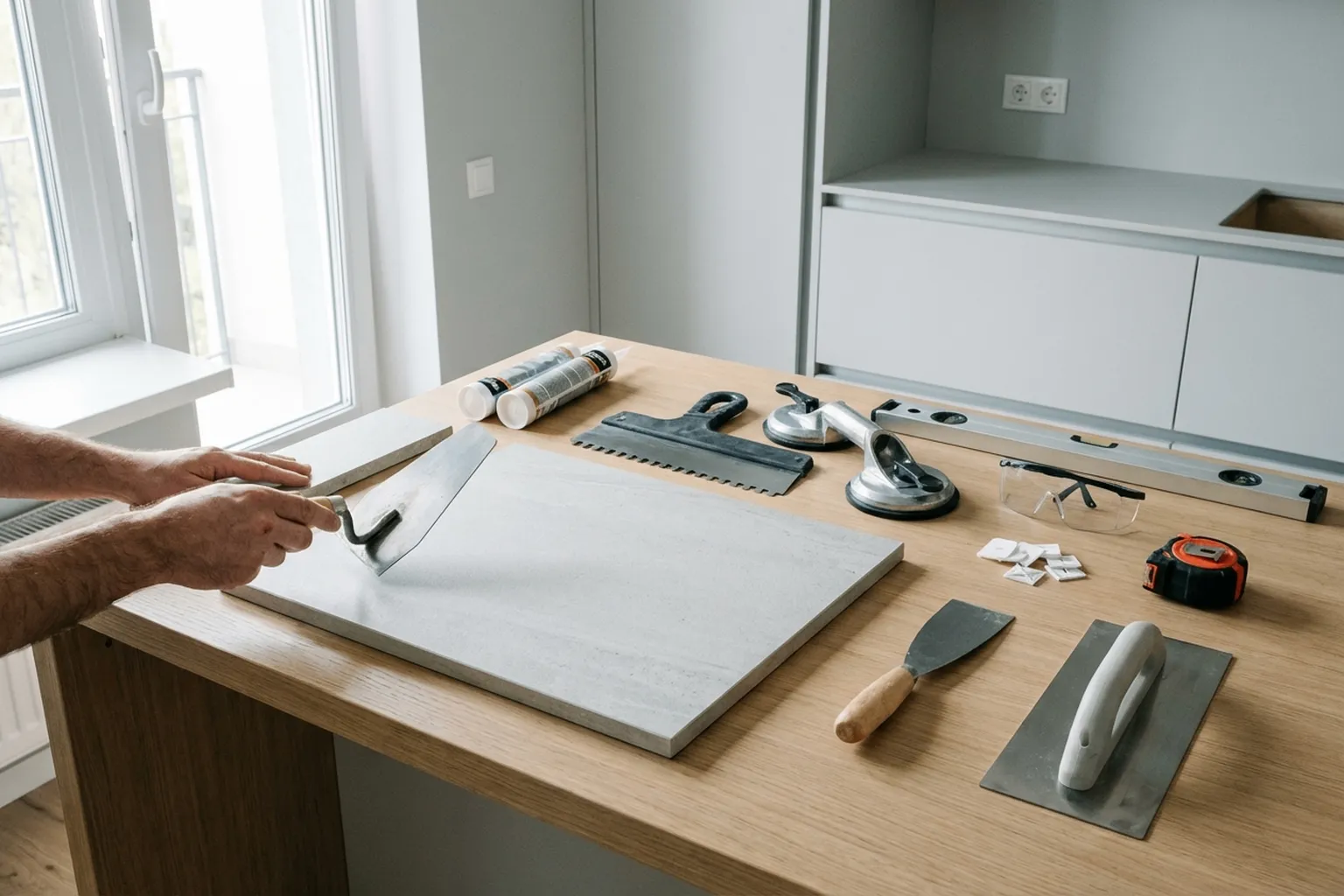
The price is based on the countertop size, slab type (6 mm or 12 mm porcelain, sintered stone), number of cut-outs (sink, hob, sockets) and the way the edges are finished. A plain straight countertop costs less. An L-shaped one, a top with an island, or tricky cut-outs: costs more. The substrate (plywood/chipboard) is listed separately. Materials are billed separately. You can see current prices in the table below.
| Service | Price |
|---|---|
| Large format: countertops / cladding | 350–700 zł/m² |
| Sintered stone / slab / 6–12 mm | 250–650 zł/m² |
| Laying large-format tiles | 180–400 zł/m² |
| Large format precision cut | 60–100 zł/mb |
| Sintered stone precision cut | 80–140 zł/mb |
| Edge polishing (gloss) | 60–90 zł/mb |
Indicative prices. Ranges for a typical scope. Fixings included, materials separate. Minimum order 300 zł.
What it costs and how to book: large format tiling in Warsaw.
How the work is done on site
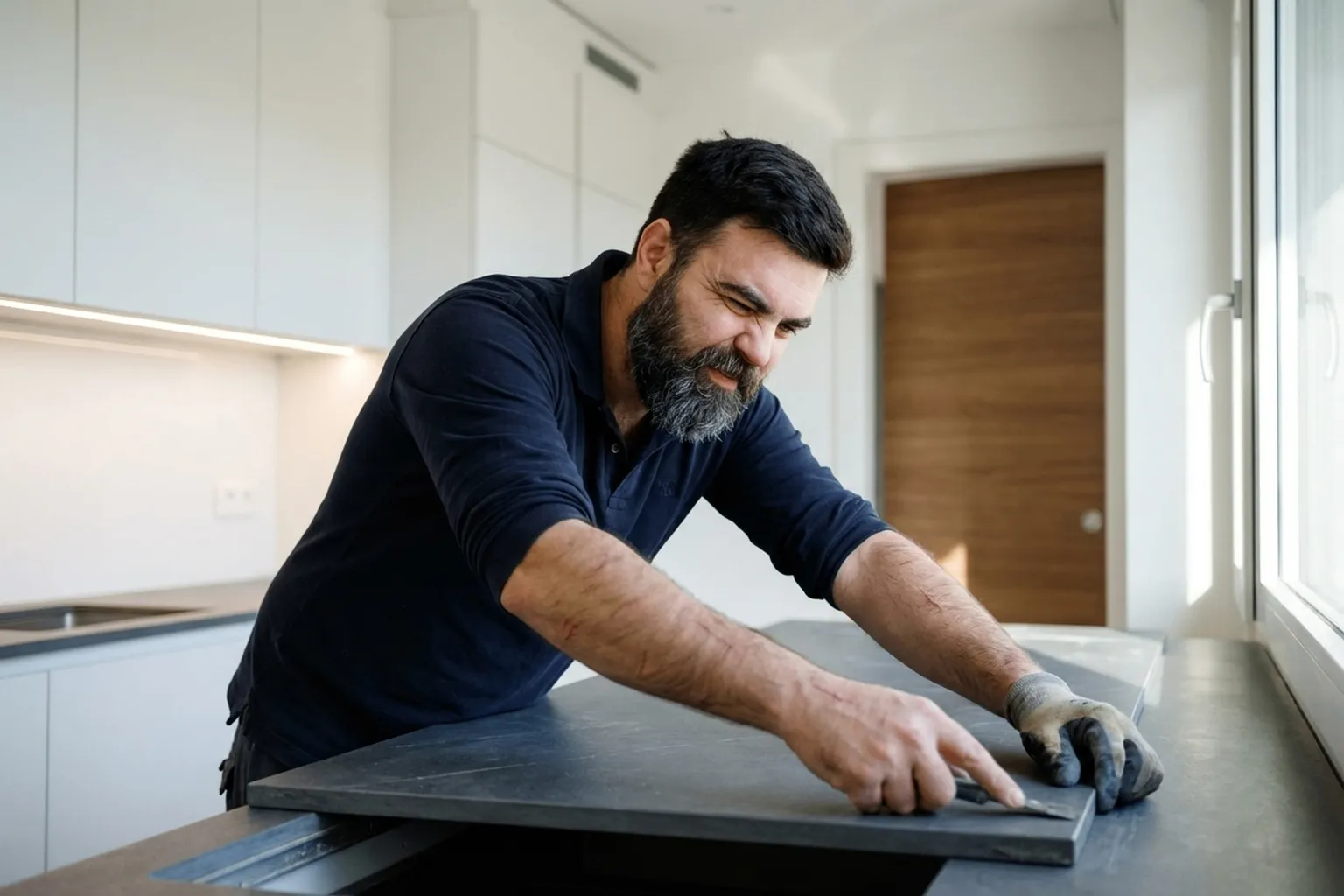
- Measurement and template. Tradespeople take measurements in the kitchen or bathroom and make a template from card or MDF. The positions for the sink, hob, sockets and joints are marked out.
- Substrate preparation. An 18 mm plywood or moisture-resistant chipboard base is mounted on the cabinets: level and stiff.
- Slab cutting. The porcelain is cut on a professional bridge saw with a diamond blade and water cooling. Cut-outs for the sink and hob are done with a diamond router.
- Bonding. The slab is glued to the substrate using flexible adhesive (Mapei Keraflex Maxi S1). Dual application is required.
- Edge treatment. The edges are faced with a strip from the same slab, mitred at 45 degrees or joined straight. Then sanded and polished.
- Grouting and sealing. The wall joint is sealed with sanitary silicone. The L-joint between countertop sections — with colour-matched epoxy adhesive, almost invisible.
- Sink installation. For an undermount sink, the cut-out is sanded fully smooth and sealed with silicone.
Common mistakes with tile countertops
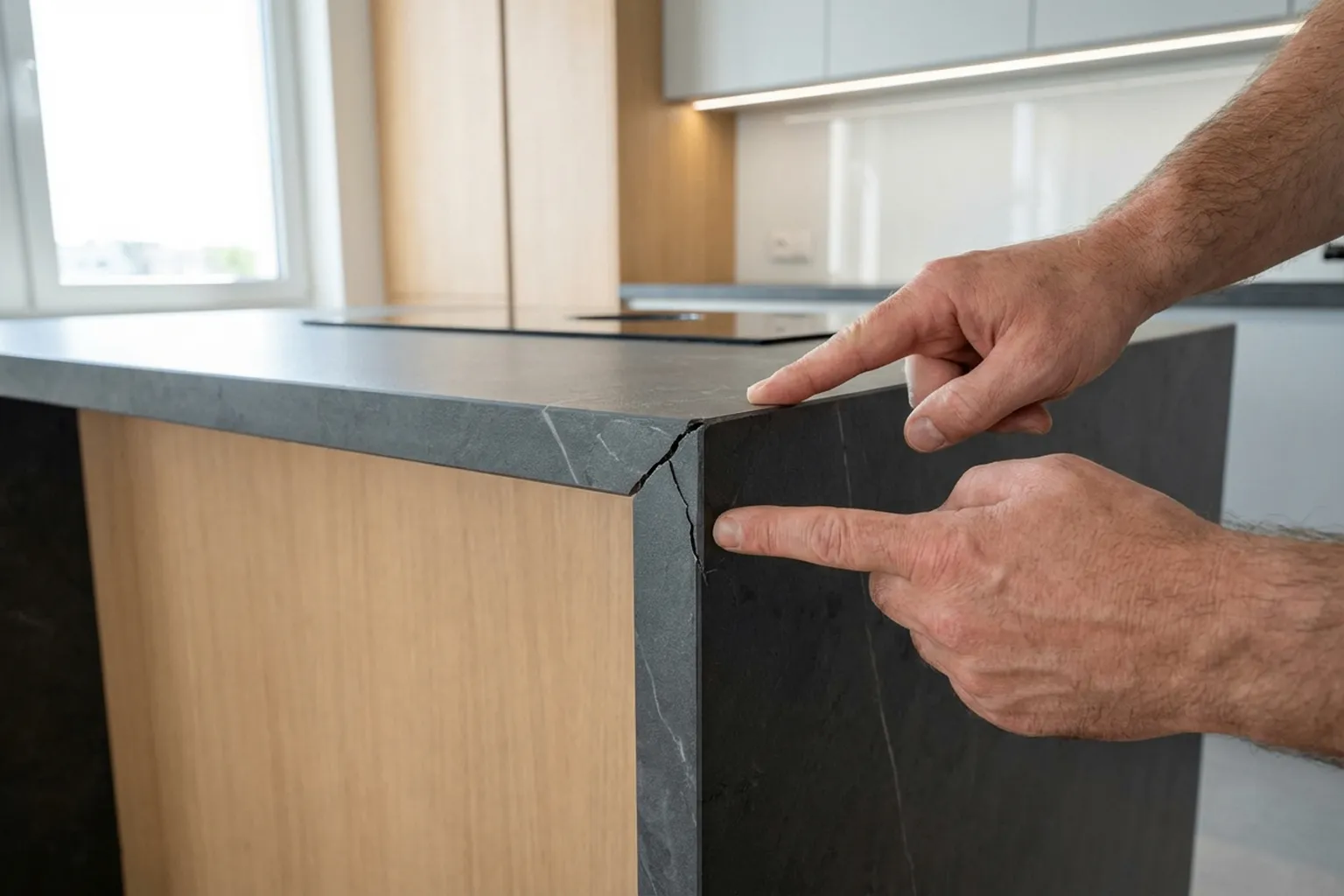
- Weak substrate: the countertop bends and the slab cracks. Minimum 18 mm plywood, fixed firmly.
- Voids under the slab: empty spots crack when loaded.
- Freehand angle-grinder cuts — rough edges and visible chipping. Only a professional saw.
- Unfinished edges: bare plywood and slab edge left visible. The edges need cladding in matching material.
- Rigid adhesive: the slab cracks from heat movement. Flexible adhesive is a must.
- Unsealed sink cut-out — water gets into the plywood, and it swells and rots.
What to prepare before the technician arrives
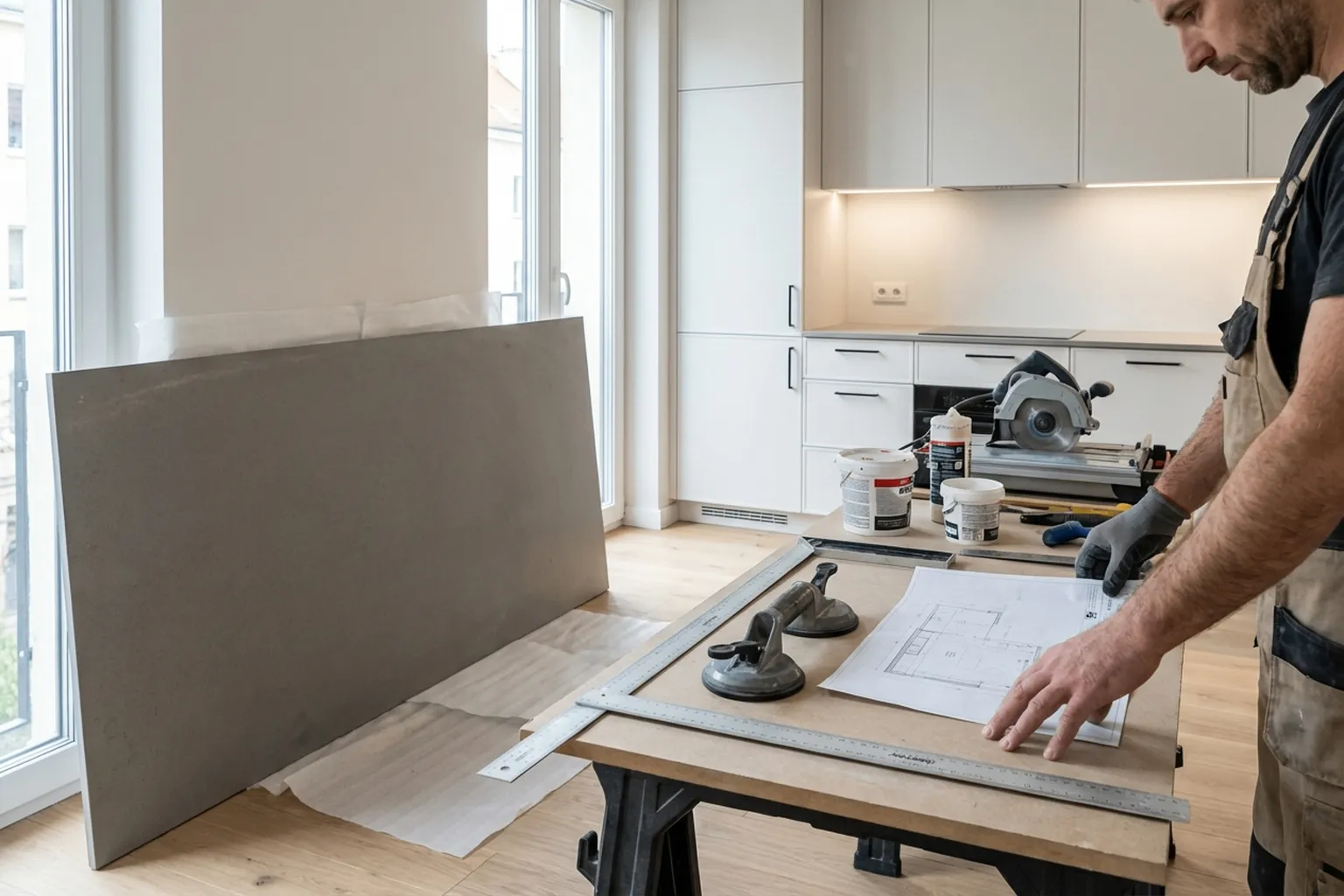
- Kitchen units or bathroom furniture installed and levelled.
- Slab bought with extra material: Laminam, Neolith, Dekton or large format porcelain. Thickness 6-12 mm.
- 18 mm plywood or moisture-resistant chipboard.
- Flexible adhesive.
- Sanitary silicone.
- Choose the sink type (undermount or drop-in).
- Sink and tap: purchase in advance for accurate measurement.
- Confirm socket and hob positions: cut-outs have to be known before cutting.
- Power and water nearby.
- Clear the work area.
A real case from Warsaw
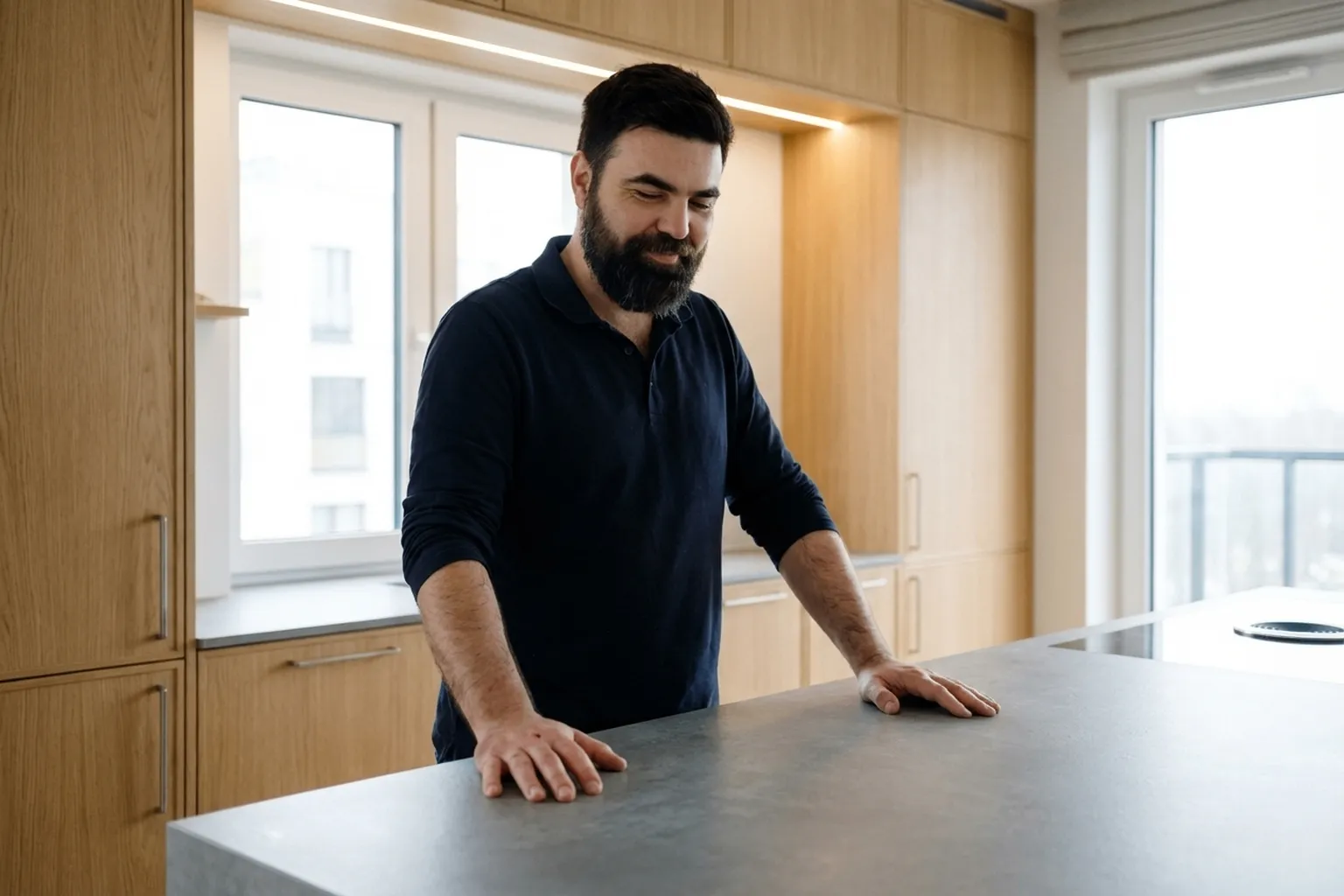
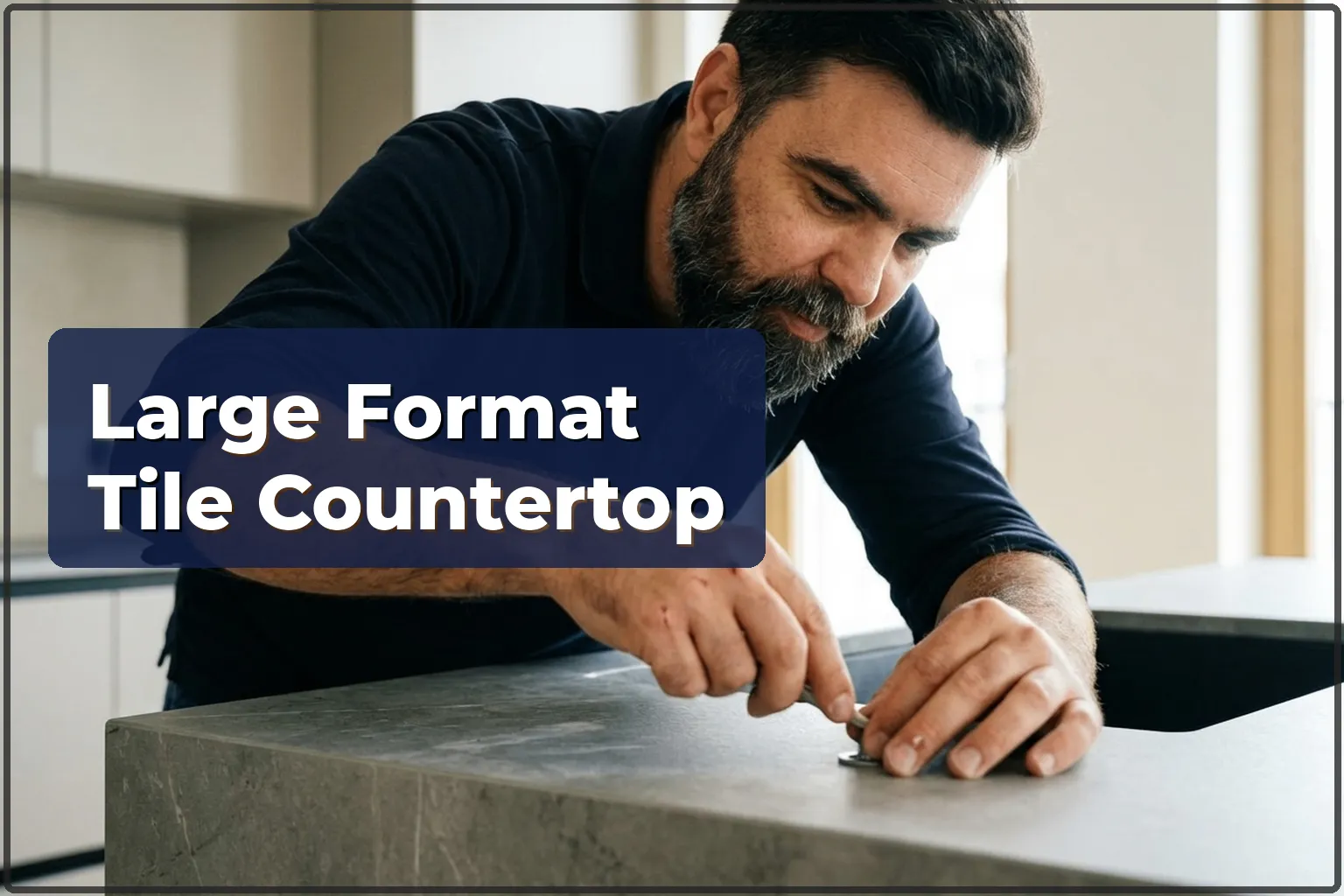
A kitchen in Mokotow, L-shaped countertop 3.2 m² — the client picked Laminam Fokos Roccia 12 mm, grey stone effect. Tradespeople measured everything, made an MDF template, then cut it on a bridge saw. The substrate: 18 mm plywood on IKEA Metod units. The slab was bonded with Mapei Keraflex Maxi S1, dual application. The undermount Blanco sink cut-out was done with a diamond router, and the edge was sanded smooth. The edges: strips of the same Laminam, mitred at 45 degrees. The L-joint was filled with colour-matched epoxy — the seam is almost invisible. Two days of work. The finished countertop looks like a full stone slab for much less money.
Frequently asked questions
How is a tile countertop better than stone?
It costs less than natural stone and quartz, is lighter (6-12 mm vs 20-30 mm), does not take in water, handles heat up to 300 C, and comes in a huge choice of finishes.
What slab thickness is best?
For a kitchen: 12 mm (stronger, with a more solid look). For a bathroom: 6 mm is enough. With an edge strip it appears like 20-30 mm.
Can you put a hot pan on it?
Yes. Porcelain can handle up to 300 C. But a sudden extreme temperature change could in theory cause a micro-crack — better to use a trivet.
Does it scratch?
Porcelain is harder than most countertop materials. An ordinary knife will not scratch it, but using a chopping board is still the right habit.
How is the sink cut-out made?
Using a diamond router with water cooling. The edge is sanded completely smooth.
Are joints visible on an L-shaped countertop?
If the job is done properly, almost not. The joint is filled with colour-matched epoxy adhesive, under 1 mm wide.
Which slab brands do tradespeople recommend?
Laminam (Italy), Neolith (Spain), Dekton (Cosentino) are top tier. More affordable options come from Tubadzin and Paradyz in large format.
How long does fabrication take?
A straight countertop: 1-2 days. An L-shaped one with cut-outs — 2-3 days. Plus a day for the adhesive to cure.
Are materials included?
No. The slab, plywood, adhesive and silicone are bought by the client. Labour covers consumables and cutting.
Can it be used in a bathroom?
Yes. Porcelain does not absorb water and works very well for bathroom countertops: around basins and bathtubs.
Who does the work
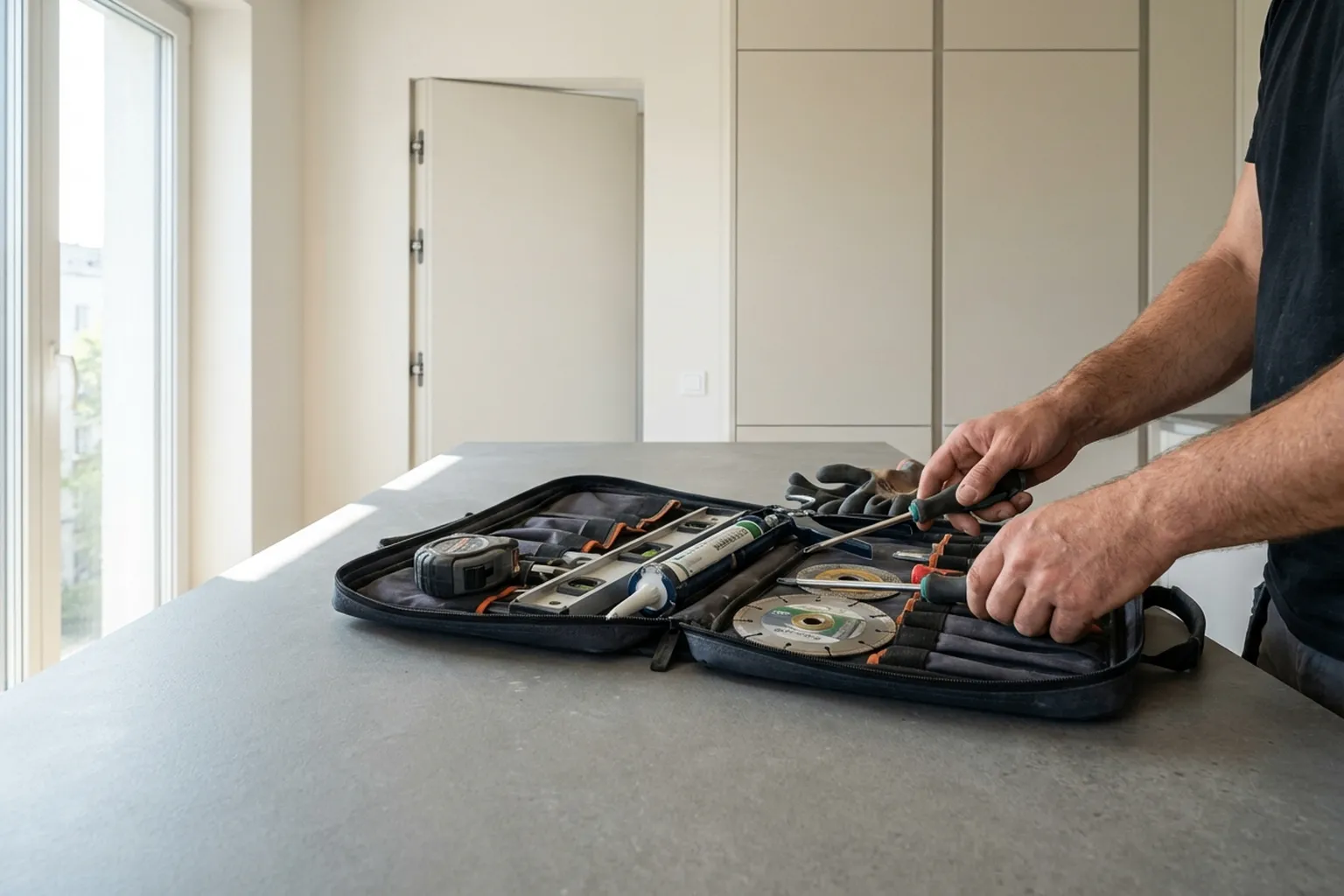
Large format tile countertops are made by technicians who handle slabs for a living, precise cutting and proper edge finishing are separate skills. Tradespeople come with a bridge saw, diamond routers and a full installation kit. Post a request in the HandyMan24 app: tradespeople across Warsaw will measure your kitchen and send their prices.
Order in the app
Describe the job, add photos and the address. Tradespeople send their own prices and dates, and you pick one of the offers.
Open the app