Replacing Oven Heating Elements in Warsaw — Upper and Lower
Your oven has stopped warming up, or it only heats on one side? In many cases, the reason is a failed heating element. This is one of the faults we see most often on service visits around Warsaw. Swapping a heating element usually takes about an hour, and after that the oven is back to normal. If baking has become uneven or the oven does not get up to temperature at all — it’s time to get a technician in.
What the replacement costs and what changes the price
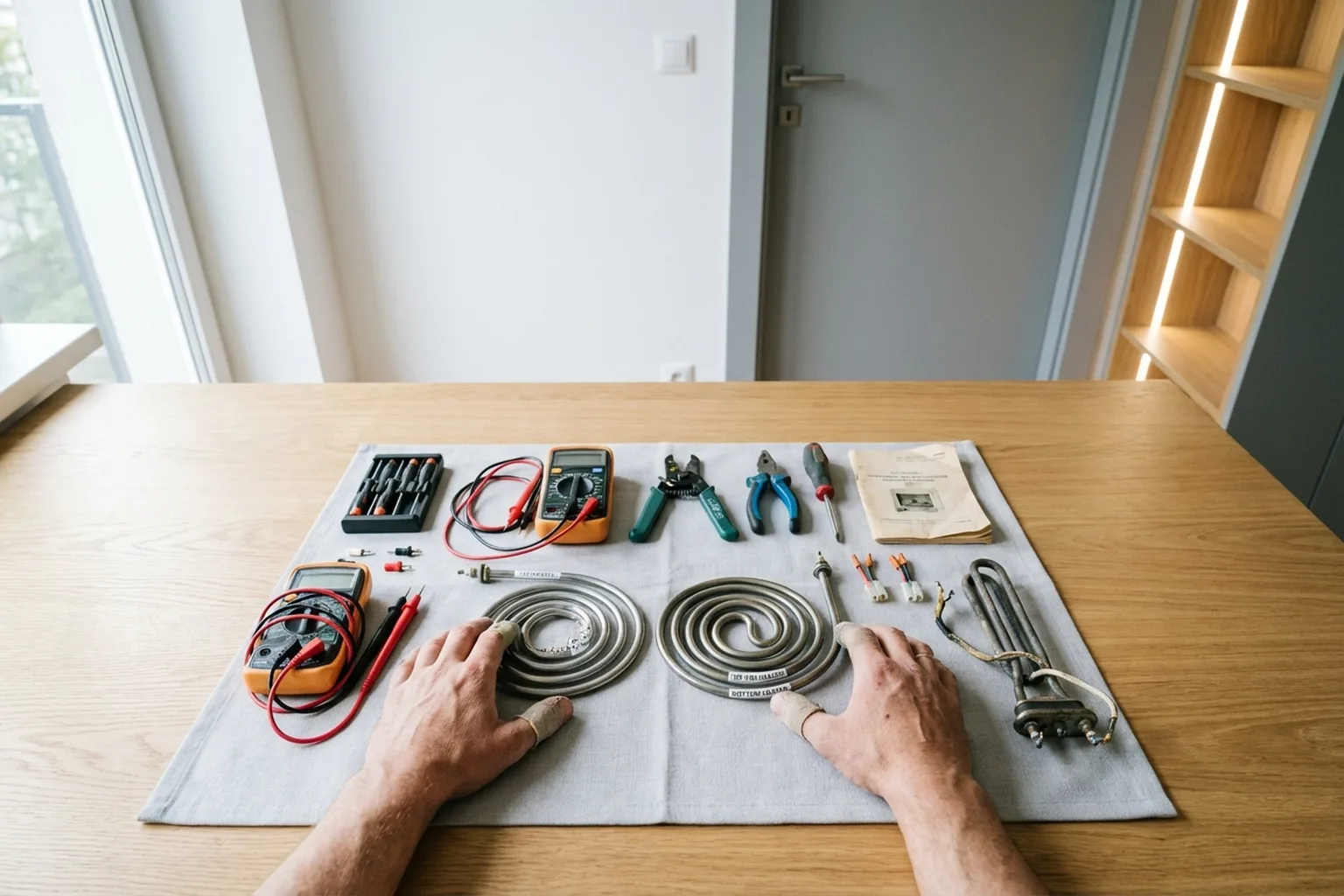
The price of heating element replacement depends on the oven model, the kind of element involved (upper, lower, or convection ring), and how much dismantling is needed. Current rates are listed in the table below. Mounting hardware is covered in the labour price; the element itself is billed separately. We find a matching part for your model — Bosch, Electrolux, Samsung, Beko or others.
| Service | min | max |
|---|---|---|
| Heating element top/bottom replacement (oven) | 250 zł | 350 zł |
| Thermostat replacement (oven) | 250 zł | 320 zł |
| Fan replacement (oven) | 300 zł | 400 zł |
| Mode selector switch replacement (oven) | 300 zł | 400 zł |
| Door glass replacement (oven) | 300 zł | 400 zł |
| Control module repair (oven) | 400 zł | 550 zł |
How the on-site replacement goes
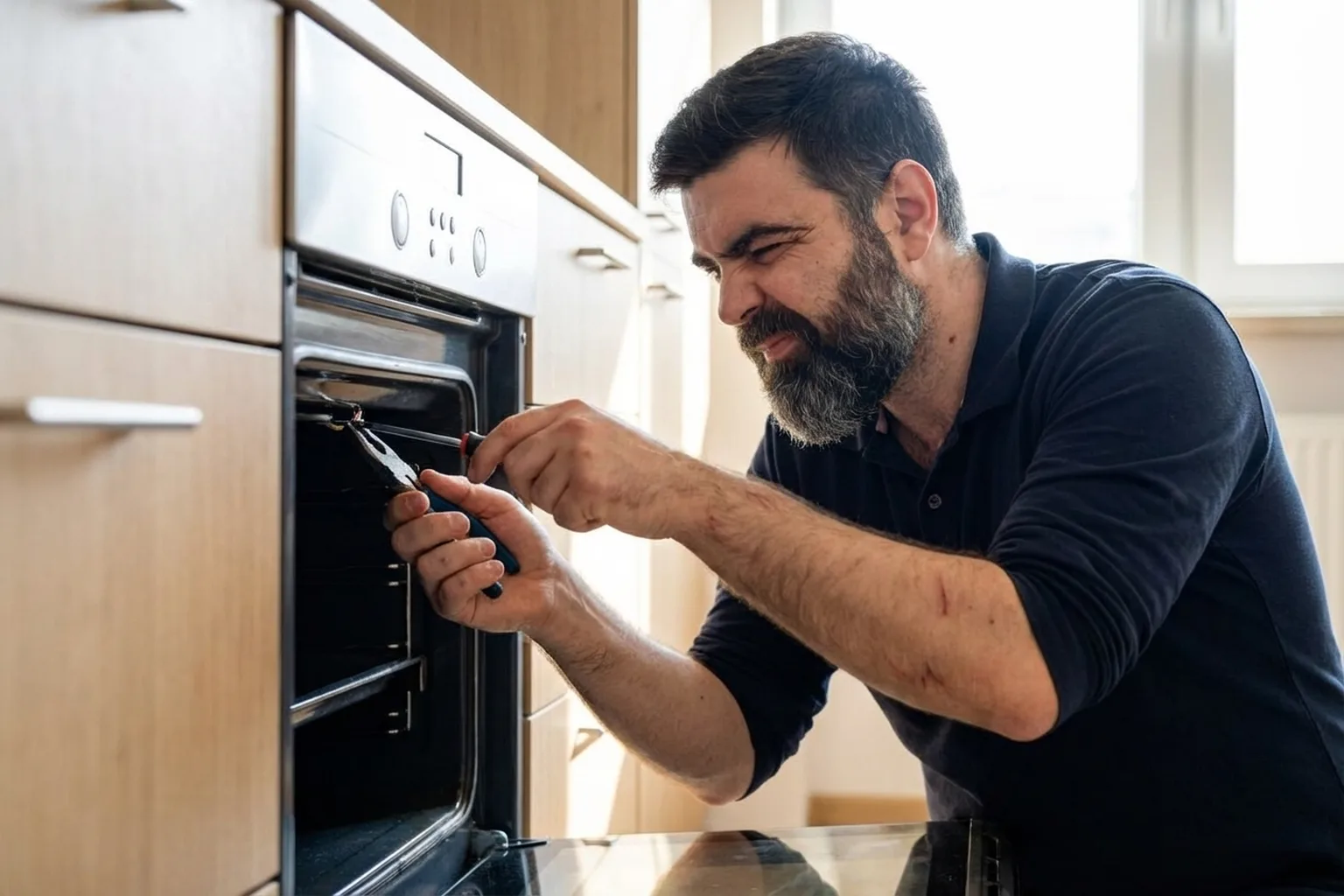
- You explain the issue — what exactly is not heating and which oven model you have.
- The technician verifies the model and brings the right element or orders it ahead of time.
- At your place, we disconnect the oven from the mains and remove the rear panel or the inner cover.
- We check the old element with a multimeter to make sure it has failed.
- We unplug the terminals, take out the burnt element, and fit the new one.
- Everything is put back together, powered on, and tested in different heating modes.
- We also give a few practical tips — how to help the new element last longer.
Common errors when changing a heating element
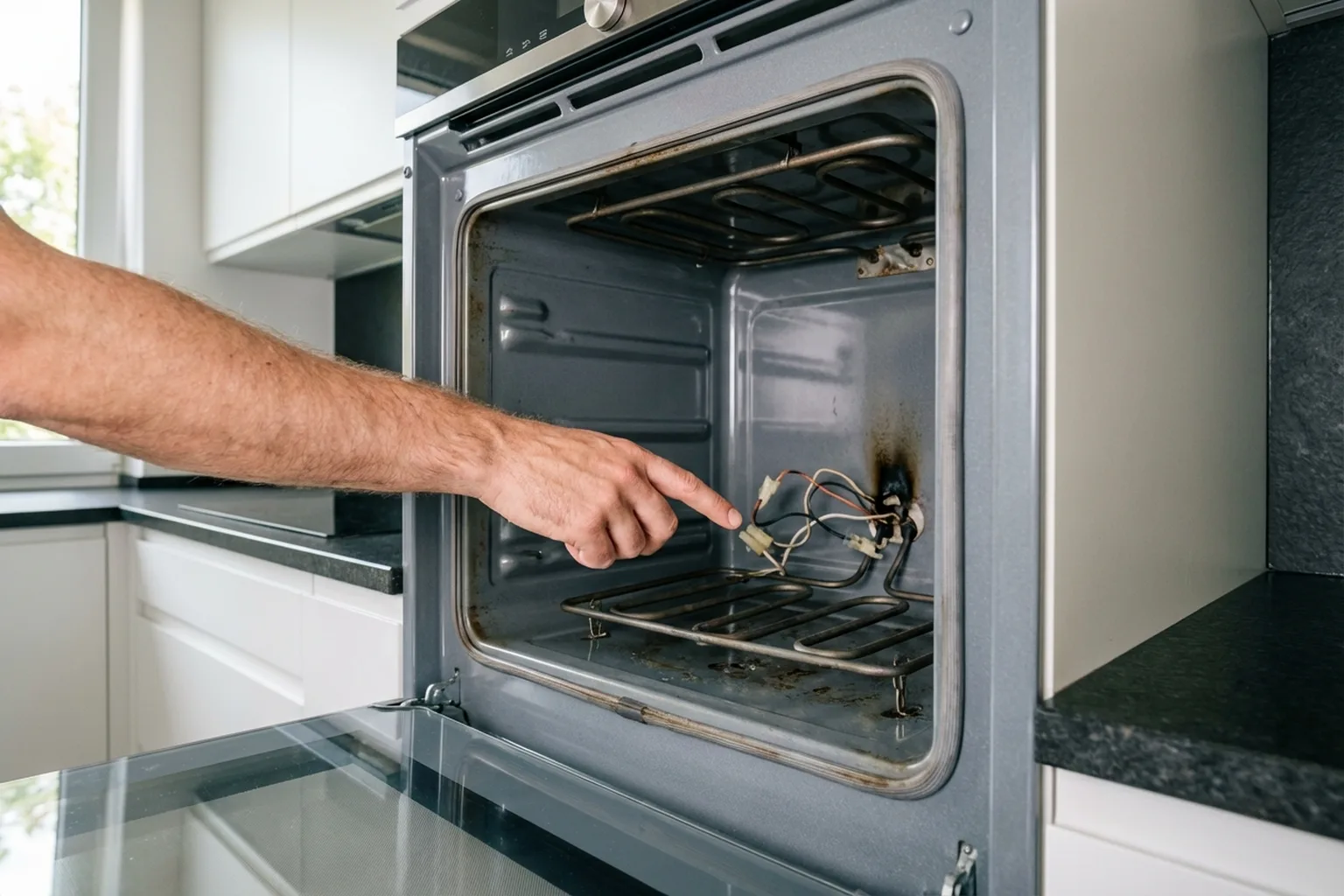
- Ordering an element without checking the model — the size or wattage ends up wrong.
- Trying to replace it yourself without disconnecting from the mains — risk of electric shock.
- Skipping checks of the contacts and thermal fuse — fitting a new element when the real fault is in the wiring.
- Installing a cheap no-name element — it burns out after a couple of months.
- Tightening the mounting screws too hard — bending the mounting bracket.
- Missing the convection ring element — changing only the top or bottom one when the problem is the third element.
What to get ready before the technician comes
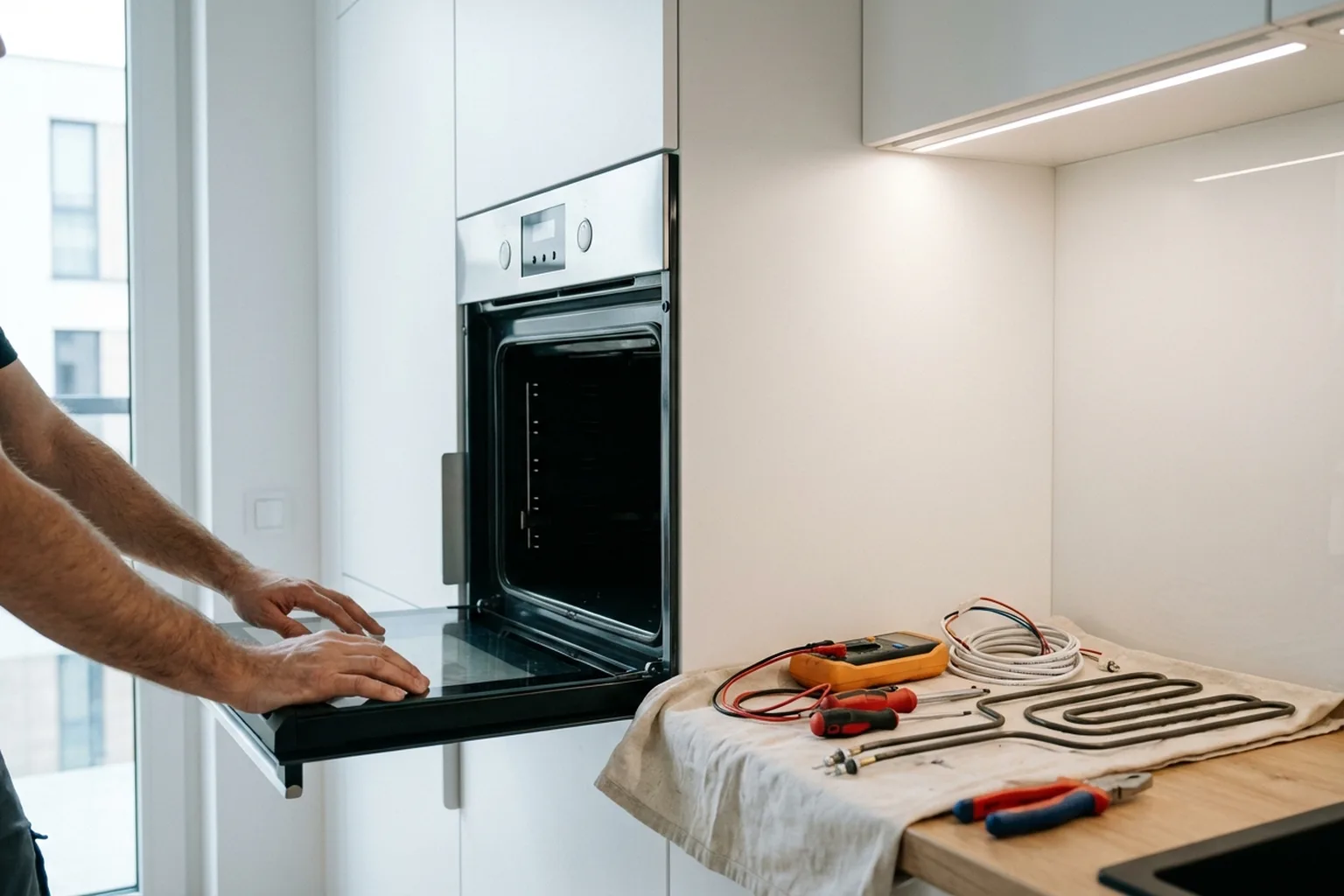
- Find the exact oven model — the label is often on the door frame or at the back.
- Unplug the oven from the socket (if it is built-in, switch off the breaker).
- Free up space in front of the oven — the technician needs room to pull it out.
- If it is built-in, check that it can be slid out of the cabinet.
- Take out the trays and racks from inside.
- Take a photo of the data plate with the model number and send it to the technician beforehand.
- If you have already removed the old element — show it to the technician.
- Make sure there is access to a power socket for testing after the repair.
A real job from Warsaw
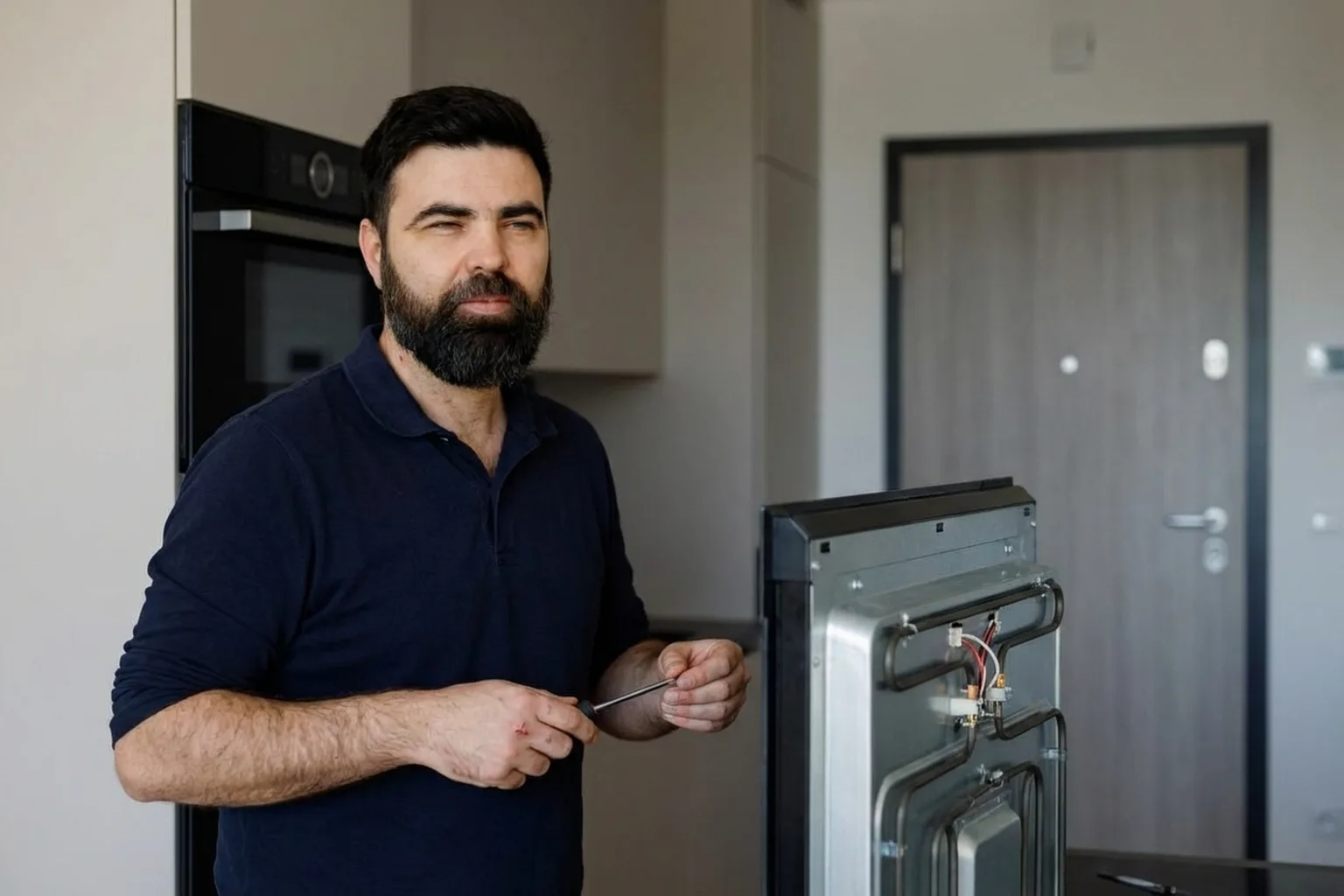
A client in Mokotów said pizza was burning underneath but staying pale on top. The oven was a built-in Bosch, around 7 years old. On site, we checked both elements with a multimeter — the upper one showed an open circuit. The lower element was working properly, which explained why the bottom was heating as usual while the top was not. We changed the upper element for a genuine Bosch part. After the replacement, we tested every mode — top/bottom heat, grill, convection. Everything worked as it should. The job took about 50 minutes. The takeaway: if your oven heats unevenly, you do not always need to replace both elements — first test each one on its own.
Frequently asked questions
How can I tell if the heating element has failed?
The oven does not reach temperature or only heats from one side. You may also see dark marks, bubbling, or cracks on the element itself.
Can I keep using the oven if one element still works?
Yes, in theory, but the food will cook unevenly. We advise replacing the faulty element.
How long will a new element last?
An original element lasts 5–10 years with normal use. Good aftermarket parts last 3–7 years.
Do I have to use an original part?
No, but the wattage and dimensions must match. Cheap no-name elements often fail fast.
Does the technician bring the replacement element?
If you send the oven model in advance — yes. For rare models, the part may need to be ordered first.
Is it safe to replace the element on my own?
Only if the oven is completely disconnected from the mains. If you have no experience with electrical appliances, call a professional. There is 230V inside the oven.
What if the new element still does not heat?
The problem may be in the thermal fuse, relay, or control board. The technician checks the full circuit before replacement.
Are the top and bottom elements identical?
No — they have different shapes and wattage. The top one is often flat (grill), while the bottom one is curved. They cannot be swapped.
Do you handle all brands?
Yes — Bosch, Siemens, Electrolux, Samsung, Beko, Amica, Whirlpool and more. We source parts for any specific model.
Do you have to pull the oven out of the cabinet?
In most cases yes, because access to the back panel is needed. The technician will do it carefully.
Who carries out the work
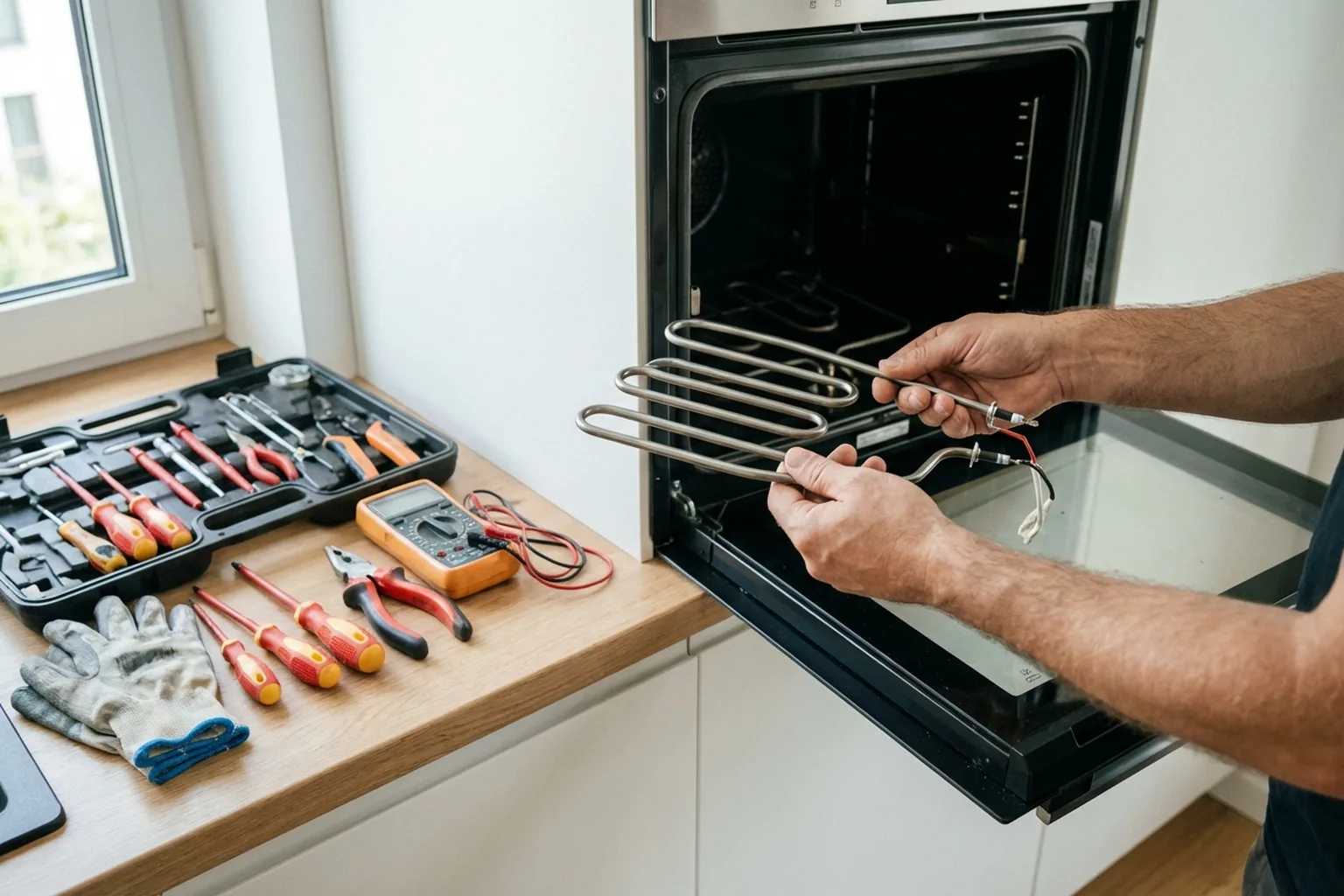
Heating element replacement is done by technicians with hands-on experience in built-in appliance repair. We cover all of Warsaw and arrive with tools and a multimeter for diagnostics. Need a replacement? Call or message us — we will find the part and come at a time that suits you.