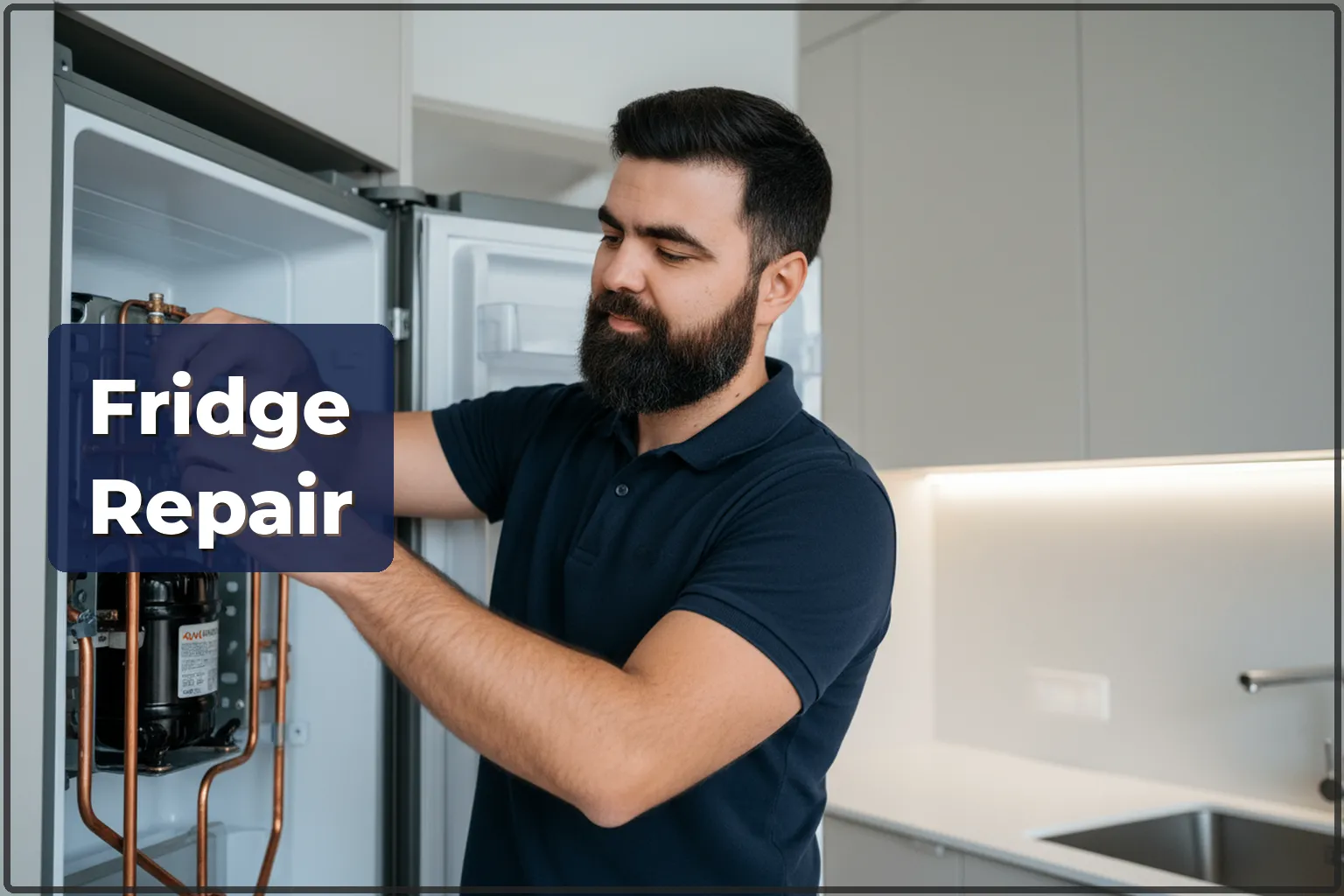

Important: a fridge runs on pressurised refrigerant and electrical parts. Don’t try to take off the rear panel, swap the compressor, or open the refrigerant circuit on your own, that job needs proper tools and training. Before any repair, disconnect the fridge from the mains.
How much does fridge repair cost
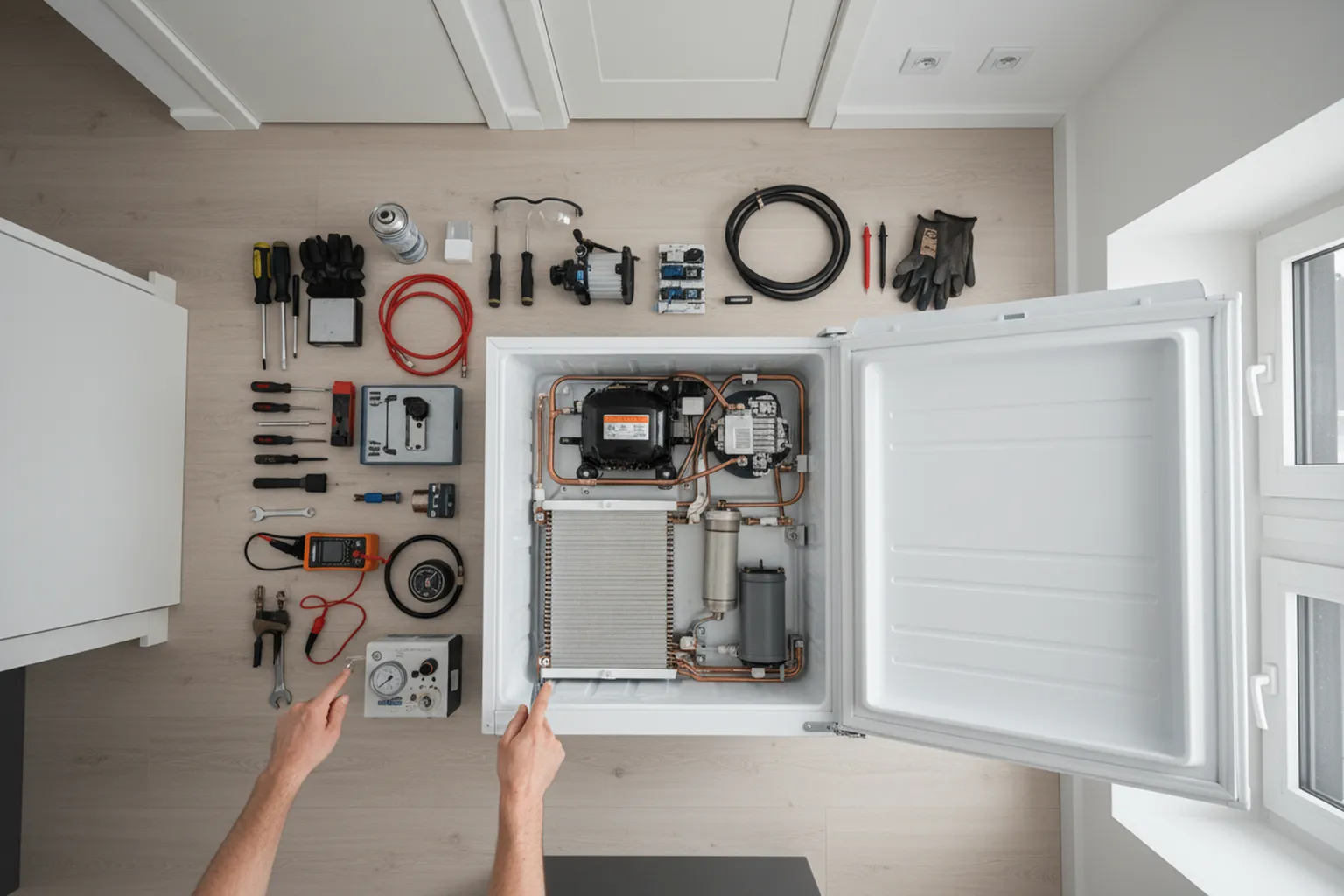
You’ll find current prices in the table below. The final cost depends on the brand, the kind of fault, and whether the job calls for a refrigerant top-up or compressor replacement. Diagnostics are part of the repair price. Parts and refrigerant are billed separately.
| Service | Price |
|---|---|
| Thermostat replacement (fridge) | 200–400 zł |
| Fan replacement (fridge) | 300–400 zł |
| Sensor replacement (fridge) | 300–350 zł |
| Defrost heater replacement (fridge) | 350–550 zł |
| Refrigerator refrigerant recharge | 300–700 zł |
| Refrigerator compressor replacement | 500–1200 zł/szt |
Indicative prices. Ranges for a typical scope. Fixings included, materials separate. Minimum order 300 zł.
What it costs and how to book: home repair service in Warsaw.
How the home repair works
- You explain the issue: not cooling, making noise, ice build-up, leaking, tripping the breaker.
- The technician checks the model and brand — asks for a data plate photo (usually inside the compartment or at the rear).
- Timing depends on the tradesperson you choose: they give the arrival time in their offer.
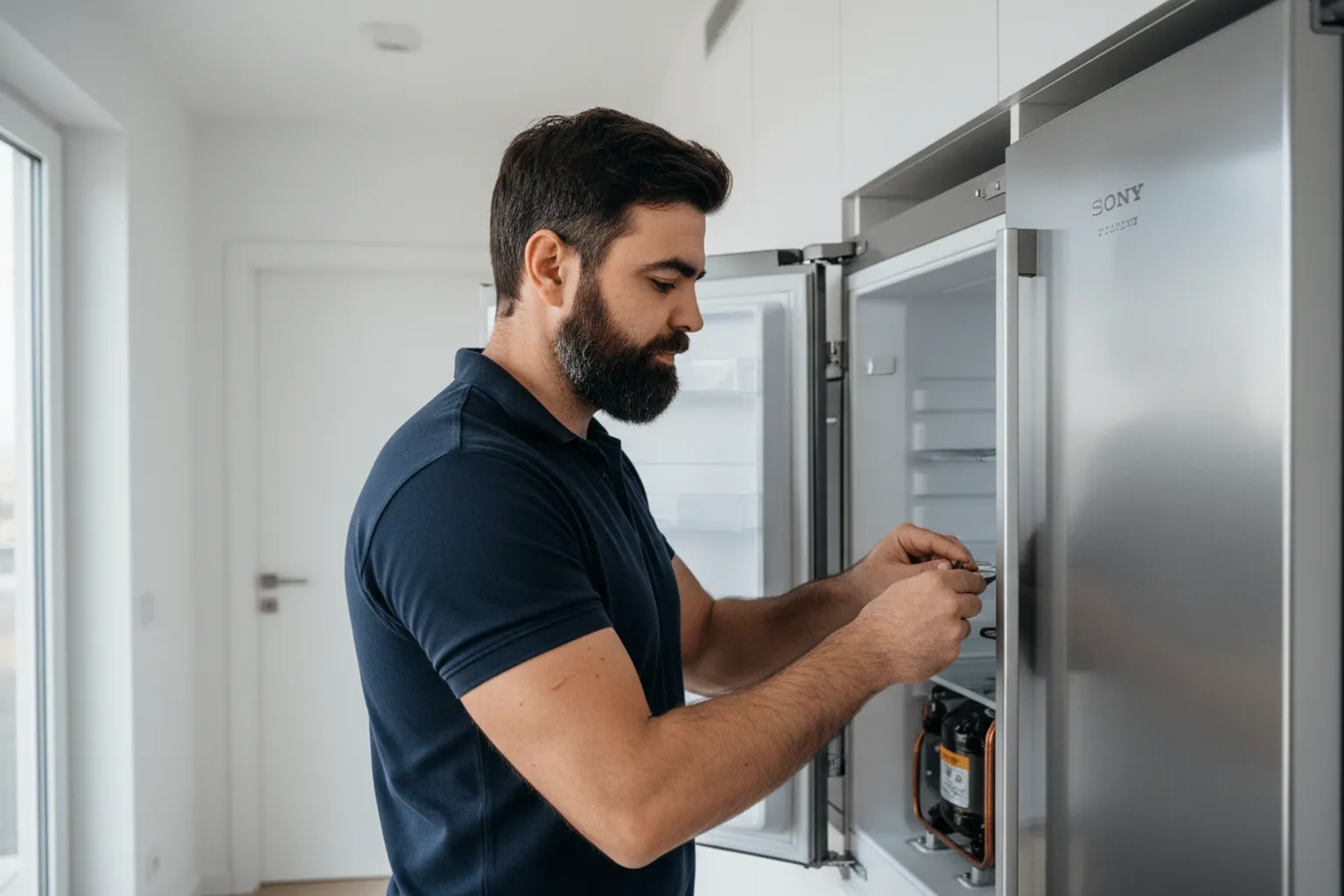
- At your place, the technician disconnects the fridge and carries out diagnostics: compressor, thermostat, fan, sensor, defrost heater, door seal, control board.
- Finds the cause and gives the repair price.
- If the part is available, repair done straight away. If not — it’s ordered and a return visit is booked.
- After the repair, the fridge is powered on and checked for temperature recovery and correct operation of all compartments.
Common fridge owner mistakes
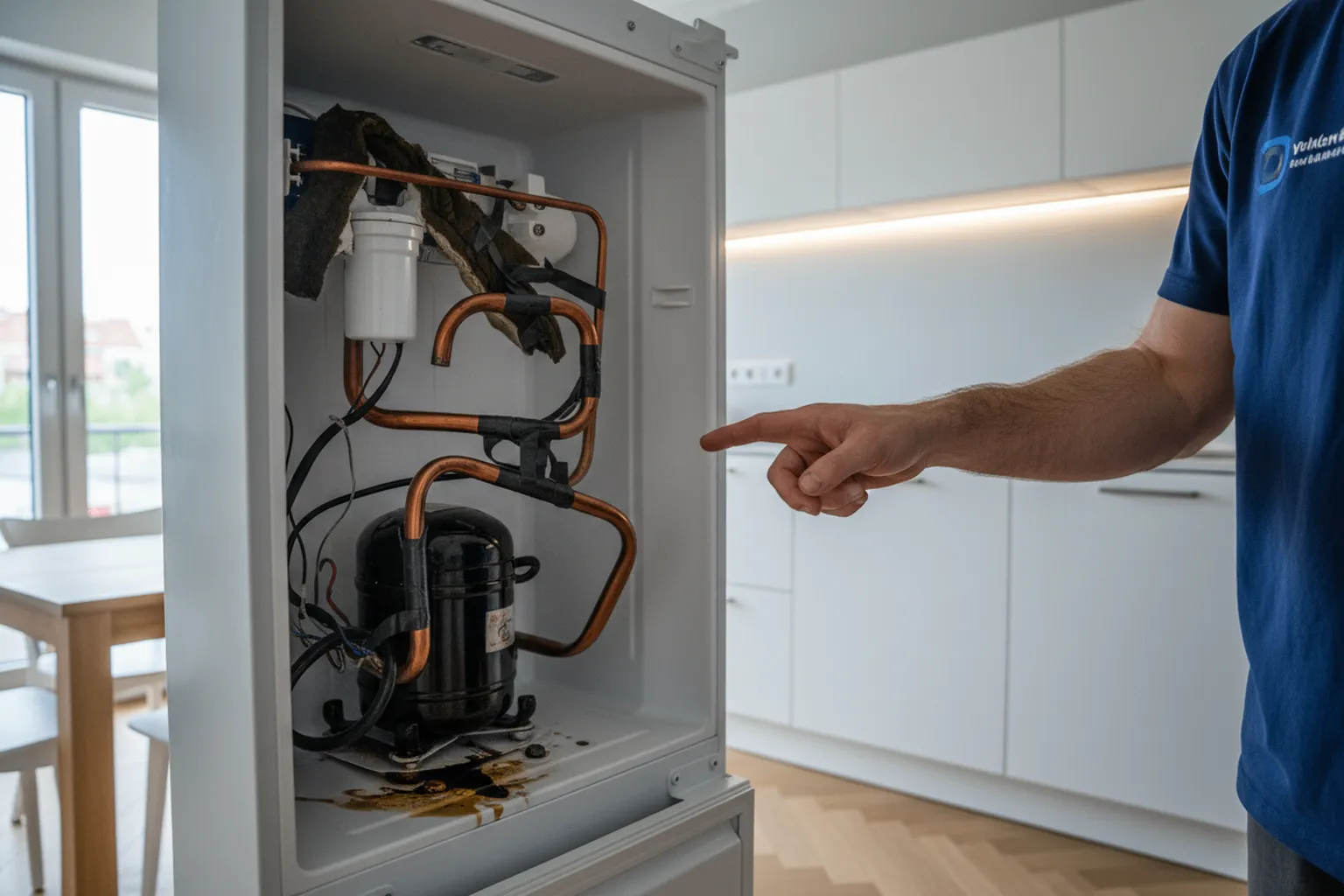
- Shoving the fridge tight against the wall: the condenser has no airflow, the compressor overheats and breaks down.
- Ignoring ice build-up in a frost-free freezer: that points to a defrost system fault, not a reason to hack away at the ice with a knife.
- Defrosting the freezer with a hair dryer — hot air ruins plastic parts and door seals.
- Missing a door gasket that doesn’t seal properly, cold air escapes, the compressor keeps running, and power bills go up.
- Putting off repair when there’s a leak: water gets under the fridge and damages the floor and electronics.
- Loading the shelves too heavily — the fan can’t move air properly, so temperatures become uneven.
- Placing hot food straight into the fridge: the sudden extra load cuts compressor life.
- Trying a DIY refrigerant top-up: without vacuuming and pressure gauges, it’s useless and unsafe.
What to prepare before the technician arrives
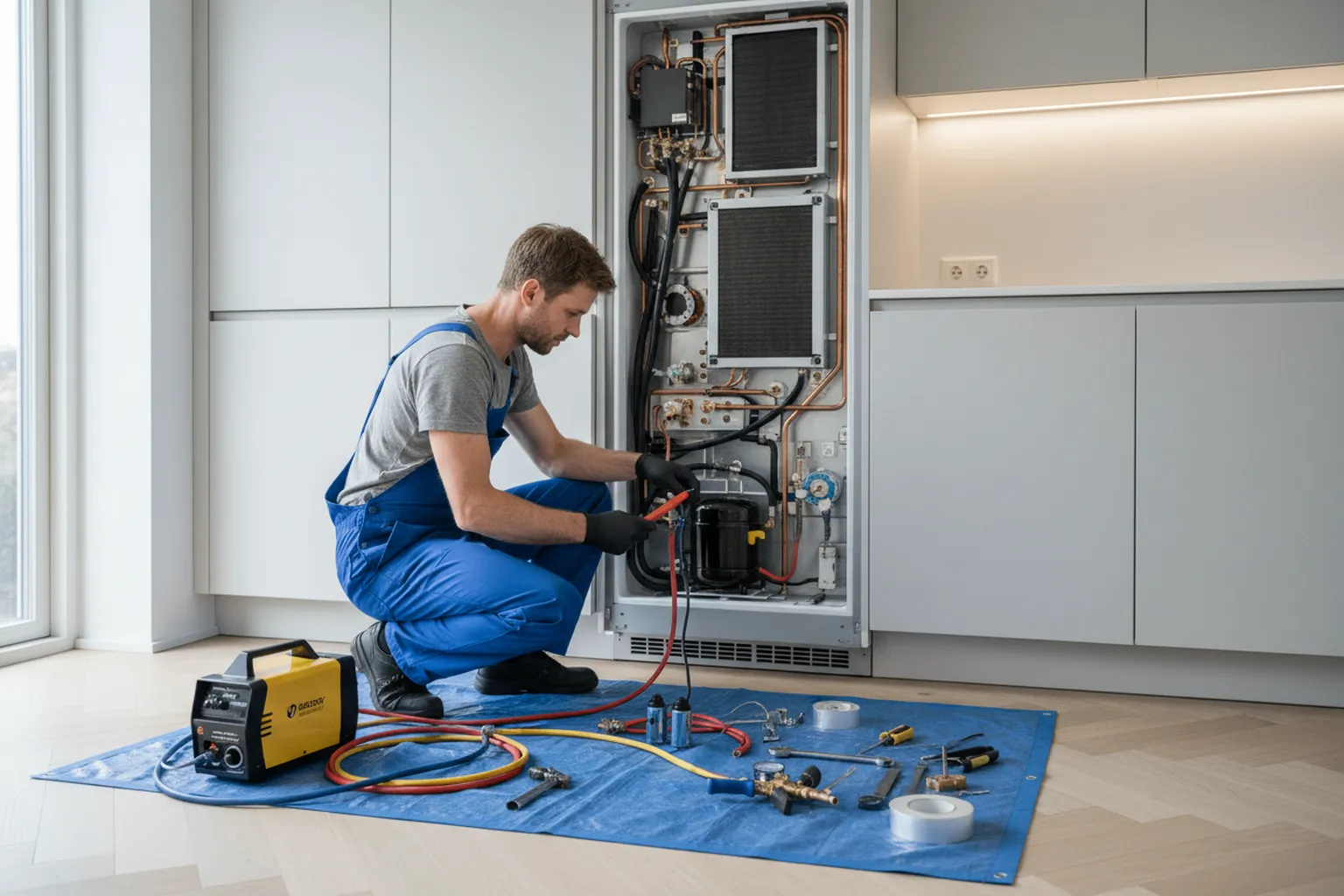
- Write down the error code from the display (if any).
- Take a photo of the data plate with the model and serial number.
- Unplug the fridge 10–15 minutes before the visit.
- Empty the shelves: move the food into a cool bag or onto the balcony.
- Put a container under the fridge if it’s leaking.
- If you can, pull the fridge away from the wall, access to the back speeds up the repair.
- Note when the issue began: after a power cut, gradually, suddenly.
- Confirm the type: single-door, double-door, side-by-side, built-in.
- Give access details: intercom code, parking info.
- Combine all appliance tasks into one visit.
A real case from Warsaw: fridge repair
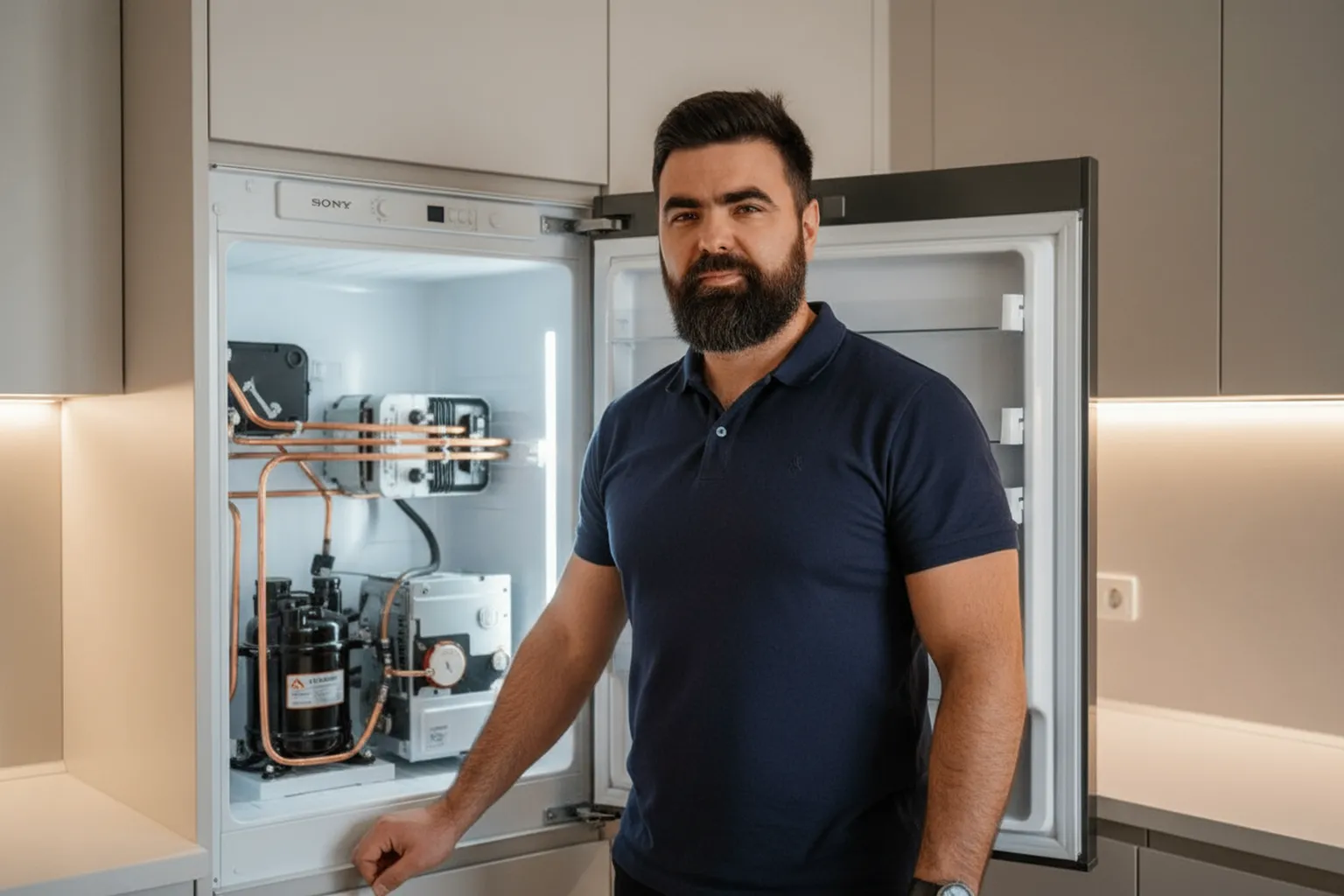
A client in Bemowo called to say a Samsung No Frost fridge had stopped freezing: the fridge compartment was working, but the freezer showed -2°C instead of -18°C. Diagnostics showed that the defrost heater had burned out, the evaporator was covered in a thick layer of ice, which blocked airflow. The technician defrosted the evaporator, replaced the heater and thermal fuse (parts on hand). After 3 hours the freezer got back to the standard -18°C. The repair itself took 1.5 hours. Conclusion: ice build-up in a No Frost fridge is not normal — it points to a defrost system fault.
Frequently asked questions
Which fridge brands do tradespeople repair?
Bosch, Samsung, LG, Liebherr, Siemens, Electrolux, Beko, Whirlpool, Gorenje, Amica and others.
Is the diagnostic fee separate?
It’s included in the repair price. If you decide not to go ahead, call-out only.
How long does the repair take?
Defrost heater, thermostat, fan: 1–2 hours. Compressor or refrigerant recharge: up to 4 hours.
The fridge isn’t cooling — what could be wrong?
A refrigerant leak, faulty compressor, failed fan, or a blocked condenser.
Why is ice building up in a frost-free fridge?
A faulty defrost heater, a blown thermal fuse, or a defrost timer problem.
Is it worth repairing a fridge over 10 years old?
That depends on the cost. Replacing a compressor in an older model is often not cost-effective.
Do tradespeople bring parts and refrigerant?
Heaters, thermostats, fans, gaskets: technicians often have them on hand. Compressors are ordered. Refrigerant usually comes with the technician.
What if the fridge is leaking water?
Check whether the drain channel is blocked (the hole on the rear wall inside the compartment). Clean it with a cotton bud. If that doesn’t help, call a technician.
How quickly can a tradesperson come?
That depends on who is free: you see the arrival time in the offer before you accept it. If it can’t wait, mark the job as urgent in the app. Tradespeople know a fridge can’t wait.
Who does the work
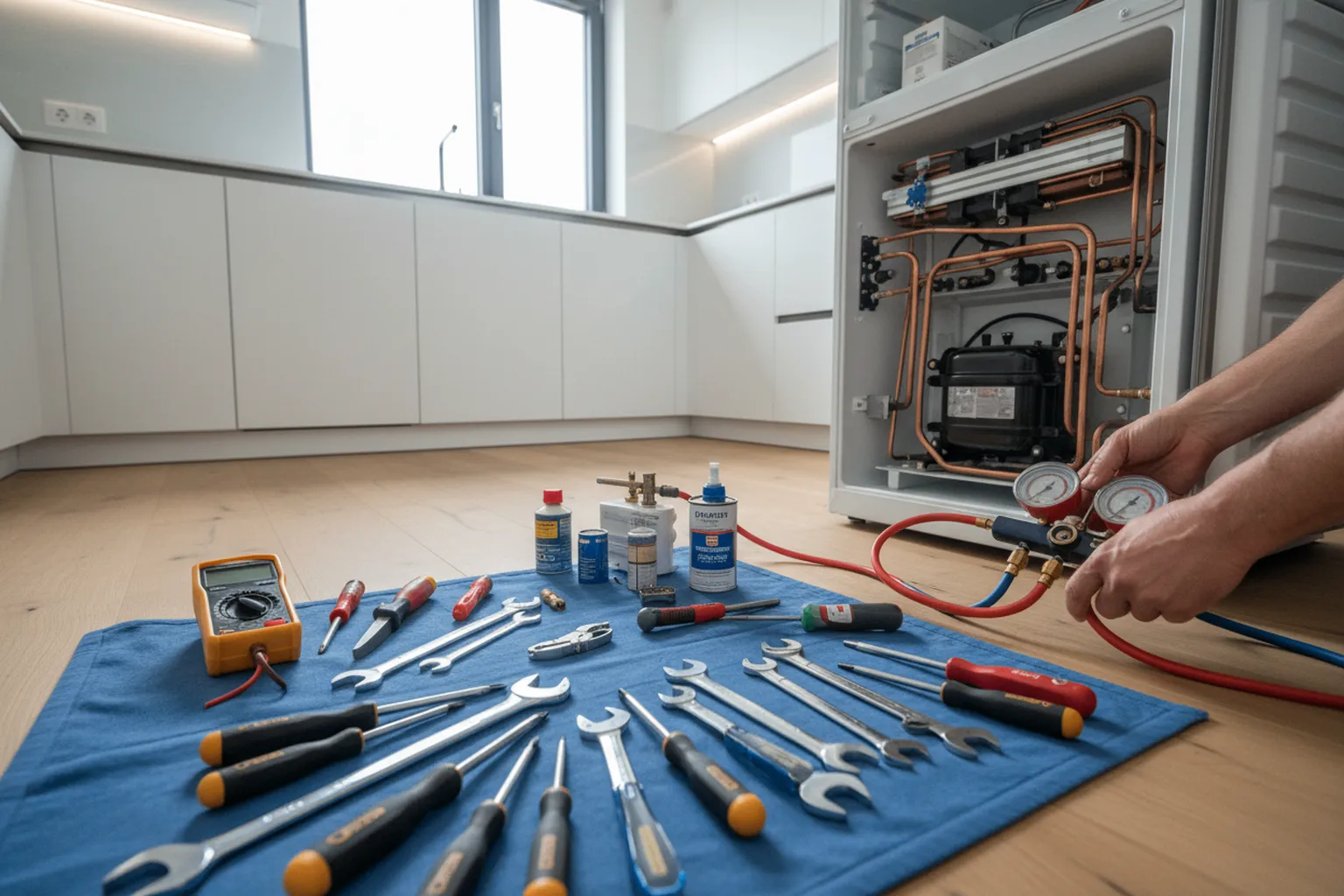
Fridge repairs are done by technicians with hands-on experience in refrigeration and household appliance service. Tradespeople work across all of Warsaw and nearby areas.
Order in the app
Describe the job, add photos and the address. Tradespeople send their own prices and dates, and you pick one of the offers.
Open the app