
How much it costs and what affects the price
The price depends on the drain length (50-100 cm), the type (tile-insert, grate, slot), whether the screed has to be redone, the extent of waterproofing, the tile area, and how difficult the cuts are around the drain. Fitting into an existing screed is easier than doing the whole base from zero. Large-format tiles by the drain need very accurate cuts: that costs more than small tiles. Fixings and consumables are included. The drain, tiles, adhesive, grout and waterproofing are bought by the client. Current prices are shown in the table below.
| Service | Price |
|---|---|
| Linear drain installation | 400–900 zł |
| Tile processing for drain | 150–300 zł |
| Precision cut around drain | 120–250 zł |
| Tiled shower base: small (up to 90×90) | 1100–1400 zł |
| Tiled shower base: medium (100–120) | 1100–1600 zł |
| Tiled shower base: large walk-in | 1400–2200 zł |
| Waterproofing substrate before tiling | 35–80 zł/m² |
Indicative prices. Ranges for a typical scope. Fixings included, materials separate. Minimum order 300 zł.
Price ranges and offers from tradespeople: grouting and waterproofing in Warsaw.
Tiling or drain installation?
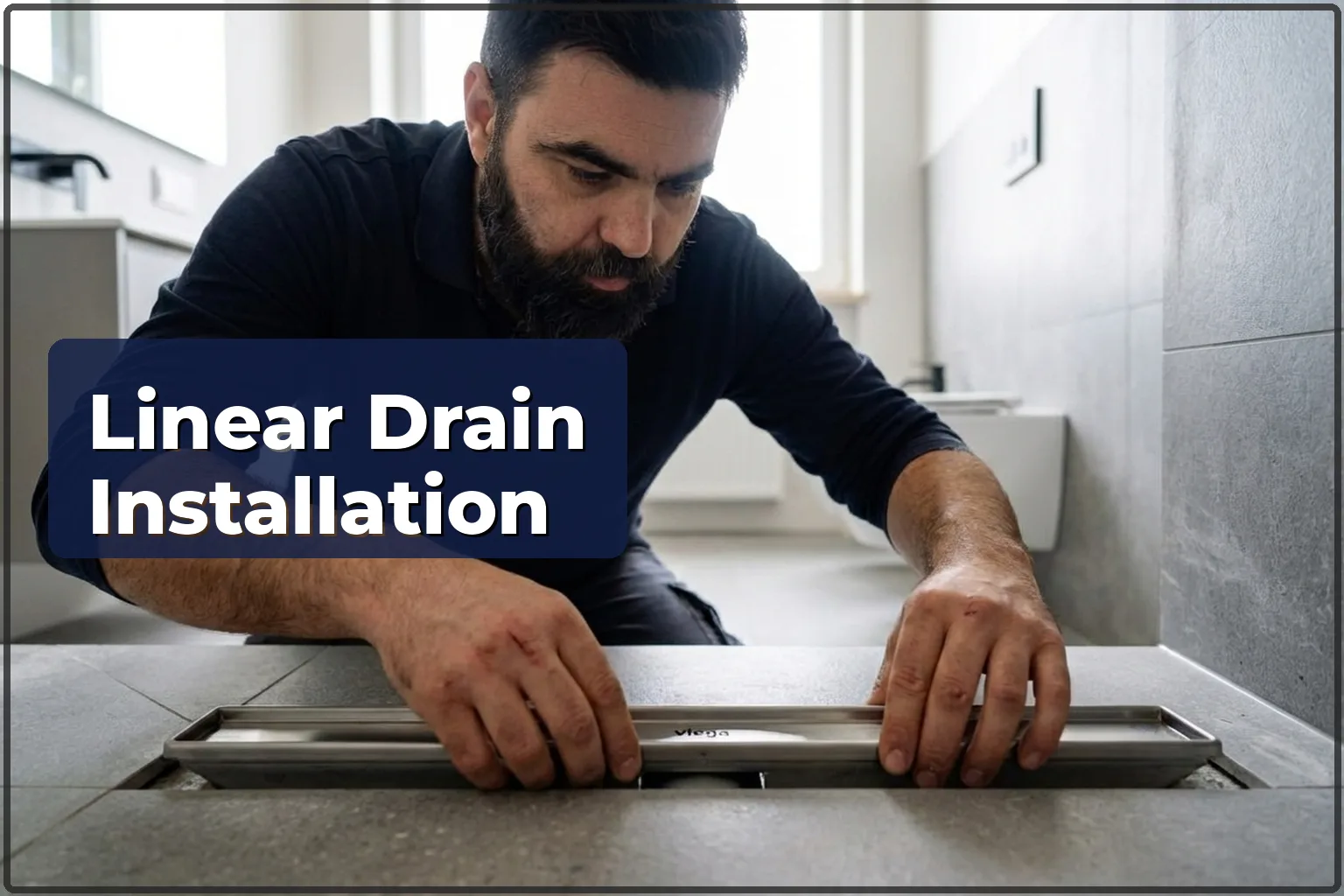
This is about tiles, fall and a watertight floor. Setting the drain body, its height and the waste connection are covered in the article on linear drain installation.
How installation and tiling work
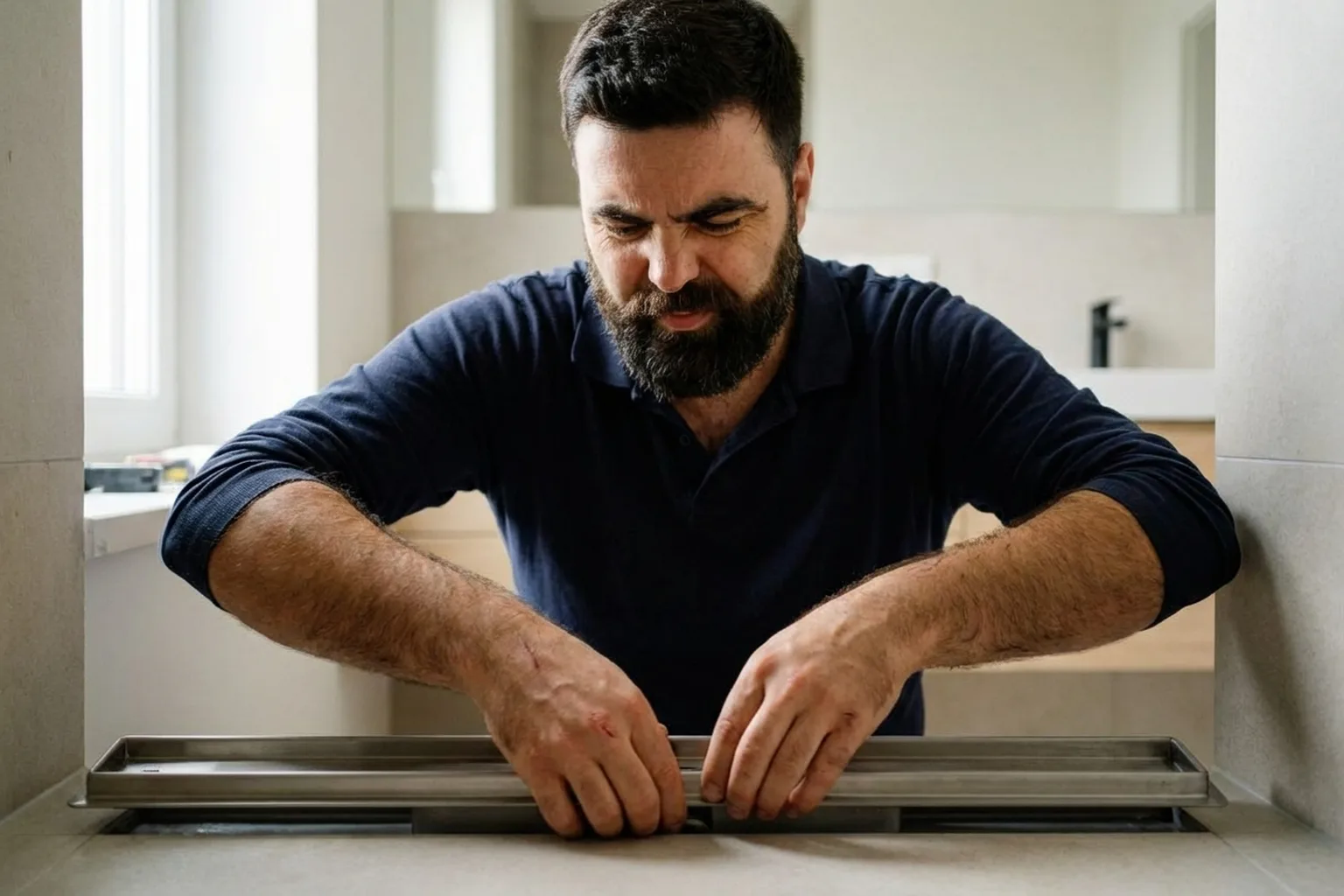
- Survey and planning. Tradespeople decide where the drain will go (wall, centre, diagonal), check the screed height and the waste pipe position. Tradespeople work out the slope — minimum 1-2% towards the drain line from every side.
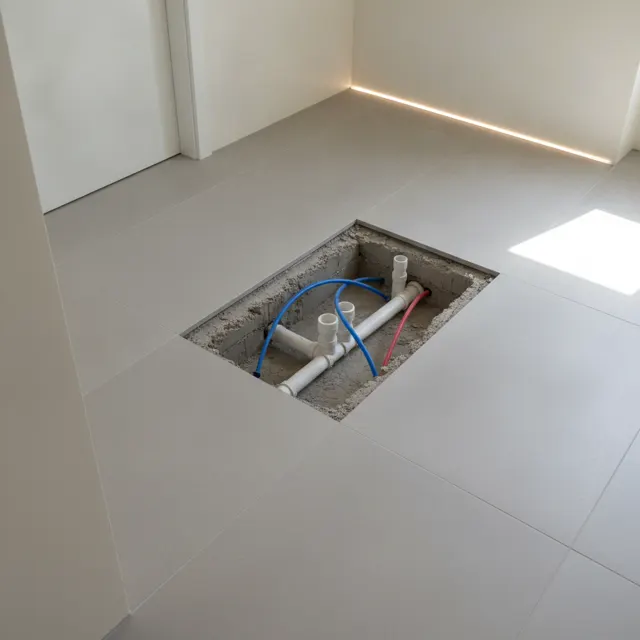
- Substrate preparation. If the screed is too thin, they build it up. Tradespeople cut a channel for the waste pipe and install a 50 mm pipe with a minimum 2 cm/m fall to the stack.
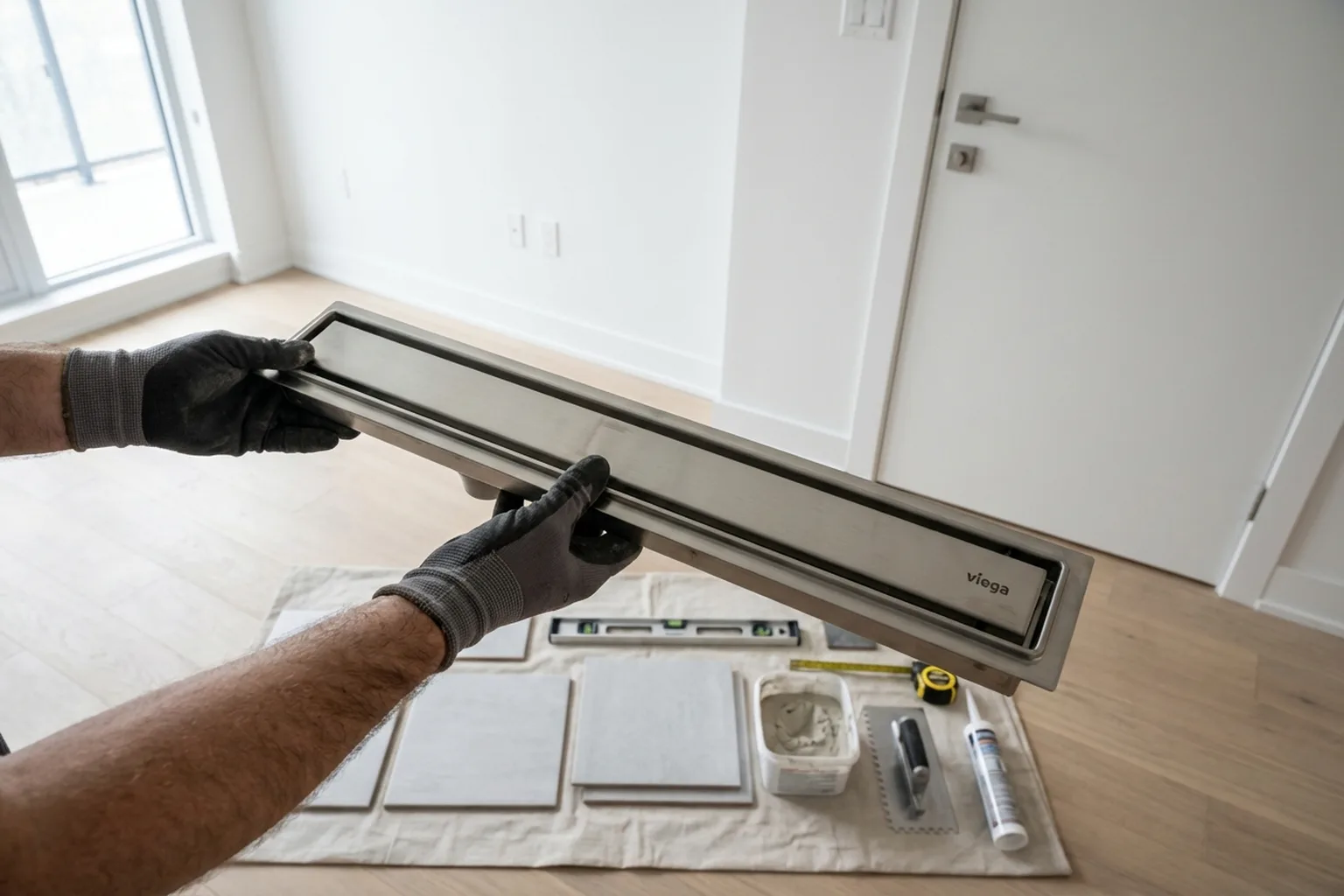
- Drain body installation. Viega Advantix, Geberit or Alcaplast: fixed into the screed and set at the right height with adhesive and tile thickness taken into account. Connected to the waste pipe. Pressure checked for leaks.
- Waterproofing. Mapei Mapelastic liquid membrane on the floor and walls (minimum 15-20 cm). Extra care at the drain-to-screed connection: sealing tape plus mastic. Tape on all corners and wall joints.
- Slope formation. Tradespeople pour the screed with the right fall towards the drain using guide rails. Checked with a straight edge: water has to run evenly from every point to the drain line.
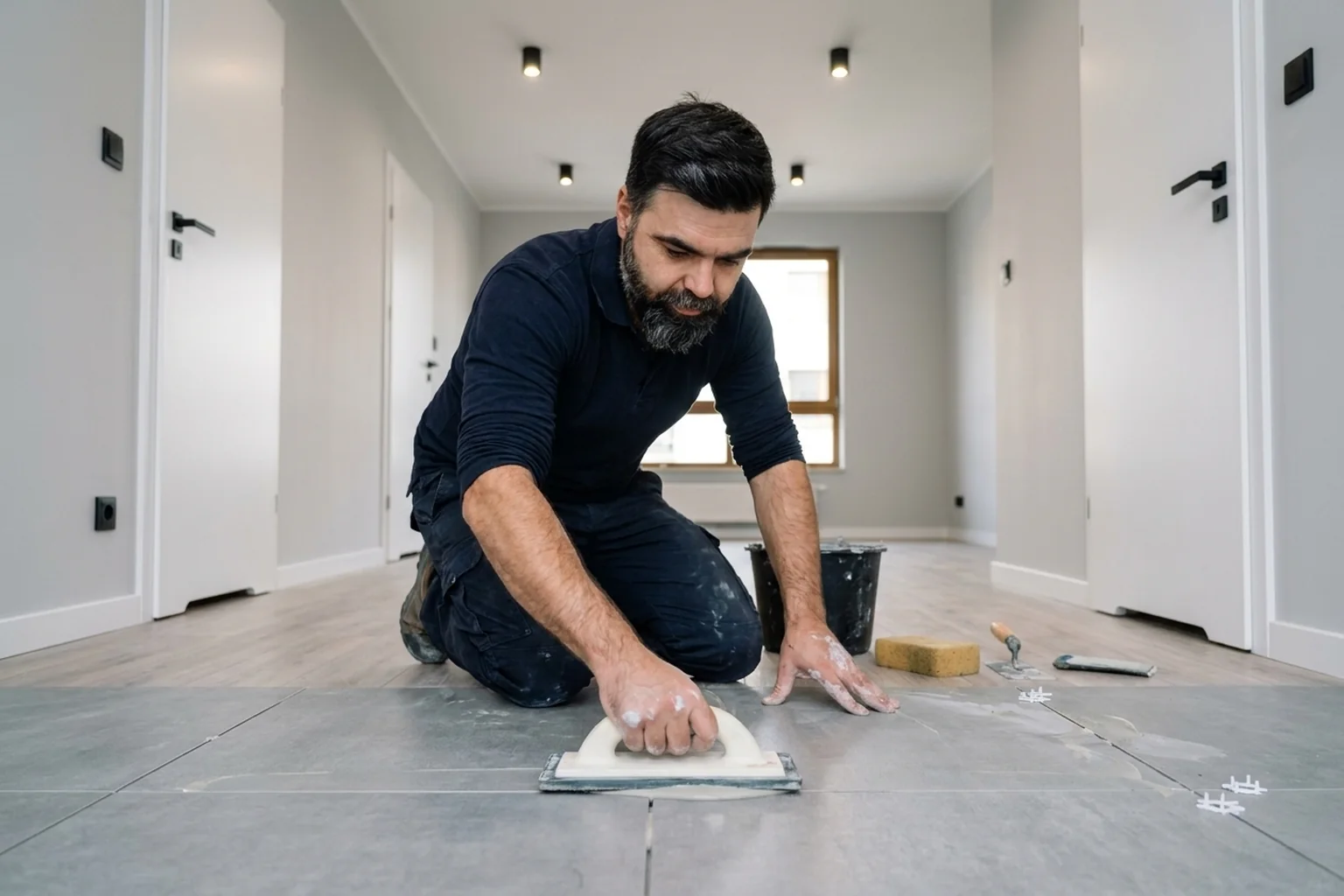
- Tile laying. Tradespeople begin at the drain and move towards the walls. Cutting around the drain is the key stage: a 2-3 mm gap filled with silicone. With large-format tiles the cut has to be dead straight — Rubi or Montolit with a diamond blade.
- Grouting and sealing. Joints: epoxy or hydrophobic grout. Tile-to-drain connection: Ceresit CS 25 sanitary silicone. Wall joint — silicone as well. Final check: flood test and confirm drainage.
Common mistakes with linear drain installation
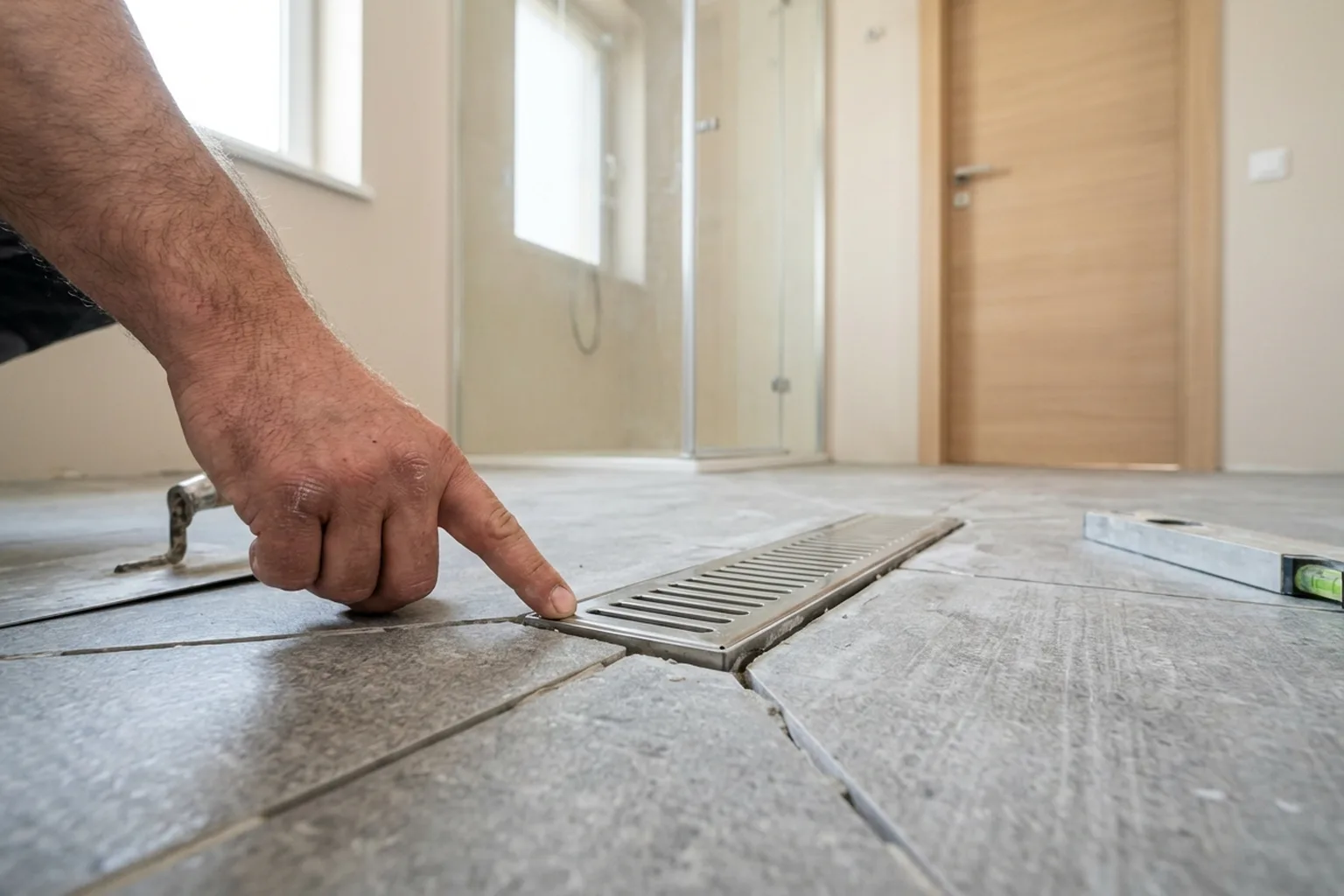
- Too little slope: water sits near the drain. The only fix is redoing the whole screed.
- Drain out of level: the grate ends up higher or lower than the tile surface.
- Bad waterproofing at the drain connection — this is where 80% of leaks start. Tape plus mastic is compulsory.
- Waste pipe without enough fall: slow drainage, dirt collecting inside, smell from the drain.
- Messy tile cuts around the drain: uneven gaps look bad and are difficult to seal properly.
- Rigid adhesive at the drain connection — thermal movement pushes tiles up. At the drain, the junction must be silicone only.
- No trap with water seal: sewer smell in the bathroom. Viega and Geberit have built-in seals: always check.
- Screed too thin — not enough room for the pipe, drain body, and slope. The whole floor has to be raised.
Important: a linear drain brings together plumbing, waterproofing, and tiling. A mistake at any step can lead to a leak into the flat below. If you do not have real experience with linear drains, they strongly advise getting a specialist in.
What to prepare before the technician arrives
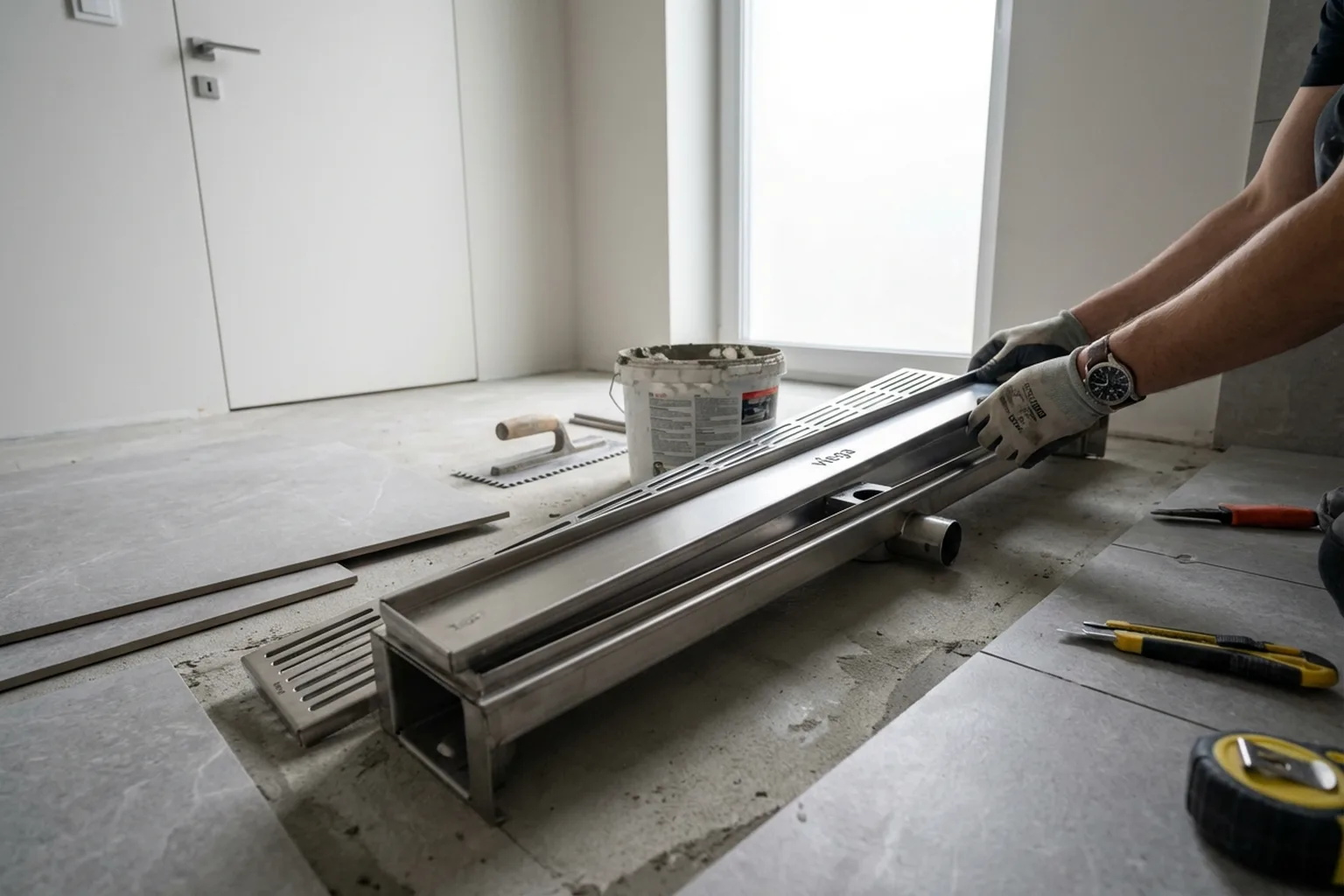
- Linear drain purchased: Viega Advantix, Geberit or Alcaplast, confirm the model and length with the technician.
- Waste pipe outlet prepared (or the technician can chase one).
- Waterproofing: liquid membrane (Mapei Mapelastic, Ceresit CR 166) plus tape.
- Tiles bought with 10-15% spare.
- Flexible adhesive (Ceresit CM 17, Mapei Keraflex).
- Epoxy or hydrophobic grout.
- Sanitary silicone (Ceresit CS 25).
- Check the screed thickness: this decides the scope of the work.
- Empty the bathroom completely.
- Make sure there is access to the waste stack and shut-off valves.
- Power and water supply available nearby.
- Give access details: intercom, lift, parking.
A real case from Warsaw: linear drain installation
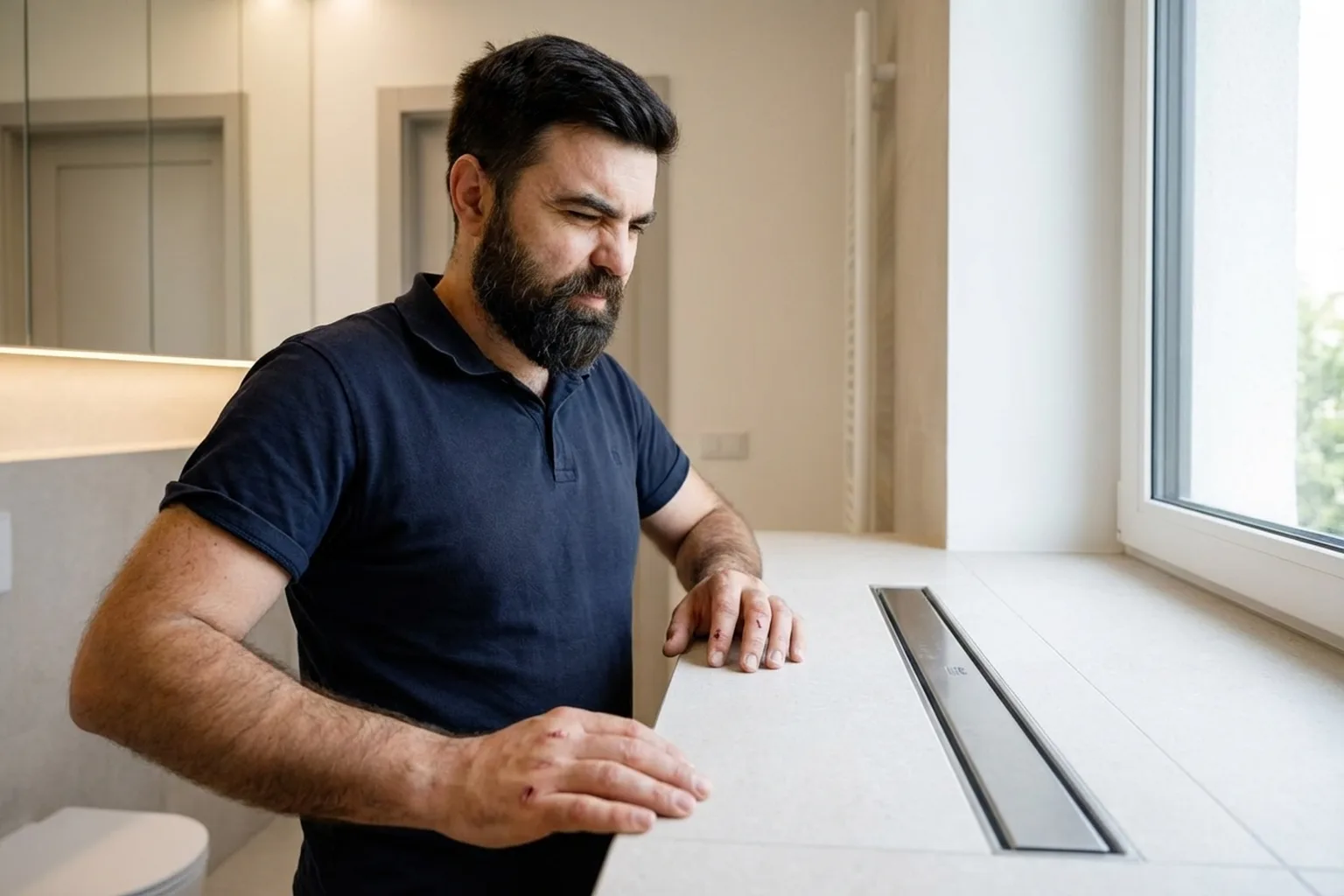
A new-build flat in Wilanów, 6 m² bathroom: the client wanted a walk-in shower with a Viega Advantix Vario 70 cm linear drain by the wall. The screed was thin (4 cm) and the waste outlet was in the opposite corner. Tradespeople chased a channel through the whole bathroom and installed a 50 mm pipe with a 2 cm/m fall. The drain was positioned flush with the future tile surface. Waterproofing: two coats of Mapei Mapelastic with sealing tape on every junction. Screed poured to fall using guide rails. Tiles — Paradyż 60×60 cm porcelain, cut around the drain on a Rubi with a diamond blade. The 3 mm gap was filled with Ceresit CS 25 sanitary silicone. Grout: Mapei Kerapoxy. The work took four days: one day for plumbing and waterproofing, one for screed (plus drying), two for tiles and grouting. The client said water now runs off instantly from the whole shower area: no puddles at all. The lesson: a linear drain needs the whole job handled properly, and saving money on waterproofing is the costliest mistake there is.
Frequently asked questions
Which drain should I choose?
Viega Advantix — dependable, slim body. Geberit: premium, quiet drainage. Alcaplast: budget-friendly, decent quality. The right choice depends on your budget and screed thickness.
Can a drain be installed in a finished bathroom?
Yes, but the work is more involved: tiles have to come off, the screed has to be redone, and the waste pipe needs routing. During renovation it is easier and cheaper.
What slope is needed?
Minimum 1-2% (1-2 cm per metre) towards the drain line from all sides.
Is waterproofing mandatory?
Yes, it is essential. Sealing tape at the drain junction is not optional.
How long does the full package take?
3-5 days: plumbing and waterproofing (1 day), screed and drying (1-2 days), tiling and grouting (1-2 days).
What tiles work best around the drain?
Small format (mosaic, 10×10) is easier for shaping the slope. Large format (60×60) is harder but gives a more modern look. It depends on the design.
What is included in the price?
Labour, consumables and travel. The drain, tiles, adhesive, grout and waterproofing are purchased by the client.
Will there be odour from the drain?
No, if the drain has a water seal. Viega Advantix and Geberit have built-in dry/wet traps. Tradespeople check this during installation.
Can the drain go in the centre?
Yes, but then the slope has to come from all four sides — more difficult. At the wall it is a one-direction slope, easier to make.
Who does the work

Linear drain installation with the full tiling package is done by technicians who know shower zones properly: combining plumbing, waterproofing, and accurate tiling. Tradespeople come with an electric tile cutter, diamond blades, chasing tools, and a full waterproofing kit. Tradespeople cover all of Warsaw and nearby suburbs.
Order in the app
Describe the job, add photos and the address. Tradespeople send their own prices and dates, and you pick one of the offers.
Open the app