Old Tile Removal in Warsaw — Wall and Floor Demolition
Removing Old Tiles in Warsaw — Demolition of Walls and Floors
Before new tiles can go down, the old finish has to be stripped off. On paper it looks straightforward, but on site it means dust everywhere, a lot of noise, hard manual work, and a real chance of harming the substrate. In older Warsaw buildings in Praga or Ochota, tiles are often set on a finger-thick bed of cement mortar — taking them off with a Bosch or Makita demolition hammer can easily take an hour per square metre. In newer Wilanow developments, tiles are usually fixed with thin-set adhesive — quicker to remove, but you have to work more carefully so the screed is not damaged. We remove tiles all over Warsaw and get the substrate ready for the next finish.
What the job costs and what changes the price
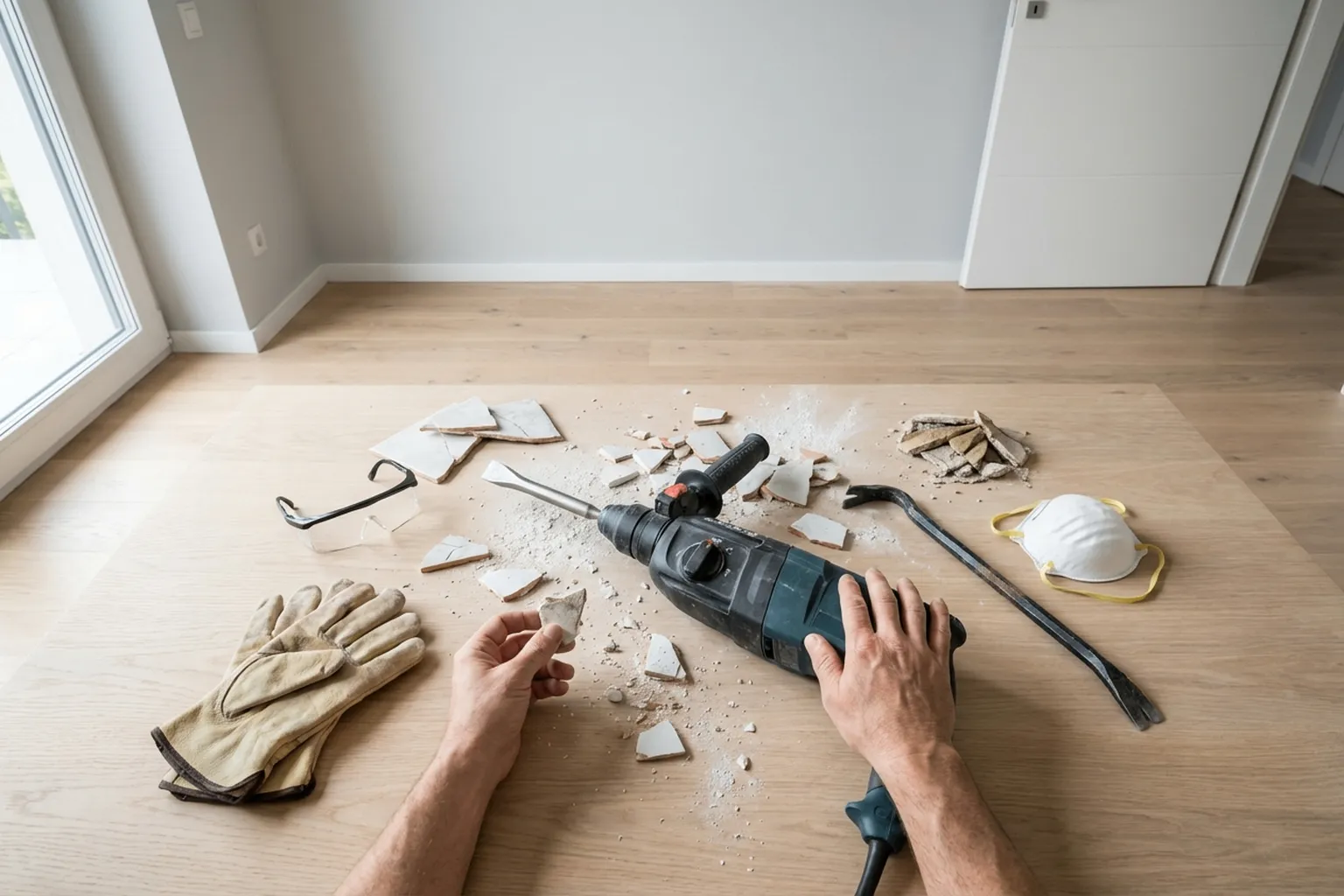
The price is based on the area, the fixing method (adhesive or cement mortar), the thickness of the layer, and the kind of substrate underneath (concrete, brick, plasterboard). Tiles fixed on thin adhesive come off quicker and cost less. On thick mortar — the work is slower and more demanding. Removing adhesive leftovers and smoothing the substrate is priced separately. Waste removal is also a separate charge. Current rates are shown in the table below.
| Service | min | max |
|---|---|---|
| Old tile removal | 40 zł/m² | 100 zł/m² |
| Substrate preparation for tiles | 40 zł/m² | 80 zł/m² |
| Waterproofing under tiles | 30 zł/m² | 60 zł/m² |
| Standard tile up to 60 cm | 120 zł/m² | 160 zł/m² |
| Tile 60–120 cm | 160 zł/m² | 220 zł/m² |
How the job is done on site
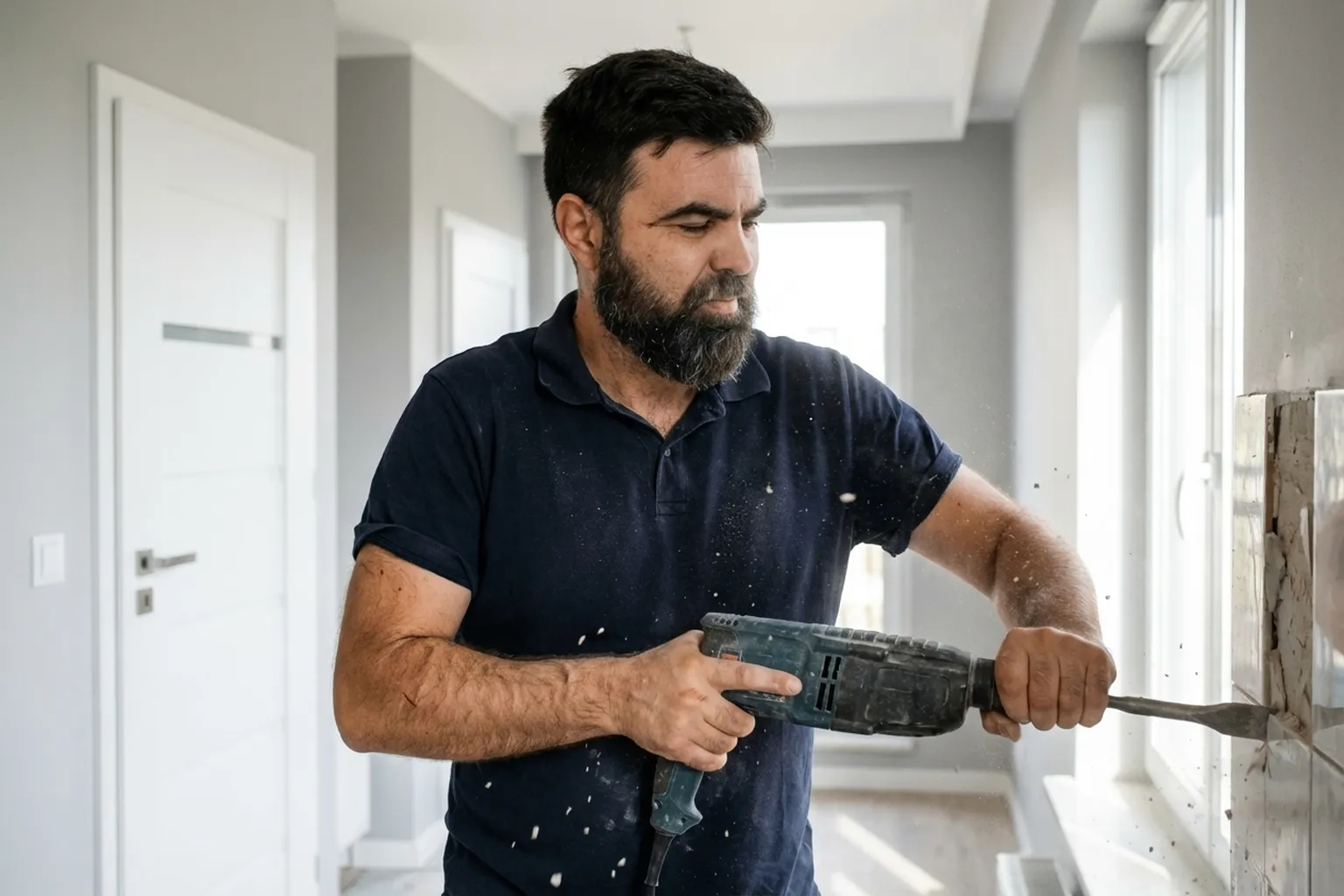
- Assessment. We check how the tiles were fixed, what condition the substrate is in, and whether any pipes or cables run behind the tiled surface.
- Room protection. We cover the bathtub, toilet, fittings and doorways with sheeting. There will be plenty of dust.
- Demolition. We use a Bosch or Hilti demolition hammer with a flat chisel, starting from an edge. The tiles are taken off together with the adhesive layer.
- Substrate cleaning. Once the tiles are off, lumps of adhesive are left behind. We chip them away and grind the surface smooth.
- Substrate inspection. Under old tiles we sometimes uncover crumbling plaster, cracks in the screed, or damaged waterproofing. We let the client know.
- Clean-up. Rubble is packed into bags and taken out. The room is vacuumed.
Frequent demolition mistakes
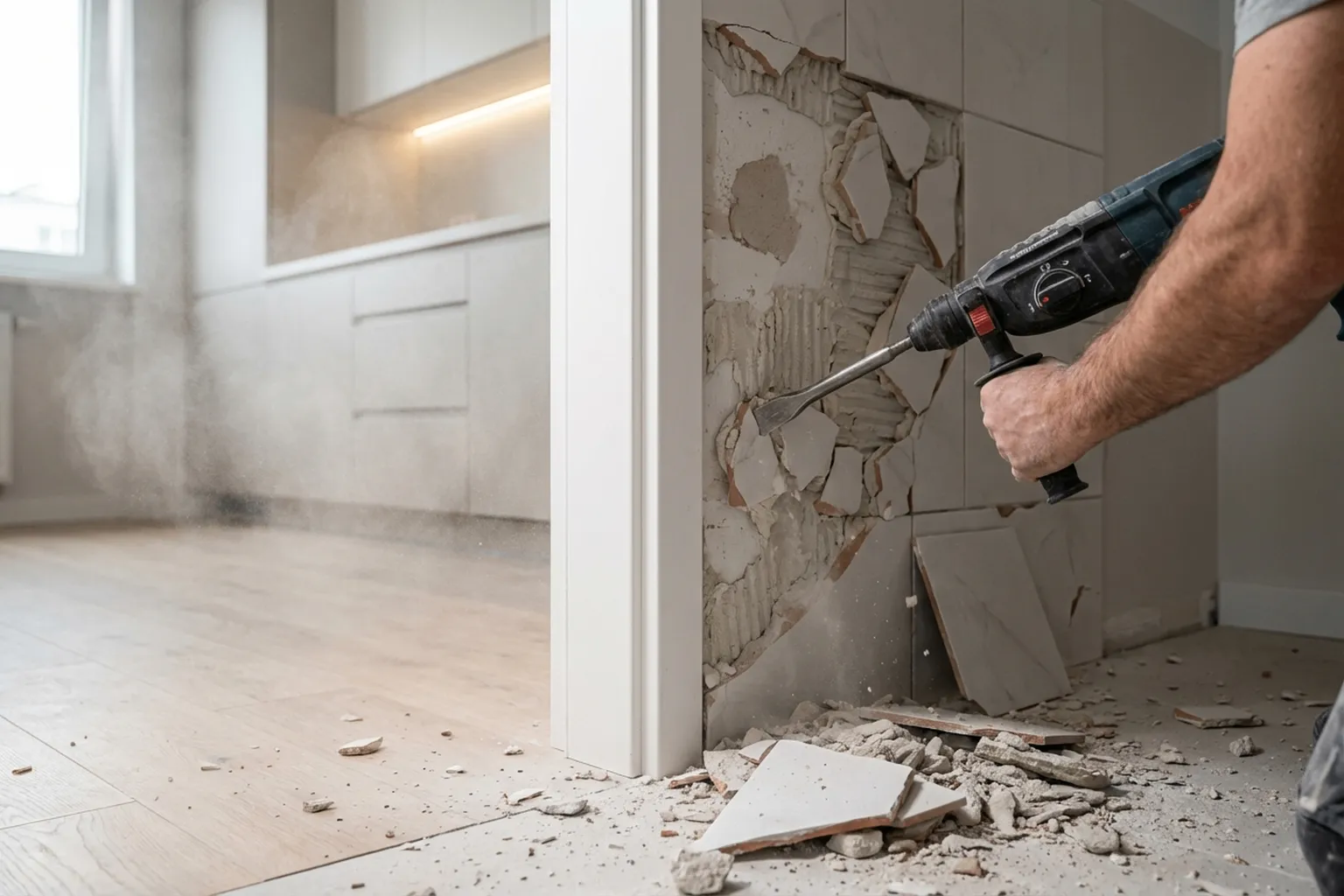
- Chiselling too deep — this damages the screed or the wall. The chisel depth has to be controlled.
- No protection for fixtures — broken tile pieces scratch the bath, basin and toilet.
- Ignoring hidden services — pipes and cables can run behind the tiles.
- Leaving adhesive behind — high spots make the surface unfit for new tiles.
- Breaking off plasterboard — the board comes apart with the tiles. In that case it is easier to replace the whole sheet.
- Not clearing rubble in time — bags stack up and get in the way.
What to get ready before the technician arrives
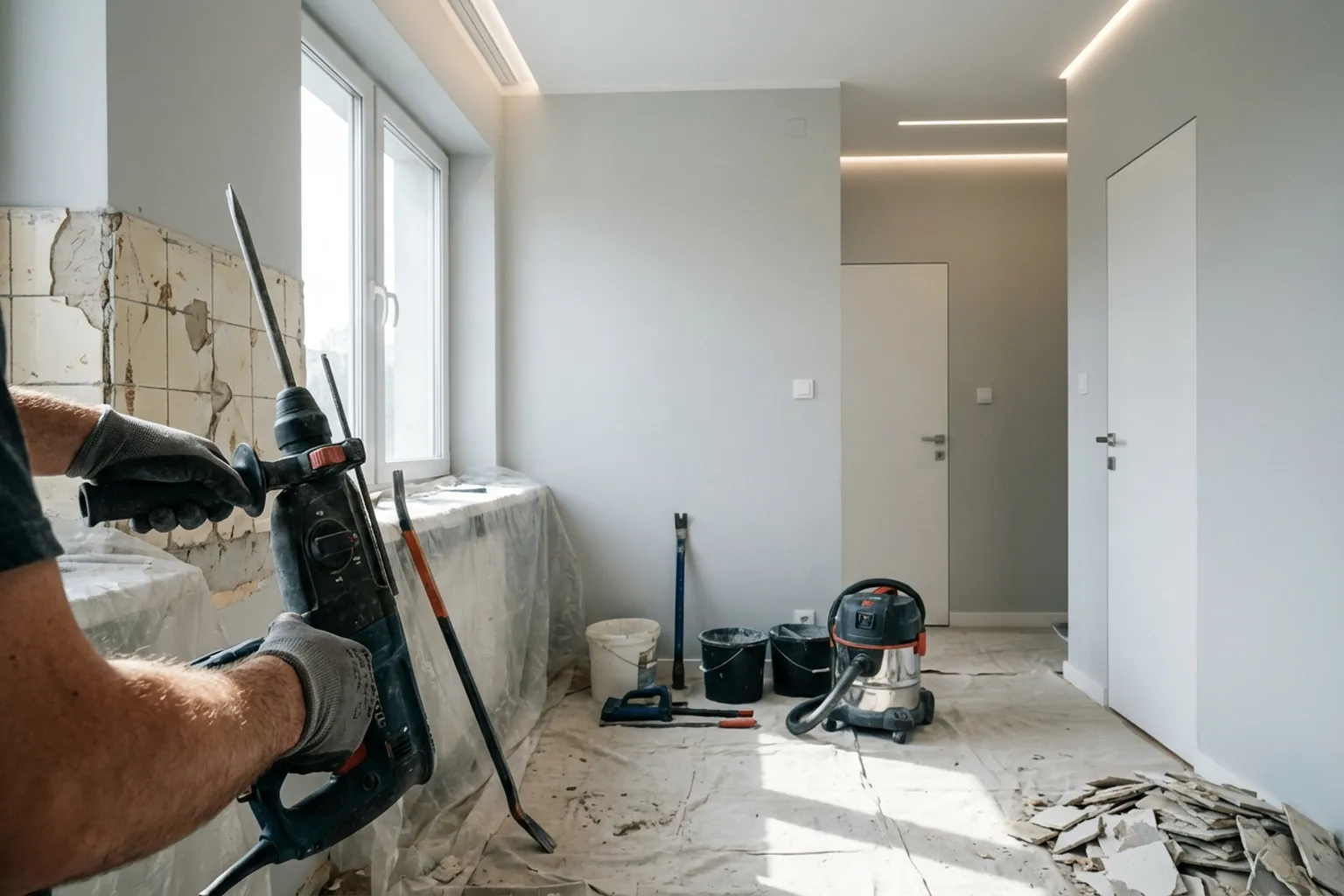
- Remove furniture, appliances and personal belongings from the room.
- Turn off the water if the demolition is close to plumbing.
- Seal doorways with sheeting — dust travels through the whole flat.
- Check whether any hidden services run behind the tiles.
- Have heavy-duty rubble bags ready (40-60 litres).
- Arrange waste collection — this is a separate service.
- Make sure there is power for the demolition hammer.
- Inform the neighbours — tile removal is one of the loudest jobs around.
- If some tiles must be kept intact — mention it beforehand (careful removal costs more).
- Confirm access: intercom, floor, lift.
A real job from Warsaw

A bathroom in Ochota, 1970s block, 4 m² of walls and floor. Old 15×15 tiles laid on cement mortar 2-3 cm thick. Hilti TE 30 with flat chisel — we removed them one by one, with the mortar coming off in chunks. Behind the wall tiles we found old oil-based paint — that had to come off or the new adhesive would not stick. The floor screed had cracks — we reported this to the client. Full demolition took one day for two workers. We carried out 15 bags at 30 kg each. The room was left ready for levelling and new tiling (compatible with Paradyż, Tubądzin, Cersanit and similar).
Frequently asked questions
Can new tiles be laid over old ones?
Technically yes, if the old tiles are solidly bonded and level. But the floor height goes up by 15-20 mm — check the door thresholds.
How long does removal take?
A bathroom of 5-7 m² on adhesive — about one day. On cement mortar — one and a half to two days.
Will the hammer damage the wall?
With careful work — no. On plasterboard, the sheet gets destroyed and is easier to replace in full.
Does adhesive residue need to be removed?
Yes. Any lumps left behind create an uneven surface and stop the new tiles from sitting flat.
Where does the rubble go?
Broken tiles are heavy construction waste. Bagging and carrying them out is a separate service.
Can I do the removal myself?
Yes, but you will need a demolition hammer, safety goggles, a dust mask and some stamina. The job is loud, dusty and physically hard.
What if defects are found underneath?
Cracked screed, old paint — these issues have to be dealt with before new tiles are installed. The technician will check the scope and cost.
How noisy is it?
A demolition hammer is one of the loudest tools on site. Work is carried out during daytime hours (8-18) in line with building rules.
Are materials included in the price?
No materials are needed for demolition. The price covers labour and tools. Bags and removal are charged separately.
Can tiles be removed intact for reuse?
On thin adhesive — sometimes. But in most cases the tiles break during removal. Careful removal costs more.
Who carries out the work
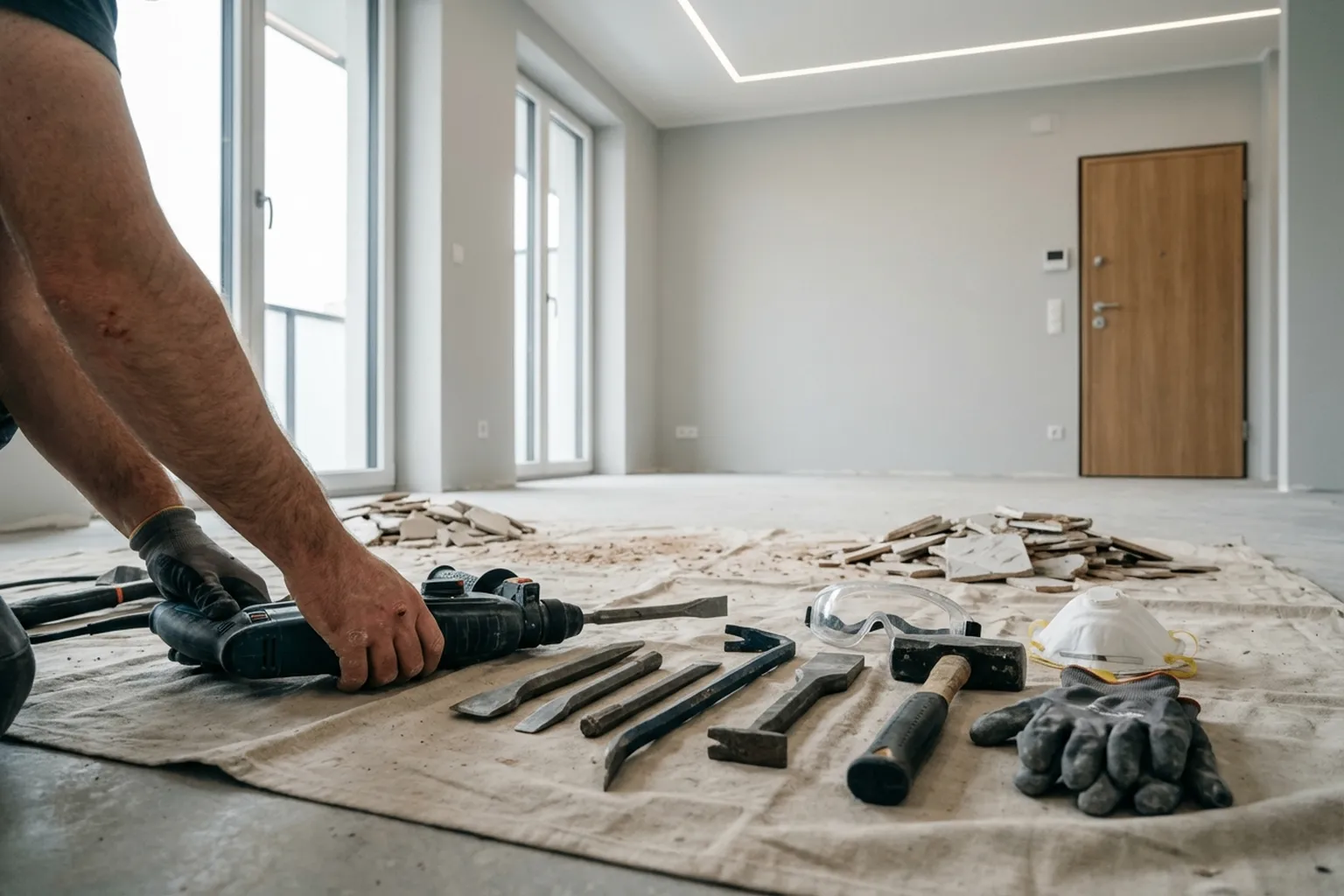
Tile removal is done by technicians using professional equipment — Bosch, Makita and Hilti demolition hammers, plus grinding tools. We work fast but carefully, control the depth, and protect fixtures. We cover all of Warsaw. Call or message — we will check the scope and give you a price.