Lafarge, Nida, Siniat: what’s in a name
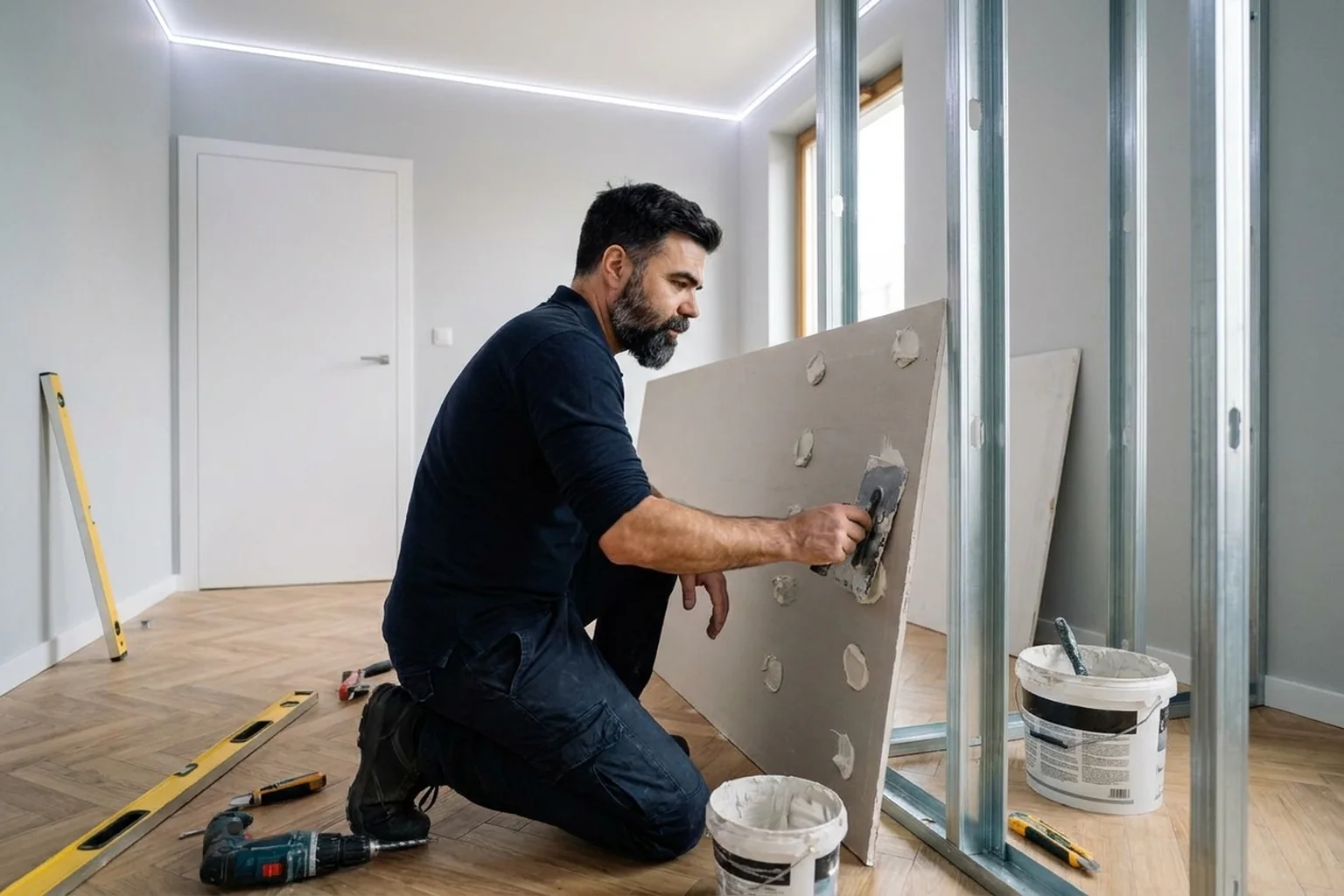
In Poland, Lafarge plasterboard was sold as Nida Gips. That line later moved under the Siniat brand, so Siniat is what you’ll usually see in the shop today, with “Nida” still in the product names. For the fitting itself it makes no difference. What matters is the board type and keeping studs, screws and compounds within one system.
The board type follows the location. Moisture-resistant in bathrooms and kitchens, standard in living rooms, fire-rated near a fireplace or on an escape route. The marking is printed on the board edge and the pack label.
Rather hand the job over? More here: apartment finishing in Warsaw.
Boxing in and ceilings are two different jobs
A pipe in the bathroom gets boxed in with a stud frame. The key part is an access hatch at the valves and the cleaning eye. Without it, the first leak means breaking open the new boxing and the tiles on it.
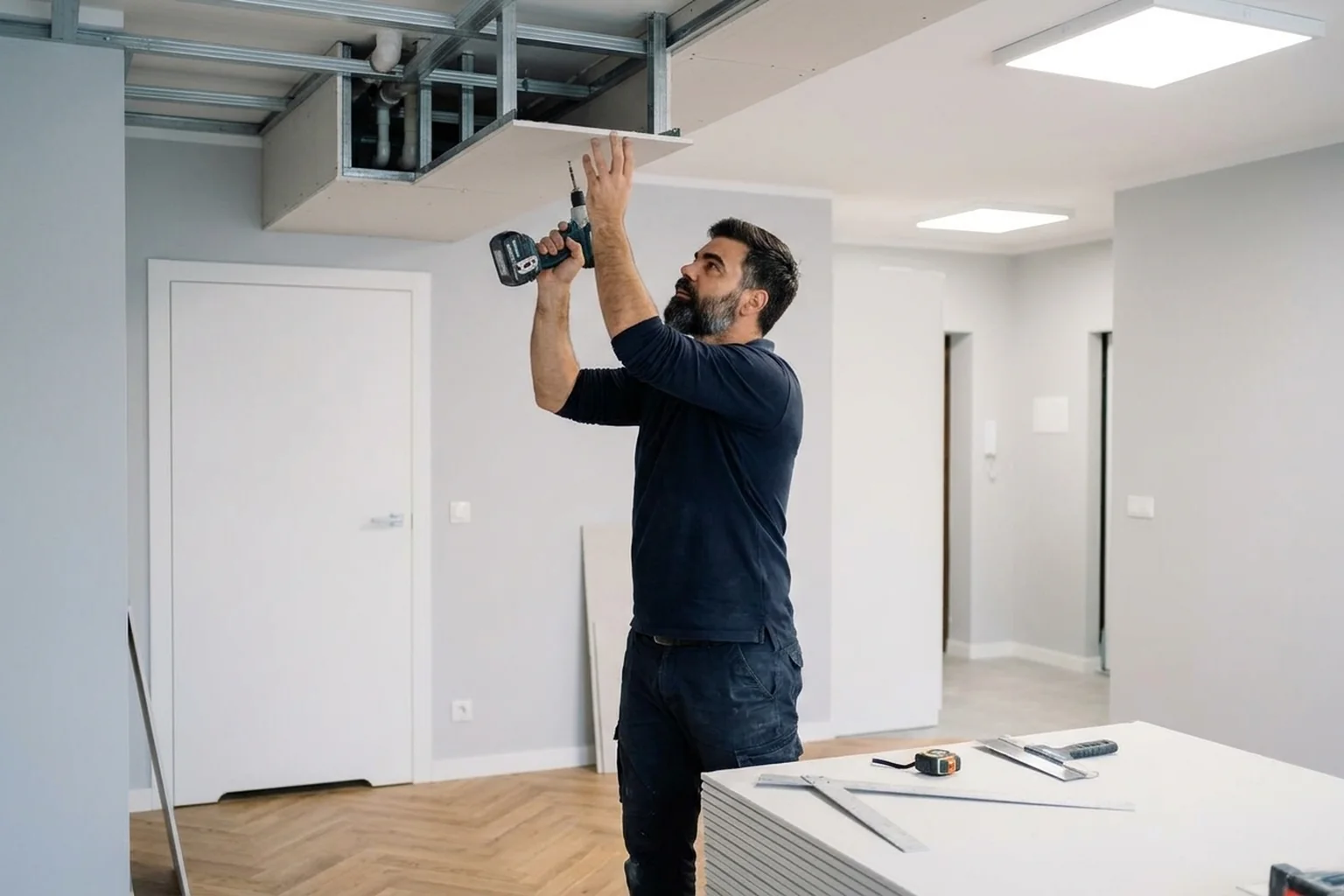
A suspended ceiling hangs on hangers and is levelled across the whole room. Dropping it a few centimetres gives space for downlight cables and hides a crooked slab. If the ceiling is meant to cover a water stain, find and fix the leak first. Plasterboard won’t stop water.
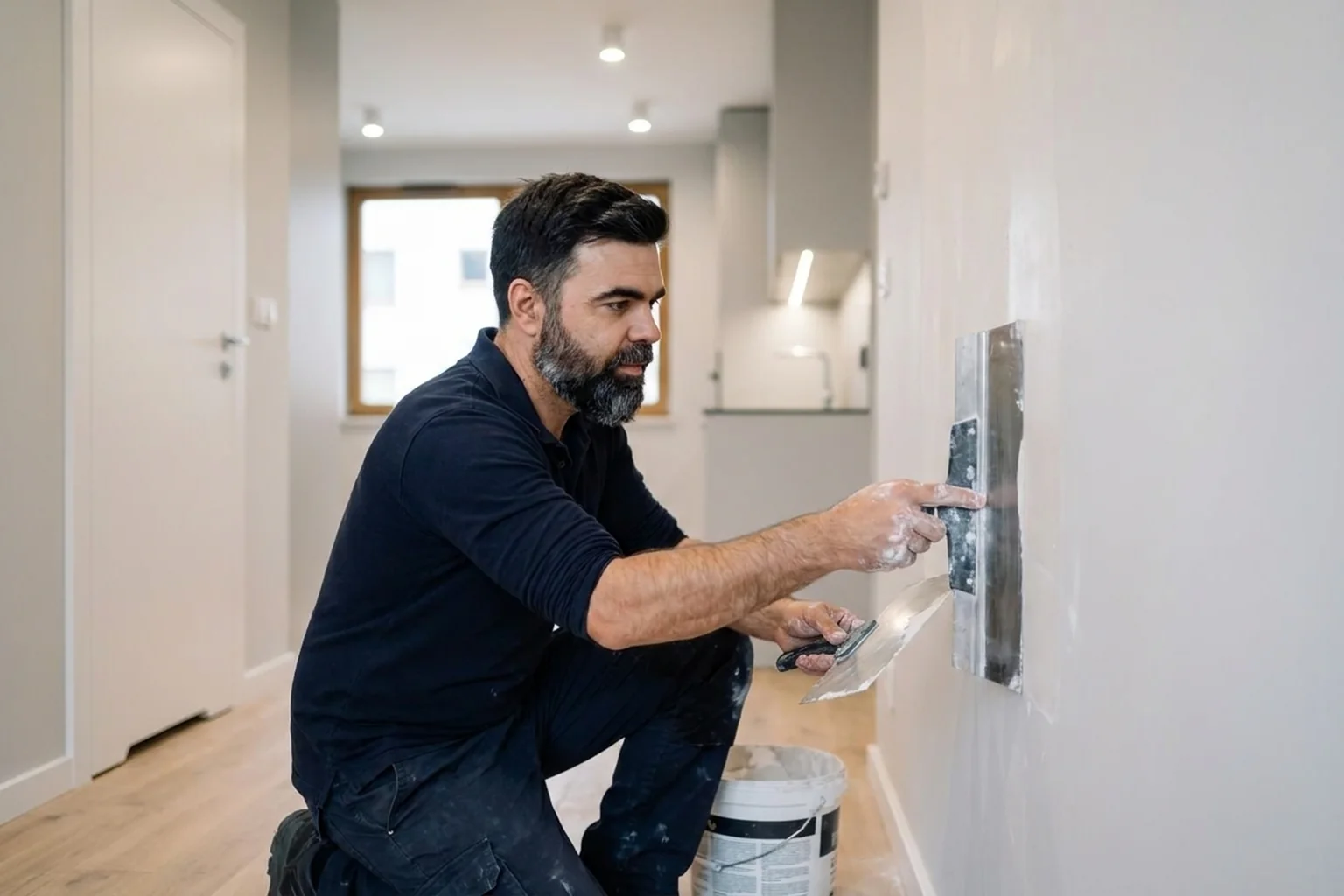
Smaller repairs come up too: a hole from a door handle, a cracked joint, a dent from furniture. The damaged piece is cut out, a patch goes in on a backing strip, and it’s filled and sanded.
Where it goes wrong
- Boxing with no hatch. A valve starts dripping and everything comes apart.
- Ceiling on too few hangers. Over time the boards sag into waves.
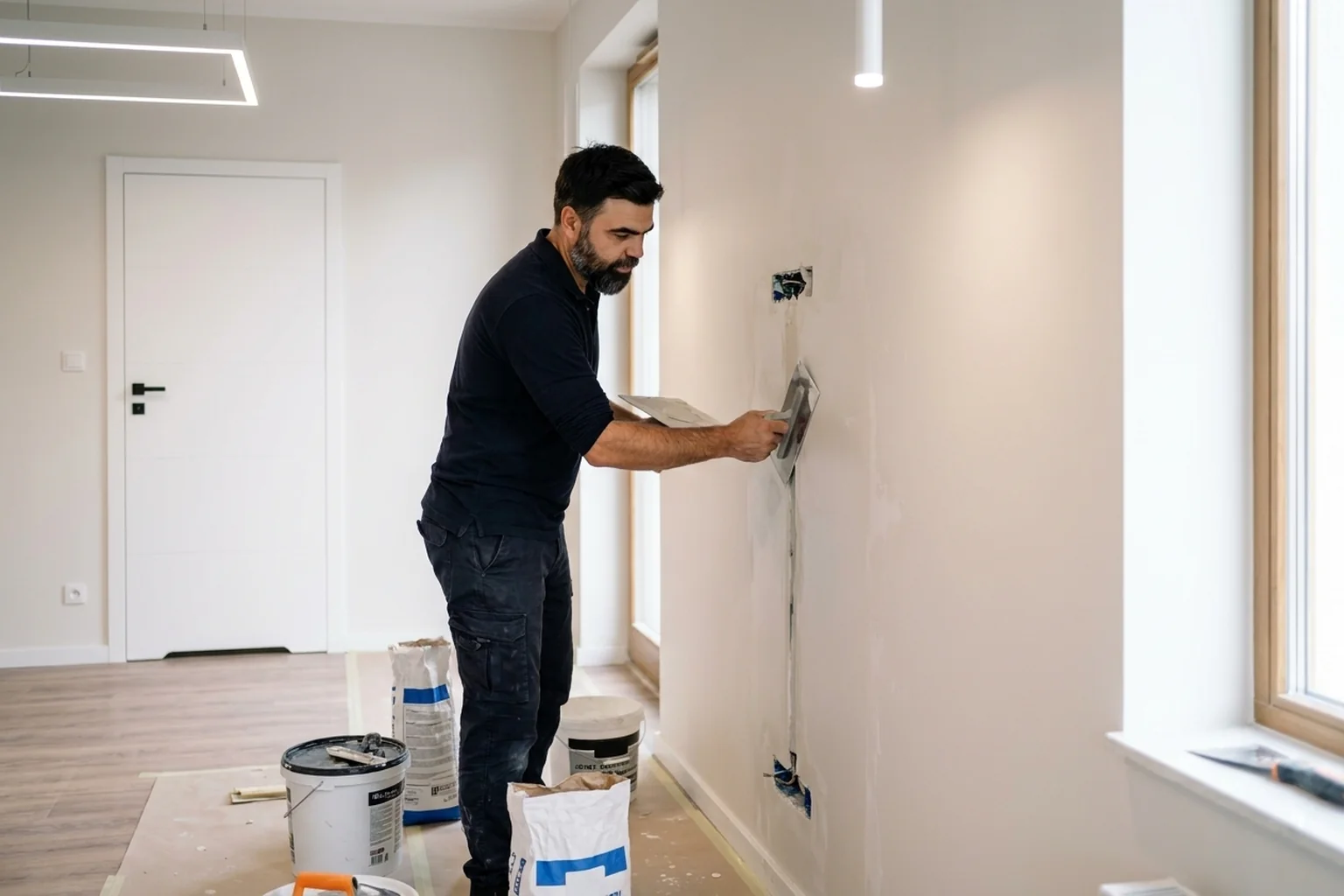
- Joints filled without tape. After a heating season a crack appears.
- Standard board over a shower. The paper soaks up moisture and grows mould.
Getting ready
- Photograph the pipes, valves and where you want the hatch.
- For a ceiling with lights, decide where they go. An electrician connects them with the power off.
- After a leak, make sure the slab has dried out.
- Clear the room: there will be a lot of gypsum dust.
Booking it
In the app, describe what needs boxing in or lowering and add photos. Warsaw tradespeople send bids, each with their own price and date. Choose on price and reviews; the phone number and address show up after you pick.
You pay the tradesperson directly and they invoice you. Screws and plugs are usually included; boards, studs, the hatch, compounds, rubbish removal and carrying materials up are extra. The tradesperson redoes their own joints and fitting, but old pipes and a neighbour’s leak are not their responsibility.
Order in the app
Describe the job, add photos and the address. Tradespeople send their own prices and dates, and you pick one of the offers.
Open the app