
579 328 023

Wooden Countertop Installation in Warsaw — Oak, Beech, Ash

Wooden Countertop Installation in Warsaw — Oak, Beech, Ash

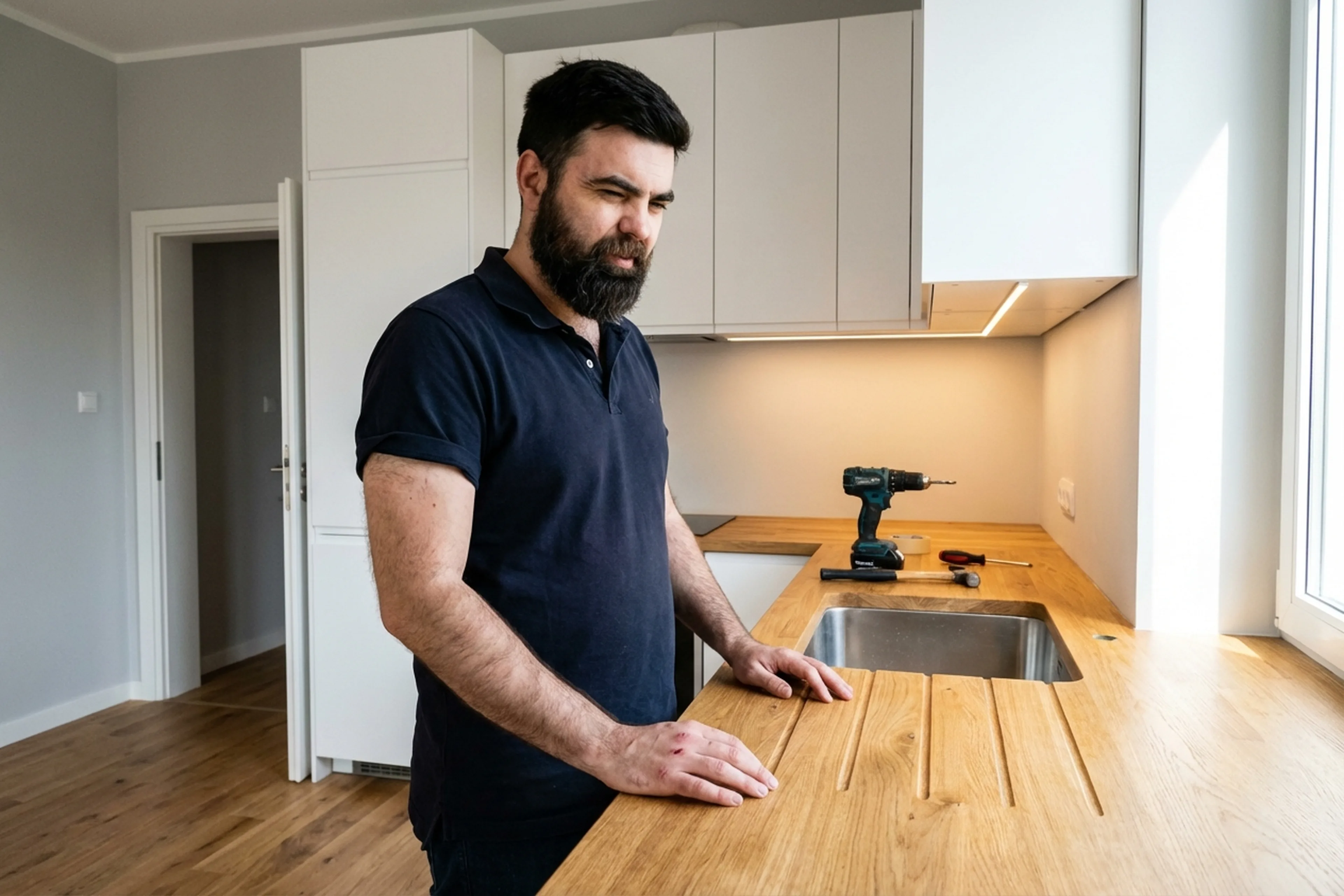
A wooden countertop in the kitchen looks great, feels warm to the touch, and lasts for years — if installed properly. Oak, beech, ash — solid wood or glued panels — require a different approach compared to laminate. Wood is heavier, reacts to moisture, needs oiling, and must have expansion gaps. We work across all of Warsaw: from Mokotow to Zoliborz, arriving with a router, sander, and all mounting hardware.

Current prices for kitchen services
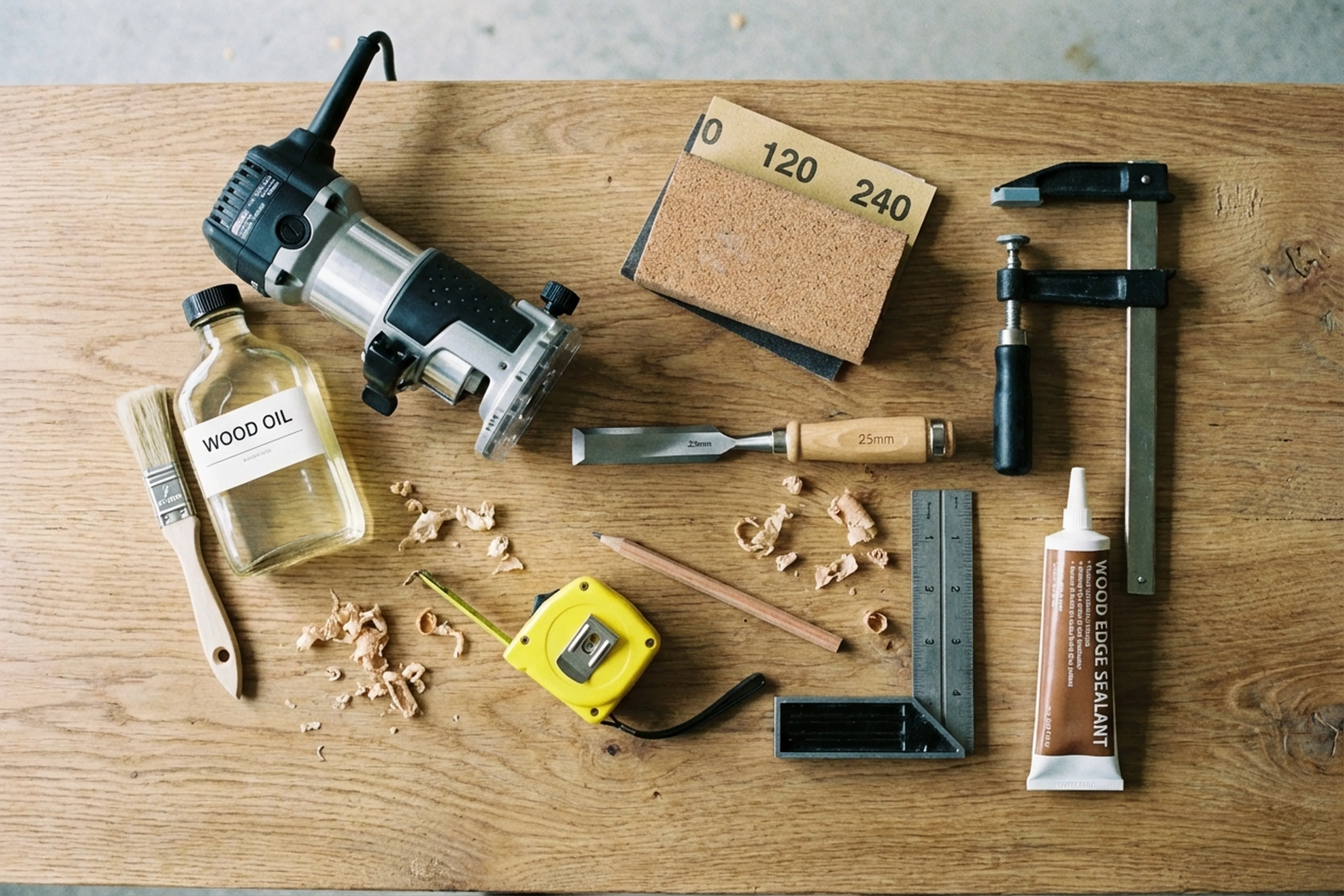
The cost of installing a wooden countertop depends on the length, number of cutouts (sink, hob), wood species, and the condition of kitchen cabinets. The exact price is confirmed by the technician after measuring. Mounting hardware is included; oil and sealant are charged separately. Current rates for all kitchen work are listed in the table below.

Serviceminmax
Kitchen furniture installation (complete set) 20% od ceny25% od ceny
Kitchen base cabinet installation 250 zł400 zł
Wall cabinet installation 250 zł400 zł
Kitchen cabinet door adjustment 80 zł150 zł
Hinge replacement 60 zł/szt120 zł/szt
Kitchen countertop installation 200 zł/mb350 zł/mb
Laminate countertop installation 150 zł/mb250 zł/mb
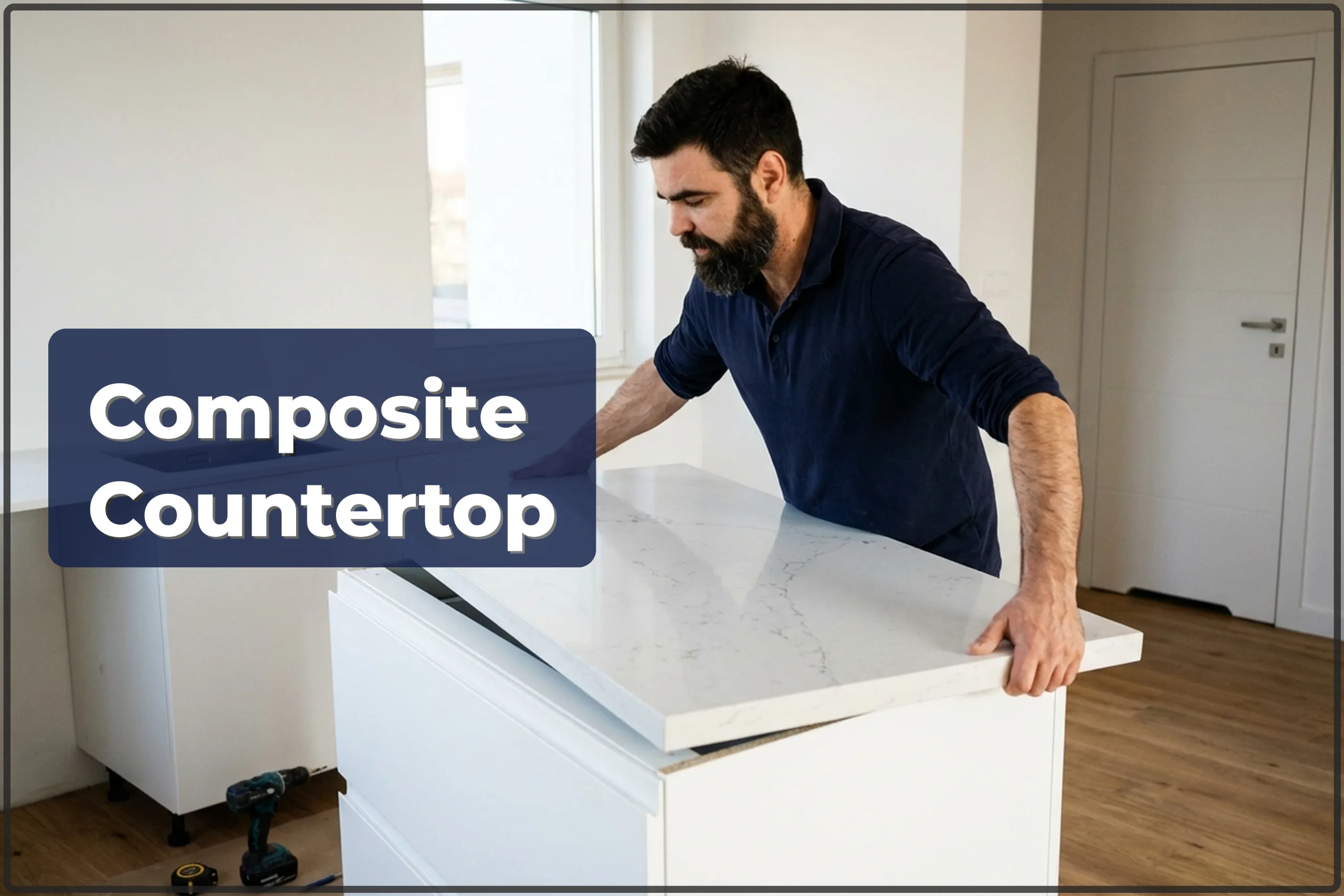
Composite countertop installation 250 zł/mb400 zł/mb
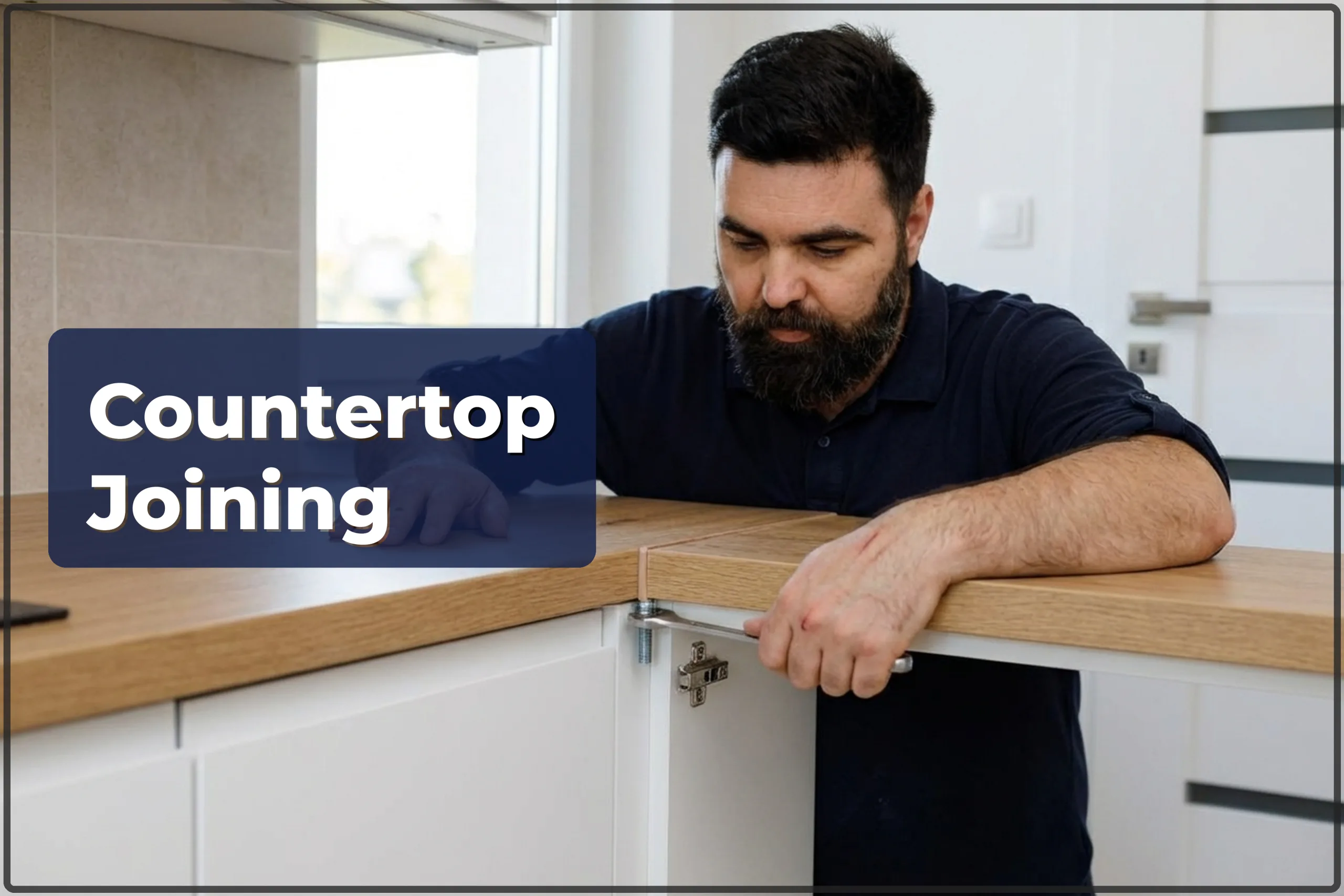
Countertop joining 190 zł/szt300 zł/szt
Countertop cutout (sink / hob) 120 zł/szt200 zł/szt

How the countertop installation works on site
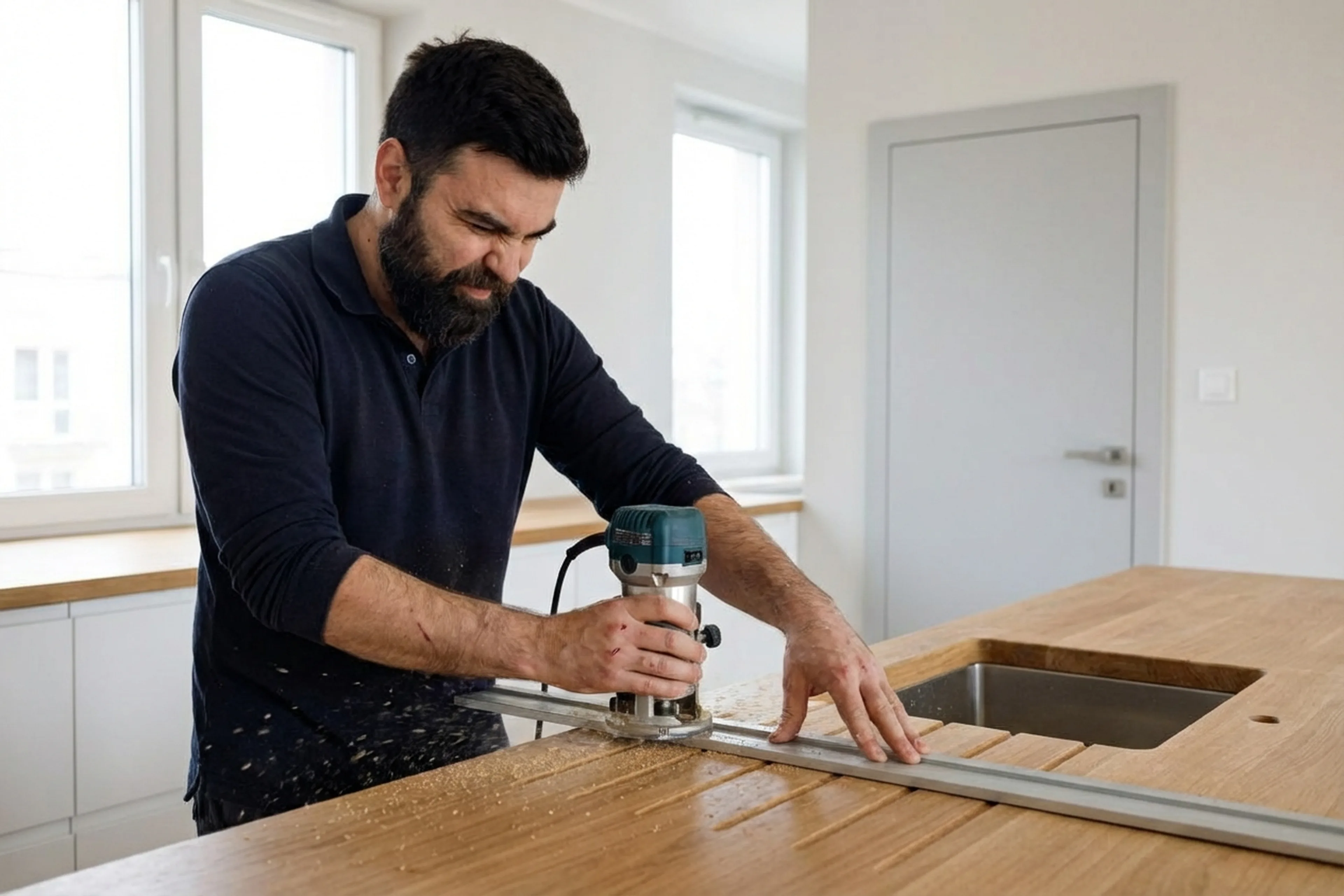
  1. You send kitchen dimensions and photos — the technician assesses the scope of work.
  2. We agree on a date. On site, the technician checks cabinet and wall levels.
  3. The countertop is marked and trimmed to size, leaving expansion gaps at the walls (3–5 mm on each side).
  4. Cutouts for the sink and hob are made with a router using a template — edges are finished and sealed.
  5. The countertop is secured to the cabinets from underneath with brackets and screws. Joints (if any) are connected with bolts and sealed with silicone.
  6. A wall-edge strip is installed and the junction with the wall is sealed.
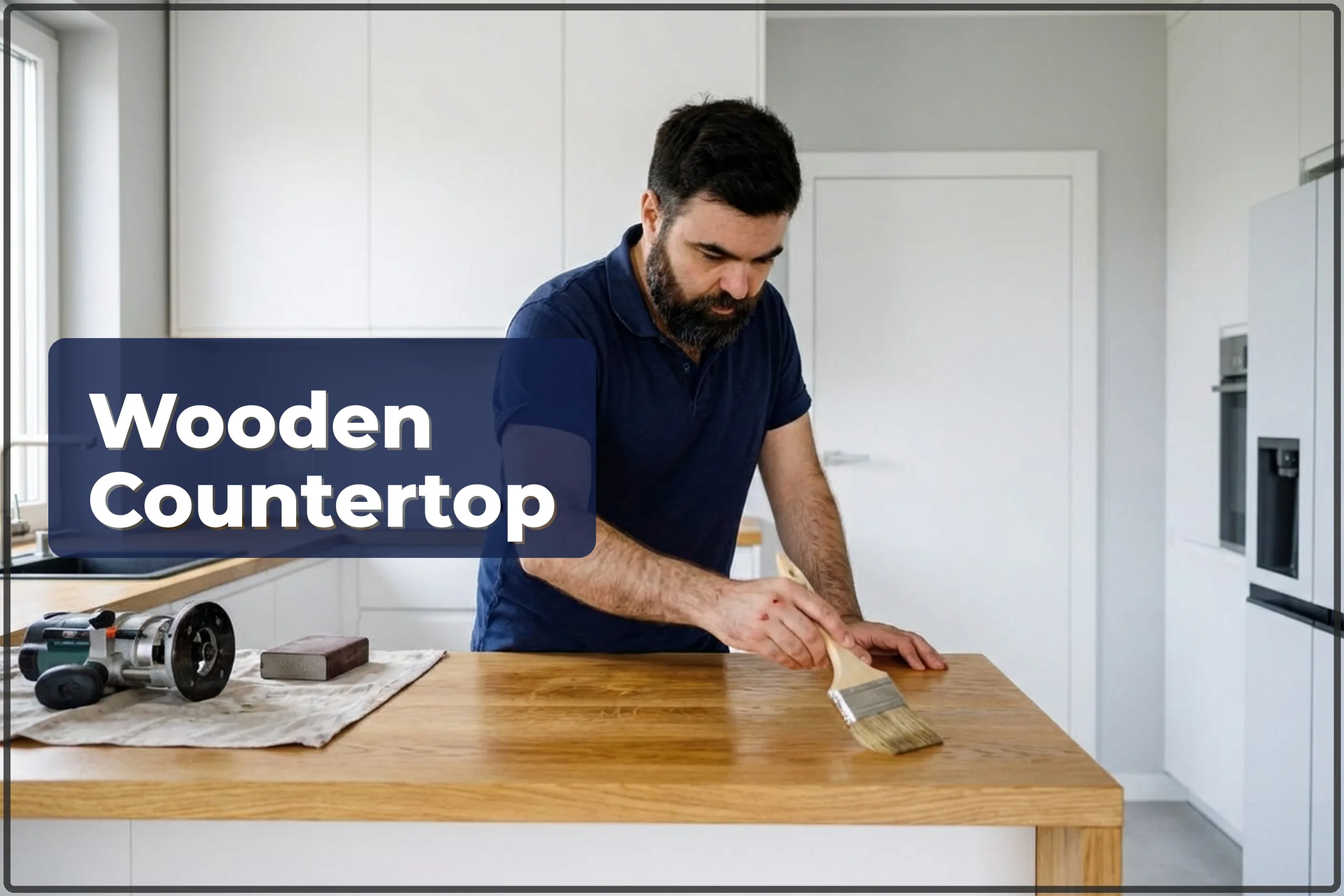
  7. The surface is coated with oil or varnish in 2–3 layers — the technician explains how to maintain the finish.

Common mistakes when installing a wooden countertop
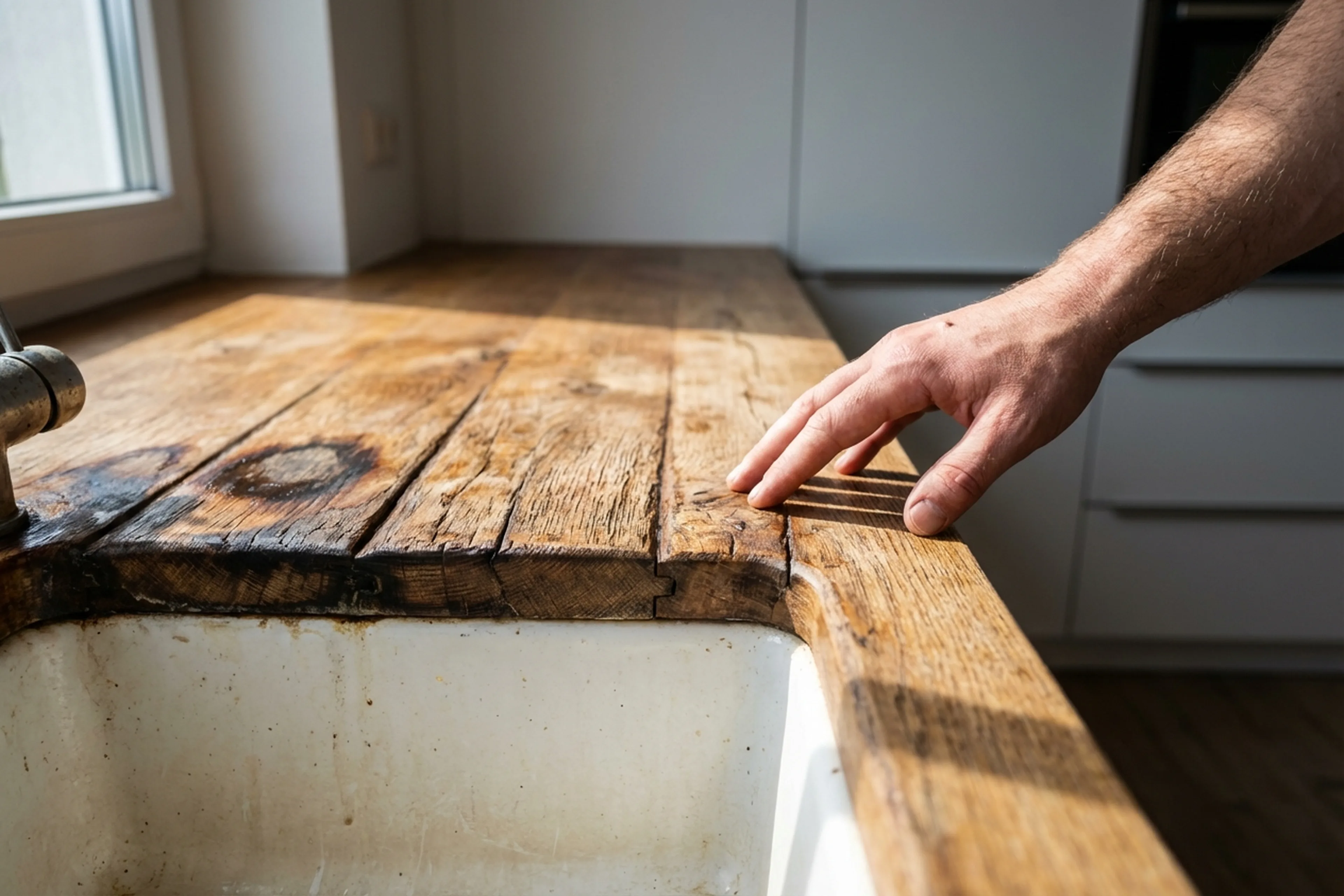
  • No expansion gaps at the walls — wood swells with moisture, the countertop pushes against the wall and bows upward.
  • Rigid fixing to the cabinet — the wood cracks when it expands. The correct method: oval mounting holes that let the wood move.
  • Failing to seal the edges of sink cutouts — water soaks in, the wood turns black and swells within a few months.
  • Buying an untreated countertop and leaving oiling ‘for later’ — without oil, the wood absorbs stains from day one.
  • Placing a hot pan directly on the wood — it leaves a white mark that can only be removed by sanding.
  • Joining two sections without bolts and sealant — after six months water and dirt build up in the seam.
  • Choosing a soft species (pine, birch) for the work area — it scratches and dents easily from knives.

What to prepare before the technician arrives

  • Make sure the countertop has been delivered and brought into the flat — carrying heavy materials upstairs is a separate charge.
  • Check that all base cabinets are assembled, levelled, and fixed to the wall.
  • Have exact dimensions of the sink and hob ready (or the actual appliances for fitting).
  • Clear the kitchen of dishes and small items — the technician needs open workspace.
  • If the wall is uneven — let us know: scribing to the contour may be required.
  • Buy countertop oil in advance (Osmo, Biofa, Bona) — the technician will apply the first coat.
  • Provide a power socket for tools (router, jigsaw, sander).
  • Confirm access to the building and parking options — a countertop can be over 3 metres long.
  • If you need packaging and offcuts removed — mention it in advance, it is a separate service.
  • Ensure ventilation: sanding produces dust, oiling produces fumes.

A real case from Warsaw

A client in the Praga-Poludnie district ordered installation of a 3.2-metre oak countertop for a corner IKEA kitchen. During measuring, we found the wall was 12 mm out of plumb — the countertop had to be scribed and trimmed with a belt sander. The corner joint was connected with euro-bolts, sealed with silicone, and tightened — the seam came out flush with no step. The sink cutout was made with a router — we immediately coated the edges with two layers of Osmo oil to stop water from penetrating the wood grain. The countertop was fixed to the cabinets through oval holes — so seasonal expansion won’t cause cracks. The whole job took about 5 hours. A week later the client sent a photo — the countertop had darkened half a shade (a normal reaction of oak to oil) and looked fantastic. Takeaway: wood demands precise fitting and mandatory edge protection — skip that step and the countertop will swell at the sink within a season.

Frequently asked questions

Which wood species is best for a kitchen countertop?
Oak and ash are the best choice: hard, moisture-resistant, and they age beautifully. Beech is good but more sensitive to water. We don’t recommend pine or birch for the work area.

Oil or varnish — which is better for a wooden countertop?
Oil is easier to maintain: if a scratch or stain appears, you sand the spot and reapply oil. Varnish lasts longer but if damaged you need to strip the entire layer. Oil is the usual choice for kitchens.

How often does the oil finish need refreshing?
The area around the sink — every 3–4 months. The rest of the surface — every 6–12 months. It takes 15 minutes: wipe down, apply oil with a cloth, let it dry.

Can a wooden countertop go next to the sink?
Yes, as long as the cutout edges are thoroughly sealed. The technician coats them with oil or silicone. The main thing is not to leave puddles of water on the surface.

What is included in the installation price?
Labour, mounting hardware (brackets, screws, bolts), trimming to size, cutouts. Oil, sealant, and wall-edge strip are charged separately if not already purchased.

How long does the installation take?
A straight kitchen with no joints — 3–4 hours. A corner layout with sink and hob cutouts — 5–7 hours. Plus drying time for the oil.

Who does the work

Wooden countertop installation is carried out by technicians experienced in woodwork — routing, sanding, and oil finishing. We cover all of Warsaw and the surrounding areas. Minimum order — from 200 zl. To book, call or message us — we reply within an hour and advise on what to prepare before we arrive.

Reviews from our clients

Wooden Countertop Installation in Warsaw — Oak, Beech, Ash

Wooden Countertop Installation in Warsaw — Oak, Beech, Ash

A wooden countertop in the kitchen looks great, feels warm to the touch, and lasts for years — if installed properly. Oak, beech, ash — solid wood or glued panels — require a different approach compared to laminate. Wood is heavier, reacts to moisture, needs oiling, and must have expansion gaps. We work across all of Warsaw: from Mokotow to Zoliborz, arriving with a router, sander, and all mounting hardware.

Current prices for kitchen services

The cost of installing a wooden countertop depends on the length, number of cutouts (sink, hob), wood species, and the condition of kitchen cabinets. The exact price is confirmed by the technician after measuring. Mounting hardware is included; oil and sealant are charged separately. Current rates for all kitchen work are listed in the table below.

Serviceminmax
Kitchen furniture installation (complete set) 20% od ceny25% od ceny
Kitchen base cabinet installation 250 zł400 zł
Wall cabinet installation 250 zł400 zł
Kitchen cabinet door adjustment 80 zł150 zł
Hinge replacement 60 zł/szt120 zł/szt
Kitchen countertop installation 200 zł/mb350 zł/mb
Laminate countertop installation 150 zł/mb250 zł/mb
Composite countertop installation 250 zł/mb400 zł/mb
Countertop joining 190 zł/szt300 zł/szt
Countertop cutout (sink / hob) 120 zł/szt200 zł/szt

How the countertop installation works on site

  1. You send kitchen dimensions and photos — the technician assesses the scope of work.
  2. We agree on a date. On site, the technician checks cabinet and wall levels.
  3. The countertop is marked and trimmed to size, leaving expansion gaps at the walls (3–5 mm on each side).
  4. Cutouts for the sink and hob are made with a router using a template — edges are finished and sealed.
  5. The countertop is secured to the cabinets from underneath with brackets and screws. Joints (if any) are connected with bolts and sealed with silicone.
  6. A wall-edge strip is installed and the junction with the wall is sealed.
  7. The surface is coated with oil or varnish in 2–3 layers — the technician explains how to maintain the finish.

Common mistakes when installing a wooden countertop

  • No expansion gaps at the walls — wood swells with moisture, the countertop pushes against the wall and bows upward.
  • Rigid fixing to the cabinet — the wood cracks when it expands. The correct method: oval mounting holes that let the wood move.
  • Failing to seal the edges of sink cutouts — water soaks in, the wood turns black and swells within a few months.
  • Buying an untreated countertop and leaving oiling ‘for later’ — without oil, the wood absorbs stains from day one.
  • Placing a hot pan directly on the wood — it leaves a white mark that can only be removed by sanding.
  • Joining two sections without bolts and sealant — after six months water and dirt build up in the seam.
  • Choosing a soft species (pine, birch) for the work area — it scratches and dents easily from knives.

What to prepare before the technician arrives

  • Make sure the countertop has been delivered and brought into the flat — carrying heavy materials upstairs is a separate charge.
  • Check that all base cabinets are assembled, levelled, and fixed to the wall.
  • Have exact dimensions of the sink and hob ready (or the actual appliances for fitting).
  • Clear the kitchen of dishes and small items — the technician needs open workspace.
  • If the wall is uneven — let us know: scribing to the contour may be required.
  • Buy countertop oil in advance (Osmo, Biofa, Bona) — the technician will apply the first coat.
  • Provide a power socket for tools (router, jigsaw, sander).
  • Confirm access to the building and parking options — a countertop can be over 3 metres long.
  • If you need packaging and offcuts removed — mention it in advance, it is a separate service.
  • Ensure ventilation: sanding produces dust, oiling produces fumes.

A real case from Warsaw

A client in the Praga-Poludnie district ordered installation of a 3.2-metre oak countertop for a corner IKEA kitchen. During measuring, we found the wall was 12 mm out of plumb — the countertop had to be scribed and trimmed with a belt sander. The corner joint was connected with euro-bolts, sealed with silicone, and tightened — the seam came out flush with no step. The sink cutout was made with a router — we immediately coated the edges with two layers of Osmo oil to stop water from penetrating the wood grain. The countertop was fixed to the cabinets through oval holes — so seasonal expansion won’t cause cracks. The whole job took about 5 hours. A week later the client sent a photo — the countertop had darkened half a shade (a normal reaction of oak to oil) and looked fantastic. Takeaway: wood demands precise fitting and mandatory edge protection — skip that step and the countertop will swell at the sink within a season.

Frequently asked questions

Which wood species is best for a kitchen countertop?
Oak and ash are the best choice: hard, moisture-resistant, and they age beautifully. Beech is good but more sensitive to water. We don’t recommend pine or birch for the work area.

Oil or varnish — which is better for a wooden countertop?
Oil is easier to maintain: if a scratch or stain appears, you sand the spot and reapply oil. Varnish lasts longer but if damaged you need to strip the entire layer. Oil is the usual choice for kitchens.

How often does the oil finish need refreshing?
The area around the sink — every 3–4 months. The rest of the surface — every 6–12 months. It takes 15 minutes: wipe down, apply oil with a cloth, let it dry.

Can a wooden countertop go next to the sink?
Yes, as long as the cutout edges are thoroughly sealed. The technician coats them with oil or silicone. The main thing is not to leave puddles of water on the surface.

What is included in the installation price?
Labour, mounting hardware (brackets, screws, bolts), trimming to size, cutouts. Oil, sealant, and wall-edge strip are charged separately if not already purchased.

How long does the installation take?
A straight kitchen with no joints — 3–4 hours. A corner layout with sink and hob cutouts — 5–7 hours. Plus drying time for the oil.

Who does the work

Wooden countertop installation is carried out by technicians experienced in woodwork — routing, sanding, and oil finishing. We cover all of Warsaw and the surrounding areas. Minimum order — from 200 zl. To book, call or message us — we reply within an hour and advise on what to prepare before we arrive.

Reviews from our clients