How much does furniture modification cost and what affects the price
The price depends on the scope of work: trimming legs is one thing, but a full rebuild with new fascias and freshly cut parts is a different job altogether. What affects the cost: the material (solid wood is cut differently than chipboard), how many parts need changing, whether edge banding is needed (to seal raw edges after cutting), and how tricky the alcove fitting is (crooked walls, pipes, window sills). Fixings are included. Extra materials (edge banding, hinges, new shelves) are priced separately. You can see current rates in the table below.
| Service | Price |
|---|---|
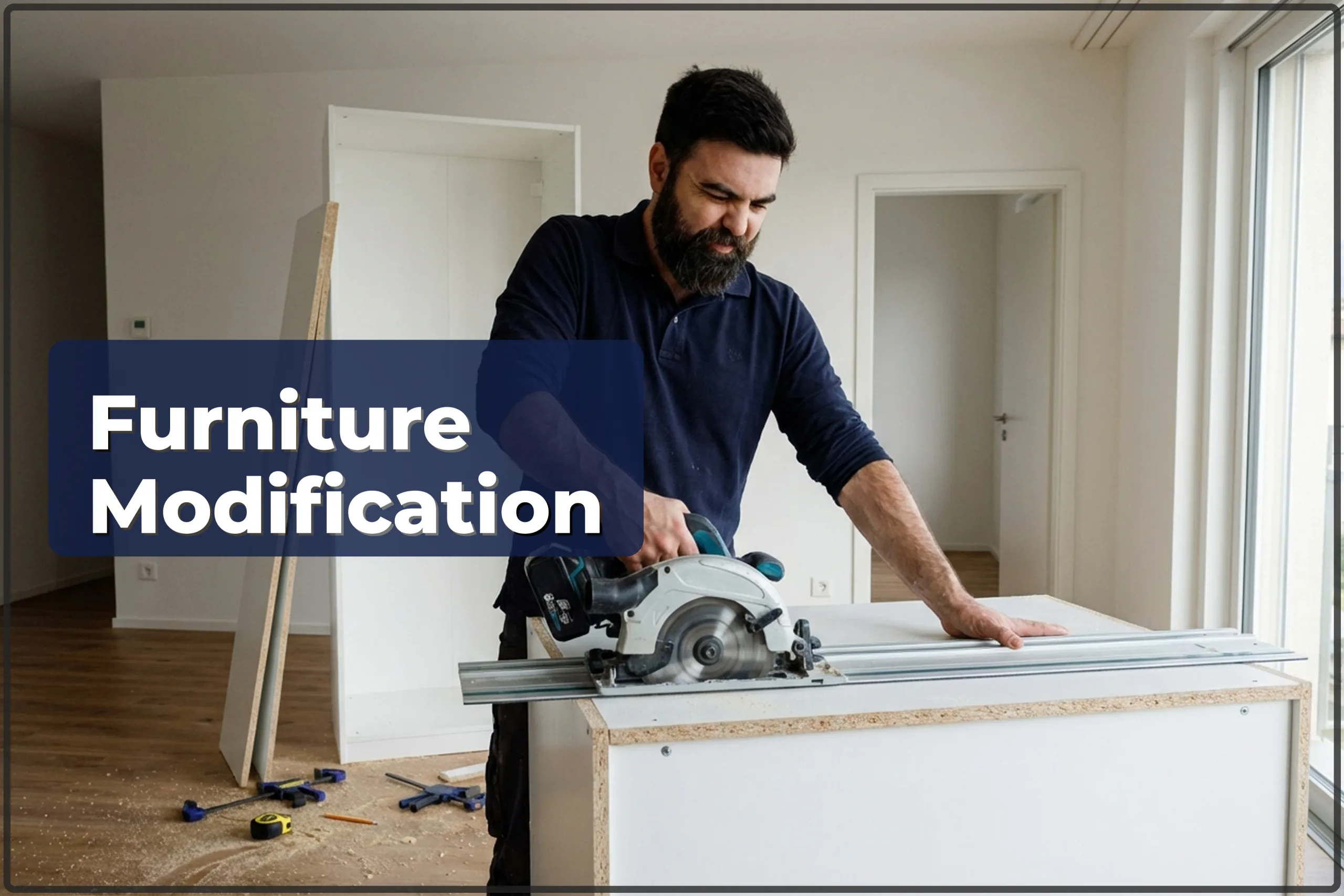
| Furniture alteration | 350–500 zł |
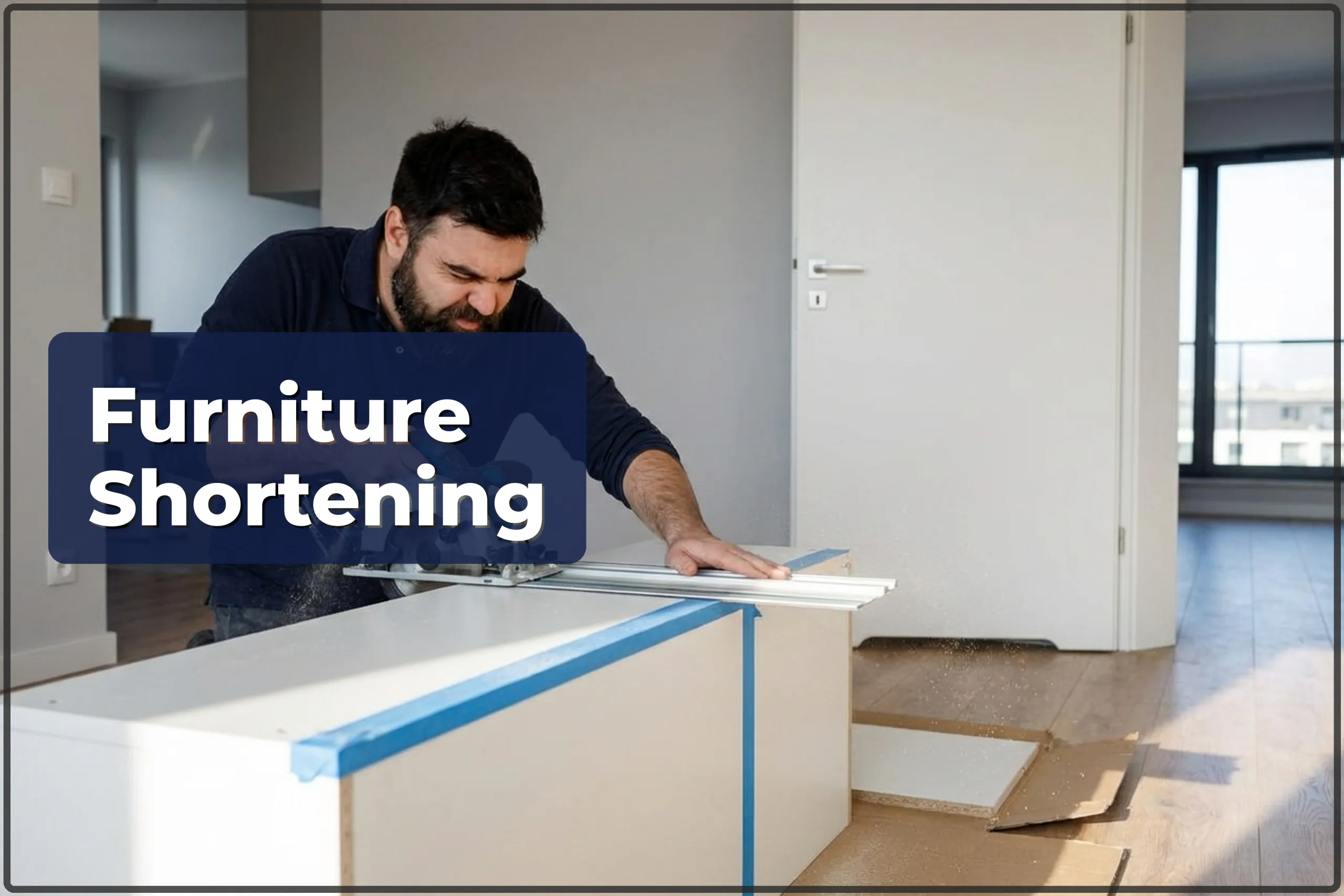
| Shortening furniture | 250–400 zł |
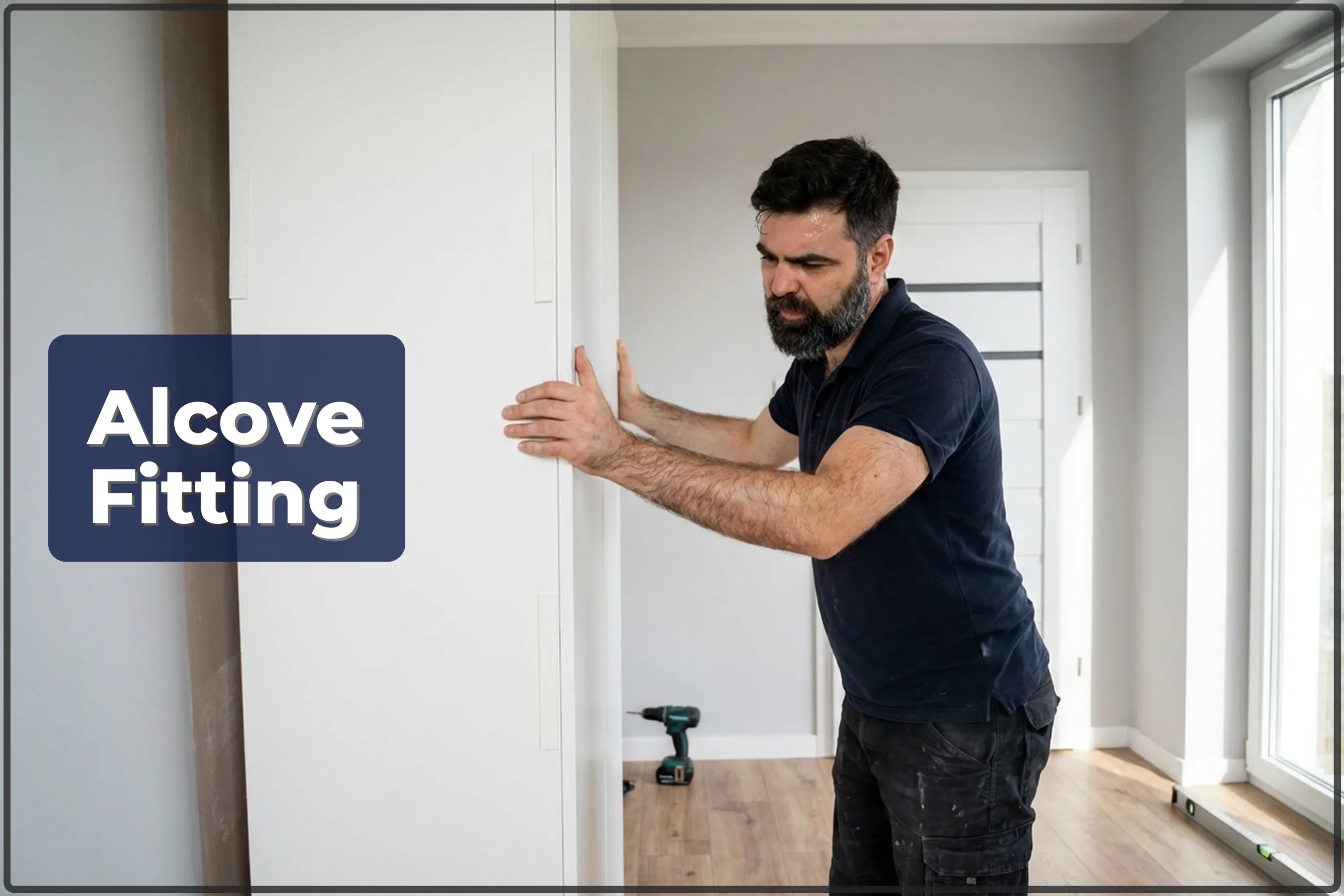
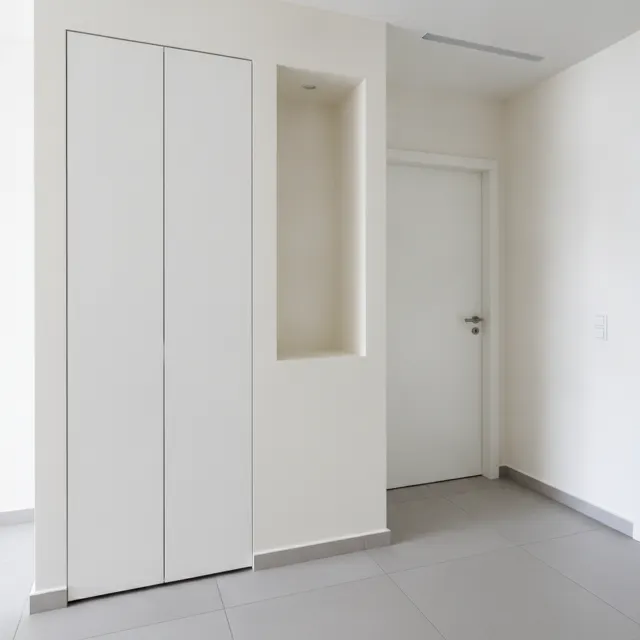
| Fitting furniture into a niche | 350–600 zł |
Indicative prices. Ranges for a typical scope. Fixings included, materials separate. Minimum order 300 zł.
What it costs and how to book: furniture alterations in Warsaw.
How on-site furniture modification works
- You explain the job: what has to be changed, and you send photos of the furniture along with measurements of the space. The technician checks what can be done and gives an estimated price.
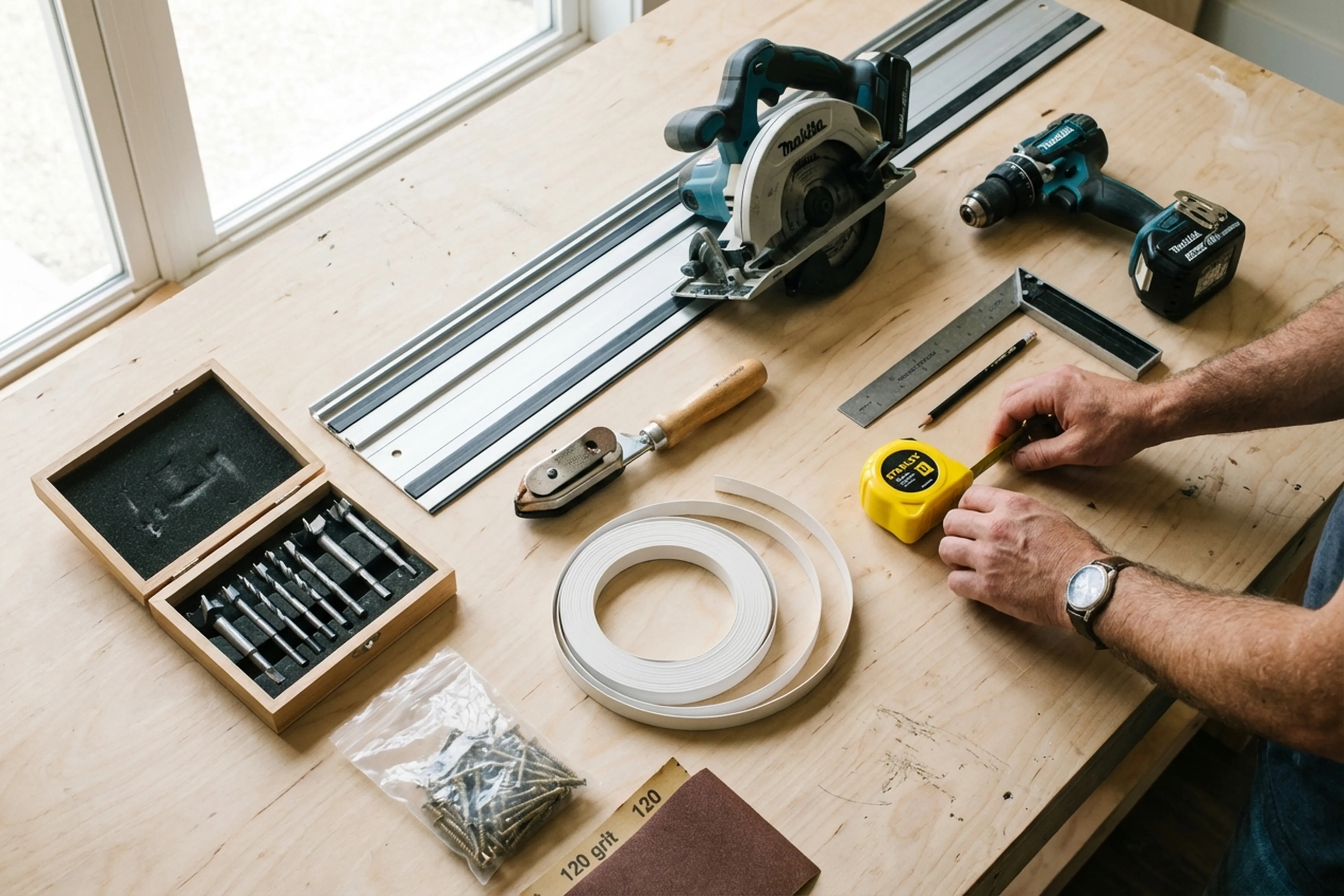
- Tradespeople arrange the visit. The technician comes with the tools needed: track saw, jigsaw, router, cordless drill, orbital sander, spirit level, clamps.
- On-site the technician takes exact measurements: the alcove, openings, pipe and socket locations. These are checked against the furniture dimensions to work out exactly what needs cutting or rearranging.
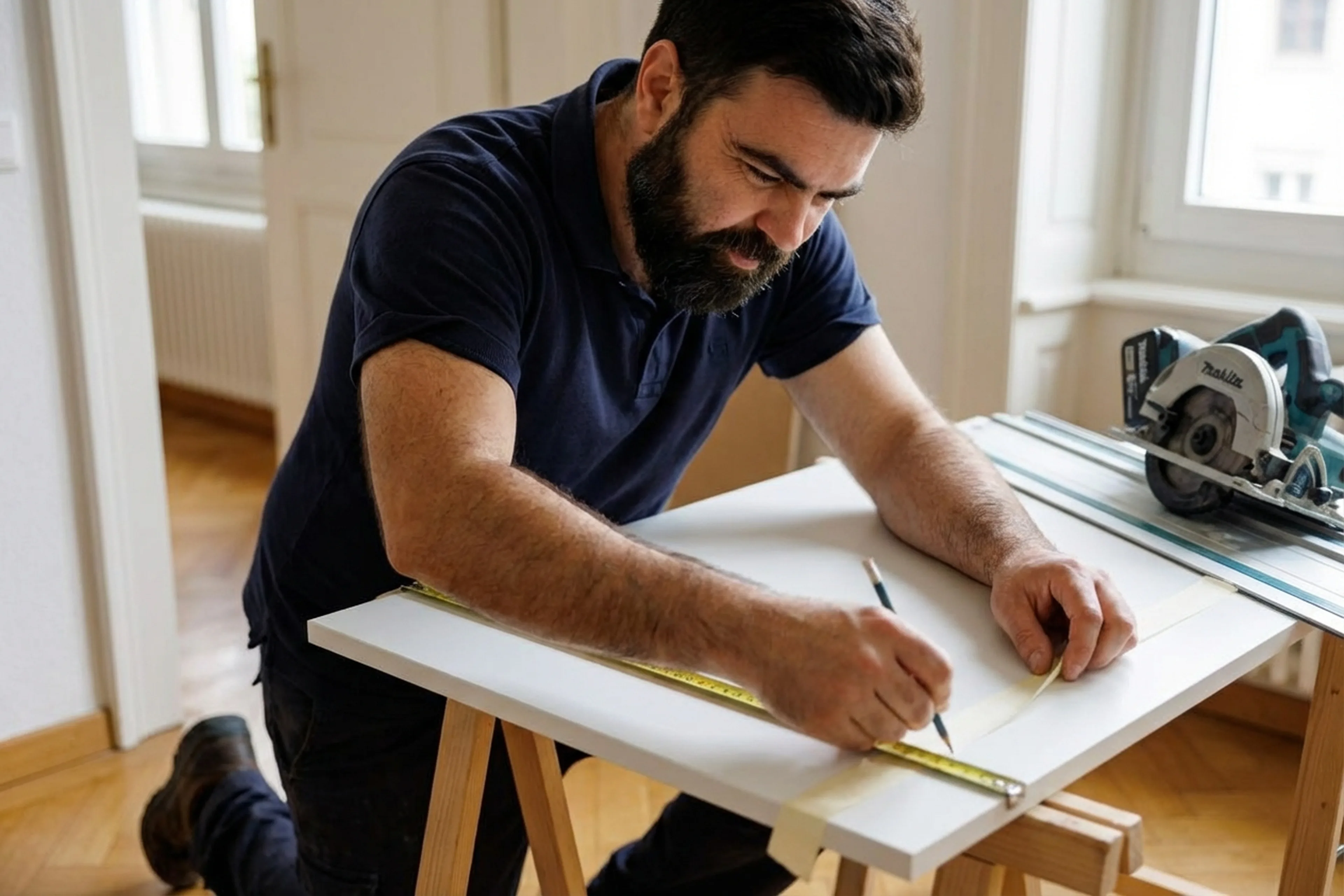
- The furniture is dismantled into the necessary sections. Parts that need cutting are marked, with allowance for edge banding and clearances.
- The cutting is then done: for chipboard, a track saw with a guide rail (clean cut, no chipping); for solid wood: followed by sanding of the edges.
- Raw edges are finished with melamine or PVC edge banding, applied with an iron or heat gun, then trimmed flush.
- The furniture is put back together, set in place, clearances are checked, doors are adjusted, and drawers are tested to make sure they run smoothly.
Common mistakes when modifying furniture yourself
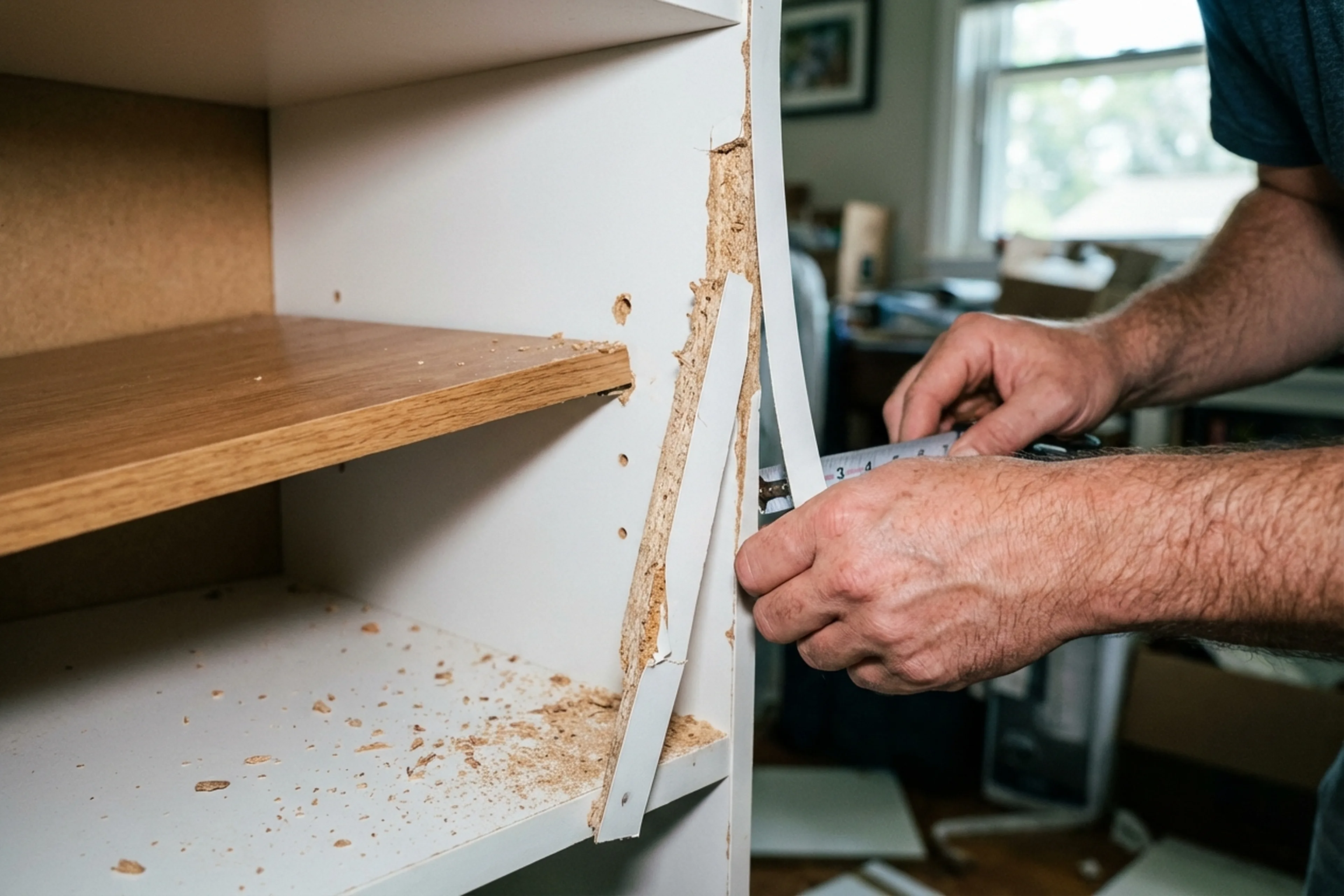
- Cutting chipboard with a jigsaw and no guide — you end up with a torn edge full of chips. Laminated board should be cut with a circular saw using a fine-tooth blade or a scoring module.
- Forgetting about the thickness of the edge banding, cutting exactly to the alcove size, then realising the piece no longer fits once the banding goes on. Leave 1 to 2 mm for each banded edge.
- Shortening a wardrobe from the bottom and not moving the shelf fixings, once cut, the lower holes are left at the wrong level.
- Ignoring curved walls when fitting into an alcove — cutting to one measurement and then finding the walls open out by 2 to 3 cm. Measure in several places: top, middle, bottom.
- Cutting the back panel together with the carcase, the HDF back is fitted separately and needs a different method.
- Leaving no ventilation gaps, a built-in unit pushed tight to the wall with no rear clearance can hold moisture, especially on external walls.
- Trying to shorten solid wood furniture the same way as chipboard, solid wood needs sanding on the edge, then staining or lacquering.
- Not checking for hidden fixings inside the furniture — cutting straight through dowels or confirmat screws.
What to prepare before the technician arrives
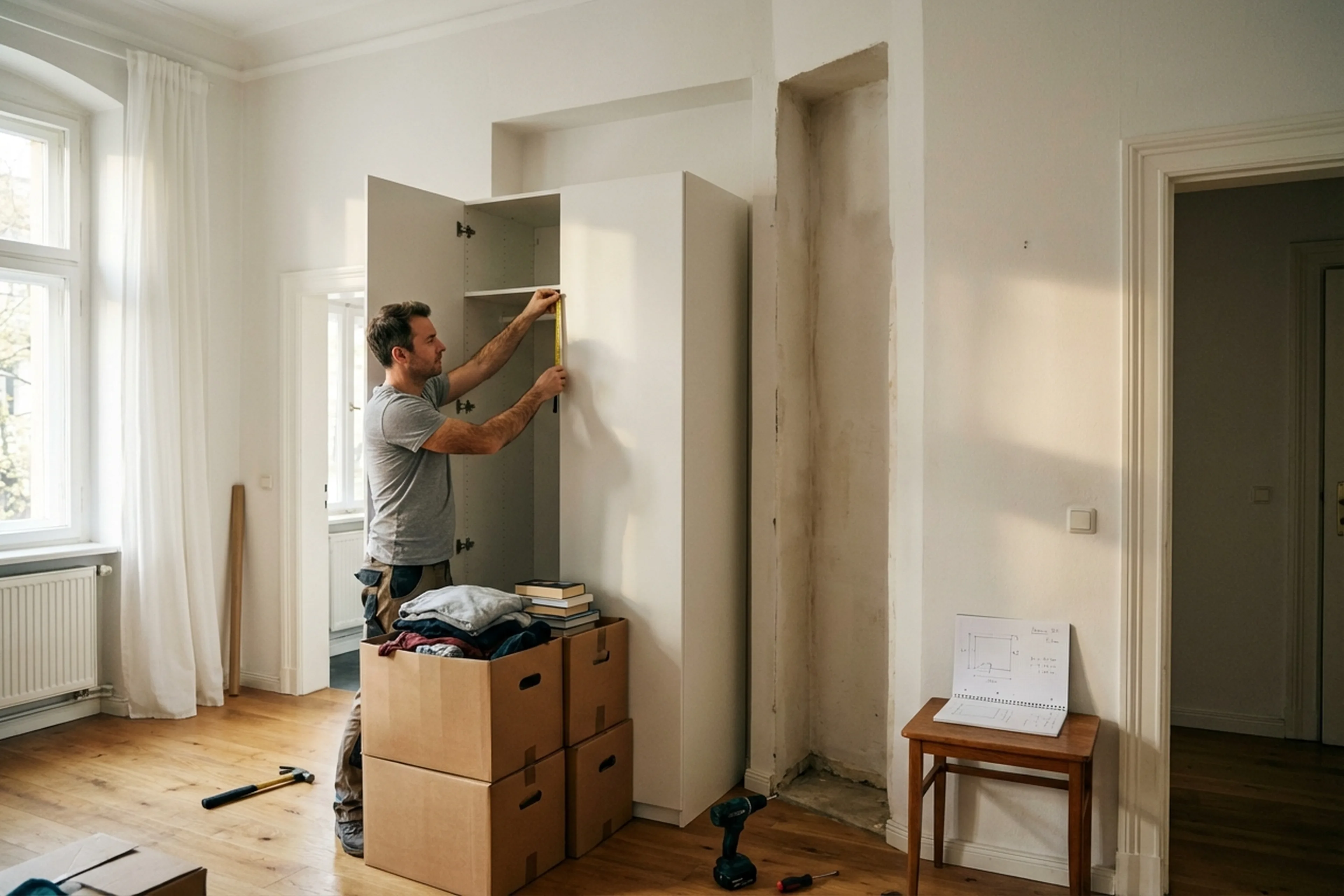
- Empty the furniture fully: modification cannot be done with a wardrobe still packed.
- Measure the alcove or available space: width, height, and depth in several spots (walls are often uneven).
- Take photos of the furniture from every side and of the space where it has to go, send the pictures to the technician beforehand.
- Decide what result you want: only shorten it? Remove a section? Add shelves? The clearer the brief, the quicker the job.
- Mark pipes, sockets, and any protrusions in the installation area — the technician will cut around them.
- Make space to work: cutting needs at least 2 x 2 metres of clear floor area.
- Confirm what the furniture is made from: chipboard, MDF, or solid wood: that decides the tool kit.
- If you want edge banding in a particular colour, buy it beforehand or tell the technician so he can match it.
- Protect the floor with film or cardboard — cutting makes sawdust and shavings.
- Provide the intercom code and parking details.
- Make sure there is ventilation: adhesives and edge banding can produce a smell while the work is being done.
A real case from Warsaw: furniture modification
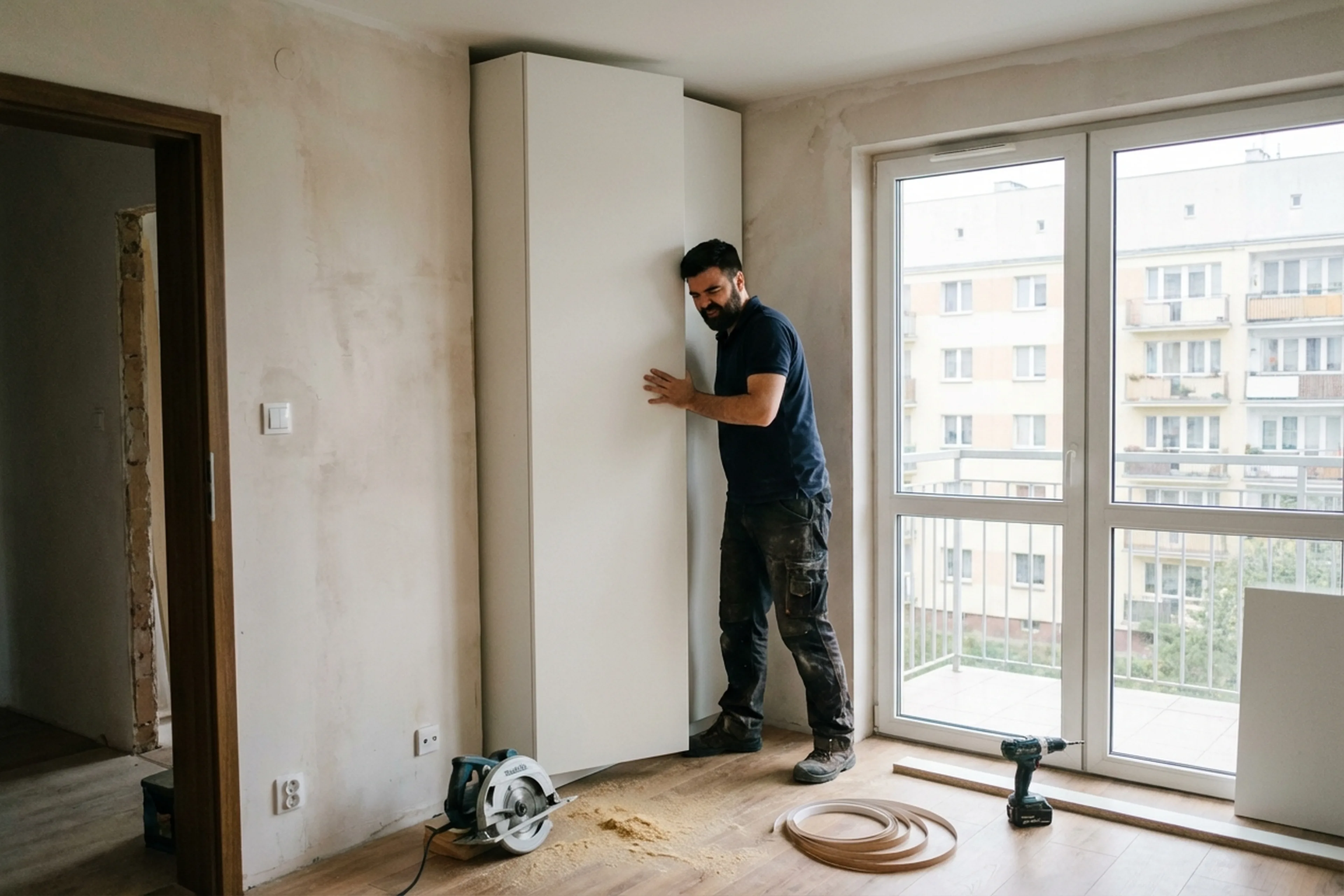
A client in the Ursynow district moved into a new flat and found that his 220 cm wardrobe would not go in, the ceiling height in the new-build was actually 215 cm once the stretch ceiling had been installed. On top of that, the bedroom had a 140 cm alcove between the wall and the ventilation shaft, while the wardrobe measured 150 cm in width. So it had to be made both lower and narrower. Tradespeople took the unit apart into sections and removed the top panel and base. The top was cut with a track saw — clean edge, no chipping. Both side panels were shortened by 5 cm each, and the HDF back was trimmed to the new size. One shelf section was narrowed by 10 cm; the other stayed as it was. All exposed edges were banded in a matching colour, so it looked like it belonged there from the start. The wardrobe was set into the alcove with a 5 mm gap on each side and 2 cm to the ceiling. Doors were rehung and the hinges adjusted. Later the client said it looked like a custom built-in wardrobe. The whole job took about five hours.
Frequently asked questions
What furniture can be modified?
Almost any carcase furniture: wardrobes, chests of drawers, shelving units, cabinets, bookcases, sliding-door wardrobes. The main limits are furniture with complicated curved shapes (bent fascias) and units where the carcase itself is structural and cannot be shortened.
Can a tradesperson shorten a wardrobe in height?
Yes, that is the request they get most often. Tradespeople remove the top panel, shorten the sides and back, fit the top back on, and band the edges. If the wardrobe has an overhead compartment, in some cases it is easier to remove that compartment completely.
How do tradespeople fit furniture into an alcove with uneven walls?
Tradespeople measure the alcove in several places (top, middle, bottom). If the difference is more than 5 mm, they make a contour cut on the back or side panel so it follows the wall line. The furniture then sits tight, and any small remaining gaps are covered with a trim strip or silicone.
What happens to the edges after cutting?
An exposed chipboard edge looks unfinished and takes in moisture. Tradespeople apply melamine or PVC edge banding matched to the furniture colour. Tradespeople choose it from a sample: in most jobs the difference cannot be seen.
How long does modification take?
Simple shortening (one plane) — 2 to 3 hours. Fitting into an alcove with multiple cuts: 3 to 5 hours. Full reconfiguration with section replacement: from 5 hours.
What is included in the price?
The technician’s labour, use of his tools, and fixings. Materials (edge banding, additional shelves, hardware) and waste removal are charged separately.
Can a tradesperson add shelves or remove unwanted ones?
Yes. New shelves are cut to size from chipboard, or the technician can get ready-made ones. Unwanted sections are removed and the holes are covered with caps.
Will there be a lot of dust?
When cutting chipboard, yes. The technician uses a saw with a dust extraction port and works on a protective mat. Still, it is not possible to avoid sawdust completely. Tradespeople suggest covering nearby furniture with dust sheets.
Who does the work and how a job runs
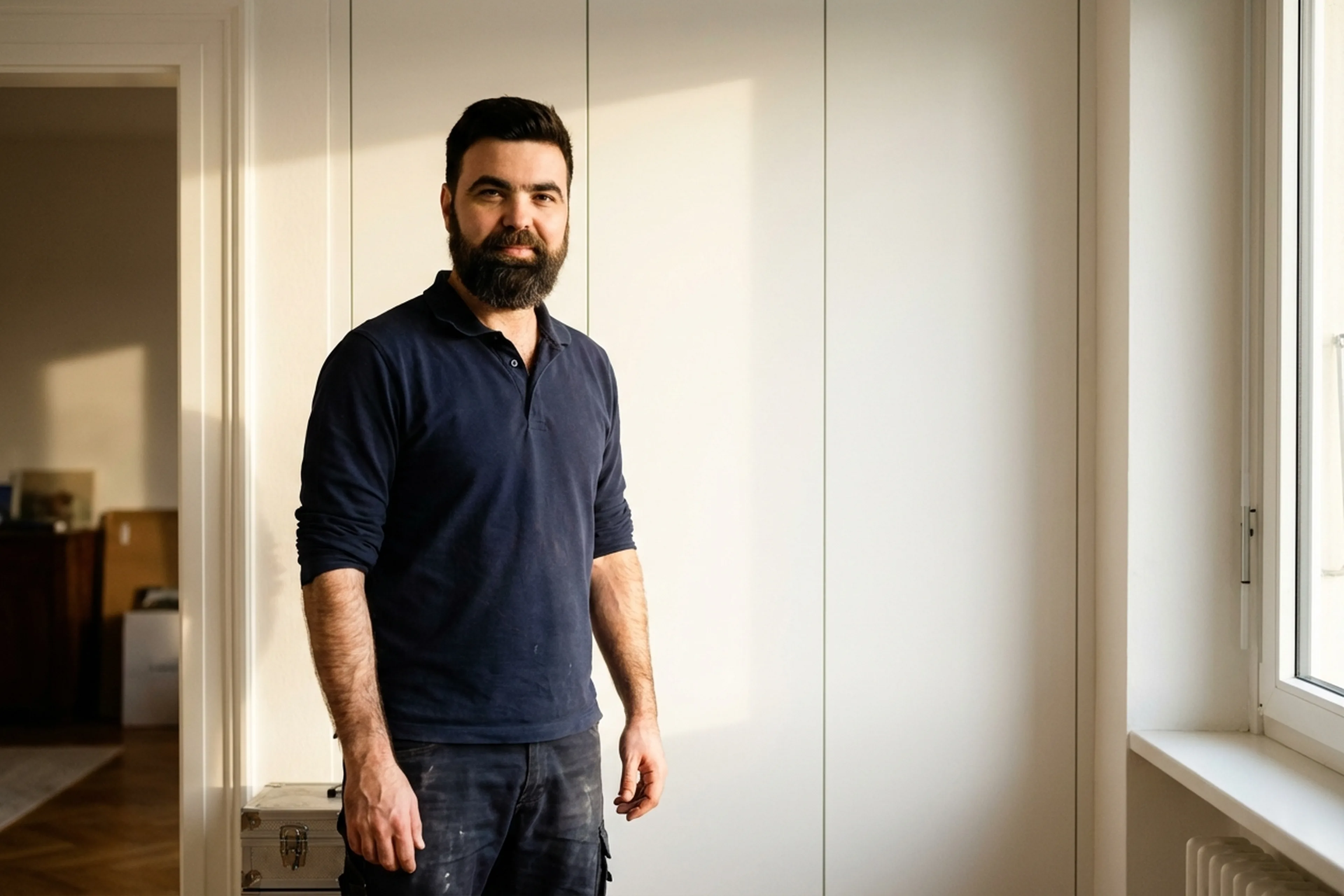
Furniture modification is done by technicians with hands-on carpentry and cabinetry experience. Tradespeople cut accurately, finish edges neatly, and reassemble everything properly — after the work, the furniture looks like it was made in that size from the beginning. Tradespeople cover all of Warsaw and nearby areas: Ursynow, Mokotow, Wola, Praga, Wilanow, and they arrive with a full set of tools.
Order in the app
Describe the job, add photos and the address. Tradespeople send their own prices and dates, and you pick one of the offers.
Open the app