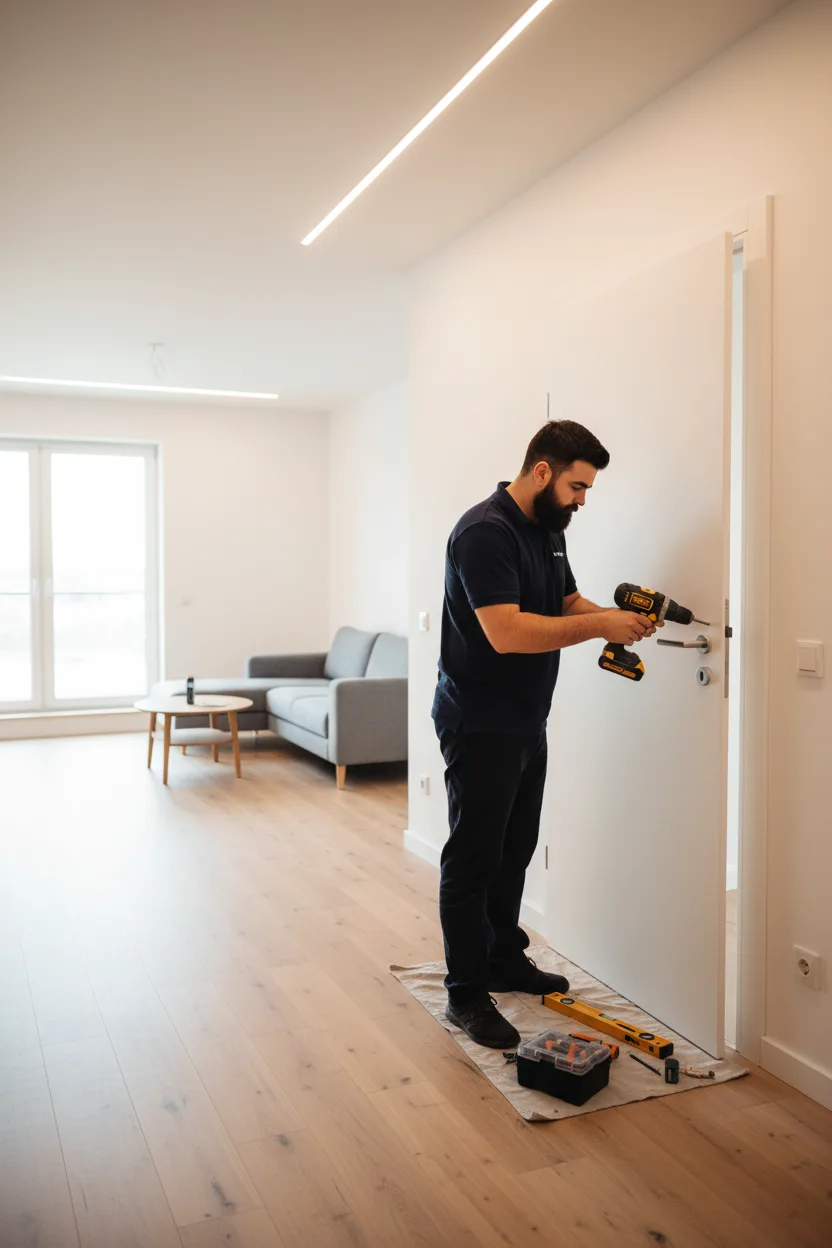
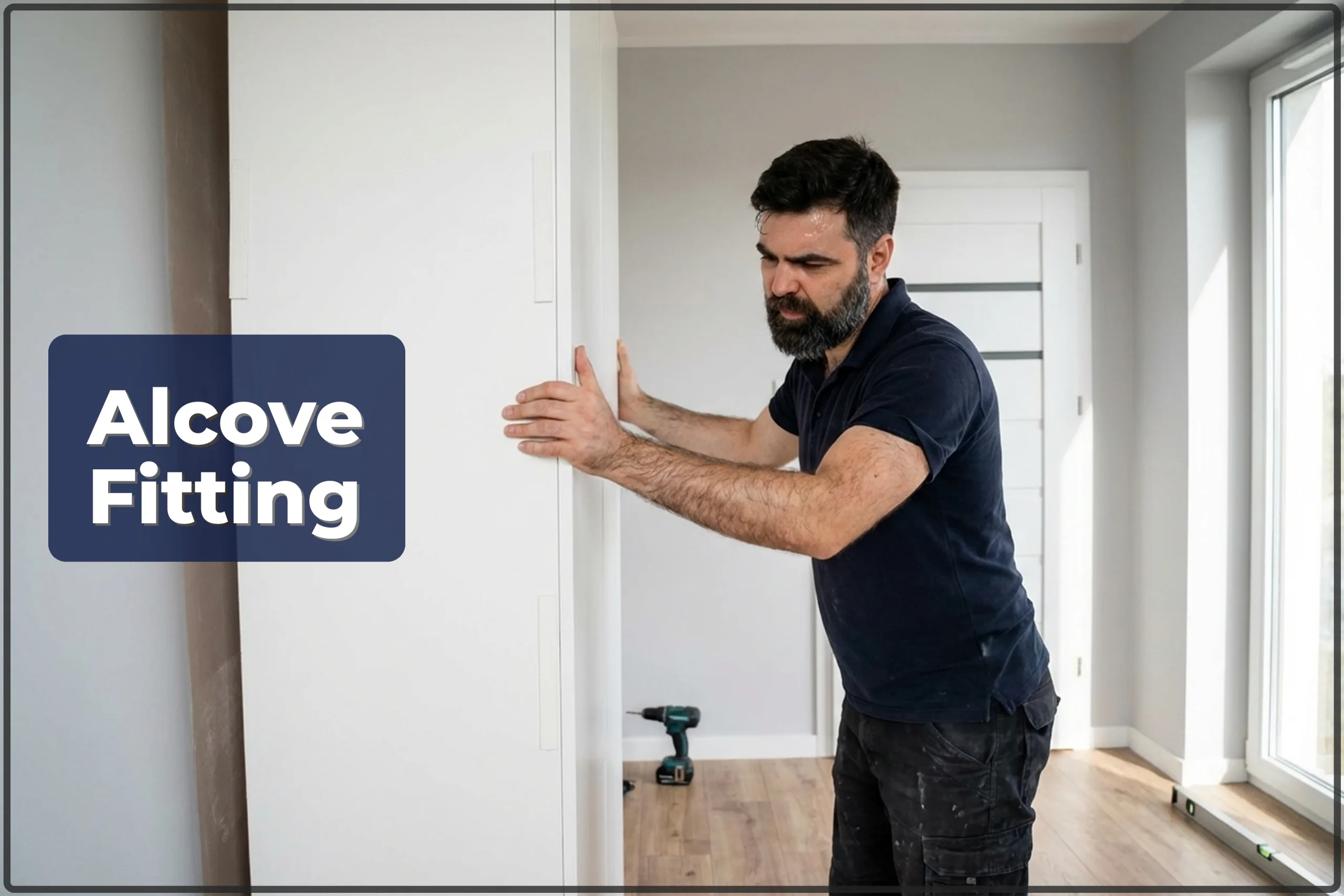
Bought a wardrobe that is 2 cm too wide for the alcove? Or maybe it goes in, but leaves finger-wide gaps on both sides? In older Warsaw buildings in Praga and Mokotow, walls are hardly ever straight and alcoves are rarely truly rectangular. Ready-made furniture is not built to your exact measurements. We adapt furniture to alcoves: cut down, widen, add filler panels, close gaps — so the wardrobe looks built-in, even if it came from IKEA.
How much does alcove fitting cost
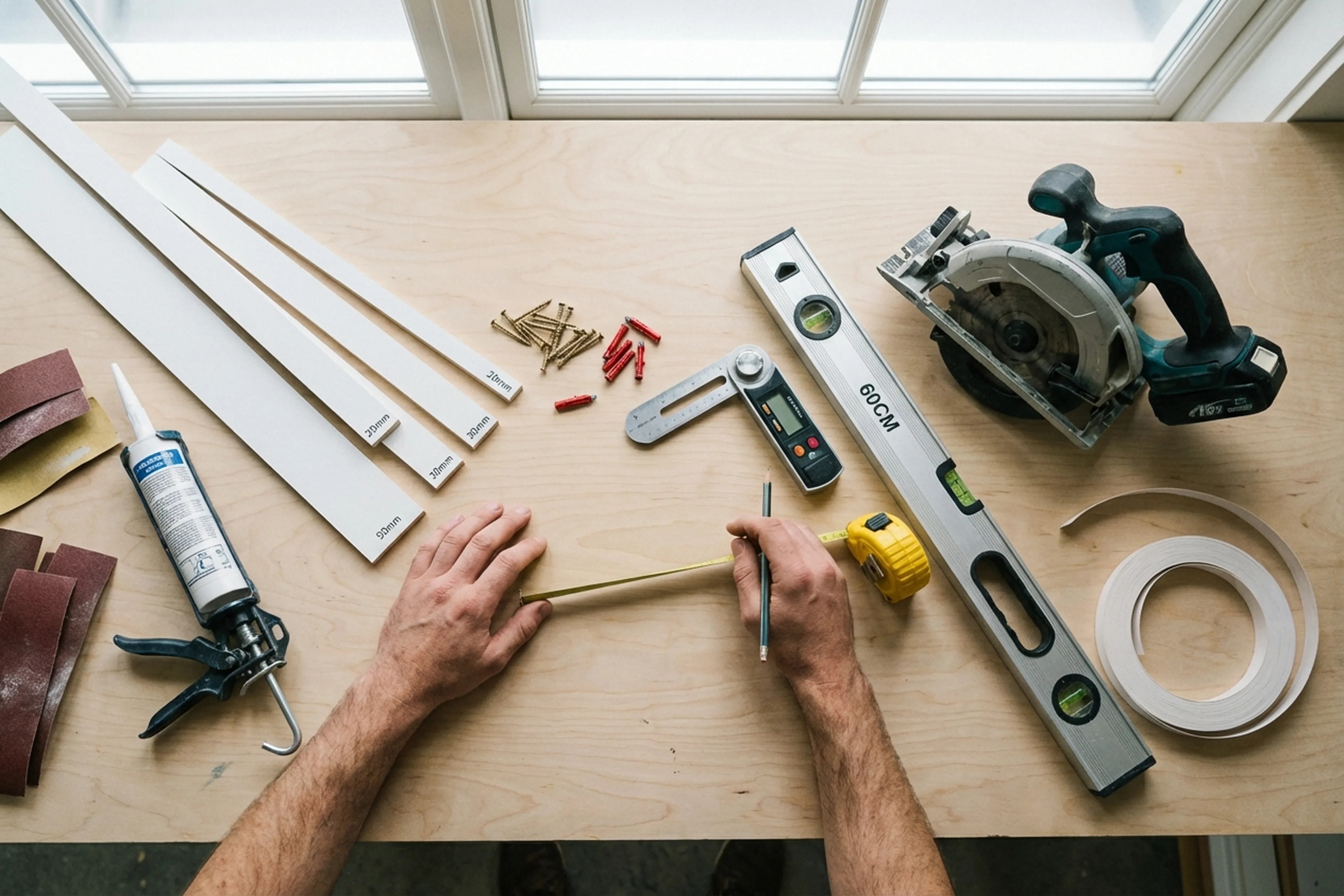
The price depends on the size of the gaps, how much the walls bow, and how much work is involved. Cutting a side panel by 15 mm is one kind of job. Making a filler strip with edge banding, installing a fascia panel and hiding the gap at the ceiling is something else. Current rates are in the table below.
| Service | min | max |
|---|---|---|
|
Furniture fitting to alcove
Book this service → | 250 zł | 600 zł |
|
Furniture modification
Book this service → | 150 zł | 400 zł |
|
Shelf installation
Book this service → | 80 zł | 150 zł |
How the fitting works
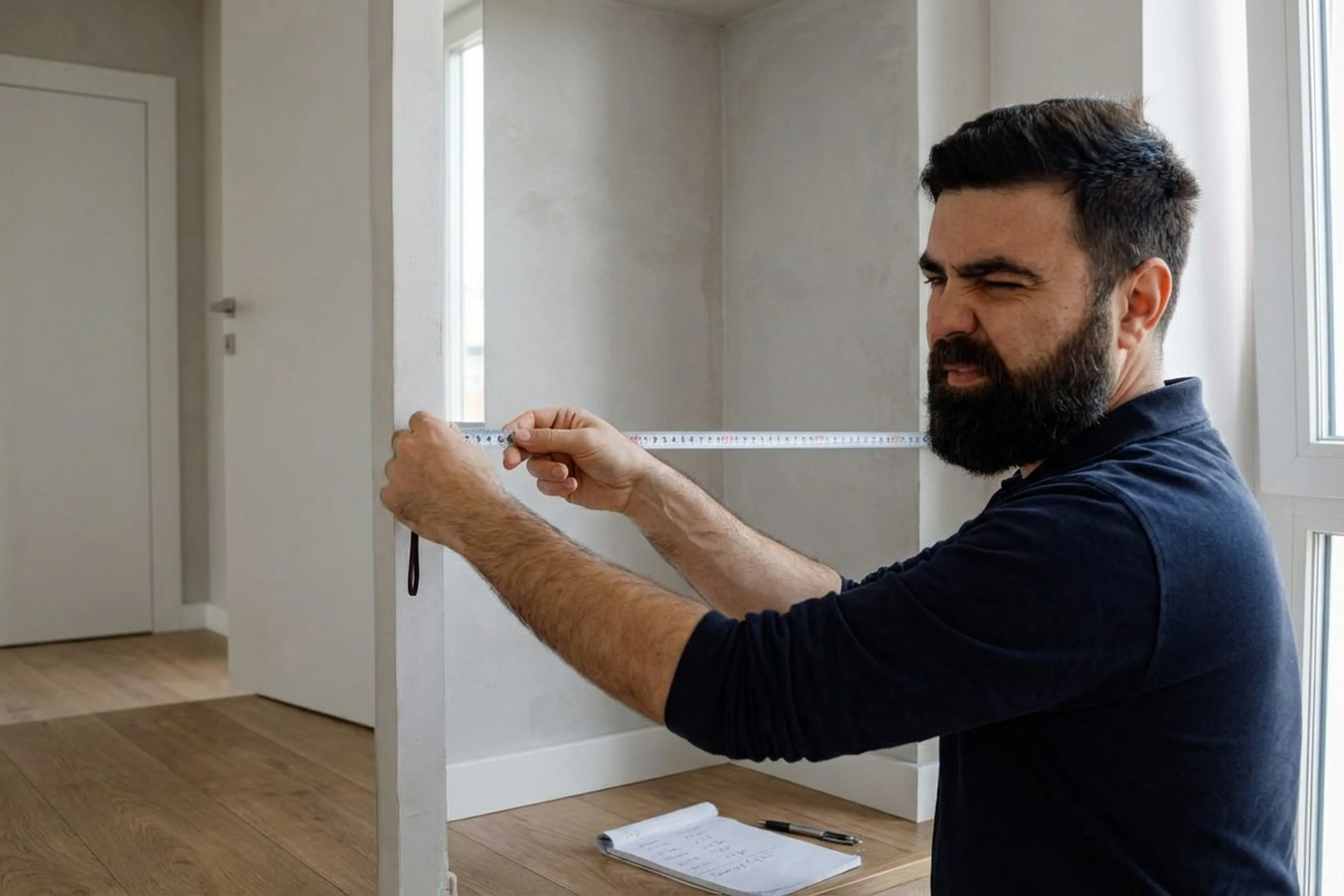
- We measure the alcove in several places — top, bottom, depth. In old buildings the difference can reach 3-4 cm.
- We measure the furniture. We check what is needed: trimming, filler strip, fascia panel or a mix of these.
- If the furniture is wider — we cut the side panel with a guided circular saw and finish it with edge banding.
- If it is narrower — we make filler strips from matching chipboard or install a universal fascia panel.
- We set the furniture into the alcove and level it (shims, adjustable feet).
- We close the gaps: side fillers, top strip, plinth at the bottom.
- We tune the doors and drawers — this is often needed after fitting into an alcove.
Common mistakes
- Measuring the alcove in one spot only — walls can open out by 2 cm from top to bottom.
- Ignoring skirting boards and ceiling cornices.
- Cutting the front visible side instead of the wall side.
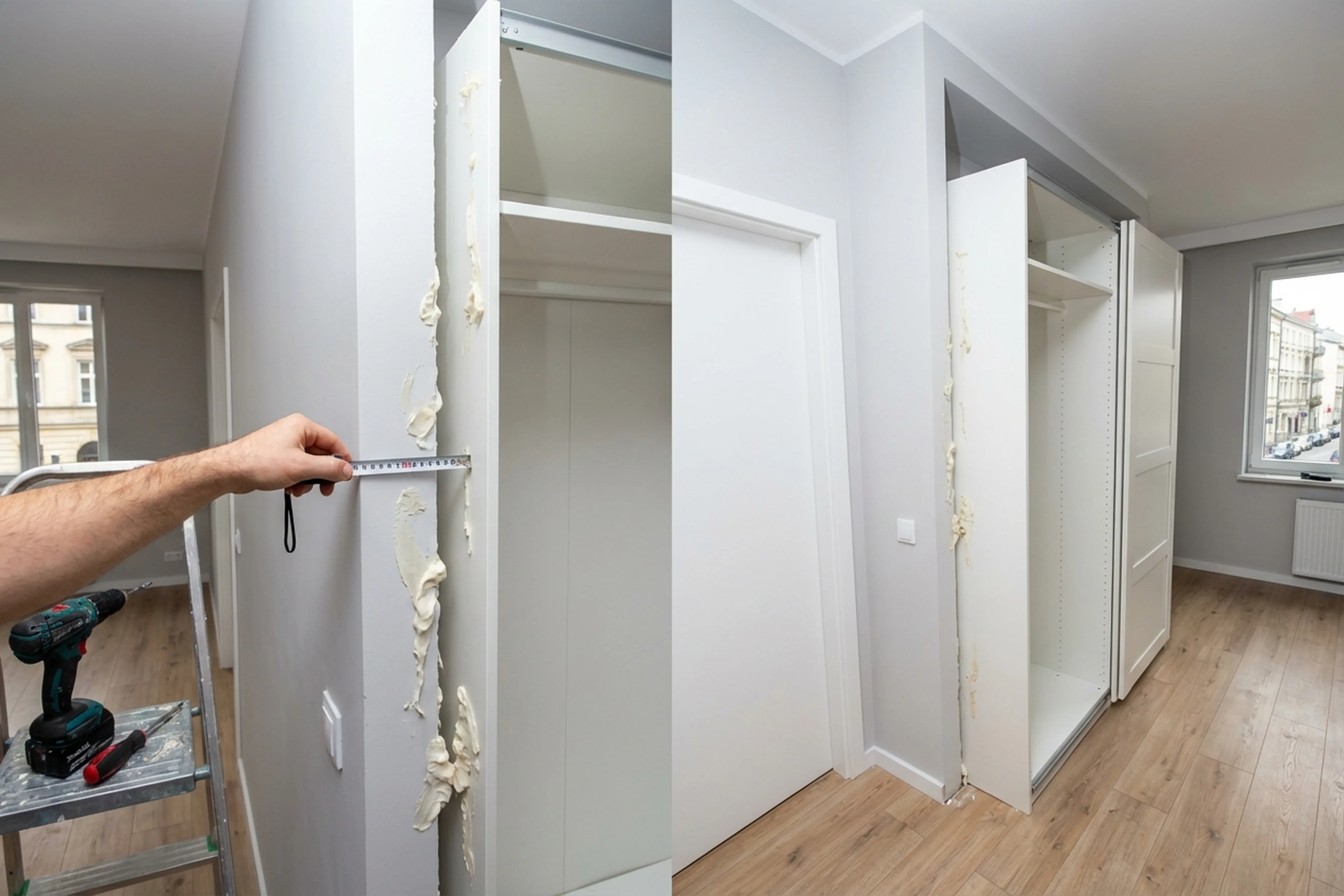
- Filling gaps with expanding foam — it presses on the furniture and looks untidy.
- Covering sockets or ventilation ducts with the furniture.
- Skipping levelling — on an uneven floor the furniture wobbles and doors go out of line.
- Using filler strips in the wrong shade.
What to prepare
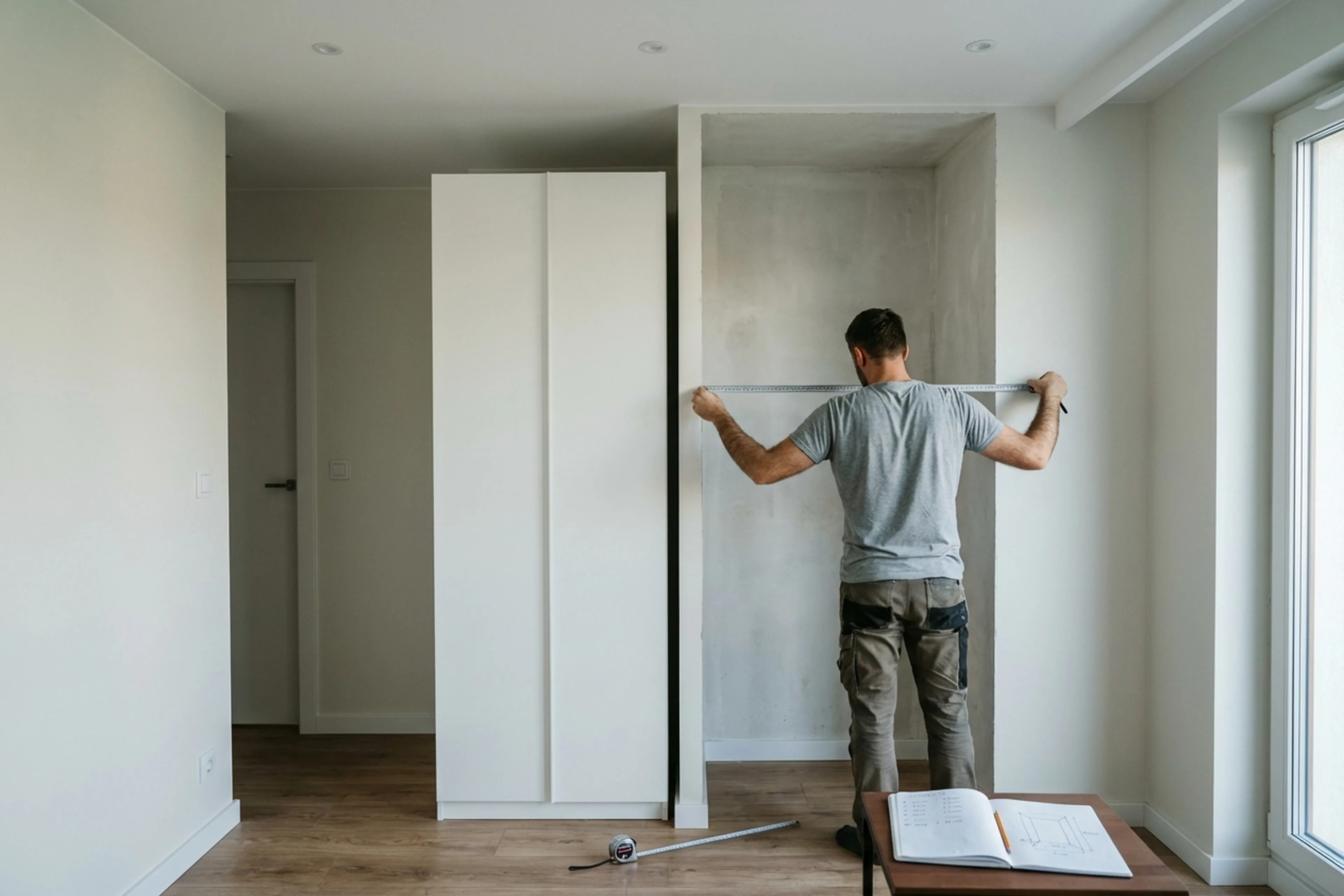
- Measure the alcove: width at the top and bottom, height on the left and right, depth.
- Measure the furniture, including any parts that stick out.
- Decide: minimal gaps or no cutting.
- Tell us the furniture colour/decor.
- Empty the alcove.
- Check for sockets, switches, vents in the alcove.
- Make sure there is space to work.
- Let us know if the floor is uneven.
- Provide the intercom code.
A real case from Warsaw
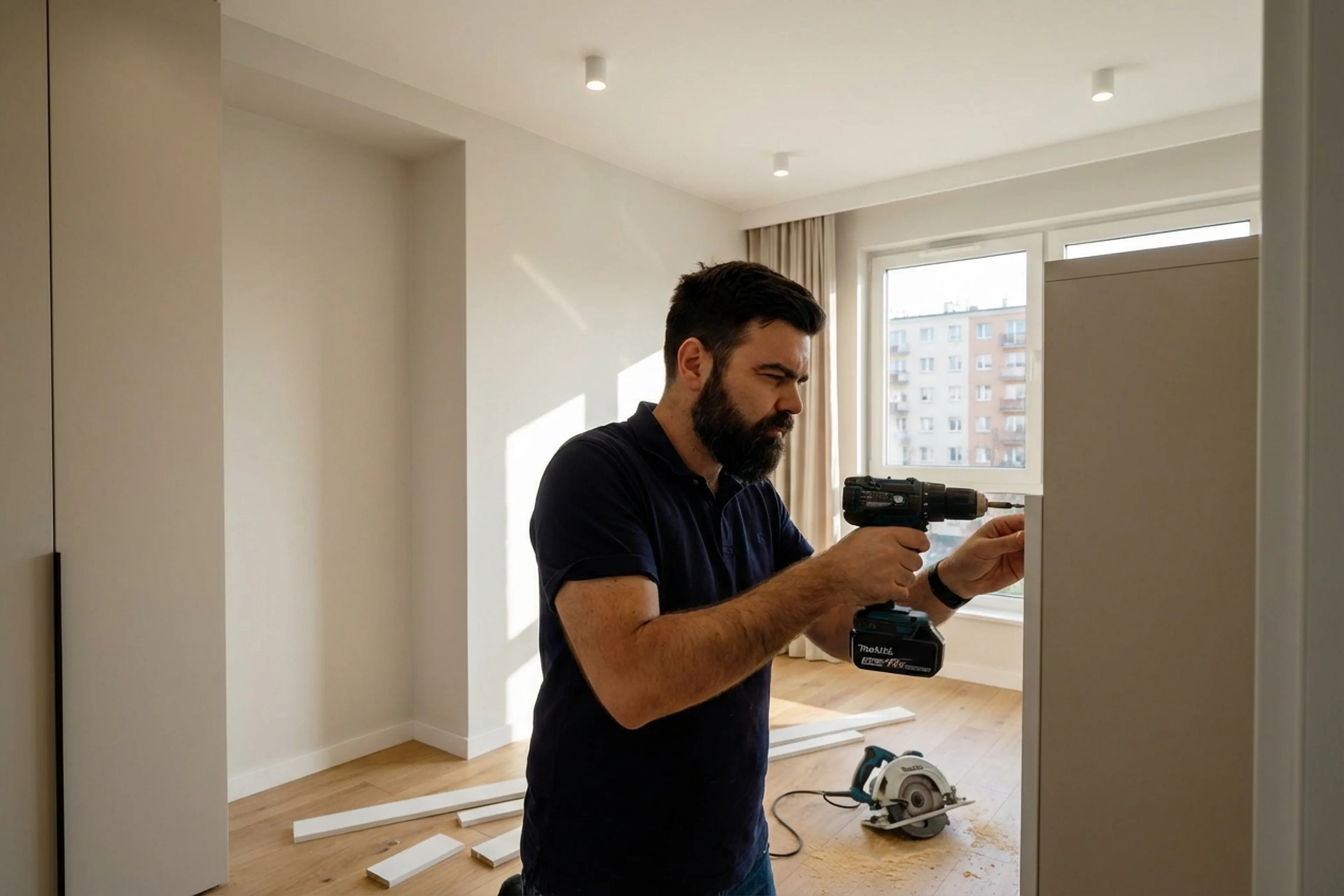
Clients in the Wola district bought an IKEA PAX wardrobe 150 cm wide for a bedroom alcove. The alcove turned out to be 147 cm at the bottom and 149 cm at the top — the walls spread apart. The wardrobe was 1-3 cm too wide. Returning it was not an option — it was already assembled. The technician came over, took it apart, trimmed both side panels: left by 2 cm, right by 1 cm. Applied white PVC edge banding. Put it back together, set it in the alcove, levelled it with shims. Installed a decorative strip at the top to hide the ceiling gap. The job took four hours. The wardrobe looked fully built-in — no gaps visible.
Frequently asked questions
What furniture can be fitted?
All cabinet furniture: wardrobes, shelving, chests, units, kitchen modules.
What if the walls are very uneven?
We handle uneven walls. We cut to a template and add fillers.
Can you just cover gaps without cutting?
Yes, up to 3-4 cm — we use filler strips or fascia panels.
How long does it take?
With fillers only — 1-2 hours. With trimming and reassembly — 3-5 hours.
Do you work weekends?
Yes, Saturdays and Sundays are normal working days.
Who does the work
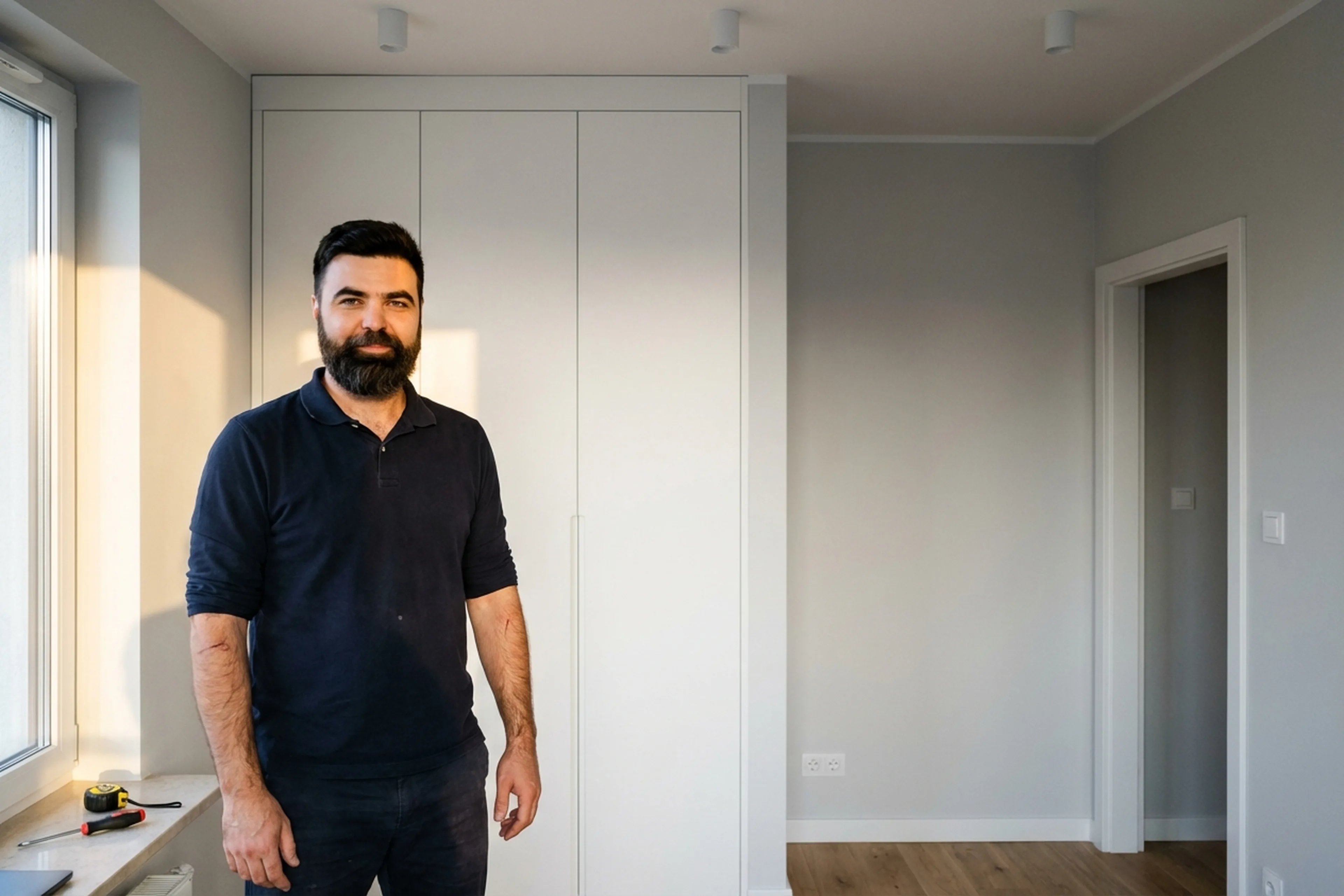
The fitting is done by carpenters with hands-on experience in built-in furniture. We cover all of Warsaw. Call or message us — we answer within an hour.