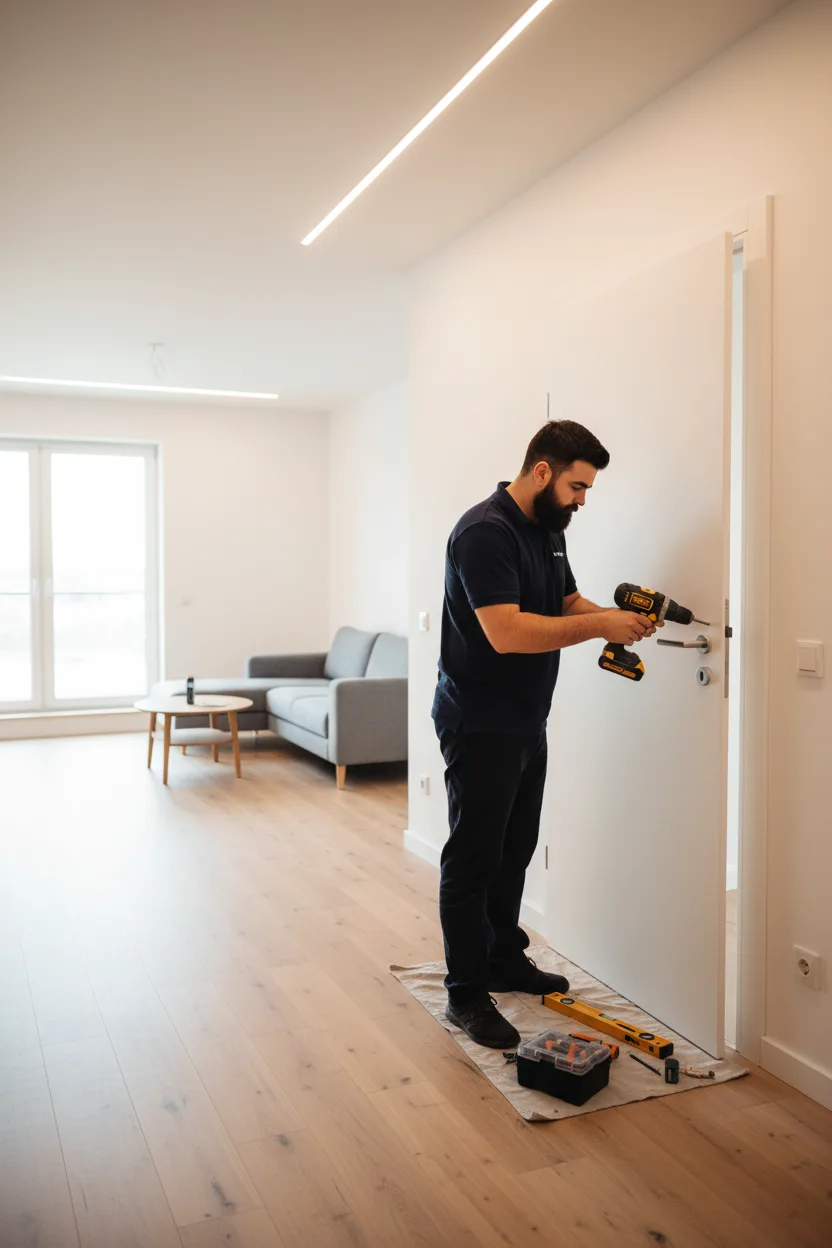
Old interior doors often come with gaps around the frame, flaking paint or veneer, loose hinges, and latches that stop catching properly. Swapping a door is more than just taking one leaf down and putting another up — first the old frame has to come out carefully, then all the old foam and plaster mess needs clearing, the opening has to be brought straight, and only after that can the new set be installed. We replace doors all over Warsaw, from Zoliborz to Wilanow. If the opening gets damaged during removal, the walls are out of line, or the new door is a different size from the old one, we deal with it there and then.
How much does a door replacement cost and what affects the price
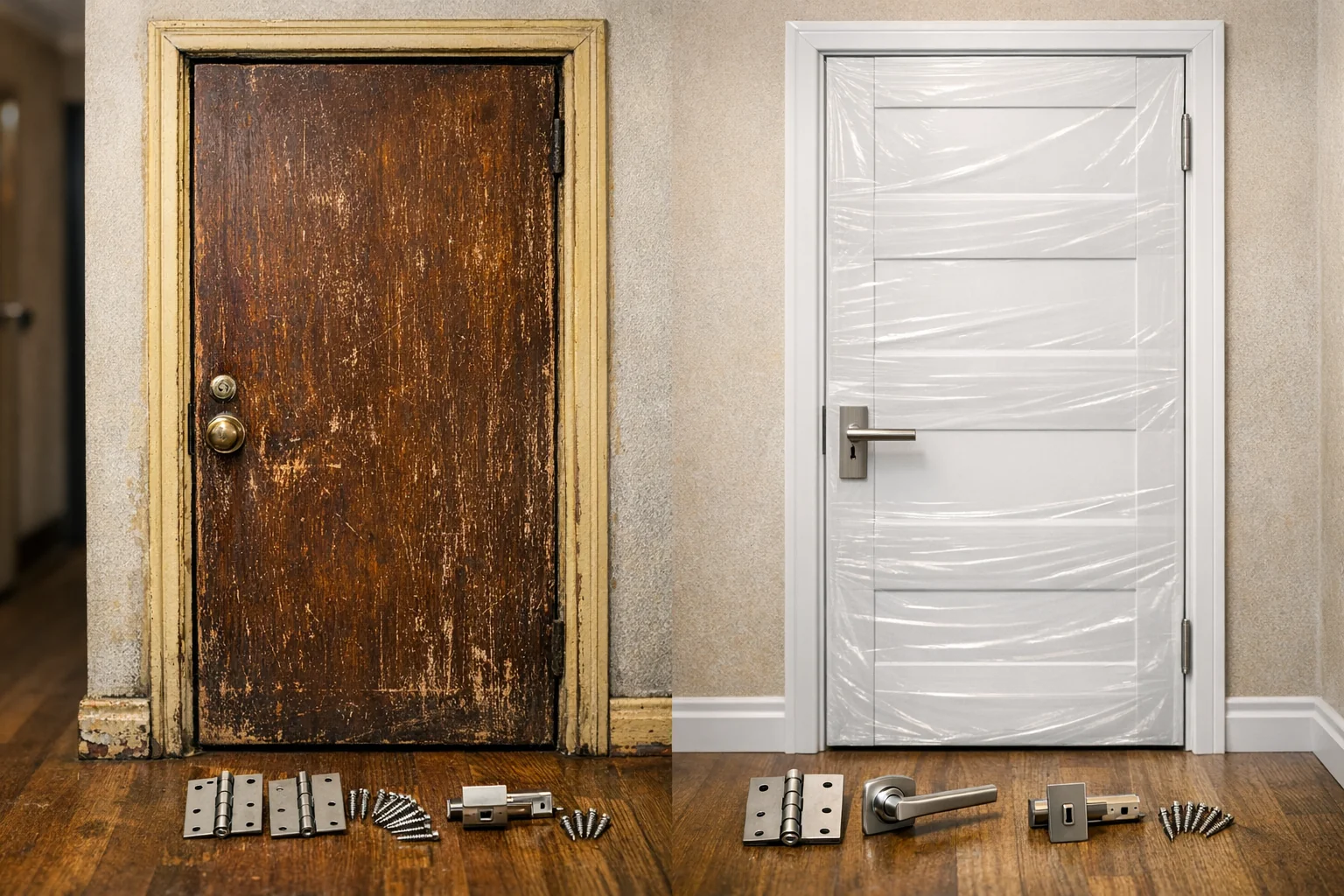
The price of replacing an interior door depends on the state of the existing opening: how much the reveals are damaged, whether the opening has to be widened or reduced, and whether there is any damp or mould present. The style of the new door also affects the cost — hinged, sliding or concealed frame. Fixings and expanding foam are included in the labour price. The door itself, the frame, architraves and hardware are bought by the client. Taking away the old door and construction waste, and carrying new materials upstairs, is charged separately. Up-to-date prices for all our door services are listed in the table below.
| Service | min | max |
|---|---|---|
|
Interior door installation
Book this service → | 700 zł | 1100 zł |
|
Interior door replacement
Book this service → | 800 zł | 1300 zł |
|
Door removal
Book this service → | 150 zł | 300 zł |
|
Door trimming
Book this service → | 120 zł | 250 zł |
|
Door frame installation
Book this service → | 250 zł | 450 zł |
|
Door adjustment
Book this service → | 30 zł | 60 zł |
|
Squeaky door lubrication
Book this service → | 40 zł | 80 zł |
|
Lock replacement
Book this service → | 180 zł | 350 zł |
|
Door handle replacement
Book this service → | 80 zł | 150 zł |
Send a photo of the old door and the opening — the technician will check the scope of work and give you a clear quote with no surprise add-ons (compatible with Porta, VOX, Erkado and similar).
How a door replacement works: from removal to finish
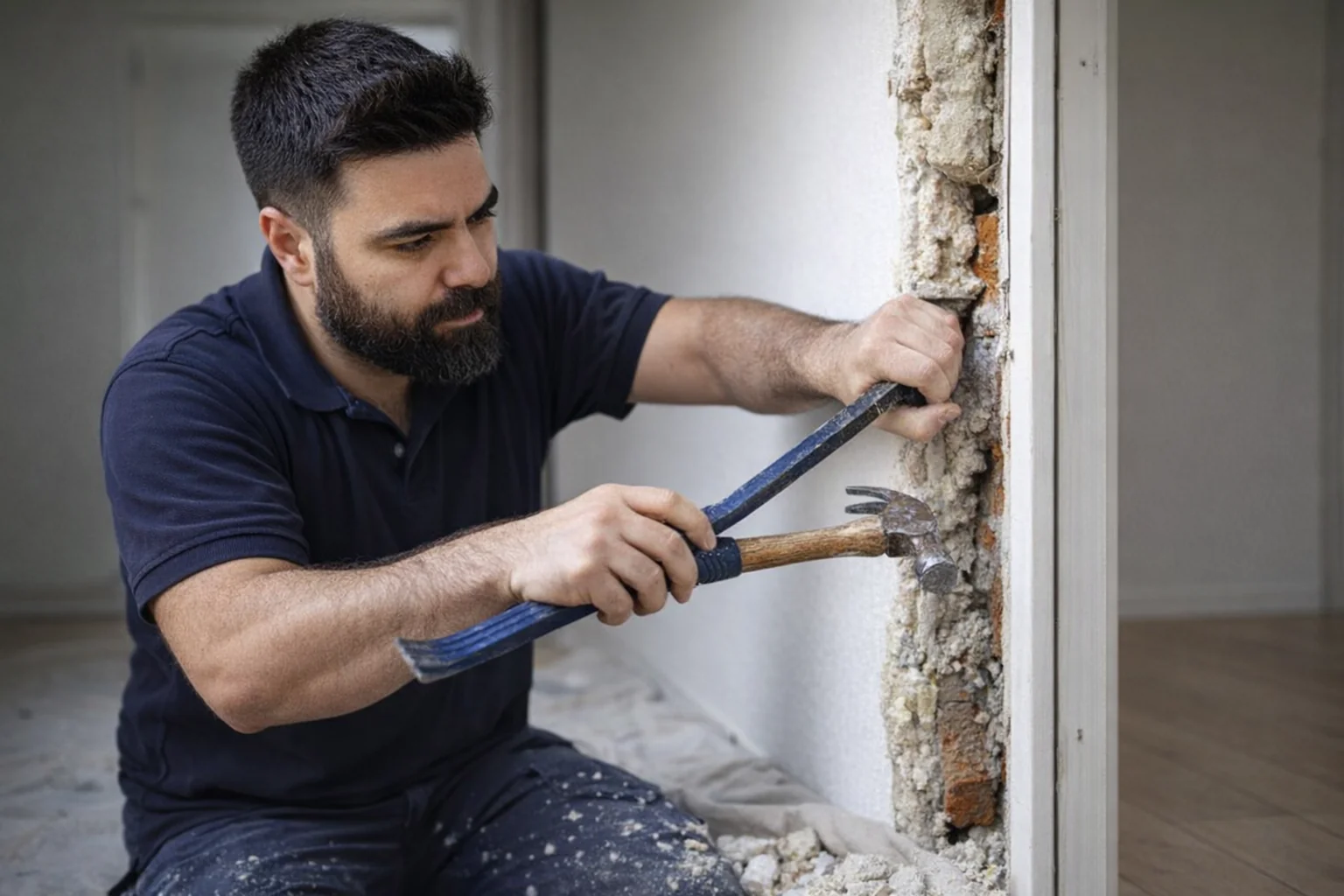
Replacing a door is not the same job as installing one in a new opening. The hardest part is removing the old set without doing extra damage to the wall, then getting the opening ready for the new frame. This is how the work goes:
- Inspection and measurement. The technician comes out and checks the condition of the old door, the opening and the walls. Everything is measured: width, height, wall thickness, rebate depth. Based on that, you get a fixed price and a list of anything still to buy.
- Removing the old leaf and frame. We take the leaf off the hinges. The frame is either cut out or worked loose carefully if the fixings make that possible. The point is to avoid tearing chunks out of the wall, especially in older buildings where the plaster breaks easily.
- Cleaning the opening. We strip out old expanding foam, leftover fixings and broken plaster. If the foam has gone completely hard, we slice it with a knife and trim it back with a chisel. The opening needs to be clean and level.
- Preparing the opening for the new frame. If the old door was a different size, we make the opening smaller with packing timber or open it up with a breaker. We straighten any reveals damaged during removal and prime the surfaces.
- Fitting the new frame and leaf. We put the frame together, set it plumb and level, wedge it in place and foam it. The leaf is hung, hinge and latch recesses are routed, and the handles are installed. We test the swing.
- Architraves, extension strips, finishing. If the wall is thicker than the frame, we fit extension strips. Architraves are cut at 45 degrees and fixed with adhesive or pins. Where needed, we seal the gap between the frame and wall.
- Clean-up and handover. We check that the door opens and shuts smoothly and that the latch catches properly. The old door, offcuts and dust are removed. The client inspects the job and signs it off.
Common mistakes when replacing doors
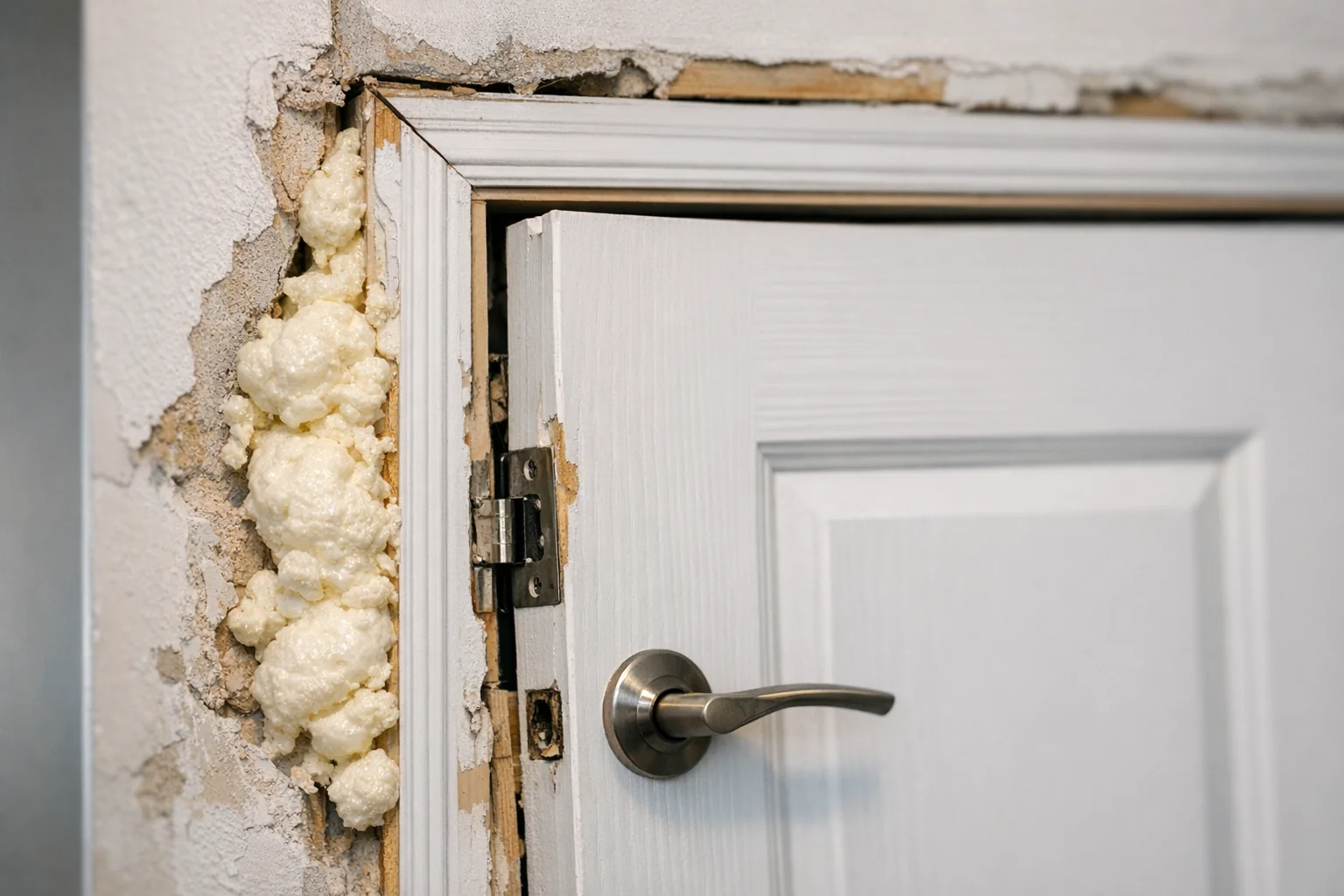
A replacement job is not the same as a first-time installation. It has its own common problems, and these are the ones we run into most often:
- Buying the new door before removing the old one. People measure to the old frame, then after removal find that the real opening is wider or narrower. The right way is to measure the bare opening after demolition and only then order the door.
- Ripping the frame out roughly. Pulling with a crowbar tears off plaster and sometimes even brickwork. Then the wall needs repair, which pushes the cost up fast. The frame should be cut and taken out carefully.
- Not cleaning off old foam. A new frame gets fitted over hardened old foam. It is uneven and stiff, so there is no way to set the frame straight. The result is a twist that starts showing within months.
- Ignoring damaged reveals. After the old frame comes out, the reveals are often chipped and cracked. If they are not levelled before the new frame is fitted, the architraves sit unevenly and gaps show up.
- Not accounting for size differences. A new door may be 2-3 cm narrower or shorter than the old one. If the opening is not reworked, you end up seeing marks from the previous frame, steps in the plaster and old paint lines.
- Skimping on architraves and extension strips. Cheap architraves that do not match the door in colour or finish, or no extension strips even though the wall is thicker than the standard frame. It looks rough and spoils the final result.
- Fitting before filler has dried. If the reveals were repaired, the filler needs time to dry out. Otherwise the moisture goes into the frame and the MDF or timber starts swelling.
What to prepare before the technician arrives
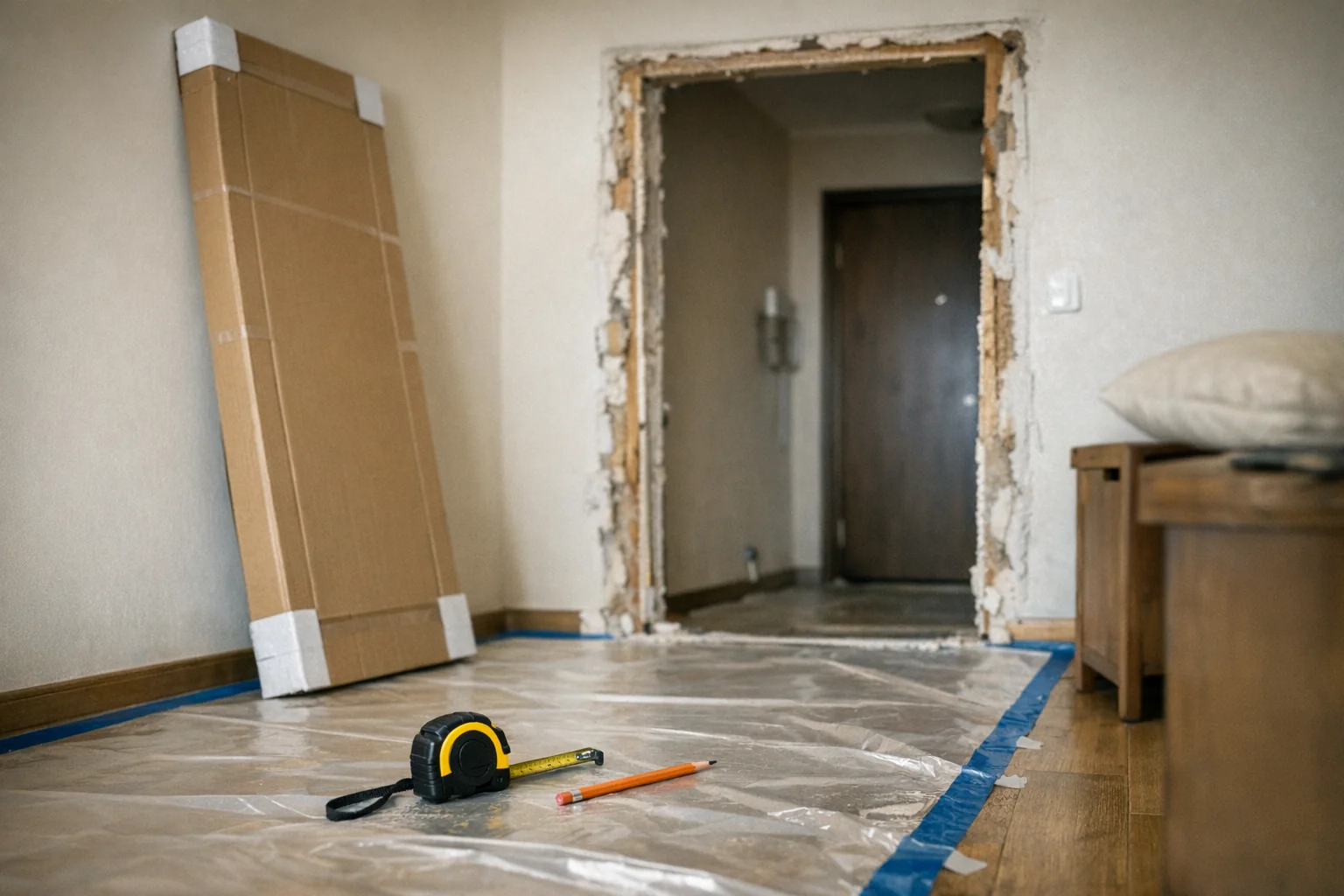
Replacing a door creates more dust than fitting one into a clean opening. Here is what you should sort out beforehand:
- Decide what should happen with the old door — leave it by the entrance, take it to the skip, or get rid of it yourself. Waste removal by the technician is a separate service.
- Clear the space around the opening by at least a metre on both sides. Move furniture, rugs and anything from nearby shelves.
- Cover the floor and any furniture that cannot be moved — demolition makes a lot of dust and small debris.
- The new door leaf, frame, architraves and hardware should already be on site when the technician arrives.
- Check what is in the pack: hinges, handles, latch, strike plate, extension strips (if the wall is thick). Very often something is missing.
- If you are not sure about the size of the new door — do not buy it before the technician has seen the job. Better to remove the old one first and measure the bare opening.
- Make sure there is a power socket available within 5 metres of the opening for the tools.
- Provide the entry code, floor number and lift details — especially if the old door has to be carried out.
- If you have pets, keep them in another room while the work is being done.
- Decide which way the new door should open — it may be different from the old one if the furniture layout now allows it.
A real case from Warsaw: three doors replaced in Ursynow
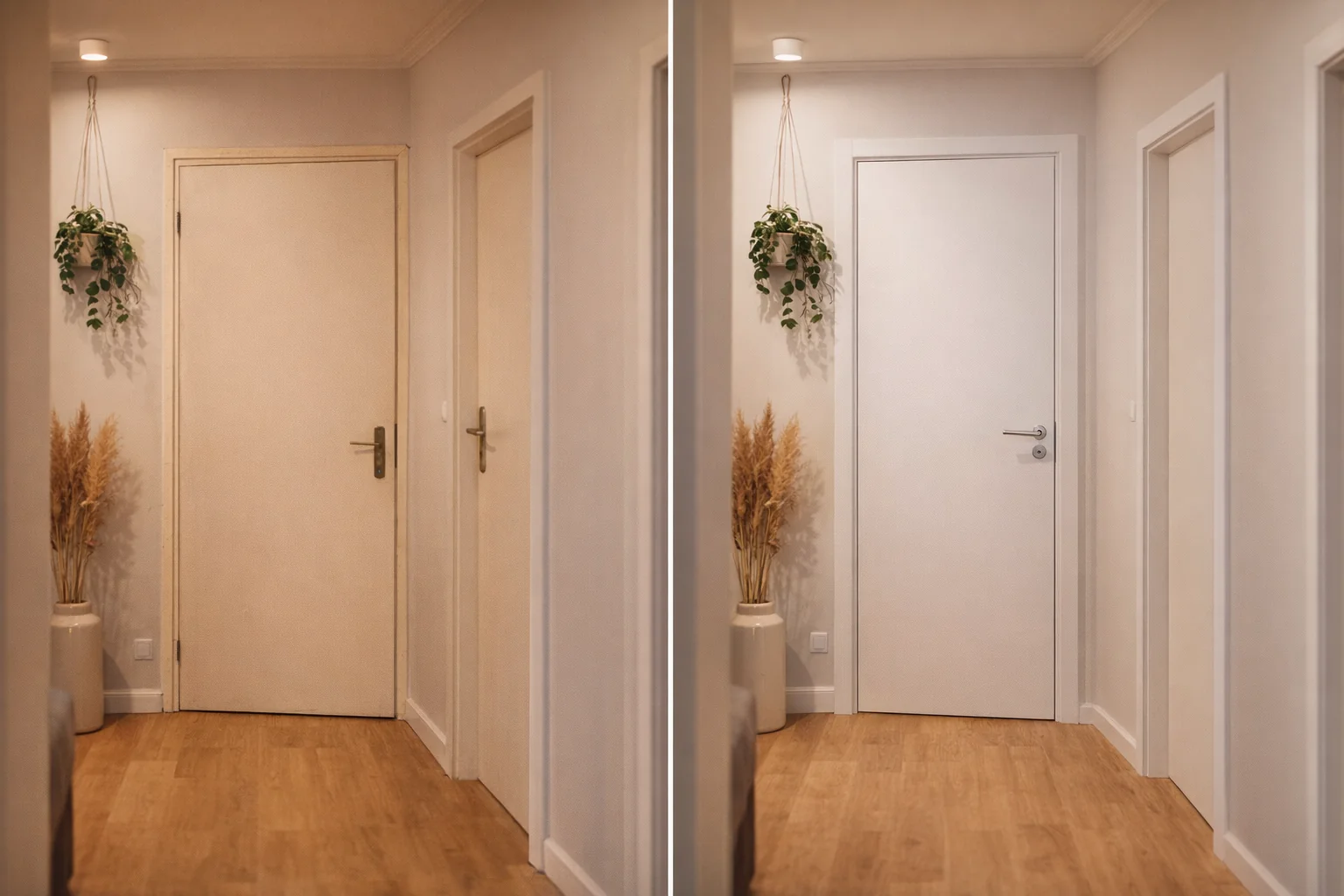
A client in Ursynow asked us to replace three interior doors in a flat from the early 2000s. The old doors were hollow-core on timber frames — common in panel-built blocks from that time. The frames had dried out, the leaves had twisted and the hinges were loose. When we removed the first door, we found the frame had been nailed and foamed directly onto the concrete, with no plugs or anchors. We had to cut it out piece by piece so we would not destroy the opening. The second door came out cleanly, but the third — in the bathroom — was 4 cm wider than standard. A new standard-size door would not cover the whole opening, so we reduced it with a plasterboard insert on a metal stud. After fitting all three doors, we repaired the chipped plaster and touched up the reveals. The whole job took one full working day. Later the client wrote that the flat had become noticeably quieter — new doors with rubber seals block sound much better than the old ones. The lesson is simple: replacing doors in buildings 15-20 years old almost always means surprises inside the opening, so it pays to expect them.
Frequently asked questions
Can I replace just the leaf and keep the old frame?
Yes, as long as the old frame is in good shape, straight and suited to the new leaf. The technician will check this on site — in some cases it really is the cheaper and quicker option.
How long does it take to replace one door?
Including removal and preparing the opening, 3-4 hours in most cases. If the opening is badly damaged and needs levelling, allow up to 5 hours.
What about damaged walls after removal?
The technician will repair small chips and cracks. If the damage is more serious, he will suggest a plasterer or do basic levelling himself.
The new door is a different size to the old one — is that a problem?
No. The opening can be widened with a breaker or made smaller with packing timber and plasterboard. The price depends on how much work is involved.
Do you take the old doors away?
Yes, removing old doors and waste is a separate service. If you would rather dispose of them yourself, the technician will leave them in the flat.
What is included in the replacement price?
Removal of the old door and frame, cleaning the opening, fitting the new frame and leaf, routing for hardware, fixings and foam. The door, frame and hardware are the client’s responsibility.
Can I change the opening direction when replacing?
Yes, that is one of the benefits of a full replacement. If the layout allows it, the technician will set the frame for the new opening direction.
Who does the work and what guarantees we offer
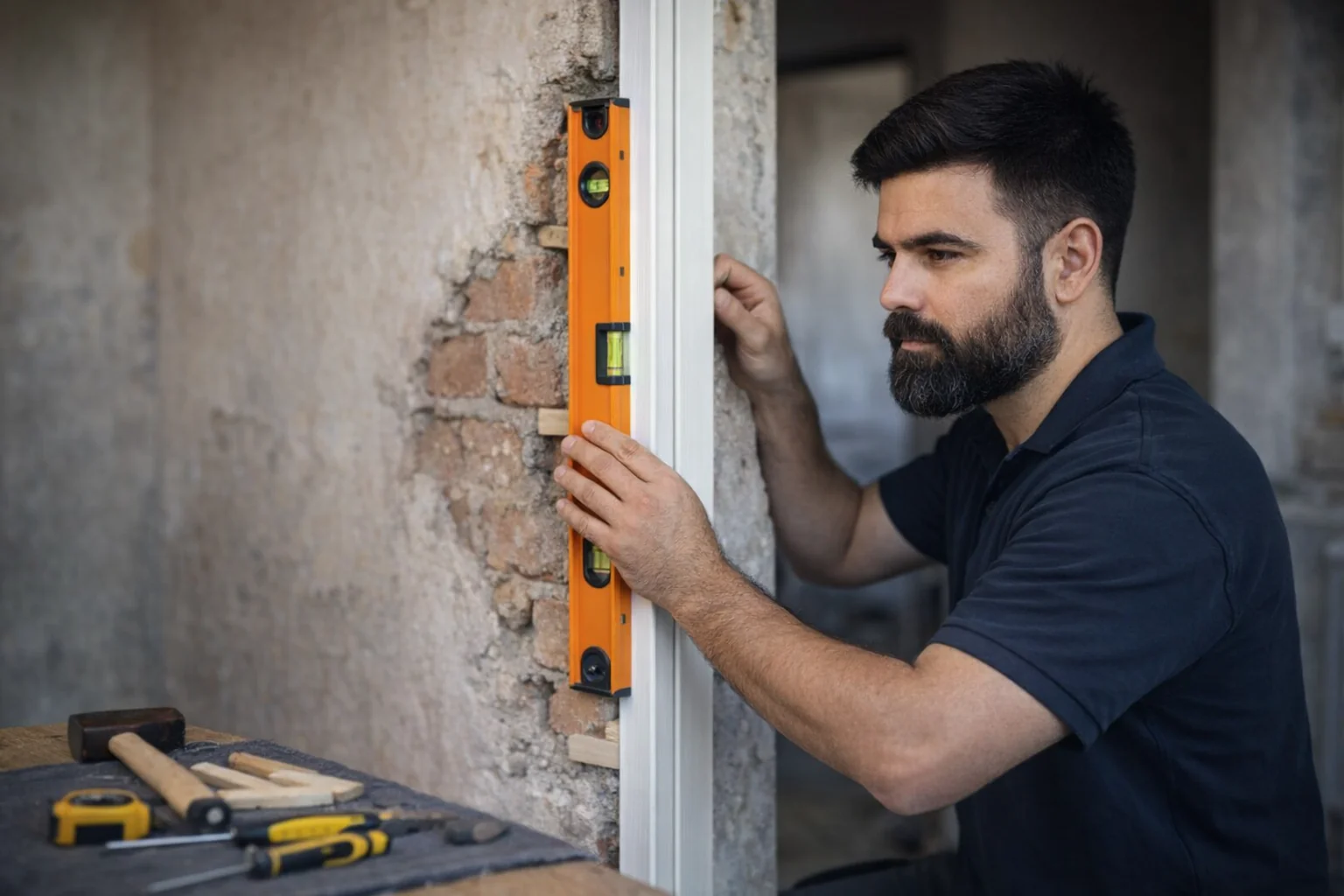
Door replacements are done by tradespeople with real experience in joinery and finishing — people who know what old openings look like in Polish buildings from different periods. We work across all of Warsaw and the nearby suburbs. We come with a full set of tools: breaker, mitre saw, hinge router, spirit level, chisels. The technician stays available after the job — if a month later the foam settles and a gap shows up, we will return and adjust it. To book a replacement, call or message us — we usually reply within an hour.