Interior door installation: cost and what affects it
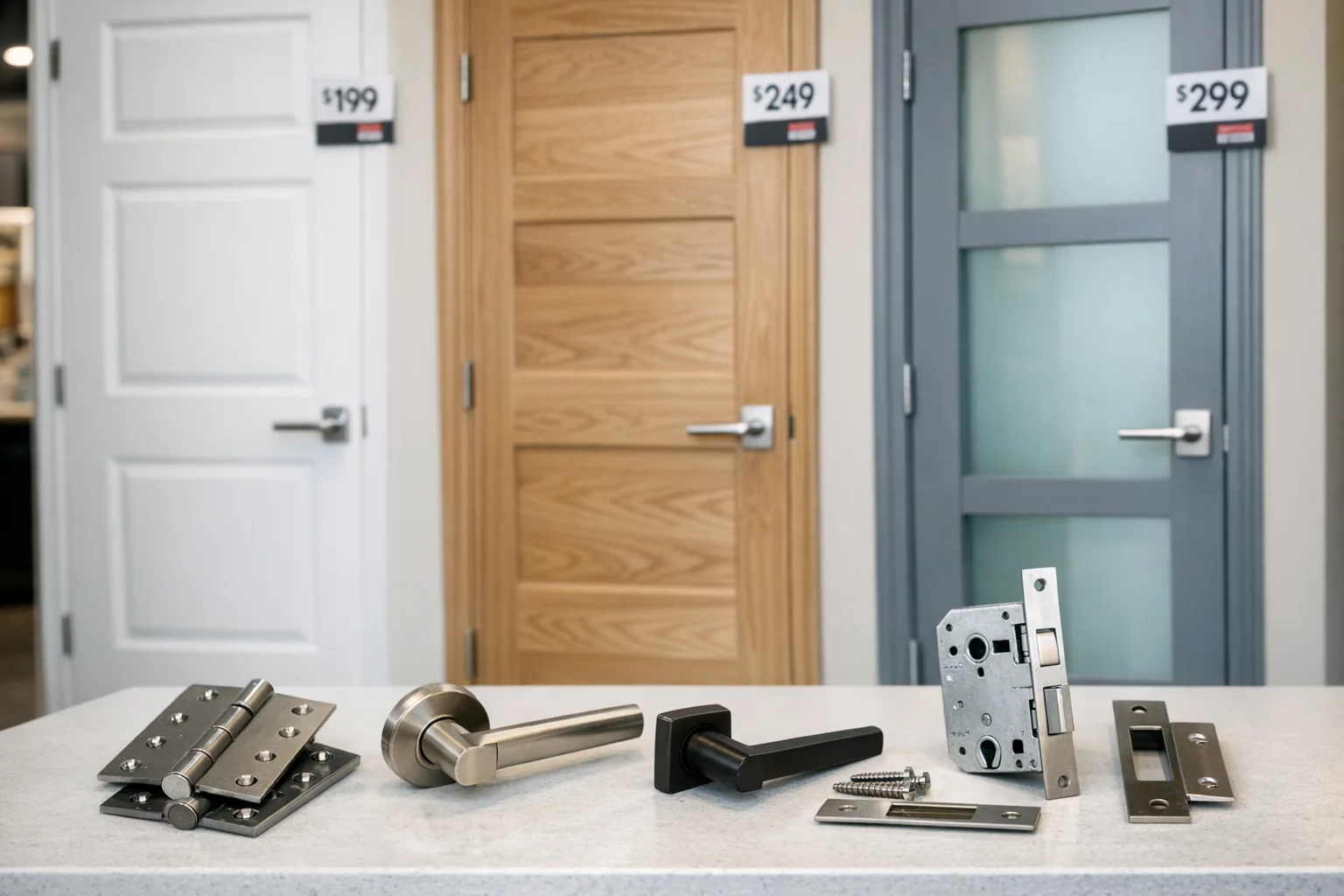
The price of interior door installation depends on a few things: the door type (hinged, sliding, concealed frame), the state of the opening, whether the old door has to be taken out, and whether the leaf needs trimming or the opening has to be widened. Fixings and expanding foam are included in the labour price. The door set itself, the frame and the hardware are bought by the client. Disposal of construction waste and carrying heavy items upstairs are charged separately. Current prices for all their door and window jobs are listed in the table below.
| Service | Price |
|---|---|
| Interior door installation with frame | 400–700 zł/szt |
| Interior door replacement | 800–1300 zł |
| Door removal | 200–250 zł |
| Door trimming | 200–400 zł |
| Door frame installation | 250–450 zł |
| Door adjustment | 80–150 zł |
| Fixing squeaky doors | 40–80 zł |
| Lock replacement | 180–350 zł |
| Door handle replacement | 180–280 zł |
Indicative prices. Ranges for a typical scope. Fixings included, materials separate. Minimum order 300 zł.
Post a request in the HandyMan24 app: explain the work and add a photo of the opening, and technicians will send their quotes.
What it costs and how to book: apartment finishing in Warsaw.
Installation or replacement?
Installation assumes an empty, even opening of known size. If the old frame needs cutting out, the opening needs clearing of foam and plaster, or the new door has to fit the old frame, book interior door replacement.
How the installation works step by step
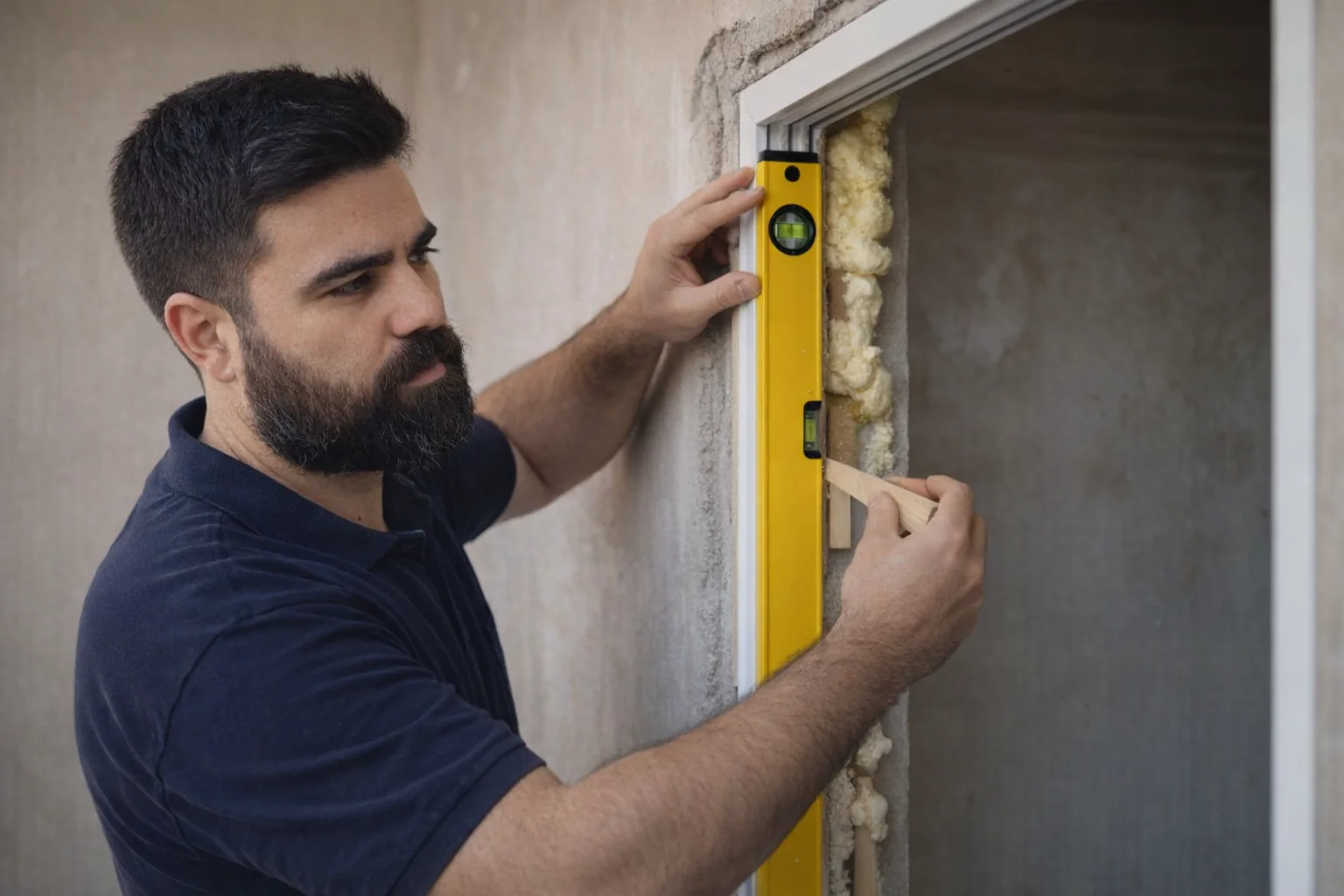
Installing a door is precise work where every millimetre matters. This is how the job goes on site:
- You explain the job. Send photos of the opening, give the dimensions and the door model. The technician checks the scope and gives an estimated price.
- Each tradesperson says in their offer when they can come, and you pick the one that suits you. Tradespeople bring a full tool kit: hammer drill, mitre saw, hinge router, spirit level, cordless driver.
- Removing the old door. Tradespeople remove the leaf and carefully take out the old frame. If the wall has been damaged, they get the opening ready: clear off old foam residue, straighten the reveals.
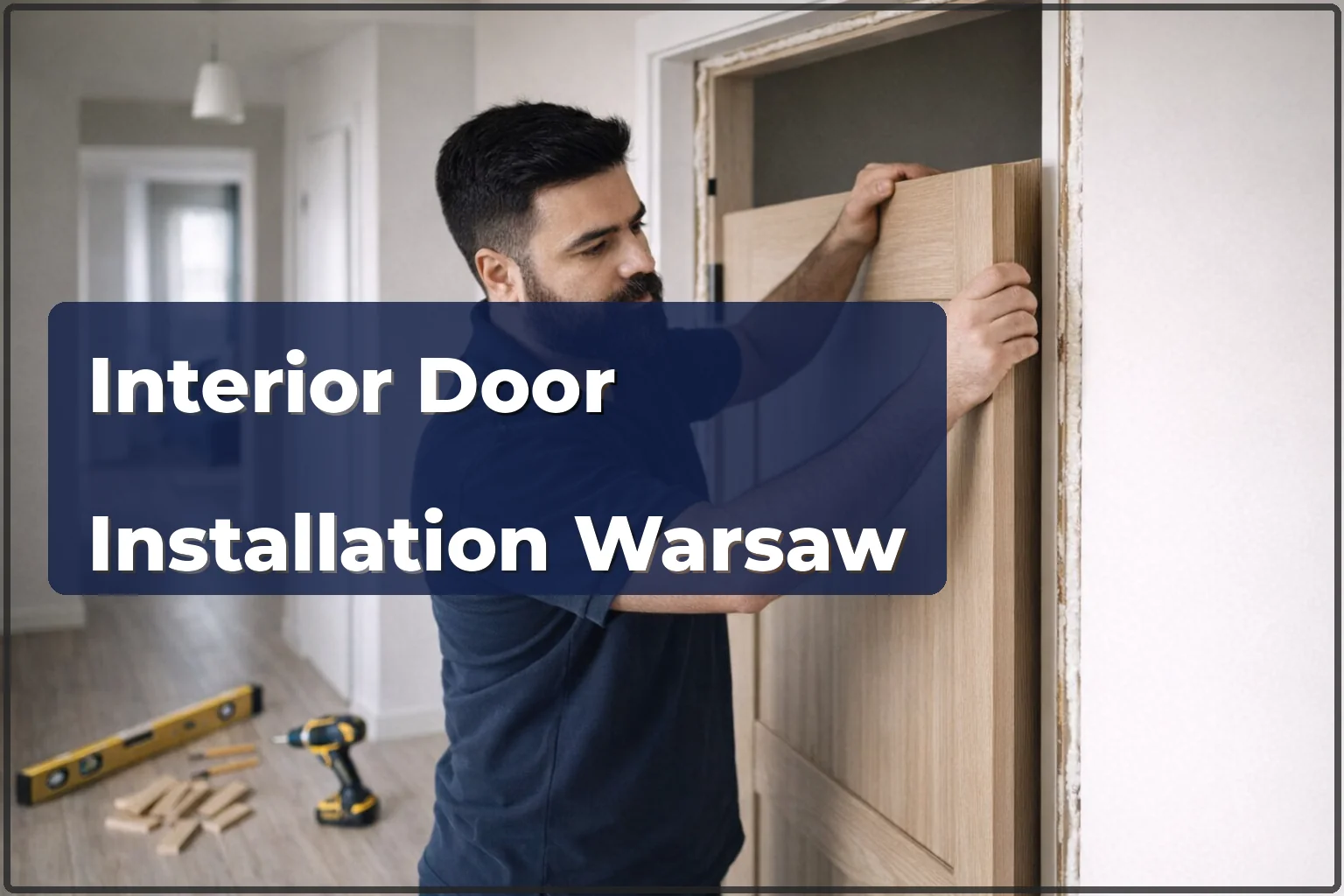
- Assembling and fitting the frame. Tradespeople put the door frame together, position it plumb and level in the opening, hold it with wedges and foam it in. If the opening is wider than the frame, they fit extension strips.
- Hanging the leaf and fitting hardware. Tradespeople hang the door, cut recesses for the hinges and latch, and fit the handles. Tradespeople make sure the swing is smooth and nothing rubs.
- Fitting architraves and extension strips. Architraves are cut at 45 degrees and fixed with adhesive or headless pins. If the walls are uneven, they scribe and fine-tune everything on site.
- Final check and clean-up. The door should open and shut easily, and the latch should catch cleanly. Tradespeople remove shavings, offcuts and packaging.
Common mistakes when fitting doors

Over the years they have come across plenty of issues caused by DIY installation or work done by people without proper experience. These are the ones they see most often:
- Incorrect opening measurement. Buying a door without proper measuring: the leaf either will not fit or leaves a finger-width gap. Measure once the finished floor is in place.
- Frame not set plumb. Even 2-3 mm out of line is enough for the door not to shut properly. After a while it starts scraping the floor or catching on the frame.
- Too much expanding foam. Foam expands and pushes the frame inward. You need spacer bars between the jambs and foam applied in thin layers over several passes.
- Skimping on hardware. Cheap handles and hinges loosen up within six months. The saving is small, but changing them later means drilling new holes in the leaf.
- Trimming the leaf without a guide rail. When a door needs shortening for a new floor, people often cut it by eye and it ends up uneven. You need a straight edge and the correct blade in the circular saw.
- Fitting before wet trades are finished. Doors installed before plaster or screed has dried take in moisture and swell. This matters most with veneered and laminated doors.
- Forgetting extension strips. The wall is thicker than the frame, but no extension strips were ordered. Then you are stuck waiting for delivery and calling the fitter back again.
- Not checking the opening direction. The door should open into the larger room and should not block a light switch or furniture. That needs deciding before you buy.
What to prepare before the technician arrives

So the installation goes smoothly and without hold-ups, have these things ready:
- Door leaf, frame, architraves and hardware — all of it should be on site before the technician arrives.
- Check what is in the package: hinges, handles, latch, strike plate. Very often something is missing from the box.
- If extension strips are needed, measure the wall thickness and order them beforehand.
- Clear the opening and the space around it: move furniture, take away mats and threshold strips.
- If the flat has just been renovated — tell the technician so the walls and floors can be protected with sheeting.
- Make sure there is a power socket within 5 metres of the opening for the tools.
- Decide the opening direction: inward or outward, left-hand or right-hand.
- If the floor has not been laid yet, tell the technician the thickness of the planned finish so the gap can be set properly.
- Give the entry code, floor number and lift details — especially for long, heavy doors.
- If the old door has to be removed, decide in advance what should happen to it. Waste removal is a separate service.
Interior door installation in practice: a Warsaw case

A client in Praga Poludnie booked installation of five interior doors in a flat that had just finished a full renovation. Every opening turned out to be a different width, from 70 to 90 cm — although on the plan they were supposed to match. Two walls were stud partitions and the rest were brick. In the stud walls they had to strengthen the openings with timber, otherwise the frames would not have been stiff enough. Three openings had walls thicker than the standard frame, so they fitted extension strips. The client chose magnetic latches: quieter to use and flush with the edge of the leaf. All five doors were fitted in one working day. A week later the client sent a message saying everything worked perfectly, not one door squeaked or rubbed on the floor. The takeaway is simple: in older buildings the openings are never standard, so it makes sense to hire a fitter who can work around whatever the building gives them.
Classen doors: when adjustment is enough
Classen makes interior doors and laminate flooring. With doors, problems almost always come from the installation and the building, not the leaf itself. Rubbing on the lock side usually means the leaf has dropped on its hinges. Rubbing at the top near the hinges points to a twisted frame. And a gap that changes with the seasons is down to humidity, not a faulty door.
An adjustable frame can be corrected without taking it apart. A fixed frame set in foam sometimes has to be cut out and refitted. For new doors the rule is simple: floor first, then doors, or at least a known laminate thickness.
Frequently asked questions
How long does it take to fit one door?
Usually 2-3 hours, including removal of the old one. If the opening is square and everything is prepared, it can take less time. Non-standard jobs can take up to 4 hours.
Do tradespeople supply the doors?
No, the client purchases the doors and hardware. Tradespeople can recommend manufacturers and models, and point you to places in Warsaw where the prices are good.
Can a new leaf be fitted into an existing frame?
Yes, as long as the old frame is in good shape and matches the new leaf. The technician will check this on site.
What is included in the fitting price?
Labour, fixings, expanding foam, travel within Warsaw. Doors, frame, hardware and extension strips are on the client.
Do I need to buy foam and screws myself?
No, the technician brings everything required. Foam, screws and wedges are included in the price.
Do tradespeople fit sliding doors?
Yes, including pocket doors (concealed in the wall) and barn-style doors (on an external track). The price depends on the system.
Can a tradesperson trim a door that catches on the floor?
Yes, that is a separate service. Tradespeople trim it on site without taking out the frame.
Who does the work

Door installation is done by tradespeople with real hands-on experience in joinery and interior finishing. Tradespeople work across all of Warsaw and the nearby suburbs. Tradespeople arrive with a full tool kit: from hammer drill to hinge router. The technician is available before and after the job: if a month later the door starts rubbing on the frame because the foam has settled, they will come back and adjust it.
Order in the app
Describe the job, add photos and the address. Tradespeople send their own prices and dates, and you pick one of the offers.
Open the app