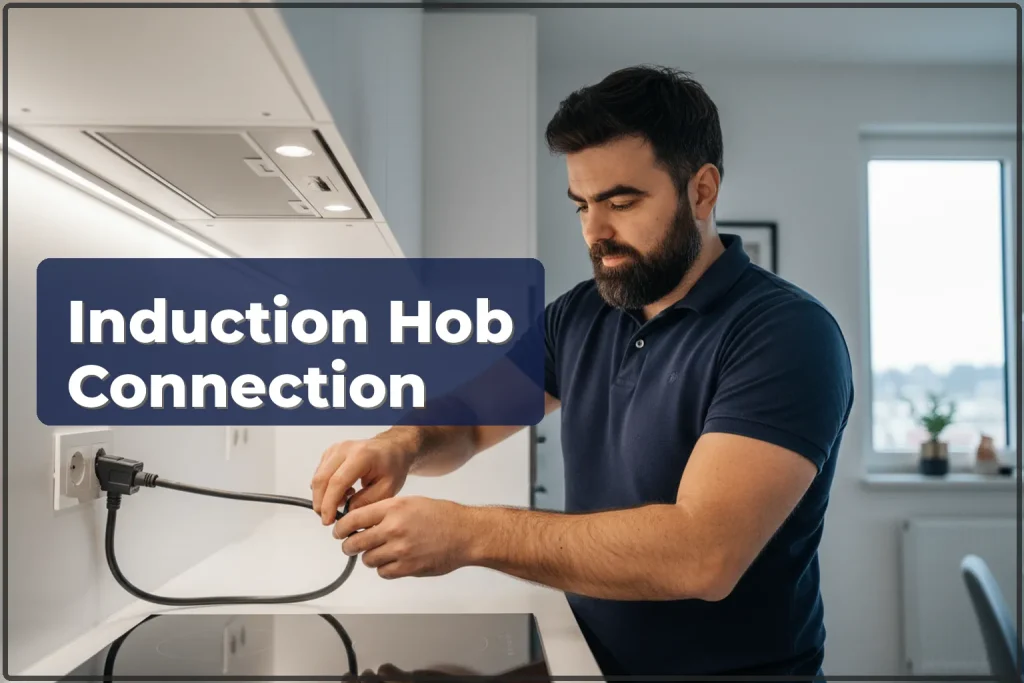
Had a new induction hob delivered and not sure where it plugs in? These hobs do not come with a regular plug — they are wired straight into a terminal block on a dedicated circuit with a 32A breaker. This is not something to run from an extension lead pulled out of the cupboard. If the wiring is dated or there is no separate line, hooking it up without an electrician can end in a tripped breaker or a burnt socket. We cover all of Warsaw — from Praga Poludnie to Wola.
How much does the connection cost and what affects the price
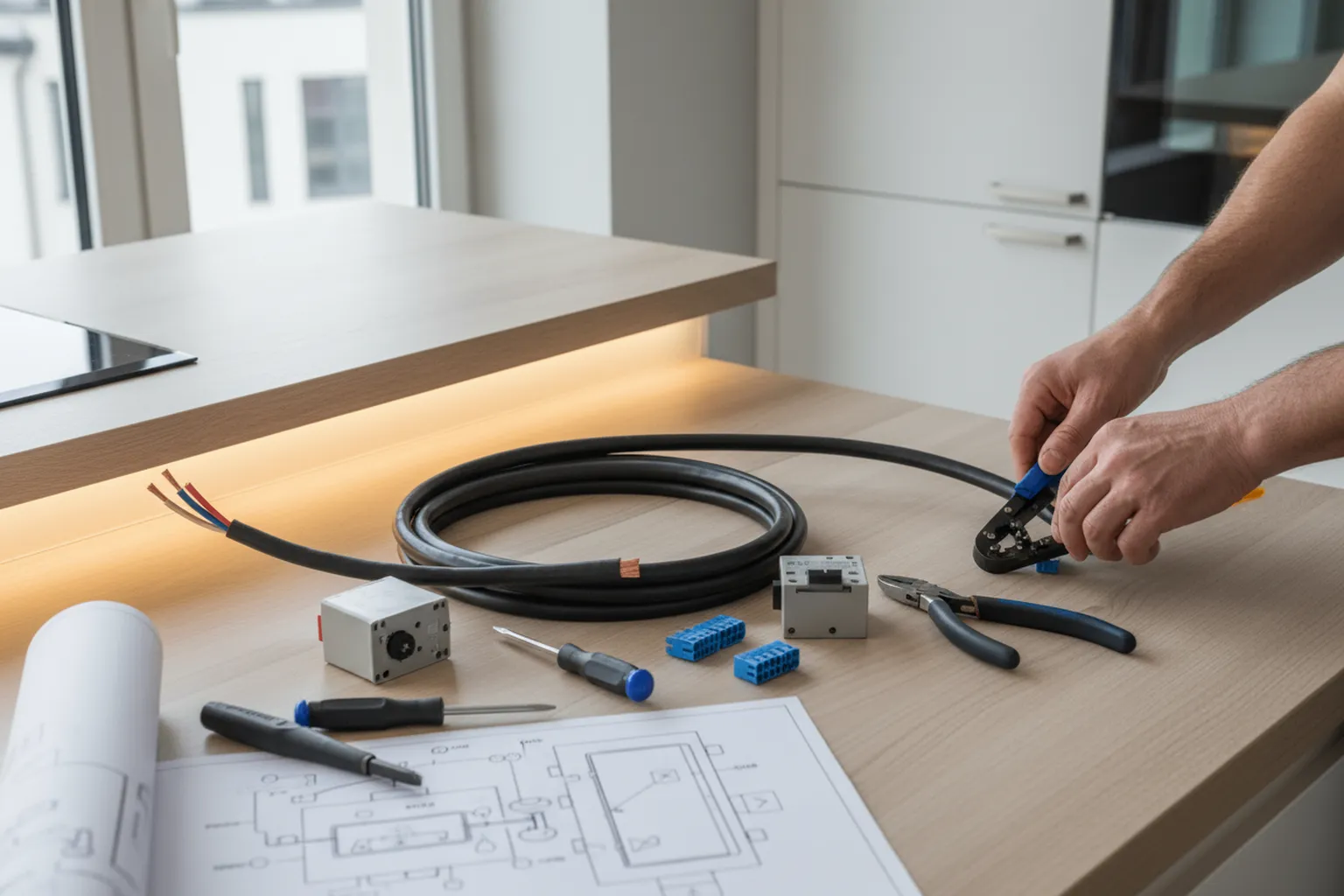
The price of connecting an induction hob depends mainly on the condition of the electrical wiring in your flat. If there is already a dedicated line with a 3×6 mm² cable and a 32A breaker, the technician can connect the hob to the terminal block in around an hour to ninety minutes. If there is no separate line, a new cable has to be run from the consumer unit, and a breaker plus an RCD have to be fitted — that means more time and a higher cost. Basic fixings are included in the service price. Extra materials (cable, breaker, conduit) are billed separately if required. You can find current prices in the table below.
| Service | min | max |
|---|---|---|
|
Induction stove connection
Book this service → | 250 zł | 400 zł |
How the on-site connection works
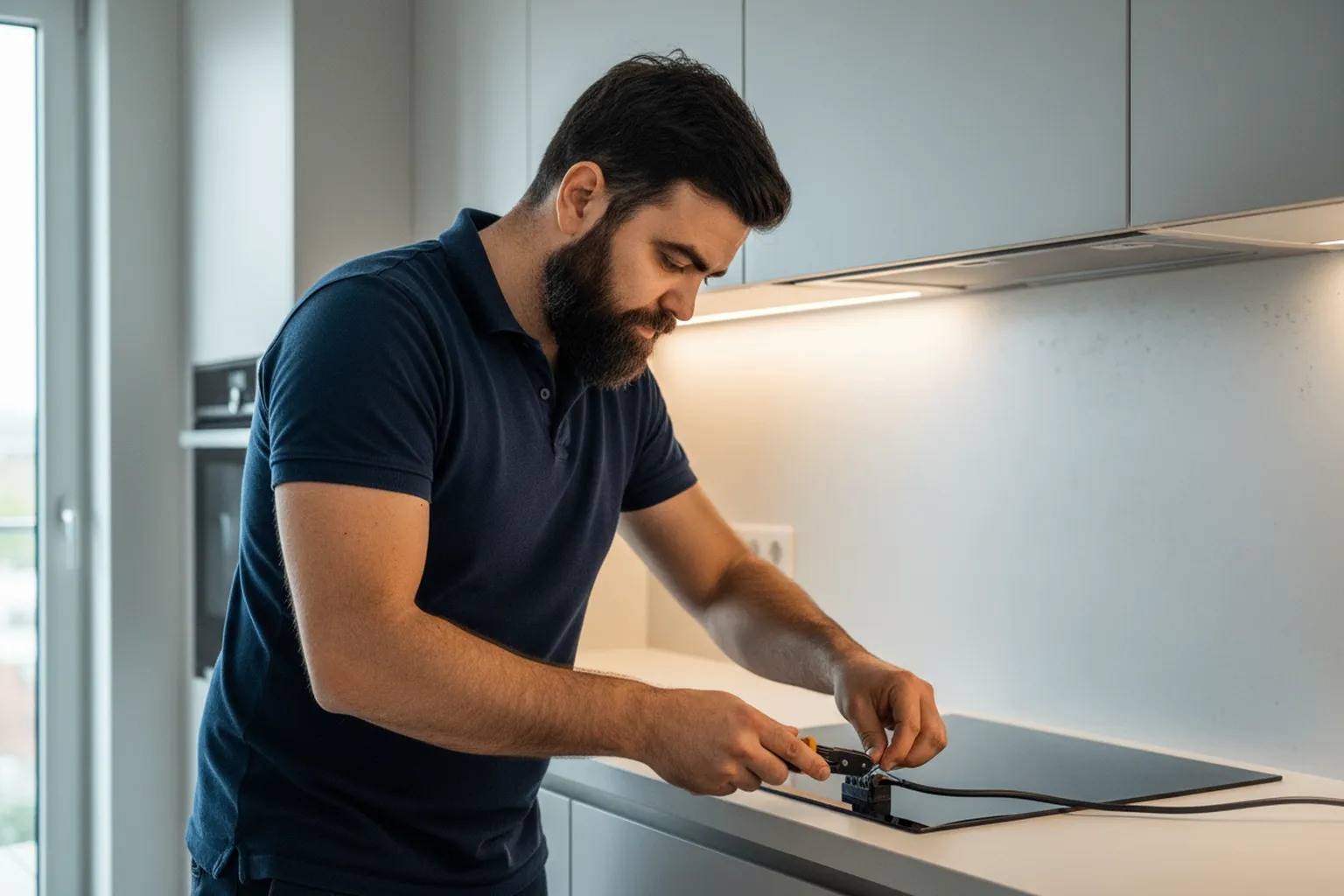
- You send a photo of the consumer unit and the hob location — the technician checks the scope of work and gives you an estimated price.
- We set a time — often for the same day or the next day.
- On site, the technician checks if there is a dedicated 32A line, what cable is installed (3×6 mm² is needed for single-phase, 5×2.5 mm² for three-phase), and whether earthing and an RCD are in place.
- If the line is there — the rear cover of the hob is removed and the conductors are wired into the terminal block according to the manufacturer’s diagram (single-phase or three-phase).
- If there is no dedicated line — a cable is run from the consumer unit to the installation point, and a 32A breaker plus a 40A/30mA RCD are installed.
- Earthing is tested with a multimeter. Without earthing, the hob can give electric shocks through its casing.
- The hob is powered up and each cooking zone is checked. The RCD is trip-tested to make sure it reacts to a simulated leakage.
- We show you how to use the timer, the child lock, and the Booster function.
Important: wiring an induction hob is high-load electrical work (up to 7.4 kW). Wrong connections can cause overheated cables, a short circuit, or a fire. If you are not sure what condition your wiring is in — call a professional.
Common mistakes when connecting an induction hob (and how to avoid them)
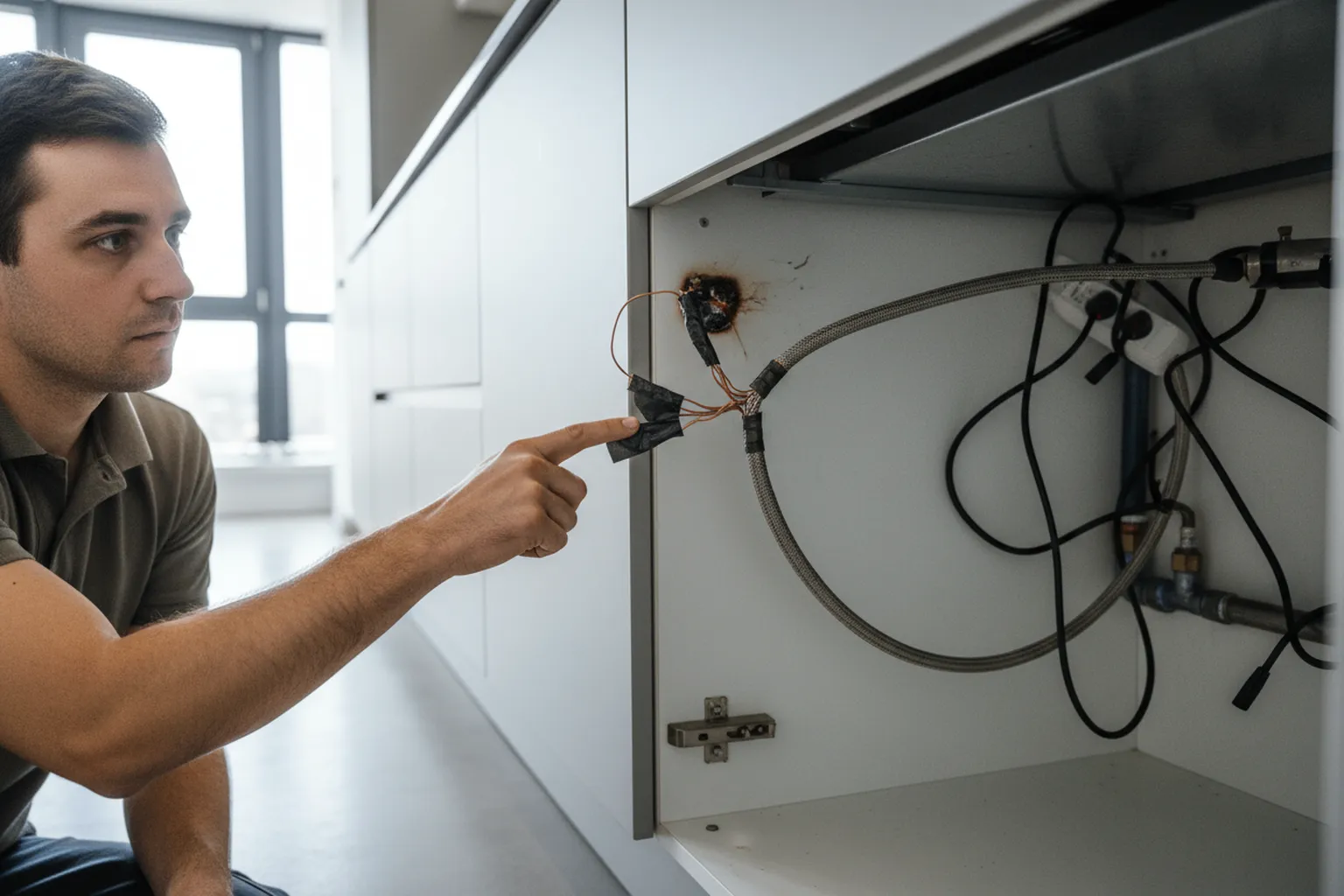
- Connecting the hob to a standard 16A socket — it is not built for 7+ kW loads, and the contacts overheat and melt.
- Using a 3×2.5 mm² cable instead of 3×6 mm² — the cable gets too hot under load, which creates a fire risk.
- Leaving out a dedicated breaker — the induction hob trips the flat’s main breaker when several zones are running.
- Mixing up live, neutral, and earth on the terminal block — the hob will not start or will work unpredictably.
- Setting it up for three-phase on a single-phase supply (or the other way round) — the jumpers on the terminals are configured wrongly.
- Skipping the RCD — if current leaks to the casing there is no protection, which means a risk of electric shock.
- Not testing the earth connection — in older Warsaw buildings the earth wire may be disconnected or missing altogether.
- Not leaving a ventilation gap below the hob — the electronics get too hot and the hob shuts itself off.
What to prepare before the technician arrives
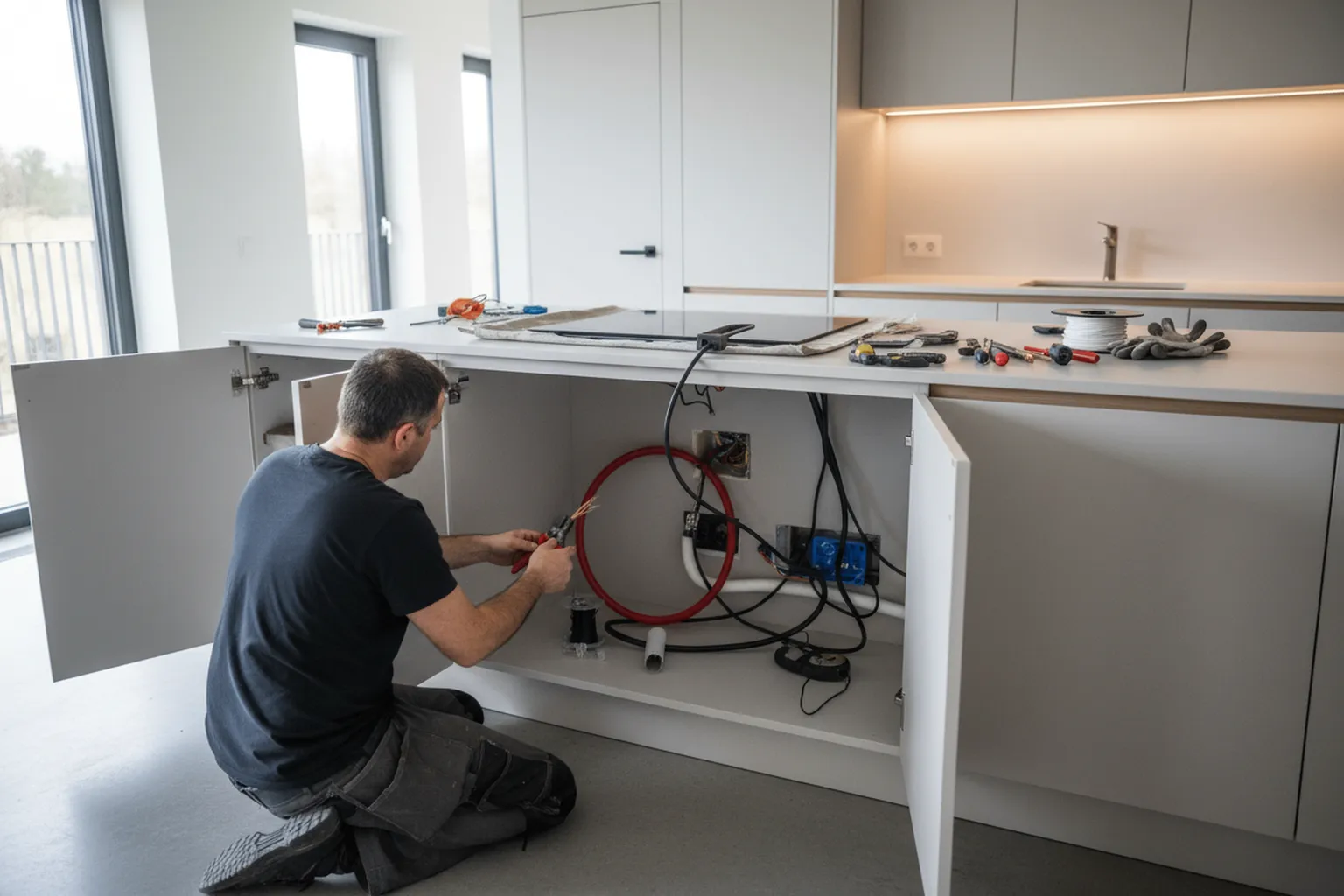
- Take a photo of the consumer unit — the technician will be able to see in advance whether there is room for a breaker and what cable is installed.
- Check whether your flat has a single-phase or three-phase supply — this will be listed in your energy contract or on the meter.
- Make sure there is clear access to the hob location and the consumer unit — the technician needs room to work at both points.
- If the hob is being fitted into a worktop, the cut-out should already be prepared (the connection service covers electrical work only).
- Keep the hob manual ready — it has the terminal wiring diagram (single-phase / three-phase).
- Check whether a dedicated line is already there — a separate cable from the consumer unit to the hob. If not, tell the technician.
- Remove pots and kitchen items from the worktop so the technician can work without obstruction.
- Send entry details: intercom code, parking information.
A real case from Warsaw
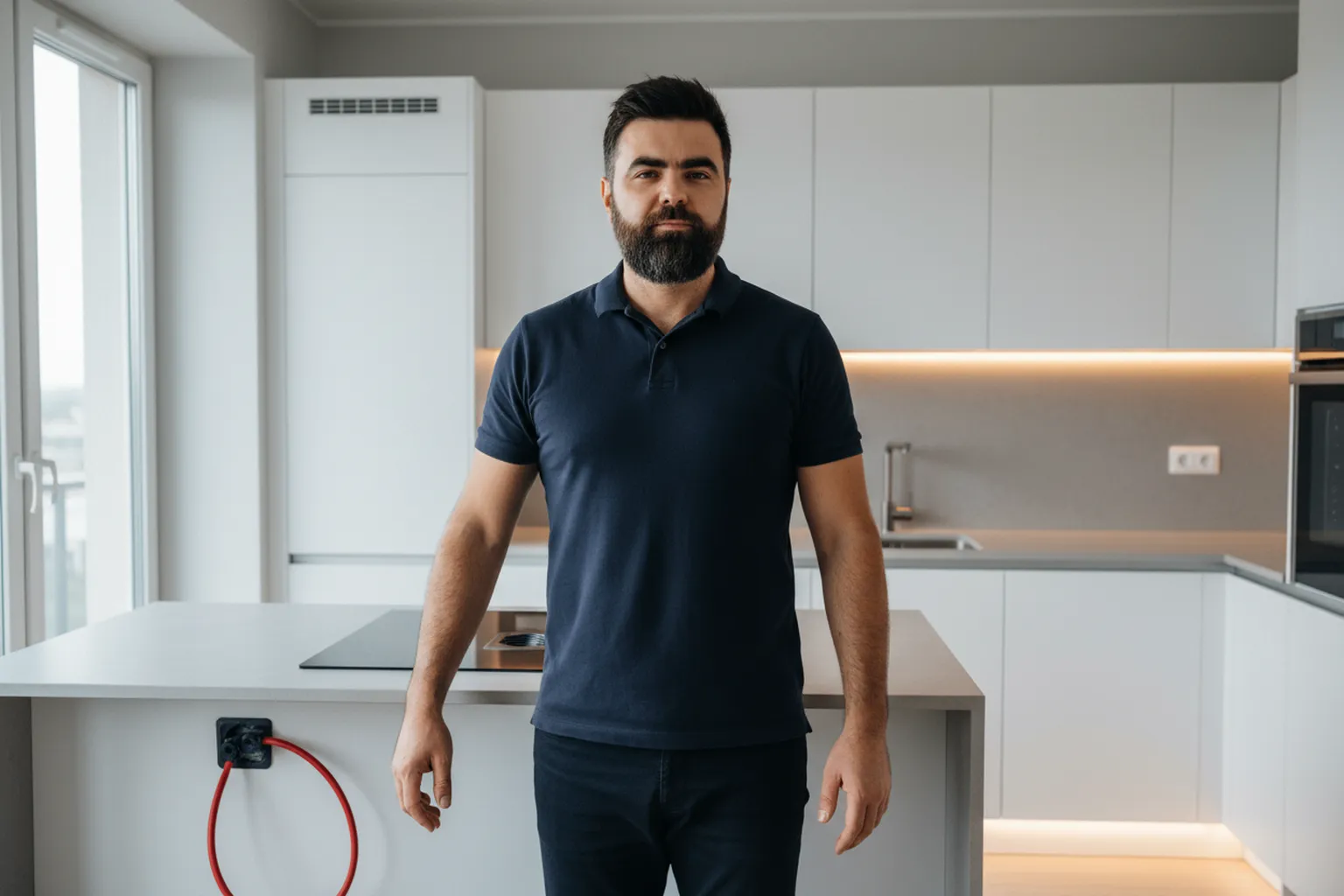
A client in the Praga Poludnie district was changing from a gas hob to induction. He had bought a Bosch Series 6 with four zones, rated at 7.2 kW. During inspection, it turned out the flat had a single-phase supply, and an old aluminium 2×2.5 mm² cable ran from the consumer unit to the kitchen — no earth wire and one 20A breaker for the whole kitchen circuit. Connecting an induction hob to that line was not an option. The technician ran a new NYM 3×6 mm² copper cable from the consumer unit to the installation point, installed a dedicated C32 breaker and a 40A/30mA RCD. He connected the hob in single-phase configuration — three live terminals bridged together, neutral and earth separate. After power-up, we tested every zone at full output, checked the Booster function, and confirmed the RCD tripped as it should. The job took about three hours. The lesson is simple: in buildings from before 2000, a new dedicated line is needed in most cases — old wiring cannot cope with induction-hob power.
Frequently asked questions
Can I plug an induction hob into a regular socket?
No. An induction hob takes up to 7.4 kW — a standard 16A socket (3.5 kW) cannot handle that. You need a dedicated line with a 32A breaker and a 3×6 mm² cable.
What is the difference between single-phase and three-phase connection?
With a single-phase supply, the three live terminals are bridged together and connected to one phase. With three-phase, each terminal is connected to its own phase. The diagram is shown in the hob manual.
Is an RCD mandatory?
Yes. An RCD protects you from electric shock if current leaks to the casing. For an induction hob, a 40A RCD with 30mA trip current is recommended.
Does any cookware work on induction?
No. You need cookware with a ferromagnetic base — it should stick to a magnet. Aluminium, copper, glass, and non-magnetic ceramic will not work on induction.
What is included in the connection price?
Labour, travel within Warsaw, basic fixings. Extra materials (cable, breaker, RCD, conduit) are charged separately if needed.
How long does the connection take?
If a dedicated line is already there — about an hour to ninety minutes. If a new cable has to be run from the consumer unit — three to four hours.
Do I need to disconnect the gas if I am switching to induction?
If the gas hob has already been removed — yes, the gas pipe should be capped. That work is done by the gas utility, not an electrician.
Who does the work
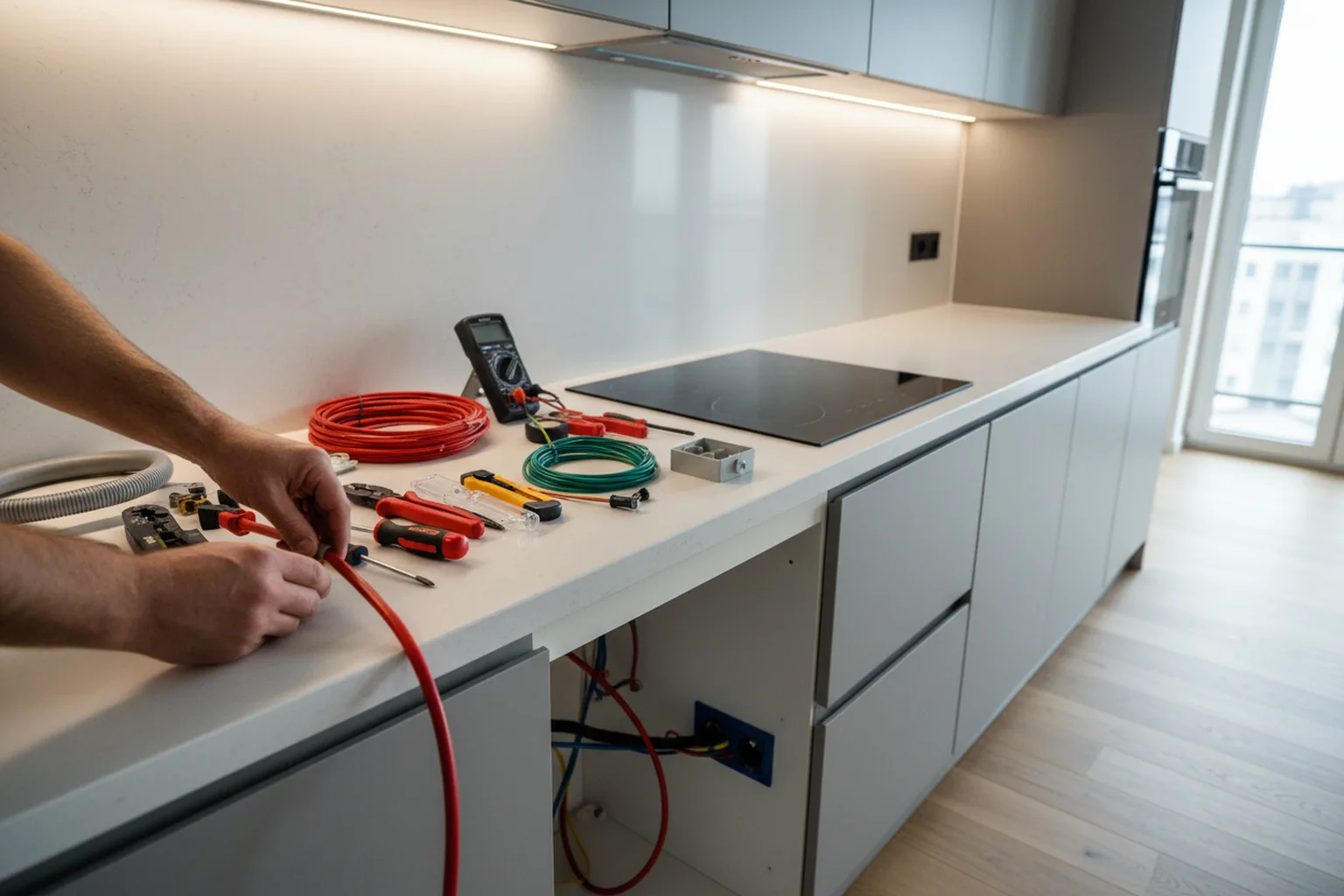
Induction hob connections are done by technicians with hands-on experience in electrical installations in every kind of flat — from pre-war tenement buildings to new developments in Wilanow. We come with a multimeter, a complete tool kit, and basic consumables. If cable or a breaker is needed, we go through it with you in advance. To book, call or message us — we get back to you within an hour.