Got an overgrown lawn, grass up to your knees, and a broken mower — or no mower at all? A detached house on the outskirts, a townhouse in Wilanow, or a plot in Bródno — makes no difference. Once the grass gets too high, an ordinary electric mower will not manage it. We come with our own gear: petrol mower, strimmer, collection bags. We mow, gather up the cuttings, and take them away.
How much does it cost and what affects the price
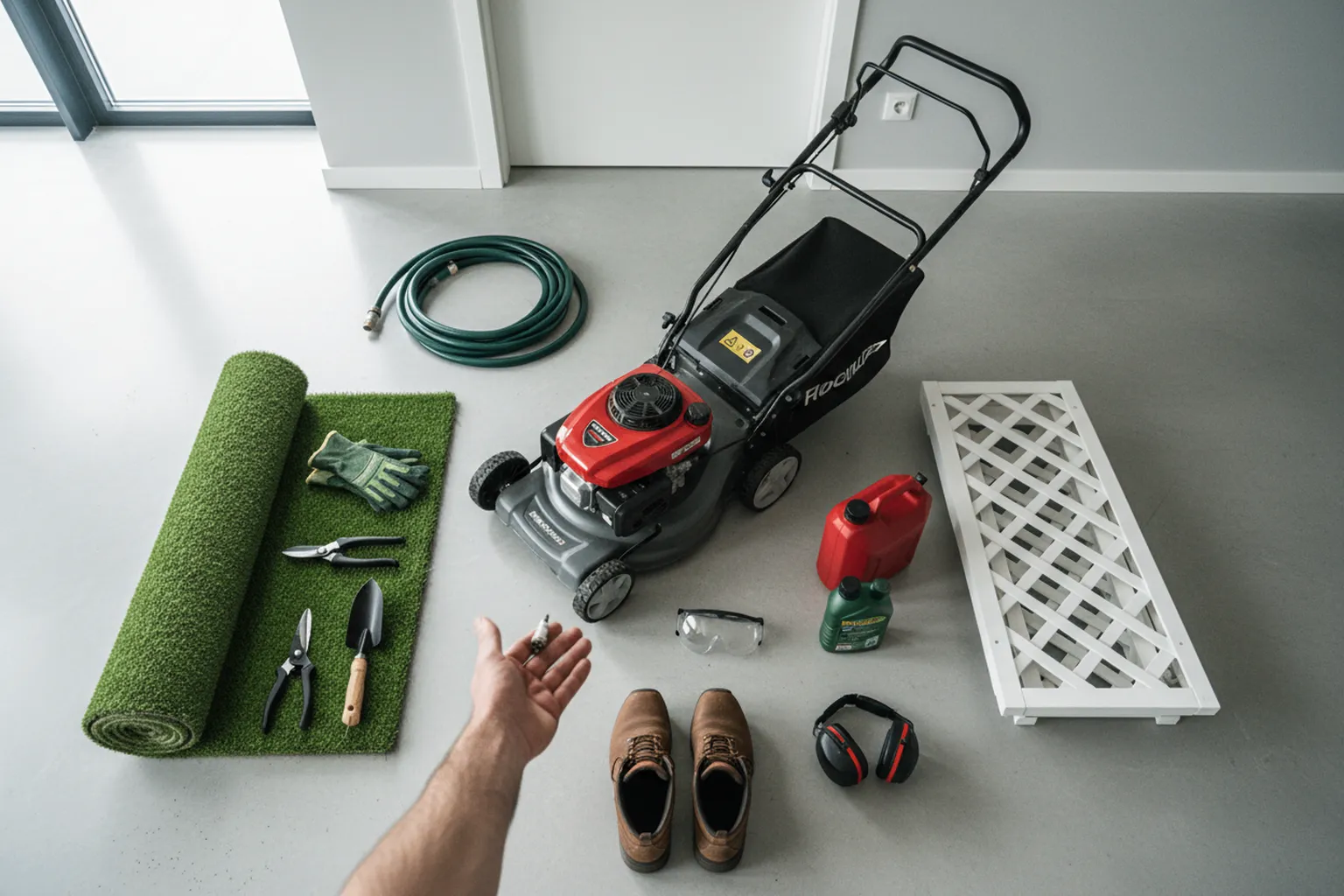
The price of mowing depends on the size of the area, the height of the grass, and the condition of the ground. A flat 100 m² lawn with grass up to the ankle is one job. An abandoned 500 m² plot with uneven ground, scrub, and rubbish buried in the grass is a different one. If the grass is above 30 cm, we need 2 passes: first the strimmer to knock down the top, then the mower to even everything out. Disposal of cut grass is priced separately. Current rates are in the table below.
| Service | min | max |
|---|---|---|
|
Lawn mowing
Book this service → | 150 zł/h | 300 zł/h |
|
Hedge trimming
Book this service → | 250 zł/h | 300 zł/h |
|
Tree / branch trimming
Book this service → | 150 zł | 2000 zł |
|
Leaf raking
Book this service → | 50 zł/h | 100 zł/h |
How the on-site work goes
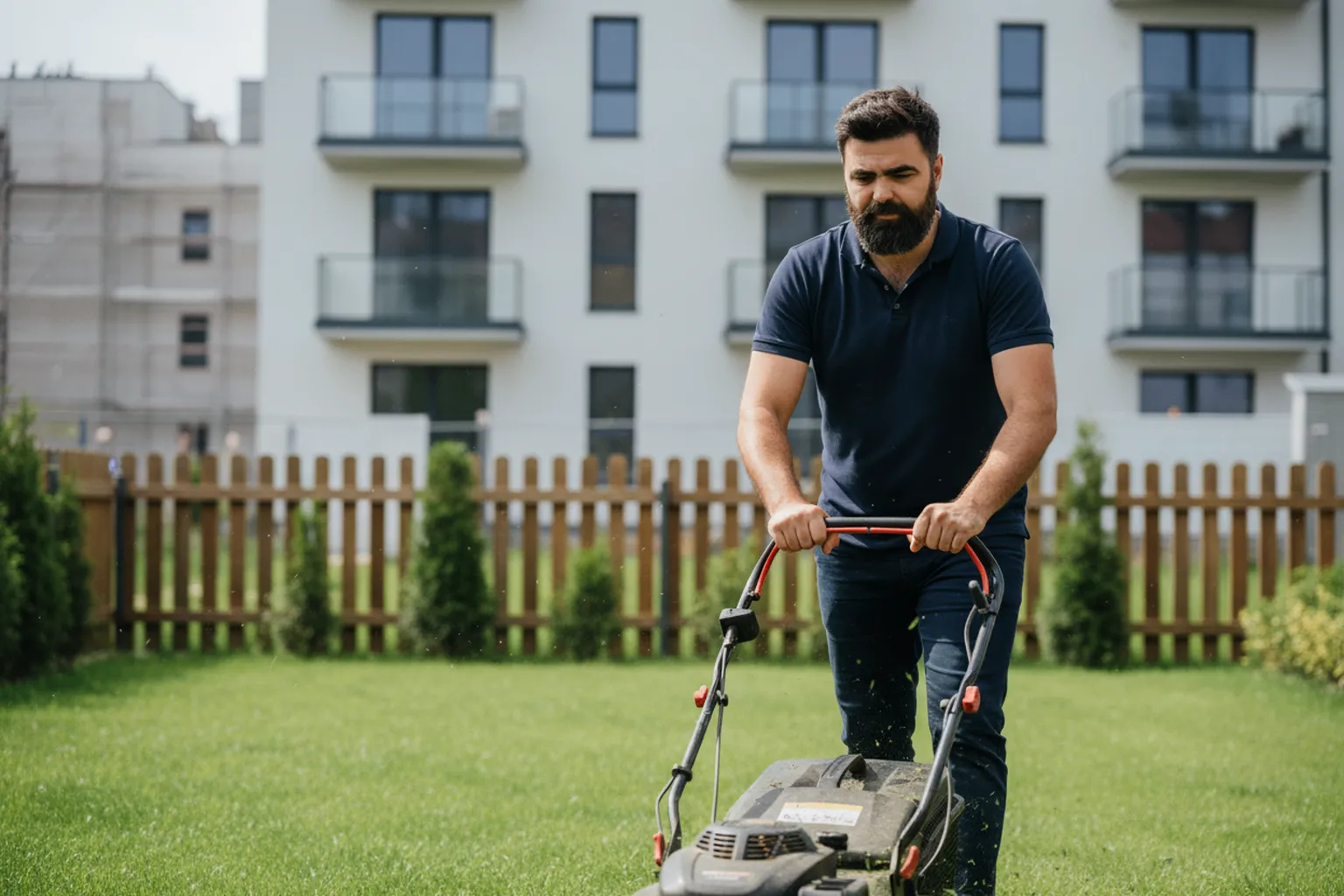
- You send a photo of the plot — the technician assesses the area, grass height, and how difficult the terrain is, then gives you an estimated price.
- We set a date — often within 1-2 days.
- On site, the technician checks the area: looking for stones, wire, branches, or rubbish in the grass — any of these can wreck the equipment.
- If the grass is high — we begin with a strimmer to cut down the top layer. That stops the mower from choking.
- Main mowing with the mower at the agreed cutting height. Standard is 4-5 cm, but this can be discussed.
- Edges are finished with the strimmer: along fences, kerbs, trees, and flower beds — anywhere the mower cannot get in.
- We gather the cut grass and bag it if needed. We can take it away or leave it — up to you.
Common mistakes when mowing a lawn
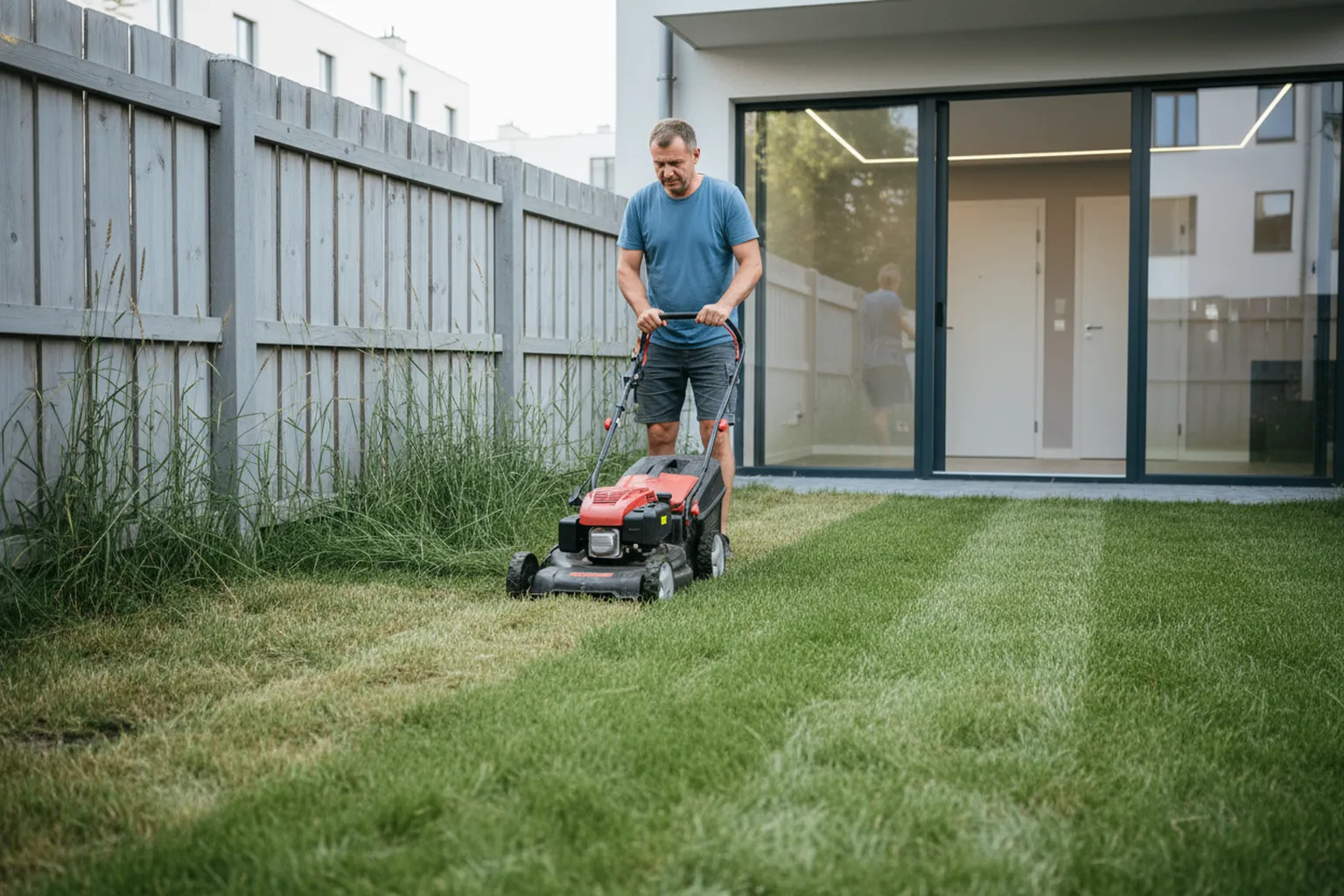
- Cutting a neglected lawn straight down to the lowest height — the grass goes yellow and has a hard time recovering. Rule of thumb: never take off more than a third of the height in one pass.
- Mowing wet grass — it sticks together, blocks the mower, and ends up lying unevenly.
- Skipping the area check before mowing — one stone or bit of wire in the grass can snap the mower blade.
- Leaving a thick layer of clippings on the lawn — the grass underneath overheats and bare spots start to appear.
- Mowing in the midday sun — hard on the lawn. Morning or evening works better.
- Ignoring the edge trim — the lawn looks cut, but the fence lines and kerbs still look overgrown.
- Mowing too rarely — the grass gets out of hand, the roots weaken, and weeds move in.
What to prepare before the technician arrives
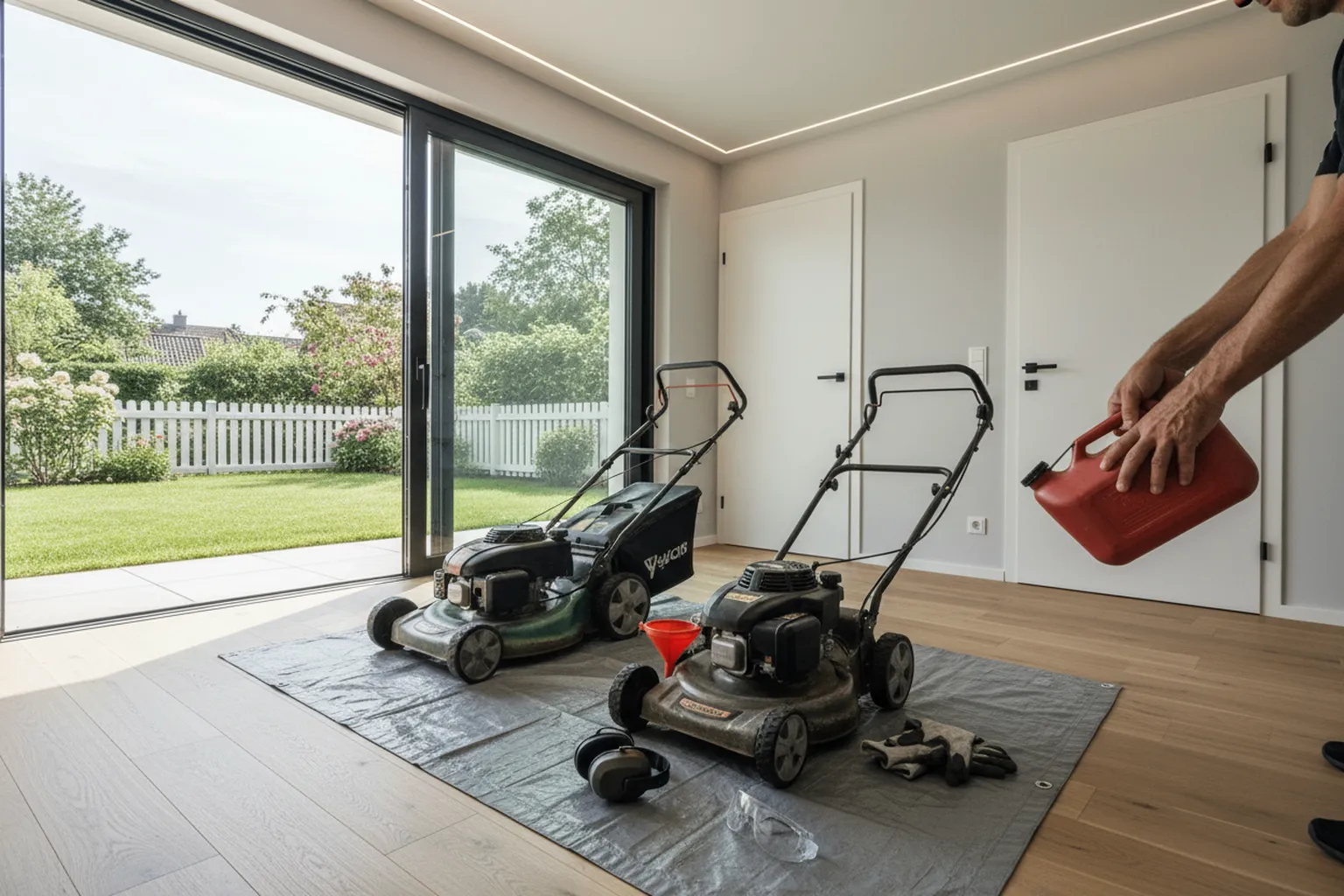
- Remove toys, garden furniture, hoses, and other items from the lawn.
- Check the grass for stones, broken glass, or wire — these can damage the equipment.
- If there are hidden elements (manholes, kerb stones, irrigation pipes) — mark them or tell the technician.
- Make sure there is access to the plot: gate, intercom code, parking space for the van with equipment.
- If cut grass needs to be removed — let us know beforehand.
- Decide what height you want the lawn left at after mowing.
- If there is a dog on the property — clean up after it before we arrive.
- Tell us about flower beds to avoid or young trees with thin trunks.
- Check that the gate is wide enough for the mower to get through.
- If the plot has not been cut for a long time (grass over 50 cm) — let the technician know so they bring heavy-duty equipment.
A real case from Warsaw
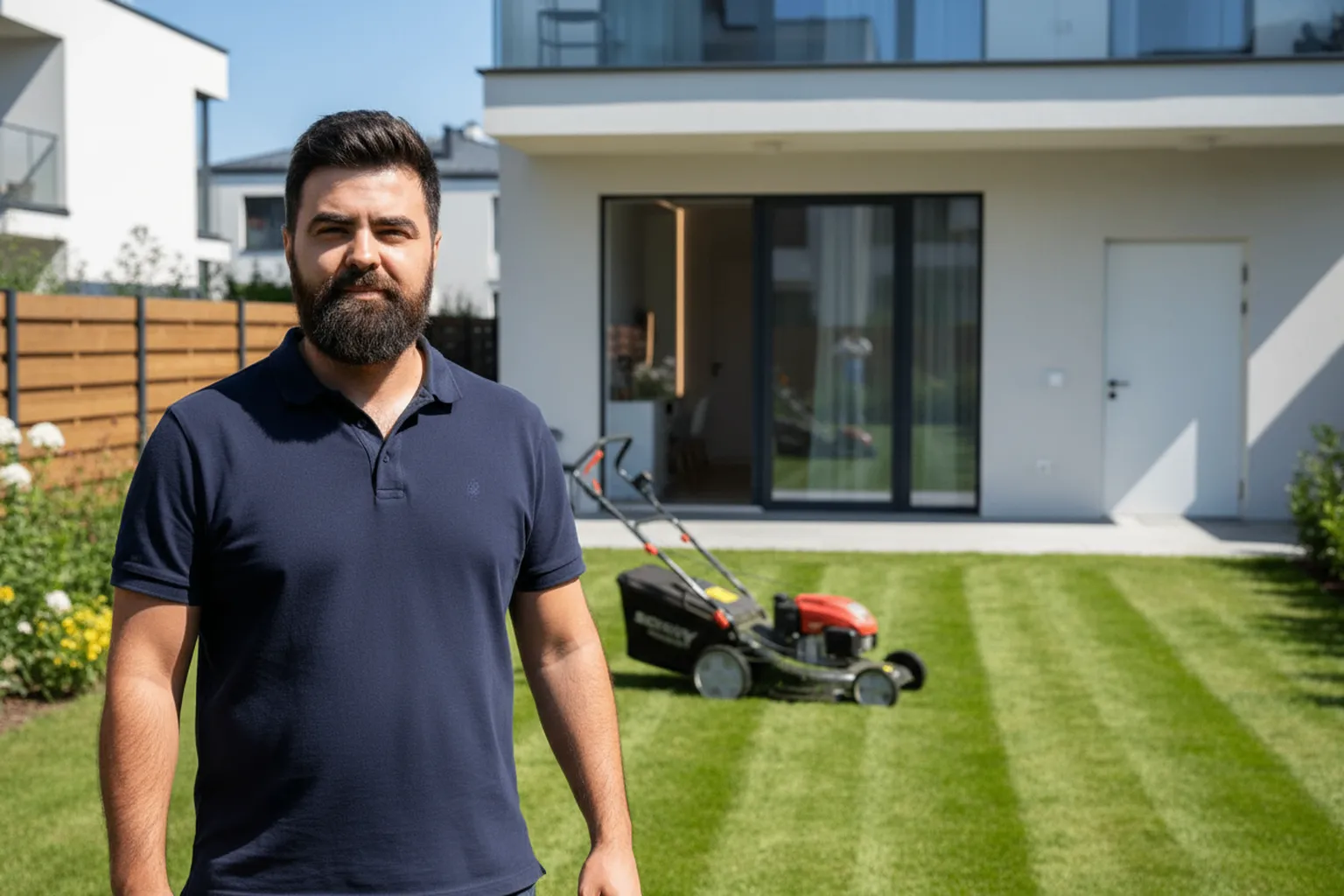
A townhouse owner in the Wesola district called at the beginning of summer — a 200 m² plot that had not been cut since autumn. The grass was up to 40 cm, with thistle coming through here and there. The client’s regular electric mower just kept stalling. The technician came with a petrol strimmer and a professional mower. First he covered the whole plot with the strimmer, cutting back the top layer. He spotted two stones and a piece of rebar in the grass — good thing he found them before bringing in the mower. Then he mowed the area with the machine set to 5 cm. Edges along the fence and around the trees were finished with the strimmer. The clippings filled 8 bags. The whole job took 3 hours. The client then booked regular fortnightly mowing — now the lawn stays tidy and never gets out of hand (compatible with Kärcher, Vileda and similar).
Frequently asked questions
How often should a lawn be mowed?
During the season (April-October) — once every 1-2 weeks. In spring the grass grows faster; in the summer heat it slows down. In autumn — every 2-3 weeks.
Do you bring your own mower?
Yes, we come with full equipment: mower, strimmer, collection bags. You do not need to supply anything.
Can you mow wet grass?
Best not to. Wet grass clumps together, blocks the mower, and ends up lying unevenly. Better to wait until it dries out.
What do you do with the cut grass?
We bag it. We can take it away for an extra charge or leave it for your compost.
Do you cut weeds and very tall grass?
Yes. For tall and neglected grass we use a strong petrol strimmer. First we cut down the top layer, then we finish with the mower.
Do you work outside Warsaw?
Yes, we also go to the suburbs. The travel charge outside Warsaw is agreed individually.
Can I book regular mowing?
Yes, many clients schedule mowing every 1-2 weeks for the whole season. It costs less in the long run and the lawn always stays presentable.
Do you trim the edges?
Always. After the main mow we trim along fences, kerbs, trees, and flower beds with a strimmer.
Can I order mowing only, without collecting the grass?
Yes, fine clippings can stay on the lawn as mulch. But bigger piles are better removed.
What time of year do you mow?
April to October is the main season. The final mow is before the first frosts, usually in late October.
Who does the work
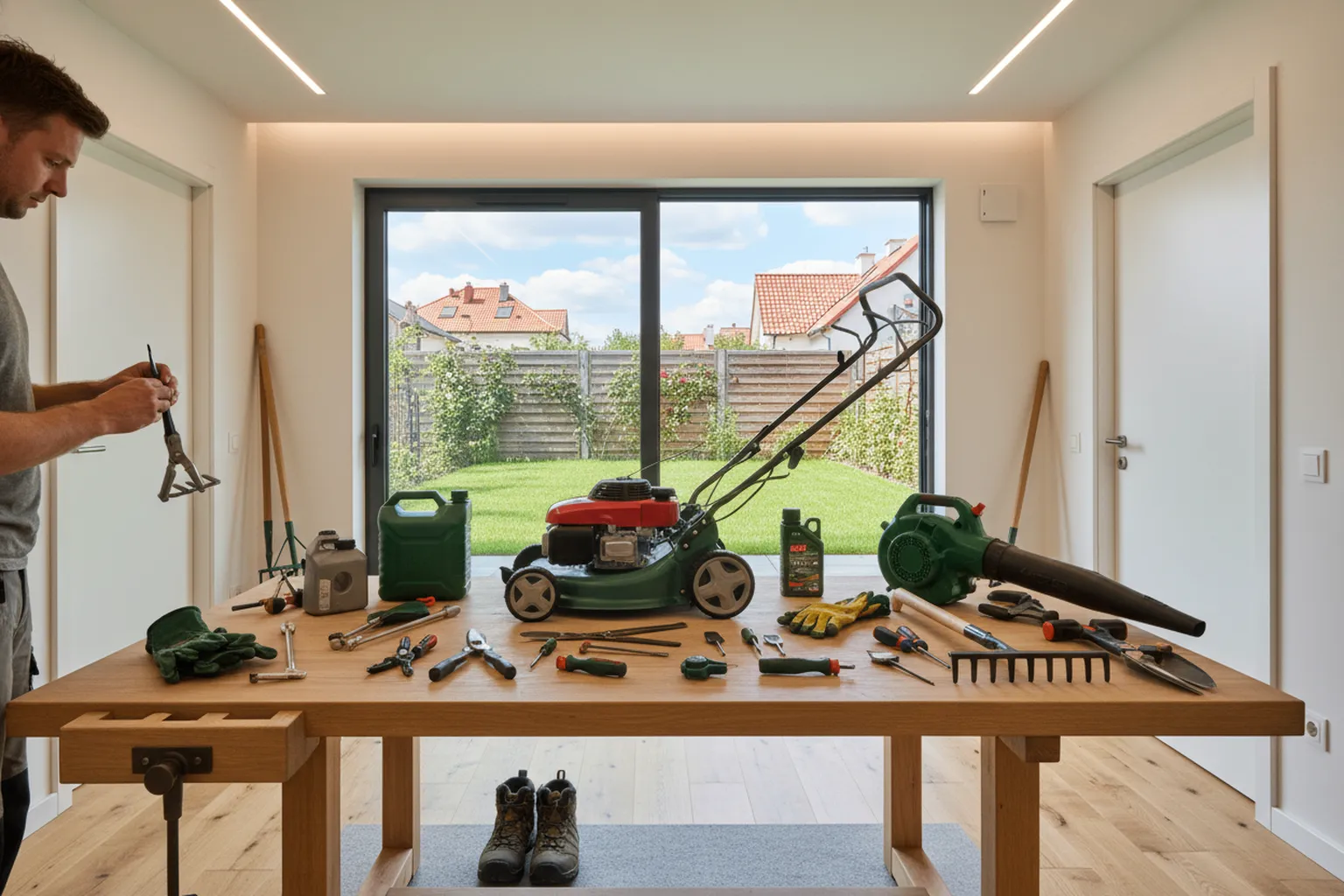
The mowing is done by technicians who know how to handle plots of all sizes — from small townhouse lawns to big suburban gardens. We show up with professional equipment: petrol mower, strimmer, collection bags. We work carefully — no damage to flower beds, trees, or kerbs. We tidy up after the job. To book, call or send us a message — we reply within an hour.