
How much does it cost and what affects the price
The price depends on the size of the area, the type of room (shower, full bathroom, kitchen), the number of coats, and the product selected. For bathrooms, liquid membrane is the usual solution. Joints and corners are strengthened with tape — priced as a separate item. Materials are billed separately. Current prices are shown in the table below.
| Service | Price |
|---|---|
| Waterproofing substrate before tiling | 35–80 zł/m² |
| Substrate preparation for tiles | 40–80 zł/m² |
| Removing old tiles | 50–80 zł/m² |
| Tiling | 140–200 zł/m² |
| Epoxy grouting | 50–75 zł/m² |
Indicative prices. Ranges for a typical scope. Fixings included, materials separate. Minimum order 300 zł.
Rather hand the job over? More here: grouting and waterproofing in Warsaw.
How the work is done on site
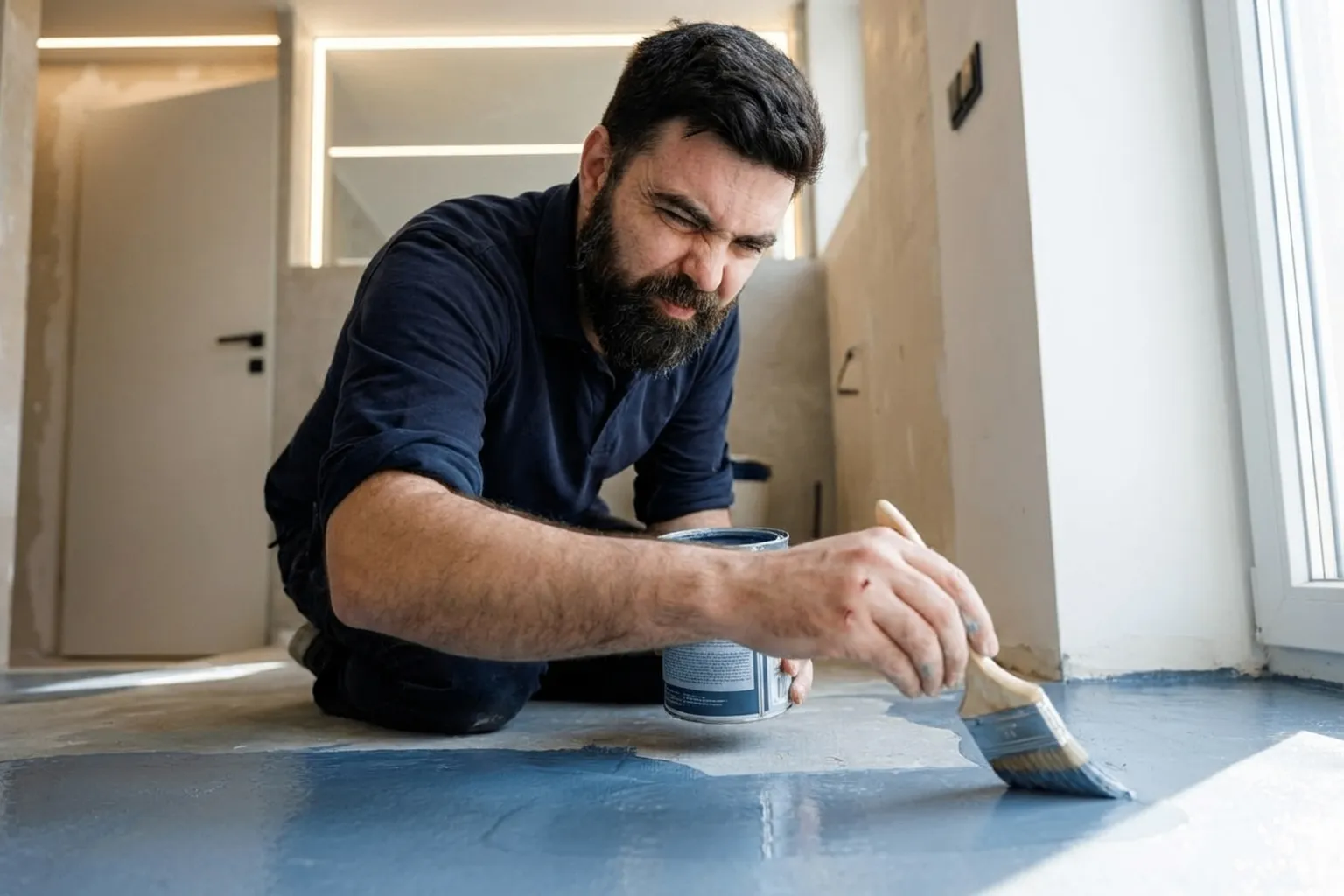
- Substrate inspection. Tradespeople inspect the screed for cracks and uneven spots. Waterproofing goes only onto a properly prepared surface: level, clean, and dry.
- Priming. One or two coats of deep-penetrating primer to improve bonding.
- Joint reinforcement. Elastic tape (Mapei Mapeband, Ceresit CL 152) is installed at wall-floor and wall-wall junctions and around pipe penetrations.
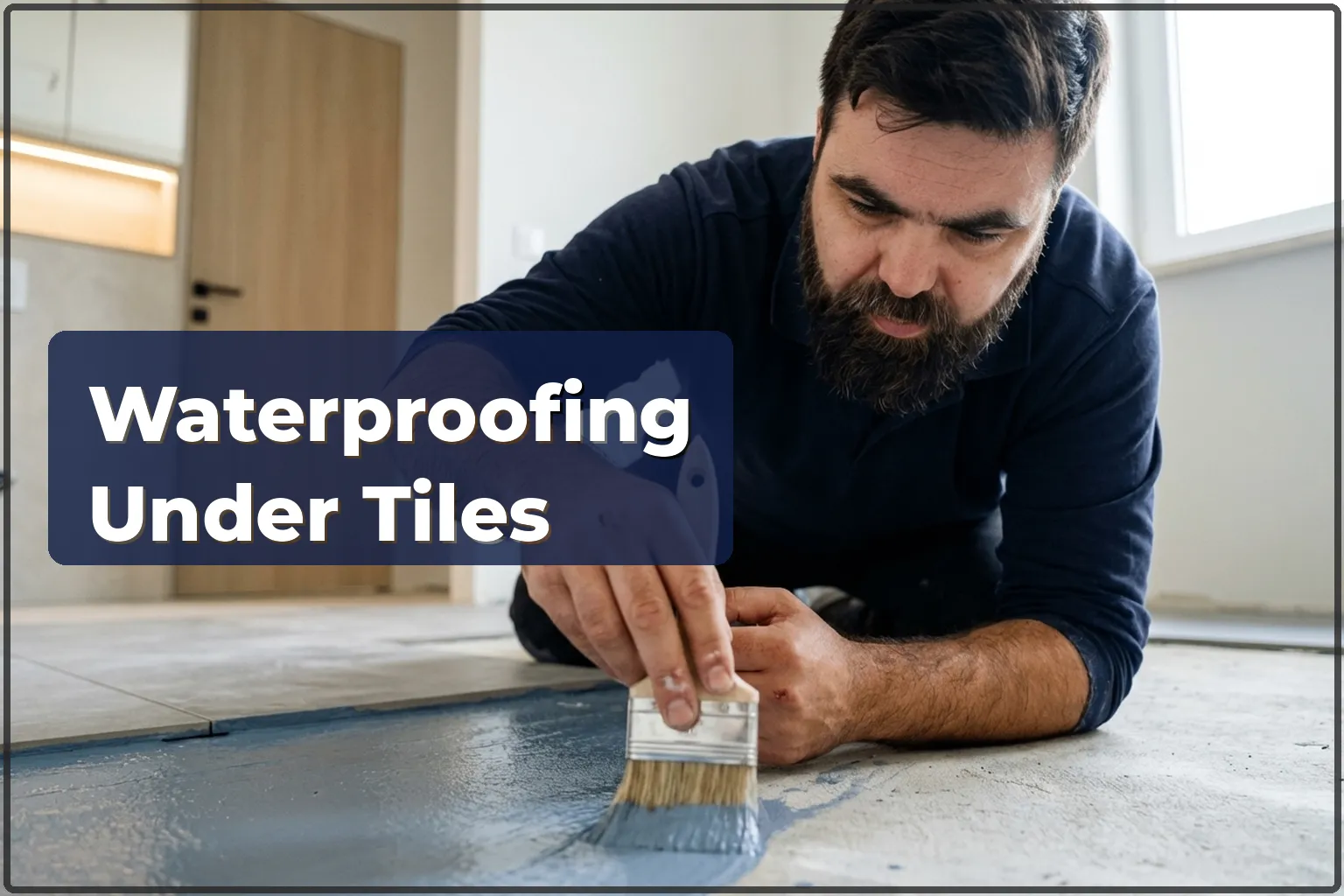
- First membrane coat. Liquid membrane (Mapei Aquadefense, Weber.tec 822, Ceresit CR 166) applied with a roller or brush. Walls — at least 20 cm high; in the shower zone, up to the ceiling or at least 20 cm above the shower head.
- Intermediate drying. 4-12 hours between coats depending on the product and temperature.
- Second coat. Put on perpendicular to the first to get even coverage. Two coats are the standard.
- Inspection. After full curing (24-48 hours) they check for any gaps or damage. Only after that does tiling start.
Common waterproofing mistakes
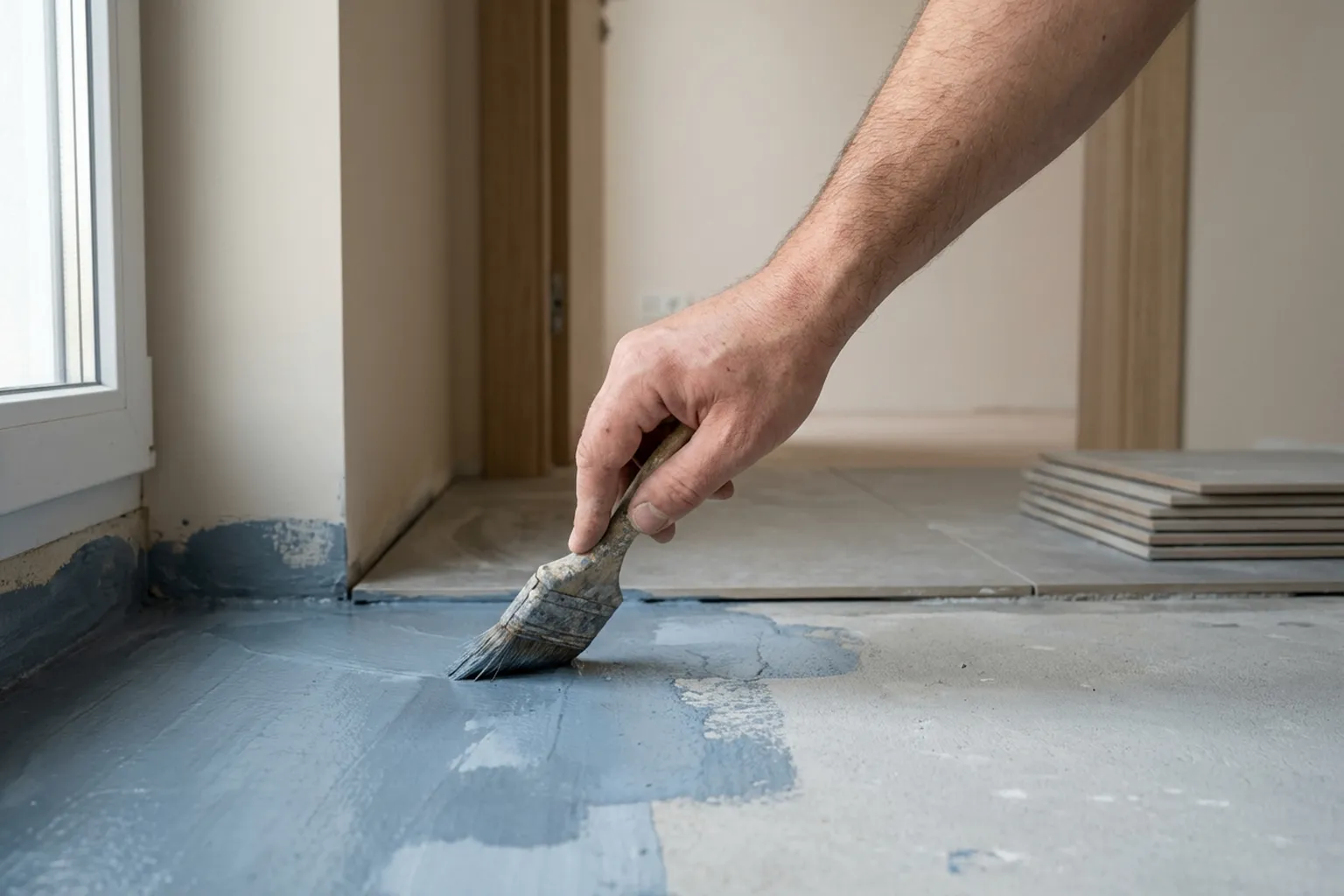
- Single coat — not enough thickness and easy to miss spots. Two coats minimum.
- No tape at corners: corners and junctions are the first places where the membrane gives way.
- Applying on a damp substrate: the membrane does not adhere properly and starts peeling.
- Waterproofing the floor only — shower walls left without protection. Water gets in through wall grout joints.
- Damaging the membrane during tiling: walking on it, scratching it with tools.
- Skipping pipe penetrations: the weakest spots, which need separate treatment with collars.
- Cheap uncertified products — saving money at first, then ending up with a leak within a year.
Where else damp in a flat comes from is explained in our guide to the causes of mould and damp.
What to prepare before the technician arrives
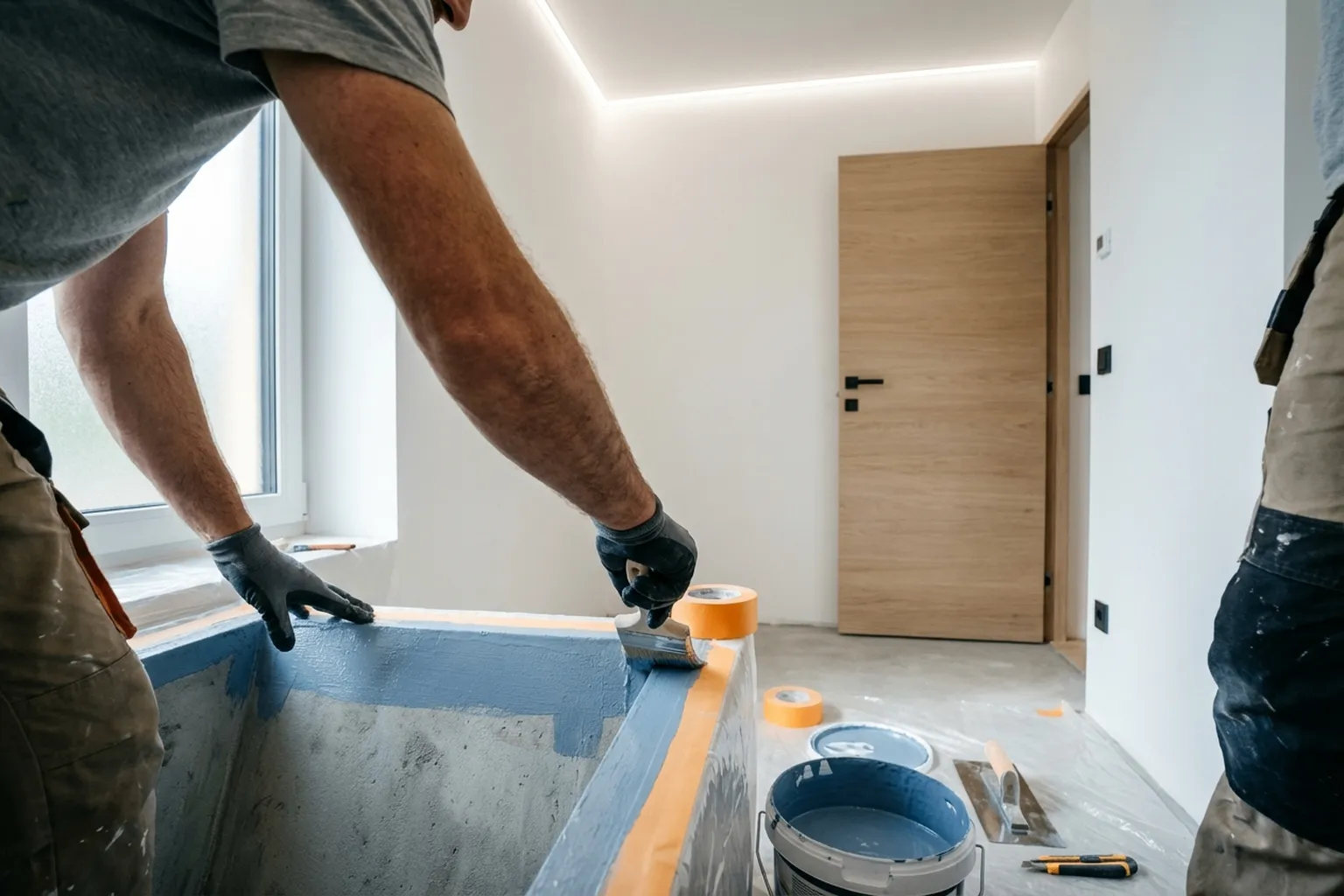
- Screed cured and dry (minimum 28 days for cement). Cracks repaired.
- Surface cleaned: no dust, rubble, or adhesive residue.
- Pipes installed: waterproofing is done after plumbing, before tiling.
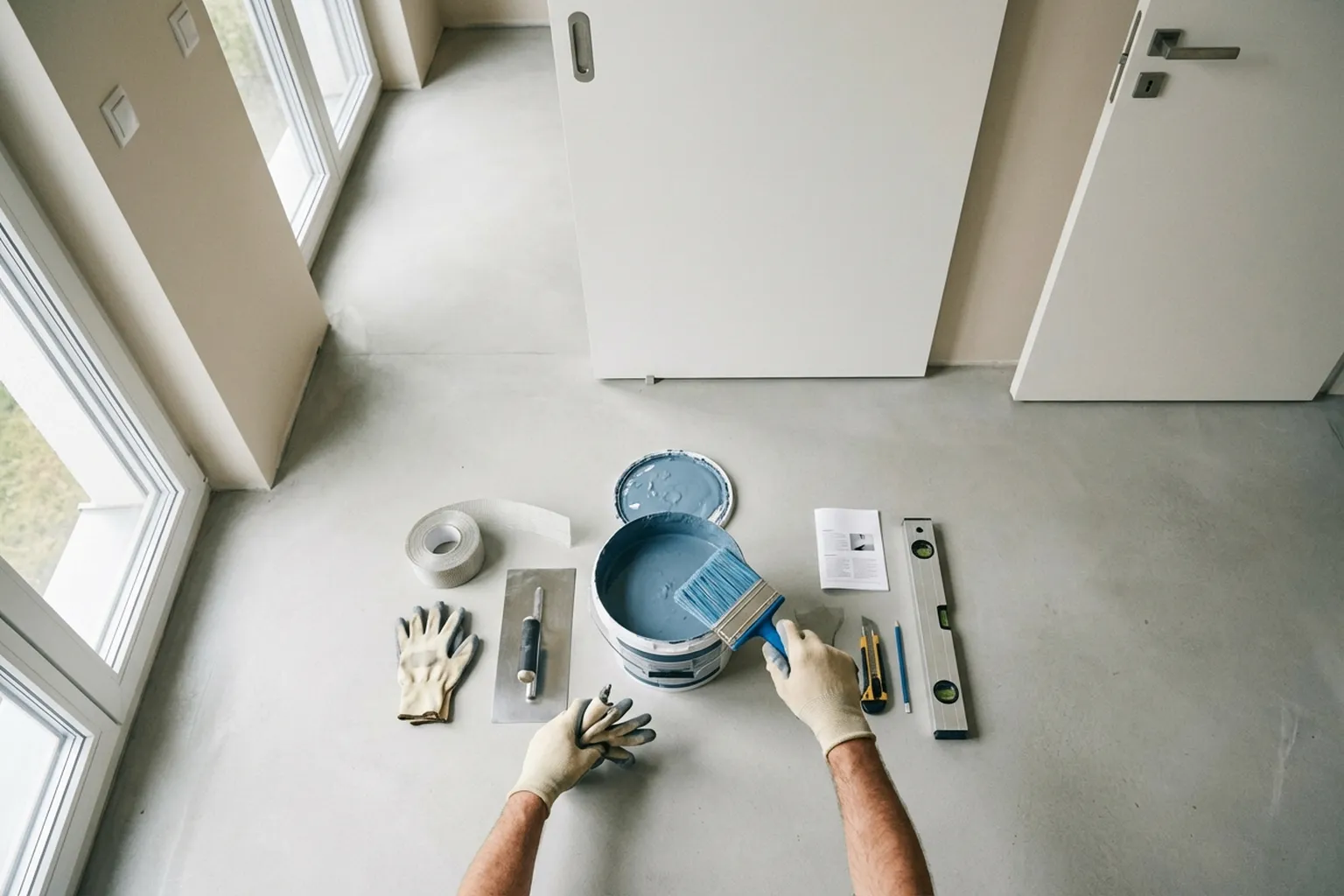
- Waterproofing bought: Mapei Aquadefense, Weber.tec 822 or Ceresit CR 166.
- Elastic tape for corners.
- Deep-penetrating primer.
- Pipe collars if needed.
- Room temperature at least +10 C.
- Ventilation for drying.
- Room emptied of furniture and fixtures blocking access to the walls.
A real case from Warsaw
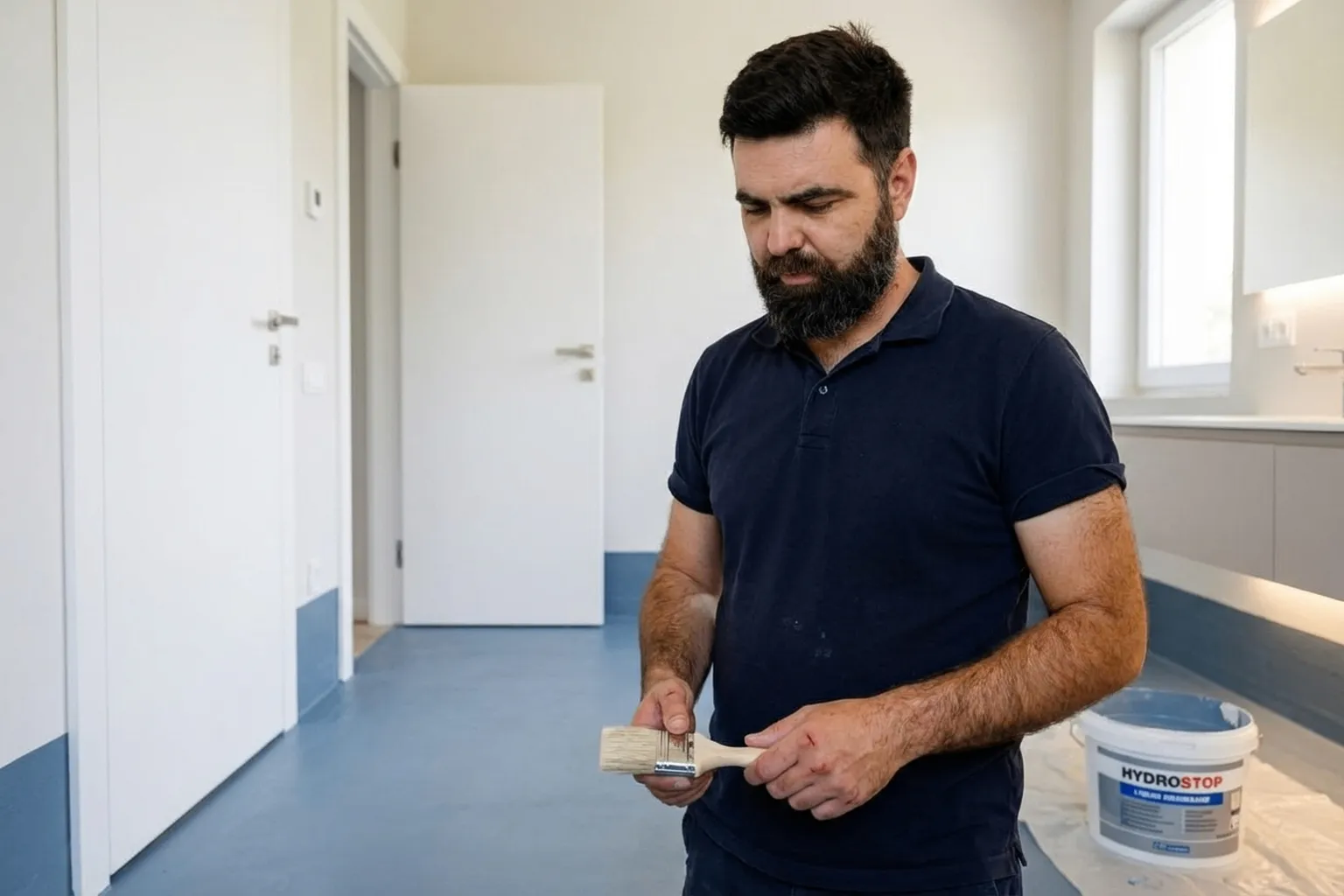
In a new-build on Praga Poludnie, bathroom 7 m². The client was renovating from zero: screed, pipe runs, and waterproofing all had to be done before tiling. The screed had micro-cracks: they filled them with repair compound and gave it time to dry. Primed the floors and walls. Corners and pipe passes reinforced with Mapei Mapeband. First coat of Mapei Aquadefense: roller on the floor, brush on the walls ( shower zone to ceiling, other walls 30 cm up). Dried for eight hours. Second coat perpendicular. After 24 hours — inspection: membrane continuous, even, blue (Aquadefense changes colour when cured). The tiler arrived the next day. Six months later: not one leak, neighbours happy.
Frequently asked questions
Is waterproofing mandatory in a bathroom?
Yes. Tiles and grout are not waterproofing. Water gets through the joints. Without a membrane, a leak into the flat below is only a matter of time.
Is one coat enough?
No. One coat can leave gaps and does not give enough thickness. Two coats are the minimum.
Which product is best?
Mapei Aquadefense, Weber.tec 822, Ceresit CR 166, Sika: all are well proven. The right choice depends on the substrate.
Is waterproofing needed on walls?
In the shower zone — mandatory, at least up to shower head height. Behind the bath: minimum 30 cm from the floor.
How long does waterproofing take to dry?
Between coats: 4-12 hours. Full curing before tiling — 24-48 hours.
Can it be applied to plasterboard?
Yes, on moisture-resistant board (green type). Standard plasterboard is not suitable in wet areas.
What happens without waterproofing?
Water gets through the joints, damages the screed, and reaches the flat below. Repair costs are much higher than waterproofing.
Is corner tape necessary?
Yes. Corners are the weakest point. Without reinforcement, the membrane tears first at the junctions.
Are materials included in the price?
No. Waterproofing, tape, and primer are bought by the client.
How long does bathroom waterproofing take?
1-2 days: priming, reinforcement, two coats with drying in between. Plus a day for full cure before tiling.
Who does the work
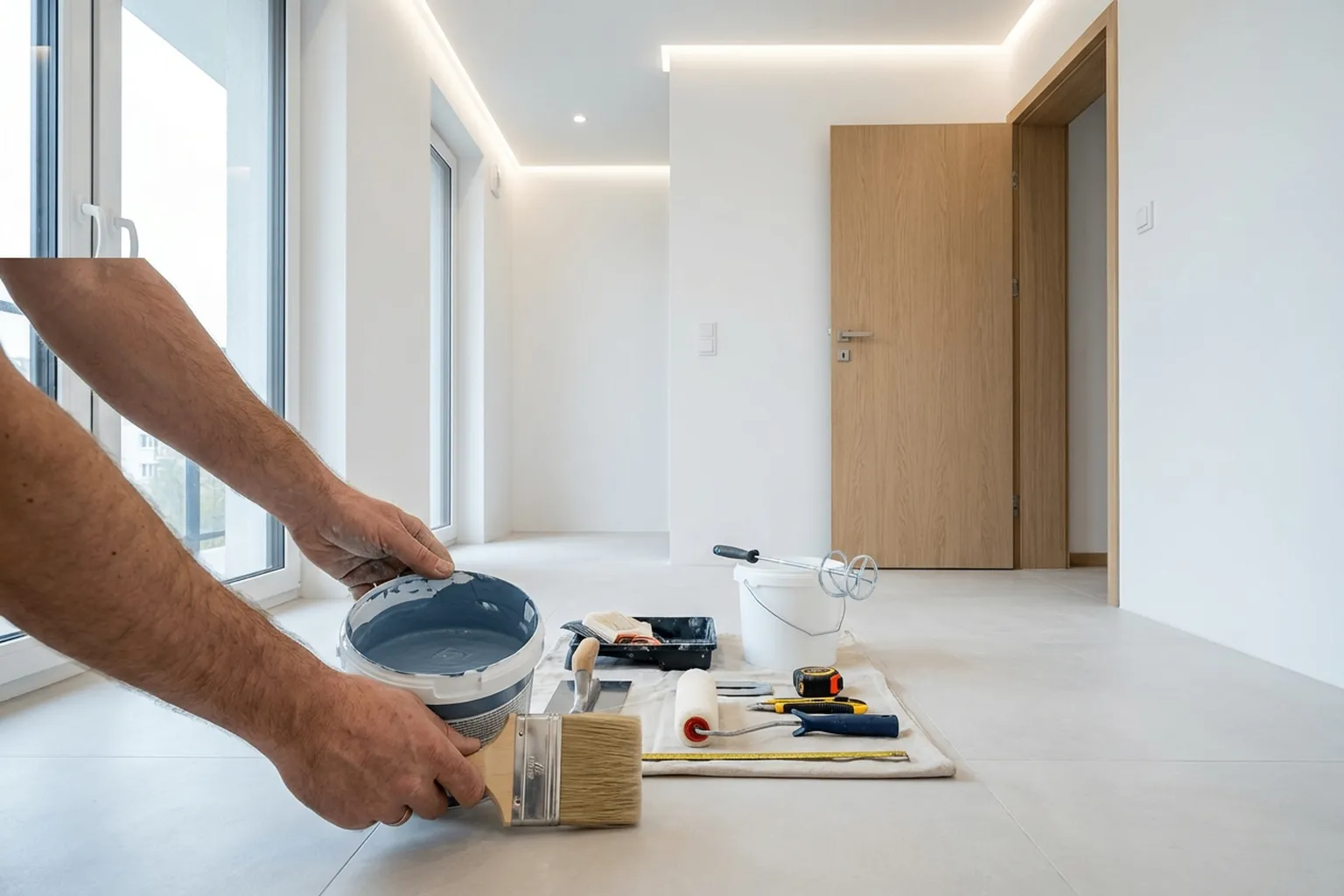
Waterproofing under tiles is done by technicians who know membrane systems and manufacturer requirements. It takes more than painting a wall: the order of layers, drying times, and proper reinforcement all count. Tradespeople work with Mapei, Weber, Ceresit and Sika. Post a request in the HandyMan24 app to discuss your project with tradespeople across Warsaw.
Order in the app
Describe the job, add photos and the address. Tradespeople send their own prices and dates, and you pick one of the offers.
Open the app