
How much it costs and what affects the price
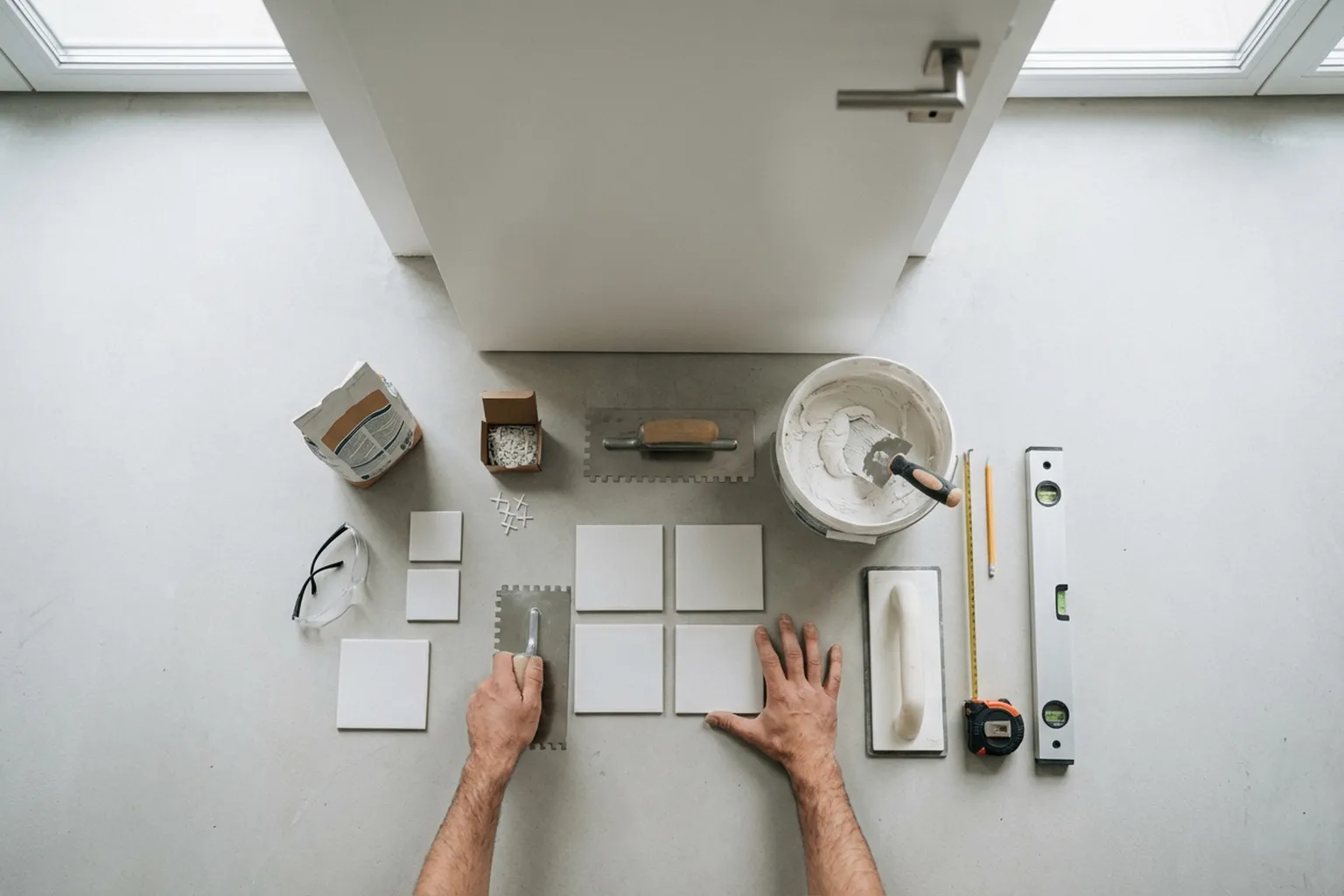
The price depends on the size of the area, tile format (smaller tiles mean more labour), how much cutting is needed, the number of edges and corners, and whether extra waterproofing has to be done. A plain rectangular base costs less. Irregular shapes, small formats and curved edges push the price up. Fixings and consumables are included in the labour cost. Tiles, adhesive and grout are supplied by the client. You can find current prices in the table below.
| Service | Price |
|---|---|
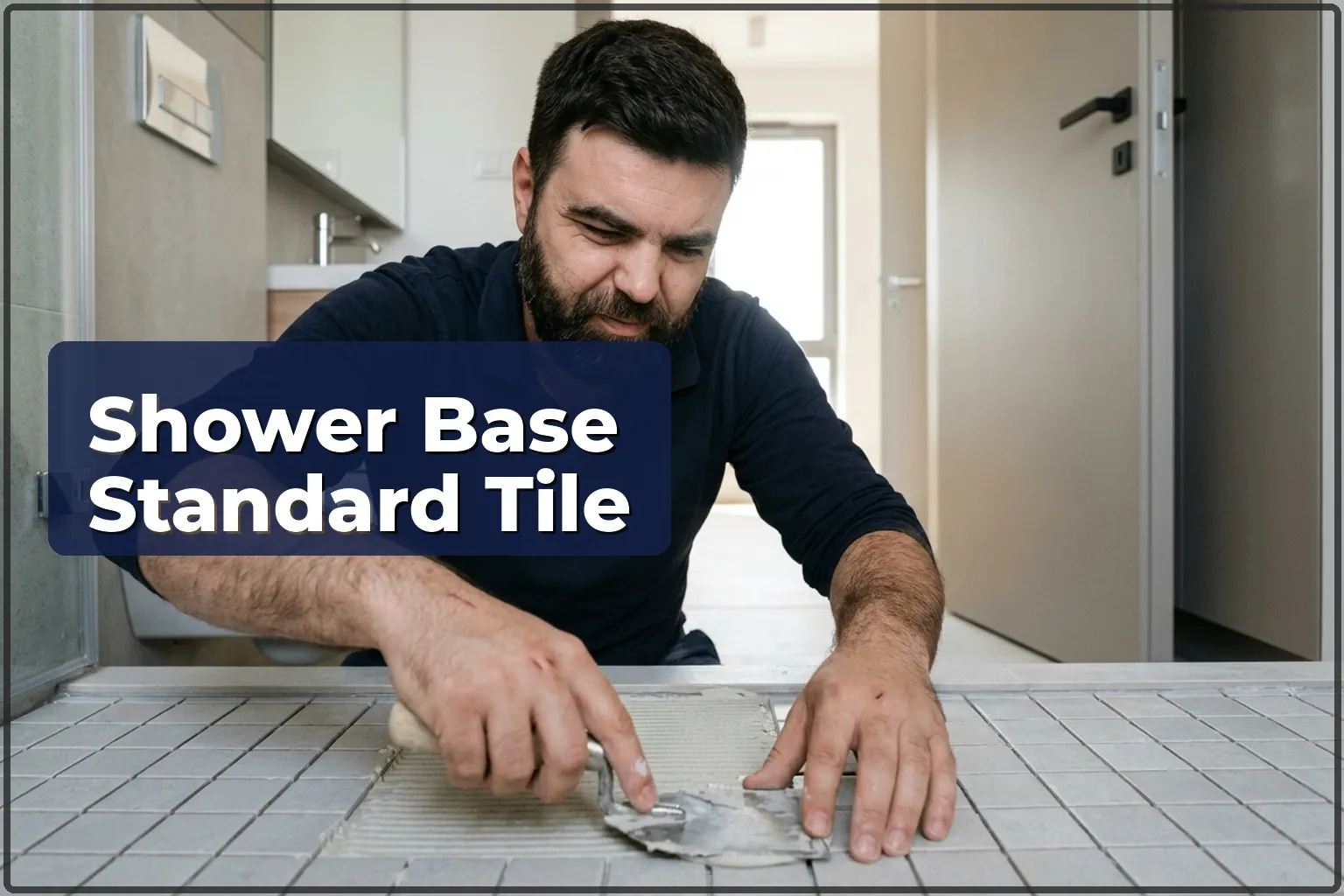
| Shower base tiling: standard tile | 130–150 zł/m² |
| Shower base tiling: large format | 160–280 zł/m² |
| Shower base tiling: sintered stone | 360–400 zł/m² |
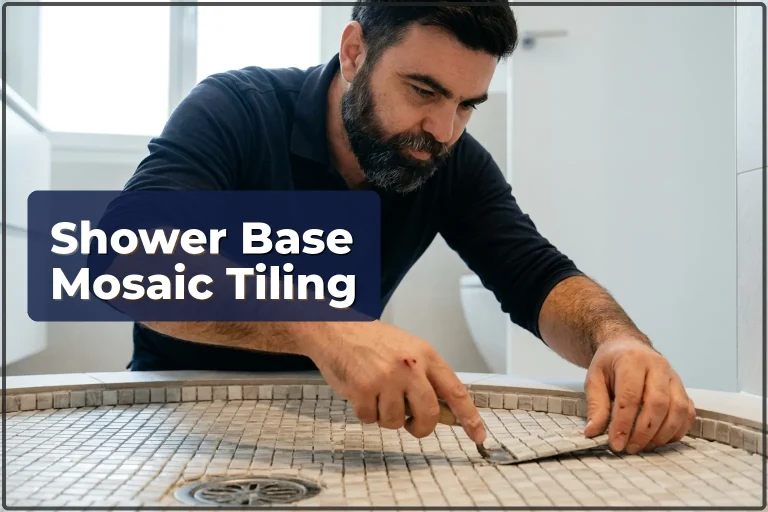
| Shower base tiling: mosaic | 250–300 zł/m² |
| Waterproofing substrate before tiling | 35–80 zł/m² |
| Substrate preparation for tiles | 40–80 zł/m² |
Indicative prices. Ranges for a typical scope. Fixings included, materials separate. Minimum order 300 zł.
Price ranges and offers from tradespeople: tiler in Warsaw.
How shower base tiling works
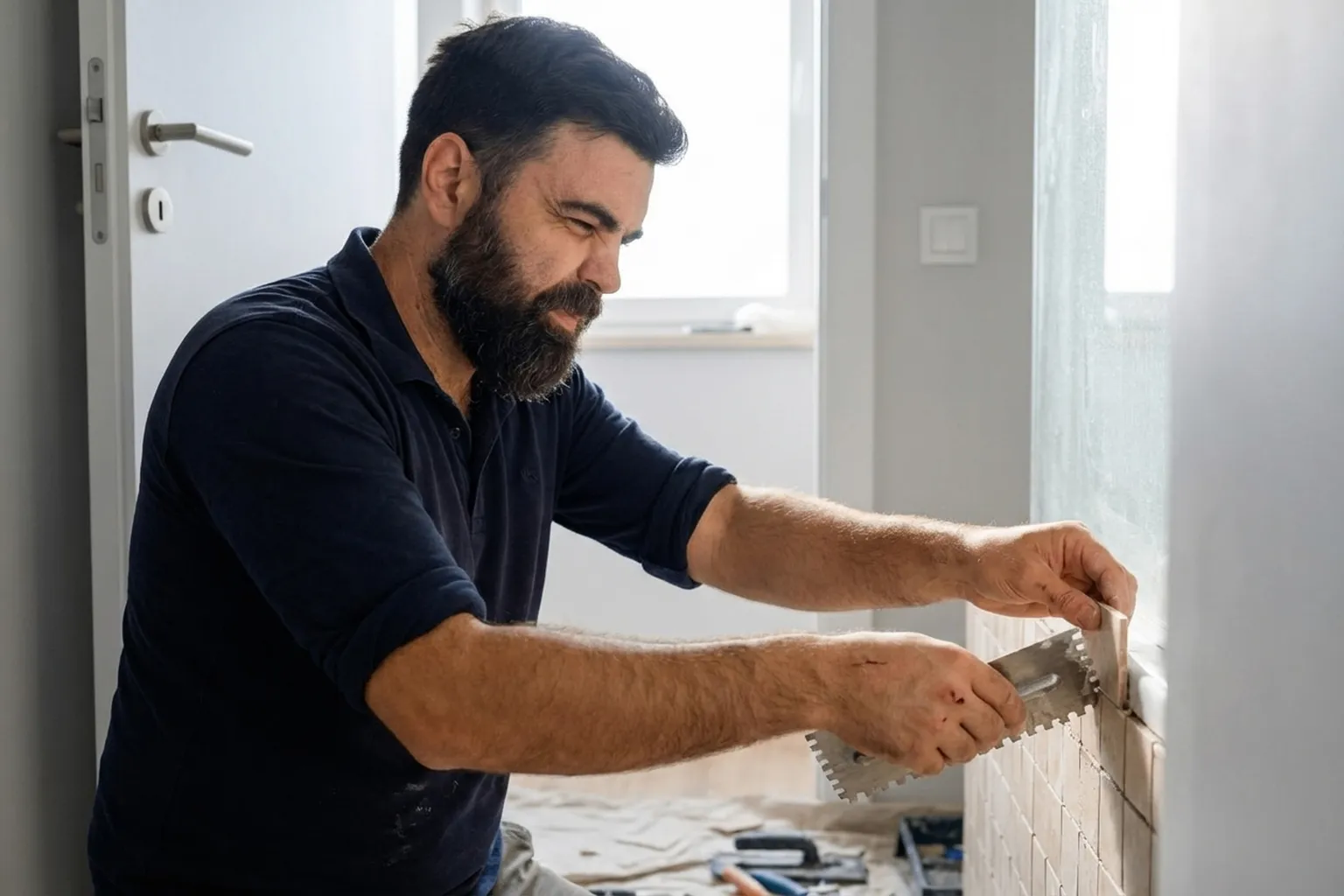
- Base inspection. Tradespeople check the geometry, the slope towards the drain (minimum 1-2%) and the quality of the waterproofing. If it’s missing, they advise applying a Mapei or Ceresit liquid membrane first.
- Surface preparation. Tradespeople prime the surface to improve adhesion. Any uneven spots are corrected with repair compound. The slope is checked again with a straight edge.
- Dry layout. Tradespeople set out the tile pattern: full tiles in the visible zones, cuts in the corners. Tradespeople avoid thin slivers at the edges.
- Adhesive application. Tradespeople spread flexible adhesive (Ceresit CM 17 or Mapei Keraflex) with a notched trowel. Double-buttering on the base is compulsory — empty spots under the tiles cause cracking under pressure.
- Cutting and fitting. Tiles are cut on a Rubi or Montolit electric cutter. The opening for the drain is made with a diamond core bit.
- Grouting. Tradespeople use epoxy or water-repellent cementitious grout. Standard grout on a shower base goes dark and starts cracking after a few months, this is not the place to save money.
- Joint sealing. The junction between the base and the wall is sealed with sanitary silicone (Ceresit CS 25). The drain junction is sealed as well.
Common mistakes when tiling a shower base
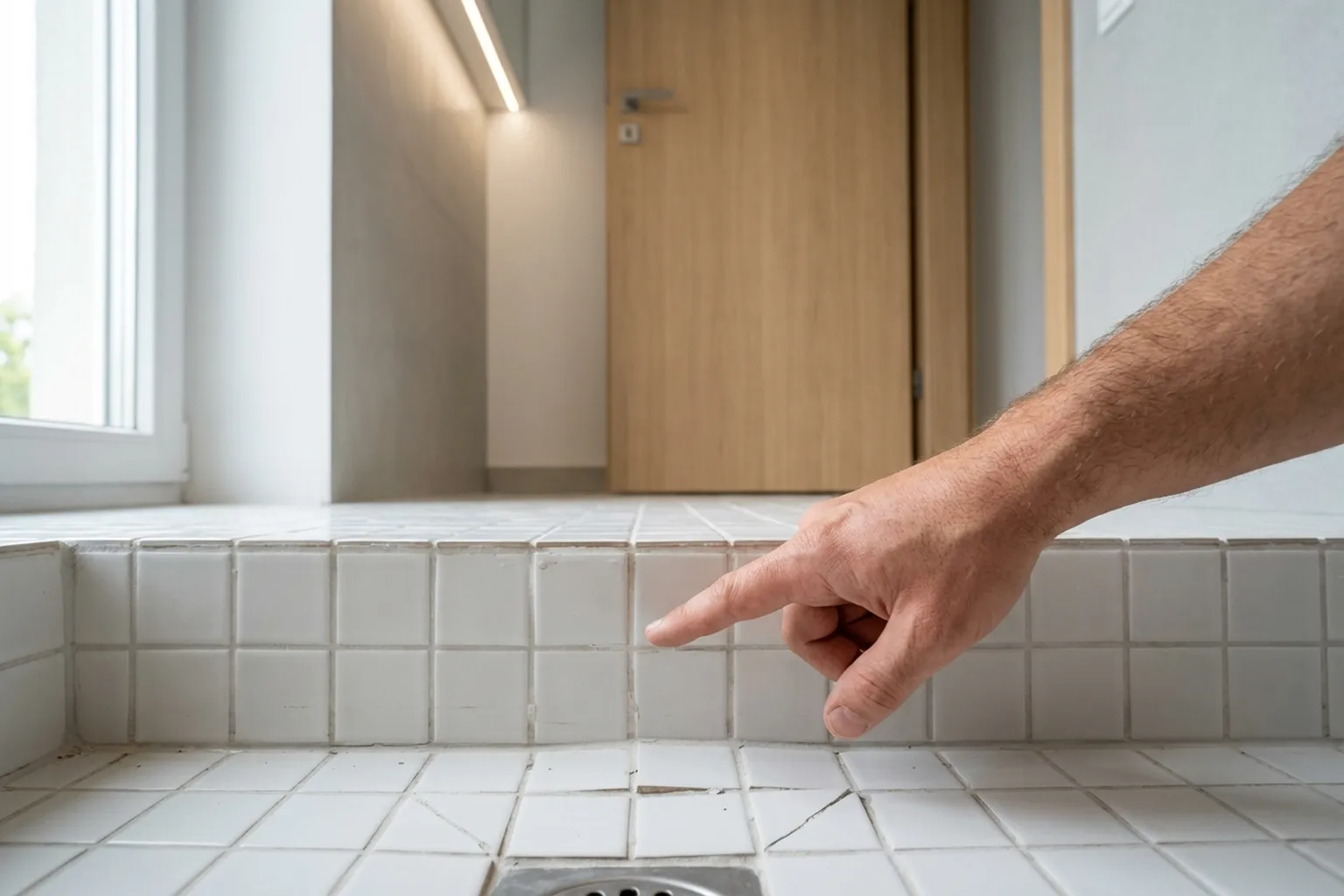
- Using rigid adhesive — the base moves slightly under load and the tiles detach. Flexible S1-class adhesive is necessary.
- Voids under tiles: when you step on them, the tiles bend and crack. Double-buttering is required.
- Standard cement grout: it turns black and starts letting water through within six months. On shower bases, only epoxy or hydrophobic grout should be used.
- Wrong slope — water sits on the surface instead of flowing to the drain. Check the slope before tiling.
- Glossy tiles without slip resistance, a wet glossy base is seriously slippery. R10-R11 rating is essential.
- Too large a format on a small base: hard to keep the slope, too much cutting, and the finish looks bad.
- No waterproofing under the tiles: water gets through the grout joints to the neighbours below.
What to prepare before the technician arrives
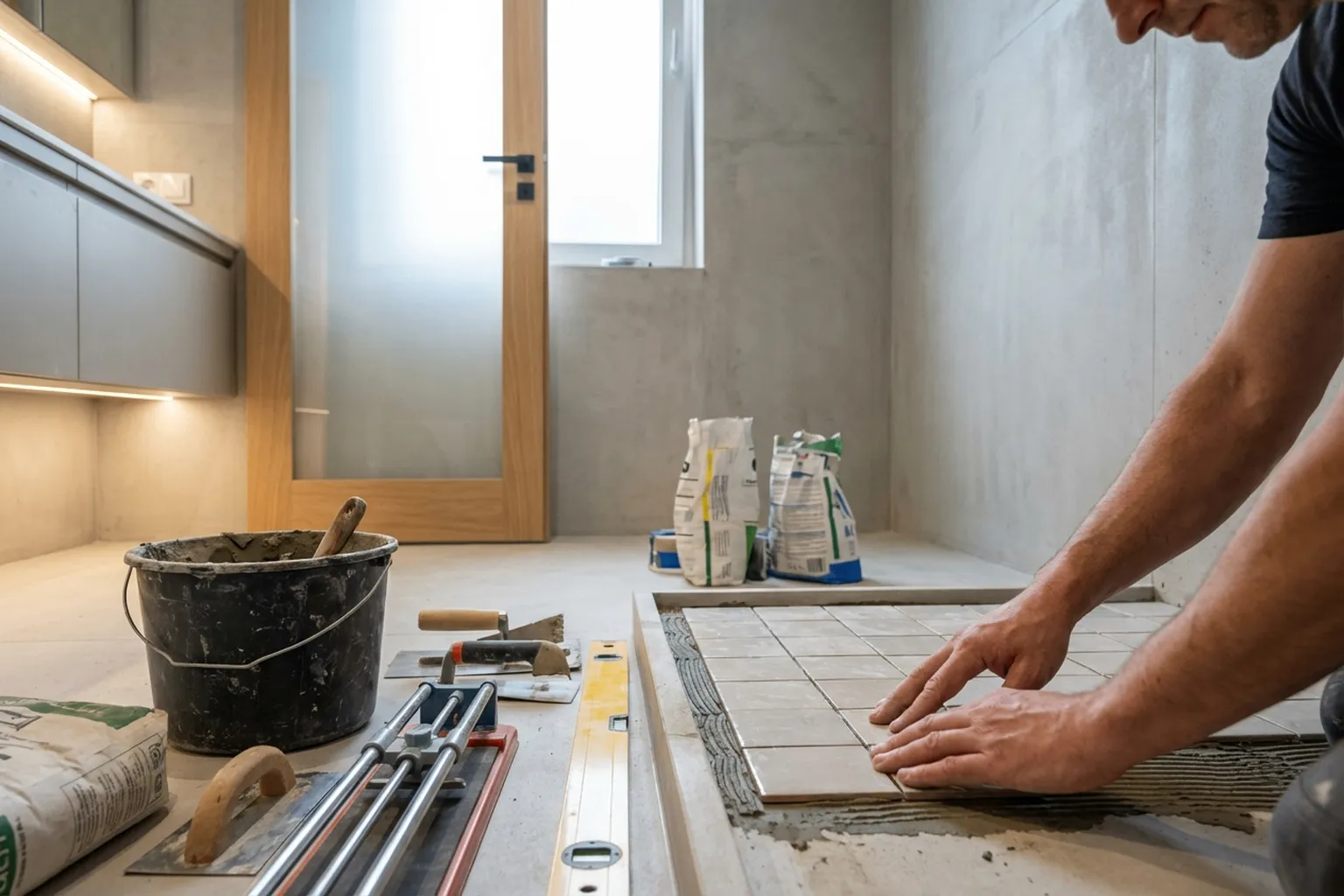
- Base ready: screed with slope to drain, waterproofing already applied and dry.
- Tiles bought with 10-15% extra — 10×10, 15×15 or 20×20 cm is the best format.
- Tiles with an anti-slip finish (R10 rating or higher).
- Flexible tile adhesive (Ceresit CM 17, Mapei Keraflex).
- Grout: epoxy (Mapei Kerapoxy, Litokol Starlike) or water-repellent cementitious.
- Sanitary silicone matched to the grout colour.
- Tile spacers or a levelling system for straight joints.
- Make sure there is a power outlet nearby: the tile cutter runs on electricity.
- Remove all unnecessary items from the bathroom.
- Send access details: intercom code, parking, floor number.
A real case from Warsaw
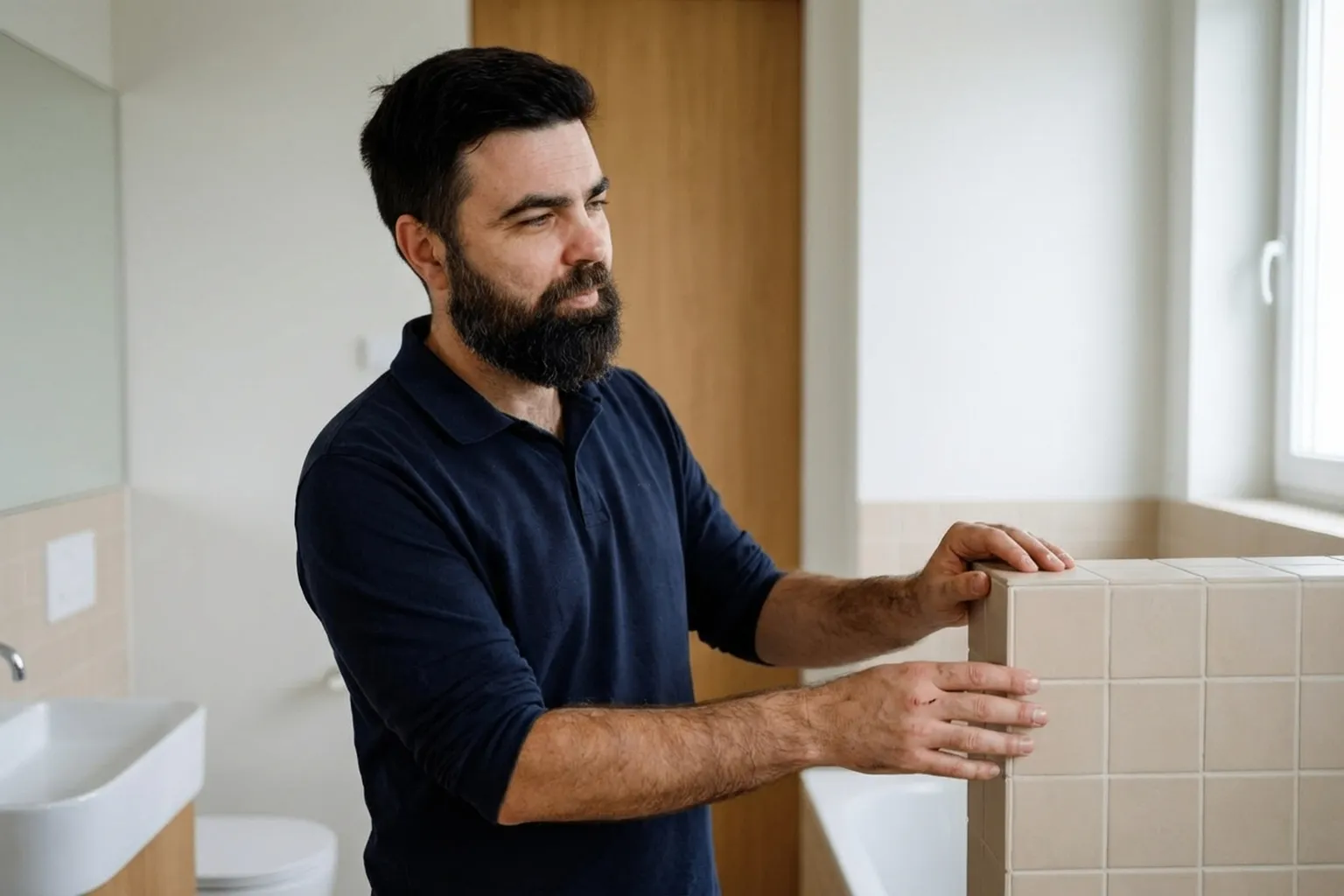
An apartment in Mokotów, in a new building — the client had made a concrete base and fitted a Viega Advantix drain. He wanted it tiled with Paradyż Natura 10×10 cm matte tiles. During inspection they saw the slope was too weak: water was collecting in one corner. Tradespeople corrected the screed with repair compound and added another coat of Mapei Mapelastic waterproofing. The tiles were installed on Ceresit CM 17 with double-buttering. Grout: Mapei Kerapoxy Design, matched by colour. Wall junction — Ceresit CS 25 sanitary silicone. The work took a day and a half. The client said that small-format tiles on the base look far better than large ones: no awkward curved effect. The takeaway: always check the base slope before tiling: fixing it later costs a lot more.
Frequently asked questions
What tile format is best for a shower base?
10×10 or 15×15 cm works best. Smaller tiles are easier to fit to the slope and the shape. Large format (30×60+) is difficult to install with proper drainage.
Is epoxy grout essential?
Tradespeople highly recommend it. Standard cement grout on a shower base darkens fast and starts letting water through. Epoxy (Mapei Kerapoxy, Litokol Starlike) holds up for years.
Is waterproofing under the tiles necessary?
Yes, absolutely. Grout joints are not waterproof — water passes through them. A liquid membrane protects the structure and the neighbours downstairs.
Can I tile the base myself?
In theory yes, but mistakes cost money: leaks to neighbours, screed repairs, grout replacement. If you haven’t done shower bases before, it’s better to call a professional.
How long does it take?
A standard base takes 1-2 days, plus 24 hours for the adhesive and grout to cure before it can be used.
Which adhesive should I use?
Only flexible S1-class: Ceresit CM 17, Mapei Keraflex. Standard rigid adhesive will not stay on a shower base.
What is included in the price?
Labour, consumables and travel within Warsaw. Tiles, adhesive, grout and silicone are bought by the client.
Won’t the tiles be slippery?
Not if you choose anti-slip tiles with an R10 or R11 rating. Tradespeople do not fit glossy smooth tiles on shower bases.
Can tiles be laid on an old base?
That depends on its condition. If the substrate is flat and solid, yes, after priming. Cracks or delamination need to be repaired first.
Who does the work
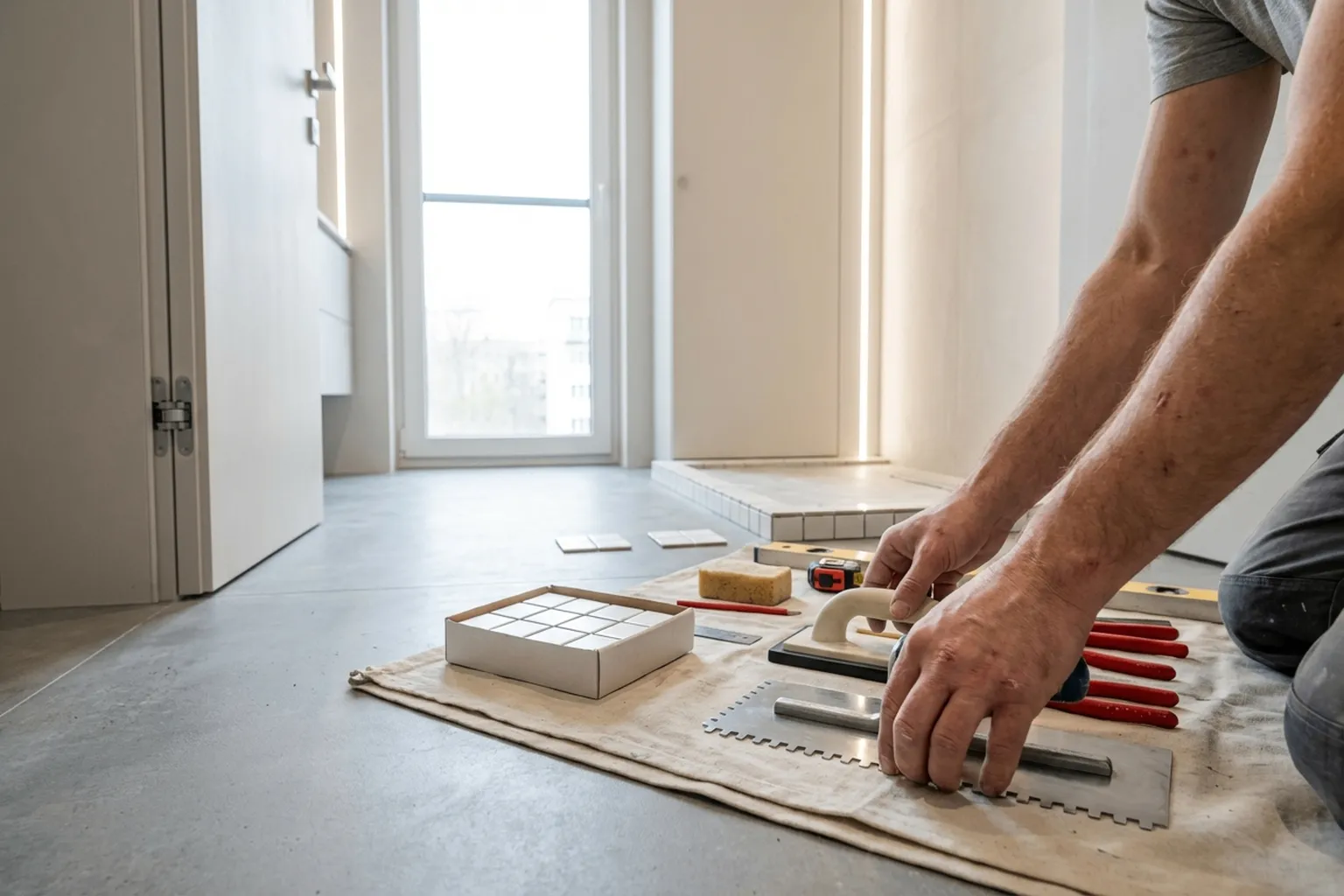
Shower base tiling is done by tile specialists with direct experience in wet areas, this is a separate kind of work that demands accurate slopes, proper waterproofing and the right choice of materials. Tradespeople arrive with an electric tile cutter, diamond core bits and a complete set of tools. Tradespeople cover all of Warsaw and the nearby suburbs.
Order in the app
Describe the job, add photos and the address. Tradespeople send their own prices and dates, and you pick one of the offers.
Open the app