
How much does oven fan replacement cost in Warsaw?
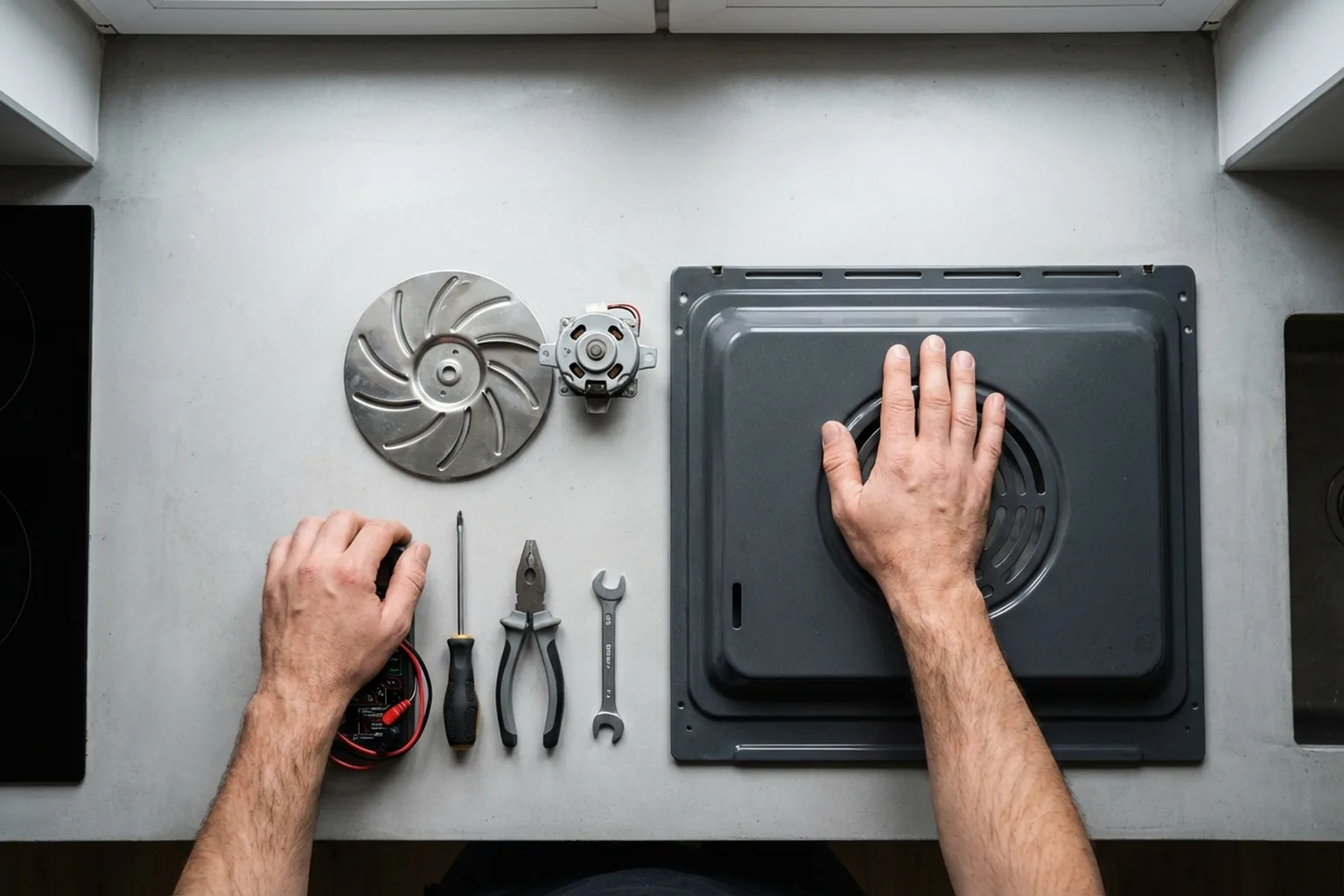
The cost depends on the fan type (convection or cooling), the oven model, and whether the part is readily available. Convection fans are more expensive: they work in high heat. You can see current prices in the table below. The service includes removal and installation; the fan itself is billed separately.
| Service | Price |
|---|---|
| Heating element top/bottom replacement (oven) | 250–350 zł |
| Thermostat replacement (oven) | 250–420 zł |
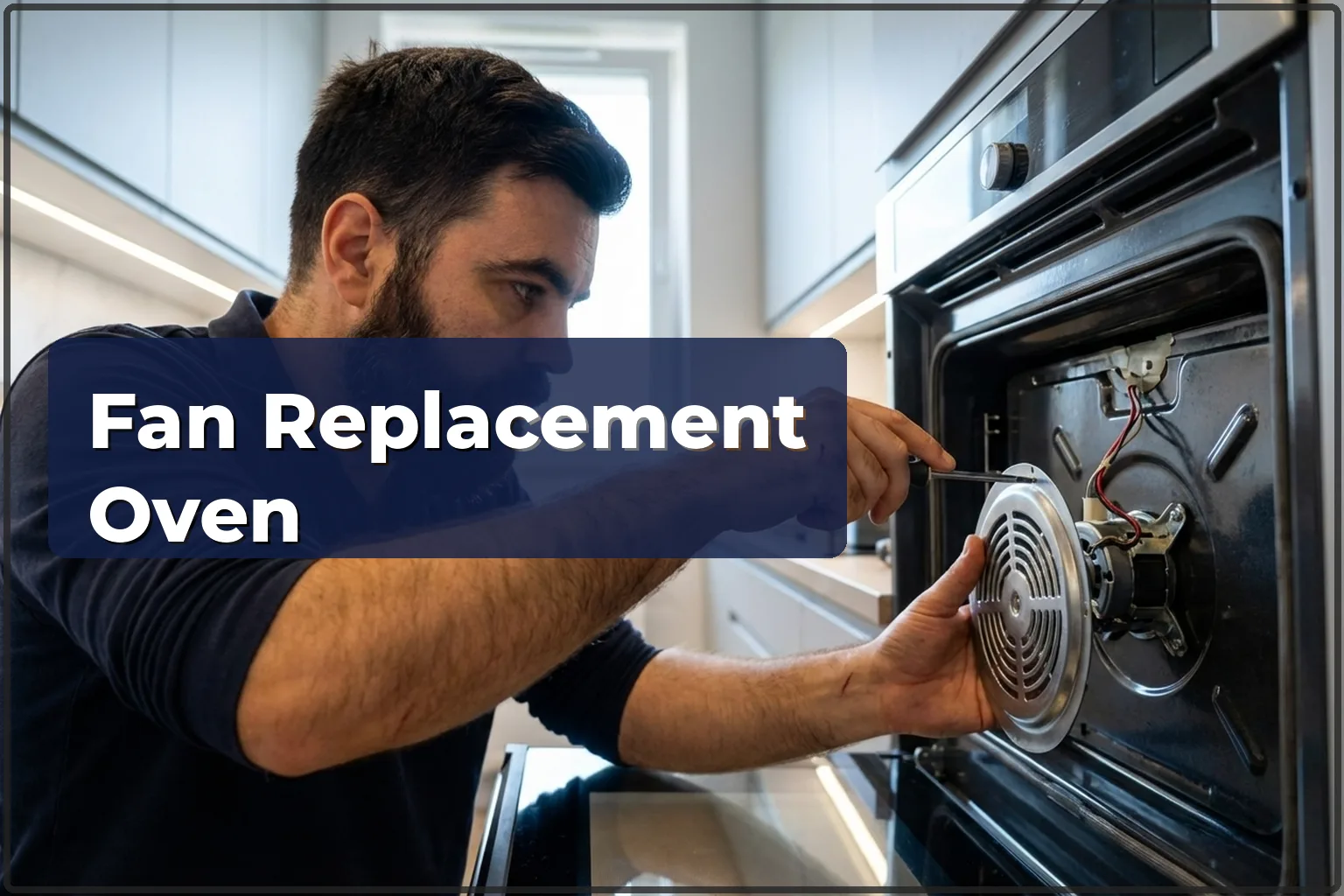
| Fan replacement (oven) | 300–400 zł |
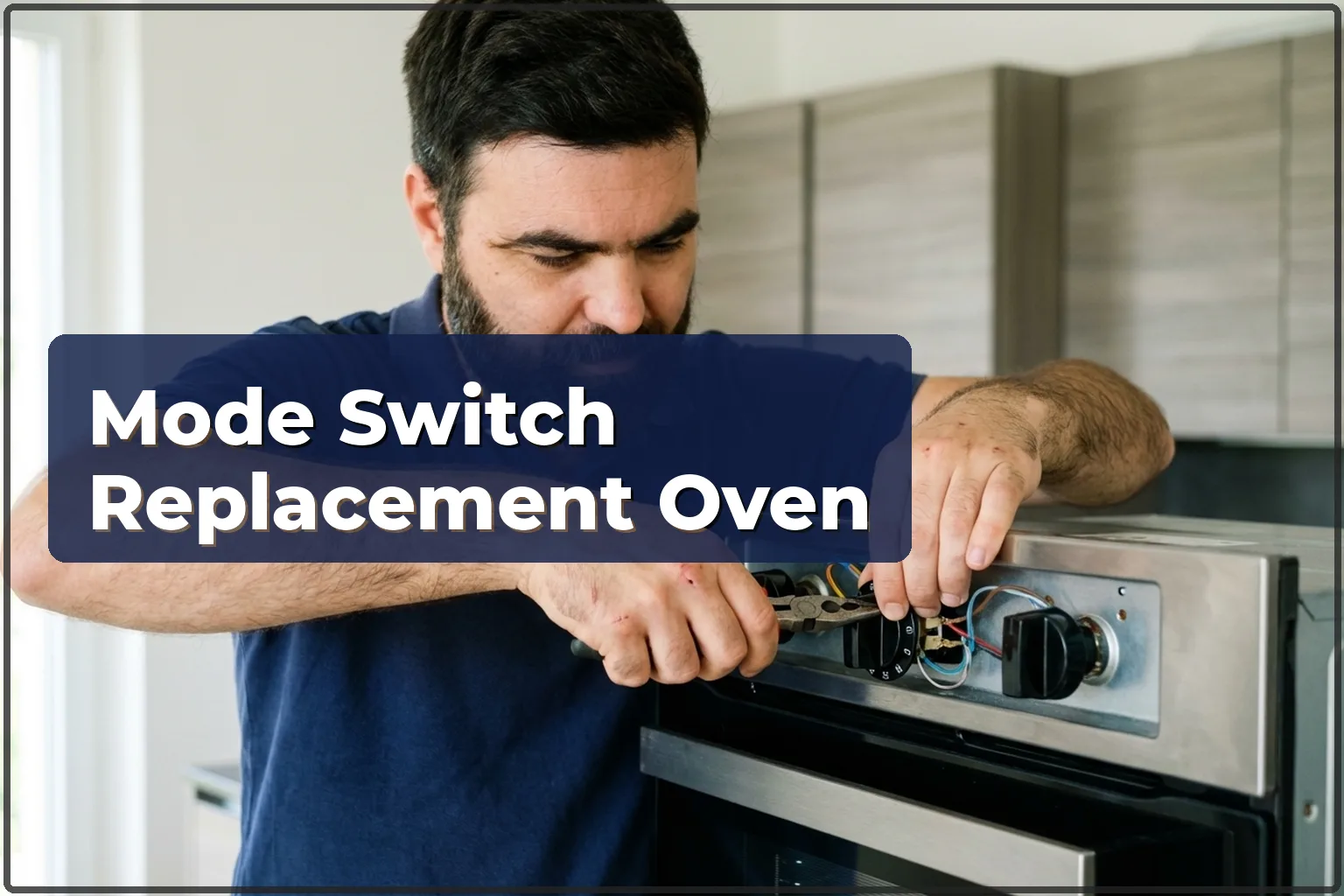
| Mode selector switch replacement (oven) | 300–400 zł |
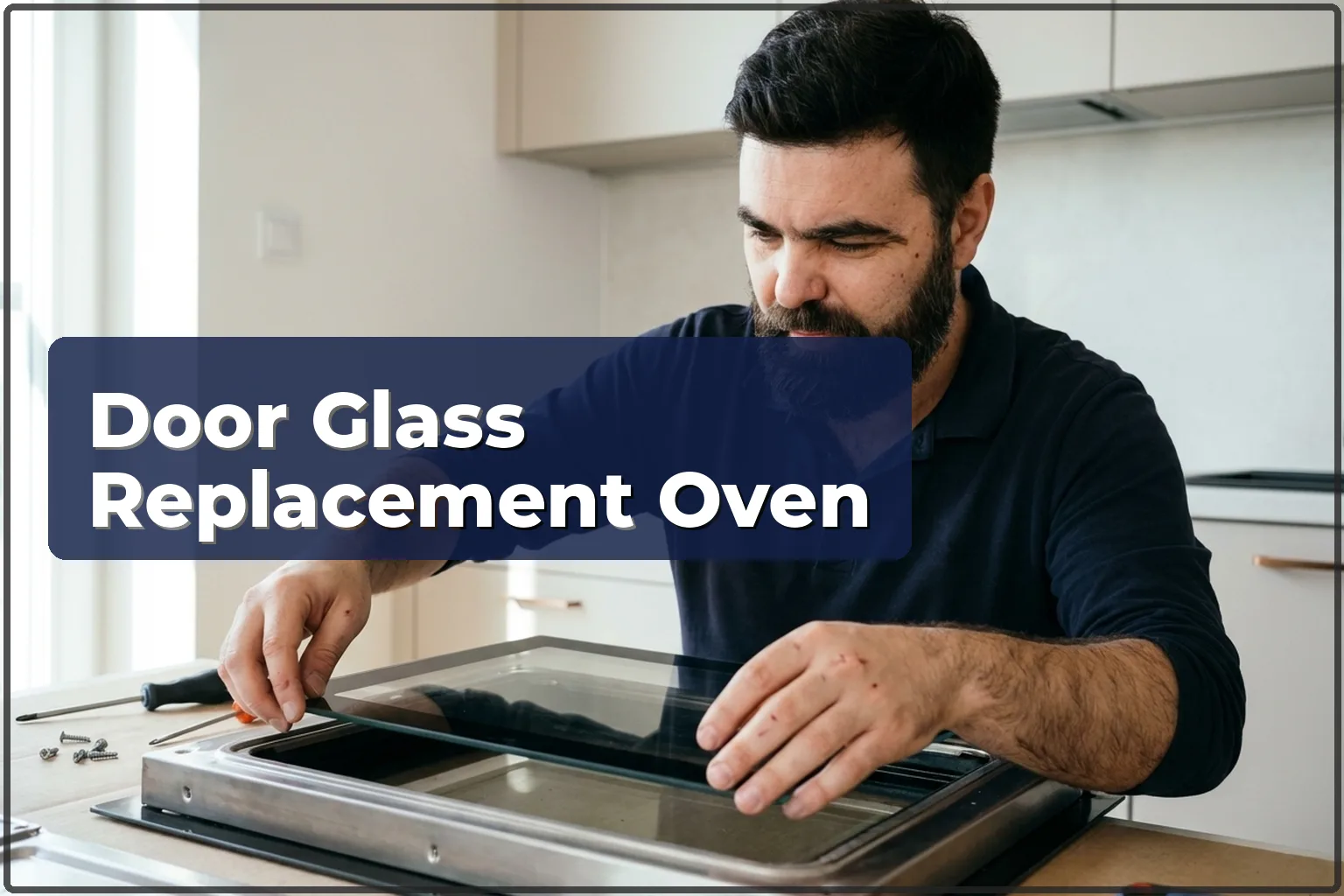
| Door glass replacement (oven) | 300–400 zł |
| Control module repair (oven) | 250–550 zł |
Indicative prices. Ranges for a typical scope. Fixings included, materials separate. Minimum order 300 zł.
Price ranges and offers from tradespeople: handyman in Warsaw.
How the fan replacement works
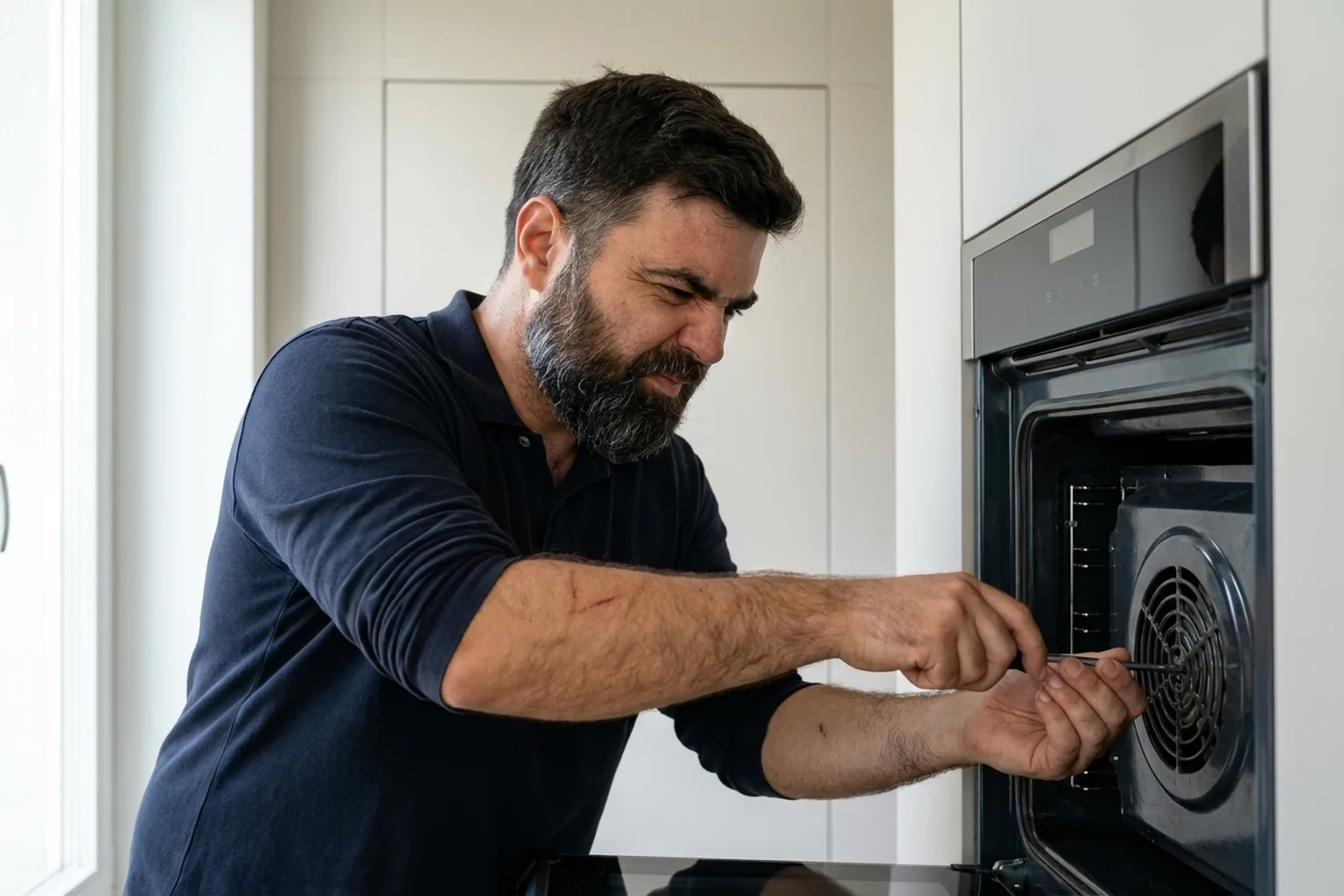
- You say so in the order what’s happening — noise, uneven baking, hot outer panels.
- The technician works out which fan is fitted and finds the correct replacement.
- Tradespeople disconnect the oven. For the convection fan, they remove the inner rear panel.
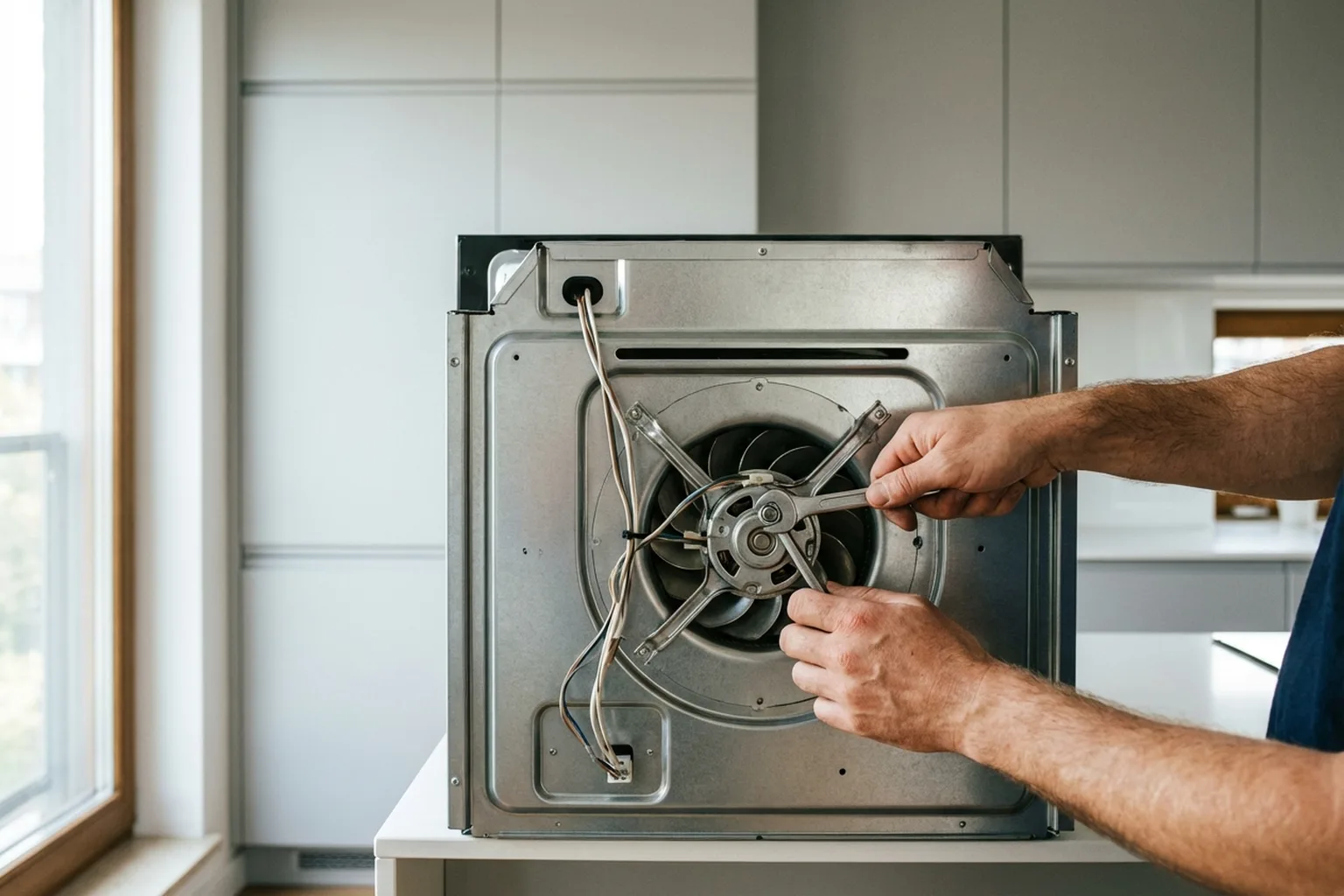
- For the cooling fan, they pull the oven out and take off the outer back cover.
- Tradespeople loosen the fixings, disconnect the plug, and remove the old fan.
- The new fan is fitted and the impeller is checked to make sure it spins freely.
- Then they reassemble everything, switch the power back on, test convection mode, and listen for any unusual noise.
Common mistakes with oven fan problems
- Mixing up fan noise with other sounds: sometimes the metal is expanding from heat, and the fan is not the issue.
- Using the oven when the cooling fan is not working, the casing gets too hot and can damage the kitchen units.
- Oiling the bearing instead of replacing it, a short-term fix that may last only a couple of weeks.
- Buying a fan with the wrong diameter — it won’t match the shaft or the housing.
- Skipping a motor check: in some cases the fault is in the motor winding, not the impeller.
What to prepare before the technician arrives
- Find the oven model: the data plate is on the door frame or at the back.
- Describe the symptom: noise, vibration, uneven baking, hot casing.
- Disconnect the oven from the mains.
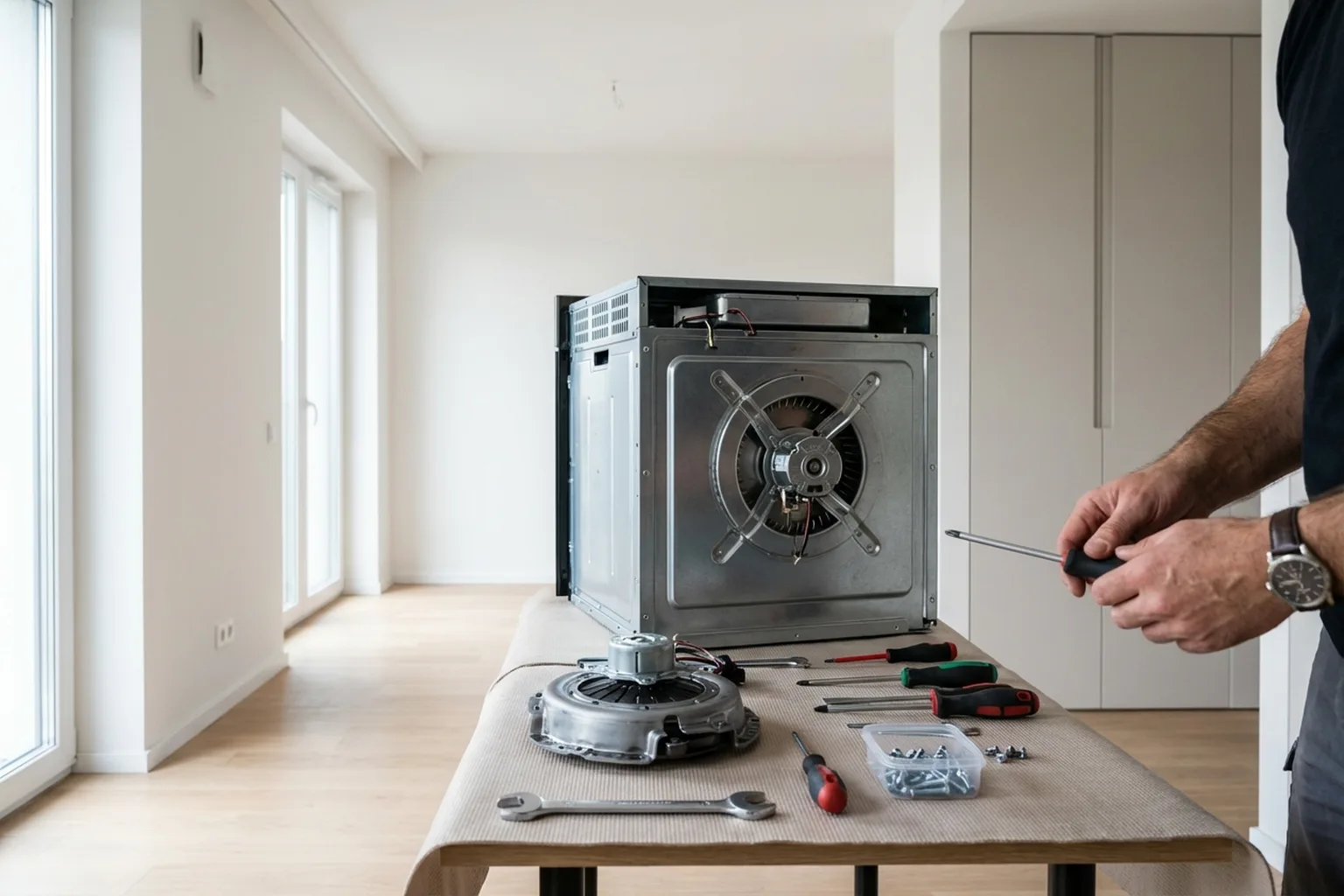
- Make some room — the oven has to be pulled out for access from the rear.
- Empty the neighbouring cabinets if the oven is built-in.
- Take a photo of the model plate and send it to the technician.
- Make sure there is a power socket available for testing.
- If the oven is installed in an upper column, check that it can be reached easily.
A real case from Warsaw: oven fan replacement
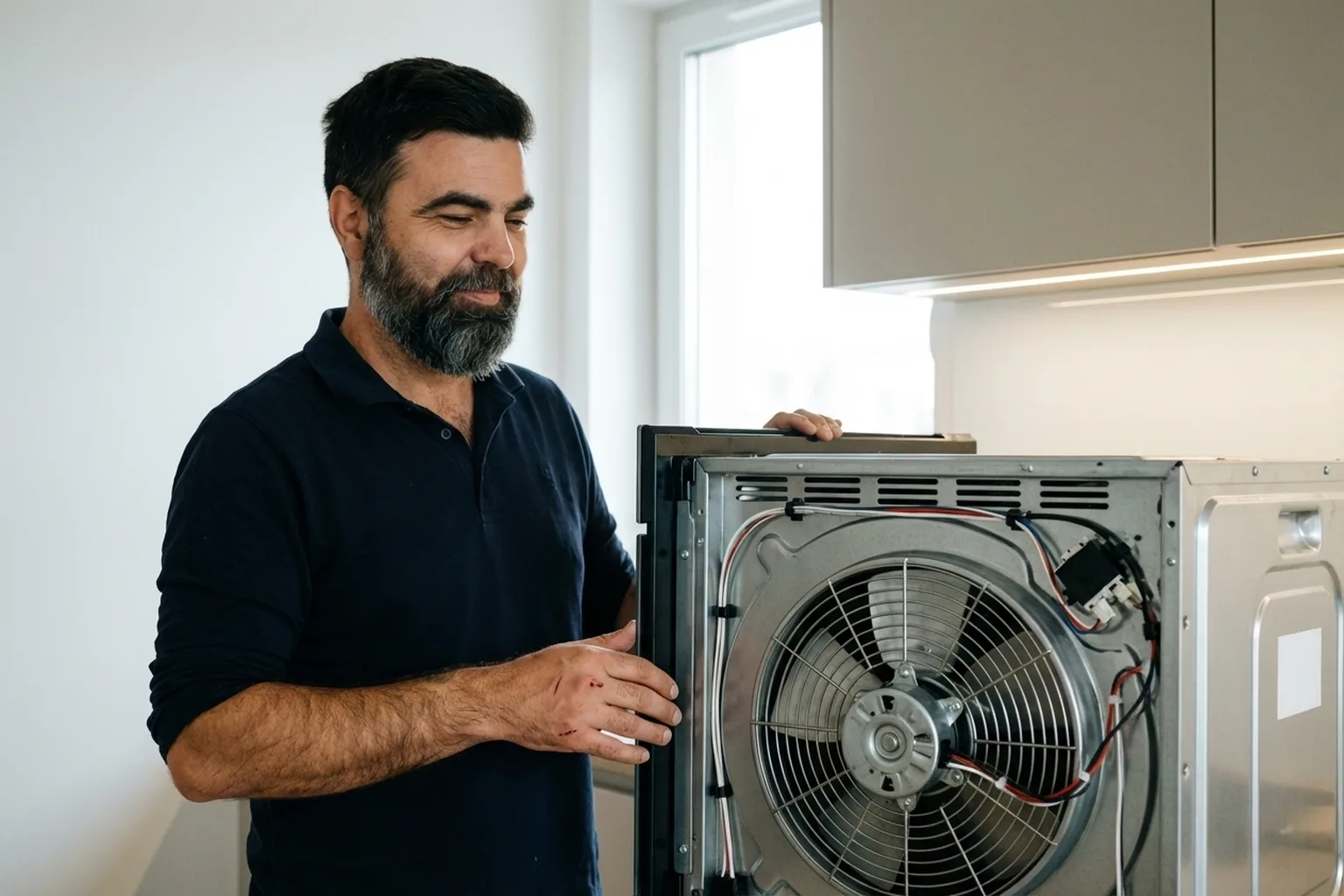
A client in Ochota posted a request about a loud humming sound whenever convection was turned on. The oven was a built-in Samsung in a tall kitchen unit. During the inspection the technician found that the convection fan bearing had failed, the impeller was rubbing on the rear panel. The fan motor assembly was replaced. After testing all modes, the noise had disappeared and convection was working properly again. The cooling fan was checked as well: it was in good condition. The whole repair took around an hour. Advice: if the fan starts humming, don’t wait too long, a worn bearing can ruin the impeller and the motor winding.
Frequently asked questions
Why does an oven have two fans?
The convection fan moves hot air around inside the cavity so baking is even. The cooling fan pushes air over the casing to protect the cabinetry and electronics from overheating.
How can I tell which fan has failed?
Noise from inside the oven when convection is on points to the convection fan. Noise from the back in any mode points to the cooling fan. The technician will check and confirm.
Can I use the oven without the convection fan?
Yes, but only with top/bottom heat and grill modes. Convection mode will not work.
What about without the cooling fan?
Strongly not advised — the casing will overheat and may damage the built-in furniture and the oven’s electronics.
Why has the fan started making noise?
Most often it’s worn bearings. Less often, the impeller warps from high temperatures.
Can the fan be lubricated instead of replaced?
Only as a temporary measure for a couple of weeks. The bearing is already worn out, so the noise will come back. Better to replace it straight away.
Does the technician bring the fan?
Yes, if the model is known beforehand. Uncommon models may take 1–3 days to order.
How long does the replacement take?
40 minutes to 1.5 hours, depending on the fan type and the oven design.
Which brands do tradespeople service?
Bosch, Siemens, Samsung, Electrolux, Whirlpool, Amica, Beko, Gorenje and others.
Who does the work
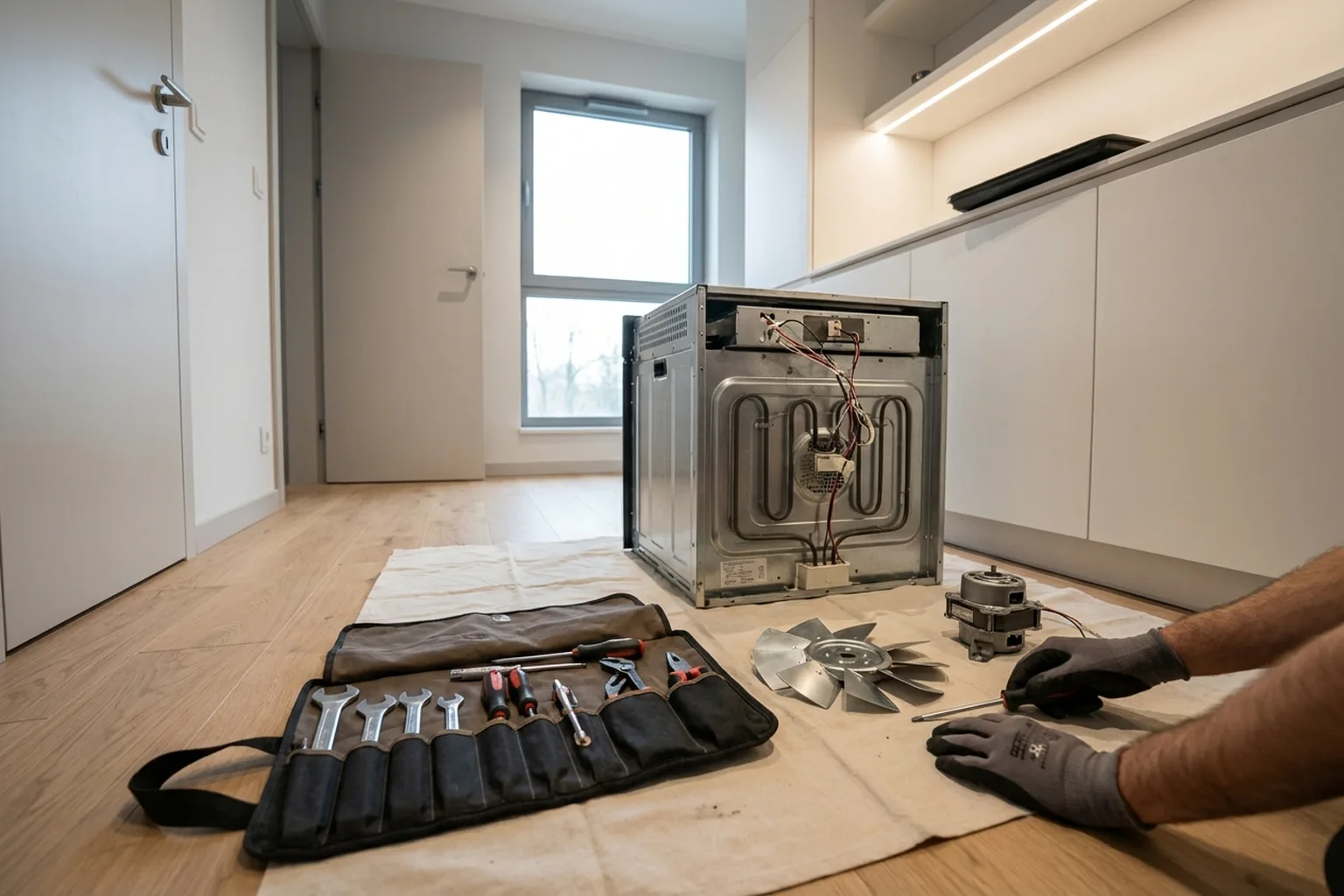
Oven fan replacement is done by technicians with hands-on experience in built-in appliance repair. Tradespeople cover all of Warsaw with the right tools and parts. Hearing noise from your oven?
Order in the app
Describe the job, add photos and the address. Tradespeople send their own prices and dates, and you pick one of the offers.
Open the app