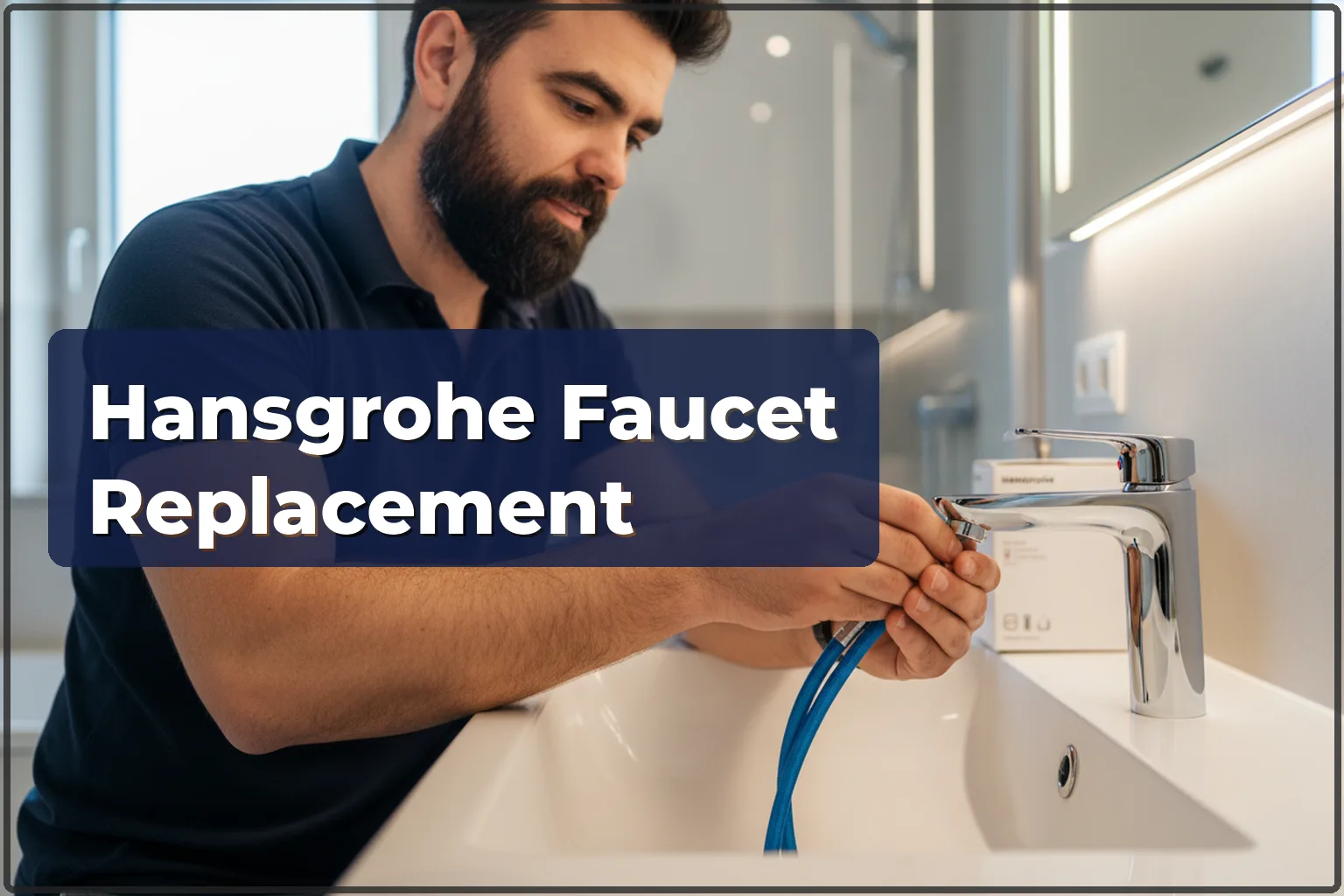
A call like this comes up in Warsaw all the time: a Hansgrohe basin mixer in Mokotów begins dripping from the spout, the handle develops a bit of play, and the owner says, “It’s a good tap, I’d rather do it properly than wrestle with it for another month.” With this brand, people rarely call because the faucet was some cheap throwaway item, but because it has already done years of service and now the question is whether to repair it properly or swap it out neatly.
Why Hansgrohe stands out
Hansgrohe is one of those German brands clients in Warsaw often pick when they want a faucet that looks polished but is still built for everyday use, not only for a showroom picture. You notice it in the small things: smoother handle action, neater chrome finish, and sensible water-saving features that do not get irritating in daily life.
In real life, Hansgrohe belongs in the premium segment, especially next to mass-market mixers. Models such as Focus, Logis or Vernis Blend are common in newer flats, while Talis E and Metris turn up more often in apartments where the bathroom was finished with a bit more money and more care for design. On many models, the aerator and spray pattern are set up to give that “fuller” stream feel, which is why clients often say the faucet feels pleasant even with lower water use. That is where technologies like AirPower and EcoSmart actually show their value, not only in brochures.
Typical failures of Hansgrohe faucets
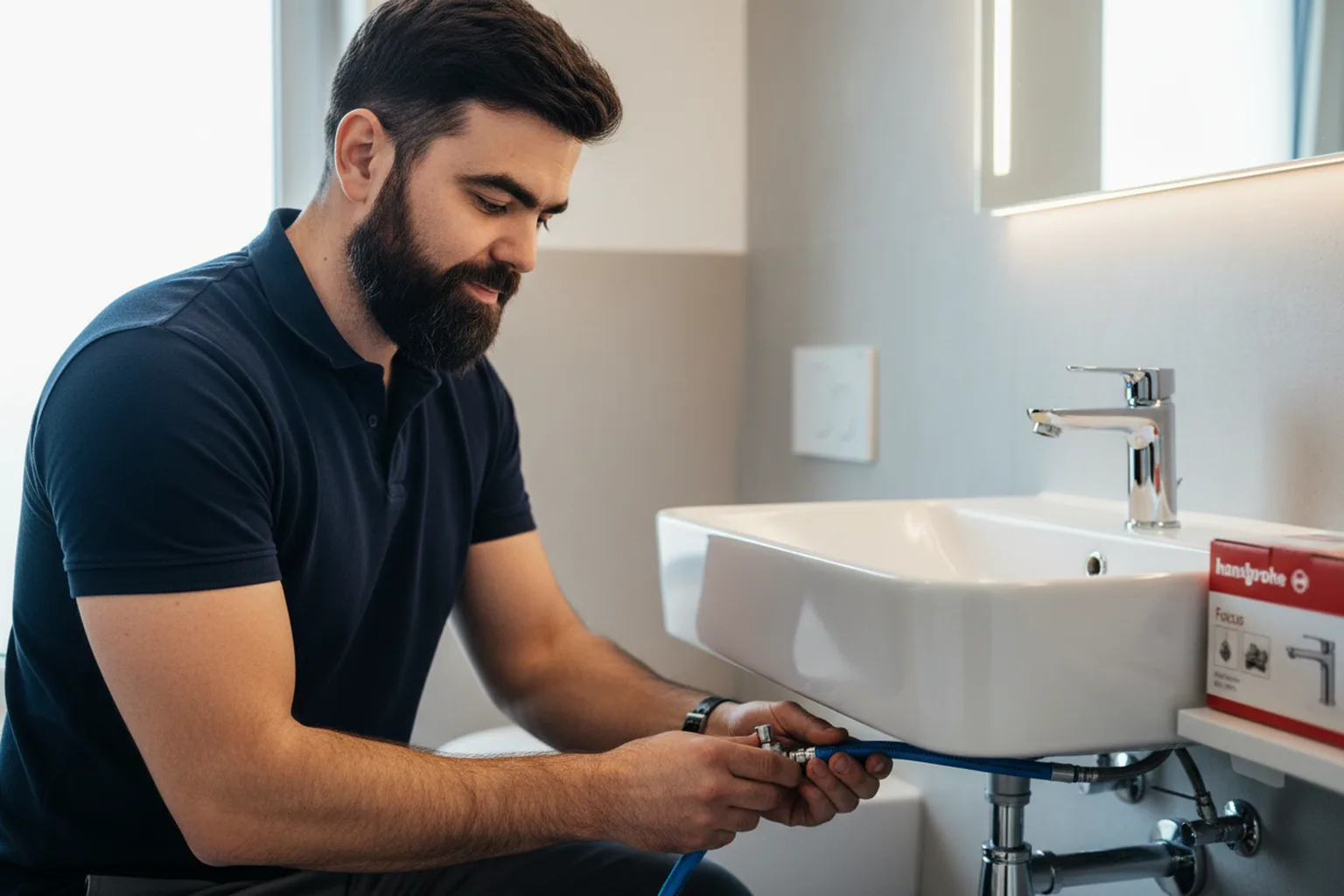
Hansgrohe faucets do not often fail in some dramatic fashion. More often, they wear out in a fairly clear pattern. The first sign is often limescale around the outlet or reduced flow, especially in places with harder water. On models with silicone nozzles or easy-clean elements, the QuickClean system helps, but after a few years in Warsaw conditions even that begins to collect deposits that a quick wipe no longer removes fully.
The second frequent issue is cartridge wear. On Hansgrohe mixers with CoolStart-type operation or similar ceramic control systems, leakage or a rougher handle movement often shows up after about 5 to 7 years of normal use. Sometimes the faucet drips after shut-off. Sometimes water comes out from under the handle or body cap. In many cases, the cartridge is the culprit, not the whole faucet body.
Another brand-specific thing I run into is the threaded handle-to-body connection working loose. This does not always mean the faucet is “broken,” but the customer notices the lever has a bit of play or feels less firm than before. On some Hansgrohe constructions, especially if the faucet has seen heavy use, this should be checked during service because tightening it is not always the full answer if internal wear is already there.
Less often, but still on a regular basis, there are problems with the pull-out hose on kitchen versions, ageing seals, or a body finish that still looks fine outside while the inside mechanism is already worn out. That is why decisions about replacing Hansgrohe should be based on the internal condition, not just on looks.
Replacement process
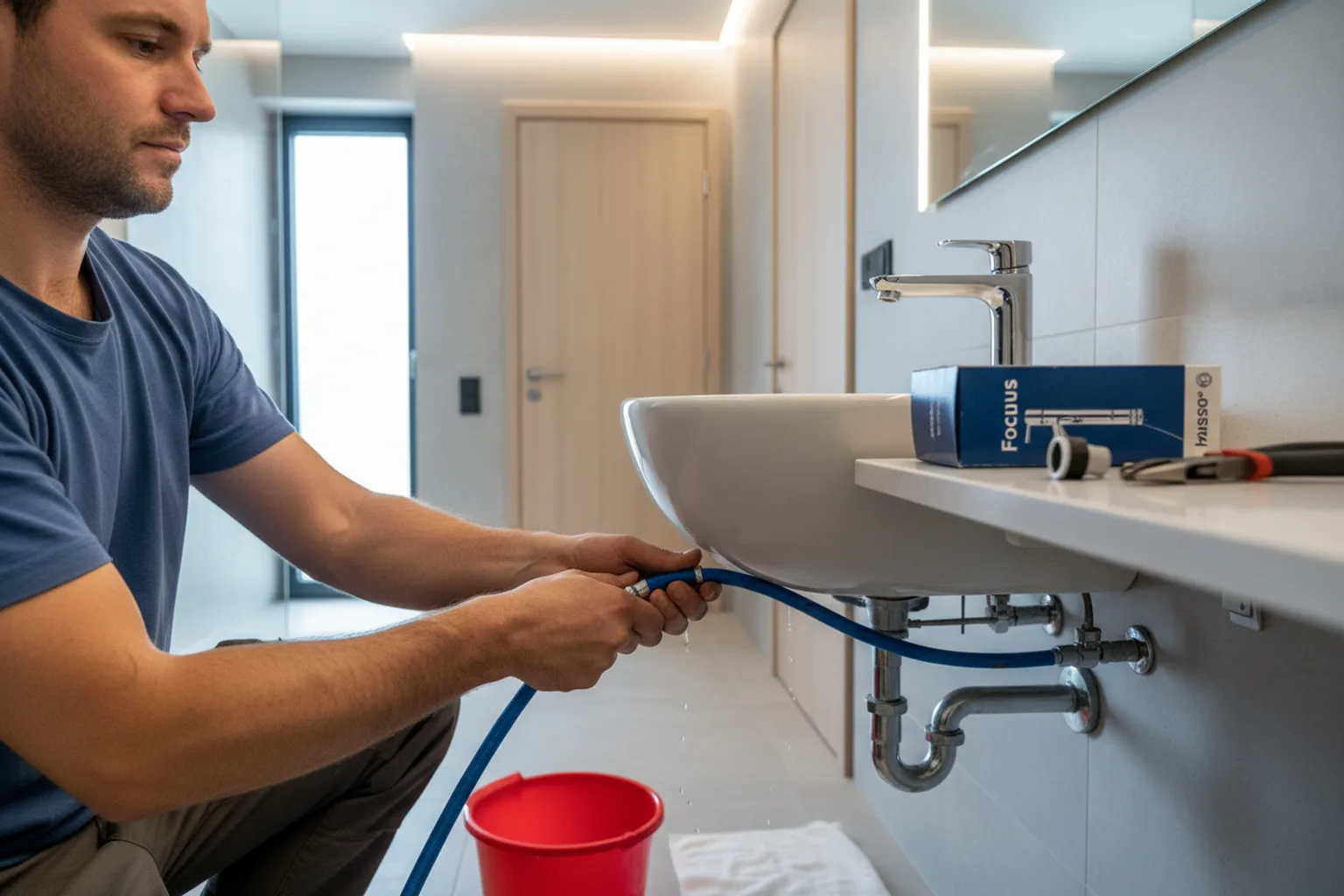
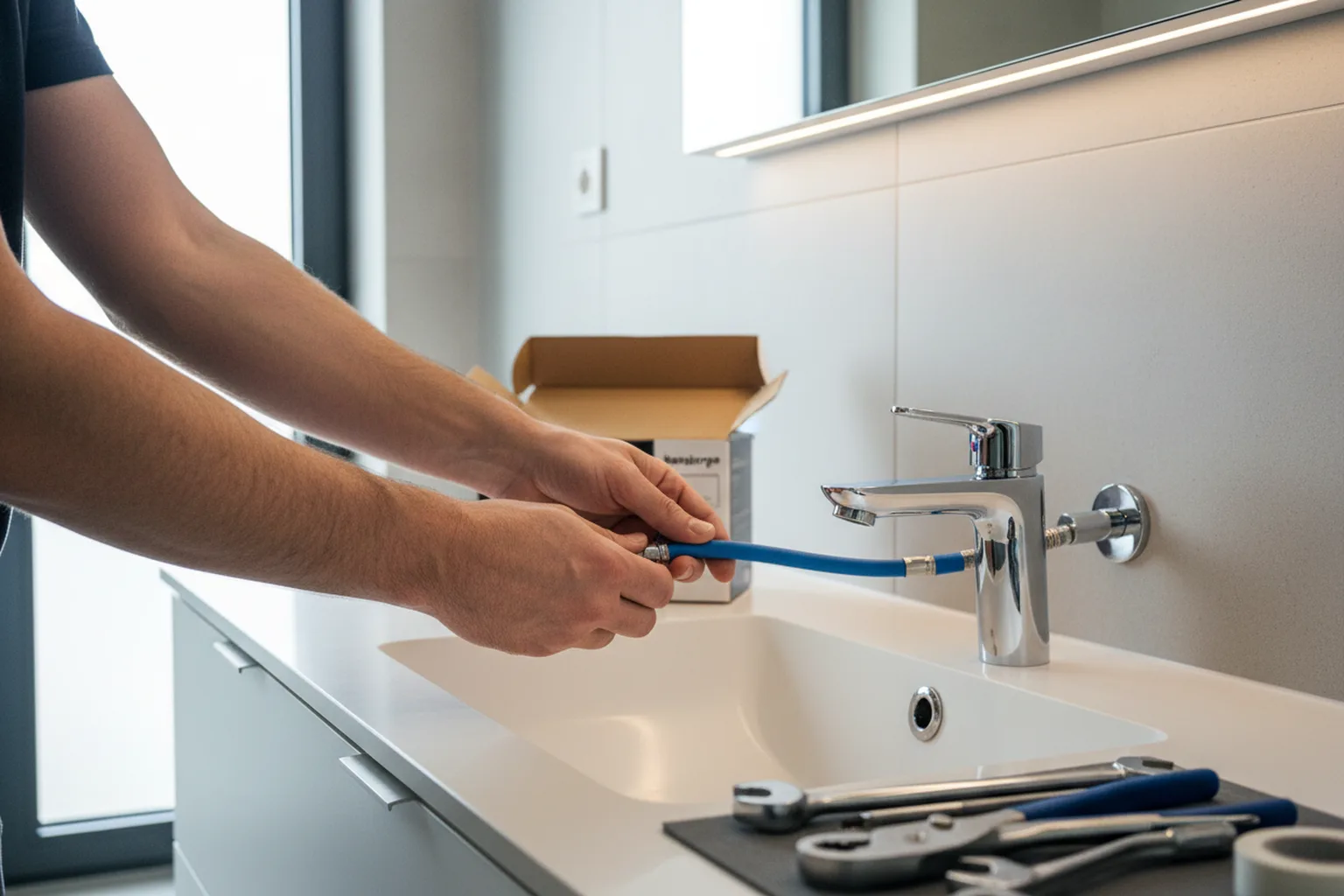
Replacing a Hansgrohe faucet is not hard for an experienced installer, but it should not be handled like the cheapest universal mixer from a DIY shelf. The first step is always access. In many flats in Ochota or Wola, the basin cabinet leaves very little room under the sink, and that matters because Hansgrohe mounting hardware is usually solid but can be awkward to remove after years of humidity and scale.
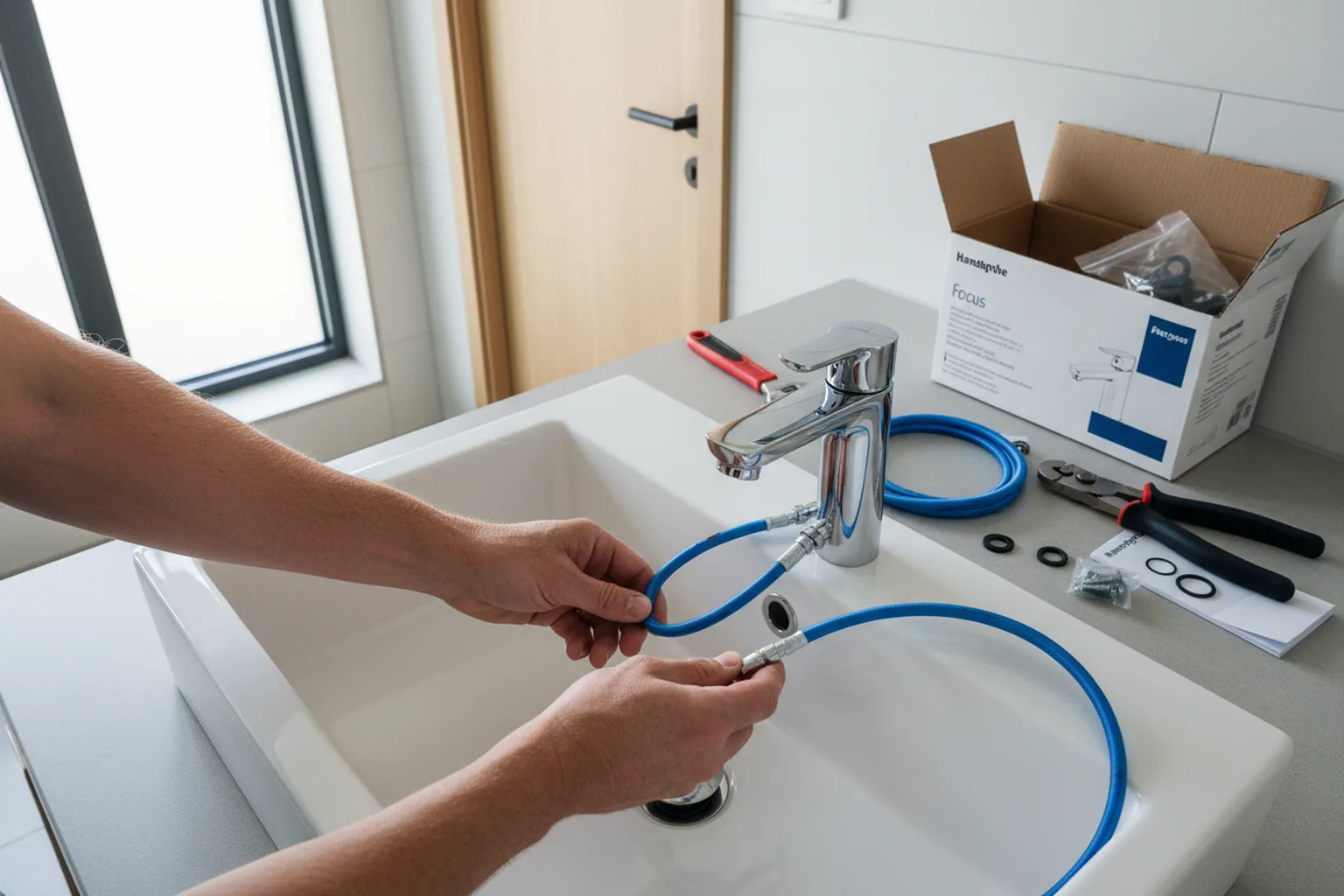
The old faucet is disconnected from the angle valves, the fixing set comes off, and the body is lifted out together with the flexible hoses. At that stage I always check the sink hole, the condition of the valves, and the supply hoses. With premium faucets, there is no point fitting a new mixer onto half-stuck shut-off valves that may give up the next time someone touches them.
Hansgrohe-specific quirks begin during disassembly. On many models, the internal layout is built around a 40 mm ceramic cartridge, and some handles use an M8 fixing screw. If you are opening the old faucet before deciding whether to keep it or replace it, the right Allen key and careful hands matter. The decorative parts scratch easily, and once someone forces the handle, the whole job gets more expensive for no sensible reason.
During installation of the new mixer, I focus on three things: straight seating on the ceramic or basin surface, even gasket compression, and hose routing without twists. Hansgrohe hoses and connectors are usually good quality, but if they are bent too sharply under a compact washbasin, both flow and lifespan suffer. After mounting, I flush the lines, inspect the aerator, and make sure the handle moves smoothly across both pressure and temperature range.
Parts and compatibility
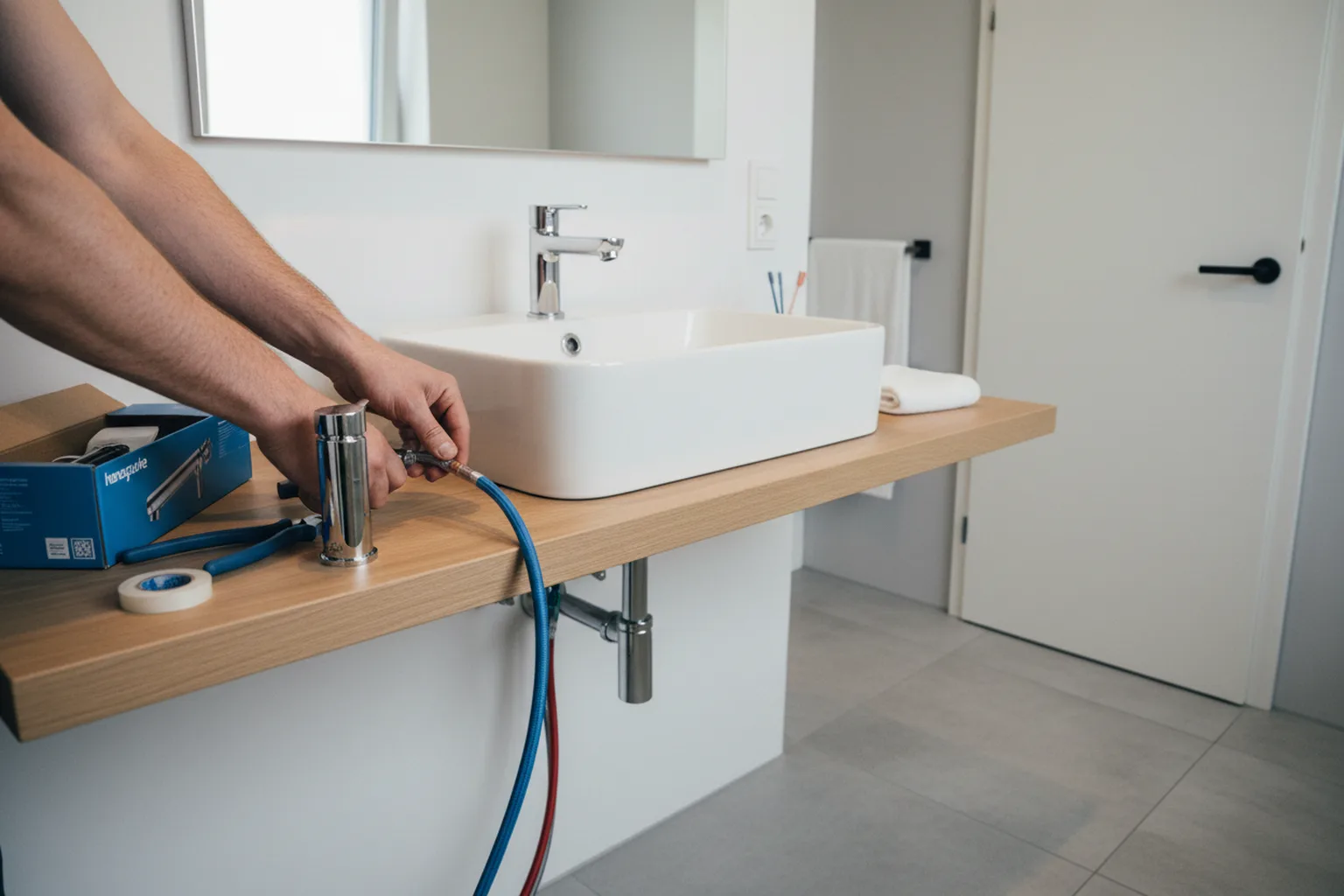
One benefit of Hansgrohe in Warsaw is how available the parts are. For a working plumber, this brand is convenient because original parts are not some rare item. You can usually get what is needed through local suppliers such as hurtownie Alicja, MaxFliz or Leroy, and there is also authorized service support in Warsaw. That matters when the client wants to try repair first and go for replacement only when repair no longer makes sense.
On most Hansgrohe basin mixers, the standard working element is a 40 mm ceramic cartridge. That makes diagnosis simpler, but it does not mean every 40 mm cartridge is automatically compatible. The dimensions may look close while the locating tabs, stem height, sealing surface or handle connection are different. I have seen plenty of cases where a “universal” insert fits physically but gives poor handle alignment, leaks under pressure, or simply does not work with the body geometry.
So yes, generic parts do sometimes fit, but with Hansgrohe I suggest checking by exact model or at least by the original cartridge code and handle construction. This matters especially for Focus, Talis E, Metris, Logis and Vernis Blend lines, because the outside can be misleading. Two faucets may look almost identical to the client and still have different internals or fixing details.
Price
Hansgrohe replacement is generally not a budget job. Standard basin models mostly start in the mid range and climb depending on finish, line and technology. In practice, common Hansgrohe faucets often land somewhere from roughly a few hundred złoty into the higher premium range, while the Axor series sits clearly above that and belongs to a different bathroom budget altogether.
The final cost depends on more than the faucet alone. Installation access, valve condition, whether the old mounting is badly seized, and whether extra parts are needed all influence the total. With this brand, clients often choose between “repair a good faucet properly” and “replace it with another Hansgrohe model so everything stays consistent.”
When replacement beats repair for Hansgrohe
If the faucet is around 5 to 7 years old and the only issue is a worn cartridge, repair often makes sense. That is especially true if the body is in good shape, the finish still looks good, and the model fits the rest of the bathroom. Hansgrohe is worth repairing when the fault is clearly limited and spare parts can be sourced quickly.
Replacement is the better option when several symptoms show up together: cartridge leakage, loosened handle connection, scaled outlet, ageing hoses, and visible wear around the base. If the owner is already saying the handle feels rough, the faucet drips after shut-off, and the fixing under the sink has started corroding, then spending money on only one internal part is often a false saving.
I also suggest replacement when the client wants to move from an older basic line to a newer model with better water comfort and easier upkeep. For example, changing from a tired older mixer to a new Focus, Logis or Vernis Blend can be reasonable even if the old one is still technically repairable. In premium bathrooms, Talis E or Metris replacement is often chosen simply to keep the design standard consistent instead of mixing brands and shapes.
FAQ
- Does Hansgrohe offer warranty on installation?
Warranty for the product comes from the manufacturer or seller, but the installation warranty normally comes from the installer or service company doing the job. These are separate matters, so ask clearly who is responsible for what. - Can I fit a different brand cartridge into a Hansgrohe faucet?
Sometimes a non-original cartridge looks similar, especially in 40 mm size, but compatibility is not guaranteed. With Hansgrohe, stem height, tab position and sealing details matter, so I prefer matching the exact model. - Which Hansgrohe models are most common in Warsaw flats?
From what I see, Focus, Logis and Vernis Blend are common in standard apartments, while Talis E and Metris appear more often in higher-end bathrooms or newer renovations. - Why is my Hansgrohe faucet dripping even though it still looks almost new?
Because the internal ceramic cartridge can wear out before the outside shows its age. This is very common after several years of regular use, especially with hard water and frequent daily operation. - What is the usual cartridge size in Hansgrohe mixers?
On many models, it is a 40 mm ceramic cartridge. Some versions also have handle details such as an M8 fixing screw, which matters during servicing and replacement. - Are Hansgrohe spare parts easy to get in Warsaw?
Yes, in general they are. Local suppliers and authorized service support make this one of the easier premium brands to maintain compared with more niche imported fittings.
If your Hansgrohe faucet has started leaking, the handle has gone stiff, or it has simply reached the stage where repair no longer adds up, check the exact model before ordering parts or a replacement. And if you haven’t chosen your new faucet yet, read our general guide on faucet replacement.