How much does intercom installation cost
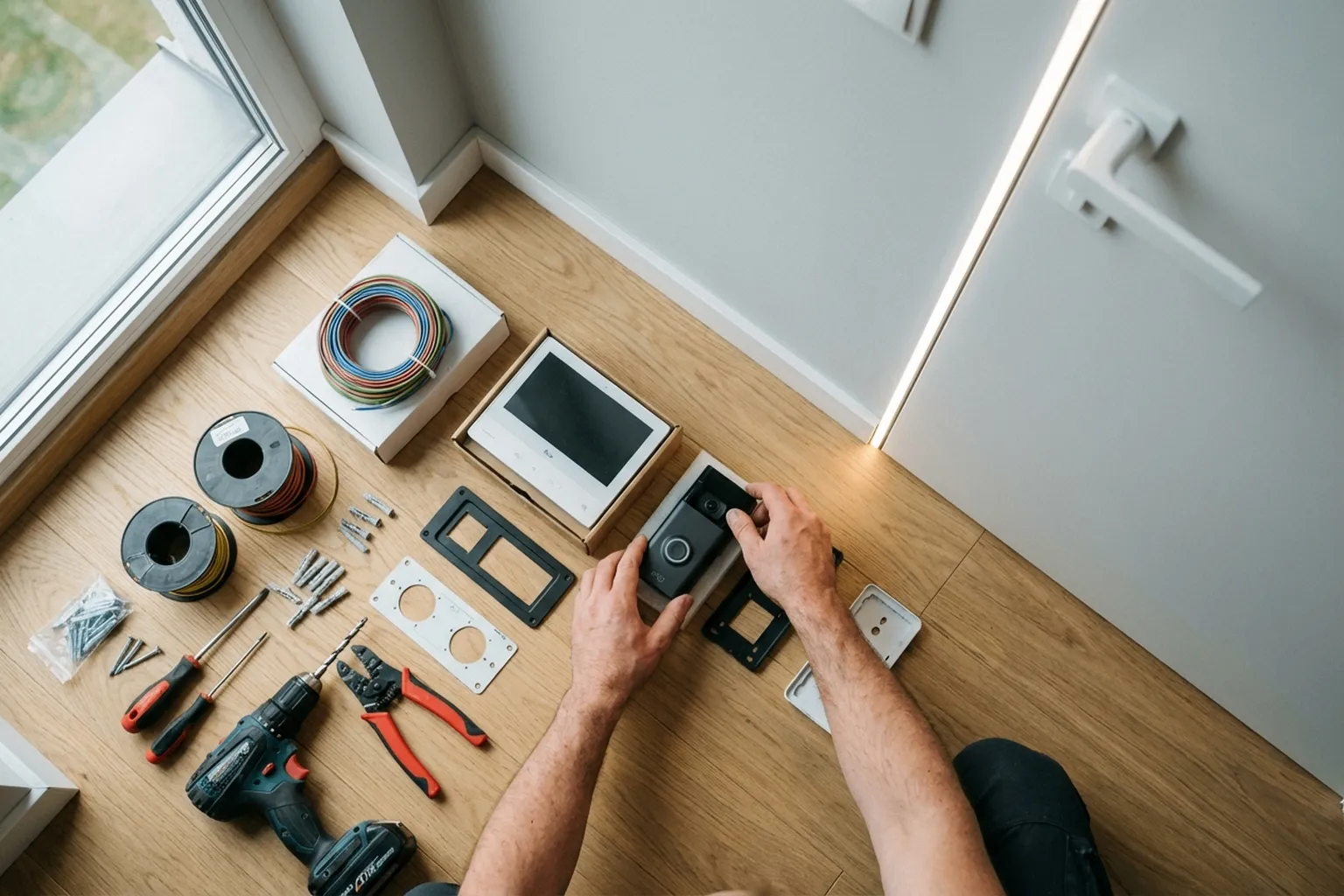
The cost depends on the kind of system (audio or video), the length of the cable run, and how tricky the installation is. Swapping a simple handset in a flat takes little time. A video intercom in a private house with cabling from the gate is a bigger job. Wireless (Wi-Fi) units are quicker to fit, but they need a steady signal. Fixings are included; equipment is billed separately. You can see the current prices in the table below.
| Service | Price |
|---|---|
| Intercom installation | 500–800 zł |
Indicative prices. Ranges for a typical scope. Fixings included, materials separate. Minimum order 300 zł.
What it costs and how to book: intercom installation in Warsaw.
Intercom and video doorbell installation: how the work goes
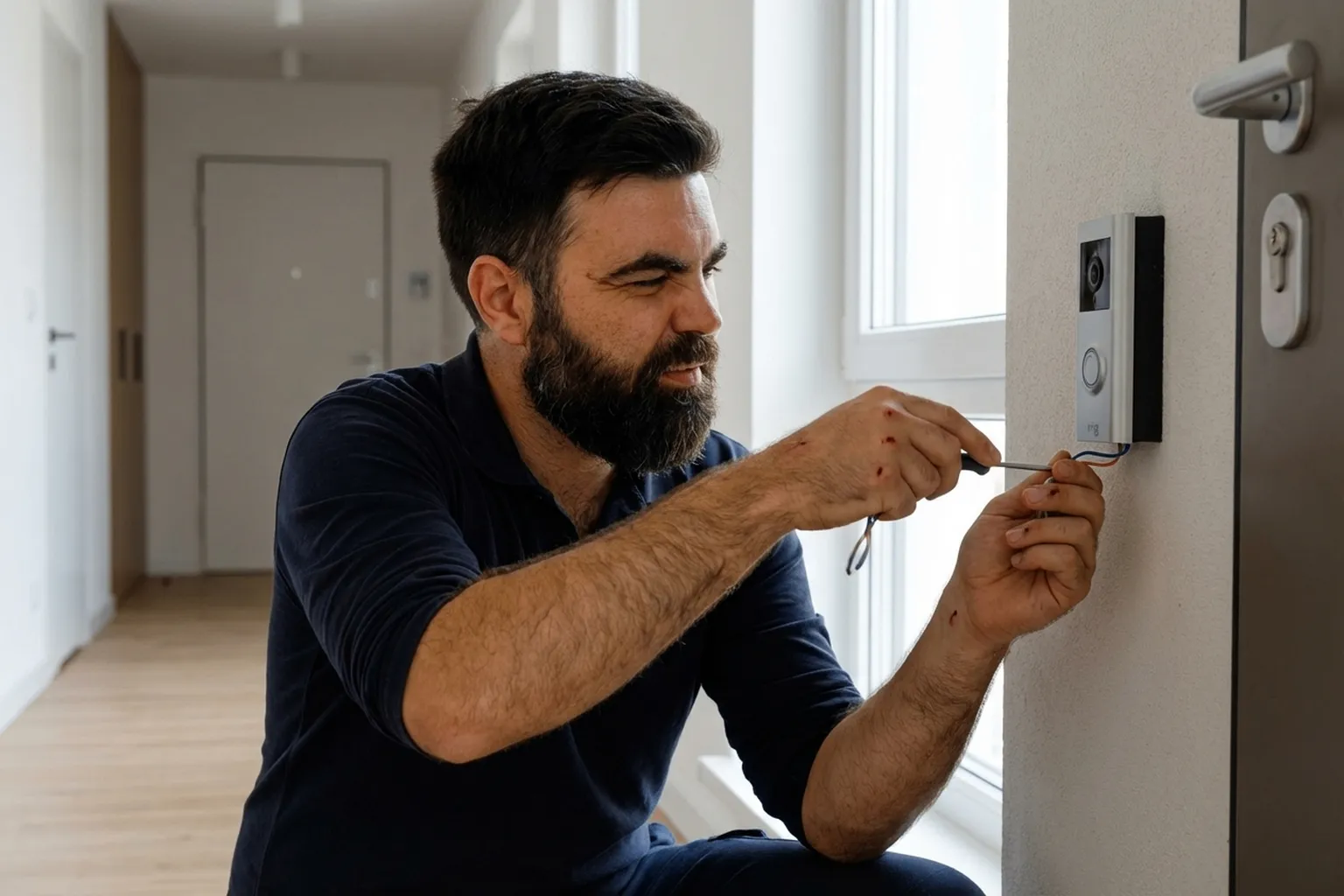
- You explain the job: a new installation or a replacement, the system type, and the distance between the panel and monitor.
- The technician checks the scope of work and gives you a price.
- Each tradesperson says in their offer when they can come, and you pick the one that suits you.
- On site, the technician maps out the cable route and where the panel and monitor will be mounted.
- Tradespeople run the cable (in trunking, in a wall chase, or along an existing route).
- Tradespeople install the call panel at the entrance/gate and the indoor monitor/handset.
- Tradespeople connect everything, set it up, and test the call, audio, video, and lock release.
Common intercom installation mistakes

- Buying a Wi-Fi video doorbell when the signal at the gate is one bar. Without solid Wi-Fi, the image freezes or cuts out.
- Using standard telephone cable instead of proper intercom cable, it oxidises within a year and the audio stops working.
- Mounting the call panel on a wall facing the sun without a visor — the camera gets washed out in sunlight, and the plastic loses colour.
- Not allowing for an electric lock: the intercom rings, but the door can’t be opened remotely.
- Forgetting the lock’s power supply: the lock won’t operate without its own source.
- Installing the panel too high or too low — the camera doesn’t catch the visitor’s face.
What to prepare before the technician arrives

- Choose the system type: audio or video, wired or Wi-Fi.
- Buy the equipment beforehand or ask the technician to suggest a model.
- Give the distance from the gate/entrance to the apartment/house: this decides the cable length.
- Decide if you need an electric lock on the door or gate.
- Make sure there is a power source near where the monitor will be mounted.
- If a wall chase is required — say so in the order in advance so the technician brings a hammer drill.
- Confirm whether there is existing wiring from an old intercom.
- Provide the building intercom code and parking details.
Case study: video intercom in Zoliborz

A private house in Zoliborz: the client wanted a Hikvision video intercom with a 7-inch monitor and an electromagnetic lock on the gate. The distance from the gate to the house was 18 metres. There was no old intercom and no wiring in place. Tradespeople laid a 4-core cable in conduit along the fence and in trunking along the house wall. The call panel was fixed to the gate post at 150 cm — the right height for the camera. The monitor was mounted in the hallway near a power socket. The electromagnetic lock was installed on the gate, with the power supply inside a weatherproof box. Tradespeople set up the call and checked audio and video: both clear. Lock release from the monitor works. The whole installation took 4 hours. The client said he finally stopped running out to the gate. The conclusion is simple: a wired video intercom is more dependable than Wi-Fi, especially at distances above 10 metres.
Fermax and Urmet intercoms
Fermax
Fermax is a Spanish maker of audio and video intercoms. Houses usually get a ready-made kit: a panel at the gate, a monitor inside, a power supply. A block of flats runs one system for the whole stairwell, and a new monitor has to match it.
Some Fermax installations use the DUOX system, which carries picture, sound and control over two wires. When you swap audio for video that helps a lot, because new channels in the wall often aren’t needed. Older systems can have more cores, and then the scope depends on what’s already in the wall.
Urmet
Urmet is an Italian maker, and its handsets and door panels hang in plenty of Warsaw blocks. The handset in your flat is only the end point. Behind it sit the panel at the entrance, a power supply and wiring that runs up the riser through the whole stairwell.
In a block of flats the system is shared. A new handset has to match the building’s installation: older ones are analogue, newer ones run on the two-wire digital 2Voice system. A handset from a different system simply won’t talk to the panel. So before you buy, photograph the model sticker on the old handset. You can usually see it once the handset is off its bracket.
Frequently asked questions
Which is better: wired or Wi-Fi?
Wired is more dependable: it doesn’t rely on Wi-Fi signal. Wireless is simpler to install but needs stable connectivity.
Can I add an electric lock?
Yes, most video intercoms work with electric locks. A separate power supply is required.
Do tradespeople supply the equipment?
The client buys the equipment. Tradespeople can suggest models and where to get them.
How long does installation take?
Handset replacement — 1-2 hours. A full installation with cabling: 3-5 hours.
Can I upgrade from audio to video?
Yes, but new cabling is often needed: old 2-core cable is not enough for video.
Does it work during a power cut?
No, it requires power. A UPS can be added as backup.
Can multiple monitors be connected?
Yes, most systems support 2-3 monitors (for example, one on each floor).
What’s included in the price?
The technician’s labour, fixings, trunking, and travel. Equipment and cable are charged separately.
Do I need a permit?
In a private house — no. In an apartment building, approval from building management may be needed.
Who does the work

Intercom installation is done by specialists with hands-on experience in low-voltage systems across Warsaw. Tradespeople work with Hikvision, Dahua, Vidos, and Commax, and they know the quirks of each brand. Tradespeople lay cables, fit panels and monitors, and set up locks. Tradespeople cover all of Warsaw and the suburbs.
Order in the app
Describe the job, add photos and the address. Tradespeople send their own prices and dates, and you pick one of the offers.
Open the app