
How much it costs and what affects the price
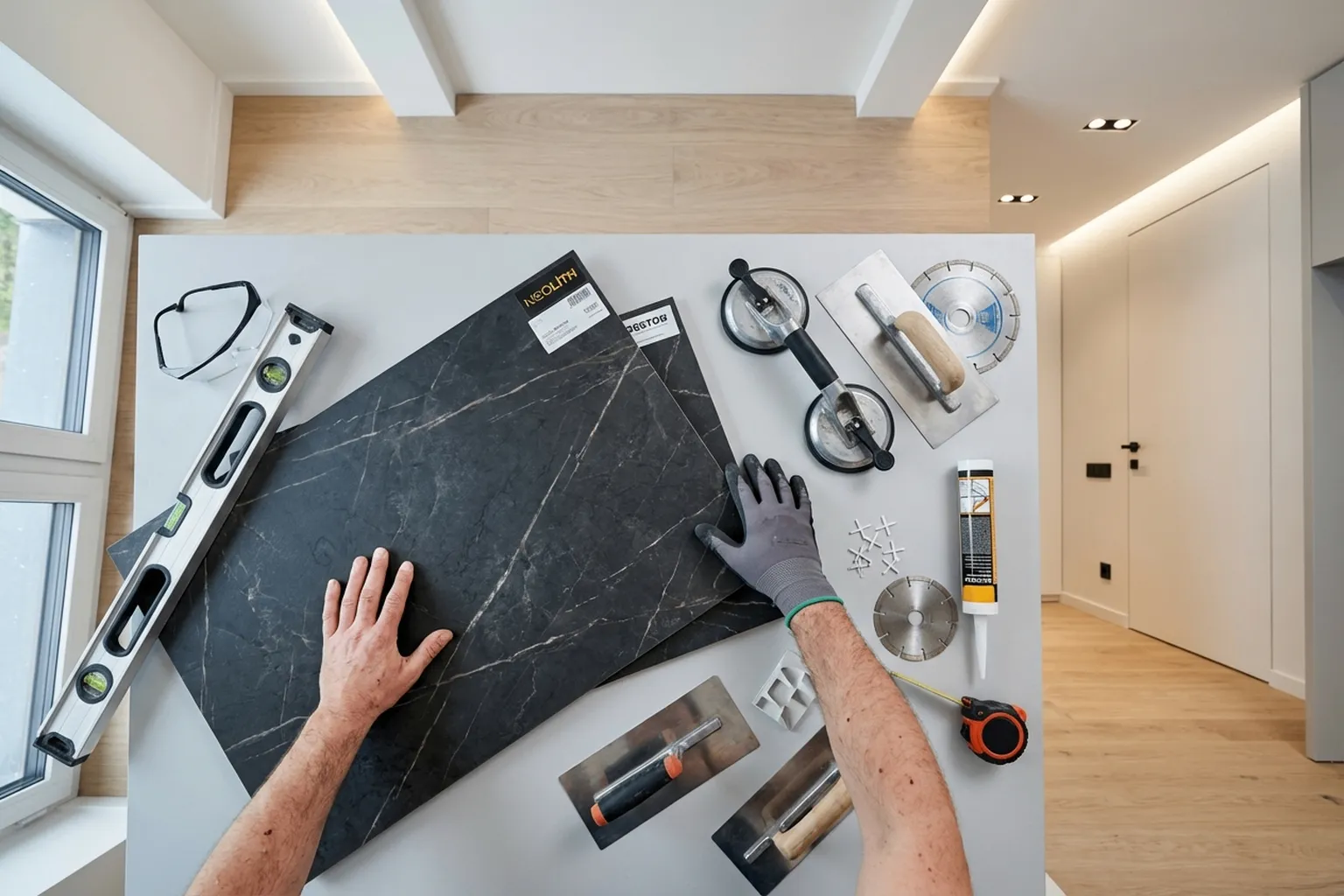
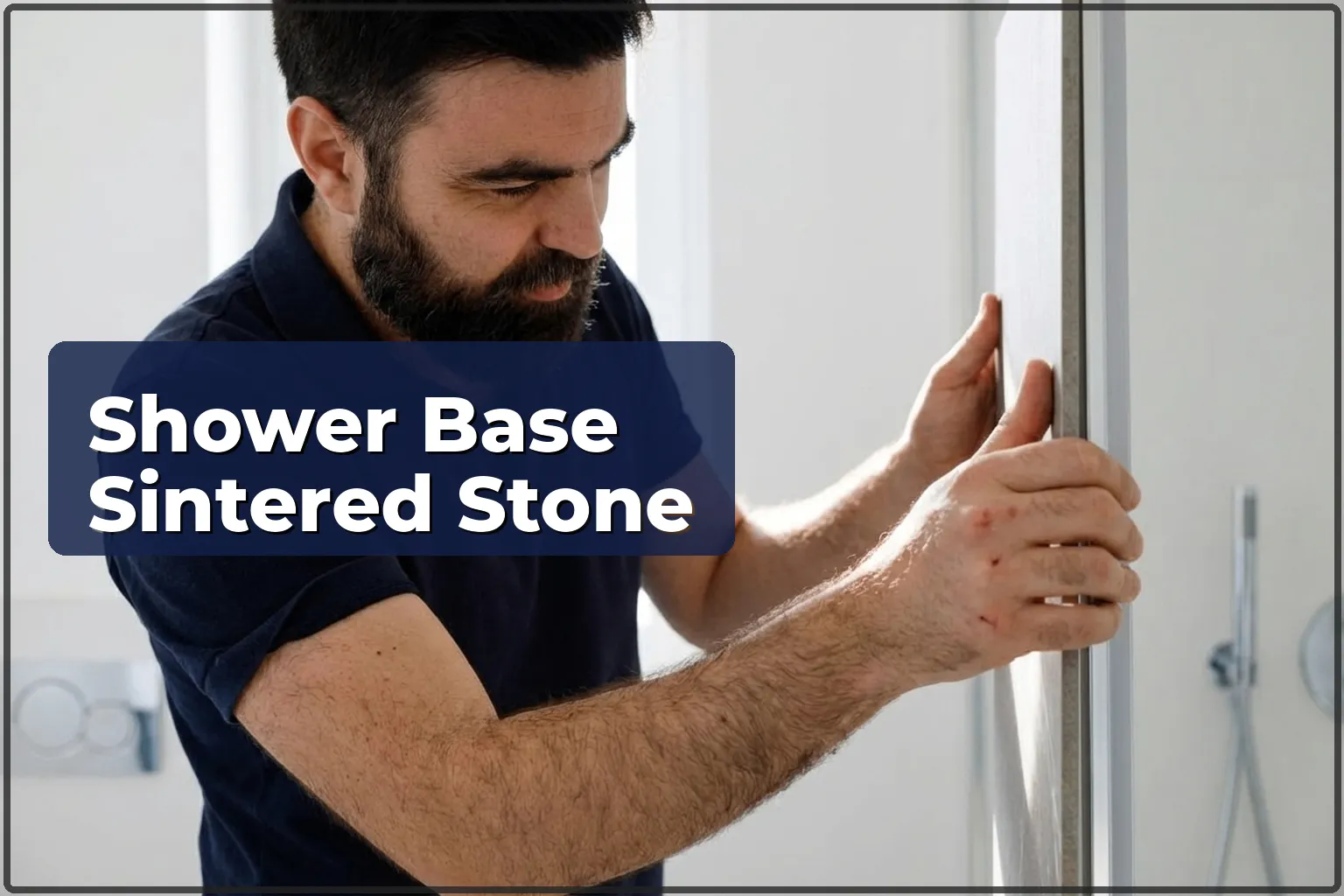
The price depends on the slab type (Laminam 3 mm, Neolith 6 mm, Dekton 8 mm), base size, number of cutouts (drain, edges, niches), how tricky the cuts are and the edge finish. Sintered stone is pricier than standard tiles, but it cuts down installation time — fewer joints, less grout. Adhesive, waterproofing and slabs are bought by the client. Labour and consumables are part of the service price. Current prices are in the table below.
| Service | Price |
|---|---|
| Shower base tiling: sintered stone | 360–400 zł/m² |
| Shower base tiling: standard tile | 130–150 zł/m² |
| Shower base tiling: large format | 160–280 zł/m² |
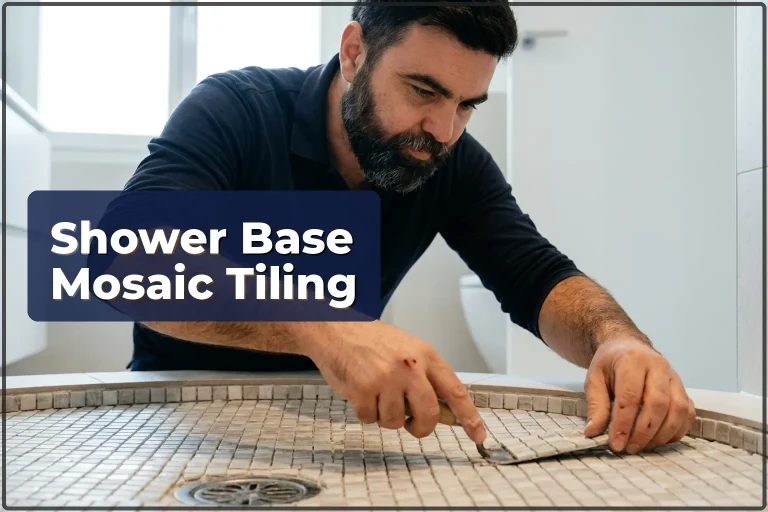
| Shower base tiling: mosaic | 250–300 zł/m² |
| Sintered stone precision cut | 80–140 zł/mb |
| Waterproofing substrate before tiling | 35–80 zł/m² |
Indicative prices. Ranges for a typical scope. Fixings included, materials separate. Minimum order 300 zł.
Rather hand the job over? More here: large format tiling in Warsaw.
How sintered stone base tiling works
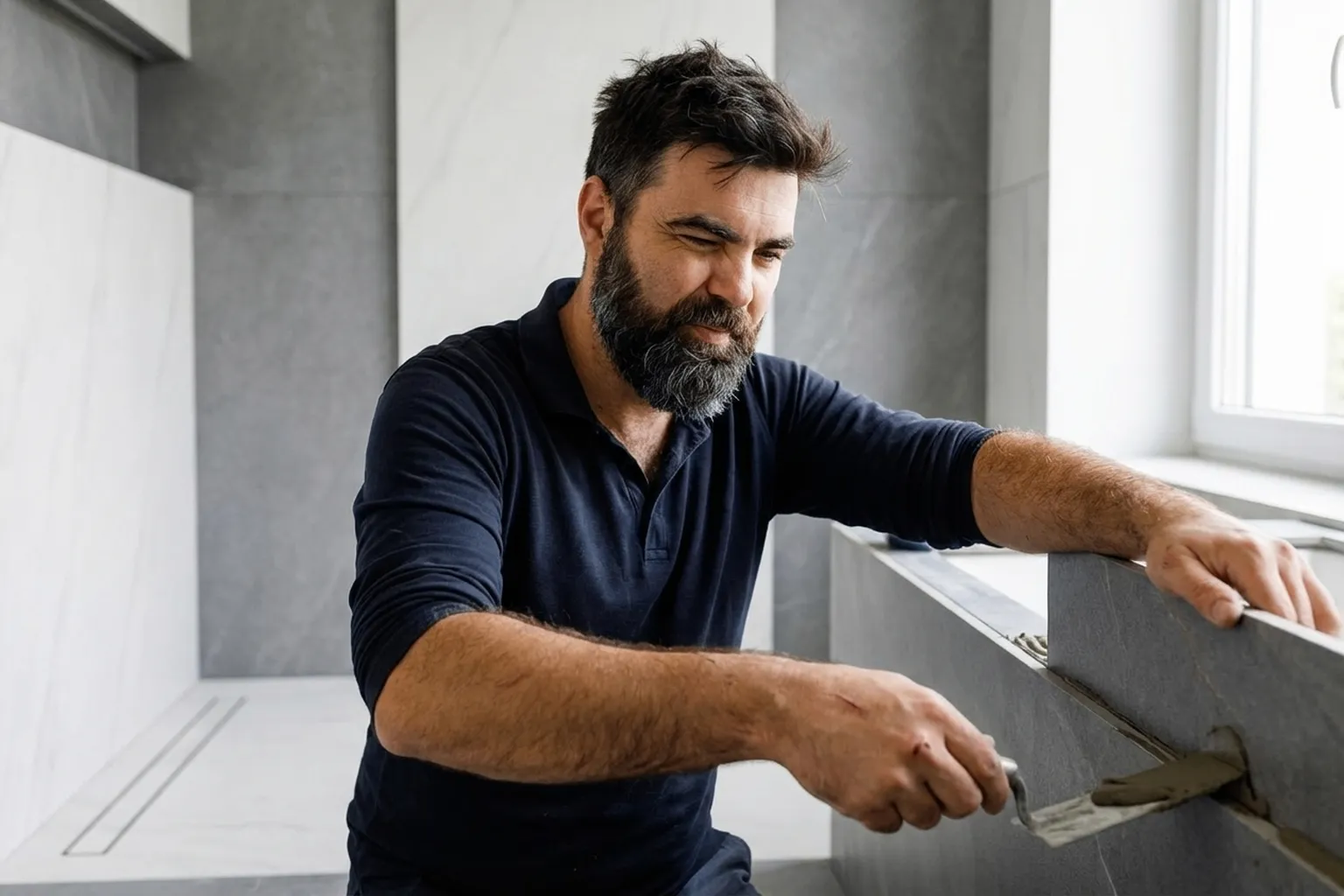
- Measurement and template. Tradespeople take exact dimensions, prepare a cardboard template with the drain, edges and wall junctions in mind. Tradespeople also plan the cutting layout to keep waste to a minimum.
- Surface preparation. Tradespeople check the fall to the drain (minimum 1-2%) and prime the surface. If waterproofing is missing, they apply Mapei Mapelastic membrane.
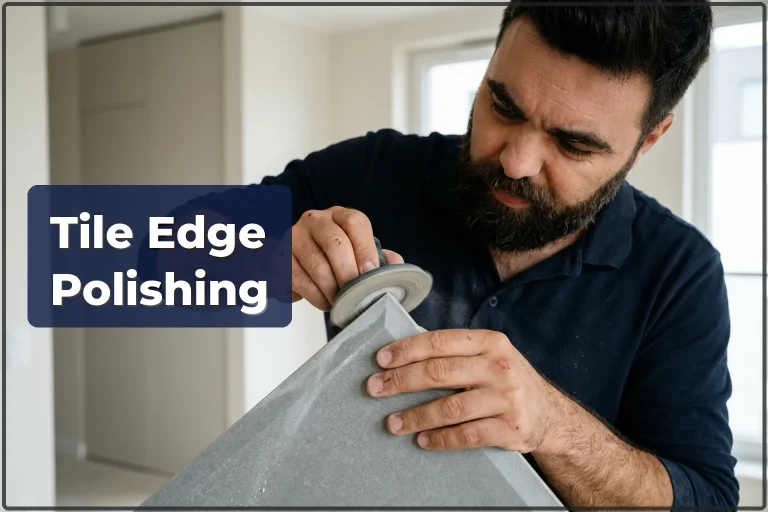
- Slab cutting. Tradespeople cut on a bridge saw using a diamond blade with water cooling. Drain opening: diamond router. Edges are smoothed by grinding.
- Adhesive application. Mapei Keraflex Maxi S1 or Litokol K80: only flexible adhesive. Double-buttering on both the substrate and the slab. Empty spots under thin slabs lead to cracks.
- Joint treatment. If the base is bigger than one slab, joints are filled with colour-matched epoxy (Litokol Starlike or Mapei Kerapoxy). The seam is almost impossible to see.
- Sealing. Wall junctions — sanitary silicone. Drain junction: silicone plus a water test.
- Final check. Tradespeople flood the base, check how fast the water drains and inspect all joints for leaks.
Common mistakes with sintered stone bases
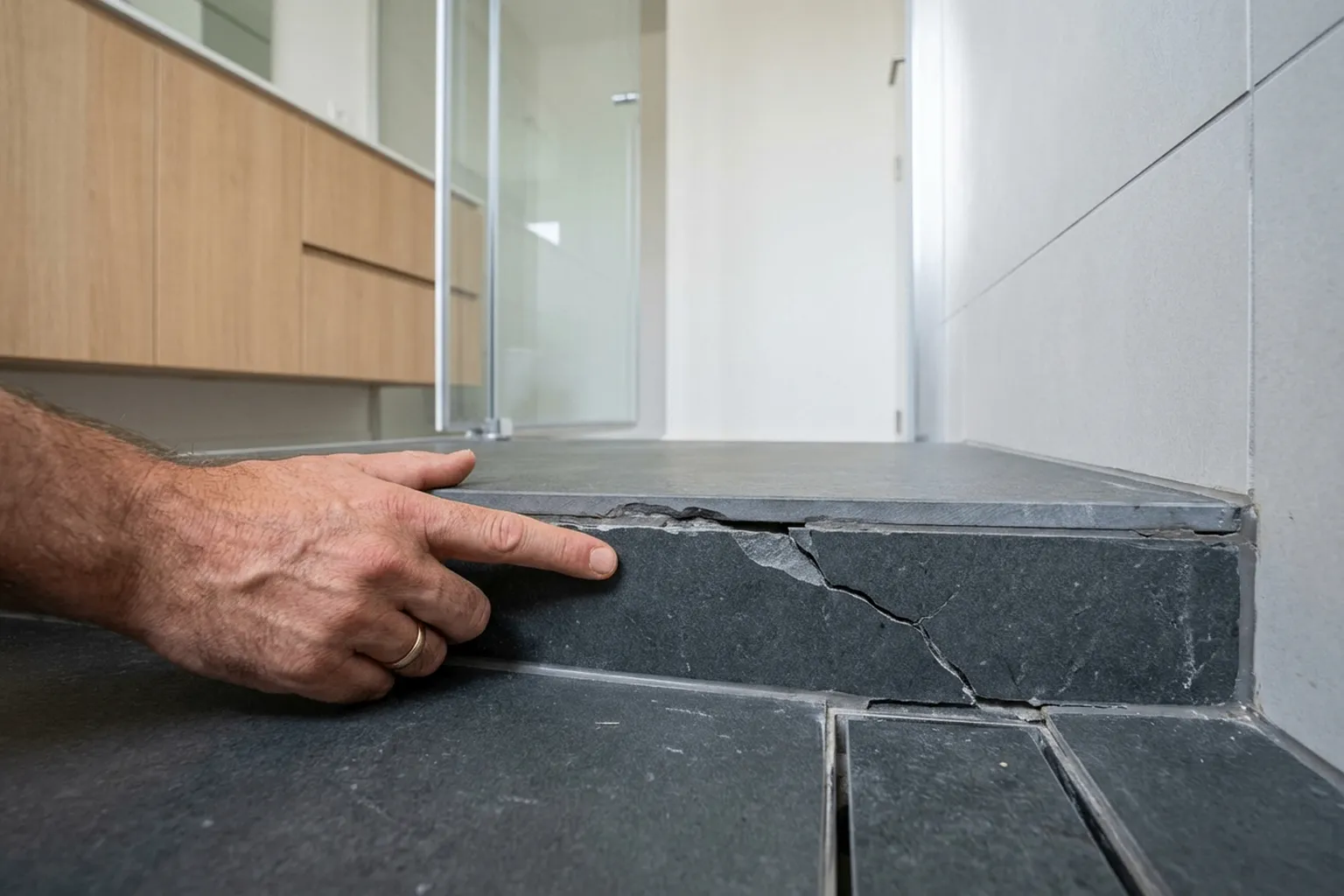
- Cutting with an angle grinder: 3-6 mm slabs crack and chip on visible edges. Only a water-fed bridge saw should be used.
- Rigid adhesive — sintered stone is thinner than porcelain and reacts more to movement in the substrate. Flexible S1 is a must.
- Voids under the slab: the stone bends under foot and breaks. Double-buttering is not optional.
- Incorrect cutting plan: sintered stone is expensive; one measuring mistake means the slab is wasted. Templating is essential.
- Standard cement grout on joints — with sintered stone they use only colour-matched epoxy. Cement grout looks rough and then cracks.
- Unpolished edges: visible cuts need grinding and polishing, otherwise the finish looks unfinished.
- Laying on an uneven substrate: thin slabs copy every bump and dip and may crack.
What to prepare before the technician arrives
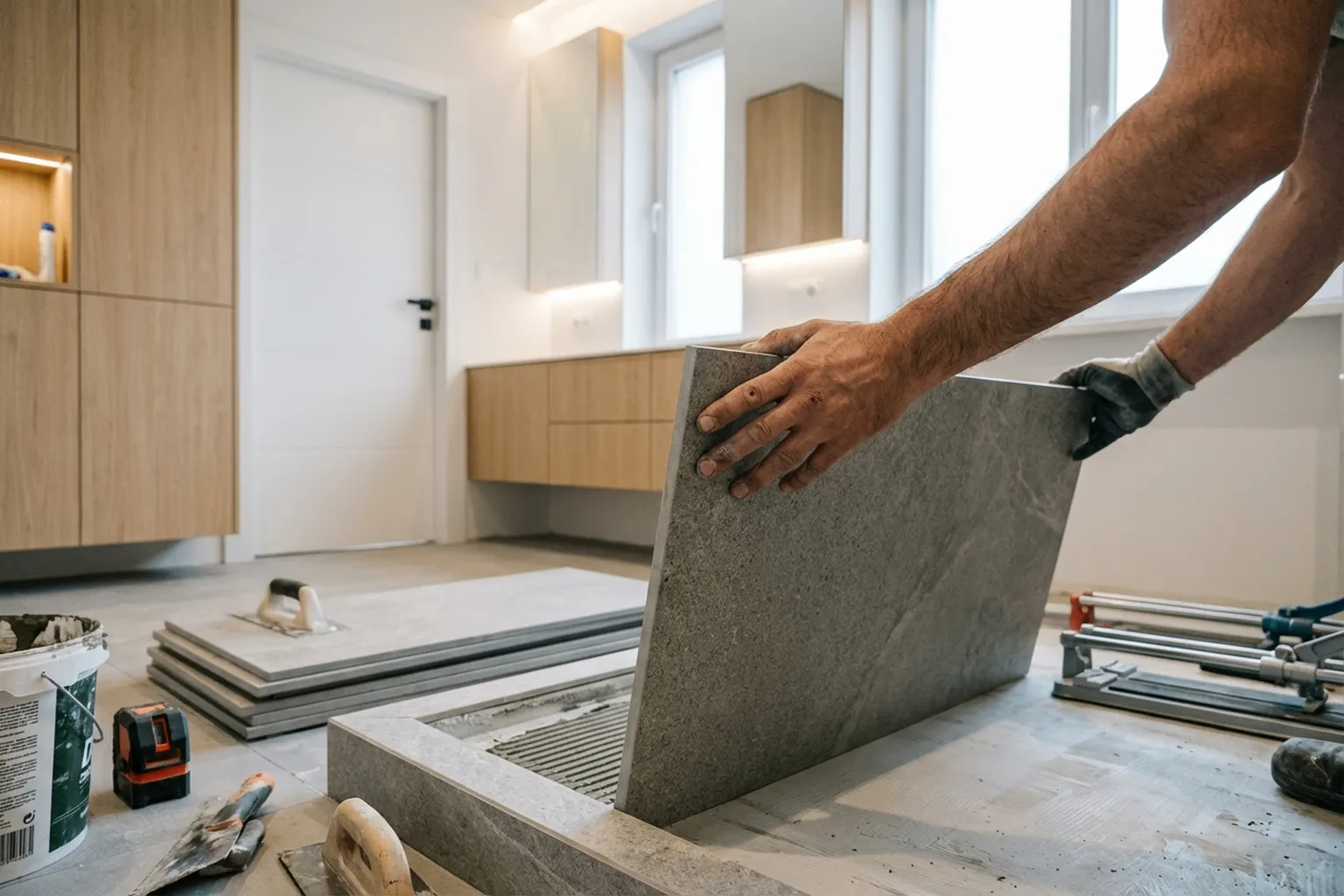
- Base with finished screed and slope to drain.
- Waterproofing already applied and cured.
- Sintered stone purchased: Laminam, Neolith or Dekton — confirm the slab size with the technician in advance.
- Flexible adhesive: Mapei Keraflex Maxi S1 or Litokol K80.
- Colour-matched epoxy adhesive/grout for joints.
- Sanitary silicone (clear or colour-matched).
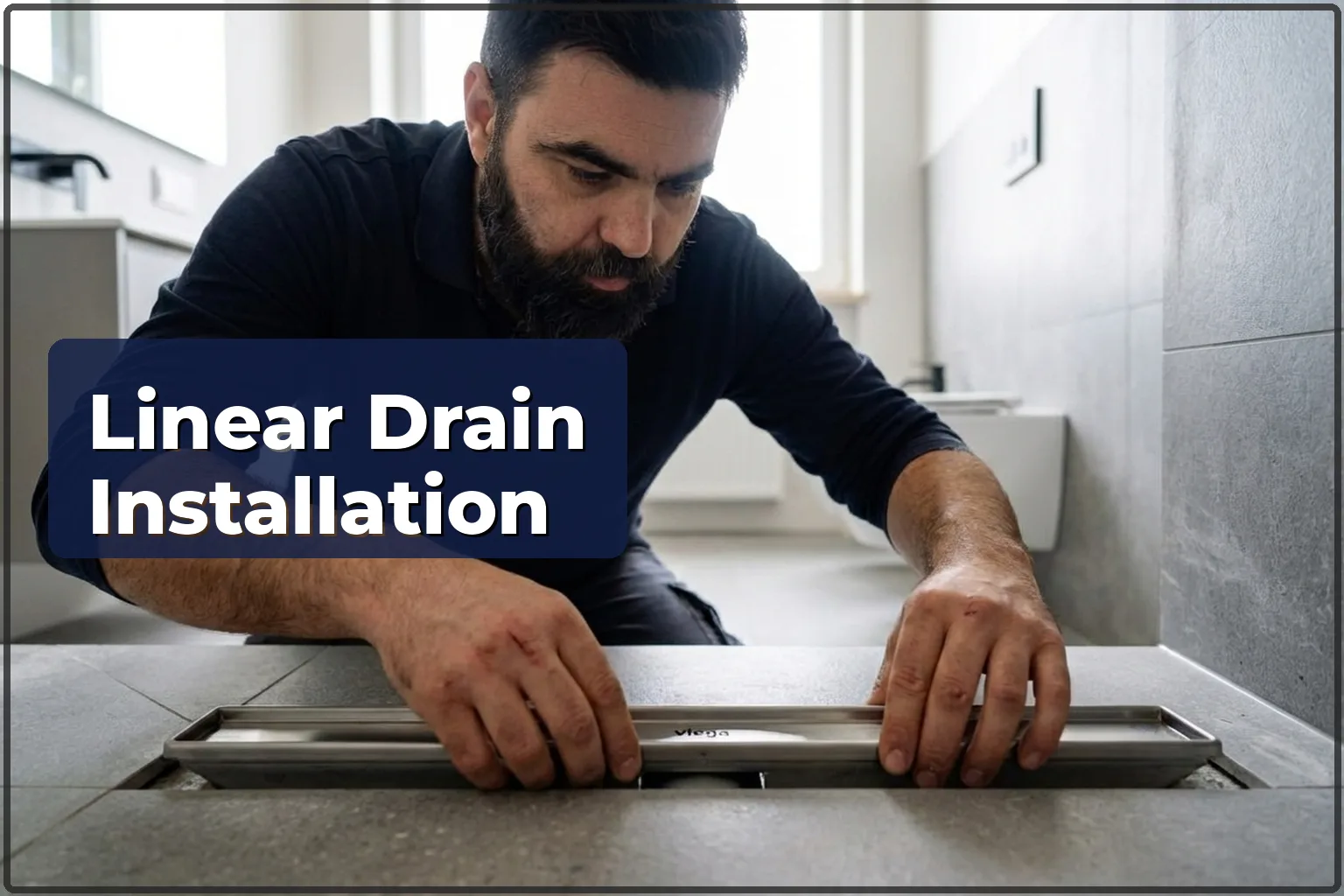
- Confirm the drain type: length, model, position.
- Make sure there is water supply nearby (for the bridge saw).
- Empty the bathroom completely: the saw needs room.
- Power supply — bridge saws draw 2 kW or more.
- Provide access details: intercom, lift (slabs are heavy), parking.
A real case from Warsaw
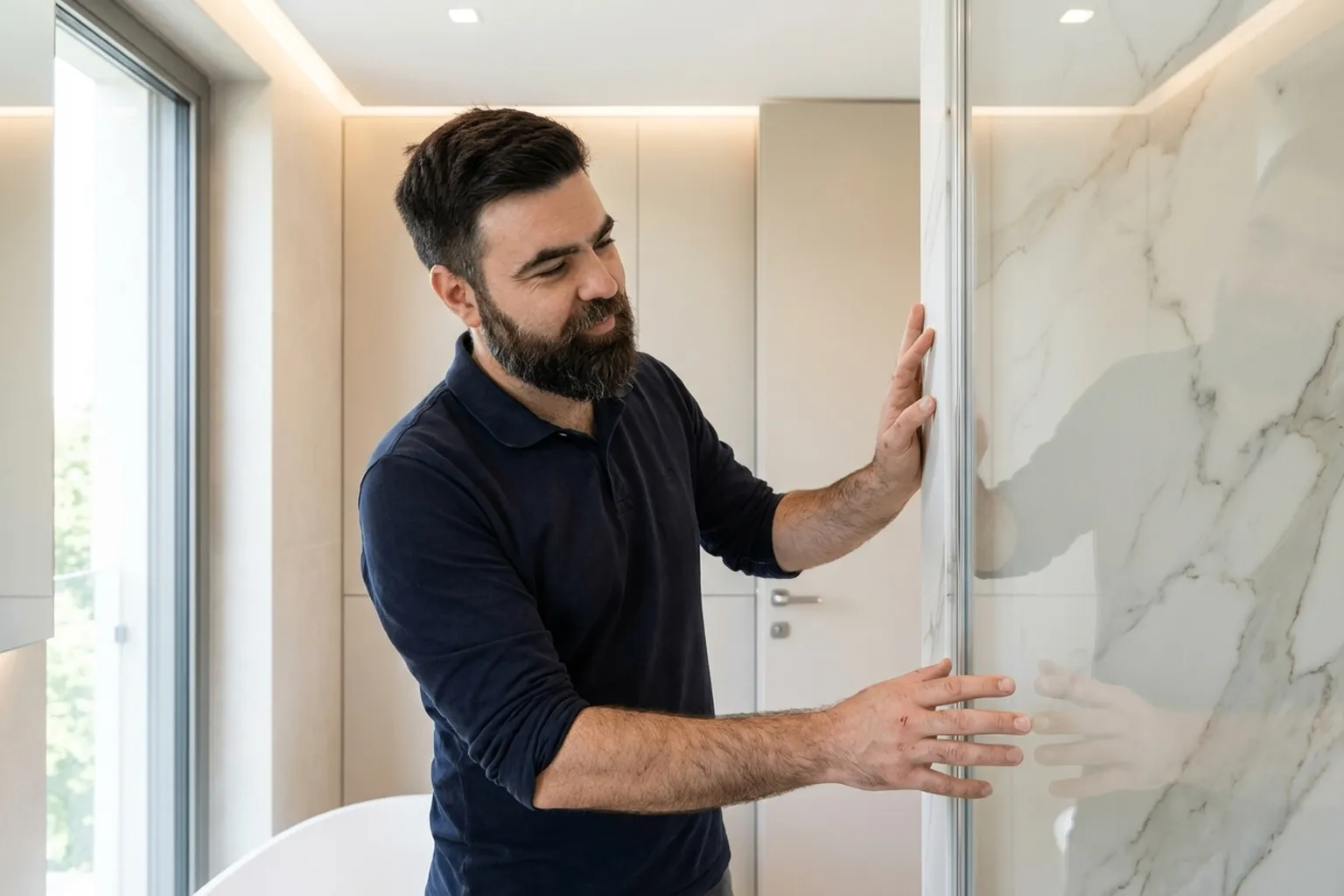
An apartment in Wilanów, designer bathroom: the client picked Neolith Calacatta Royale 6 mm for a walk-in shower base. The base was unusual: trapezoidal, 120×90 cm, with a Geberit linear drain by the wall. Tradespeople prepared a cardboard template, cut the slab on the bridge saw, two main sections plus a strip for the edge. Drain cutout done with a water-cooled diamond router. Installed on Mapei Keraflex Maxi with double-buttering. The joint between the two parts — Litokol Starlike colour-matched, with the seam barely visible. The edge was polished to a mirror finish. Wall junction: clear sanitary silicone. Result: the base looks like one solid marble slab. The whole job took one day. The client said the lack of grout lines was the main reason he chose sintered stone, and he does not regret it.
Frequently asked questions
Why is sintered stone better than regular tiles on a base?
Very few joints (1-2 instead of dozens), one-piece look, zero water absorption, easy cleaning. It looks like a single stone slab.
What thickness works for a shower base?
3-6 mm is enough. Laminam 3 mm is the thinnest. Neolith and Dekton 6-8 mm are stronger. The key thing is the quality of the substrate and adhesive.
Is sintered stone slippery when wet?
That depends on the finish. Matte and textured surfaces (silk, riverwashed) are safe. Tradespeople do not install polished glossy slabs on shower bases.
Can it be laid on an existing base?
Yes, if the substrate is flat, solid and has the right slope. Priming is required. Old tiles can remain if they are firmly bonded.
How long does it take?
A standard base: 1 day. Non-standard shapes — 1-2 days. Plus 24 hours for the adhesive to cure.
Are joints visible?
With proper cutting and colour-matched epoxy: hardly at all. The seam is thinner than 1 mm.
What is included in the price?
Labour (measurement, cutting, installation, polishing), consumables and travel. Slabs, adhesive and silicone are bought by the client.
Which brands do tradespeople recommend?
Laminam (Italy): the thinnest and lightest. Neolith (Spain) — great value. Dekton (Cosentino): top durability.
Can a tradesperson make an edge from sintered stone?
Yes. The edge is cut from the same slab and polished. It matches the base as one piece.
Who does the work
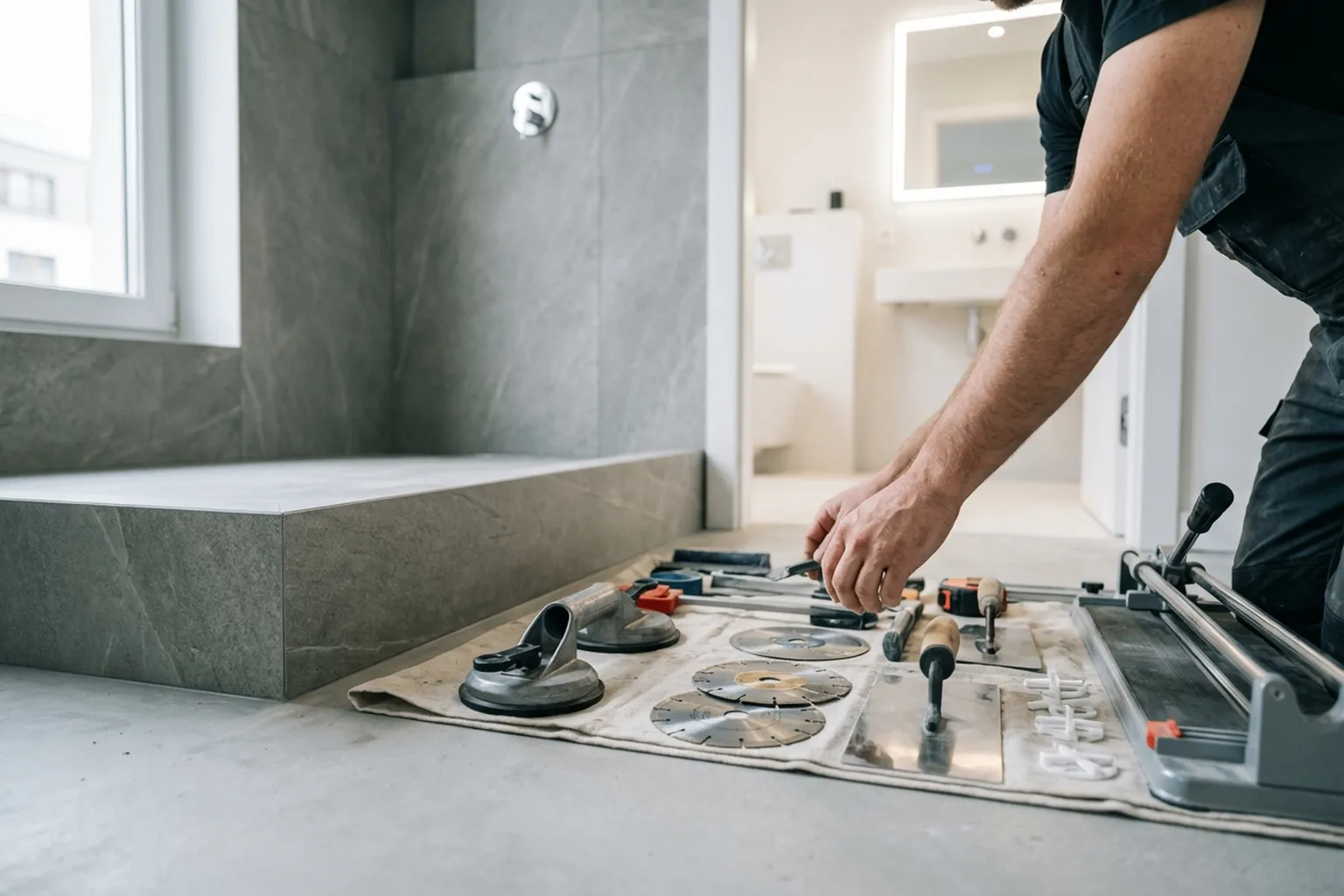
Sintered stone installation is done by technicians who work professionally with large-format slabs, this calls for a bridge saw, diamond routers and accurate cutting skills. A regular tiler with an angle grinder will destroy sintered stone. Tradespeople come fully equipped. Tradespeople work across all of Warsaw.
Order in the app
Describe the job, add photos and the address. Tradespeople send their own prices and dates, and you pick one of the offers.
Open the app