
How much does it cost and what affects the price
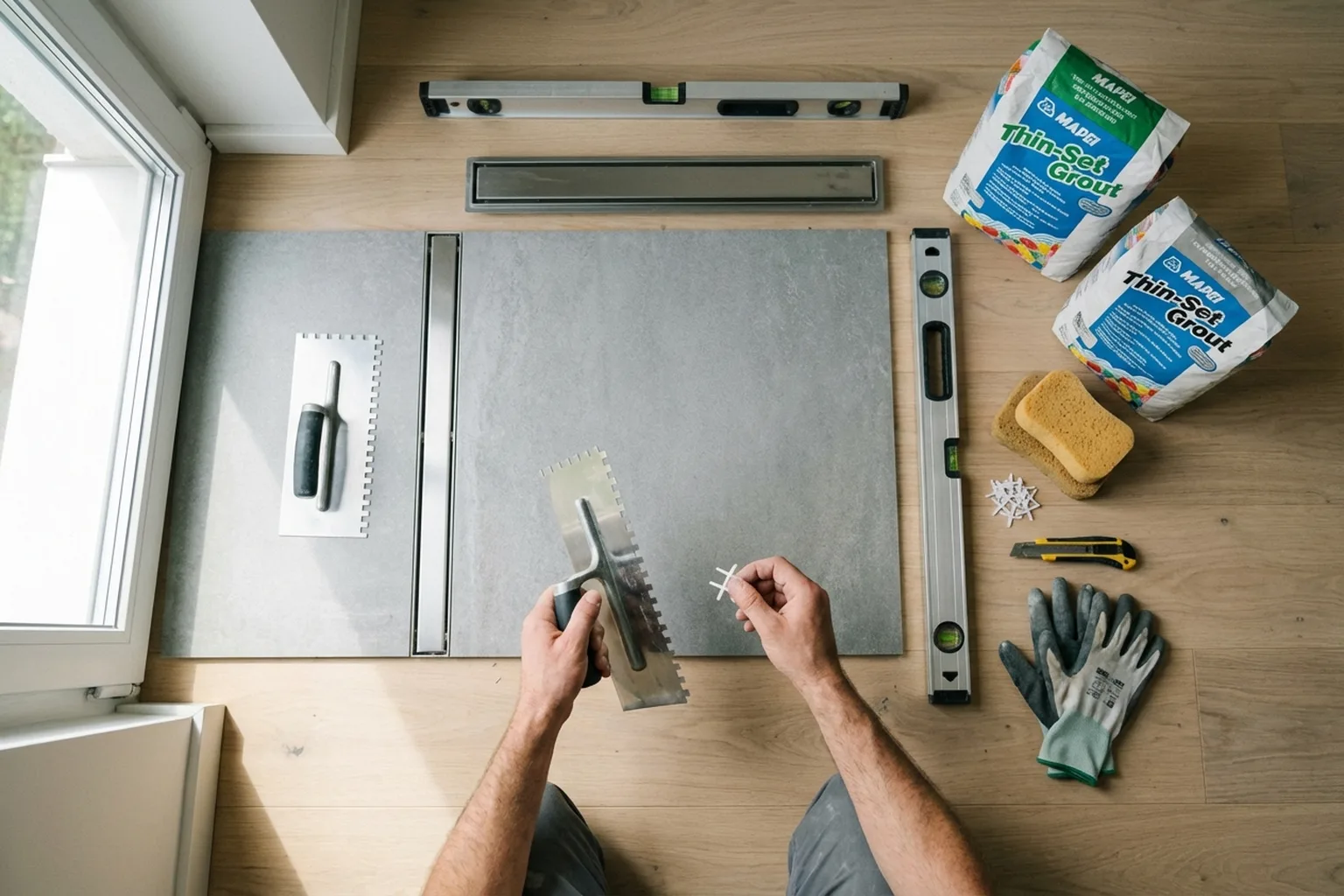
The price of tiling a shower base with large format depends on the size of the base, how complicated the cuts are, and what kind of tile is being used. Porcelain stoneware 60×120 and sintered stone slabs 80×160 require a different amount of labour: the larger the tile, the more difficult it is to fit neatly around the drain and the slopes. If the base is an unusual shape or has recesses, more time goes into cutting. Adhesive for large format (Mapei Keraflex Maxi, Ceresit CM 17) is pricier than regular adhesive. Materials are billed separately; labour covers fixings and consumables. You can see current prices in the table below.
| Service | Price |
|---|---|
| Shower base tiling: large format | 160–280 zł/m² |
| Shower base tiling: standard tile | 130–150 zł/m² |
| Shower base tiling: sintered stone | 360–400 zł/m² |
| Shower base tiling: mosaic | 250–300 zł/m² |
| Tiled shower base: small (up to 90×90) | 1100–1400 zł |
| Tiled shower base: medium (100–120) | 1100–1600 zł |
| Tiled shower base: large walk-in | 1400–2200 zł |
| Large format: shower walls | 350–650 zł/m² |
Indicative prices. Ranges for a typical scope. Fixings included, materials separate. Minimum order 300 zł.
Price ranges and offers from tradespeople: large format tiling in Warsaw.
How the on-site work goes
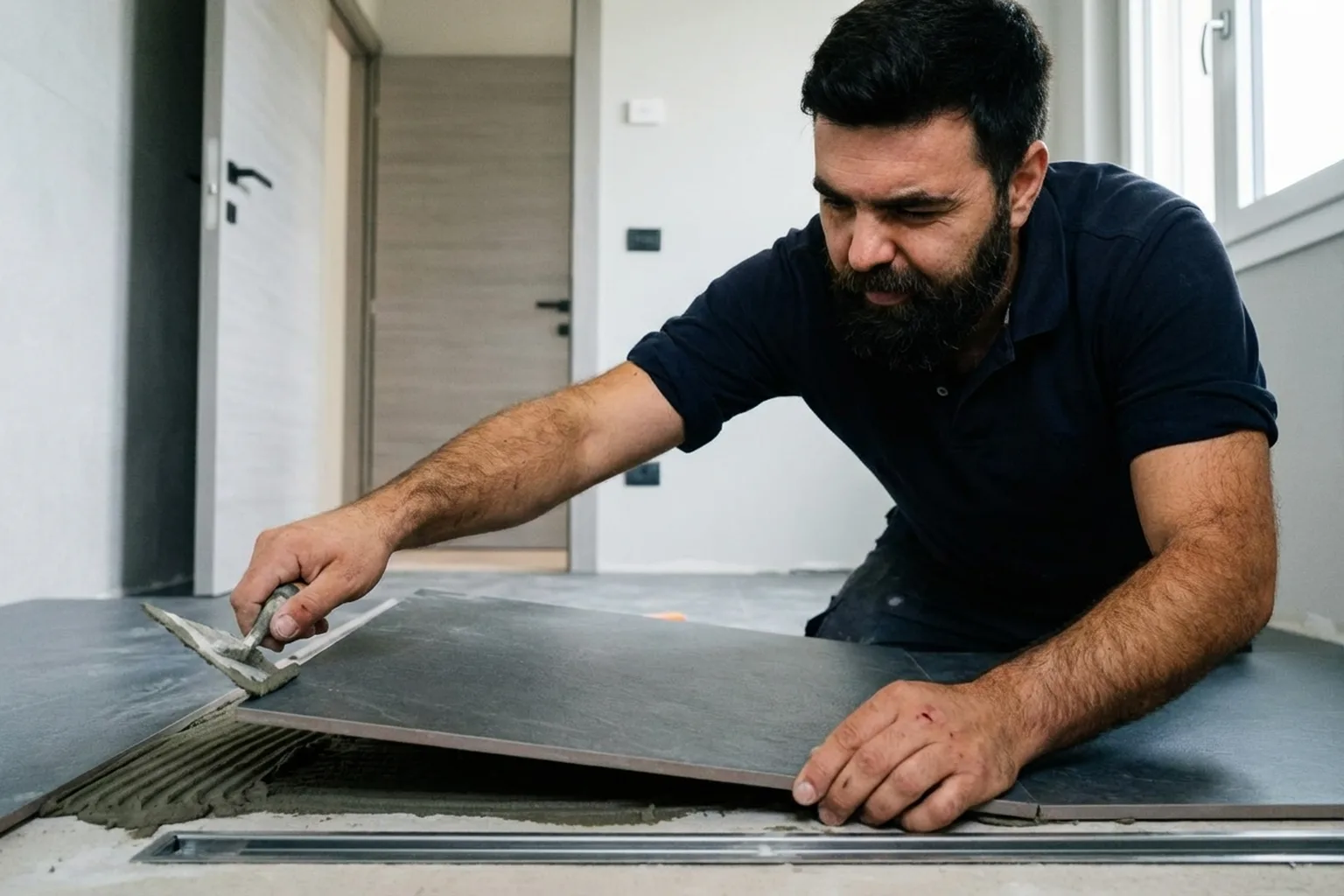
- Measuring the base and checking the substrate. Tradespeople inspect the screed with a spirit level, anything over 2 mm per metre has to be levelled out. Tradespeople also make sure the slope to the drain is right.
- If the slope is too small, they adjust it with self-levelling compound or by hand using screeding rails. The standard is a 1-1.5% fall towards the drain.
- Two coats of primer on the substrate. On a shower base, waterproofing is non-negotiable: Mapei Mapelastic or Weber.tec 822 membrane, with sealing tape on every corner and wall junction.
- Dry-laying the tiles: they figure out how the format lands, where the cuts will be, and how to deal with the drain. Large format has to be planned so the cut around the drain looks clean.
- Tradespeople spread adhesive with a 10-12 mm notched trowel on both the substrate and the back of the tile (back-buttering is required for tiles from 60 cm). Tradespeople use flexible adhesive: Mapei Keraflex Maxi or Ceresit CM 17.
- Tradespeople place the tile and fit the levelling system (LLS clips). At each stage, they check the fall towards the drain.
- After 24 hours: grouting with epoxy grout (Mapei Kerapoxy or Litokol Starlike). On a shower base, ordinary cement grout does not hold up, water washes it out after a couple of months. Wall-to-floor junctions are sealed with colour-matched silicone.
Common mistakes when tiling a shower base with large format
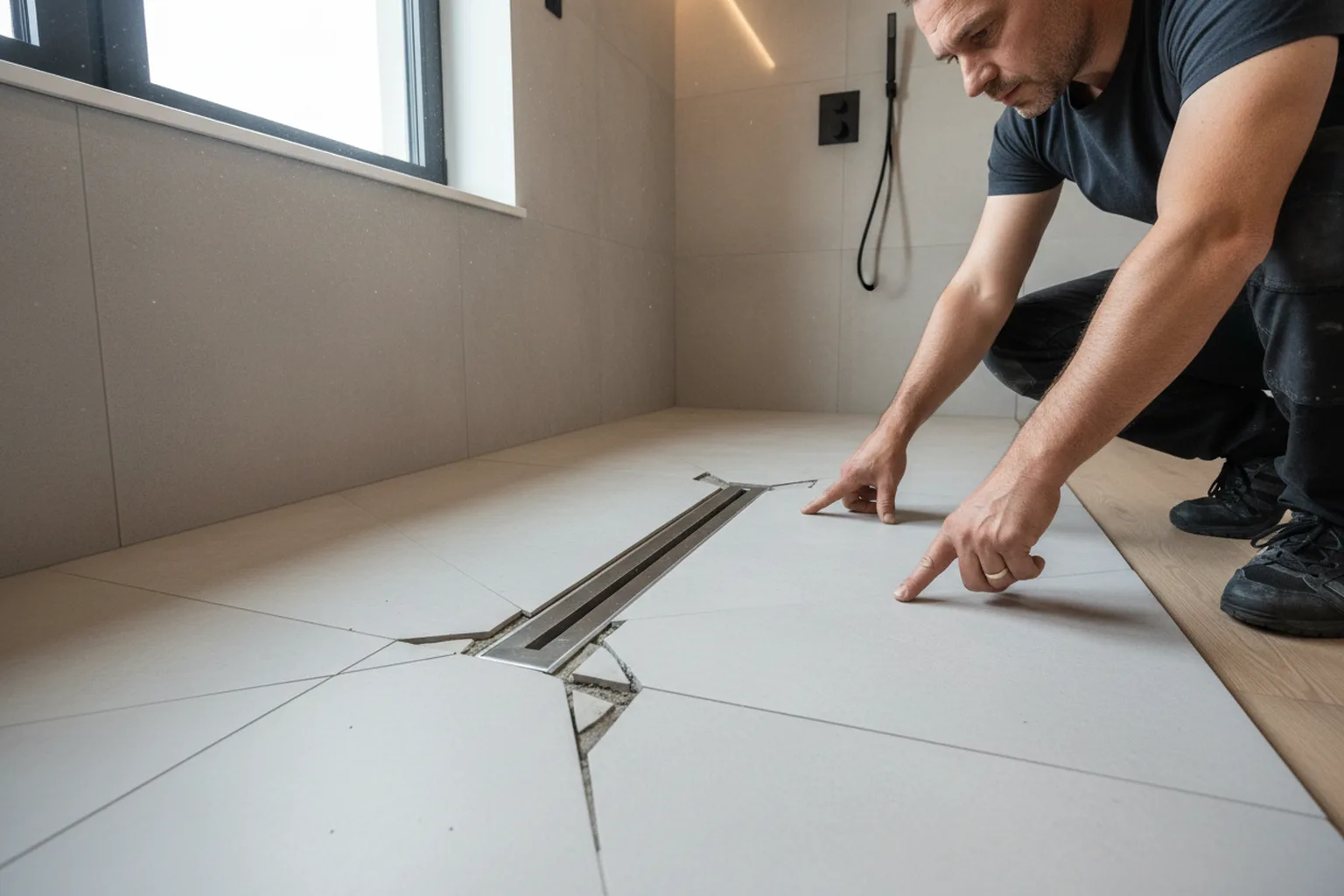
- Using regular C1 adhesive for large format — the tile starts coming away within six months. Tiles from 60 cm need at least C2 rated S1 (flexible).
- Setting the slope by eye without a level or straightedge, water stays in the corners and never gets to the drain.
- Leaving out waterproofing and trusting the tiles alone, water passes through grout joints and wrecks the screed, and the neighbour downstairs ends up with stains on the ceiling.
- Using normal cement grout instead of epoxy: after 2-3 months the joints go dark, crack, and begin to let water through.
- Skipping back-buttering: empty spots stay under the tile, and it cracks under load.
- Cutting large format with an angle grinder and no guide: chipped surface, rough cut.
- Forgetting the perimeter expansion joint: when the tiles move with temperature changes they push against the wall and crack.
- Fitting a point drain in the middle of a large format tile: that means four cuts with slopes. A linear drain against the wall is easier and looks better.
What to prepare before the technician arrives
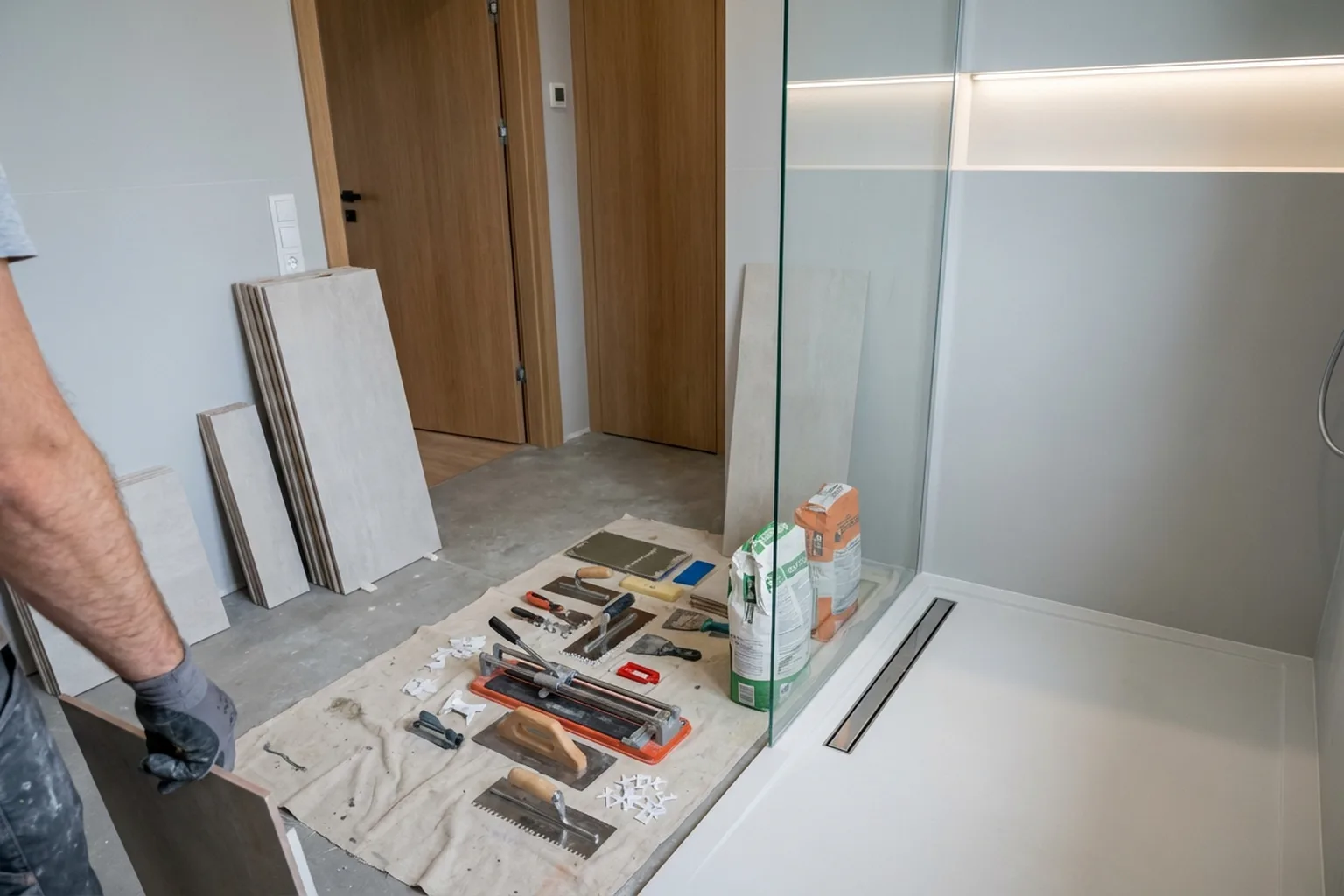
- Make sure the shower base screed is finished and dry (at least 7 days for cement-based).
- The drain must already be fitted and connected to the waste pipe — tiling is done around it.
- Buy tiles with a 10-15% extra allowance: large format creates more waste during cutting.
- Check that all tiles come from the same batch: colour can differ between batches.
- Have adhesive for large format ready (C2 S1): Mapei Keraflex Maxi, Ceresit CM 17 or equivalent.
- Epoxy grout (Mapei Kerapoxy, Litokol Starlike): agree the colour beforehand.
- Colour-matched silicone sealant: for wall junctions.
- Waterproofing membrane and corner tape: if waterproofing has not been completed yet.
- Make sure there is access to water and electricity, you need a tile cutter and wet cutting.
- Provide access details: intercom code, floor, whether equipment can be brought in easily.
- Remove unnecessary items from the bathroom: the technician needs room to work and cut tiles.
A real case from Warsaw
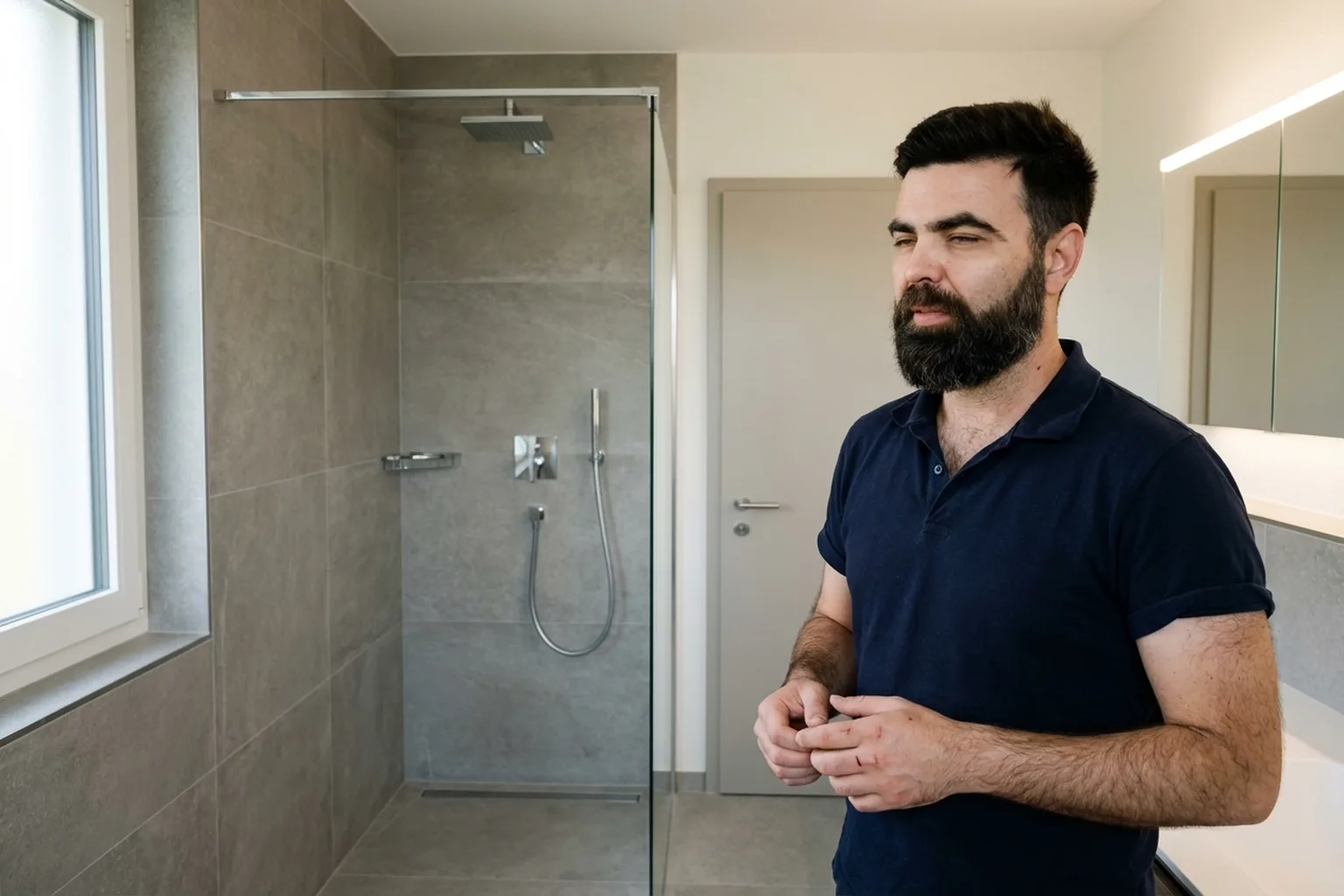
A client in the Ursynow district was renovating a bathroom in a new-build, a walk-in shower area with no tray, only a screed with a fall and a Viega linear drain by the wall. He picked Paradyż 60×120 porcelain stoneware with a concrete finish — very few grout joints and a modern look. The difficult bit was that the drain was off-centre, pushed into the corner, they had to plan the layout so the cut at the drain came out symmetrical. Tradespeople primed the substrate and put on two coats of Mapei Mapelastic with tape at every corner and wall junction. Adhesive: Mapei Keraflex Maxi, back-buttered using a 12 mm notched trowel. The slope to the drain was set at 1.2%: water disappears in seconds, with no pooling anywhere. Grout: Mapei Kerapoxy Design in anthracite. Wall junction: Mapei Mapesil AC. The whole job took two days. The client has been using the shower for four months, zero leaks, and the grout still looks brand new.
Frequently asked questions
What is the maximum tile size you can lay on a shower base?
In real jobs, they work with tiles up to 80×160 cm. Bigger sizes are technically possible, but cutting around the drain and the slopes gets too risky, there is a strong chance of chipping.
Is waterproofing under the tiles on a shower base mandatory?
Yes, absolutely. Tiles and grout are not waterproofing. Water gets through joints and micro-cracks. Without membrane and corner tape, a leak into the flat below is only a matter of time.
Why can’t you use regular grout on a shower base?
Cement grout is porous: it takes in water, goes dark, and cracks. On a shower base where water is there all the time, you need epoxy: it is waterproof, does not change colour, and does not crack.
What adhesive do you need for large format tiles?
At least class C2 S1 — flexible, with extended open time. Tradespeople use Mapei Keraflex Maxi or Ceresit CM 17. Standard C1 will not keep large format tiles in place under stress.
Point drain or linear drain: which is better?
For large format, a linear drain against the wall is the better option by far. A point drain means four cuts with slopes towards the centre, more difficult, more expensive, and not as good-looking.
How long before the shower can be used?
Adhesive reaches working strength in 24 hours, and grout needs one more day. The shower can be used 48 hours after the job is finished. Full adhesive strength is reached in 7-14 days.
Can large format tiles be laid over an old shower base?
If the old base is tiled, you can tile over it, but the adhesion and height need to be checked (so it does not clash with doors). If it is acrylic or steel, no, it has to be removed first and replaced with a screed at the correct slope.
Is a tile levelling system needed on a shower base?
Yes, a levelling system is necessary for large format. Without it, even a tiny lip between tile edges creates a ridge where water sits.
Are materials included in the price?
No, materials are charged separately: tiles, adhesive, grout, waterproofing, sealant. Labour includes consumables: levelling clips, cutting discs, spacers.
Do tradespeople only work on shower bases or walls as well?
Tradespeople do both bases and walls. Clients often order the full package: tiling the whole shower area: base plus walls in large format. It gives a clean look without unnecessary joints.
Who does the work
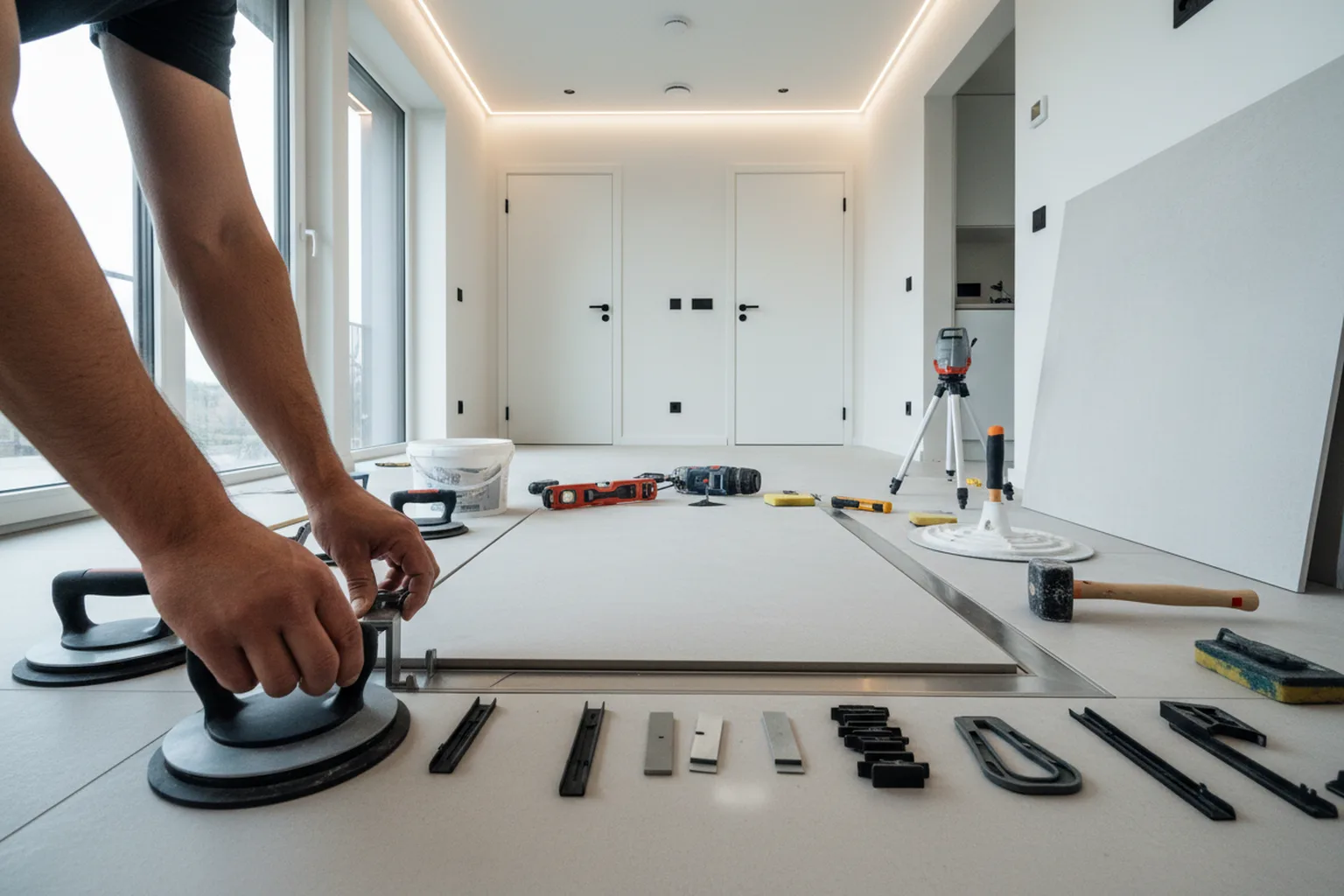
Shower base tiling with large format tiles is done by technicians who have hands-on experience specifically with big formats, it is a separate trade skill, and not every tiler is willing to do it. They come with an electric tile cutter for wet cutting (an angle grinder on large format means chipping), a complete levelling system kit, and notched trowels in the right sizes. Slopes are checked with a laser level, and every joint is looked over. To book a survey, post a request in the HandyMan24 app and tradespeople will send their offers.
Order in the app
Describe the job, add photos and the address. Tradespeople send their own prices and dates, and you pick one of the offers.
Open the app