
How much does it cost and what affects the price
The price depends on the size of the base, the drain type (point or linear), how complicated the falls are, and the tiles you choose. A linear drain is more expensive than a point drain, but it looks neater and works better — one-direction fall instead of four. Waterproofing, screed, tiling and grouting are priced separately. Materials are billed separately as well. Current rates are shown in the table below.
| Service | Price |
|---|---|
| Tiled shower base: small (up to 90×90) | 1100–1400 zł |
| Tiled shower base: medium (100–120) | 1100–1600 zł |
| Tiled shower base: large walk-in | 1400–2200 zł |
| Linear drain installation | 400–900 zł |
| Waterproofing substrate before tiling | 35–80 zł/m² |
| Substrate preparation for tiles | 40–80 zł/m² |
| Shower base tiling: standard tile | 130–150 zł/m² |
Indicative prices. Ranges for a typical scope. Fixings included, materials separate. Minimum order 300 zł.
What it costs and how to book: a good plumber in Warsaw.
How the work is done on site
- Measurement and design. Tradespeople set the base dimensions, drain location and direction of the fall. Tradespeople also check slab depth: there should be at least 70-90 mm between the finished floor level and the structural slab.
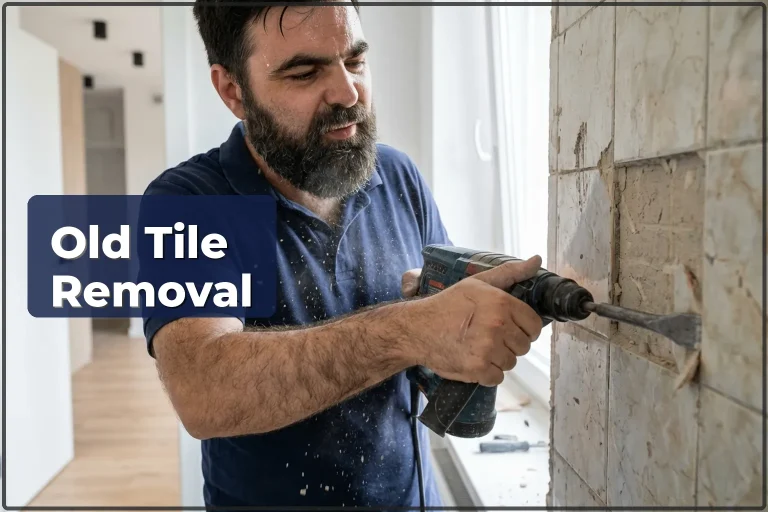
- Substrate preparation. The old tray or tiles are taken out and the surface is cleaned down to concrete. Tradespeople inspect the waste outlet: the drain has to connect with at least a 2% fall to the riser.
- Drain installation. A point or linear drain (Viega, Geberit) is installed at the right height, connected to the waste and checked for leaks.
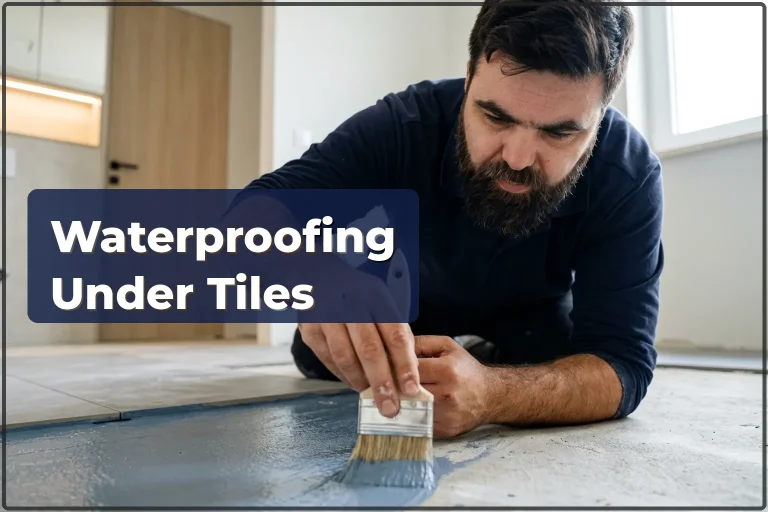
- First waterproofing layer. Liquid membrane (Mapei Mapelastic, Weber.tec 822) is applied to the floor and walls up to 20-30 cm high. Corners and joints are strengthened with tape. Two coats with drying time between them.
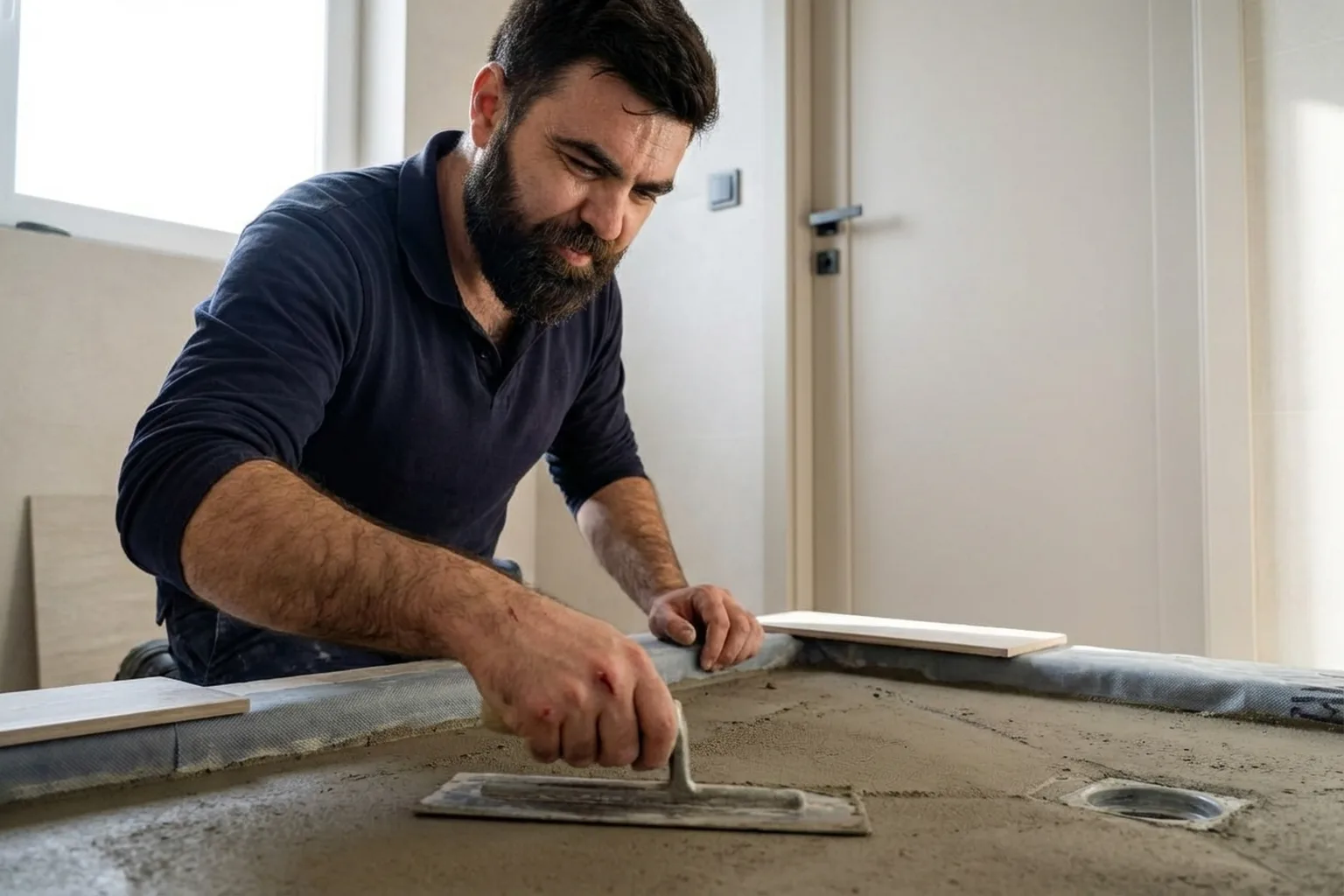
- Graded screed. A cement screed is formed with a 1.5-2% fall towards the drain. For a point drain the fall comes from four sides; for linear — from one side. The screed dries for 3-7 days.
- Second waterproofing layer. This goes over the cured screed. Double protection means water will not reach the neighbours even if a tile cracks.
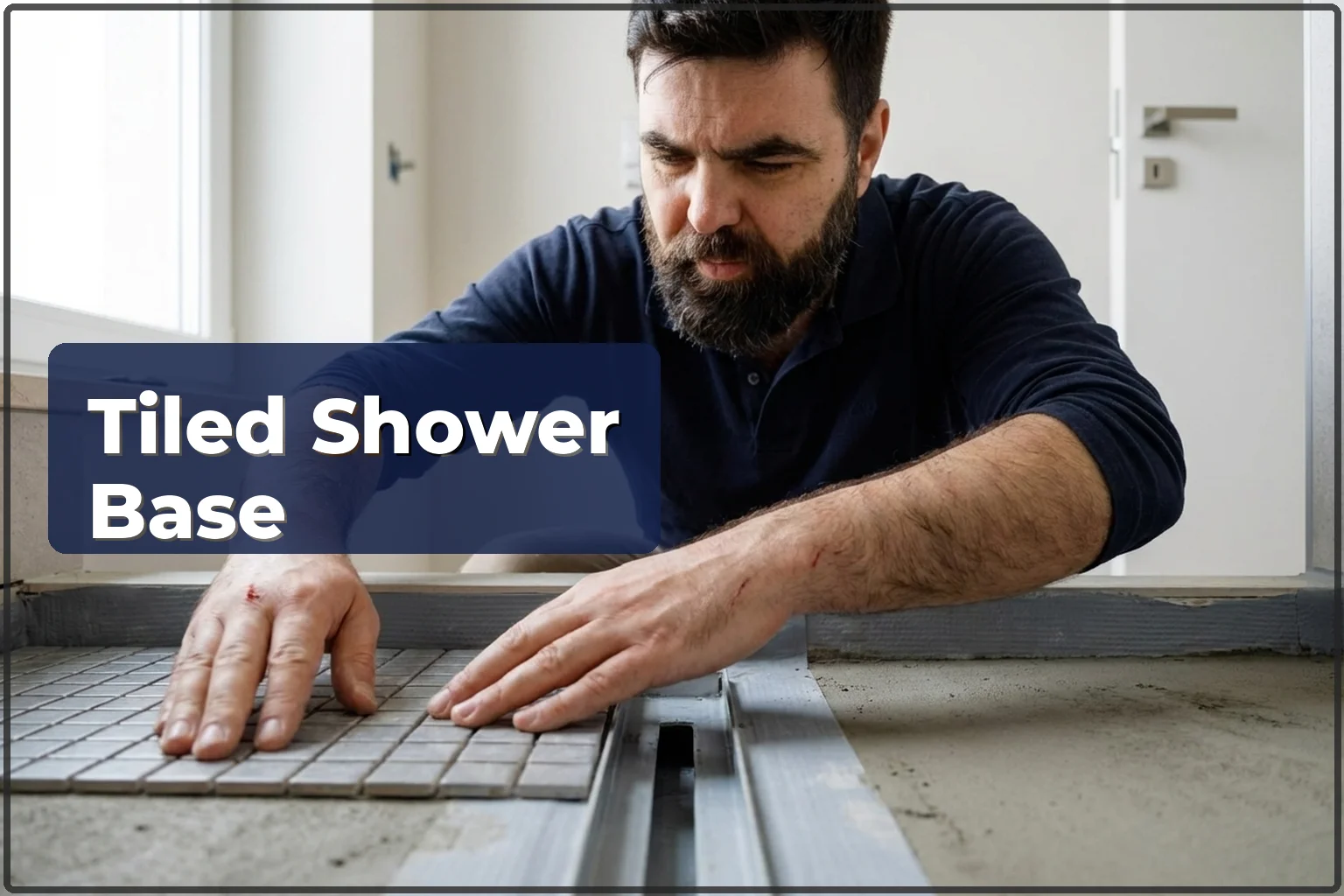
- Tiling. Mosaic or small format (up to 15×15 cm) with an anti-slip finish (R10-R11). Flexible C2 S1 adhesive and epoxy grout.
Common mistakes when building a tiled shower base
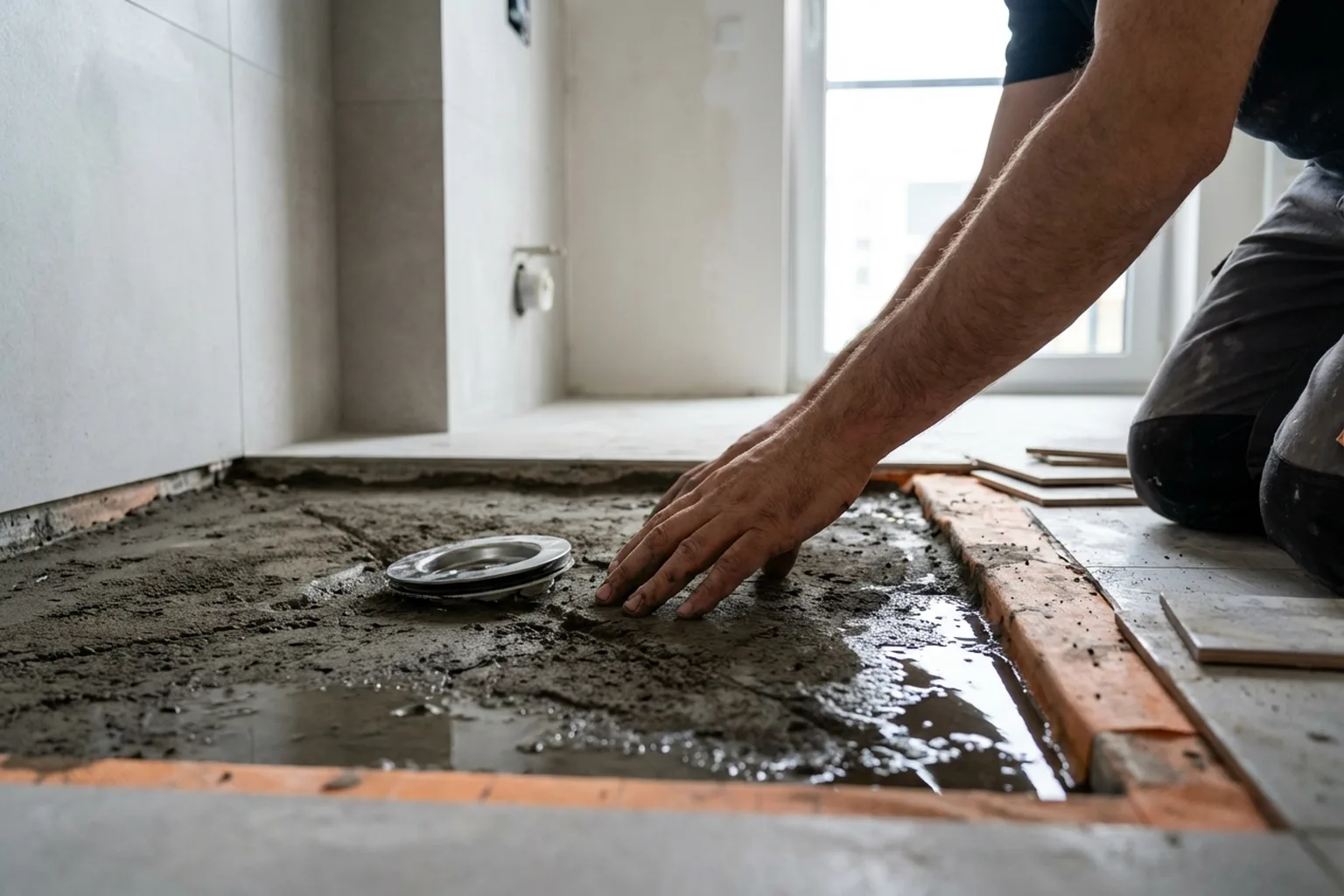
- Not enough depth for the drain: the distance from the slab to the finished floor was never checked. The drain does not fit and the floor has to be lifted.
- Only one waterproofing layer: if the screed cracks, water goes straight through to the neighbours. Two layers is the standard.
- Wrong fall — water sits on the floor instead of flowing into the drain. The fall must be at least 1.5% and even.
- Large tiles on a sloped surface, a 60×60 tile will not lie flat on a four-way fall. Mosaic or small format is the right choice.
- Cheap drain without a trap seal: sewer smell in the bathroom. Viega and Geberit come with dry or wet trap seals.
- Cementitious grout: after months of constant water exposure it starts to crack. Epoxy only.
- No upstand — water spreads outside the shower area.
What to prepare before the technician arrives
- Choose the size of the shower zone and where the drain will go.
- Check the waste outlet: it needs to be inside the future base area.
- Buy the drain in advance (Viega Advantix, Geberit), the technician can help you choose the model.
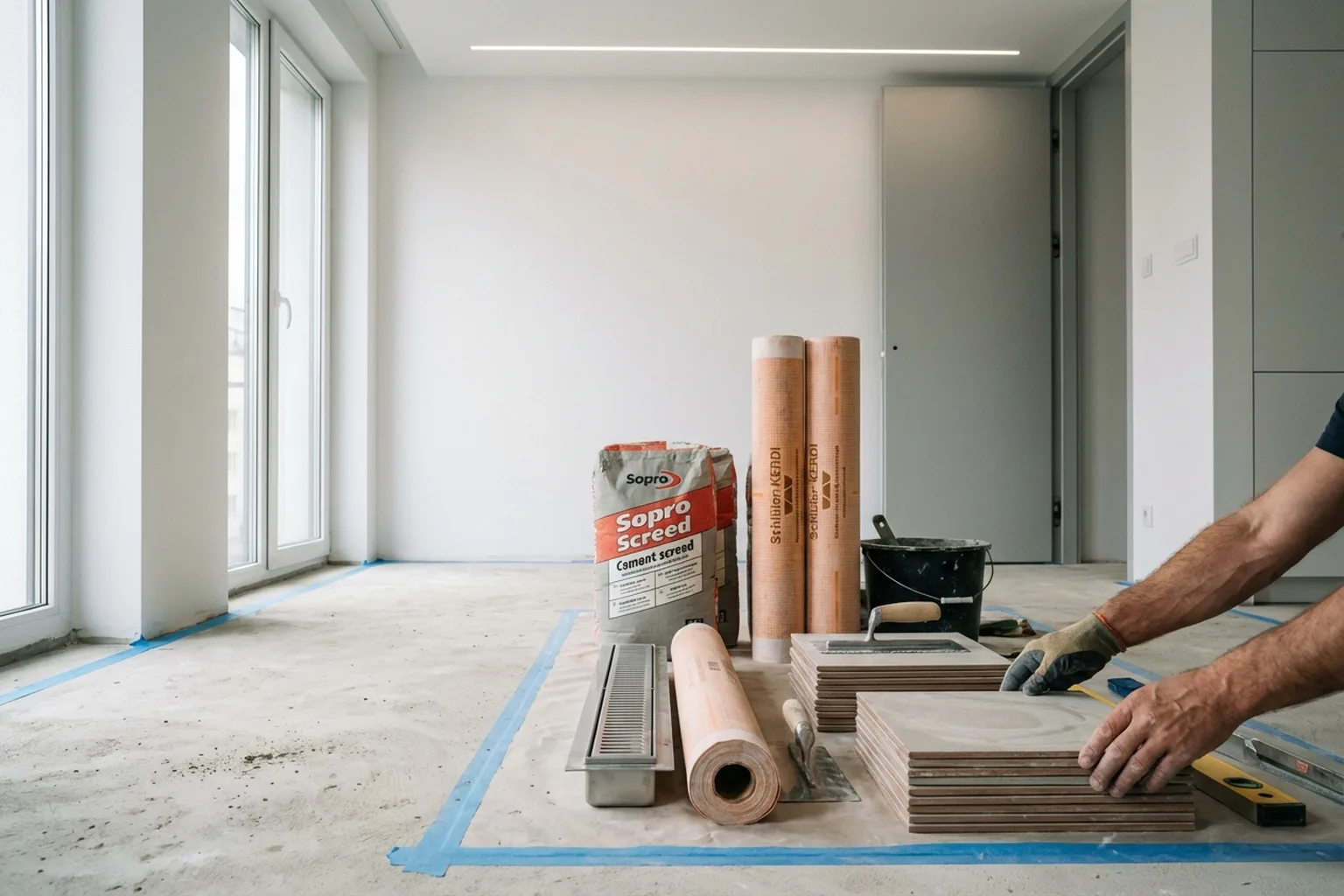
- Waterproofing: Mapei Mapelastic, Weber.tec 822, Ceresit CR 166. Corner tape.
- Tiles — mosaic or small format with an anti-slip surface (R10-R11).
- Flexible C2 S1 adhesive (Mapei Keraflex Maxi, Ceresit CM 17).
- Epoxy grout (Litokol Starlike, Mapei Kerapoxy).
- Colour-matched sanitary silicone.
- Empty the bathroom completely.
- Let the neighbours know: there will be noise.
- Make sure there is ventilation.
A real case from Warsaw
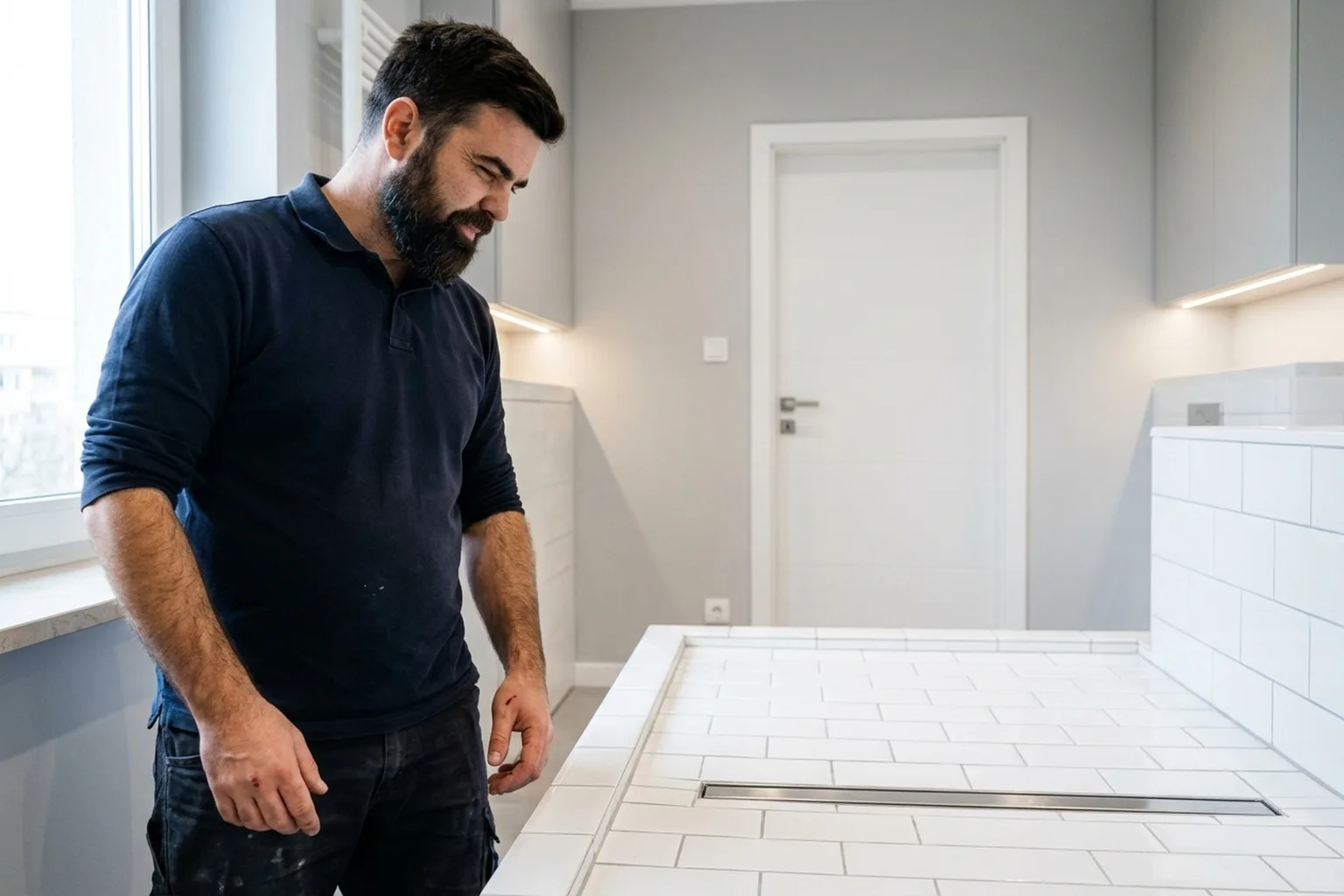
A flat in Ursynow, bathroom 5 m²: the client wanted to swap an acrylic tray for a tiled base with a Geberit linear drain by the wall. Tradespeople removed the old tray and tiles. It turned out the waste outlet was 5 cm higher than required, so they reworked it with extra fall. Drain installed, flow checked — water is gone in three seconds. First layer of Mapei Mapelastic on the floor and walls, with corner reinforcement. Screed formed at 2% towards the linear drain, set with a laser level. After curing: second membrane layer. Mosaic 5×5 cm fixed with Ceresit CM 17, grouted with Litokol Starlike. The whole job took five days. The result is a continuous floor with no threshold, water drains right away and there is no plastic anywhere.
Frequently asked questions
Point drain or linear — which is better?
Linear looks better and is easier to live with: one-direction fall and simpler tiling. A point drain costs less, but the four-way fall is harder to make evenly.
Can the base be built without an upstand?
Yes, if the fall is correct and there is a glass screen. An upstand is just extra protection against overflow.
Which tiles should be used on the base?
Mosaic or small format up to 15×15 cm with an anti-slip rating of R10-R11.
How many waterproofing layers are needed?
Two. The first goes on the substrate before the screed, the second over the screed before tiling.
What gradient is required?
At least 1.5% (1.5 cm per metre). Best is 2%.
Will there be sewer odour?
No, as long as the drain has a trap seal (wet or dry). Tradespeople recommend Viega or Geberit.
How long does construction take?
5-7 days: demolition, waterproofing, screed with curing, second waterproofing, tiling and grouting.
Can underfloor heating be included?
Yes, an electric heating cable can be installed in the screed under the tiles: very comfortable in winter.
Are materials included in the price?
No. The drain, waterproofing, tiles, adhesive and grout are bought by the client.
Can a base be rebuilt if something goes wrong?
Technically yes: remove the tiles and screed, redo the fall and waterproofing. But that is almost the same as building it again from zero, so it needs to be done right the first time.
Who does the work
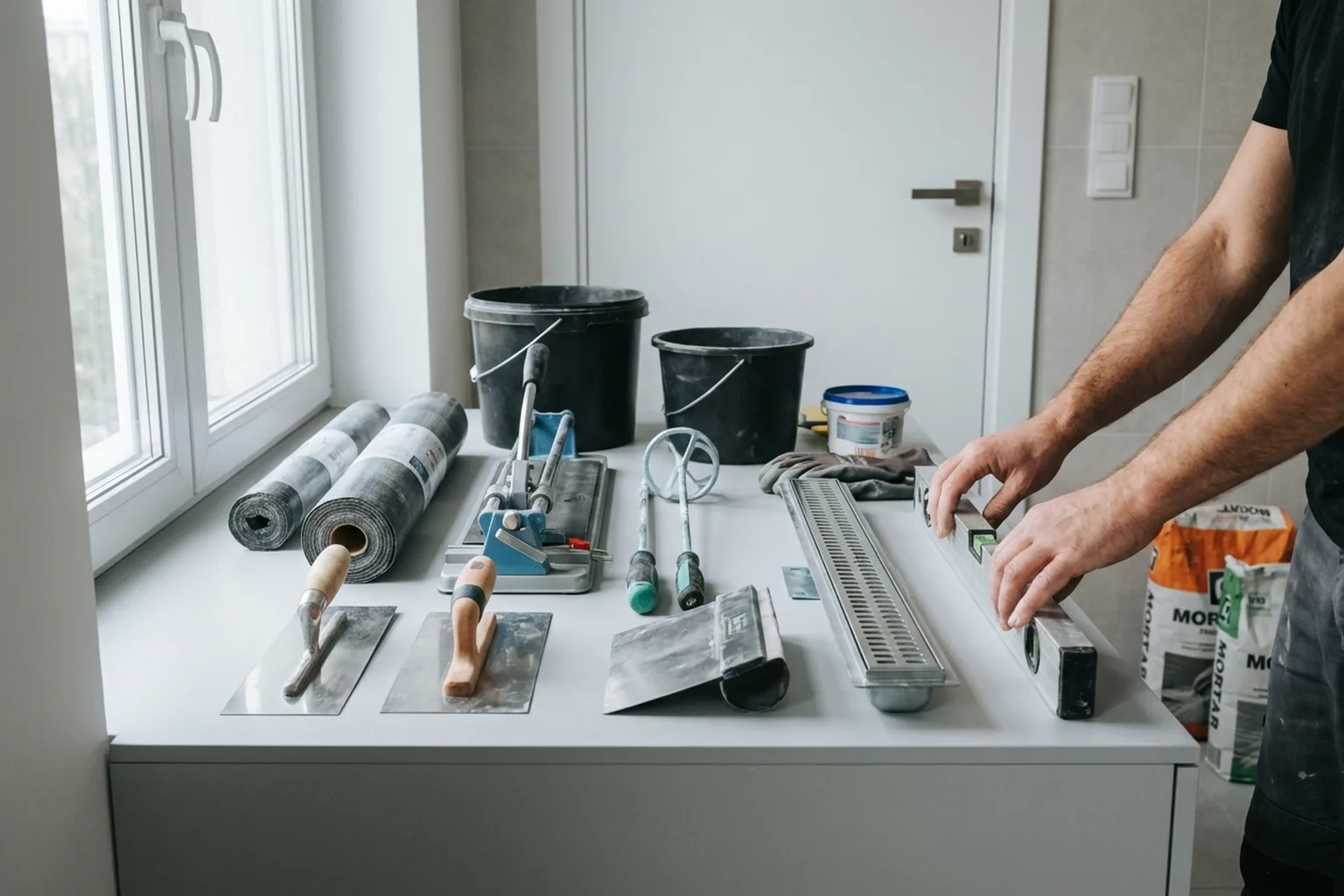
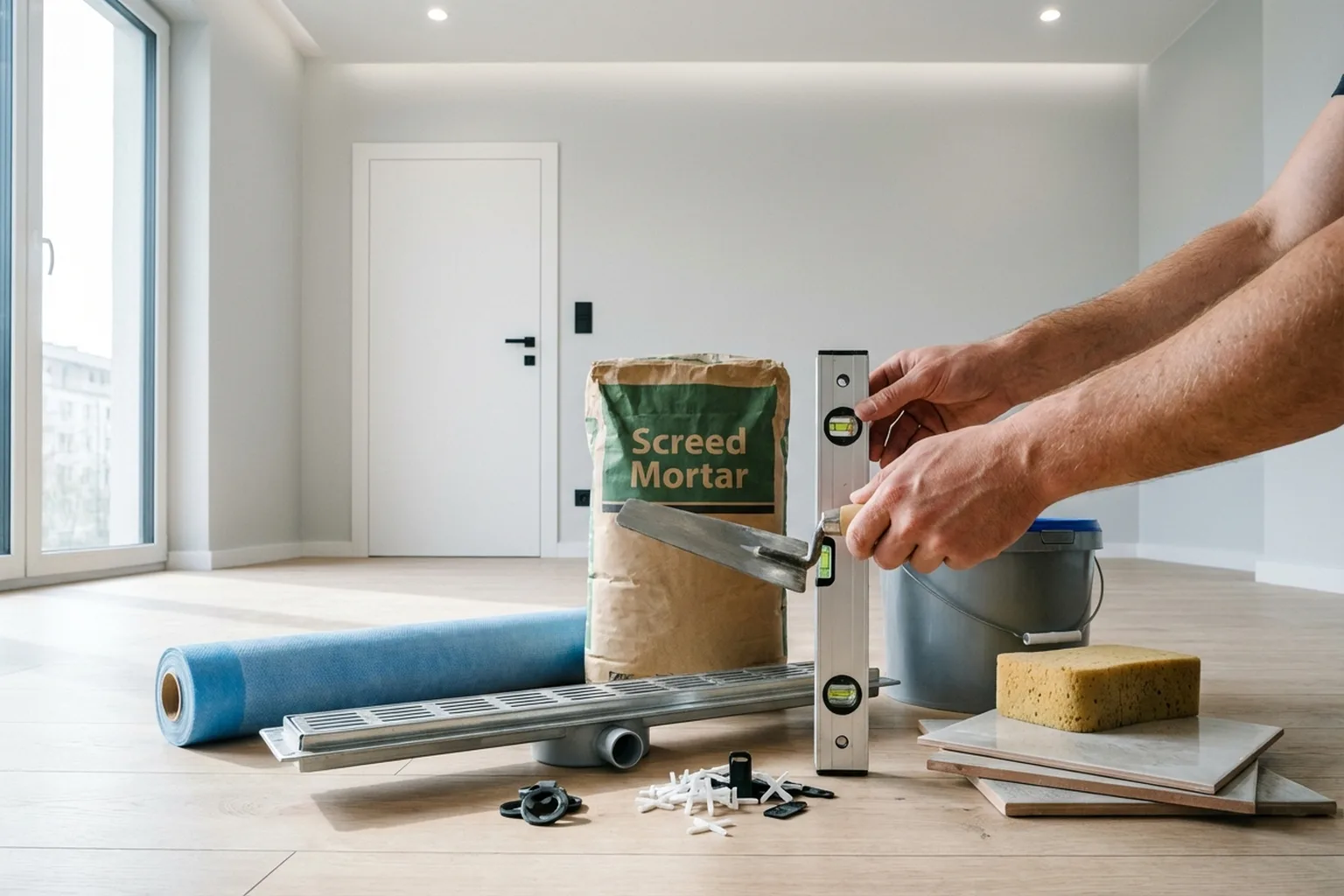
Tiled shower bases are done by technicians who know both waterproofing and tile fitting — this is a multi-stage job where every layer counts. Tradespeople come with a laser level, straight edges and a complete set for waterproofing and tiling. Post a request in the HandyMan24 app: tradespeople across Warsaw will come for a site survey and give you an exact price.
Order in the app
Describe the job, add photos and the address. Tradespeople send their own prices and dates, and you pick one of the offers.
Open the app