How much does it cost and what affects the price
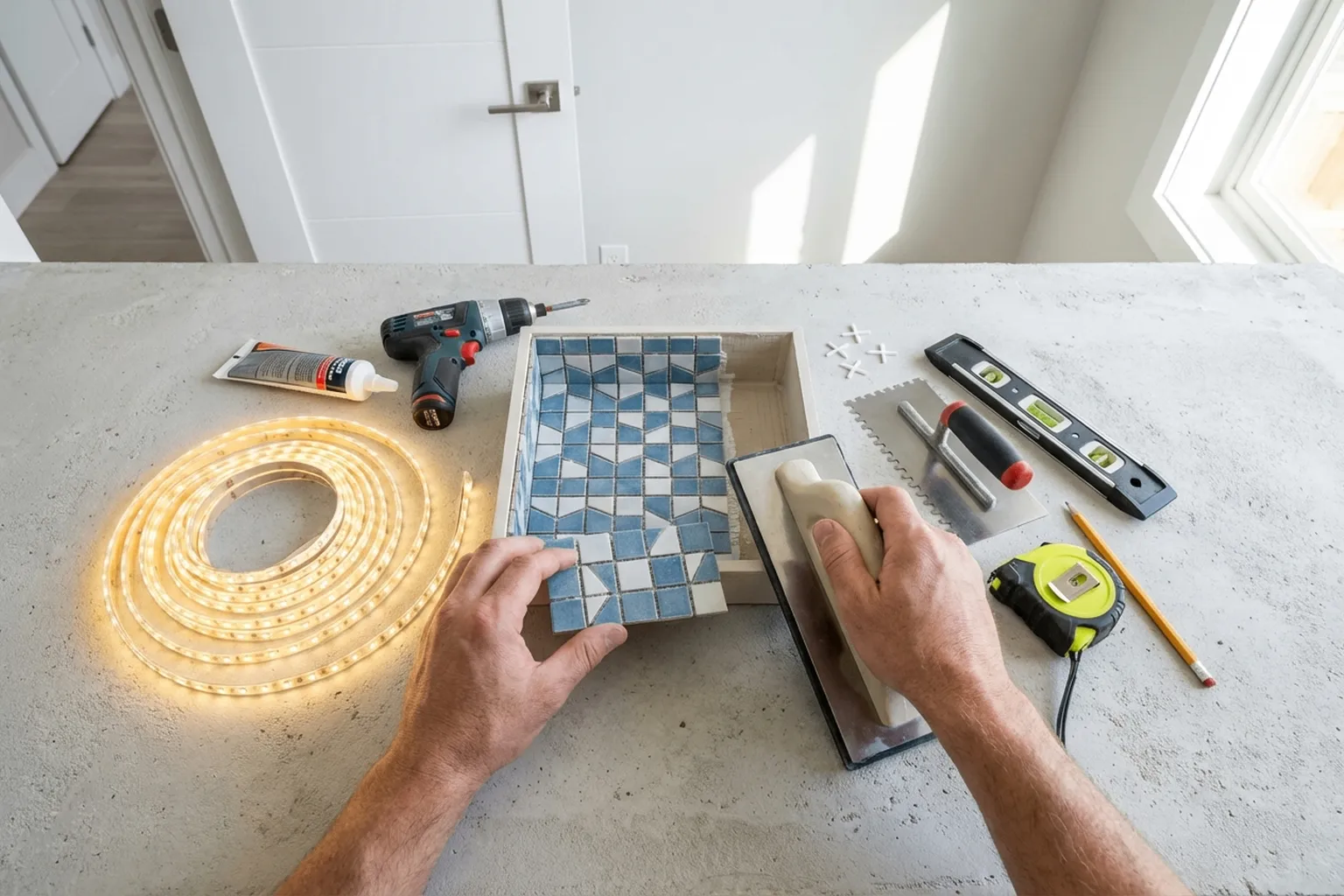
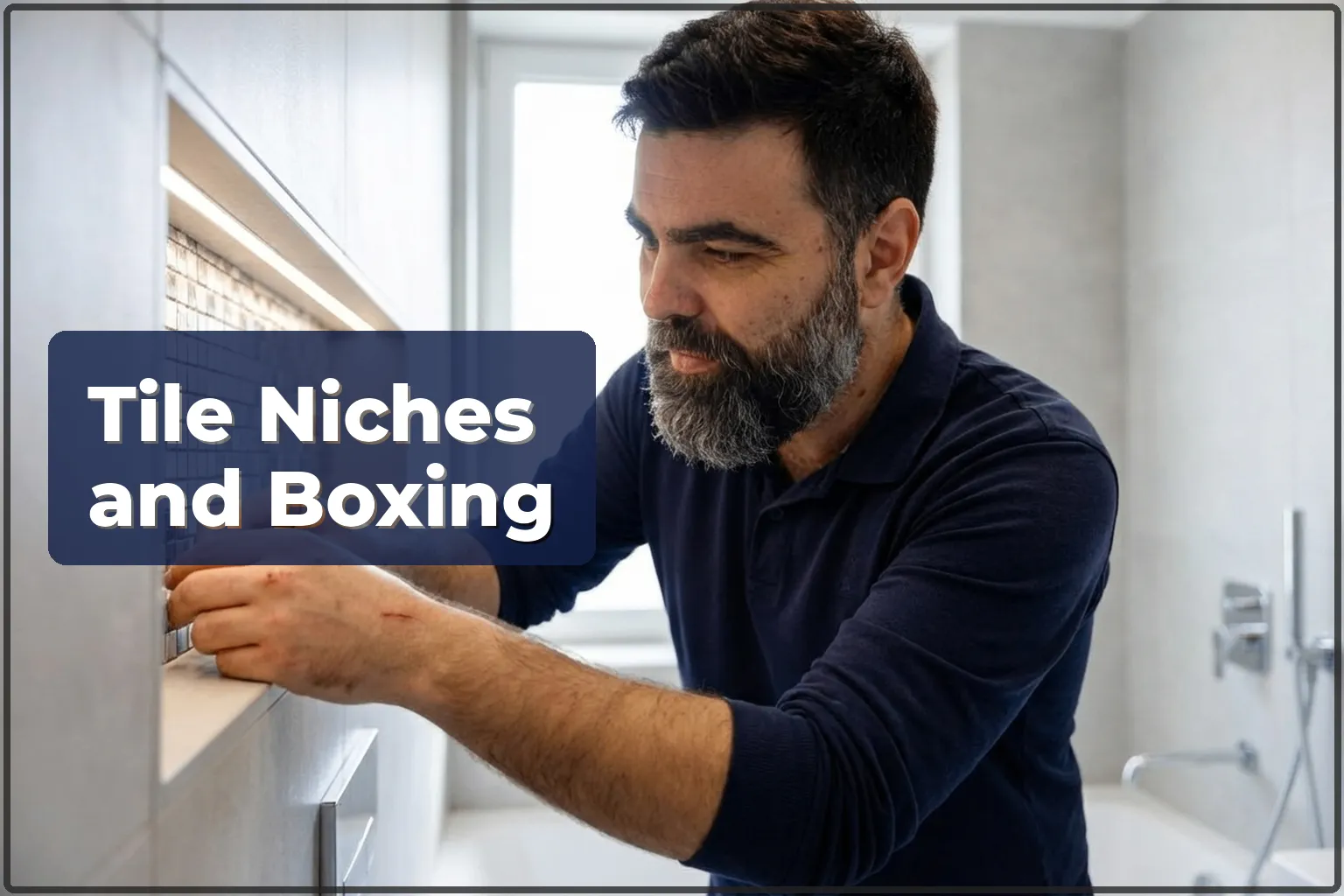
The price depends on the size of the structure, how complicated the shape is, the number of niches, and the tile selected. A basic 30×40 niche includes framing, plasterboard, waterproofing, and tiling. Boxing around risers is priced by height and the number of access panels. Materials are billed separately. You can find current prices in the table below.
| Service | Price |
|---|---|
| Tile niches / boxings | 150–400 zł/szt |
| Tiling | 140–200 zł/m² |
| Epoxy grouting | 50–75 zł/m² |
| Waterproofing substrate before tiling | 35–80 zł/m² |
| Holes in tiles (sockets, pipes) | 40–80 zł/szt |
Indicative prices. Ranges for a typical scope. Fixings included, materials separate. Minimum order 300 zł.
Rather hand the job over? More here: tiler in Warsaw.
How the work is done on site
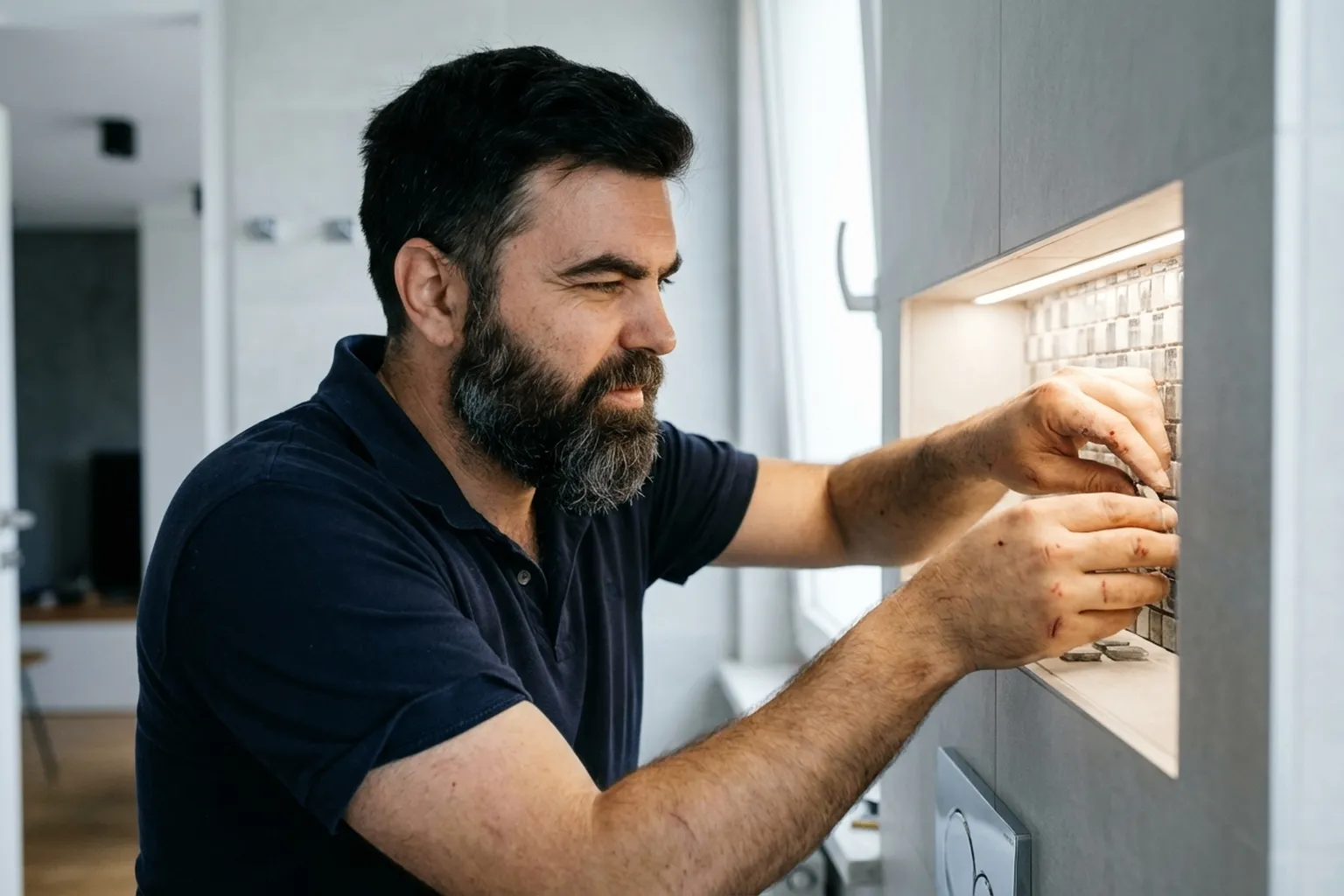
- Measuring and planning. Tradespeople set the niche or boxing dimensions, match them to the tile layout (so the niche joints continue the lines from the main wall) and mark access panels for valves and meters.
- Frame installation from Knauf CW/UW profiles — stiff, with double fixing at the corners.
- Plasterboard covering. Moisture-resistant board (green GKBI) is a must in bathrooms. External corners get a double layer for extra stiffness.
- Waterproofing. Every niche and boxing surface in the wet zone is coated with liquid membrane (Mapei Mapelastic, Ceresit CR 166).
- Tiling. Tradespeople begin with the main wall and then continue onto the niche/boxing so the joints stay in line. External corners get an aluminium trim or a 45-degree mitre.
- Grouting and sealing. Epoxy grout in wet zones. The joint between niche and wall is sealed with colour-matched sanitary silicone.
Common mistakes with niches and boxing
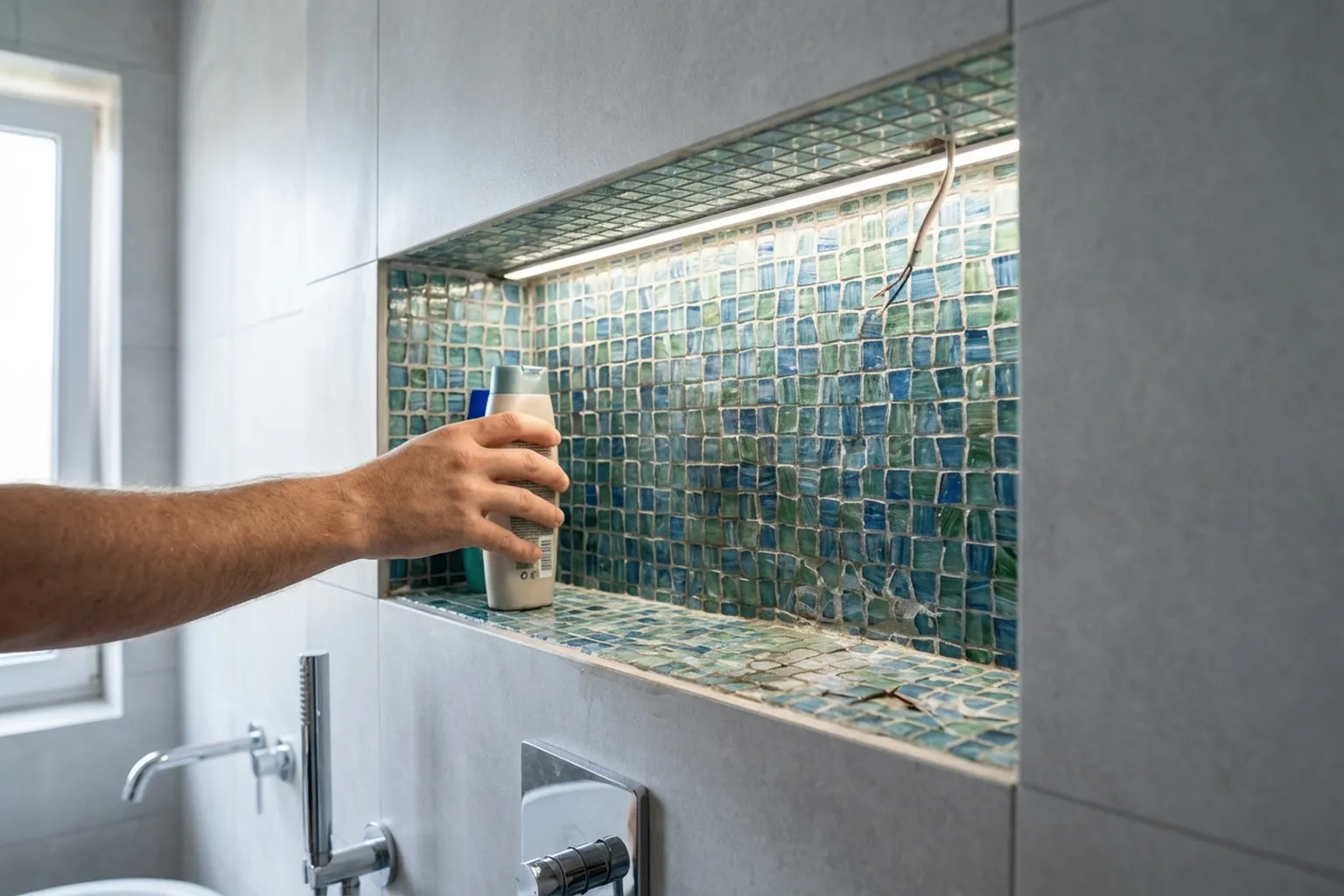
- Niche not matched to the tile layout: joints do not line up with the wall, and it looks badly done.
- Standard plasterboard used instead of moisture-resistant — in a bathroom it swells and falls apart.
- No waterproofing inside the niche: water builds up behind the tiles, mould appears, and the board starts failing.
- Weak frame: the niche moves when pressed, and tiles crack along the joints.
- No access panel in boxing — no access to valves, meters or traps. In an emergency the whole boxing has to be broken out.
- External corners left unprotected: without a trim or mitre, tile edges chip when knocked.
- Niche too shallow: bottles will not fit. Minimum 10-12 cm depth.
What to prepare before the technician arrives
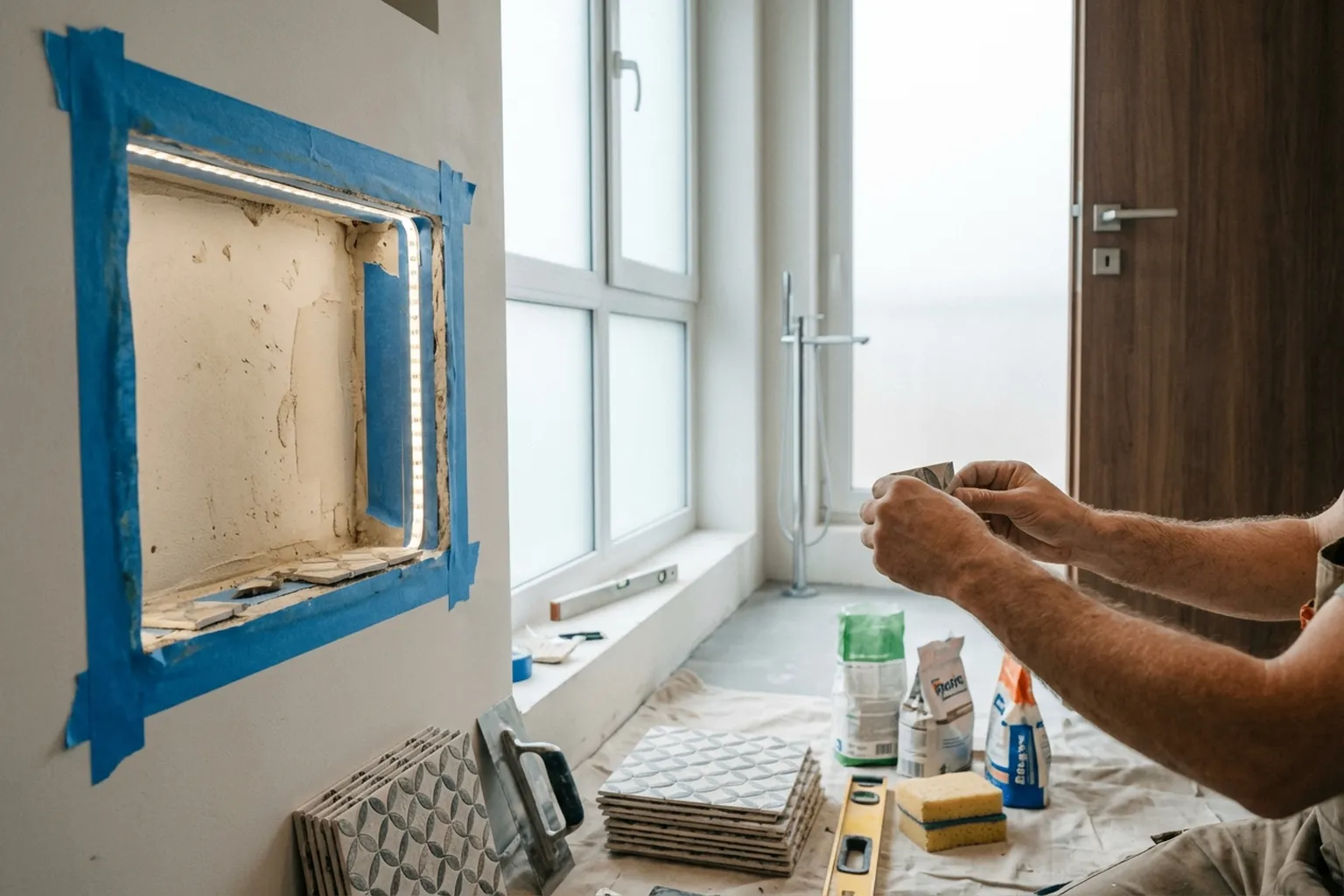
- Choose niche sizes, locations and heights.
- LED lighting in the niche? The cables need to be in place before cladding.
- For boxing — decide where the access panels will go (valves, meters, traps).
- Knauf CW/UW profiles.
- Moisture-resistant plasterboard (green GKBI).
- Waterproofing membrane.
- Tiles: include extra for cuts inside the niche.
- Aluminium corner trims (or the technician will cut a mitre).
- Access panels in the right size.
- Empty the work area.
A real case from Warsaw
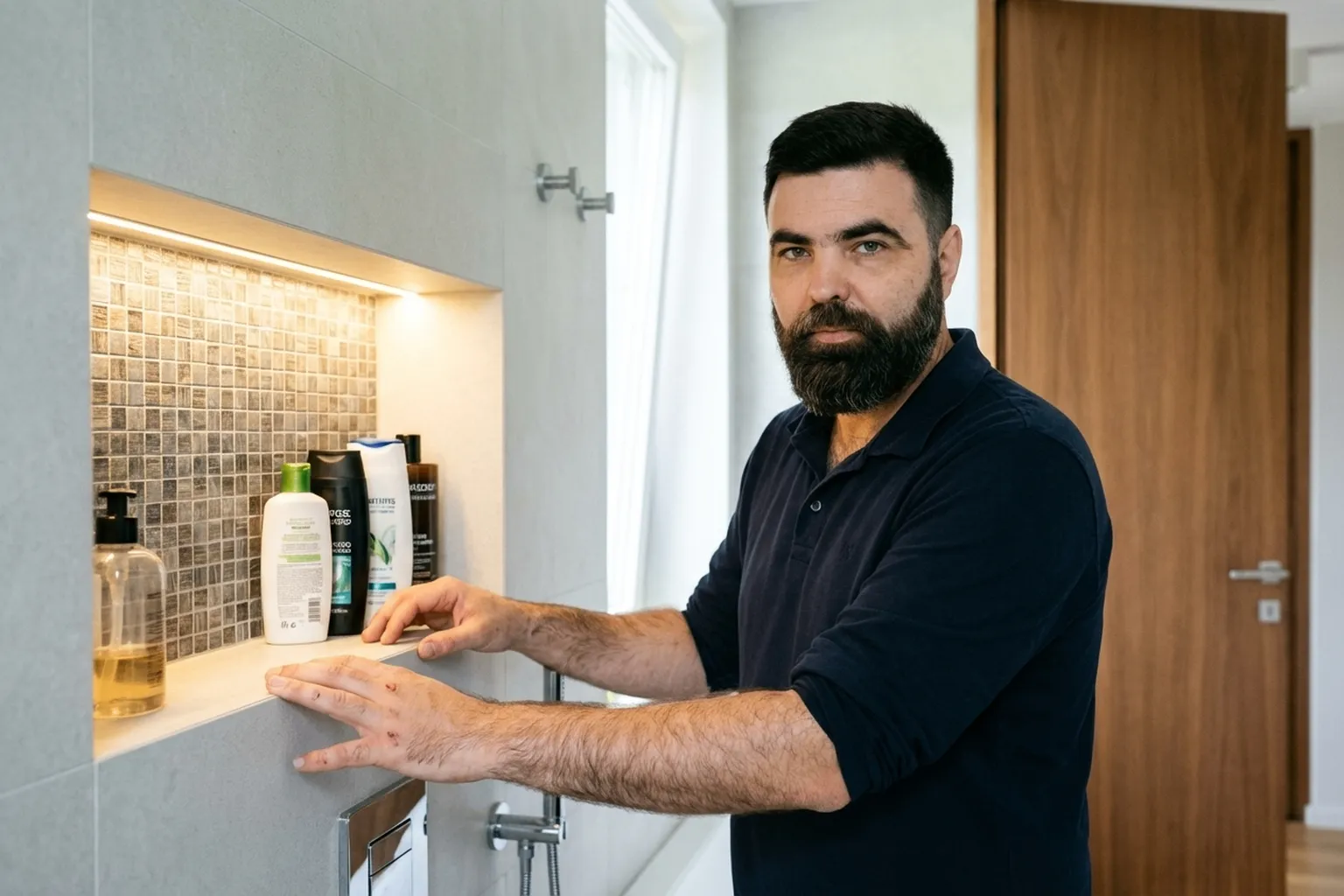
A bathroom in Targowek, 6 m²: the client asked for two niches behind the bath and boxing around a vertical riser with an access panel. Tradespeople first set out 60×30 tiles on the full wall, making each niche exactly one tile wide so the joints lined up. Frame from Knauf CW 50, double-layer GKBI on corners. Tradespeople waterproofed inside the niches and on the boxing with Mapei Mapelastic. Tiles fixed with Ceresit CM 17, external corners cut to 45 degrees (the client did not want aluminium trim). Hidden access panel 20×30 cm flush with the tile surface. Grouted with Mapei Kerapoxy. Three days of work. The niches sit neatly in place — the joints run with the main wall as though they had been part of it from the start.
Frequently asked questions
Can a niche be cut into a load-bearing wall?
No. The niche is made in a plasterboard stud wall in front of the structural wall. It takes 5-7 cm of space but is safe.
What is the minimum niche depth?
10-12 cm for standard shampoo bottles. 15-20 cm for towels or decorative pieces.
Is waterproofing needed inside the niche?
Yes, if the niche is in a wet zone (shower, wall behind the bath).
Can LED lighting be added?
Yes. An LED strip is installed at the top of the niche. Cables need to be run before the plasterboard is fitted.
Aluminium trim or mitre?
A 45-degree mitre looks cleaner but is more delicate: the edge can chip if hit. An aluminium trim is more practical and longer-lasting.
Is an access panel mandatory in boxing?
Yes. Without it there is no access to valves, meters or traps. In an emergency the whole boxing would have to be demolished.
How long does installation take?
One niche plus boxing: 2-3 days. A more complex design with several niches — up to 5 days.
Which plasterboard?
Moisture-resistant only (green GKBI). Double layer on external corners for stiffness.
Are materials included?
No. Profiles, plasterboard, waterproofing, tiles, adhesive and grout are bought by the client.
Can boxing be clad with mosaic?
Yes, mosaic works very well on boxing: it follows curves and corners without cut pieces. It is often combined with large format tiles on flat walls.
Who does the work
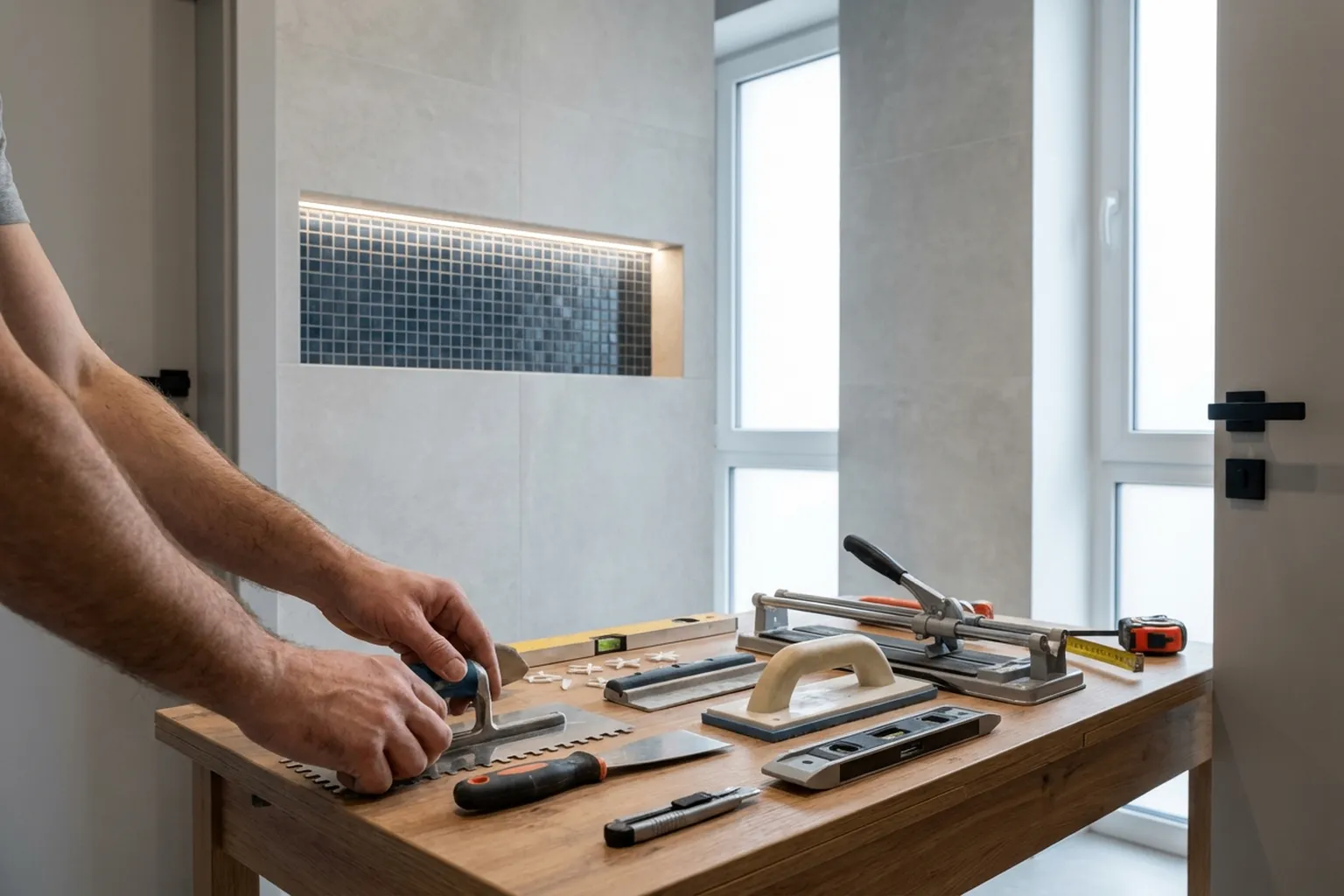
Niches and boxing are done by technicians who know both plasterboard work and tiling: it is one combined trade. Tradespeople come with profiles, board-cutting tools, a laser level, and a full tiling set. Post a request in the HandyMan24 app: tradespeople across Warsaw will go over the design and send their prices.
Order in the app
Describe the job, add photos and the address. Tradespeople send their own prices and dates, and you pick one of the offers.
Open the app